

Thoughts on food
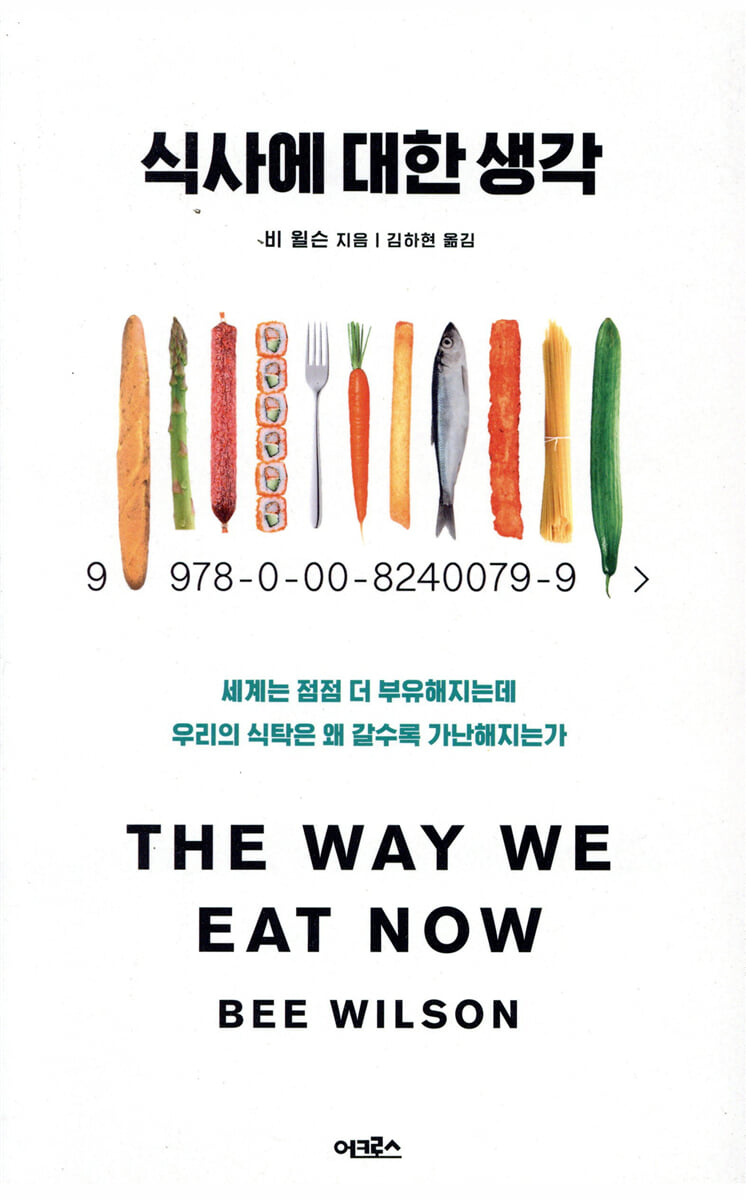 |
Description
Book Introduction
- A word from MD
- TV is overflowing with food-related programs, but are our tables truly plentiful and safe? Today's tables are extreme.
It's either meat or vegetables, carbohydrates or fat, superfood or junk food.
Renowned food columnist Bee Wilson critically analyzes today's global dining table.
- Son Min-gyu, MD of Politics and Society
“This book will change your life.”
A message to Sapiens who are always full but are becoming weaker and weaker.
WSJ columnist Bee Wilson's question about eating
- How did we end up craving more snacks than meals?
- Why do we drink carbonated drinks 'like water' (without guilt)?
- Since when did billions of people around the world start eating the same menu for dinner?
- Since when did people's meal times around the world become so short?
How did food companies get us to buy foods high in sugar, fat, and sodium? Is it all a matter of personal will, or is it a matter of systems and culture?
Recommended by the New York Times, Washington Post, and Financial Times! "Thoughts on Food"
BBC Food Columnist of the Year Bee Wilson reveals the secrets behind the modern dining table.
Meat or vegetables, carbs or fat, superfoods or junk food.
Why and how did we come to eat the way we do? Bee Wilson, who has told controversial and bold stories about the world's tables and food cultures through her previous works, "Thinking of Forks" and "The Humanities of Eating," now focuses on the "light and dark sides of our meals."
In today's world, where the world has become richer but our daily meals have become poorer, a book has been published that asks fundamental questions about what we really eat and answers them from a global perspective.
The author vividly portrays the dining landscape faced by people around the world today and analyzes it from a critical perspective.
Through various examples and statistics, it shows how food in the food culture and food industry, which have changed rapidly and extensively, almost to the point of revolution, have changed our bodies, our lives, and the world.
To address this major shift in human diet, we urge individuals to make "wise choices," while also logically suggesting the need for socioeconomic "system" change.
This insightful book, which challenges our preconceptions and intuitions, will change your diet and your life.
A message to Sapiens who are always full but are becoming weaker and weaker.
WSJ columnist Bee Wilson's question about eating
- How did we end up craving more snacks than meals?
- Why do we drink carbonated drinks 'like water' (without guilt)?
- Since when did billions of people around the world start eating the same menu for dinner?
- Since when did people's meal times around the world become so short?
How did food companies get us to buy foods high in sugar, fat, and sodium? Is it all a matter of personal will, or is it a matter of systems and culture?
Recommended by the New York Times, Washington Post, and Financial Times! "Thoughts on Food"
BBC Food Columnist of the Year Bee Wilson reveals the secrets behind the modern dining table.
Meat or vegetables, carbs or fat, superfoods or junk food.
Why and how did we come to eat the way we do? Bee Wilson, who has told controversial and bold stories about the world's tables and food cultures through her previous works, "Thinking of Forks" and "The Humanities of Eating," now focuses on the "light and dark sides of our meals."
In today's world, where the world has become richer but our daily meals have become poorer, a book has been published that asks fundamental questions about what we really eat and answers them from a global perspective.
The author vividly portrays the dining landscape faced by people around the world today and analyzes it from a critical perspective.
Through various examples and statistics, it shows how food in the food culture and food industry, which have changed rapidly and extensively, almost to the point of revolution, have changed our bodies, our lives, and the world.
To address this major shift in human diet, we urge individuals to make "wise choices," while also logically suggesting the need for socioeconomic "system" change.
This insightful book, which challenges our preconceptions and intuitions, will change your diet and your life.
- You can preview some of the book's contents.
Preview
index
Prologue - How long has it been since I had a normal meal?
Chapter 1 - A Brief and Stunning History of Our Table
Chapter 2 - High in calories, low in nutrients
Chapter 3 - The Economics of Food
Chapter 4 - Where Did All Those Meal Times Go?
Chapter 5 - When it comes to food, we are multiple personalities.
Chapter 6 - Eat Out! Trash or Caviar
Chapter 7 - The Table Where Ordinary Meals Gone
Chapter 8 - What Cooking Can Change
Chapter 9 - A Slightly Different Ending to the Food Story
Epilogue - 13 Strategies for Smart, Healthy Eating
Chapter 1 - A Brief and Stunning History of Our Table
Chapter 2 - High in calories, low in nutrients
Chapter 3 - The Economics of Food
Chapter 4 - Where Did All Those Meal Times Go?
Chapter 5 - When it comes to food, we are multiple personalities.
Chapter 6 - Eat Out! Trash or Caviar
Chapter 7 - The Table Where Ordinary Meals Gone
Chapter 8 - What Cooking Can Change
Chapter 9 - A Slightly Different Ending to the Food Story
Epilogue - 13 Strategies for Smart, Healthy Eating
Into the book
For most people around the world, life is getting better, but diets are getting worse.
A bittersweet dilemma in the diet of our time.
Eating unhealthy food in a rush seems like the price we have to pay for living in a free modern society.
(...) But this free and comfortable lifestyle loses its power when we realize that the food we eat is killing us.
Food torments us not because it is scarce, but because it is abundant.
It is an empty abundance.
---From the "Prologue"
Nowadays, humans have difficulty recognizing the food in front of them.
This is also because most of the foods our culture recommends are hidden behind layers of packaging.
Not only have people become unaware of what they are eating, they have also forgotten the old rules of how to eat.
This reality sometimes feels like freedom, and sometimes like chaos.
---From the "Prologue"
In the past, it was a given that people living in different places would eat different foods.
It is our nature as omnivores to adapt adeptly to a variety of food environments.
If you ask someone, “What do you eat?” you’ll likely get very different answers depending on whether you’re in Lagos or Paris.
---From "Chapter 1: A Brief and Amazing History of Our Table"
Numerous studies have shown that most people don't eat as much as they consume from drinks.
Drinking water quickly moves through the intestines and quenches thirst, but does little to satisfy hunger.
This is also true when there is sugar in the water.
Our bodies don't seem to recognize calories from a glass, cup, or can as calories.
---From "Chapter 2: High in Calories, Low in Nutrition"
We must remember that what we eat is not solely a matter of personal desire or need.
In other words, even our desires are shaped by the world around us: the quantity and price of food we are supplied with, and the food stories we are fed through advertising.
People gradually learn different desires for food over time.
And what we learn is determined by the limitations and possibilities of our food supply system, not by what our bodies need.
---From "Chapter 2: High in Calories, Low in Nutrition"
How little importance we place on meals is evident in the fact that lunch is no longer considered a given during work hours.
In the past, most people, rich or poor, could be confident that they would have a meal break at work (assuming they had money to buy food to satisfy their hunger).
But now, in workplaces around the world, lunch breaks are disappearing, pushed aside by the accelerating pace of life.
(...) Lunchtime is often spent on other activities, such as shopping, exercise, or more work, that are considered more important than eating.
A bittersweet dilemma in the diet of our time.
Eating unhealthy food in a rush seems like the price we have to pay for living in a free modern society.
(...) But this free and comfortable lifestyle loses its power when we realize that the food we eat is killing us.
Food torments us not because it is scarce, but because it is abundant.
It is an empty abundance.
---From the "Prologue"
Nowadays, humans have difficulty recognizing the food in front of them.
This is also because most of the foods our culture recommends are hidden behind layers of packaging.
Not only have people become unaware of what they are eating, they have also forgotten the old rules of how to eat.
This reality sometimes feels like freedom, and sometimes like chaos.
---From the "Prologue"
In the past, it was a given that people living in different places would eat different foods.
It is our nature as omnivores to adapt adeptly to a variety of food environments.
If you ask someone, “What do you eat?” you’ll likely get very different answers depending on whether you’re in Lagos or Paris.
---From "Chapter 1: A Brief and Amazing History of Our Table"
Numerous studies have shown that most people don't eat as much as they consume from drinks.
Drinking water quickly moves through the intestines and quenches thirst, but does little to satisfy hunger.
This is also true when there is sugar in the water.
Our bodies don't seem to recognize calories from a glass, cup, or can as calories.
---From "Chapter 2: High in Calories, Low in Nutrition"
We must remember that what we eat is not solely a matter of personal desire or need.
In other words, even our desires are shaped by the world around us: the quantity and price of food we are supplied with, and the food stories we are fed through advertising.
People gradually learn different desires for food over time.
And what we learn is determined by the limitations and possibilities of our food supply system, not by what our bodies need.
---From "Chapter 2: High in Calories, Low in Nutrition"
How little importance we place on meals is evident in the fact that lunch is no longer considered a given during work hours.
In the past, most people, rich or poor, could be confident that they would have a meal break at work (assuming they had money to buy food to satisfy their hunger).
But now, in workplaces around the world, lunch breaks are disappearing, pushed aside by the accelerating pace of life.
(...) Lunchtime is often spent on other activities, such as shopping, exercise, or more work, that are considered more important than eating.
---From "Chapter 4: Where Did All Those Meal Times Go?"
Publisher's Review
High in calories, low in nutrients.
“In this age of abundance, why has the quality of our food deteriorated?”
Unlike in the past, the number of countries complaining of food shortages is decreasing. Instead, many countries are experiencing the opposite situation of overeating and malnutrition.
It is consuming too many calories while not getting enough nutrients and protein that are necessary for health.
It's all because of the different food.
People all over the world now eat potato chips, drink orange juice for breakfast, and eat plain yogurt for dessert, just like they watch European football anywhere.
Bee Wilson calls the series of changes in the amount and type of food we eat a "food revolution."
The author illuminates the light and dark sides of this food revolution, noting that we have experienced a tremendous shift from a traditional diet to a globalized one in just two generations.
(Chapter 1)
Thanks to the food revolution, we have always had access to fresh ingredients, but we have also been indiscriminately exposed to salty, fatty snacks, sugary cereals, 'breads' that have never been fermented, sugary drinks in various colors, and 'health' yogurts that contain more sugar than regular yogurt.
In the process, people all over the world are dying from adult diseases such as obesity, diabetes, and heart disease.
This is poverty amidst plenty, the result of a diet that is, so to speak, like 'avocado cheese toast.'
Bee Wilson breaks down the reasons why our omnivorous diets are so messed up.
The Economics of Food Choice
“The Story of People Who Can't Choose Better Food”
What we eat today is not solely a matter of personal desire or need.
Because our desires and needs are shaped by the world around us, the stories of the food we are fed.
Food choices vary depending on each person's socioeconomic conditions.
As working conditions, quality of life, and welfare levels deteriorate across the board and economic disparity widens, the food industry is exploiting this gap as an opportunity to pursue profits.
They use every trick in the book to trick us into buying more stimulating foods, namely foods high in sugar, fat, and sodium.
As a result, we are now eating food that is 'close to garbage' to a degree that was unimaginable in the past.
Bee Wilson shows us how bread, once a staple food and a measure of quality of life for Westerners, has now been reduced to a cheap, factory-made product, and how we are flooded with cheap, simple, ultra-processed foods (cereal, instant ramen, cereal bars, carbonated drinks) rather than foods that take the health of consumers into consideration (Chapter 3).
Unlike the people of the past who were frugal with food, today's people have to save time, so this is not a food heaven, but a food hell.
(Chapter 4)
Bee Wilson argues that food, like other things we buy, should not be left to market forces alone.
Good food plays a crucial role in our quality of life, and governments and society must understand and change that spending money on food quality regulations for everyone is never a waste.
Where did all those meal times go?
“Would you rather take a capsule?”
Just as the quantity of food has increased but the quality has declined, our food choices have increased but our meal times have become shorter than at any other time in history.
The authors point out that the collective obsession with not wasting time has resulted in increased snack consumption, the replacement of breakfast with convenience foods, and the disappearance of lunchtime.
In the past, anyone, regardless of wealth, could enjoy a long meal break at work.
There was no need to skip lunch because of work.
But today, workers' workplaces often display posters proclaiming, "45 minutes is the new hour," and lunch hours are often spent shopping, exercising, or working overtime.
(Chapter 4)
Bee Wilson takes a critical look at the reality that people find meals a chore, prioritize work, and would rather eat in capsules.
Then, he scolds me by saying, "How can you find time to watch TV?" while not spending the time you should be spending on food.
People who are always looking for superfoods
“Since when have we been drinking coconut water?”
The problem doesn't stop there.
The obsession with consuming more nutrients in a shorter period of time has given rise to countless 'superfoods'.
Quinoa, avocado, coconut water, natural yogurt, extra virgin olive oil, pesto, pomegranate juice, protein bars, gluten free… .
Every year, experts persistently come up with a list of mysterious foods that they claim will become a craze any minute now.
Bee Wilson warns against these 'superfoods' as they are not only prohibitively expensive, but can also be a food fraud.
Instead, he says, choosing foods that are off the beaten path can save you money and help promote food diversity.
(Chapter 5, Chapter 7)
The idea that food is both pleasure and fuel
“We need to increase access to good food.”
So what exactly are we putting in our mouths every day? Is it truly unproblematic? Bee Wilson argues that this entire discussion should be framed not as a matter of "choice" based on individual taste and habits, but as a matter of "system."
What to eat is a personal matter, but it is the government's role to guide the people's eating habits in a positive direction.
That doesn't mean individuals don't need to make an effort to eat better.
While we wait and see what new, improved food cultures emerge, there are things individuals can do to enjoy the best of modern food instead of being consumed by it.
Because sometimes these changes are the only changes we are given.
It's a good idea to start thinking about your meals with Bee Wilson's 13 strategies for smart, healthy eating at the end of the book.
1.
Let's eat new food on old plates
2.
Don't drink things that aren't water 'as if they were water'
3.
Let's focus on meals rather than snacks.
4.
Let's change our taste
5.
Let's change the balance
6.
Let's eat according to proportion, not absolute amount
7.
Eat protein and vegetables first, then carbohydrates.
8.
Let's eat a variety of foods
9.
Make time for food
10.
Let's learn how to cook the food I want to eat.
11.
Let's have a taste for fashion
12.
Let me know what I'm eating
13.
Let's use our senses
“In this age of abundance, why has the quality of our food deteriorated?”
Unlike in the past, the number of countries complaining of food shortages is decreasing. Instead, many countries are experiencing the opposite situation of overeating and malnutrition.
It is consuming too many calories while not getting enough nutrients and protein that are necessary for health.
It's all because of the different food.
People all over the world now eat potato chips, drink orange juice for breakfast, and eat plain yogurt for dessert, just like they watch European football anywhere.
Bee Wilson calls the series of changes in the amount and type of food we eat a "food revolution."
The author illuminates the light and dark sides of this food revolution, noting that we have experienced a tremendous shift from a traditional diet to a globalized one in just two generations.
(Chapter 1)
Thanks to the food revolution, we have always had access to fresh ingredients, but we have also been indiscriminately exposed to salty, fatty snacks, sugary cereals, 'breads' that have never been fermented, sugary drinks in various colors, and 'health' yogurts that contain more sugar than regular yogurt.
In the process, people all over the world are dying from adult diseases such as obesity, diabetes, and heart disease.
This is poverty amidst plenty, the result of a diet that is, so to speak, like 'avocado cheese toast.'
Bee Wilson breaks down the reasons why our omnivorous diets are so messed up.
The Economics of Food Choice
“The Story of People Who Can't Choose Better Food”
What we eat today is not solely a matter of personal desire or need.
Because our desires and needs are shaped by the world around us, the stories of the food we are fed.
Food choices vary depending on each person's socioeconomic conditions.
As working conditions, quality of life, and welfare levels deteriorate across the board and economic disparity widens, the food industry is exploiting this gap as an opportunity to pursue profits.
They use every trick in the book to trick us into buying more stimulating foods, namely foods high in sugar, fat, and sodium.
As a result, we are now eating food that is 'close to garbage' to a degree that was unimaginable in the past.
Bee Wilson shows us how bread, once a staple food and a measure of quality of life for Westerners, has now been reduced to a cheap, factory-made product, and how we are flooded with cheap, simple, ultra-processed foods (cereal, instant ramen, cereal bars, carbonated drinks) rather than foods that take the health of consumers into consideration (Chapter 3).
Unlike the people of the past who were frugal with food, today's people have to save time, so this is not a food heaven, but a food hell.
(Chapter 4)
Bee Wilson argues that food, like other things we buy, should not be left to market forces alone.
Good food plays a crucial role in our quality of life, and governments and society must understand and change that spending money on food quality regulations for everyone is never a waste.
Where did all those meal times go?
“Would you rather take a capsule?”
Just as the quantity of food has increased but the quality has declined, our food choices have increased but our meal times have become shorter than at any other time in history.
The authors point out that the collective obsession with not wasting time has resulted in increased snack consumption, the replacement of breakfast with convenience foods, and the disappearance of lunchtime.
In the past, anyone, regardless of wealth, could enjoy a long meal break at work.
There was no need to skip lunch because of work.
But today, workers' workplaces often display posters proclaiming, "45 minutes is the new hour," and lunch hours are often spent shopping, exercising, or working overtime.
(Chapter 4)
Bee Wilson takes a critical look at the reality that people find meals a chore, prioritize work, and would rather eat in capsules.
Then, he scolds me by saying, "How can you find time to watch TV?" while not spending the time you should be spending on food.
People who are always looking for superfoods
“Since when have we been drinking coconut water?”
The problem doesn't stop there.
The obsession with consuming more nutrients in a shorter period of time has given rise to countless 'superfoods'.
Quinoa, avocado, coconut water, natural yogurt, extra virgin olive oil, pesto, pomegranate juice, protein bars, gluten free… .
Every year, experts persistently come up with a list of mysterious foods that they claim will become a craze any minute now.
Bee Wilson warns against these 'superfoods' as they are not only prohibitively expensive, but can also be a food fraud.
Instead, he says, choosing foods that are off the beaten path can save you money and help promote food diversity.
(Chapter 5, Chapter 7)
The idea that food is both pleasure and fuel
“We need to increase access to good food.”
So what exactly are we putting in our mouths every day? Is it truly unproblematic? Bee Wilson argues that this entire discussion should be framed not as a matter of "choice" based on individual taste and habits, but as a matter of "system."
What to eat is a personal matter, but it is the government's role to guide the people's eating habits in a positive direction.
That doesn't mean individuals don't need to make an effort to eat better.
While we wait and see what new, improved food cultures emerge, there are things individuals can do to enjoy the best of modern food instead of being consumed by it.
Because sometimes these changes are the only changes we are given.
It's a good idea to start thinking about your meals with Bee Wilson's 13 strategies for smart, healthy eating at the end of the book.
1.
Let's eat new food on old plates
2.
Don't drink things that aren't water 'as if they were water'
3.
Let's focus on meals rather than snacks.
4.
Let's change our taste
5.
Let's change the balance
6.
Let's eat according to proportion, not absolute amount
7.
Eat protein and vegetables first, then carbohydrates.
8.
Let's eat a variety of foods
9.
Make time for food
10.
Let's learn how to cook the food I want to eat.
11.
Let's have a taste for fashion
12.
Let me know what I'm eating
13.
Let's use our senses
GOODS SPECIFICS
- Publication date: February 27, 2020
- Page count, weight, size: 516 pages | 634g | 135*215*35mm
- ISBN13: 9791190030373
- ISBN10: 1190030373
You may also like
카테고리
korean


korean

![GQ KOREA Mark (Monthly): December [2025]](http://librairie.coreenne.fr/cdn/shop/files/8ef265dbbfbf186523ed75ba7319009d.jpg?v=1765340328&width=3840)


