

Future School
 |
Description
Book Introduction
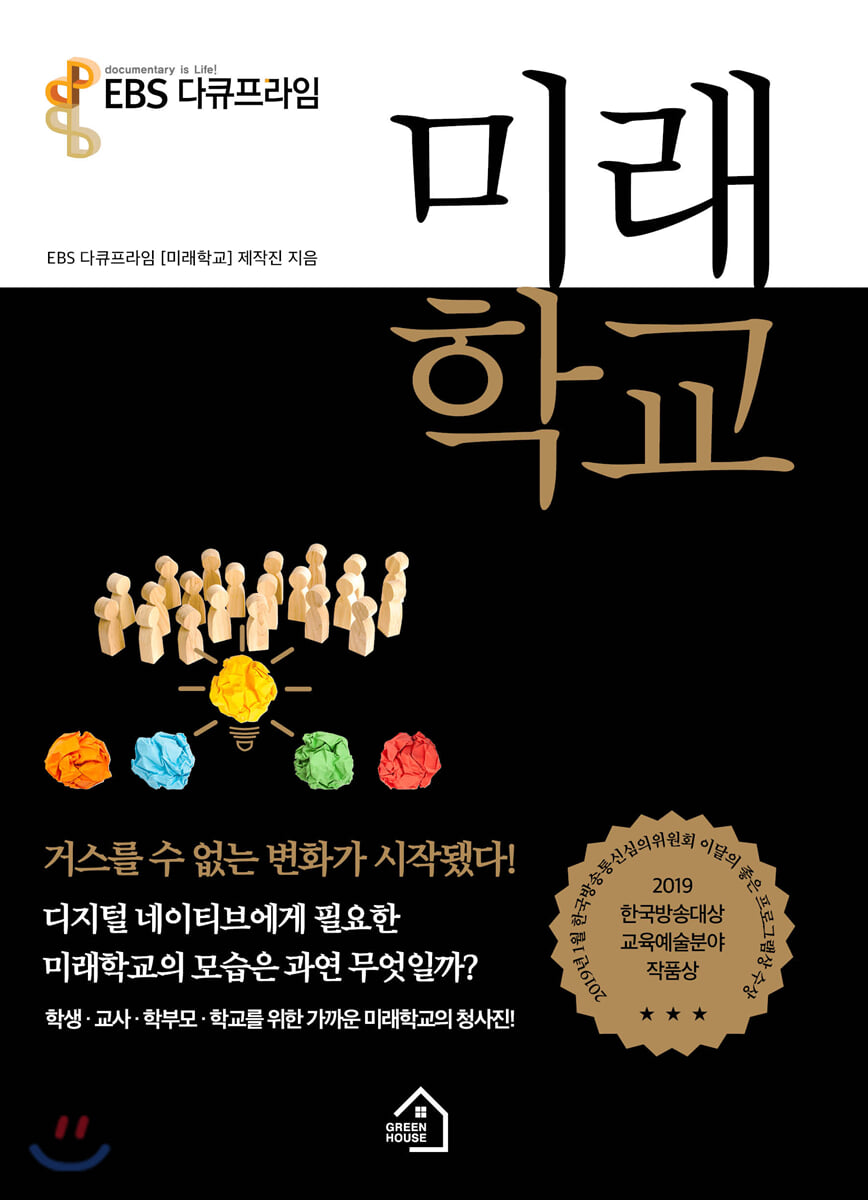
An irreversible change has begun!
Presenting a blueprint for the near future of schools for students, teachers, parents, and schools!
The rapid development of the Internet and artificial intelligence has presented urgent challenges to the education sector.
What will the future school of 2030 look like? What educational methods are appropriate for the digital natives who will usher in a new era? Twelve students from four countries, who use computers and smartphones as their native language, gathered for a two-week experience at a future school based on ICT.
Through this, we glimpse the experimental future school for digital natives who will live alongside AI. We also reflect on the meaning of education in this new era and consider what educational methods are best suited for future generations. What meaning will education have in a hyper-connected society driven by advanced IT?
"Future School_Open, Change, Think" was a journey into the future with students from four countries: Korea, Singapore, India, and Norway.
This was an attempt to incorporate the characteristics, scale, and education of schools predicted by the OECD in the near future, the 2030s, into educational methods that scholars have long studied.
Through this experiment, children's attachment to school and learning grew stronger.
I also had the opportunity to choose one of the performance evaluation items that I had previously felt was difficult - creativity, collaboration, communication, and self-directedness (metacognition) - and make it my strength.
Rather than simply solving math problems quickly and accurately, the children tried different approaches, listened to others before insisting on their own opinions, and realized that collaborating with their peers produced better results.
Presenting a blueprint for the near future of schools for students, teachers, parents, and schools!
The rapid development of the Internet and artificial intelligence has presented urgent challenges to the education sector.
What will the future school of 2030 look like? What educational methods are appropriate for the digital natives who will usher in a new era? Twelve students from four countries, who use computers and smartphones as their native language, gathered for a two-week experience at a future school based on ICT.
Through this, we glimpse the experimental future school for digital natives who will live alongside AI. We also reflect on the meaning of education in this new era and consider what educational methods are best suited for future generations. What meaning will education have in a hyper-connected society driven by advanced IT?
"Future School_Open, Change, Think" was a journey into the future with students from four countries: Korea, Singapore, India, and Norway.
This was an attempt to incorporate the characteristics, scale, and education of schools predicted by the OECD in the near future, the 2030s, into educational methods that scholars have long studied.
Through this experiment, children's attachment to school and learning grew stronger.
I also had the opportunity to choose one of the performance evaluation items that I had previously felt was difficult - creativity, collaboration, communication, and self-directedness (metacognition) - and make it my strength.
Rather than simply solving math problems quickly and accurately, the children tried different approaches, listened to others before insisting on their own opinions, and realized that collaborating with their peers produced better results.
- You can preview some of the book's contents.
Preview
index
Prologue_ Changes in school are coming, slowly but boldly
PART 1 Opening the School of the Future
1 Children of the Future School
What and how will we learn in the School of the Future?
Analyzing 12 Digital Natives Through the Eyes of Future Education
Parents don't know about their child's future capabilities
Future, why does my child go to school?
2 The school bell rings
Drawing a blueprint for the school of the future
Becoming a teacher at the school of the future
Future School Schedule - Beyond Subjects
What's Gone from Future Schools: Internet Restrictions and Paper Textbooks
What are exams for future students?
PART 2: Changing the School of the Future
1. Prepare for the future, reject lump-sum education.
Math Class - Other Reasons Why Kids Are Distracted
A Misguided Approach to Future Math - How Much Help Are Private Tutoring and Pre-Teaching?
Are there any side effects to pre-learning at future schools? - Future education that sees the forest.
Future Math Customized Education
Customized Math Education: Collaboration Between AI and Human Teachers
2 Pre-learning zero setting? Information
Misconceptions and Truths Surrounding Coding
Zero Prerequisite Learning - What Happened in Coding Class
Changes in Coding Classes: The True Colors of Digital Natives
What Happened in Coding Class - What's the Secret Behind the Math Poor, Coding Achiever?
3. Classroom Design in the Digital Age? Science
Classes that add the effectiveness of cutting-edge devices
Questions and Metacognition
4 Future Schools: Breaking Down Classroom Boundaries? Society
Standing at the center of convergence education
Facing the Reality Beyond the Textbook
Future capabilities are not determined by grades.
Killing Two Birds: Cooperation and Communication
PART 3: Thinking about the School of the Future
1 Teachers of the Future School
Role reversal: students standing at the podium
Classes taught by AI and designed by human teachers
2 Designing a Test
Future Schools: Exams Disappear
My child's future capabilities assessed by AI
Drawing a map to go further together
Testing to assess future capabilities is fun.
All students achieved the goals set by the Future School.
The Secret of Class-Free Time
3 Future Schools: What Digital Natives Have Revealed
A look into children's brains with mind maps
Misconceptions and Truths About Creativity
The Future of Schools as Seen by Digital Natives
Flipped Report Card, Honor Student at Future School
I'm a left-brained kid, I'm a right-brained kid
What is a test for digital natives?
4 Future School's Final Task
2030: Finding Children's Problems
2030: A Glimpse into the Future Children Will Create
2030: Embracing the Future's Report Card
Tasks left by teachers at the Future School
Designing the World's Future Classrooms
Future School After that, go back and move forward
PART 4 Preparing for Future School Admission_Parents
1 Will you be a parent of the future or a parent of the past?
Fostering Creativity at Home, According to Future School Teachers
Future competencies—communication and collaboration—are nurtured at home.
2 Understanding the Digital Native Ecosystem
Digital Immigrants Meet Digital Natives
How much and how much unavoidable internet exposure should we allow?
How Much Should Parents Understand Their Child's Foreign Language, Coding?
Digital Natives' Hyper-Spatial Learning Method
3 A peek at the future school schedule
A good school of the future
Deciphering the Future School's Schedule
Epilogue_ Imagine the world in which the children who will create the future will live.
PART 1 Opening the School of the Future
1 Children of the Future School
What and how will we learn in the School of the Future?
Analyzing 12 Digital Natives Through the Eyes of Future Education
Parents don't know about their child's future capabilities
Future, why does my child go to school?
2 The school bell rings
Drawing a blueprint for the school of the future
Becoming a teacher at the school of the future
Future School Schedule - Beyond Subjects
What's Gone from Future Schools: Internet Restrictions and Paper Textbooks
What are exams for future students?
PART 2: Changing the School of the Future
1. Prepare for the future, reject lump-sum education.
Math Class - Other Reasons Why Kids Are Distracted
A Misguided Approach to Future Math - How Much Help Are Private Tutoring and Pre-Teaching?
Are there any side effects to pre-learning at future schools? - Future education that sees the forest.
Future Math Customized Education
Customized Math Education: Collaboration Between AI and Human Teachers
2 Pre-learning zero setting? Information
Misconceptions and Truths Surrounding Coding
Zero Prerequisite Learning - What Happened in Coding Class
Changes in Coding Classes: The True Colors of Digital Natives
What Happened in Coding Class - What's the Secret Behind the Math Poor, Coding Achiever?
3. Classroom Design in the Digital Age? Science
Classes that add the effectiveness of cutting-edge devices
Questions and Metacognition
4 Future Schools: Breaking Down Classroom Boundaries? Society
Standing at the center of convergence education
Facing the Reality Beyond the Textbook
Future capabilities are not determined by grades.
Killing Two Birds: Cooperation and Communication
PART 3: Thinking about the School of the Future
1 Teachers of the Future School
Role reversal: students standing at the podium
Classes taught by AI and designed by human teachers
2 Designing a Test
Future Schools: Exams Disappear
My child's future capabilities assessed by AI
Drawing a map to go further together
Testing to assess future capabilities is fun.
All students achieved the goals set by the Future School.
The Secret of Class-Free Time
3 Future Schools: What Digital Natives Have Revealed
A look into children's brains with mind maps
Misconceptions and Truths About Creativity
The Future of Schools as Seen by Digital Natives
Flipped Report Card, Honor Student at Future School
I'm a left-brained kid, I'm a right-brained kid
What is a test for digital natives?
4 Future School's Final Task
2030: Finding Children's Problems
2030: A Glimpse into the Future Children Will Create
2030: Embracing the Future's Report Card
Tasks left by teachers at the Future School
Designing the World's Future Classrooms
Future School After that, go back and move forward
PART 4 Preparing for Future School Admission_Parents
1 Will you be a parent of the future or a parent of the past?
Fostering Creativity at Home, According to Future School Teachers
Future competencies—communication and collaboration—are nurtured at home.
2 Understanding the Digital Native Ecosystem
Digital Immigrants Meet Digital Natives
How much and how much unavoidable internet exposure should we allow?
How Much Should Parents Understand Their Child's Foreign Language, Coding?
Digital Natives' Hyper-Spatial Learning Method
3 A peek at the future school schedule
A good school of the future
Deciphering the Future School's Schedule
Epilogue_ Imagine the world in which the children who will create the future will live.
Detailed image
Publisher's Review
There is a movement arising that education must also change to keep pace with the rapidly changing society.
What kind of change should we make and how?
We examine the changes experienced by students at the Future School and take a look at the global educational landscape as it moves toward the future.
An irreversible change has begun!
Presenting a blueprint for the near future of schools for students, teachers, parents, and schools!
The rapid development of the Internet and artificial intelligence has presented urgent challenges to the education sector.
What will the future school of 2030 look like, and what educational methods are appropriate for the digital natives who will usher in a new era?
Twelve students from four countries, all of whom use computers and smartphones as their native language, gathered for a two-week experience at a future school based on ICT.
Through this, we get a glimpse into the experimental future school for digital natives who will live alongside artificial intelligence, consider the meaning of education in this new era, and consider what kind of educational method is right for the future generation.
What does education mean in a hyper-connected society driven by IT advancements?
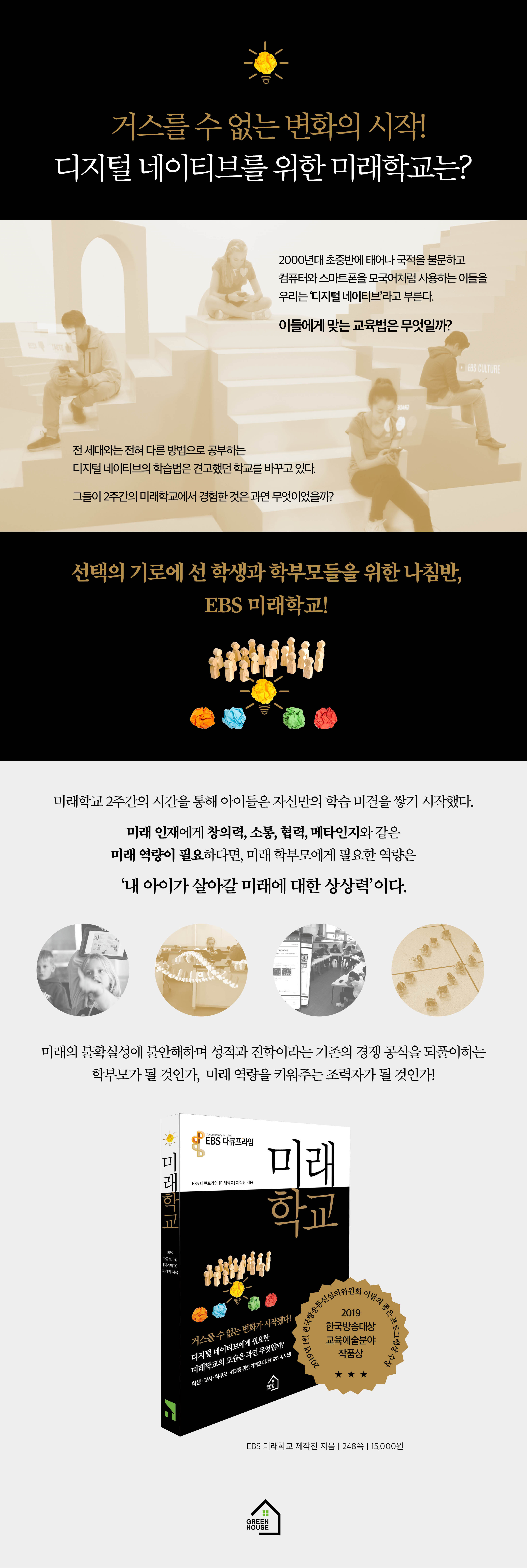
We call those born in the early to mid-2000s, regardless of nationality, who use computers and smartphones as if they were their native language, 'digital natives.'
In a society where high-speed internet allows learning anywhere, outside of the confines of school, digital natives rely on the internet for everything from information acquisition and synthesis to presentation.
Digital natives, who study in a completely different way than previous generations, are changing the rigid school system.
In the Future School, classes were designed to strengthen future capabilities rather than simply impart knowledge. Learning was conducted through collaboration rather than competition, thought expansion and application rather than mere memorization, and communication.
Following the assessment, which included step-by-step assignments requiring students to understand and apply the course content, classes were held to maximize students' creativity and collaboration.
"Future School_Open, Change, Think" was a journey into the future with students from four countries: Korea, Singapore, India, and Norway.
This was an attempt to incorporate the characteristics, scale, and education of schools predicted by the OECD in the near future, the 2030s, into educational methods that scholars have long studied.
Through this experiment, children's attachment to school and learning grew stronger.
I also had the opportunity to choose one of the performance evaluation items that I had previously felt was difficult - creativity, collaboration, communication, and self-directedness (metacognition) - and make it my strength.
Rather than simply solving math problems quickly and accurately, the children tried different approaches, listened to others before insisting on their own opinions, and realized that collaborating with their peers produced better results.
This is precisely the condition of future talent that the Future School wanted to show children.
What the children realized most during that process was that the introduction of cutting-edge technologies like AI and AR does not automatically develop future capabilities. It was a valuable experience that they could spread their wings of creativity, cooperation, and communication only when they could freely exchange opinions with friends, when their seemingly immature ideas were respected, and when trial and error was recognized as a learning process and given the opportunity to challenge again.
Additionally, we want to convey the message to parents that 'there are many opportunities in the future.'
We cannot easily predict or choose future changes on our own.
I hope that the two-week experiment presented by EBS's [Future School] will serve as an absolutely essential compass for students and parents currently at a crossroads.
What kind of change should we make and how?
We examine the changes experienced by students at the Future School and take a look at the global educational landscape as it moves toward the future.
An irreversible change has begun!
Presenting a blueprint for the near future of schools for students, teachers, parents, and schools!
The rapid development of the Internet and artificial intelligence has presented urgent challenges to the education sector.
What will the future school of 2030 look like, and what educational methods are appropriate for the digital natives who will usher in a new era?
Twelve students from four countries, all of whom use computers and smartphones as their native language, gathered for a two-week experience at a future school based on ICT.
Through this, we get a glimpse into the experimental future school for digital natives who will live alongside artificial intelligence, consider the meaning of education in this new era, and consider what kind of educational method is right for the future generation.
What does education mean in a hyper-connected society driven by IT advancements?
We call those born in the early to mid-2000s, regardless of nationality, who use computers and smartphones as if they were their native language, 'digital natives.'
In a society where high-speed internet allows learning anywhere, outside of the confines of school, digital natives rely on the internet for everything from information acquisition and synthesis to presentation.
Digital natives, who study in a completely different way than previous generations, are changing the rigid school system.
In the Future School, classes were designed to strengthen future capabilities rather than simply impart knowledge. Learning was conducted through collaboration rather than competition, thought expansion and application rather than mere memorization, and communication.
Following the assessment, which included step-by-step assignments requiring students to understand and apply the course content, classes were held to maximize students' creativity and collaboration.
"Future School_Open, Change, Think" was a journey into the future with students from four countries: Korea, Singapore, India, and Norway.
This was an attempt to incorporate the characteristics, scale, and education of schools predicted by the OECD in the near future, the 2030s, into educational methods that scholars have long studied.
Through this experiment, children's attachment to school and learning grew stronger.
I also had the opportunity to choose one of the performance evaluation items that I had previously felt was difficult - creativity, collaboration, communication, and self-directedness (metacognition) - and make it my strength.
Rather than simply solving math problems quickly and accurately, the children tried different approaches, listened to others before insisting on their own opinions, and realized that collaborating with their peers produced better results.
This is precisely the condition of future talent that the Future School wanted to show children.
What the children realized most during that process was that the introduction of cutting-edge technologies like AI and AR does not automatically develop future capabilities. It was a valuable experience that they could spread their wings of creativity, cooperation, and communication only when they could freely exchange opinions with friends, when their seemingly immature ideas were respected, and when trial and error was recognized as a learning process and given the opportunity to challenge again.
Additionally, we want to convey the message to parents that 'there are many opportunities in the future.'
We cannot easily predict or choose future changes on our own.
I hope that the two-week experiment presented by EBS's [Future School] will serve as an absolutely essential compass for students and parents currently at a crossroads.
GOODS SPECIFICS
- Date of publication: October 25, 2019
- Page count, weight, size: 248 pages | 432g | 152*210*16mm
- ISBN13: 9791196680497
- ISBN10: 1196680493
You may also like
카테고리
korean


korean

![GQ KOREA Mark (Monthly): December [2025]](http://librairie.coreenne.fr/cdn/shop/files/8ef265dbbfbf186523ed75ba7319009d.jpg?v=1765340328&width=3840)


