

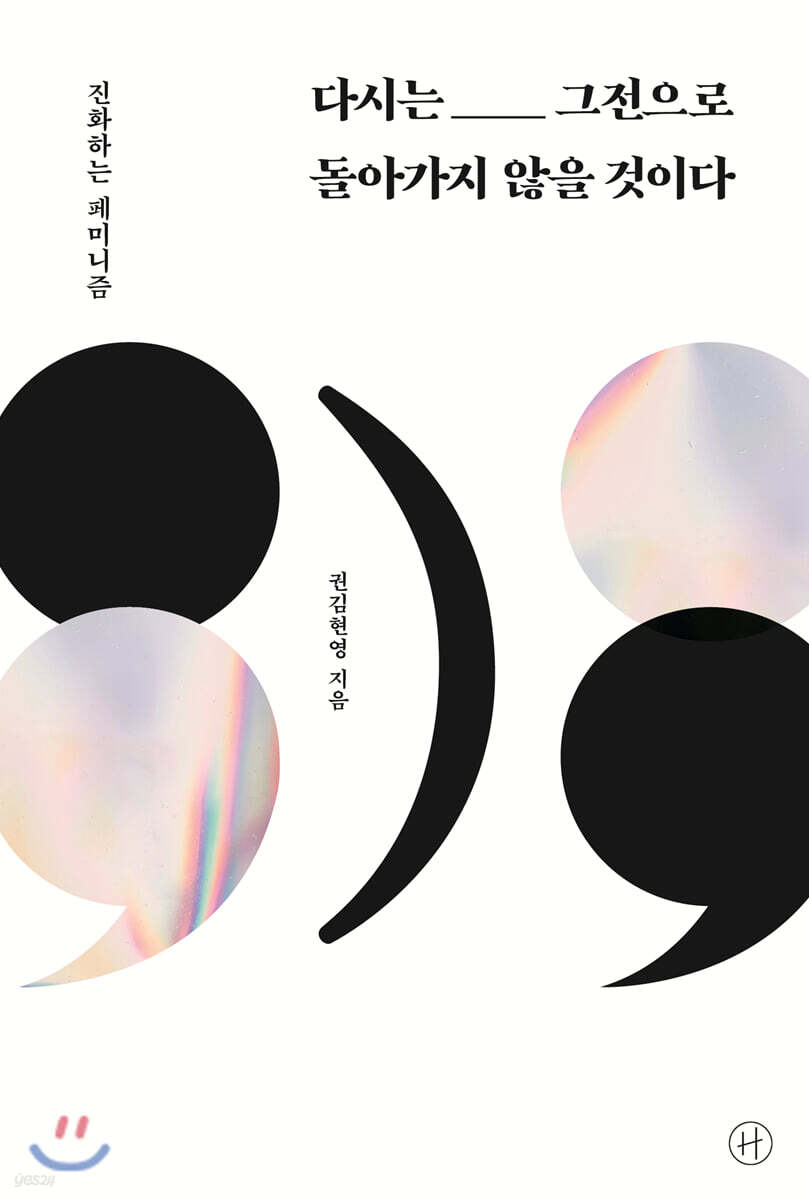
I will never go back to the way it was before
 |
Description
Book Introduction
Feminist Kwon Kim Hyun-young, who always talks about the here and now, has written her first solo book!
What he learned while living as a feminist in Korea
The first solo book by Kwon Kim Hyun-young, a feminist researcher and activist who has written, lectured, and worked in solidarity with women for over 20 years.
We look back on the here and now through the unfamiliar yet poignant gaze of a feminist.
From the soybean paste girl and the dog poop girl to the Gangnam Station murder case, the controversy over "Kim Ji-young, Born 1982," the Me Too movement, and the Burning Sun club incident, his voice, which speaks on various gender issues in Korean society, has the power to question the "obvious world" and change it.
In his book, “I Will Never Go Back,” he states firmly:
The world is changing, and we are evolving to the point where we will never return to the male-dominated society we used to have.
What he learned while living as a feminist in Korea
The first solo book by Kwon Kim Hyun-young, a feminist researcher and activist who has written, lectured, and worked in solidarity with women for over 20 years.
We look back on the here and now through the unfamiliar yet poignant gaze of a feminist.
From the soybean paste girl and the dog poop girl to the Gangnam Station murder case, the controversy over "Kim Ji-young, Born 1982," the Me Too movement, and the Burning Sun club incident, his voice, which speaks on various gender issues in Korean society, has the power to question the "obvious world" and change it.
In his book, “I Will Never Go Back,” he states firmly:
The world is changing, and we are evolving to the point where we will never return to the male-dominated society we used to have.
- You can preview some of the book's contents.
Preview
index
Introduction: Evolving Soul, Evolving Feminism
Chapter 1 I Decided Not to Tell Who I Am
After locking eyes│I decided not to tell who I am│Running race│Why we share parents' surnames│Dad has to step in│That's not good intentions│There is no way to break up like a woman│Courtesy to everyone's life│Men who know everything│Britney Spears, the double command given to that woman│Who brought down Park Kyung-won│The way to depict women's friendship
Chapter 2 We have no choice but to write and write again.
To say it's this picky and sensitive│The courage to know│What is discussion│We have no choice but to write and write│What family love alone cannot do│Dignified taste│Captain, my captain│Not a debt or a burden│Revolution and forced labor│Why women's rights│"Don't look down on 18-year-olds"│We need more female politicians
Chapter 3: Dystopia of Victims and Perpetrators
The questions that 『Kim Ji-young, Born 1982』 poses to our society│Women also need power│There is no reverse discrimination│How much is everyone getting paid│North Korean women in South Korean films│A family-like atmosphere│Dystopia of victimization and perpetrators│From the privilege of ignorance to revolutionary honesty│Deep massage│A woman's brain, a man's brain│Did you enjoy harassing the shit girl│The day we lost faith that the police would protect us│Calling names accurately and asking questions properly
Chapter 4: Questioning Too Easy Empathy
What makes us human?│When the death of another enters my life│When I am more hurt by the pain of another│The attitude that one who hears the pain of another should have│I doubt too easy empathy│There is no way I didn't know│The wings and claws of victimization│"My life is not your porn"│The victim of Yang Jin-ho's assault knew│Ahn Hee-jung and the court are guilty│Gender sensitivity and two dots│She did not fall in love with your husband│The legacy of Yang Hyun-suk and the YG family│The lost 10 years after the Jang Ja-yeon incident
Chapter 5: A Woman Can Be Anything
No Democracy Without Feminism│Can Homosexuals Represent the People?│The Struggle for the Meaning of "Speaking"│Megalia, Mirroring, and Political Correctness│Feminist Practice Begins with Not Laughing│How to Survive in the Age of Backlash│What Excesses and Obsessions—The Internet, Pornography, and Male Sexuality│Chemical Castration? Nothing Castrates│Women Can Be Anything
main
Source of article
Chapter 1 I Decided Not to Tell Who I Am
After locking eyes│I decided not to tell who I am│Running race│Why we share parents' surnames│Dad has to step in│That's not good intentions│There is no way to break up like a woman│Courtesy to everyone's life│Men who know everything│Britney Spears, the double command given to that woman│Who brought down Park Kyung-won│The way to depict women's friendship
Chapter 2 We have no choice but to write and write again.
To say it's this picky and sensitive│The courage to know│What is discussion│We have no choice but to write and write│What family love alone cannot do│Dignified taste│Captain, my captain│Not a debt or a burden│Revolution and forced labor│Why women's rights│"Don't look down on 18-year-olds"│We need more female politicians
Chapter 3: Dystopia of Victims and Perpetrators
The questions that 『Kim Ji-young, Born 1982』 poses to our society│Women also need power│There is no reverse discrimination│How much is everyone getting paid│North Korean women in South Korean films│A family-like atmosphere│Dystopia of victimization and perpetrators│From the privilege of ignorance to revolutionary honesty│Deep massage│A woman's brain, a man's brain│Did you enjoy harassing the shit girl│The day we lost faith that the police would protect us│Calling names accurately and asking questions properly
Chapter 4: Questioning Too Easy Empathy
What makes us human?│When the death of another enters my life│When I am more hurt by the pain of another│The attitude that one who hears the pain of another should have│I doubt too easy empathy│There is no way I didn't know│The wings and claws of victimization│"My life is not your porn"│The victim of Yang Jin-ho's assault knew│Ahn Hee-jung and the court are guilty│Gender sensitivity and two dots│She did not fall in love with your husband│The legacy of Yang Hyun-suk and the YG family│The lost 10 years after the Jang Ja-yeon incident
Chapter 5: A Woman Can Be Anything
No Democracy Without Feminism│Can Homosexuals Represent the People?│The Struggle for the Meaning of "Speaking"│Megalia, Mirroring, and Political Correctness│Feminist Practice Begins with Not Laughing│How to Survive in the Age of Backlash│What Excesses and Obsessions—The Internet, Pornography, and Male Sexuality│Chemical Castration? Nothing Castrates│Women Can Be Anything
main
Source of article
Detailed image
Publisher's Review
1.
"What disappeared wasn't gender discrimination, but the voices that acknowledged it."
Hear the voice of Kwon Kim Hyun-young, a feminist who fights with knowledge.
Since 2015, when feminism experienced a resurgence, countless women have begun to see the world differently.
Feminist books became bestsellers in bookstores, feminist lectures, large and small, continued, and a movement to remove the corset, rejecting women's decorative labor, took place.
However, this situation did not come about suddenly one day without any background.
In Korean society, where discrimination and violence against women are sometimes perpetrated covertly and sometimes openly, there have been those who have consistently spoken out about this, raised issues, and fought alongside the victims.
The revival of feminism was possible precisely because there were feminists who were active in the past and are still active today.
And among them is the name of feminist researcher and activist Kwon Kim Hyun-young.
He is a representative feminist in our society who has been sharply observing and harshly criticizing women's issues in Korea for the past 20 years.
Believing that feminism must be a combination of ideology and practice, I researched and lectured on feminism, planned and published books with fellow feminists, and fought against perpetrators by standing by victims of sexual violence.
From the 1990s to the early 2000s, when violence against women became a social issue and feminism was actively discussed; around 2010, when feminism was dismissed as a cliché with the claim that “structural gender discrimination has disappeared”; and up to the present, when the female public revived feminism from the brink of death through the Feminist Declaration, he has always voiced his own unique voice in the “here and now” where women’s issues arise.
This book, a compilation of articles contributed to various media from 2003 to the present that vividly illustrate the reality of "evolving feminism," is a valuable achievement obtained in the process.
2.
“It’s not about being picky or sensitive, but about asking what’s right.”
- The world you can only see when you have feminist eyes
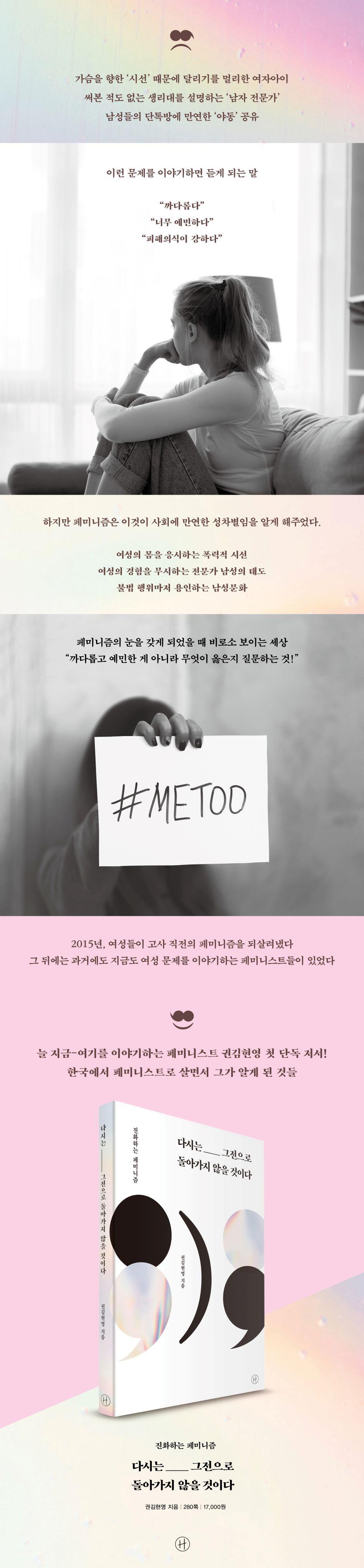
What does Korean society look like through the eyes of a feminist? The author, who loved running as a child, was unable to enjoy it for fear of being teased by boys for her trembling breasts.
When the controversy over the harmful effects of disposable sanitary pads arose, a news program featured a male vice president of a broadcasting company and a male chemistry professor discussing the structure and wearing method of sanitary pads, which were never seen before.
In group chats where men gather, illegally filmed sex videos are shared without much concern.
When people questioned and raised issues about these things, they simply said he was overly sensitive, picky, and had a victim mentality.
But feminism made us realize that this is gender discrimination and sexual violence that is rampant in Korean society.
It provided an unfamiliar perspective on the problem of male culture that tolerates even illegal acts as instinct, not just the violent gaze that stares at women's bodies, but the attitude of 'expert' men who ignore women's experiences and try to teach them.
Feminism also gave us a voice to discuss why male-centered culture is problematic, what kind of discrimination and violence women experience within it, and how to criticize and change it.
To question the discrimination and violence against women on a daily basis, to analyze the social and structural causes behind it, and to write and talk about it.
This is the everyday shift in thinking, speaking, and writing that feminism brings us.
Then, I suddenly remembered what the kid had said about my heart fluttering, and I felt my heart, which I hadn't even realized existed before, fluttering violently.
It seemed like all the laughing children were talking about their hearts.
While I was stretching my t-shirt with my hands to keep my shaking chest from being seen by anyone, my opponent had already crossed the finish line.
From that day on, I was obsessed with finding ways to support my chest, which was larger than my peers, and as a result, I gradually lost the enjoyment of running itself.
The difficulties women face when participating in physical activities are not unique to their experience.
It was much later that I realized that what stopped me at the time was not my shaking heart, but the gaze looking at it.
A woman's body is 'still' a battlefield.
The only difference is that women are increasingly choosing resistance and solidarity rather than giving up or overcoming.
- From "Running Competition" (pp. 27-28)
This part was really interesting. The male vice president of a broadcasting company and a male chemistry professor had a conversation about the harmful effects of sanitary pads.
The story these two told is something most women know.
A chemistry professor, who took apart disposable sanitary pads for the first time for research, explained the structure of the pads in detail and released an "expert opinion" that the Korea Centers for Disease Control and Prevention should step in and teach people how to use them.
If you use disposable sanitary pads about 100 times a year, you will know where the adhesive is, how to attach the wings, and how often to replace the pad.
(Omitted) Why did health officials and male experts grab the microphone even for things they didn't know about?
I wonder if it's because I'm so used to holding the microphone that I think I know everything, and I've even gotten to the point where I'm trying to teach her how to put on a sanitary pad.
Let me emphasize again that what you're just now finding out is something that we, who have been using sanitary pads, already knew.
- From "Men Who Know Everything" (pp. 45-46)
I also wanted to be someone who wasn't afraid to be strong like him and who acknowledged their weaknesses.
I just wanted to be someone who could live in this world with the sole purpose of knowing.
I wanted to be someone who discovered beauty outside of the options and reinvented the world.
And the closest name to that person to me was feminist.
To me, a feminist is not someone who has experienced discrimination and violence, but someone who has the language to interpret their experiences and who does not give up on the will to know.
I think a feminist is not someone who claims to be right, but someone who questions what is right.
- From "Introductory Remarks" (page 8)
3.
Feminism is a vessel that captures the changing trajectories of women.
- A look back at major gender issues in Korea since 2000
What impact has feminism had on Korean society? What are the major women's issues discussed in Korean society over the past 20 years? How have the lives of Korean women changed during that time? The diverse gender issues covered in this book—including the "Doenjangnyeo" and "Gaedongnyeo" controversies, the Jang Ja-yeon case, the Megalia controversy, the Gangnam Station murder, the "Kim Ji-young, Born 1982" controversy, the #MeToo movement, and the Burning Sun scandal—provide a comprehensive overview of the history of Korean feminism since 2000.
Meanwhile, women's socioeconomic conditions have improved somewhat, and feminism is once again influencing every aspect of women's lives.
At the same time, some debates have been repetitive without progress, social awareness of inequality has regressed, and feminism has entered an era of backlash, facing collective attacks.
What does the future of Korean feminism look like? It's difficult to say for sure.
But what is clear is that Kwon Kim Hyun-young's voice, once unfamiliar and then considered trite, has now become common sense.
So, perhaps we can also catch a glimpse of the future of feminism in his voice, which always fiercely thinks about women in the 'here and now.'
Feminism is always being asked to prove its worth.
The reality surrounding women is so tiresomely similar that the simplest way to demonstrate the usefulness of feminism is to collect and present evidence of the harm done.
But as a result, women were portrayed as unevolving beings.
But over the past 100 years, women's lives have changed more dramatically than any social revolution.
Feminism should be a vessel that captures the trajectory of women's transformation, not a tool that only remembers the heroic stories of a few exceptional women.
This book contains the process, the journey of thought.
- From "Introductory Remarks" (pages 8-9)
"What disappeared wasn't gender discrimination, but the voices that acknowledged it."
Hear the voice of Kwon Kim Hyun-young, a feminist who fights with knowledge.
Since 2015, when feminism experienced a resurgence, countless women have begun to see the world differently.
Feminist books became bestsellers in bookstores, feminist lectures, large and small, continued, and a movement to remove the corset, rejecting women's decorative labor, took place.
However, this situation did not come about suddenly one day without any background.
In Korean society, where discrimination and violence against women are sometimes perpetrated covertly and sometimes openly, there have been those who have consistently spoken out about this, raised issues, and fought alongside the victims.
The revival of feminism was possible precisely because there were feminists who were active in the past and are still active today.
And among them is the name of feminist researcher and activist Kwon Kim Hyun-young.
He is a representative feminist in our society who has been sharply observing and harshly criticizing women's issues in Korea for the past 20 years.
Believing that feminism must be a combination of ideology and practice, I researched and lectured on feminism, planned and published books with fellow feminists, and fought against perpetrators by standing by victims of sexual violence.
From the 1990s to the early 2000s, when violence against women became a social issue and feminism was actively discussed; around 2010, when feminism was dismissed as a cliché with the claim that “structural gender discrimination has disappeared”; and up to the present, when the female public revived feminism from the brink of death through the Feminist Declaration, he has always voiced his own unique voice in the “here and now” where women’s issues arise.
This book, a compilation of articles contributed to various media from 2003 to the present that vividly illustrate the reality of "evolving feminism," is a valuable achievement obtained in the process.
2.
“It’s not about being picky or sensitive, but about asking what’s right.”
- The world you can only see when you have feminist eyes
What does Korean society look like through the eyes of a feminist? The author, who loved running as a child, was unable to enjoy it for fear of being teased by boys for her trembling breasts.
When the controversy over the harmful effects of disposable sanitary pads arose, a news program featured a male vice president of a broadcasting company and a male chemistry professor discussing the structure and wearing method of sanitary pads, which were never seen before.
In group chats where men gather, illegally filmed sex videos are shared without much concern.
When people questioned and raised issues about these things, they simply said he was overly sensitive, picky, and had a victim mentality.
But feminism made us realize that this is gender discrimination and sexual violence that is rampant in Korean society.
It provided an unfamiliar perspective on the problem of male culture that tolerates even illegal acts as instinct, not just the violent gaze that stares at women's bodies, but the attitude of 'expert' men who ignore women's experiences and try to teach them.
Feminism also gave us a voice to discuss why male-centered culture is problematic, what kind of discrimination and violence women experience within it, and how to criticize and change it.
To question the discrimination and violence against women on a daily basis, to analyze the social and structural causes behind it, and to write and talk about it.
This is the everyday shift in thinking, speaking, and writing that feminism brings us.
Then, I suddenly remembered what the kid had said about my heart fluttering, and I felt my heart, which I hadn't even realized existed before, fluttering violently.
It seemed like all the laughing children were talking about their hearts.
While I was stretching my t-shirt with my hands to keep my shaking chest from being seen by anyone, my opponent had already crossed the finish line.
From that day on, I was obsessed with finding ways to support my chest, which was larger than my peers, and as a result, I gradually lost the enjoyment of running itself.
The difficulties women face when participating in physical activities are not unique to their experience.
It was much later that I realized that what stopped me at the time was not my shaking heart, but the gaze looking at it.
A woman's body is 'still' a battlefield.
The only difference is that women are increasingly choosing resistance and solidarity rather than giving up or overcoming.
- From "Running Competition" (pp. 27-28)
This part was really interesting. The male vice president of a broadcasting company and a male chemistry professor had a conversation about the harmful effects of sanitary pads.
The story these two told is something most women know.
A chemistry professor, who took apart disposable sanitary pads for the first time for research, explained the structure of the pads in detail and released an "expert opinion" that the Korea Centers for Disease Control and Prevention should step in and teach people how to use them.
If you use disposable sanitary pads about 100 times a year, you will know where the adhesive is, how to attach the wings, and how often to replace the pad.
(Omitted) Why did health officials and male experts grab the microphone even for things they didn't know about?
I wonder if it's because I'm so used to holding the microphone that I think I know everything, and I've even gotten to the point where I'm trying to teach her how to put on a sanitary pad.
Let me emphasize again that what you're just now finding out is something that we, who have been using sanitary pads, already knew.
- From "Men Who Know Everything" (pp. 45-46)
I also wanted to be someone who wasn't afraid to be strong like him and who acknowledged their weaknesses.
I just wanted to be someone who could live in this world with the sole purpose of knowing.
I wanted to be someone who discovered beauty outside of the options and reinvented the world.
And the closest name to that person to me was feminist.
To me, a feminist is not someone who has experienced discrimination and violence, but someone who has the language to interpret their experiences and who does not give up on the will to know.
I think a feminist is not someone who claims to be right, but someone who questions what is right.
- From "Introductory Remarks" (page 8)
3.
Feminism is a vessel that captures the changing trajectories of women.
- A look back at major gender issues in Korea since 2000
What impact has feminism had on Korean society? What are the major women's issues discussed in Korean society over the past 20 years? How have the lives of Korean women changed during that time? The diverse gender issues covered in this book—including the "Doenjangnyeo" and "Gaedongnyeo" controversies, the Jang Ja-yeon case, the Megalia controversy, the Gangnam Station murder, the "Kim Ji-young, Born 1982" controversy, the #MeToo movement, and the Burning Sun scandal—provide a comprehensive overview of the history of Korean feminism since 2000.
Meanwhile, women's socioeconomic conditions have improved somewhat, and feminism is once again influencing every aspect of women's lives.
At the same time, some debates have been repetitive without progress, social awareness of inequality has regressed, and feminism has entered an era of backlash, facing collective attacks.
What does the future of Korean feminism look like? It's difficult to say for sure.
But what is clear is that Kwon Kim Hyun-young's voice, once unfamiliar and then considered trite, has now become common sense.
So, perhaps we can also catch a glimpse of the future of feminism in his voice, which always fiercely thinks about women in the 'here and now.'
Feminism is always being asked to prove its worth.
The reality surrounding women is so tiresomely similar that the simplest way to demonstrate the usefulness of feminism is to collect and present evidence of the harm done.
But as a result, women were portrayed as unevolving beings.
But over the past 100 years, women's lives have changed more dramatically than any social revolution.
Feminism should be a vessel that captures the trajectory of women's transformation, not a tool that only remembers the heroic stories of a few exceptional women.
This book contains the process, the journey of thought.
- From "Introductory Remarks" (pages 8-9)
GOODS SPECIFICS
- Date of publication: October 21, 2019
- Page count, weight, size: 280 pages | 364g | 135*200*16mm
- ISBN13: 9791160803020
- ISBN10: 1160803021
You may also like
카테고리
korean


korean

![GQ KOREA Mark (Monthly): December [2025]](http://librairie.coreenne.fr/cdn/shop/files/8ef265dbbfbf186523ed75ba7319009d.jpg?v=1765340328&width=3840)


