

A year abroad
 |
Description
Book Introduction
- A word from MD
-
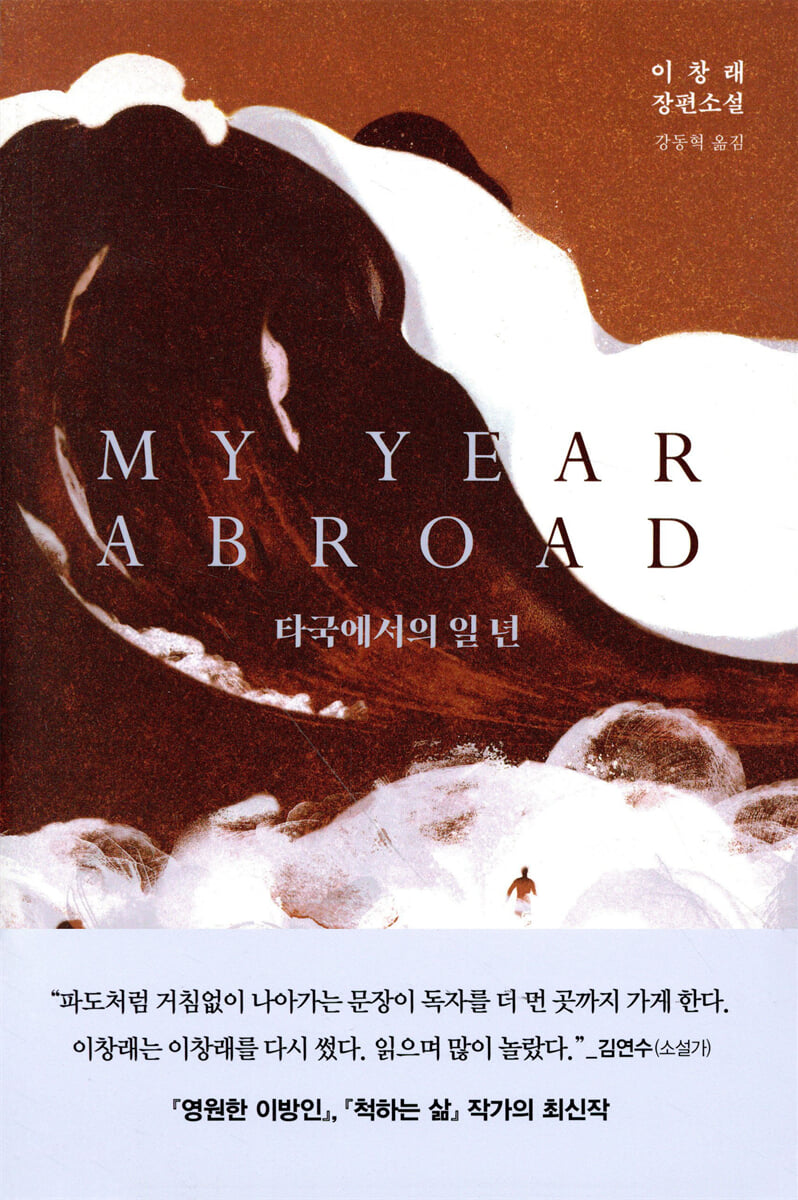
The never-ending story of the eternal strangerLee Chang-rae, a Korean-American writer and a representative writer of modern American literature since his debut with "The Eternal Stranger."
He returned after nine years with a coming-of-age novel about a young man in his 20s.
Known for his delicate sentences and excellent psychological descriptions, this novel also clearly depicts the growing pains, conflicts, and destinies of youth.
November 3, 2023. Novel/Poetry PD Kim Yu-ri
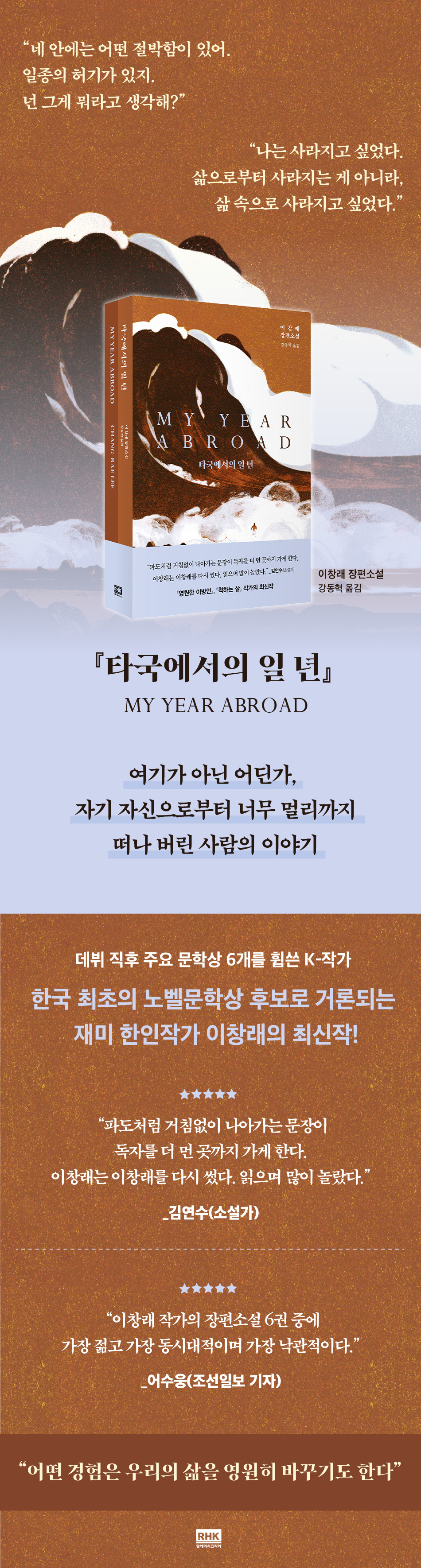
“Some experiences change our lives forever.”
He is being mentioned as the first Korean candidate for the Nobel Prize in Literature.
Korean-American writer Lee Chang-rae publishes a new work after nine years!
If you are a reader who loves foreign literature, there is a name you must not forget.
Chang-rae Lee, who debuted in 1995 with 『Native Speaker』, swept six major literary awards, including the PEN/Hemingway Award, and quickly rose to the ranks of leading American writers.
As a Korean-American writer, she was a finalist for the Pulitzer Prize, the National Society of Book Critics Award for Fiction, and the Carnegie Medal for her works such as A Gesture Life, which was written after being shocked by the tragedy of comfort women; The Surrendered, which is set during the Korean War; and On Such a Full Sea, which depicts the fantastic adventures of an immigrant girl.
Despite having published only five works over the past 30 years due to his prolific writing style, Lee Chang-rae has been consistently mentioned as a strong candidate for the Nobel Prize in Literature and has received high praise from the world's literary community. He is now meeting Korean readers with his sixth full-length novel, "My Year Abroad."
This is especially welcome news for fans who have been following author Lee Chang-rae for a long time, as it is his first new work in nine years since “On the Sea of High Tide” in 2014.
"A Year in a Foreign Land" deals with the journey of a person who feels no sense of belonging to the reality and world he belongs to, and who, drawn by a chance encounter with another person, turns his back on everything he had and sets off for a "foreign world."
Unlike his previous works, which have represented the lives and minds of immigrants through the stories of modern and contemporary Korean history, which has experienced dramatic upheaval since his debut, and the people who lived through that history, the author presents a unique narrative in this work by featuring MZ generation youth for the first time.
Through a fateful encounter that changed one's life, a year spent in a foreign land, and a grand and captivating narrative that travels across East and West, what will the author show us who remain 'here and now'?
This is a story that anyone who has ever felt the longing to escape from something, someone, or even themselves, can relate to.
He is being mentioned as the first Korean candidate for the Nobel Prize in Literature.
Korean-American writer Lee Chang-rae publishes a new work after nine years!
If you are a reader who loves foreign literature, there is a name you must not forget.
Chang-rae Lee, who debuted in 1995 with 『Native Speaker』, swept six major literary awards, including the PEN/Hemingway Award, and quickly rose to the ranks of leading American writers.
As a Korean-American writer, she was a finalist for the Pulitzer Prize, the National Society of Book Critics Award for Fiction, and the Carnegie Medal for her works such as A Gesture Life, which was written after being shocked by the tragedy of comfort women; The Surrendered, which is set during the Korean War; and On Such a Full Sea, which depicts the fantastic adventures of an immigrant girl.
Despite having published only five works over the past 30 years due to his prolific writing style, Lee Chang-rae has been consistently mentioned as a strong candidate for the Nobel Prize in Literature and has received high praise from the world's literary community. He is now meeting Korean readers with his sixth full-length novel, "My Year Abroad."
This is especially welcome news for fans who have been following author Lee Chang-rae for a long time, as it is his first new work in nine years since “On the Sea of High Tide” in 2014.
"A Year in a Foreign Land" deals with the journey of a person who feels no sense of belonging to the reality and world he belongs to, and who, drawn by a chance encounter with another person, turns his back on everything he had and sets off for a "foreign world."
Unlike his previous works, which have represented the lives and minds of immigrants through the stories of modern and contemporary Korean history, which has experienced dramatic upheaval since his debut, and the people who lived through that history, the author presents a unique narrative in this work by featuring MZ generation youth for the first time.
Through a fateful encounter that changed one's life, a year spent in a foreign land, and a grand and captivating narrative that travels across East and West, what will the author show us who remain 'here and now'?
This is a story that anyone who has ever felt the longing to escape from something, someone, or even themselves, can relate to.
- You can preview some of the book's contents.
Preview
index
A year abroad
Acknowledgements
Translator's Note
Acknowledgements
Translator's Note
Detailed image
Into the book
I took last semester off to explore as many of the tables and food and drink corners offered by the magnificent buffet called life.
I didn't realize that buffet was so accessible.
I had no idea that it was such a glorious and miserable place, so heroic and sad at the same time.
--- p.17
People often advise us to live in the moment.
They tell us not to constantly look to the future or the past, not to add it all up, but to savor the richly ripe fruit of the present.
But if you really do that, humans will stay in that moment.
Like an addict, you deceive yourself and give up.
Until all that sweetness becomes so rotten that nothing can change it.
--- p.29
It seemed like Val had to make some kind of declaration.
Even if it is a declaration to oneself in general.
A declaration that 'this is my only life, and I will live it.'
--- p.120
Like everyone's life, mine is also the story of my mother and father.
--- p.194
I felt re-aligned as Pong's loyal junior and new friend.
It seemed as if a fresh day, a clearer and more distinct day, had come to the home of my keys.
Ready to be used in an unexpectedly fun way.
If we really wanted to, aren't we all master keys?
--- p.355
Whenever I think of a place now, I always think of its scent.
I don't think that's surprising at all.
Maybe I've always done that unconsciously.
Even an ordinary place like Dunbar has a scent.
Dunbar usually smells like a cold block of butter, but not when the swarm of landscapers surrounds the town, humidifying the air with the scent of freshly cut grass and the pungent exhaust of two-stroke engines.
The smell of dusty mold, dried beer, and unwashed fleece wafting from the drawers of old oak desks at university.
As mentioned earlier, Oahu has a wide blue ocean that stretches out like the Milky Way, with a gentle breeze blowing through the filter for kilometers.
The streets of Seonjeon are filled with wet asphalt and the unbearable smell of underground sewers.
In Macau, there are the lights of overheated casinos, the smell of spilled White Russians and Nenitas, and, well, the usual smells.
All of that will remain in my memory forever.
--- p.427
I just wanted to give myself over to her.
I just wanted to be clay.
As Pong said when he was telling the story of his father's life, it was like 'dust on the heel of a shoe.'
I wanted to disappear.
I wanted to disappear into life, not disappear from it.
--- p.451
To be honest, I never wanted to scream.
I wanted to do something different.
Something that can be done for a long time.
Or to make a sound that can pierce the air for a long, long time.
--- p.454
But was this my destiny? Even if it was a more tear-jerking form? Or perhaps I wasn't so caught up in the idea that pain equals pleasure, but rather drawn to the dead end pain could lead me to, to the realm where I became indispensable, a key cog in the machine of someone's dark dreams.
I would rather belong in the darkness than belong anywhere.
--- p.463
There's a desperation in you, Tiller.
There is a kind of hunger.
What do you think it is?
--- p.467
I was just a clam stuck in the sea, swept away by the current.
It is a process of being isolated, submerged in water, and being pounded by rough waves, and then falling.
It didn't matter.
I saw, heard, felt and tasted everything.
--- p.603
I hope we can continue to plant seeds without worrying about the harvest.
May those plants flourish.
The harvest is already prepared.
The harvest is in our working the land together, in our dribbling of a basketball, in our soft, musical humming, in our vibrant eating and drinking.
And the harvest takes shape in random, lovely things, like the meringues Victor Jr. makes that stack up like Himalayan peaks, or the warm dents Belle leaves on her pillow, or the savory scent of her hair stuck deep in the flannel.
Then one day, it disappears as if it were some kind of alchemy working in reverse.
All the gold of life is scattered and becomes nothing.
Even so, I want to make myself fit for this world.
This is the world I wish was made for me.
I didn't realize that buffet was so accessible.
I had no idea that it was such a glorious and miserable place, so heroic and sad at the same time.
--- p.17
People often advise us to live in the moment.
They tell us not to constantly look to the future or the past, not to add it all up, but to savor the richly ripe fruit of the present.
But if you really do that, humans will stay in that moment.
Like an addict, you deceive yourself and give up.
Until all that sweetness becomes so rotten that nothing can change it.
--- p.29
It seemed like Val had to make some kind of declaration.
Even if it is a declaration to oneself in general.
A declaration that 'this is my only life, and I will live it.'
--- p.120
Like everyone's life, mine is also the story of my mother and father.
--- p.194
I felt re-aligned as Pong's loyal junior and new friend.
It seemed as if a fresh day, a clearer and more distinct day, had come to the home of my keys.
Ready to be used in an unexpectedly fun way.
If we really wanted to, aren't we all master keys?
--- p.355
Whenever I think of a place now, I always think of its scent.
I don't think that's surprising at all.
Maybe I've always done that unconsciously.
Even an ordinary place like Dunbar has a scent.
Dunbar usually smells like a cold block of butter, but not when the swarm of landscapers surrounds the town, humidifying the air with the scent of freshly cut grass and the pungent exhaust of two-stroke engines.
The smell of dusty mold, dried beer, and unwashed fleece wafting from the drawers of old oak desks at university.
As mentioned earlier, Oahu has a wide blue ocean that stretches out like the Milky Way, with a gentle breeze blowing through the filter for kilometers.
The streets of Seonjeon are filled with wet asphalt and the unbearable smell of underground sewers.
In Macau, there are the lights of overheated casinos, the smell of spilled White Russians and Nenitas, and, well, the usual smells.
All of that will remain in my memory forever.
--- p.427
I just wanted to give myself over to her.
I just wanted to be clay.
As Pong said when he was telling the story of his father's life, it was like 'dust on the heel of a shoe.'
I wanted to disappear.
I wanted to disappear into life, not disappear from it.
--- p.451
To be honest, I never wanted to scream.
I wanted to do something different.
Something that can be done for a long time.
Or to make a sound that can pierce the air for a long, long time.
--- p.454
But was this my destiny? Even if it was a more tear-jerking form? Or perhaps I wasn't so caught up in the idea that pain equals pleasure, but rather drawn to the dead end pain could lead me to, to the realm where I became indispensable, a key cog in the machine of someone's dark dreams.
I would rather belong in the darkness than belong anywhere.
--- p.463
There's a desperation in you, Tiller.
There is a kind of hunger.
What do you think it is?
--- p.467
I was just a clam stuck in the sea, swept away by the current.
It is a process of being isolated, submerged in water, and being pounded by rough waves, and then falling.
It didn't matter.
I saw, heard, felt and tasted everything.
--- p.603
I hope we can continue to plant seeds without worrying about the harvest.
May those plants flourish.
The harvest is already prepared.
The harvest is in our working the land together, in our dribbling of a basketball, in our soft, musical humming, in our vibrant eating and drinking.
And the harvest takes shape in random, lovely things, like the meringues Victor Jr. makes that stack up like Himalayan peaks, or the warm dents Belle leaves on her pillow, or the savory scent of her hair stuck deep in the flannel.
Then one day, it disappears as if it were some kind of alchemy working in reverse.
All the gold of life is scattered and becomes nothing.
Even so, I want to make myself fit for this world.
This is the world I wish was made for me.
--- p.687
Publisher's Review
“I wanted to disappear.
Not disappearing from life,
“I wanted to disappear into life.”
Somewhere other than here,
Too far from oneself
A novel depicting the journey of someone who has left
* The latest work by the author of 'The Eternal Stranger' and 'Pretending to Live'
* Strongly recommended by Kim Yeon-su (novelist) and Eo Su-woong (Chosun Ilbo reporter)
* [New York Times] Notable Book Selection
The protagonist of 'A Year in a Foreign Land' is Tiller Bardman, a young man in his 20s.
He describes himself as “the pure embodiment of the ‘yes’ answer,” and is a mixed-race person with a very small amount of Korean blood, making him almost indistinguishable from white.
Tiller, a native of the college town of Dunbar, wasn't as wealthy as his friends in this wealthy city, but he grew up in a relatively stable environment thanks to his father, a corporate manager.
The deprivation Tiller feels stems less from racial or economic marginality than from the experience of being abandoned by a mother who “seemed to be staring into an endless void.”
Tiller feels that his father's love, who took care of him as a single father in place of his missing mother, is abstract, and he always maintains a good line in his father-son relationship.
He was clearly in a relatively stable situation, but he was not completely rooted in where he belonged.
Like a leaf floating in still water, it would remain still as long as the water did not flow, but it would be easily retrieved if someone pulled it out.
“I would rather belong to the darkness than to belong to nowhere.” (p. 463)
“I always felt like I was in a river of incomplete things from the moment I was born.
It felt like there was a transparent ink of just being okay on me.
Some people notice it right away.
Most other people, when they finally get to know me, give me a fleeting 'Oh, I see.'
“Usually that expression was a prelude to the exit.” (p. 551)
One day, Tiller, who feels like he is both alive and dead at the same time, has no emotional attachment or sense of belonging anywhere, and a Chinese-American businessman and laboratory chemist for the giant pharmaceutical company Bader Gas appears.
Tiller describes Fong, who is wealthy, intelligent, and unlike him, experienced in every way:
“I didn’t know Pong very well, but there was a certain sincerity in his speech and movements.
I felt confident in the way he walked through the neighborhood as if it were his own backyard.
He seemed to own every crack in the terrace, every new hydrangea bloom.
“It seemed as if every single thing, not a single fluttering leaf or pebble, was mixed into the existence of the person named Pong.” (p. 65)
“I just wanted to give myself away.
As Pong said when talking about his father's life, 'like dirt on the heel of a shoe.'
I wanted to disappear.
“I wanted to disappear into life, not disappear from it.” (p. 451)
Pong also feels a subtle bond with Tiller.
And there's a desperation in you, Tiller.
There is a kind of hunger.
He asks, “What do you think that is?” and suggests that he join his colleagues on an overseas investment trip.
Wanting to get as far away from his miserable reality as possible, Tiller joins Fong on the journey without much hesitation.
Like someone jumping into the middle of a swirling sea, feeling the urge to ride the waves without even knowing where they are going, surrendering themselves completely.
And their journey, which is somewhat suspicious and sometimes even bizarre, unfolds through the gorgeous trading cities of East Asia, such as Shenzhen, Macau, and Hong Kong in China, via Hawaii as a stopover...
To the MZ generation moving towards a new world
The story the 'master of diaspora literature' wanted to tell
Lee Chang-rae, who, along with Lee Min-jin, the author of the million-seller "Pachinko," is considered one of the two great mountains that led the 1.5 generation of Korean literature, and is also considered a master of modern Anglo-American literature, is a writer who has clashed with the world more fiercely than anyone else as a "borderline person" who cannot completely belong anywhere.
With his deep and delicate insight, beautiful and sharp writing style, and solid drama, he has been loved by readers not only in the American literary world but also around the world, to the point of being compared to Dostoevsky, Kazuo Ishiguro, and Cormac McCarthy. In this new work, he also generously displays the face of an author who constantly evolves, transcending the barriers of nationality, language, and culture.
The title of this novel, A Year in a Foreign Land, is a metaphor for our unfamiliar experiences.
This novel, which contains the anguish and confusion that youth brings, as well as the freedom that breaks down the boundaries of time and space, has a particularly strong resonance with readers of the MZ generation who are endlessly moving toward a new world in search of 'me'.
This book is also a coming-of-age novel for young people by an author who has spent a long time communicating and interacting with students on the podiums of Princeton and Stanford University.
A season when your heart floats and you want to go somewhere.
How about becoming a stranger in a completely unfamiliar novel world, following the journey led by Lee Chang-rae, a master of diaspora literature?
Not disappearing from life,
“I wanted to disappear into life.”
Somewhere other than here,
Too far from oneself
A novel depicting the journey of someone who has left
* The latest work by the author of 'The Eternal Stranger' and 'Pretending to Live'
* Strongly recommended by Kim Yeon-su (novelist) and Eo Su-woong (Chosun Ilbo reporter)
* [New York Times] Notable Book Selection
The protagonist of 'A Year in a Foreign Land' is Tiller Bardman, a young man in his 20s.
He describes himself as “the pure embodiment of the ‘yes’ answer,” and is a mixed-race person with a very small amount of Korean blood, making him almost indistinguishable from white.
Tiller, a native of the college town of Dunbar, wasn't as wealthy as his friends in this wealthy city, but he grew up in a relatively stable environment thanks to his father, a corporate manager.
The deprivation Tiller feels stems less from racial or economic marginality than from the experience of being abandoned by a mother who “seemed to be staring into an endless void.”
Tiller feels that his father's love, who took care of him as a single father in place of his missing mother, is abstract, and he always maintains a good line in his father-son relationship.
He was clearly in a relatively stable situation, but he was not completely rooted in where he belonged.
Like a leaf floating in still water, it would remain still as long as the water did not flow, but it would be easily retrieved if someone pulled it out.
“I would rather belong to the darkness than to belong to nowhere.” (p. 463)
“I always felt like I was in a river of incomplete things from the moment I was born.
It felt like there was a transparent ink of just being okay on me.
Some people notice it right away.
Most other people, when they finally get to know me, give me a fleeting 'Oh, I see.'
“Usually that expression was a prelude to the exit.” (p. 551)
One day, Tiller, who feels like he is both alive and dead at the same time, has no emotional attachment or sense of belonging anywhere, and a Chinese-American businessman and laboratory chemist for the giant pharmaceutical company Bader Gas appears.
Tiller describes Fong, who is wealthy, intelligent, and unlike him, experienced in every way:
“I didn’t know Pong very well, but there was a certain sincerity in his speech and movements.
I felt confident in the way he walked through the neighborhood as if it were his own backyard.
He seemed to own every crack in the terrace, every new hydrangea bloom.
“It seemed as if every single thing, not a single fluttering leaf or pebble, was mixed into the existence of the person named Pong.” (p. 65)
“I just wanted to give myself away.
As Pong said when talking about his father's life, 'like dirt on the heel of a shoe.'
I wanted to disappear.
“I wanted to disappear into life, not disappear from it.” (p. 451)
Pong also feels a subtle bond with Tiller.
And there's a desperation in you, Tiller.
There is a kind of hunger.
He asks, “What do you think that is?” and suggests that he join his colleagues on an overseas investment trip.
Wanting to get as far away from his miserable reality as possible, Tiller joins Fong on the journey without much hesitation.
Like someone jumping into the middle of a swirling sea, feeling the urge to ride the waves without even knowing where they are going, surrendering themselves completely.
And their journey, which is somewhat suspicious and sometimes even bizarre, unfolds through the gorgeous trading cities of East Asia, such as Shenzhen, Macau, and Hong Kong in China, via Hawaii as a stopover...
To the MZ generation moving towards a new world
The story the 'master of diaspora literature' wanted to tell
Lee Chang-rae, who, along with Lee Min-jin, the author of the million-seller "Pachinko," is considered one of the two great mountains that led the 1.5 generation of Korean literature, and is also considered a master of modern Anglo-American literature, is a writer who has clashed with the world more fiercely than anyone else as a "borderline person" who cannot completely belong anywhere.
With his deep and delicate insight, beautiful and sharp writing style, and solid drama, he has been loved by readers not only in the American literary world but also around the world, to the point of being compared to Dostoevsky, Kazuo Ishiguro, and Cormac McCarthy. In this new work, he also generously displays the face of an author who constantly evolves, transcending the barriers of nationality, language, and culture.
The title of this novel, A Year in a Foreign Land, is a metaphor for our unfamiliar experiences.
This novel, which contains the anguish and confusion that youth brings, as well as the freedom that breaks down the boundaries of time and space, has a particularly strong resonance with readers of the MZ generation who are endlessly moving toward a new world in search of 'me'.
This book is also a coming-of-age novel for young people by an author who has spent a long time communicating and interacting with students on the podiums of Princeton and Stanford University.
A season when your heart floats and you want to go somewhere.
How about becoming a stranger in a completely unfamiliar novel world, following the journey led by Lee Chang-rae, a master of diaspora literature?
GOODS SPECIFICS
- Date of issue: October 31, 2023
- Page count, weight, size: 700 pages | 936g | 146*219*35mm
- ISBN13: 9788925575896
- ISBN10: 8925575892
You may also like
카테고리
korean


korean

![GQ KOREA Mark (Monthly): December [2025]](http://librairie.coreenne.fr/cdn/shop/files/8ef265dbbfbf186523ed75ba7319009d.jpg?v=1765340328&width=3840)


