

The city and its uncertain walls
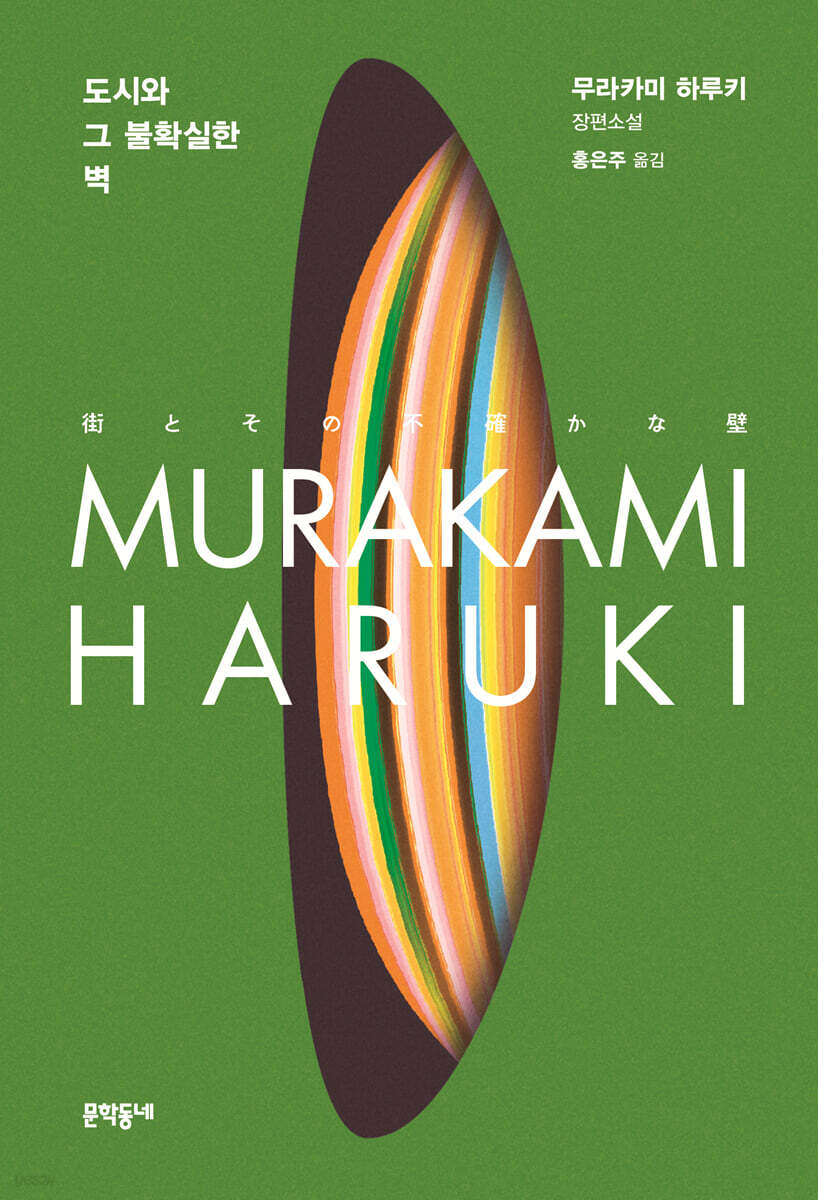 |
Description
Book Introduction
43 years after its first publication, I finally completed the novel I had been holding in my heart. A definitive world filled with all of Haruki Murakami's imagination! “This work contains something very important to me, “I’ve felt that way from the beginning.” _Haruki Murakami The Korean version of Haruki Murakami's new novel, "The City and Its Uncertain Walls," will be published on September 6th. This work paralyzed major bookstores on the day of its release in April 2023, with lines of readers and media coverage, and it demonstrated its power by rising to the top of the first-half bestseller list within two months. Munhakdongne Publishing presents the world's first translated version of the new work. This new work is special because of the behind-the-scenes story surrounding its writing and publication. Since his debut in 1979, Haruki Murakami has published a variety of works, including novels, in various literary magazines, most of which have been compiled and officially published as books. Among them, the only work that was not published as a single volume and thus remained a mystery among fans for a long time was the short story “The City and Its Uncertain Wall” (1980), published in the literary magazine [Munhakgye]. Haruki Murakami says that although he never published this work as a book, he has always kept it in his heart as a writer. In 2020, when COVID-19 began to build walls between people, the artist finally felt he could revisit and complete a work that had been buried for forty years. And after three years of writing, he published a three-part novel, “The City and Its Uncertain Walls.” The 70-year-old author, who has created the 'Haruki Murakami Syndrome' and is loved by readers around the world, has finally completed the world he drew in his youth. The world that the master Haruki Murakami has solidly built over 43 years is contained in one volume, “The City and Its Uncertain Walls.” “There are probably very few novels I have written that have not been published as books, but this one alone has never been published in Japan or any other country. (…) In the meantime, I turned from thirty-one to seventy-one. (…) Anyway, I feel very relieved that I can rewrite (or complete) this work in a new form like this. To me, this work has always been a source of concern, like a fishbone stuck in my throat. (…) It was also a thorn that had an important meaning to me (as a writer, as a human being). “As I was writing this after forty years, I returned to ‘that city’ once again and realized that fact anew.” _Haruki Murakami, from the author's afterword to 'The City and Its Uncertain Walls' |
- You can preview some of the book's contents.
Preview
index
Part 1 009
Part 2 221
Part 3 697
Author's Note 762
Part 2 221
Part 3 697
Author's Note 762
Into the book
“Just want it.
But truly wanting something isn't that simple.
It might take some time.
You may have to give up a lot of things in the meantime.
Something precious to you.
But don't give up.
“No matter how long it takes, the city will never disappear.”
--- p.15
Were we lovers? Or is it okay to simply call it that? I don't know.
In any case, you and I were bound together with pure, untainted hearts for at least that period, nearly a year.
Eventually, they created their own special secret world and shared it together—a mysterious city surrounded by high walls.
--- p.33
To you, dreams were almost equivalent to things that actually happened in the real world, and they were not things that could be simply forgotten or erased.
Dreams are like a precious source of water for your heart, conveying many things to you.
--- p.43
Maybe that's one of the problems with eternity.
Not knowing where to go from now on.
But what value is there in a love that does not seek eternity?
--- p.80
“Sometimes I feel like a shadow of something, of someone,” you say, as if revealing an important secret.
“There is no such thing as a real me here, my real self is somewhere else.
“The me here now, even though at first glance it looks like me, is actually just a shadow cast on the floor or wall… … I can’t shake that thought.”
--- p.111
Time passed through me very slowly, yet never backwards.
Exactly one minute per minute, exactly one hour per hour.
There is no way to go backwards, even if you go slowly.
That was the truth I realized with my body at that time.
It goes without saying, but sometimes the most important thing is in the obvious.
--- p.137
How much do we really know about the mysterious, dark river that flows through the labyrinths of the earth, beneath the solid ground on which we stand? How many have actually seen it, and returned to it?
--- p.223
I remember that sadness very well.
It is a kind of deep sadness that cannot be described in words and that does not disappear with time.
It is a sadness that quietly leaves invisible wounds in places that cannot be seen.
How on earth do we deal with what we cannot see?
--- p.280
“The only thing I can tell you here right now is that you must not lose your faith.
If you can believe in something strongly and deeply, the path forward will become clear.
This will prevent the violent fall that comes next.
Or it could greatly soften the impact.”
--- p.452
An imprint that carries specific pain, capable of transcending the boundaries between one world and another.
I will probably go through life with it as a part of my being.
But truly wanting something isn't that simple.
It might take some time.
You may have to give up a lot of things in the meantime.
Something precious to you.
But don't give up.
“No matter how long it takes, the city will never disappear.”
--- p.15
Were we lovers? Or is it okay to simply call it that? I don't know.
In any case, you and I were bound together with pure, untainted hearts for at least that period, nearly a year.
Eventually, they created their own special secret world and shared it together—a mysterious city surrounded by high walls.
--- p.33
To you, dreams were almost equivalent to things that actually happened in the real world, and they were not things that could be simply forgotten or erased.
Dreams are like a precious source of water for your heart, conveying many things to you.
--- p.43
Maybe that's one of the problems with eternity.
Not knowing where to go from now on.
But what value is there in a love that does not seek eternity?
--- p.80
“Sometimes I feel like a shadow of something, of someone,” you say, as if revealing an important secret.
“There is no such thing as a real me here, my real self is somewhere else.
“The me here now, even though at first glance it looks like me, is actually just a shadow cast on the floor or wall… … I can’t shake that thought.”
--- p.111
Time passed through me very slowly, yet never backwards.
Exactly one minute per minute, exactly one hour per hour.
There is no way to go backwards, even if you go slowly.
That was the truth I realized with my body at that time.
It goes without saying, but sometimes the most important thing is in the obvious.
--- p.137
How much do we really know about the mysterious, dark river that flows through the labyrinths of the earth, beneath the solid ground on which we stand? How many have actually seen it, and returned to it?
--- p.223
I remember that sadness very well.
It is a kind of deep sadness that cannot be described in words and that does not disappear with time.
It is a sadness that quietly leaves invisible wounds in places that cannot be seen.
How on earth do we deal with what we cannot see?
--- p.280
“The only thing I can tell you here right now is that you must not lose your faith.
If you can believe in something strongly and deeply, the path forward will become clear.
This will prevent the violent fall that comes next.
Or it could greatly soften the impact.”
--- p.452
An imprint that carries specific pain, capable of transcending the boundaries between one world and another.
I will probably go through life with it as a part of my being.
--- p.667
Publisher's Review
Haruki Murakami's first new novel in six years
Korean version topped the overall bestseller list immediately after pre-orders began
Haruki Murakami's new novel, "The City and Its Uncertain Walls," will be published on September 6th.
This work, which became a hot topic as a full-length novel published after 6 years, paralyzed major bookstores with lines of readers trying to buy the book and media coverage as soon as it was published in the local area, and showed that readers' interest and love for the master Haruki Murakami remains strong by rising to the top of the bestseller list in the first half of the year in just 2 months.
The response to the Korean version, which began pre-orders on August 28th, was also enthusiastic.
As soon as the pre-orders began, it immediately rose to the real-time bestseller list of the three major online bookstores, Kyobo Bookstore, Aladdin, and Yes24, and, unusually, maintained the number one spot on the overall bestseller list throughout the pre-order period.
Compared to the previous novel, 『Killing Commendatore』, this is a record that surpassed the previous work's three-day sales in just one day.
Encouraged by the enthusiastic response from readers, Munhakdongne decided to reprint the book quickly during pre-order sales, and as of September 4, the third printing is in production.
43 years after its first publication, I finally completed the novel I had been holding in my heart.
A definitive world filled with all of Haruki Murakami's imagination!
“This work contains something very important to me,
“I’ve felt that way from the beginning.” _Haruki Murakami
Haruki Murakami's new novel, "The City and Its Uncertain Walls," has a special story surrounding its writing and publication.
Since his debut in 1979, Haruki Murakami has published a variety of works, including novels, in various literary magazines, and most of these works have been compiled and officially published as books.
Among them, the only work that was not published as a single volume and thus remained a mystery among fans for a long time was the novella "The City and Its Uncertain Wall" (1980), published in the literary magazine [Munhakgye].
In 2020, when COVID-19 began to build walls between people, he thought he could rework and complete a work he had buried for forty years.
And after three years of writing, he published a three-part novel, “The City and Its Uncertain Walls.”
The author, now in his 70s, who has been loved by readers around the world and created the 'Haruki Murakami Syndrome' with each work he published, has finally completed the world he had drawn in his youth after 43 years.
“There are probably very few novels I have written that have not been published as books, but this one alone has never been published in Japan or any other country.
(…) In the meantime, I turned from thirty-one to seventy-one.
(…) Anyway, I feel very relieved that I can rewrite (or complete) this work in a new form like this.
To me, this work has always been a source of concern, like a fishbone stuck in my throat.
(…) It was also a thorn that had an important meaning to me (as a writer, as a human being).
“While writing this book after forty years, I went back to ‘that city’ once again and realized that fact anew.” _Haruki Murakami, from the author’s note in ‘The City and Its Uncertain Walls’
There is no one who does not have a secret in his heart.
“The place where I really live is inside that city surrounded by high walls.”
'Me', a seventeen-year-old high school boy, 'You', a sixteen-year-old high school girl.
The two meet at a high school essay contest and fall in love.
Then one day, the girl says something unknown.
“The place where I really live is inside that city surrounded by high walls.
The me here now is not the real me.
“It’s like a flowing shadow.” I am bewildered, but soon become absorbed in the city story the girl tells me.
As I was following the story and recording the city in detail, the girl suddenly disappeared.
I was suffering from not being able to tell whether it was a coincidence or a hint of something, and after waiting for a long time, I finally headed to the unknown city that the girl had mentioned.
The city the girl spoke of was surrounded by strong, high stone walls.
There are no hands on the clock there, but people can naturally sense the time.
There is a library in the city, and its shelves are lined with people's dreams, not books, in the shape of eggs.
Managing these dreams and deciphering their meaning is one of the city's important tasks.
There is only one entrance to the city, and even that is guarded by a sturdy gatekeeper, so no one can enter or leave.
There are special conditions for entering the city.
That is, you must discard your own 'shadow'.
After abandoning the shadow and entering the city, 'I' go to work at the library and live as a 'dream reader'.
He reunites with the girl he had been longing for, but for some reason, the girl does not recognize him.
I threw away my shadow.
(…) said the gatekeeper.
“Once it actually falls, it looks quite strange.
“You might wonder why I kept that thing around so fondly.” I mumbled my answer.
It still hadn't fully sunk in that he had lost his own shadow.
“Shadows are truly useless,” the gatekeeper continued.
“Do you remember a time when a shadow was of great help to you?” I don’t remember any such thing.
At least it doesn't come to mind right away.
(Main text, p. 66)
You carefully wipe the white dust that has accumulated on the old dream with a large white rag and place it on the desk in front of me.
I take off my dark green glasses and place both hands on the surface of an old dream.
Wrap it with your palm.
After about five minutes, the old dream gradually awakens from its deep sleep and its surface begins to glow faintly.
A comfortable and natural warmth is transmitted to both palms.
And they start to dream.
Like a silkworm spinning a thread, hesitantly at first, but then with a suitable enthusiasm.
They have a story to tell.
They must have been waiting patiently on the shelf for the time to come out of their shells.
(Main text, p. 48)
Me and the world, truth and fiction, secrets and sharing, separation and unity… …
A message for this era, which faces countless challenges and yet must continue on.
As time passes, I become middle-aged.
He quit his long-time job in the publishing and distribution industry and took on the role of director at a small library in a mountainous region.
There, he spends peaceful days interacting with the former director 'Goyasu', the librarian 'Soeda', and 'M Boy', who visits the library every day wearing clothes with a yellow submarine on them and reads books at an incredible speed.
One day, as the mysterious secret of 'Goyasu' is revealed and 'M Boy' goes missing, 'I' feel confused at the boundary between reality and unreality.
And 'I', who had been living a life of floating on the border between 'a quiet library in the mountainous region' and 'a city surrounded by walls', now senses that this life also needs an end.
What choice will I make at this point, at the border where the pursuit of a single, clear truth and phenomenon becomes meaningless, at this border where human faith is constantly tested?
What is real and what isn't? No, is there really a wall in this world that divides reality from unreality? I think there might be a wall.
No, it will definitely exist.
But it is still an uncertain wall.
In some cases, it changes its shape and firmness depending on the opponent.
As if it were a living creature.
(Main text, p. 684)
What is a novel in an age of plague and war?
A meaningful "completion" and new "beginning" for author Haruki Murakami.
Haruki Murakami gave a lecture titled "Writing Novels in Times of Plague and War" at Wellesley College in Massachusetts, USA, on April 27, 2023.
He mentioned the current phenomenon in which a wall of wariness has been created between people due to the COVID-19 pandemic and the Ukrainian War, and the pursuit of just and free values has become a personal choice, and stated that "The City and Its Uncertain Walls" will be a work that fits these times.
In "The City and Its Uncertain Walls," essential elements of Haruki Murakami's world, such as love, shadows, libraries, the Beatles, classical music, and jazz, are even more closely intertwined.
The seeds of the world that Haruki has been building for over 40 years have bloomed beautifully once again.
Haruki Murakami has been evaluated as a writer who mainly focuses on the inner self of an individual.
And he has expressed his belief that novels are 'writing from the heart', 'bridging the gap between the heart and logical consciousness', and 'saving what cannot be saved by logic alone'.
In this work, Haruki Murakami shows his own unique world that he has built up over time, while emphasizing the message of 'inheritance' and 'future generations.'
This is a passage where we can look forward to what kind of future paths Haruki Murakami, a master who has established a solid world of works, will take as a writer.
Hearing the laughter from the wall, I ran straight without raising my head and rushed towards the wall in front of me.
Since we've come this far, we have no choice but to believe the shadow's words.
You shouldn't be afraid.
I mustered all my strength to let go of my doubts and trust my own heart.
(Main text, p. 206)
For Haruki Murakami, "The City and Its Uncertain Walls" is a meaningful completion and culmination of his life as a writer and his world of works, and it also signifies another beginning that raises expectations for the future of Haruki.
This full-length novel, which allows readers to experience Haruki's imagination, which colorfully crosses between reality and unreality, in a more mature world, will be positioned as a 'definitive work that encapsulates Haruki's world' for fans who have been waiting for his new work, and as a 'perfect introduction to Haruki's world' for readers who are just beginning to encounter the author Haruki Murakami.
Korean version topped the overall bestseller list immediately after pre-orders began
Haruki Murakami's new novel, "The City and Its Uncertain Walls," will be published on September 6th.
This work, which became a hot topic as a full-length novel published after 6 years, paralyzed major bookstores with lines of readers trying to buy the book and media coverage as soon as it was published in the local area, and showed that readers' interest and love for the master Haruki Murakami remains strong by rising to the top of the bestseller list in the first half of the year in just 2 months.
The response to the Korean version, which began pre-orders on August 28th, was also enthusiastic.
As soon as the pre-orders began, it immediately rose to the real-time bestseller list of the three major online bookstores, Kyobo Bookstore, Aladdin, and Yes24, and, unusually, maintained the number one spot on the overall bestseller list throughout the pre-order period.
Compared to the previous novel, 『Killing Commendatore』, this is a record that surpassed the previous work's three-day sales in just one day.
Encouraged by the enthusiastic response from readers, Munhakdongne decided to reprint the book quickly during pre-order sales, and as of September 4, the third printing is in production.
43 years after its first publication, I finally completed the novel I had been holding in my heart.
A definitive world filled with all of Haruki Murakami's imagination!
“This work contains something very important to me,
“I’ve felt that way from the beginning.” _Haruki Murakami
Haruki Murakami's new novel, "The City and Its Uncertain Walls," has a special story surrounding its writing and publication.
Since his debut in 1979, Haruki Murakami has published a variety of works, including novels, in various literary magazines, and most of these works have been compiled and officially published as books.
Among them, the only work that was not published as a single volume and thus remained a mystery among fans for a long time was the novella "The City and Its Uncertain Wall" (1980), published in the literary magazine [Munhakgye].
In 2020, when COVID-19 began to build walls between people, he thought he could rework and complete a work he had buried for forty years.
And after three years of writing, he published a three-part novel, “The City and Its Uncertain Walls.”
The author, now in his 70s, who has been loved by readers around the world and created the 'Haruki Murakami Syndrome' with each work he published, has finally completed the world he had drawn in his youth after 43 years.
“There are probably very few novels I have written that have not been published as books, but this one alone has never been published in Japan or any other country.
(…) In the meantime, I turned from thirty-one to seventy-one.
(…) Anyway, I feel very relieved that I can rewrite (or complete) this work in a new form like this.
To me, this work has always been a source of concern, like a fishbone stuck in my throat.
(…) It was also a thorn that had an important meaning to me (as a writer, as a human being).
“While writing this book after forty years, I went back to ‘that city’ once again and realized that fact anew.” _Haruki Murakami, from the author’s note in ‘The City and Its Uncertain Walls’
There is no one who does not have a secret in his heart.
“The place where I really live is inside that city surrounded by high walls.”
'Me', a seventeen-year-old high school boy, 'You', a sixteen-year-old high school girl.
The two meet at a high school essay contest and fall in love.
Then one day, the girl says something unknown.
“The place where I really live is inside that city surrounded by high walls.
The me here now is not the real me.
“It’s like a flowing shadow.” I am bewildered, but soon become absorbed in the city story the girl tells me.
As I was following the story and recording the city in detail, the girl suddenly disappeared.
I was suffering from not being able to tell whether it was a coincidence or a hint of something, and after waiting for a long time, I finally headed to the unknown city that the girl had mentioned.
The city the girl spoke of was surrounded by strong, high stone walls.
There are no hands on the clock there, but people can naturally sense the time.
There is a library in the city, and its shelves are lined with people's dreams, not books, in the shape of eggs.
Managing these dreams and deciphering their meaning is one of the city's important tasks.
There is only one entrance to the city, and even that is guarded by a sturdy gatekeeper, so no one can enter or leave.
There are special conditions for entering the city.
That is, you must discard your own 'shadow'.
After abandoning the shadow and entering the city, 'I' go to work at the library and live as a 'dream reader'.
He reunites with the girl he had been longing for, but for some reason, the girl does not recognize him.
I threw away my shadow.
(…) said the gatekeeper.
“Once it actually falls, it looks quite strange.
“You might wonder why I kept that thing around so fondly.” I mumbled my answer.
It still hadn't fully sunk in that he had lost his own shadow.
“Shadows are truly useless,” the gatekeeper continued.
“Do you remember a time when a shadow was of great help to you?” I don’t remember any such thing.
At least it doesn't come to mind right away.
(Main text, p. 66)
You carefully wipe the white dust that has accumulated on the old dream with a large white rag and place it on the desk in front of me.
I take off my dark green glasses and place both hands on the surface of an old dream.
Wrap it with your palm.
After about five minutes, the old dream gradually awakens from its deep sleep and its surface begins to glow faintly.
A comfortable and natural warmth is transmitted to both palms.
And they start to dream.
Like a silkworm spinning a thread, hesitantly at first, but then with a suitable enthusiasm.
They have a story to tell.
They must have been waiting patiently on the shelf for the time to come out of their shells.
(Main text, p. 48)
Me and the world, truth and fiction, secrets and sharing, separation and unity… …
A message for this era, which faces countless challenges and yet must continue on.
As time passes, I become middle-aged.
He quit his long-time job in the publishing and distribution industry and took on the role of director at a small library in a mountainous region.
There, he spends peaceful days interacting with the former director 'Goyasu', the librarian 'Soeda', and 'M Boy', who visits the library every day wearing clothes with a yellow submarine on them and reads books at an incredible speed.
One day, as the mysterious secret of 'Goyasu' is revealed and 'M Boy' goes missing, 'I' feel confused at the boundary between reality and unreality.
And 'I', who had been living a life of floating on the border between 'a quiet library in the mountainous region' and 'a city surrounded by walls', now senses that this life also needs an end.
What choice will I make at this point, at the border where the pursuit of a single, clear truth and phenomenon becomes meaningless, at this border where human faith is constantly tested?
What is real and what isn't? No, is there really a wall in this world that divides reality from unreality? I think there might be a wall.
No, it will definitely exist.
But it is still an uncertain wall.
In some cases, it changes its shape and firmness depending on the opponent.
As if it were a living creature.
(Main text, p. 684)
What is a novel in an age of plague and war?
A meaningful "completion" and new "beginning" for author Haruki Murakami.
Haruki Murakami gave a lecture titled "Writing Novels in Times of Plague and War" at Wellesley College in Massachusetts, USA, on April 27, 2023.
He mentioned the current phenomenon in which a wall of wariness has been created between people due to the COVID-19 pandemic and the Ukrainian War, and the pursuit of just and free values has become a personal choice, and stated that "The City and Its Uncertain Walls" will be a work that fits these times.
In "The City and Its Uncertain Walls," essential elements of Haruki Murakami's world, such as love, shadows, libraries, the Beatles, classical music, and jazz, are even more closely intertwined.
The seeds of the world that Haruki has been building for over 40 years have bloomed beautifully once again.
Haruki Murakami has been evaluated as a writer who mainly focuses on the inner self of an individual.
And he has expressed his belief that novels are 'writing from the heart', 'bridging the gap between the heart and logical consciousness', and 'saving what cannot be saved by logic alone'.
In this work, Haruki Murakami shows his own unique world that he has built up over time, while emphasizing the message of 'inheritance' and 'future generations.'
This is a passage where we can look forward to what kind of future paths Haruki Murakami, a master who has established a solid world of works, will take as a writer.
Hearing the laughter from the wall, I ran straight without raising my head and rushed towards the wall in front of me.
Since we've come this far, we have no choice but to believe the shadow's words.
You shouldn't be afraid.
I mustered all my strength to let go of my doubts and trust my own heart.
(Main text, p. 206)
For Haruki Murakami, "The City and Its Uncertain Walls" is a meaningful completion and culmination of his life as a writer and his world of works, and it also signifies another beginning that raises expectations for the future of Haruki.
This full-length novel, which allows readers to experience Haruki's imagination, which colorfully crosses between reality and unreality, in a more mature world, will be positioned as a 'definitive work that encapsulates Haruki's world' for fans who have been waiting for his new work, and as a 'perfect introduction to Haruki's world' for readers who are just beginning to encounter the author Haruki Murakami.
GOODS SPECIFICS
- Date of issue: September 6, 2023
- Page count, weight, size: 768 pages | 836g | 128*188*40mm
- ISBN13: 9788954699075
- ISBN10: 8954699073
You may also like
카테고리
korean


korean

![GQ KOREA Mark (Monthly): December [2025]](http://librairie.coreenne.fr/cdn/shop/files/8ef265dbbfbf186523ed75ba7319009d.jpg?v=1765340328&width=3840)


