

Crucial Words for Intermediate English
 |
Description
Book Introduction
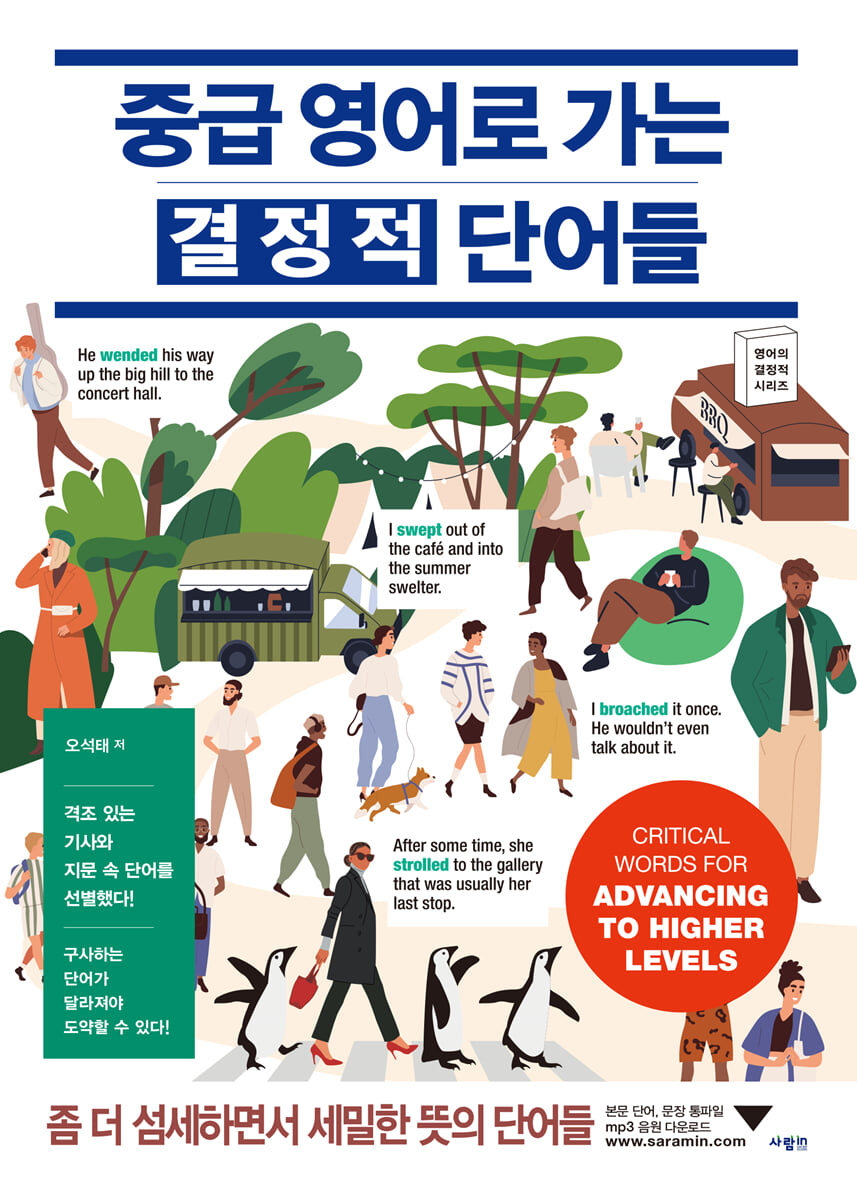
If you are an intermediate level learner, use words with more detailed and nuanced meanings!
What is needed to leap from your current English level, where you can interpret English sentences to a certain level, is not grammar or syntax, but vocabulary.
This is because when you change the vocabulary you use, your understanding expands and your feeling of accepting English changes.
If knowing a lot of English words was necessary to build a foundation, intermediate English learners must accept that there are no synonyms and that only one word can accurately describe a given situation.
This means that we can understand and talk about similar words in a general way by dividing them into words with detailed meanings.
This is necessary because that is the kind of vocabulary used in the kind of books and high-quality articles that readers at that level are expected to read.
"Decisive Vocabulary for Intermediate English" presents vocabulary that can be used accurately, not vaguely, by selecting it from high-quality English articles and texts.
What is needed to leap from your current English level, where you can interpret English sentences to a certain level, is not grammar or syntax, but vocabulary.
This is because when you change the vocabulary you use, your understanding expands and your feeling of accepting English changes.
If knowing a lot of English words was necessary to build a foundation, intermediate English learners must accept that there are no synonyms and that only one word can accurately describe a given situation.
This means that we can understand and talk about similar words in a general way by dividing them into words with detailed meanings.
This is necessary because that is the kind of vocabulary used in the kind of books and high-quality articles that readers at that level are expected to read.
"Decisive Vocabulary for Intermediate English" presents vocabulary that can be used accurately, not vaguely, by selecting it from high-quality English articles and texts.
- You can preview some of the book's contents.
Preview
index
Author's Preface
Knowing super gap words
Structure and Use of This Book
CHAPTER 1 People
UNIT 1 Personality
UNIT 2 Emotions, Moods, and States
boredom
Anxiety, tension, stress
confidence, doubt
A state of loss, discouragement, and sentimentality
indifference, antipathy
embarrassment, shock
positive emotions/states
UNIT 3 Fire, Annoyance, Hatred
UNIT 4 Appearance
CHAPTER 2 Daily Life
UNIT 1 Behavior, Attitude
UNIT 2 Walking, Running, Moving
UNIT 3 See, Read
UNIT 4 Money, Life
UNIT 5 Fatigue, Stress
UNIT 6 Weather
UNIT 7 Atmosphere, Situation, and State
UNIT 8 Traffic Conditions
CHAPTER 3 Social Life
UNIT 1 Thinking, Planning, and Judgment
UNIT 2 Communication, Discord
UNIT 3 DAYS
UNIT 4 Obstruction, Abandonment
UNIT 5 Find, Give
UNIT 6 LAW, CRIME
CHAPTER 4 Verb Phrases
UNIT 1 Thoughts, Memory
UNIT 2 Listen, Speak, See, Find
UNIT 3 Coming and going, movement
UNIT 4 Day
UNIT 5 Human Relationships
UNIT 6 LIFE
CHAPTER 5 Idioms
UNIT 1 Emotions and Health
UNIT 2 Personality and Habits
UNIT 3 DAY, SUCCESS
UNIT 4 Words
UNIT 5 Rumors, Information, and Thoughts
UNIT 6 Human Relationships
UNIT 7 LIFE
English INDEX
Korean INDEX
Knowing super gap words
Structure and Use of This Book
CHAPTER 1 People
UNIT 1 Personality
UNIT 2 Emotions, Moods, and States
boredom
Anxiety, tension, stress
confidence, doubt
A state of loss, discouragement, and sentimentality
indifference, antipathy
embarrassment, shock
positive emotions/states
UNIT 3 Fire, Annoyance, Hatred
UNIT 4 Appearance
CHAPTER 2 Daily Life
UNIT 1 Behavior, Attitude
UNIT 2 Walking, Running, Moving
UNIT 3 See, Read
UNIT 4 Money, Life
UNIT 5 Fatigue, Stress
UNIT 6 Weather
UNIT 7 Atmosphere, Situation, and State
UNIT 8 Traffic Conditions
CHAPTER 3 Social Life
UNIT 1 Thinking, Planning, and Judgment
UNIT 2 Communication, Discord
UNIT 3 DAYS
UNIT 4 Obstruction, Abandonment
UNIT 5 Find, Give
UNIT 6 LAW, CRIME
CHAPTER 4 Verb Phrases
UNIT 1 Thoughts, Memory
UNIT 2 Listen, Speak, See, Find
UNIT 3 Coming and going, movement
UNIT 4 Day
UNIT 5 Human Relationships
UNIT 6 LIFE
CHAPTER 5 Idioms
UNIT 1 Emotions and Health
UNIT 2 Personality and Habits
UNIT 3 DAY, SUCCESS
UNIT 4 Words
UNIT 5 Rumors, Information, and Thoughts
UNIT 6 Human Relationships
UNIT 7 LIFE
English INDEX
Korean INDEX
Detailed image

Publisher's Review
Even if you read the same thing and write the same content,
The difference in understanding and expressiveness is due to the difference in the level of vocabulary used.
The difference between someone who is proficient in English and someone who isn't is definitely vocabulary.
Grammar doesn't have as much of an impact as you might think.
Let's say you've learned the essential word "embarrassed" and stored it in your head.
Whenever I meet a foreigner and have to talk to them or write in English, the moment the Korean word 'embarrassed' comes to mind, I always use 'embarrassed'.
However, when reading articles and original texts, you will come across numerous words that are comparable to 'embarrassed', each with different contexts and nuances.
Raising your vocabulary level does not mean knowing a lot of words, but rather knowing the more nuanced and detailed meanings of those words.
In other words, the person who uses words that are more appropriate for the situation is the one who is skilled.
"Decisive Vocabulary for Intermediate English" presents the vocabulary needed to become such a skilled speaker.
Includes super-gap words used by elites
Native speaker elites work hard to use vocabulary that fits the situation.
"Decisive Words for Intermediate English" categorizes essential words frequently found in English articles, texts, and novels read by native English speakers, conveying their precise meanings, nuances, and usage methods.
Adding the fun of reading stories within words
Avoid 1:1 presentation methods such as '000 means ◇◇◇'.
It explains the etymology of the word, explains in detail how it has changed, and explains what it means today.
For idioms, detailed background explanations are provided, adding the fun of gaining knowledge to the fun of building English skills, making it fun to read until the end.
A selection of examples suitable for reading articles, texts, and novels.
The ultimate goal of learning English is to be able to read freely without the distraction of words, including nonfiction and fiction.
"Decisive Vocabulary for Intermediate English" carefully selects grammatically correct example sentences that accurately demonstrate word usage, helping you read high-quality articles and novels.
The difference in understanding and expressiveness is due to the difference in the level of vocabulary used.
The difference between someone who is proficient in English and someone who isn't is definitely vocabulary.
Grammar doesn't have as much of an impact as you might think.
Let's say you've learned the essential word "embarrassed" and stored it in your head.
Whenever I meet a foreigner and have to talk to them or write in English, the moment the Korean word 'embarrassed' comes to mind, I always use 'embarrassed'.
However, when reading articles and original texts, you will come across numerous words that are comparable to 'embarrassed', each with different contexts and nuances.
Raising your vocabulary level does not mean knowing a lot of words, but rather knowing the more nuanced and detailed meanings of those words.
In other words, the person who uses words that are more appropriate for the situation is the one who is skilled.
"Decisive Vocabulary for Intermediate English" presents the vocabulary needed to become such a skilled speaker.
Includes super-gap words used by elites
Native speaker elites work hard to use vocabulary that fits the situation.
"Decisive Words for Intermediate English" categorizes essential words frequently found in English articles, texts, and novels read by native English speakers, conveying their precise meanings, nuances, and usage methods.
Adding the fun of reading stories within words
Avoid 1:1 presentation methods such as '000 means ◇◇◇'.
It explains the etymology of the word, explains in detail how it has changed, and explains what it means today.
For idioms, detailed background explanations are provided, adding the fun of gaining knowledge to the fun of building English skills, making it fun to read until the end.
A selection of examples suitable for reading articles, texts, and novels.
The ultimate goal of learning English is to be able to read freely without the distraction of words, including nonfiction and fiction.
"Decisive Vocabulary for Intermediate English" carefully selects grammatically correct example sentences that accurately demonstrate word usage, helping you read high-quality articles and novels.
GOODS SPECIFICS
- Date of issue: March 4, 2024
- Page count, weight, size: 288 pages | 494g | 148*210*15mm
- ISBN13: 9791171010639
- ISBN10: 117101063X
You may also like
카테고리
korean


korean

![GQ KOREA Mark (Monthly): December [2025]](http://librairie.coreenne.fr/cdn/shop/files/8ef265dbbfbf186523ed75ba7319009d.jpg?v=1765340328&width=3840)


