

Someone who knows a little about IT
 |
Description
Book Introduction
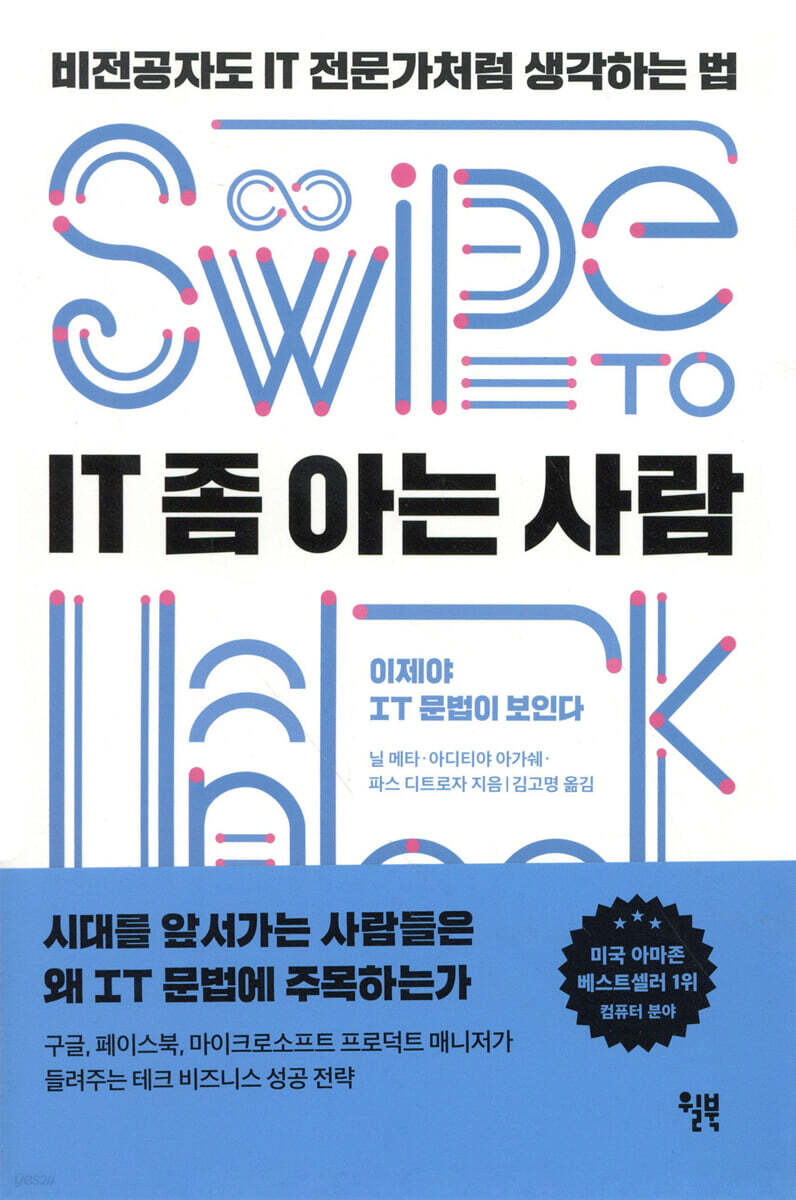
Amazon Business Bestseller The A to Z of the tech business world, told by three product managers from Google, Facebook, and Microsoft. "IT Literacy Essentials": Easily Explain IT Grammar, Essential Knowledge in the Digital Age - How does YouTube recommend content that's right for me? - Why are so many companies afraid of Amazon? How will Netflix handle the surge in viewers on new release days? - What is the secret behind Facebook's ability to make so much money without charging users a single penny? Anyone who uses the Internet has probably had this question at least once. But few people can answer these questions even though they use YouTube, Instagram, and Netflix every day. The reality is that terms like in-app economy, SaaS, and ISP are unfamiliar, and it is difficult to understand how the IT company ecosystem works. Yet, we see IT companies like Apple, Amazon, and Google dominating the global economy, and we know that IT is rapidly changing our lives. So I feel the need to open our eyes to the world of technology to ensure future competitiveness. But where should we begin? Here, three current practitioners working as product managers at Google, Facebook, and Microsoft have come together. They set out to write an "introduction to IT technology and tech business strategy" for the general public, with the goal of widely disseminating the grammar and flow of the IT world. As a result, they published a book that even IT laypeople can properly understand. The authors first reassure readers that IT knowledge is readily accessible to everyone. It explains the basic concepts from the beginning, using familiar examples such as comparing how the Internet works to hot sauce delivery. Furthermore, it meticulously covers the marketing strategies of IT companies, current trends in IT technologies such as cloud computing and big data, Amazon's dinosaur marketing that devours all startups, the countermeasures of Google and Microsoft, and even future prospects such as the war between IT companies to dominate the self-driving car market. 《People Who Know IT》 is a book that covers everything from the basics to the advanced aspects of Silicon Valley technology. Thanks to the vivid real-world examples and concise explanations provided by the authors, who are exploring ways to connect technology and life in Silicon Valley, you will soon understand IT grammar and envision the future of IT. Whether you don't know how to code or have no business knowledge, it doesn't matter. Whether you're a job seeker hoping to land a job at an IT company, a manager eager to integrate technology into the organization's success strategy, or a developer seeking to develop a business acumen, by the time you finish this book, you'll be thinking and speaking like an IT expert. |
- You can preview some of the book's contents.
Preview
index
prolog
Part 1: Basic IT Knowledge
Chapter 1 Software Development
How does Google search work?
How does Spotify recommend songs that are right for me?
How does Facebook decide which posts appear in your News Feed?
What do Uber, Yelp, and Pokemon Go have in common technically?
Why does Tinder ask me to log in with Facebook?
Why does the Washington Post article have two titles?
Chapter 2 Operating System
Why did BlackBerry fail?
Why does Google give Android away for free to manufacturers?
Why are there so many junk apps installed by default on Android phones?
What is the world's third largest mobile operating system?
Can you get infected with the Mac virus?
Chapter 3: App Economy
Why are most app downloads free?
What's the secret behind Facebook's ability to make so much money without charging users a single penny?
Why are there so many 'sponsored articles' on news sites?
How does Airbnb make money?
How does Robinhood make money without charging stock trading fees?
Is there a way to make money with apps without ads or fees?
Chapter 4 Internet
What happens when you type 'google.com' and hit enter?
What do transmitting information over the Internet and shipping hot sauce have in common?
How does information move from computer to computer?
Why would Wall Street traders lay fiber optic cables straight through mountains?
Part 2: Hot Issues in the IT Industry
Chapter 5 Cloud Computing
What do Google Drive and Uber have in common?
Where does what's in the cloud actually exist?
Why can't I own Photoshop?
Why did Microsoft put out an ad mocking Office itself?
What is Amazon Web Services?
How will Netflix handle the surge in viewers on new release days?
Why did one typo cause 20% of the internet to go down?
Chapter 6 Big Data
How did the target find out about his daughter's pregnancy before the father did?
How do large companies like Google analyze big data?
Why do prices change every 10 minutes on Amazon?
Is it good or bad for companies to own a lot of data?
Chapter 7 Hacking and Security
How do criminals take computers 'hostage'?
How are drugs and stolen credit card numbers traded online?
How does WhatsApp encrypt messages so that even WhatsApp can't read them?
Why did the FBI sue Apple for hacking iPhones?
How do hackers steal personal information using fake Wi-Fi networks?
Chapter 8 Hardware and Robots
What are Bytes, KB, MB, and GB?
What do specifications like CPU and RAM on computers and mobile phones mean?
Why does Apple slow down older iPhones?
How does fingerprint recognition on a mobile phone work?
How does Apple Pay work?
How does Pokémon Go work?
How does Amazon offer one-hour delivery?
How does Amazon deliver in just 30 minutes?
Part 3: The Future of IT Business
Chapter 9 Business Judgment
Why does Nordstrom offer free Wi-Fi?
Why does Amazon offer free shipping to Prime members, even at a loss?
Why does Uber need self-driving cars?
Why did Microsoft acquire LinkedIn?
Why did Facebook acquire Instagram?
Why did Facebook acquire WhatsApp?
Chapter 10 Emerging Countries
Which country are Western IT companies most likely to enter?
How do Kenyans pay for everything with their feature phones?
How did WeChat become China's 'official' app?
How can everything be paid for with QR codes in Asia?
How do the strategies of Eastern and Western IT companies differ?
Chapter 11 Technology Policy
Why can Comcast sell your search history?
How is free mobile data bad for consumers?
How a British doctor got his medical malpractice story removed from Google search results
How did the US government create a multi-billion dollar weather industry?
How can we hold companies accountable for data breaches?
Chapter 12: Future Prospects
What is the future of self-driving cars?
Will robots take our jobs?
What is the mechanism by which fake news videos and audio are created?
Why did Facebook acquire a virtual reality headset developer?
Why are so many companies afraid of Amazon?
Epilogue
Glossary of Terms
Acknowledgements
Search
annotation
Part 1: Basic IT Knowledge
Chapter 1 Software Development
How does Google search work?
How does Spotify recommend songs that are right for me?
How does Facebook decide which posts appear in your News Feed?
What do Uber, Yelp, and Pokemon Go have in common technically?
Why does Tinder ask me to log in with Facebook?
Why does the Washington Post article have two titles?
Chapter 2 Operating System
Why did BlackBerry fail?
Why does Google give Android away for free to manufacturers?
Why are there so many junk apps installed by default on Android phones?
What is the world's third largest mobile operating system?
Can you get infected with the Mac virus?
Chapter 3: App Economy
Why are most app downloads free?
What's the secret behind Facebook's ability to make so much money without charging users a single penny?
Why are there so many 'sponsored articles' on news sites?
How does Airbnb make money?
How does Robinhood make money without charging stock trading fees?
Is there a way to make money with apps without ads or fees?
Chapter 4 Internet
What happens when you type 'google.com' and hit enter?
What do transmitting information over the Internet and shipping hot sauce have in common?
How does information move from computer to computer?
Why would Wall Street traders lay fiber optic cables straight through mountains?
Part 2: Hot Issues in the IT Industry
Chapter 5 Cloud Computing
What do Google Drive and Uber have in common?
Where does what's in the cloud actually exist?
Why can't I own Photoshop?
Why did Microsoft put out an ad mocking Office itself?
What is Amazon Web Services?
How will Netflix handle the surge in viewers on new release days?
Why did one typo cause 20% of the internet to go down?
Chapter 6 Big Data
How did the target find out about his daughter's pregnancy before the father did?
How do large companies like Google analyze big data?
Why do prices change every 10 minutes on Amazon?
Is it good or bad for companies to own a lot of data?
Chapter 7 Hacking and Security
How do criminals take computers 'hostage'?
How are drugs and stolen credit card numbers traded online?
How does WhatsApp encrypt messages so that even WhatsApp can't read them?
Why did the FBI sue Apple for hacking iPhones?
How do hackers steal personal information using fake Wi-Fi networks?
Chapter 8 Hardware and Robots
What are Bytes, KB, MB, and GB?
What do specifications like CPU and RAM on computers and mobile phones mean?
Why does Apple slow down older iPhones?
How does fingerprint recognition on a mobile phone work?
How does Apple Pay work?
How does Pokémon Go work?
How does Amazon offer one-hour delivery?
How does Amazon deliver in just 30 minutes?
Part 3: The Future of IT Business
Chapter 9 Business Judgment
Why does Nordstrom offer free Wi-Fi?
Why does Amazon offer free shipping to Prime members, even at a loss?
Why does Uber need self-driving cars?
Why did Microsoft acquire LinkedIn?
Why did Facebook acquire Instagram?
Why did Facebook acquire WhatsApp?
Chapter 10 Emerging Countries
Which country are Western IT companies most likely to enter?
How do Kenyans pay for everything with their feature phones?
How did WeChat become China's 'official' app?
How can everything be paid for with QR codes in Asia?
How do the strategies of Eastern and Western IT companies differ?
Chapter 11 Technology Policy
Why can Comcast sell your search history?
How is free mobile data bad for consumers?
How a British doctor got his medical malpractice story removed from Google search results
How did the US government create a multi-billion dollar weather industry?
How can we hold companies accountable for data breaches?
Chapter 12: Future Prospects
What is the future of self-driving cars?
Will robots take our jobs?
What is the mechanism by which fake news videos and audio are created?
Why did Facebook acquire a virtual reality headset developer?
Why are so many companies afraid of Amazon?
Epilogue
Glossary of Terms
Acknowledgements
Search
annotation
Detailed image

Into the book
This book is an introductory guide to IT and business strategy. It provides an easy-to-understand explanation of the software, hardware, and business strategies that form the foundation of the IT industry, using real-world examples.
So, it will be a starting point for even people who know nothing about IT to understand, analyze, and even create technology themselves.
---From the "Prologue"
The questions and answers we present in this book are different from the questions you will be asked in an actual interview.
However, it will help you gain the IT and business knowledge to give answers that will make a difference in the interview.
For example, you can learn how Google decides which ads to show, and why Microsoft acquired LinkedIn.
While you probably won't be asked to simply describe a case like this in an interview, you might be asked how you can increase advertising revenue in a specific group or how you can improve Microsoft's enterprise products.
At this time, the above examples will help you provide a clearer answer and demonstrate your understanding of the industry.
---From the "Prologue"
When a user enters a search term, Google searches over 30 trillion web pages and narrows down the results to the top 10.
Then, with a 92% probability, the user will click on the result on the first page (i.e., one of the top 10 results).
…Google doesn't visit all those web pages every time a user enters a search term.
Instead, the information for each web page is stored in a database (think of it as a table that organizes information clearly, like an Excel spreadsheet) and an algorithm is used to decide what to display.
---From "Chapter 1 Software Development"
Why do Washington Post articles have two headlines? That's because the Washington Post uses an AB testing technique called Bandito.
Bandito changes the headlines of articles, exposing the ones that generate more clicks. AB testing is incredibly popular in the media industry.
BuzzFeed uses AB testing to find the article titles that best attract visitors.
---From "Chapter 1 Software Development"
Blackberry was complacent.
They were trying to keep existing users without any thought of attracting new users.
I failed to read the new trends in the software industry.
While BlackBerry still saw the smartphone as a business device, Apple (and Google) reimagined it as a versatile "entertainment system" for everyone.
It was a victory for Apple, which truly captured the hearts of consumers.
---From "Chapter 2 Operating Systems"
What are the differences between SaaS, IaaS, and PaaS? To use a cooking analogy, SaaS is like a restaurant.
If you order the dish you want from the staff, they will bring it to you.
IaaS is a rented kitchen.
Since we only rent the space, you must bring your own ingredients and cooking utensils and cook.
PaaS is between SaaS and IaaS.
If you give them the ingredients and recipe, they will cook it for you.
Let's summarize.
What is Amazon Web Services? In a word, it's IaaS.
Of course, it's difficult to understand if I just say it like this, so to explain it in detail, it's a service that allows you to launch an app much more cheaply, easily, and quickly than if you rent an Amazon server and run the server yourself.
---From "Chapter 5 Cloud Computing"
Companies collect customer data and look for patterns in it.
For example, let's say that in the fall, parents of 18-year-old children tend to buy a lot of dorm furniture because their children are entering college.
Then, in preparation for the fall move, it's a good idea to start sending furniture and school supply coupons to anyone with an 18-year-old child starting in the summer.
Then, there is a higher probability of sales being generated than if the same coupons were distributed randomly.
---From "Chapter 6 Big Data"
The battery replacement program caused demand for the latest models to decline as iPhone users realized they could rejuvenate their phones simply by replacing the batteries, which hurt Apple's sales.
The moral of the story is that while performance does degrade over time, it doesn't deteriorate as much as people often think.
It may be a truth that phone manufacturers would like to keep secret.
---From "Chapter 8 Hardware and Robots"
While a future where delivery drones fly around might seem far-fetched now, Amazon believes it will become the norm.
Delivery drones may become as common as delivery trucks.
If someone had told us 50 years ago that we would be buying things wirelessly using our smartphones and receiving them via flying robots, we would have been called crazy.
But you know, it's becoming an exciting reality now.
---From "Chapter 8 Hardware and Robots"
Now, Eastern and Western companies are borrowing each other's tactics.
Instead of opening stores and an online presence in India, Walmart acquired local e-commerce giant Flipkart in 2018. Google followed suit, investing in Indonesian ride-hailing company Gojek185 and Indian e-commerce startup Fynd186 in 2018.
…While it's unclear which side will emerge victorious in the East-West IT war, it's clear that companies on both sides are taking cues from the other camp.
So, it will be a starting point for even people who know nothing about IT to understand, analyze, and even create technology themselves.
---From the "Prologue"
The questions and answers we present in this book are different from the questions you will be asked in an actual interview.
However, it will help you gain the IT and business knowledge to give answers that will make a difference in the interview.
For example, you can learn how Google decides which ads to show, and why Microsoft acquired LinkedIn.
While you probably won't be asked to simply describe a case like this in an interview, you might be asked how you can increase advertising revenue in a specific group or how you can improve Microsoft's enterprise products.
At this time, the above examples will help you provide a clearer answer and demonstrate your understanding of the industry.
---From the "Prologue"
When a user enters a search term, Google searches over 30 trillion web pages and narrows down the results to the top 10.
Then, with a 92% probability, the user will click on the result on the first page (i.e., one of the top 10 results).
…Google doesn't visit all those web pages every time a user enters a search term.
Instead, the information for each web page is stored in a database (think of it as a table that organizes information clearly, like an Excel spreadsheet) and an algorithm is used to decide what to display.
---From "Chapter 1 Software Development"
Why do Washington Post articles have two headlines? That's because the Washington Post uses an AB testing technique called Bandito.
Bandito changes the headlines of articles, exposing the ones that generate more clicks. AB testing is incredibly popular in the media industry.
BuzzFeed uses AB testing to find the article titles that best attract visitors.
---From "Chapter 1 Software Development"
Blackberry was complacent.
They were trying to keep existing users without any thought of attracting new users.
I failed to read the new trends in the software industry.
While BlackBerry still saw the smartphone as a business device, Apple (and Google) reimagined it as a versatile "entertainment system" for everyone.
It was a victory for Apple, which truly captured the hearts of consumers.
---From "Chapter 2 Operating Systems"
What are the differences between SaaS, IaaS, and PaaS? To use a cooking analogy, SaaS is like a restaurant.
If you order the dish you want from the staff, they will bring it to you.
IaaS is a rented kitchen.
Since we only rent the space, you must bring your own ingredients and cooking utensils and cook.
PaaS is between SaaS and IaaS.
If you give them the ingredients and recipe, they will cook it for you.
Let's summarize.
What is Amazon Web Services? In a word, it's IaaS.
Of course, it's difficult to understand if I just say it like this, so to explain it in detail, it's a service that allows you to launch an app much more cheaply, easily, and quickly than if you rent an Amazon server and run the server yourself.
---From "Chapter 5 Cloud Computing"
Companies collect customer data and look for patterns in it.
For example, let's say that in the fall, parents of 18-year-old children tend to buy a lot of dorm furniture because their children are entering college.
Then, in preparation for the fall move, it's a good idea to start sending furniture and school supply coupons to anyone with an 18-year-old child starting in the summer.
Then, there is a higher probability of sales being generated than if the same coupons were distributed randomly.
---From "Chapter 6 Big Data"
The battery replacement program caused demand for the latest models to decline as iPhone users realized they could rejuvenate their phones simply by replacing the batteries, which hurt Apple's sales.
The moral of the story is that while performance does degrade over time, it doesn't deteriorate as much as people often think.
It may be a truth that phone manufacturers would like to keep secret.
---From "Chapter 8 Hardware and Robots"
While a future where delivery drones fly around might seem far-fetched now, Amazon believes it will become the norm.
Delivery drones may become as common as delivery trucks.
If someone had told us 50 years ago that we would be buying things wirelessly using our smartphones and receiving them via flying robots, we would have been called crazy.
But you know, it's becoming an exciting reality now.
---From "Chapter 8 Hardware and Robots"
Now, Eastern and Western companies are borrowing each other's tactics.
Instead of opening stores and an online presence in India, Walmart acquired local e-commerce giant Flipkart in 2018. Google followed suit, investing in Indonesian ride-hailing company Gojek185 and Indian e-commerce startup Fynd186 in 2018.
…While it's unclear which side will emerge victorious in the East-West IT war, it's clear that companies on both sides are taking cues from the other camp.
---From "Chapter 10 Emerging Countries"
Publisher's Review
The IT era has arrived, but no one knows anything about IT. How to think and talk like an IT expert.
“All business leaders must become IT experts.
And every company needs to become an app company.”
- Parker Harris, co-founder of Salesforce
As times change, the knowledge we need also changes.
Oil and electricity companies were once considered the world's largest companies, but now IT giants like Apple, Amazon, Facebook, Google, and Microsoft have taken their place.
It is a world where doctors diagnose diseases with AI and farmers grow crops with drones.
Moreover, with the recent COVID-19 pandemic forcing individuals to transition to non-face-to-face academic and work settings, it has become increasingly difficult to imagine a life without IT.
It's clear that technology, which is advancing at a rate faster than human evolution, will continue to have a significant impact on our lives. IT knowledge has become essential not only for IT professionals and business leaders, but also for all regardless of occupation or age.
But compared to the openness with which IT technology permeates our lives, IT terminology seems unequal.
The world of IT known only to those in the know.
Broadcasts and the media are filled with daily news updates about domestic and international IT companies' mergers and acquisitions, app launches, and rapidly rising startups. The stock market also responds to these news. However, when listening to IT experts, all you hear are terms that sound like alien languages, like SaaS, API, and augmented reality.
To understand all of this, you'd probably need to be a coding master or have an MBA.
Neil Mehta, Aditya Agache, and Parth DeTroja, product managers at Google, Facebook, and Microsoft, wrote this book to address this reality.
As the recommendation says, “The Rosetta Stone of our generation,” it covers everything from basic IT concepts to business application, step by step, for beginners who know nothing about IT.
The success stories of IT companies, which have been puzzling and puzzling for a long time, are explained in an easy-to-understand manner, and you can also get ideas about the future direction of IT technology and future strategies.
The moment you type a search term into Google, what is Google doing?
How Google Crawls to Find the Most Popular People at a Party
“Google’s algorithm starts by storing every web page on the Internet in a database.
To do this, we use a program called a ‘spider’ to ‘crawl’ web pages.”
The story begins with what happens when we type a search term into Google.
Just as humans have an "algorithm" for making cheese sandwiches, Google's computers have an algorithm for finding web pages that match your search terms.
Spiders on the web crawl webpages looking for information that will rank high on the pages, and the way they do this is similar to finding popular people at a party.
It's a way for popular people to gather around popular people.
The more links a webpage has from other important web pages, the higher it will appear in search results.
Pages that rank high in search results are considered the highest-scoring winners in such fierce competition.
This story about how Google search terms are displayed is just one example, and it also explains in easy-to-understand language how major IT companies like Netflix, YouTube, Amazon, Facebook, Uber, and Apple operate their services.
How Instagram and YouTube are making money without charging users.
Why do we never pay for useful information from Google, YouTube, and Instagram? While many people vaguely understand that revenue comes from advertising, the authors offer a more detailed explanation.
Have you ever spent hours lost in the internet, seemingly reading your mind, recommending products or videos on topics you've always been interested in? The answer lies in "targeted advertising."
Google, Facebook, and Instagram know what we click and what we search for, so they show us ads that we're more likely to click on.
Instead of paying these companies, we provide them with our personal information.
In addition, we will examine IT industry marketing strategies such as 'collaborative filtering' and 'native advertising' and explain how these companies cleverly generate enormous profits.
Will we ever see a world where drones deliver packages, we attend lectures in virtual reality, and we commute in self-driving cars?
Fifty years ago, if you said you'd buy something on your smartphone and have it delivered by a flying robot, you'd have been called crazy, but as you know, it's becoming a reality now.
Although there are still many challenges to be solved, I am curious to see what the future will look like as technology advances.
Uber is already investing heavily in self-driving cars, Google is developing Project 'Waymo', and Tesla is developing its own self-driving hardware and installing it in its vehicles.
Apple is also accelerating its entry into the autonomous electric vehicle market.
The authors say that in this war of stars, the company that creates the trend first will gain the upper hand.
Because they will make money by selling autonomous driving software licenses to competitors.
Meanwhile, Facebook, predicting that VR will become the future of communication, acquired a VR headset developer. If IT companies' predictions are correct, we will soon live in a world where we can enjoy sports at home, attend lectures, see doctors, go on adventures with friends, and travel in self-driving cars.
Now that visions once confined to science fiction are becoming increasingly real, we can no longer dismiss IT as simply incomprehensible. This is precisely why the authors of this book emphasize that IT is the cultural literacy of our time.
Who should read this book and how?
If you consider yourself an IT novice, I recommend reading this book from the beginning. You don't even need to know the first letter of IT.
This is the kind of reader the authors want to see in this book.
Conversely, if you have some knowledge of IT, you can start reading from the part that interests you.
It contains the real questions they would be curious about and provides simple yet clear answers.
The authors' concise explanations are smart and uncluttered.
At the back of the text, there are separate sections on programming languages, business terms, and common software development terms, and, true to the tech-expert authors' credentials, there are also footnotes on the website (swipetounlock.com/notes/3.4.0/).
Readers who find facts or opinions that pique their curiosity while reading the book can find all sources and references on the website.
This book is like a shower of rain that will help not only IT job seekers, developers, and programmers, but also those who have no IT knowledge at all, become "IT savvy." It will especially provide surprising insights to business managers who want to incorporate IT technology into their management strategies.
“All business leaders must become IT experts.
And every company needs to become an app company.”
- Parker Harris, co-founder of Salesforce
As times change, the knowledge we need also changes.
Oil and electricity companies were once considered the world's largest companies, but now IT giants like Apple, Amazon, Facebook, Google, and Microsoft have taken their place.
It is a world where doctors diagnose diseases with AI and farmers grow crops with drones.
Moreover, with the recent COVID-19 pandemic forcing individuals to transition to non-face-to-face academic and work settings, it has become increasingly difficult to imagine a life without IT.
It's clear that technology, which is advancing at a rate faster than human evolution, will continue to have a significant impact on our lives. IT knowledge has become essential not only for IT professionals and business leaders, but also for all regardless of occupation or age.
But compared to the openness with which IT technology permeates our lives, IT terminology seems unequal.
The world of IT known only to those in the know.
Broadcasts and the media are filled with daily news updates about domestic and international IT companies' mergers and acquisitions, app launches, and rapidly rising startups. The stock market also responds to these news. However, when listening to IT experts, all you hear are terms that sound like alien languages, like SaaS, API, and augmented reality.
To understand all of this, you'd probably need to be a coding master or have an MBA.
Neil Mehta, Aditya Agache, and Parth DeTroja, product managers at Google, Facebook, and Microsoft, wrote this book to address this reality.
As the recommendation says, “The Rosetta Stone of our generation,” it covers everything from basic IT concepts to business application, step by step, for beginners who know nothing about IT.
The success stories of IT companies, which have been puzzling and puzzling for a long time, are explained in an easy-to-understand manner, and you can also get ideas about the future direction of IT technology and future strategies.
The moment you type a search term into Google, what is Google doing?
How Google Crawls to Find the Most Popular People at a Party
“Google’s algorithm starts by storing every web page on the Internet in a database.
To do this, we use a program called a ‘spider’ to ‘crawl’ web pages.”
The story begins with what happens when we type a search term into Google.
Just as humans have an "algorithm" for making cheese sandwiches, Google's computers have an algorithm for finding web pages that match your search terms.
Spiders on the web crawl webpages looking for information that will rank high on the pages, and the way they do this is similar to finding popular people at a party.
It's a way for popular people to gather around popular people.
The more links a webpage has from other important web pages, the higher it will appear in search results.
Pages that rank high in search results are considered the highest-scoring winners in such fierce competition.
This story about how Google search terms are displayed is just one example, and it also explains in easy-to-understand language how major IT companies like Netflix, YouTube, Amazon, Facebook, Uber, and Apple operate their services.
How Instagram and YouTube are making money without charging users.
Why do we never pay for useful information from Google, YouTube, and Instagram? While many people vaguely understand that revenue comes from advertising, the authors offer a more detailed explanation.
Have you ever spent hours lost in the internet, seemingly reading your mind, recommending products or videos on topics you've always been interested in? The answer lies in "targeted advertising."
Google, Facebook, and Instagram know what we click and what we search for, so they show us ads that we're more likely to click on.
Instead of paying these companies, we provide them with our personal information.
In addition, we will examine IT industry marketing strategies such as 'collaborative filtering' and 'native advertising' and explain how these companies cleverly generate enormous profits.
Will we ever see a world where drones deliver packages, we attend lectures in virtual reality, and we commute in self-driving cars?
Fifty years ago, if you said you'd buy something on your smartphone and have it delivered by a flying robot, you'd have been called crazy, but as you know, it's becoming a reality now.
Although there are still many challenges to be solved, I am curious to see what the future will look like as technology advances.
Uber is already investing heavily in self-driving cars, Google is developing Project 'Waymo', and Tesla is developing its own self-driving hardware and installing it in its vehicles.
Apple is also accelerating its entry into the autonomous electric vehicle market.
The authors say that in this war of stars, the company that creates the trend first will gain the upper hand.
Because they will make money by selling autonomous driving software licenses to competitors.
Meanwhile, Facebook, predicting that VR will become the future of communication, acquired a VR headset developer. If IT companies' predictions are correct, we will soon live in a world where we can enjoy sports at home, attend lectures, see doctors, go on adventures with friends, and travel in self-driving cars.
Now that visions once confined to science fiction are becoming increasingly real, we can no longer dismiss IT as simply incomprehensible. This is precisely why the authors of this book emphasize that IT is the cultural literacy of our time.
Who should read this book and how?
If you consider yourself an IT novice, I recommend reading this book from the beginning. You don't even need to know the first letter of IT.
This is the kind of reader the authors want to see in this book.
Conversely, if you have some knowledge of IT, you can start reading from the part that interests you.
It contains the real questions they would be curious about and provides simple yet clear answers.
The authors' concise explanations are smart and uncluttered.
At the back of the text, there are separate sections on programming languages, business terms, and common software development terms, and, true to the tech-expert authors' credentials, there are also footnotes on the website (swipetounlock.com/notes/3.4.0/).
Readers who find facts or opinions that pique their curiosity while reading the book can find all sources and references on the website.
This book is like a shower of rain that will help not only IT job seekers, developers, and programmers, but also those who have no IT knowledge at all, become "IT savvy." It will especially provide surprising insights to business managers who want to incorporate IT technology into their management strategies.
GOODS SPECIFICS
- Publication date: January 20, 2021
- Page count, weight, size: 344 pages | 498g | 145*220*30mm
- ISBN13: 9791155813355
- ISBN10: 1155813359
You may also like
카테고리
korean


korean

![GQ KOREA Mark (Monthly): December [2025]](http://librairie.coreenne.fr/cdn/shop/files/8ef265dbbfbf186523ed75ba7319009d.jpg?v=1765340328&width=3840)


