

Young Geun-hee's March
 |
Description
Book Introduction
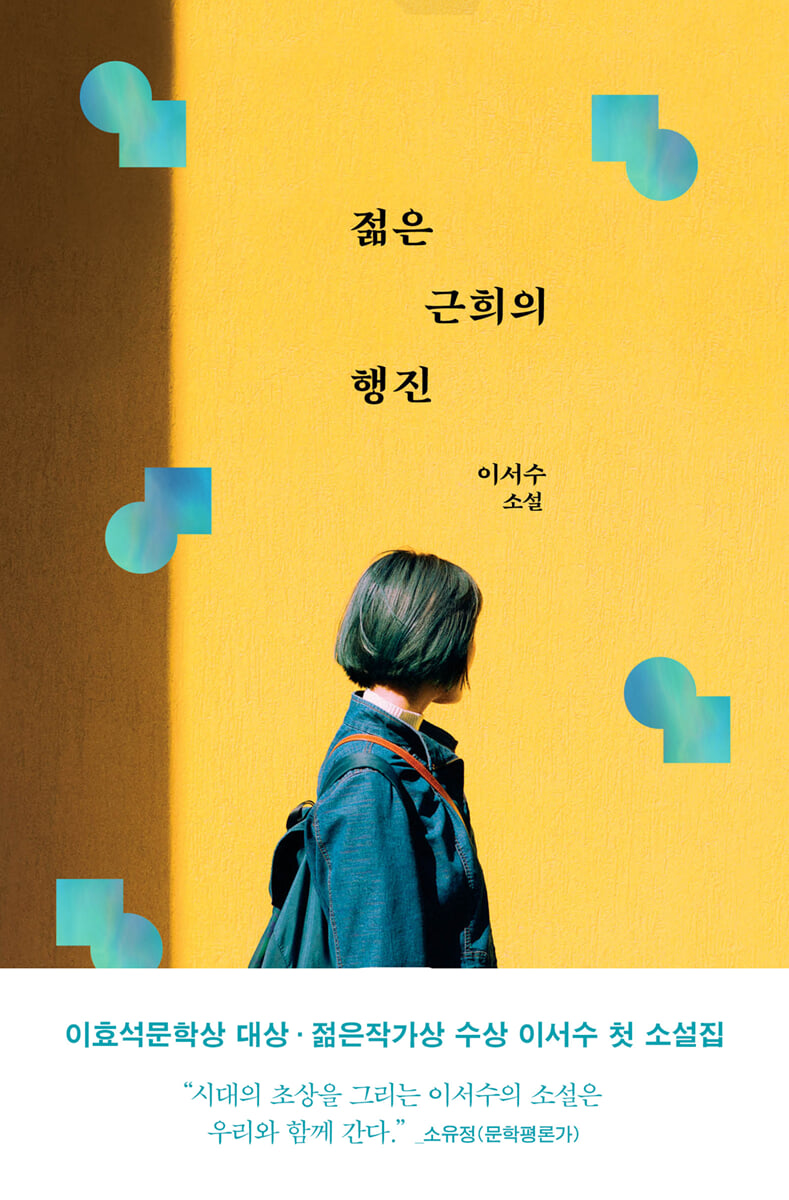
Lee Hyo-seok Literary Award Grand Prize and Young Writer Award Winner Lee Seo-su's first novel collection published Lee Seo-su's novel, which depicts a portrait of the times, accompanies us. So Yu-jeong (literary critic) “We live in the moment and the future is not here, “I firmly believe that we can create the future.” The first collection of short stories by author Lee Seo-su, who won the grand prize at the Lee Hyo-seok Literary Award for her short story “The Age of Mijo” and received rave reviews such as “a work close to perfection in every way” and “a solid novel written with tremendous effort,” has been published by Eunhaengnamu Publishing. Lee Seo-su, who began her career by winning the Dong-A Ilbo New Year’s Literary Contest, won the 6th Hwangsanbeol Youth Literature Award for her novel “Your 4 Minutes and 33 Seconds.” She has received acclaim from readers and critics alike for her works that vividly portray “portraits of the times.” And in 2023, he solidified his position by winning the 14th Young Writer's Award for his short story "Young Geun-hee's March." Lee Seo-su's novel is a mirror. We look in the mirror as we read his first novel. We see the instability of the most fundamental elements that determine our lives and shape our future, such as housing, labor, and employment. “Time slaughters people physically, but it is the times that slaughter them mentally” (The Age of Mizo) is a line that runs through the ten novels included in “Young Geun-hee’s March.” However, the characters Lee Seo-su draws do not crumble helplessly before the cold era that stands before them. In the end, they are not massacred. Get up again. We hold the hands of others who watch over us without leaving our side, and we walk together, shaking our knees. "Young Geun-hee's March" will remain a work of art, a lighthouse of the times, illuminating all of us adrift on the vast sea of life and the path we must take. When the dust clouds settle, we will see that each of our faces is different. But there are always people waiting to do something for each other. People who say what they think and end up hurting others and themselves. I'd rather keep my mouth shut. Whether it's at home, in the body, or anywhere else, should we just let other people talk and live like children, playing around? But what can I do when something keeps making me want to cry? How can it be stopped? As time goes by, another incident will strike our hearts like a meteor, and each time we will walk together with our sleeves tangled. _From 〈Tangled Sleeves〉 |
- You can preview some of the book's contents.
Preview
index
The Age of Mizo
tangled sleeves
Dropping a bird without legs
Young Geun-hee's March
Yeonhui-dong at night
My Bladder My Earth
Rehabilitate and love
He ate a cicada
Hyunseo's Shadow
Rescue, Vintage or Salvation
────────────
Commentary · Portrait of an Era by Literary Critic So Yoo-jeong
Author's Note
tangled sleeves
Dropping a bird without legs
Young Geun-hee's March
Yeonhui-dong at night
My Bladder My Earth
Rehabilitate and love
He ate a cicada
Hyunseo's Shadow
Rescue, Vintage or Salvation
────────────
Commentary · Portrait of an Era by Literary Critic So Yoo-jeong
Author's Note
Detailed image
Publisher's Review
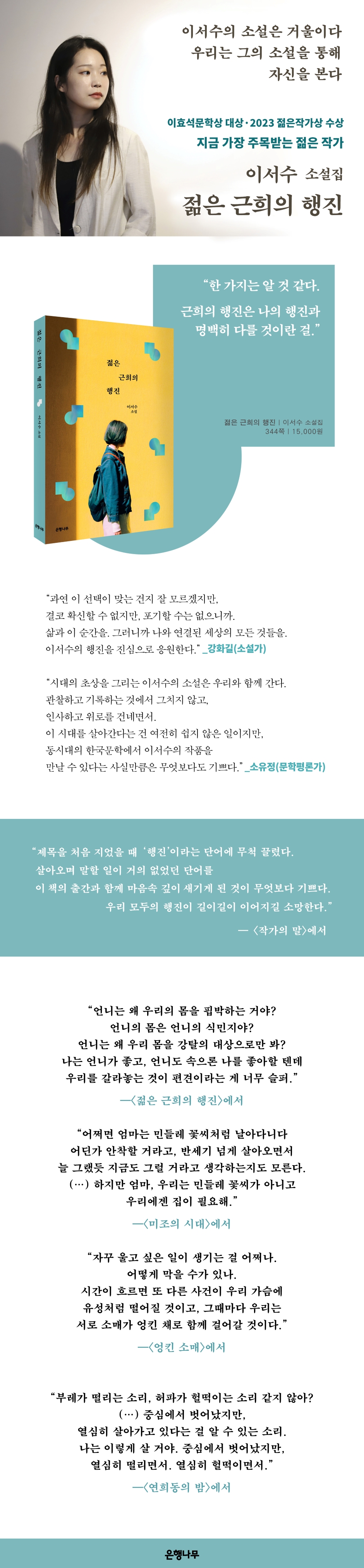
“I think I know one thing.
“Geunhee’s march will be clearly different from my march.”
A characteristic of Lee Seo-su's novels is that most of the characters suffer from housing insecurity.
This is a timely discourse surrounding the abnormally high real estate market, but its significance lies in the fact that this abnormality has already become part of our daily lives.
Among the basic necessities of human life, food, clothing, and shelter, housing is the most expensive.
For those who are from Seoul and those who came to Seoul to live there, living without a home is like pouring water into a bottomless bucket.
People who cannot settle down in any neighborhood live in an unstable state with unstable dreams.
In "Mijo's Era," "Mijo," who uses her father's lifetime savings of 50 million won to find a house to rent with her mother, and "Sister Suyeong," who developed alopecia areata due to stress while working as an assistant for an adult webtoon, appear. In "Yeonhui-dong Night," "I," who gave up on my dream, compromised with reality, and wore the "shackles of tomorrow," and "Sister Kyunghee," who could not give up on movies and writes a failed script every day, appear.
And that's not all.
There is a young couple who can no longer even dream of owning a home in Seoul due to the skyrocketing housing prices in five years (My Bladder, My Earth), and there is Gajin who finds out that while it is not easy to buy an officetel in Seoul for 300 million won, there is an apartment in Gunsan for 30 million won (Dropping a Bird Without Legs).
They feel unsafe neither inside nor outside the home.
This is because they are people who have to somehow settle down to make a living, but they have to be prepared to leave once a year or once every two years.
We were poor, but we were very poor.
But neither of them could admit it, and not just because of pride.
The 50 million won that was not enough to buy a house for us to live in together in Seoul was the fortune my father had saved throughout his life.
Perhaps we knew it so well that we vowed never to be discouraged.
But the price of housing in Seoul made my father's inheritance seem insignificant.
Before I knew it, my father had become someone who had left behind only the deposit for a semi-basement apartment of about 6 pyeong.
_From 〈The Age of Mizo〉
In particular, recently published works expand on previously discussed topics to include 'the female body' and 'subjectivity'.
'I', who is troubled by an unwanted pregnancy and decides to have an abortion (〈Tangled Sleeves〉), and Geun-hee (〈Young Geun-hee's March〉), who confidently asks Moon-hee, who doesn't understand why she is wearing clothes that reveal her cleavage during a book introduction broadcast, "Why does my sister only see our bodies as objects of robbery?" These are indicators of Lee Seo-su's limitless potential and a reason to look forward to his next novel even more.
The book is beautiful, but my body is also beautiful.
The sentence is beautiful, but my heart is also beautiful.
A properly placed period is beautiful, but my inverted nipples are also beautiful.
There's nothing wrong with thinking this way.
Rather, it's strange that my sister tells me to hide it.
Why do you oppress our bodies, sister? Is your body your colony? Why do you only see our bodies as objects of plunder? I like you, and I'm sure you secretly like me, too. It's so sad that what divides us is prejudice.
_From 〈Young Geun-hee's March〉
But, despite their bleak situation, there is a strange energy felt from the characters in the novel.
This is a common characteristic of the author's works: the power that arises when they are 'together'.
I have a mother and younger sibling who fight every other day but still have a place in my heart when I turn around, a friend and older sister who only nags when they open their mouths and even though I want to stop seeing them, I still have feelings close to love and hate for them and cannot break off our relationship.
Their relationship is very realistic, not very pretty, sometimes funny and even sad, but we all know it.
That relationship has kept us alive until now.
It means that you have been able to endure even in a foreign land where you have no place to put your heart.
'Joo-young' who gives comfort in an unpleasant way to 'I' who is lying in bed with a troubled mind after having an abortion, but stays by 'I's' side until the end even though she is suddenly kicked out in the middle of the night (〈Tangled Sleeves〉), and Moon-hee who calls her younger sister, a book-tuber who is a burden, a thoughtless and indulgent amoeba when she gets scammed on Instagram, but after reading the long letter her younger sister left behind, she goes to her sister's YouTube channel and leaves a 'many-minded' comment saying that this is not a letter an amoeba could write (〈Young Geun-hee's March〉).
Their appearances are so similar to ours that even without a hopeful ending, the warmth of their relationship alone provides great comfort and support.
Even when you can't see an inch ahead, you can laugh again because there's someone who throws you even a silly joke. Even when you feel like you're about to be swallowed up by a dark abyss, there's someone who pulls you up into the warm sunlight without a plan, so you can pull yourself together again.
The reason I readily accepted Haejung's offer was because I wanted to properly organize my experiences with them.
Even though I thought it wasn't something we should sort out together, I wanted to keep Haejung and Jooyoung by my side.
Then, I thought I wouldn't cry when I read gloomy articles, and I thought I wouldn't completely lose hope in humanity even if our opinions differed.
Of course, I could have lost it completely, but it would be less painful than never seeing Jooyoung or Haejung's faces again.
_From 〈Tangled Sleeves〉
I'm not sure if this is the right choice,
I can never be sure, but I can't give up
There is no right answer in the world that Lee Seo-su draws.
Whether it's a life of pursuing dreams or a life of compromising with reality, I walk and run silently.
There are so many people in the world, so many different lives, and there is no right answer because who we are today is different from who we will be tomorrow.
But there are 'safe paved roads' that most people in the world want, and those who willingly choose unpaved roads have a fervent dream but are not sure about it.
Still, because “I’m not sure if this is the right choice,” but “I can’t give up” (novelist Kang Hwa-gil), he clears away the stones on the unpaved road and blows the few dandelion seeds that have bloomed there to spread the flowers.
Literary critic So Yoo-jeong says of Lee Seo-su's novels, "It is an act of accurately observing the current times and sharing emotions by observing characters who are also our own from a distance."
Although they are fictional characters, there are people in his works who seem to be living like that somewhere.
When readers join the writer's silent journey of illuminating the times we are passing through through literature, our collective march will begin.
At different paces, but without anyone falling behind.
I think I know one thing.
Geunhee's march will obviously be different from mine.
I moved my finger and commented.
(……) Geunhee may see this.
I wiped the tears running down my cheeks, sniffled, and slowly moved my fingers.
With a feeling of defeat somehow.
Towards this world that looks upon my younger sister Geun-hee and Gwanjong Oh Geun-hee.
─My younger brother, Mangukwanbu
My little brother, please pay a lot of attention.
_From 〈Young Geun-hee's March〉
“Geunhee’s march will be clearly different from my march.”
A characteristic of Lee Seo-su's novels is that most of the characters suffer from housing insecurity.
This is a timely discourse surrounding the abnormally high real estate market, but its significance lies in the fact that this abnormality has already become part of our daily lives.
Among the basic necessities of human life, food, clothing, and shelter, housing is the most expensive.
For those who are from Seoul and those who came to Seoul to live there, living without a home is like pouring water into a bottomless bucket.
People who cannot settle down in any neighborhood live in an unstable state with unstable dreams.
In "Mijo's Era," "Mijo," who uses her father's lifetime savings of 50 million won to find a house to rent with her mother, and "Sister Suyeong," who developed alopecia areata due to stress while working as an assistant for an adult webtoon, appear. In "Yeonhui-dong Night," "I," who gave up on my dream, compromised with reality, and wore the "shackles of tomorrow," and "Sister Kyunghee," who could not give up on movies and writes a failed script every day, appear.
And that's not all.
There is a young couple who can no longer even dream of owning a home in Seoul due to the skyrocketing housing prices in five years (My Bladder, My Earth), and there is Gajin who finds out that while it is not easy to buy an officetel in Seoul for 300 million won, there is an apartment in Gunsan for 30 million won (Dropping a Bird Without Legs).
They feel unsafe neither inside nor outside the home.
This is because they are people who have to somehow settle down to make a living, but they have to be prepared to leave once a year or once every two years.
We were poor, but we were very poor.
But neither of them could admit it, and not just because of pride.
The 50 million won that was not enough to buy a house for us to live in together in Seoul was the fortune my father had saved throughout his life.
Perhaps we knew it so well that we vowed never to be discouraged.
But the price of housing in Seoul made my father's inheritance seem insignificant.
Before I knew it, my father had become someone who had left behind only the deposit for a semi-basement apartment of about 6 pyeong.
_From 〈The Age of Mizo〉
In particular, recently published works expand on previously discussed topics to include 'the female body' and 'subjectivity'.
'I', who is troubled by an unwanted pregnancy and decides to have an abortion (〈Tangled Sleeves〉), and Geun-hee (〈Young Geun-hee's March〉), who confidently asks Moon-hee, who doesn't understand why she is wearing clothes that reveal her cleavage during a book introduction broadcast, "Why does my sister only see our bodies as objects of robbery?" These are indicators of Lee Seo-su's limitless potential and a reason to look forward to his next novel even more.
The book is beautiful, but my body is also beautiful.
The sentence is beautiful, but my heart is also beautiful.
A properly placed period is beautiful, but my inverted nipples are also beautiful.
There's nothing wrong with thinking this way.
Rather, it's strange that my sister tells me to hide it.
Why do you oppress our bodies, sister? Is your body your colony? Why do you only see our bodies as objects of plunder? I like you, and I'm sure you secretly like me, too. It's so sad that what divides us is prejudice.
_From 〈Young Geun-hee's March〉
But, despite their bleak situation, there is a strange energy felt from the characters in the novel.
This is a common characteristic of the author's works: the power that arises when they are 'together'.
I have a mother and younger sibling who fight every other day but still have a place in my heart when I turn around, a friend and older sister who only nags when they open their mouths and even though I want to stop seeing them, I still have feelings close to love and hate for them and cannot break off our relationship.
Their relationship is very realistic, not very pretty, sometimes funny and even sad, but we all know it.
That relationship has kept us alive until now.
It means that you have been able to endure even in a foreign land where you have no place to put your heart.
'Joo-young' who gives comfort in an unpleasant way to 'I' who is lying in bed with a troubled mind after having an abortion, but stays by 'I's' side until the end even though she is suddenly kicked out in the middle of the night (〈Tangled Sleeves〉), and Moon-hee who calls her younger sister, a book-tuber who is a burden, a thoughtless and indulgent amoeba when she gets scammed on Instagram, but after reading the long letter her younger sister left behind, she goes to her sister's YouTube channel and leaves a 'many-minded' comment saying that this is not a letter an amoeba could write (〈Young Geun-hee's March〉).
Their appearances are so similar to ours that even without a hopeful ending, the warmth of their relationship alone provides great comfort and support.
Even when you can't see an inch ahead, you can laugh again because there's someone who throws you even a silly joke. Even when you feel like you're about to be swallowed up by a dark abyss, there's someone who pulls you up into the warm sunlight without a plan, so you can pull yourself together again.
The reason I readily accepted Haejung's offer was because I wanted to properly organize my experiences with them.
Even though I thought it wasn't something we should sort out together, I wanted to keep Haejung and Jooyoung by my side.
Then, I thought I wouldn't cry when I read gloomy articles, and I thought I wouldn't completely lose hope in humanity even if our opinions differed.
Of course, I could have lost it completely, but it would be less painful than never seeing Jooyoung or Haejung's faces again.
_From 〈Tangled Sleeves〉
I'm not sure if this is the right choice,
I can never be sure, but I can't give up
There is no right answer in the world that Lee Seo-su draws.
Whether it's a life of pursuing dreams or a life of compromising with reality, I walk and run silently.
There are so many people in the world, so many different lives, and there is no right answer because who we are today is different from who we will be tomorrow.
But there are 'safe paved roads' that most people in the world want, and those who willingly choose unpaved roads have a fervent dream but are not sure about it.
Still, because “I’m not sure if this is the right choice,” but “I can’t give up” (novelist Kang Hwa-gil), he clears away the stones on the unpaved road and blows the few dandelion seeds that have bloomed there to spread the flowers.
Literary critic So Yoo-jeong says of Lee Seo-su's novels, "It is an act of accurately observing the current times and sharing emotions by observing characters who are also our own from a distance."
Although they are fictional characters, there are people in his works who seem to be living like that somewhere.
When readers join the writer's silent journey of illuminating the times we are passing through through literature, our collective march will begin.
At different paces, but without anyone falling behind.
I think I know one thing.
Geunhee's march will obviously be different from mine.
I moved my finger and commented.
(……) Geunhee may see this.
I wiped the tears running down my cheeks, sniffled, and slowly moved my fingers.
With a feeling of defeat somehow.
Towards this world that looks upon my younger sister Geun-hee and Gwanjong Oh Geun-hee.
─My younger brother, Mangukwanbu
My little brother, please pay a lot of attention.
_From 〈Young Geun-hee's March〉
GOODS SPECIFICS
- Date of issue: May 30, 2023
- Page count, weight, size: 344 pages | 420g | 135*205*30mm
- ISBN13: 9791167373076
- ISBN10: 1167373073
You may also like
카테고리
korean


korean

![GQ KOREA Mark (Monthly): December [2025]](http://librairie.coreenne.fr/cdn/shop/files/8ef265dbbfbf186523ed75ba7319009d.jpg?v=1765340328&width=3840)


