

Books loved by Tokugawa
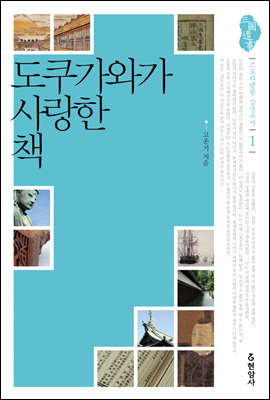 |
Description
Book Introduction
The Secret Behind the Publication of Samguk Yusa
One of the most commonly available classics today is Samguk Yusa.
It is known that 『Samguk Yusa』 was written by the Goryeo monk Iryeon.
But isn't it remarkable? We can no longer verify the numerous history books said to have been written during the Goryeo Dynasty.
『Samguk Yusa』 also experienced a crisis that almost existed only in history.
Until Choi Nam-seon excavated it, the Samguk Sagi had been forgotten for a full 415 years.
Strangely enough, Choi Nam-seon discovered the Samguk Yusa in Tokyo while studying abroad in Japan.
As the title of the book suggests, Samguk Yusa was more loved in Japan than in Korea.
This book is the first volume of 'Storytelling Samguk Yusa' planned by Samguk Yusa expert Go Woon-gi.
While preparing his doctoral dissertation, the author went out and reported on the scenes that appear in Samguk Yusa.
Many of the photographs included in this book are also the result of the author's diligent efforts.
Volume 1, “The Books Loved by Tokugawa,” writes about the fate of “Samguk Yusa” in both Korea and Japan.
It traces the distribution process of a single book and analyzes the history that followed its release.
One of the most commonly available classics today is Samguk Yusa.
It is known that 『Samguk Yusa』 was written by the Goryeo monk Iryeon.
But isn't it remarkable? We can no longer verify the numerous history books said to have been written during the Goryeo Dynasty.
『Samguk Yusa』 also experienced a crisis that almost existed only in history.
Until Choi Nam-seon excavated it, the Samguk Sagi had been forgotten for a full 415 years.
Strangely enough, Choi Nam-seon discovered the Samguk Yusa in Tokyo while studying abroad in Japan.
As the title of the book suggests, Samguk Yusa was more loved in Japan than in Korea.
This book is the first volume of 'Storytelling Samguk Yusa' planned by Samguk Yusa expert Go Woon-gi.
While preparing his doctoral dissertation, the author went out and reported on the scenes that appear in Samguk Yusa.
Many of the photographs included in this book are also the result of the author's diligent efforts.
Volume 1, “The Books Loved by Tokugawa,” writes about the fate of “Samguk Yusa” in both Korea and Japan.
It traces the distribution process of a single book and analyzes the history that followed its release.
- You can preview some of the book's contents.
Preview
index
pictorial
Chapter 1 Prologue
Chapter 2: A Fateful Encounter
Chapter 3: Hot Potato - Dangun
Chapter 4: Samguk Yusa Reborn in Gyeongju
Chapter 5: Tokugawa Ieyasu and the City of Nagoya
Chapter 6: Books Dedicated to the Imperial Family
Chapter 7: The Diary of a Samurai in Nagoya
Chapter 8: Flowers in Luxury
Chapter 9: Silhak Scholars of the Late Joseon Dynasty and Samguk Yusa
Chapter 10: In the turbulent times of the Meiji Restoration
Chapter 11: The Rediscovery of Samguk Yusa in 1904
Chapter 12 Epilogue
References
Search
Chapter 1 Prologue
Chapter 2: A Fateful Encounter
Chapter 3: Hot Potato - Dangun
Chapter 4: Samguk Yusa Reborn in Gyeongju
Chapter 5: Tokugawa Ieyasu and the City of Nagoya
Chapter 6: Books Dedicated to the Imperial Family
Chapter 7: The Diary of a Samurai in Nagoya
Chapter 8: Flowers in Luxury
Chapter 9: Silhak Scholars of the Late Joseon Dynasty and Samguk Yusa
Chapter 10: In the turbulent times of the Meiji Restoration
Chapter 11: The Rediscovery of Samguk Yusa in 1904
Chapter 12 Epilogue
References
Search
Publisher's Review
Samguk Yusa expert Go Un-gi's life work, "Storytelling Samguk Yusa"
“As globalization progresses and Korea grows larger, the world will ask us more frequently, ‘Who are you?’
Then, we need to say, ‘This is who we are,’ and there is no text like Samguk Yusa that can tell us who we are.”
These are the words of the author, Professor Koh Woon-ki.
'Samguk Yusa' is the only book that tells us about the identity and roots of the Korean people and is considered a representative book of the Republic of Korea.
The author, who has been researching a history book written 700 years ago for over 20 years, published “Samguk Yusa We Really Need to Know” in 2002, presenting a commentary on Samguk Yusa.
At the time, it sparked a nationwide craze for reading Samguk Yusa with its popular writing style that incorporated delicious expressions and literary imagination.
Afterwards, he published a travelogue written while visiting the sites of the stories in Samguk Yusa, and a biography restoring Ilyeon's life story, which only exists in epitaphs, completing the 'Samguk Yusa Trilogy'.
When publishing the 'Storytelling Samguk Yusa' series, the author made this promise to the readers.
Novelist Kim Hoon says:
“Il-yeon (一然) wrote about things that cannot be broken or burned.
This was his fight against the barbarism of his time.” I completely agree with this statement.
Il-yeon was said to be 'a person who has lived the entire time that humans have experienced.'
I agree with this statement too.
I will now try to unravel the 'unbreakable and incombustible' contained in 'Samguk Yusa' into today's story.
It's not just my job, and it's something that will never end.
I hope that my actions, as I fight against the barbarism of our time in the ongoing story, will be a signal of communication itself.
From now on, 'Storytelling Samguk Yusa' will visit readers once a year.
This is my life's work, which I dare to promise in the name of 'Samguk Yusa'.
Goun-gi's life work, which unfolds the 'unbreakable and incombustible' contained in 'Samguk Yusa' into a story for today.
This is the final conclusion to Professor Go Un-gi's research on Samguk Yusa, who has been in love with it his entire life.
Following the first volume, 'The Book Tokugawa Loved,' he is preparing his next works, including 'A Life of This Storyteller,' which explains Ilyeon's method of writing the Samguk Yusa, and 'The Birth of a Song,' which traces the boom in hyangga research that began in Japan and Korea 100 years ago.
The first volume published this time, 'Books Loved by Tokugawa', unfolds the hidden story between Korea and Japan regarding 'Samguk Yusa'.
The author travels between Korea and Japan to learn about how the Samguk Yusa was treated in the same era, and vividly tells the story of the historical consequences that followed.
By meticulously tracing the distribution process of a single book, the secrets are revealed in an entertaining way.
A Report on a Book with a Strange Fate
“The original of ‘Samguk Yusa’ somehow ended up in a faraway land, Japan.
And then it fell into the hands of the new ruler, Tokugawa.”
During the seven years of the Imjin War and the Byeongja War, generals who went on expeditions to Joseon brought back thousands of Joseon books on their way back.
This was because it was perfect for studying Joseon's printing technology, which was world-class at the time.
Among them, the Japanese army, caught in the whirlwind of war and retreating, took with them ??Samguk Yusa??.
This is one of the books taken in Gyeongju in 1512.
The original copy of the Samguk Yusa, which left its homeland and crossed the vast sea, was dedicated to Tokugawa Ieyasu and was carefully preserved in the library.
Among the original copies of Samguk Yusa remaining in Korea and abroad today, this is the only book that provides detailed information on the process of transmission.
“Samguk Yusa” published in Tokyo, Japan in 1904.
“Why did they try to teach ‘Samguk Yusa’?”
Suddenly, in 1904, 'Samguk Yusa' was published in Tokyo.
It was published as part of a series of textbooks for students of the prestigious Tokyo Imperial University Department of History.
The intention of those who published the Samguk Yusa a year before the Eulsa Treaty was clearly related to Joseon's colonial management.
Because you need to know Joseon's history and culture to govern.
Professors of the Department of History at Tokyo Imperial University discovered a book in the Tokugawa Ieyasu collection that would satisfy this need.
It was a luxurious three-volume set, printed in the traditional way using modern type, borrowed from the Tokugawa family's collection, to create the Samguk Yusa.
“An entity that can neither be accepted nor discarded
“Dangun was a hot potato to them.”
'Samguk Yusa' begins with the Dangun myth.
It was Ilyeon's insight that found the roots of the nation in Dangun.
However, during the 500 years of the Joseon Dynasty, the Dangun myth was like a hot potato for intellectuals of the time.
An existence that can neither be accepted nor abandoned.
In such a situation, the 'Samguk Yusa' that contained this had to be treated as a ridiculous book.
By the 19th century, no one had seen this book, and even its whereabouts were unknown.
After 1904, 'Samguk Yusa' resurfaced as a hot potato.
“Choi Nam-seon,
“Filming ‘Samguk Yusa’ after 415 years.”
It was not until the late 13th century that the writing was completed and left the hands of its owner. It was not until the mid-16th century that a bright person took out the woodblocks buried in a small warehouse of the Gyeongju government office, cleaned them, and printed them anew. One of the volumes was caught up in the whirlwind of the Imjin War and ended up in a new home across the sea in the early 17th century. It was not until the early 20th century that it was reborn with modern type.
After leaving my land, I was completely forgotten by my land, and it was only after the 20th century, when I was reborn in a foreign land, that I began to become known to the people of my land.
It was right by the southernmost point.
Choi Nam-seon brought the 'Samguk Yusa' published in Japan and published it in the 18th issue of 'Gyeomyeong' to make it widely available.
After 415 years, the Samguk Yusa, a book that was difficult to obtain even for a thousand gold coins, was brought to light by Choi Nam-seon.
The History of the Publication of Samguk Yusa, Crossing Between Japan and Korea
It is vividly conveyed through meticulous research and accurate data analysis.
In this book, the author has included many valuable materials that have not been made public in Korea before, as well as materials that are not easily accessible to the general public.
The Tokugawa version of 'Samguk Yusa' (the book inherited from Tokugawa Ieyasu) has a stamp of 'Gohon'.
Books with this seal received special treatment.
There are many blank pages in the Tokugawa version of 'Samguk Yusa'.) List of books in the Hosa Bunko (The materials in the Hosa Bunko are valuable because they contain a list of books published by this bunko over the years.
The list of books shows how the books in the library were kept), notes on books lent to the imperial family (a list of 32 books lent by the Hosa Bunko and later returned), and the Imperial Seal (a seal stamped by Tokugawa Ieyasu to indicate that the library had been passed down.
There are still several seals engraved with the word "Obon" (there are still several types left).), Tokyo University's "Samguk Yusa" (published by Tsuboi Kumezo, Dean of the Faculty of Letters, University of Tokyo, as part of a series called "Faculty of Letters Four-character Series"), Kyoto University's "Samguk Yusa" (published in 1925 by Imanishi Ryu of Kyoto University.
(The original text was copied as is based on the Sunamsutaekbon that Imanishi obtained in Seoul.), 'Samguk Yusa' published by Gyeongju-bu in 1512, 'Gyeomyeong', 'Samguk Yusa' in the government catalog, 'Samguk Yusa' in the Owari catalog, 'Samguk Yusa' in the Baba Eomunko fishing book catalog, 'Samguk Yusa' in the Baba Eomunko fishing book catalog, 'Samguk Yusa' in the Eomunko fishing book catalog, 'Samguk Yusa' in the Eomunko fishing book catalog, 'Samguk Yusa' in the Suruga Eoyang fishing book catalog, etc. Based on this, it is meticulously researched based on materials found in Japan and materials from our country, and vividly tells how it was evaluated and developed in Korea and Japan during the same period.
“As globalization progresses and Korea grows larger, the world will ask us more frequently, ‘Who are you?’
Then, we need to say, ‘This is who we are,’ and there is no text like Samguk Yusa that can tell us who we are.”
These are the words of the author, Professor Koh Woon-ki.
'Samguk Yusa' is the only book that tells us about the identity and roots of the Korean people and is considered a representative book of the Republic of Korea.
The author, who has been researching a history book written 700 years ago for over 20 years, published “Samguk Yusa We Really Need to Know” in 2002, presenting a commentary on Samguk Yusa.
At the time, it sparked a nationwide craze for reading Samguk Yusa with its popular writing style that incorporated delicious expressions and literary imagination.
Afterwards, he published a travelogue written while visiting the sites of the stories in Samguk Yusa, and a biography restoring Ilyeon's life story, which only exists in epitaphs, completing the 'Samguk Yusa Trilogy'.
When publishing the 'Storytelling Samguk Yusa' series, the author made this promise to the readers.
Novelist Kim Hoon says:
“Il-yeon (一然) wrote about things that cannot be broken or burned.
This was his fight against the barbarism of his time.” I completely agree with this statement.
Il-yeon was said to be 'a person who has lived the entire time that humans have experienced.'
I agree with this statement too.
I will now try to unravel the 'unbreakable and incombustible' contained in 'Samguk Yusa' into today's story.
It's not just my job, and it's something that will never end.
I hope that my actions, as I fight against the barbarism of our time in the ongoing story, will be a signal of communication itself.
From now on, 'Storytelling Samguk Yusa' will visit readers once a year.
This is my life's work, which I dare to promise in the name of 'Samguk Yusa'.
Goun-gi's life work, which unfolds the 'unbreakable and incombustible' contained in 'Samguk Yusa' into a story for today.
This is the final conclusion to Professor Go Un-gi's research on Samguk Yusa, who has been in love with it his entire life.
Following the first volume, 'The Book Tokugawa Loved,' he is preparing his next works, including 'A Life of This Storyteller,' which explains Ilyeon's method of writing the Samguk Yusa, and 'The Birth of a Song,' which traces the boom in hyangga research that began in Japan and Korea 100 years ago.
The first volume published this time, 'Books Loved by Tokugawa', unfolds the hidden story between Korea and Japan regarding 'Samguk Yusa'.
The author travels between Korea and Japan to learn about how the Samguk Yusa was treated in the same era, and vividly tells the story of the historical consequences that followed.
By meticulously tracing the distribution process of a single book, the secrets are revealed in an entertaining way.
A Report on a Book with a Strange Fate
“The original of ‘Samguk Yusa’ somehow ended up in a faraway land, Japan.
And then it fell into the hands of the new ruler, Tokugawa.”
During the seven years of the Imjin War and the Byeongja War, generals who went on expeditions to Joseon brought back thousands of Joseon books on their way back.
This was because it was perfect for studying Joseon's printing technology, which was world-class at the time.
Among them, the Japanese army, caught in the whirlwind of war and retreating, took with them ??Samguk Yusa??.
This is one of the books taken in Gyeongju in 1512.
The original copy of the Samguk Yusa, which left its homeland and crossed the vast sea, was dedicated to Tokugawa Ieyasu and was carefully preserved in the library.
Among the original copies of Samguk Yusa remaining in Korea and abroad today, this is the only book that provides detailed information on the process of transmission.
“Samguk Yusa” published in Tokyo, Japan in 1904.
“Why did they try to teach ‘Samguk Yusa’?”
Suddenly, in 1904, 'Samguk Yusa' was published in Tokyo.
It was published as part of a series of textbooks for students of the prestigious Tokyo Imperial University Department of History.
The intention of those who published the Samguk Yusa a year before the Eulsa Treaty was clearly related to Joseon's colonial management.
Because you need to know Joseon's history and culture to govern.
Professors of the Department of History at Tokyo Imperial University discovered a book in the Tokugawa Ieyasu collection that would satisfy this need.
It was a luxurious three-volume set, printed in the traditional way using modern type, borrowed from the Tokugawa family's collection, to create the Samguk Yusa.
“An entity that can neither be accepted nor discarded
“Dangun was a hot potato to them.”
'Samguk Yusa' begins with the Dangun myth.
It was Ilyeon's insight that found the roots of the nation in Dangun.
However, during the 500 years of the Joseon Dynasty, the Dangun myth was like a hot potato for intellectuals of the time.
An existence that can neither be accepted nor abandoned.
In such a situation, the 'Samguk Yusa' that contained this had to be treated as a ridiculous book.
By the 19th century, no one had seen this book, and even its whereabouts were unknown.
After 1904, 'Samguk Yusa' resurfaced as a hot potato.
“Choi Nam-seon,
“Filming ‘Samguk Yusa’ after 415 years.”
It was not until the late 13th century that the writing was completed and left the hands of its owner. It was not until the mid-16th century that a bright person took out the woodblocks buried in a small warehouse of the Gyeongju government office, cleaned them, and printed them anew. One of the volumes was caught up in the whirlwind of the Imjin War and ended up in a new home across the sea in the early 17th century. It was not until the early 20th century that it was reborn with modern type.
After leaving my land, I was completely forgotten by my land, and it was only after the 20th century, when I was reborn in a foreign land, that I began to become known to the people of my land.
It was right by the southernmost point.
Choi Nam-seon brought the 'Samguk Yusa' published in Japan and published it in the 18th issue of 'Gyeomyeong' to make it widely available.
After 415 years, the Samguk Yusa, a book that was difficult to obtain even for a thousand gold coins, was brought to light by Choi Nam-seon.
The History of the Publication of Samguk Yusa, Crossing Between Japan and Korea
It is vividly conveyed through meticulous research and accurate data analysis.
In this book, the author has included many valuable materials that have not been made public in Korea before, as well as materials that are not easily accessible to the general public.
The Tokugawa version of 'Samguk Yusa' (the book inherited from Tokugawa Ieyasu) has a stamp of 'Gohon'.
Books with this seal received special treatment.
There are many blank pages in the Tokugawa version of 'Samguk Yusa'.) List of books in the Hosa Bunko (The materials in the Hosa Bunko are valuable because they contain a list of books published by this bunko over the years.
The list of books shows how the books in the library were kept), notes on books lent to the imperial family (a list of 32 books lent by the Hosa Bunko and later returned), and the Imperial Seal (a seal stamped by Tokugawa Ieyasu to indicate that the library had been passed down.
There are still several seals engraved with the word "Obon" (there are still several types left).), Tokyo University's "Samguk Yusa" (published by Tsuboi Kumezo, Dean of the Faculty of Letters, University of Tokyo, as part of a series called "Faculty of Letters Four-character Series"), Kyoto University's "Samguk Yusa" (published in 1925 by Imanishi Ryu of Kyoto University.
(The original text was copied as is based on the Sunamsutaekbon that Imanishi obtained in Seoul.), 'Samguk Yusa' published by Gyeongju-bu in 1512, 'Gyeomyeong', 'Samguk Yusa' in the government catalog, 'Samguk Yusa' in the Owari catalog, 'Samguk Yusa' in the Baba Eomunko fishing book catalog, 'Samguk Yusa' in the Baba Eomunko fishing book catalog, 'Samguk Yusa' in the Eomunko fishing book catalog, 'Samguk Yusa' in the Eomunko fishing book catalog, 'Samguk Yusa' in the Suruga Eoyang fishing book catalog, etc. Based on this, it is meticulously researched based on materials found in Japan and materials from our country, and vividly tells how it was evaluated and developed in Korea and Japan during the same period.
GOODS SPECIFICS
- Date of issue: December 10, 2009
- Page count, weight, size: 355 pages | 632g | 153*224*30mm
- ISBN13: 9788932315362
- ISBN10: 8932315361
You may also like
카테고리
korean


korean

![GQ KOREA Mark (Monthly): December [2025]](http://librairie.coreenne.fr/cdn/shop/files/8ef265dbbfbf186523ed75ba7319009d.jpg?v=1765340328&width=3840)


