

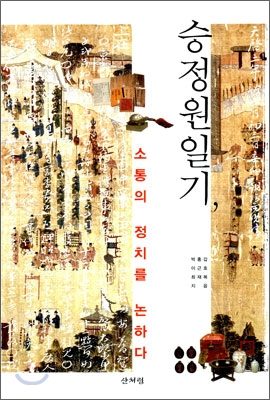
Seungjeongwon Diary: Discussing the Politics of Communication
 |
Description
Book Introduction
Joseon Dynasty stenographic records written by the royal secretariat, the Seungjeongwon, during the Joseon Dynasty.
We take a look at the vivid historical scenes through the 『Seungjeongwon Diary』.
The Seungjeongwon Diary is National Treasure No. 303 and a UNESCO World Heritage site. It is a record that was written every day without fail from the early Joseon Dynasty until the country was annexed by Japan in 1910.
This record, written in the form of a journal of the work carried out by the Seungjeongwon, which served as the king's secretariat, contains not only various reports and approvals, but also details the various tasks the king carried out throughout the day after coughing in the early morning.
This book, which covers a vast amount of content spanning 288 years, is a document left behind by the government office responsible for issuing and issuing royal orders, and thus conveys the specific details of events that occurred in the royal family and the country at the time without omission.
In addition, it presents differentiated content with vivid records of history in all fields, including politics, economics, national defense, society, and culture, as well as abundant data on daily weather and astronomical phenomena.
The authors provide a wider range of content by including historical facts and visual materials that can be gleaned from the text, as well as current discussions and research related to the records themselves.
We take a look at the vivid historical scenes through the 『Seungjeongwon Diary』.
The Seungjeongwon Diary is National Treasure No. 303 and a UNESCO World Heritage site. It is a record that was written every day without fail from the early Joseon Dynasty until the country was annexed by Japan in 1910.
This record, written in the form of a journal of the work carried out by the Seungjeongwon, which served as the king's secretariat, contains not only various reports and approvals, but also details the various tasks the king carried out throughout the day after coughing in the early morning.
This book, which covers a vast amount of content spanning 288 years, is a document left behind by the government office responsible for issuing and issuing royal orders, and thus conveys the specific details of events that occurred in the royal family and the country at the time without omission.
In addition, it presents differentiated content with vivid records of history in all fields, including politics, economics, national defense, society, and culture, as well as abundant data on daily weather and astronomical phenomena.
The authors provide a wider range of content by including historical facts and visual materials that can be gleaned from the text, as well as current discussions and research related to the records themselves.
- You can preview some of the book's contents.
Preview
index
When publishing a book
Part 1: 288 Years of Records, Seungjeongwon Diaries
Chapter 1: What kind of office is the Seungjeongwon?
Chapter 2: What Kind of Book is the Seungjeongwon Diary?
Part 2: I am the King
Chapter 1: The King's Long Procession on New Year's Day, 1763
Chapter 2: The Long King's Day
Chapter 3: King Yeongjo meets Jeong Seon, the great scholar-official
Chapter 4: The Power Struggle Between King Yeongjo and His Subjects Over the Posthumous Honor of His Birth Mother
Chapter 5: Public Opinion Divided North and South, and the King's Contact with the People
Chapter 6 The King's Wet Nurse was a first-rank official.
Chapter 7: The Crown Prince Dies, and Suspicions Grow
Part 3: Aspects of Joseon Dynasty Government
Chapter 1: The Future of Personnel Authority and the Narrow-Legged Battle Between the King and His Servants
Chapter 2: The Ins and Outs of the National Reporting System
Chapter 3: The Seven Deadly Sins of the Lords
Chapter 4: The Grand Procession of the Imperial Envoys
Chapter 5: Coffee Time at the Office of the Inspector General: The Terrifying Inspection Tea Time
Chapter 6: Do not use the character "fire" as a password. Passwords and military codes
Part 4: A World Where Both the Noble and the Commoner Live
Chapter 1: A Chaotic Scene from the Past Examination Site
Chapter 2: Even the new recruits who went to the harsh initiation ceremony were discouraged.
Chapter 3: The noble village's rivalry that has lasted for hundreds of years
Chapter 4: Sometimes, even drunkenness can be a serious sin.
Chapter 5: Let the aggrieved strike the gong.
Chapter 6: The Lame Marriage
Chapter 7: The World of Making Money by Selling Genealogy
Part 5: For a world where people eat well and live well
Chapter 1: The King's Health Care
Chapter 2: When in need, even dog poop is good medicine.
Chapter 3: The Passion Feast, a World for the Elderly
Chapter 4: A Cow-Eating Society
Chapter 5: Children Abandoned to Starvation
Chapter 6: Install rain gauges in the palace and the eight provinces.
Part 6: The Secretariat, the Royal Secretariat, and the King's Men
Chapter 1: The King's Secretariat, the Royal Secretariat
Chapter 2: Dying by the King's Order, Living by the King's Order
Chapter 3: Seungji, the greatest pillars of their time, possessing both skill and background.
Chapter 4: The New Elite, No Different from Officers
Chapter 5: The King's Men Should Not Cross Geumcheon Bridge
Part 7: The Diaries of the Royal Secretariat: The Functional Relationship Between Records and Preservation
Chapter 1: Those who make mistakes in their records must be punished.
Chapter 2: Restore the Burned Seungjeongwon Diary
Chapter 3: Jim commands, delete the sensitive parts.
Chapter 4: The Value of the Seungjeongwon Diaries as Seen Through Case Studies
Part 8: Traditional Era Record-Making Culture and the Seungjeongwon Diaries
Chapter 1: Traditions of East Asian Record Culture
Chapter 2: Our Recorded Culture Before the Joseon Dynasty
Chapter 3: The Brilliant Record-Making Culture of the Joseon Dynasty
Chapter 4: The Flower of Record Culture, Seungjeongwon Diaries
References
Part 1: 288 Years of Records, Seungjeongwon Diaries
Chapter 1: What kind of office is the Seungjeongwon?
Chapter 2: What Kind of Book is the Seungjeongwon Diary?
Part 2: I am the King
Chapter 1: The King's Long Procession on New Year's Day, 1763
Chapter 2: The Long King's Day
Chapter 3: King Yeongjo meets Jeong Seon, the great scholar-official
Chapter 4: The Power Struggle Between King Yeongjo and His Subjects Over the Posthumous Honor of His Birth Mother
Chapter 5: Public Opinion Divided North and South, and the King's Contact with the People
Chapter 6 The King's Wet Nurse was a first-rank official.
Chapter 7: The Crown Prince Dies, and Suspicions Grow
Part 3: Aspects of Joseon Dynasty Government
Chapter 1: The Future of Personnel Authority and the Narrow-Legged Battle Between the King and His Servants
Chapter 2: The Ins and Outs of the National Reporting System
Chapter 3: The Seven Deadly Sins of the Lords
Chapter 4: The Grand Procession of the Imperial Envoys
Chapter 5: Coffee Time at the Office of the Inspector General: The Terrifying Inspection Tea Time
Chapter 6: Do not use the character "fire" as a password. Passwords and military codes
Part 4: A World Where Both the Noble and the Commoner Live
Chapter 1: A Chaotic Scene from the Past Examination Site
Chapter 2: Even the new recruits who went to the harsh initiation ceremony were discouraged.
Chapter 3: The noble village's rivalry that has lasted for hundreds of years
Chapter 4: Sometimes, even drunkenness can be a serious sin.
Chapter 5: Let the aggrieved strike the gong.
Chapter 6: The Lame Marriage
Chapter 7: The World of Making Money by Selling Genealogy
Part 5: For a world where people eat well and live well
Chapter 1: The King's Health Care
Chapter 2: When in need, even dog poop is good medicine.
Chapter 3: The Passion Feast, a World for the Elderly
Chapter 4: A Cow-Eating Society
Chapter 5: Children Abandoned to Starvation
Chapter 6: Install rain gauges in the palace and the eight provinces.
Part 6: The Secretariat, the Royal Secretariat, and the King's Men
Chapter 1: The King's Secretariat, the Royal Secretariat
Chapter 2: Dying by the King's Order, Living by the King's Order
Chapter 3: Seungji, the greatest pillars of their time, possessing both skill and background.
Chapter 4: The New Elite, No Different from Officers
Chapter 5: The King's Men Should Not Cross Geumcheon Bridge
Part 7: The Diaries of the Royal Secretariat: The Functional Relationship Between Records and Preservation
Chapter 1: Those who make mistakes in their records must be punished.
Chapter 2: Restore the Burned Seungjeongwon Diary
Chapter 3: Jim commands, delete the sensitive parts.
Chapter 4: The Value of the Seungjeongwon Diaries as Seen Through Case Studies
Part 8: Traditional Era Record-Making Culture and the Seungjeongwon Diaries
Chapter 1: Traditions of East Asian Record Culture
Chapter 2: Our Recorded Culture Before the Joseon Dynasty
Chapter 3: The Brilliant Record-Making Culture of the Joseon Dynasty
Chapter 4: The Flower of Record Culture, Seungjeongwon Diaries
References
Publisher's Review
The Seungjeongwon Diaries, the flower of Joseon Dynasty's record culture, are more extensive and detailed than the Annals of the Joseon Dynasty.
Comparing the 『Seungjeongwon Diaries』 and the 『Joseon Dynasty Annals』, each has its own strengths and weaknesses.
Looking at the total period of the existing records, the Seungjeongwon Diaries are only half, covering 288 years. However, in terms of volume, the Seungjeongwon Diaries are approximately five times the size of the Joseon Dynasty Annals. (The Seungjeongwon Diaries, with 242.5 million characters in 3,245 volumes, are even more extensive than the Mingsilrok (2,964 volumes, 16 million characters), which is considered the most extensive historical record in China.)
If the Annals of the Joseon Dynasty are secondary sources that were selected and processed by editors based on records of the times and historical records, the Diaries of the Royal Secretariat are primary sources that recorded the situation at the time on the spot.
Therefore, while the 『Seungjeongwon Diary』 is a handwritten copy in cursive script written directly on site with a brush, the 『Joseon Dynasty Annals』 is a printed copy using movable type.
In particular, the 『Diary of the Royal Secretariat』 is a vivid primary source, so it shows the document format used during the Joseon Dynasty and even the Idu script used until the late Joseon Dynasty.
The records of the king and his subjects debating current issues are as vivid as a video screen, and read like a parliamentary transcript.
If 10,000 people had signed and submitted a petition together, the Annals of the Joseon Dynasty might have simply recorded that fact or omitted it altogether, but the Seungjeongwon Diary contains the full text of the petition along with the names of all 10,000 people.
Additionally, the 『Seungjeongwon Diary』 was a resource that could be taken out and referenced at any time when needed.
The Annals of the Joseon Dynasty, which were secret history, were not even allowed to be read by the king, but the Diaries of the Royal Secretariat could be read at any time when needed.
When seeking precedents in the administration of state affairs, the 『Diary of the Royal Secretariat』 was always consulted, and it was the most important reference material for compiling the Annals of the Joseon Dynasty and the 『Records of the Royal Secretariat』, and it was also used as a reference for personal litigation matters.
Therefore, in the rampant cases of false accusations (examining the facts to clarify injustice) that arose in the late Joseon Dynasty, the 『Seungjeongwon Diary』 was often presented as evidence, and it was widely used to the point of being selected as a necessary material when publishing personal anthologies.
The Seungjeongwon Diary, a Joseon stenographic record written by the royal secretariat, the Seungjeongwon
『Seungjeongwon Diaries』, National Treasure No. 303 and registered as UNESCO Memory of the World in 2001.
As the name suggests, this is a diary written by the government office called Seungjeongwon.
Seungjeongwon was an organization that served as the king's secretariat, and the 『Seungjeongwon Diary』 was a journal of the work they carried out.
During the Joseon Dynasty, in order to establish a unified reporting system to the king that would not be distorted, all reports were made through the Seungjeongwon, which was in charge of issuing and receiving royal orders. All documents reported to the king were reported to the king through the Seungjeongwon, and documents that had been approved by the king were delivered to the person in charge through the Seungjeongwon.
Accordingly, the 『Diary of the Royal Secretariat』 not only recorded these reports and approvals in detail, but also organized all the contents in a formal manner, including the weather, the king's cough at dawn, and various other events that occurred throughout the day, such as the king's residence and movements, royal banquets and receptions with officials, various meetings, and petitions submitted from the provinces.
The 『Seungjeongwon Diaries』 began to be written in the early Joseon Dynasty and were recorded every day for over 500 years until the country was annexed by Japan in 1910 and lost. However, they were burned during the Imjin War and Yi Gwal's Rebellion, so nothing from before the reign of King Gwanghaegun, which corresponds to the early Joseon Dynasty, remains.
The 『Seungjeongwon Diaries』 from the reign of King Injo (1623) to the reign of King Gyeongjong (1724) were also lost to fire, but were restored in the 22nd year of King Yeongjo's reign (1746) and are still being handed down.
Currently, the 『Seungjeongwon Diary』 is a record spanning 288 years, with a total of 3,245 volumes and 242.5 million characters.
The features of this book are
- This book examines the social aspects of the Joseon Dynasty as seen through the image of the king, various aspects of state affairs, and the customs of the yangban and commoners, as contained in the 『Diary of the Royal Secretariat』, as well as policies regarding famine and the elderly.
These are contents that are not commonly found in other existing records of the Joseon Dynasty, including the Annals of the Joseon Dynasty, and can only be seen in the Seungjeongwon Diaries, which are reminiscent of a vivid documentary because they were always recorded in quick succession from the king's side.
Therefore, this book introduces for the first time the 『Seungjeongwon Diaries』 as a treasure trove that can shed new and diverse light on the Joseon Dynasty.
- To convey these contents more vividly, we have included about 120 color illustrations to help readers understand.
Comparing the 『Seungjeongwon Diaries』 and the 『Joseon Dynasty Annals』, each has its own strengths and weaknesses.
Looking at the total period of the existing records, the Seungjeongwon Diaries are only half, covering 288 years. However, in terms of volume, the Seungjeongwon Diaries are approximately five times the size of the Joseon Dynasty Annals. (The Seungjeongwon Diaries, with 242.5 million characters in 3,245 volumes, are even more extensive than the Mingsilrok (2,964 volumes, 16 million characters), which is considered the most extensive historical record in China.)
If the Annals of the Joseon Dynasty are secondary sources that were selected and processed by editors based on records of the times and historical records, the Diaries of the Royal Secretariat are primary sources that recorded the situation at the time on the spot.
Therefore, while the 『Seungjeongwon Diary』 is a handwritten copy in cursive script written directly on site with a brush, the 『Joseon Dynasty Annals』 is a printed copy using movable type.
In particular, the 『Diary of the Royal Secretariat』 is a vivid primary source, so it shows the document format used during the Joseon Dynasty and even the Idu script used until the late Joseon Dynasty.
The records of the king and his subjects debating current issues are as vivid as a video screen, and read like a parliamentary transcript.
If 10,000 people had signed and submitted a petition together, the Annals of the Joseon Dynasty might have simply recorded that fact or omitted it altogether, but the Seungjeongwon Diary contains the full text of the petition along with the names of all 10,000 people.
Additionally, the 『Seungjeongwon Diary』 was a resource that could be taken out and referenced at any time when needed.
The Annals of the Joseon Dynasty, which were secret history, were not even allowed to be read by the king, but the Diaries of the Royal Secretariat could be read at any time when needed.
When seeking precedents in the administration of state affairs, the 『Diary of the Royal Secretariat』 was always consulted, and it was the most important reference material for compiling the Annals of the Joseon Dynasty and the 『Records of the Royal Secretariat』, and it was also used as a reference for personal litigation matters.
Therefore, in the rampant cases of false accusations (examining the facts to clarify injustice) that arose in the late Joseon Dynasty, the 『Seungjeongwon Diary』 was often presented as evidence, and it was widely used to the point of being selected as a necessary material when publishing personal anthologies.
The Seungjeongwon Diary, a Joseon stenographic record written by the royal secretariat, the Seungjeongwon
『Seungjeongwon Diaries』, National Treasure No. 303 and registered as UNESCO Memory of the World in 2001.
As the name suggests, this is a diary written by the government office called Seungjeongwon.
Seungjeongwon was an organization that served as the king's secretariat, and the 『Seungjeongwon Diary』 was a journal of the work they carried out.
During the Joseon Dynasty, in order to establish a unified reporting system to the king that would not be distorted, all reports were made through the Seungjeongwon, which was in charge of issuing and receiving royal orders. All documents reported to the king were reported to the king through the Seungjeongwon, and documents that had been approved by the king were delivered to the person in charge through the Seungjeongwon.
Accordingly, the 『Diary of the Royal Secretariat』 not only recorded these reports and approvals in detail, but also organized all the contents in a formal manner, including the weather, the king's cough at dawn, and various other events that occurred throughout the day, such as the king's residence and movements, royal banquets and receptions with officials, various meetings, and petitions submitted from the provinces.
The 『Seungjeongwon Diaries』 began to be written in the early Joseon Dynasty and were recorded every day for over 500 years until the country was annexed by Japan in 1910 and lost. However, they were burned during the Imjin War and Yi Gwal's Rebellion, so nothing from before the reign of King Gwanghaegun, which corresponds to the early Joseon Dynasty, remains.
The 『Seungjeongwon Diaries』 from the reign of King Injo (1623) to the reign of King Gyeongjong (1724) were also lost to fire, but were restored in the 22nd year of King Yeongjo's reign (1746) and are still being handed down.
Currently, the 『Seungjeongwon Diary』 is a record spanning 288 years, with a total of 3,245 volumes and 242.5 million characters.
The features of this book are
- This book examines the social aspects of the Joseon Dynasty as seen through the image of the king, various aspects of state affairs, and the customs of the yangban and commoners, as contained in the 『Diary of the Royal Secretariat』, as well as policies regarding famine and the elderly.
These are contents that are not commonly found in other existing records of the Joseon Dynasty, including the Annals of the Joseon Dynasty, and can only be seen in the Seungjeongwon Diaries, which are reminiscent of a vivid documentary because they were always recorded in quick succession from the king's side.
Therefore, this book introduces for the first time the 『Seungjeongwon Diaries』 as a treasure trove that can shed new and diverse light on the Joseon Dynasty.
- To convey these contents more vividly, we have included about 120 color illustrations to help readers understand.
GOODS SPECIFICS
- Date of issue: November 25, 2009
- Page count, weight, size: 334 pages | 630g | 153*224*30mm
- ISBN13: 9788990062376
- ISBN10: 8990062373
You may also like
카테고리
korean


korean

![GQ KOREA Mark (Monthly): December [2025]](http://librairie.coreenne.fr/cdn/shop/files/8ef265dbbfbf186523ed75ba7319009d.jpg?v=1765340328&width=3840)


