

Uncontact
 |
Description
Book Introduction
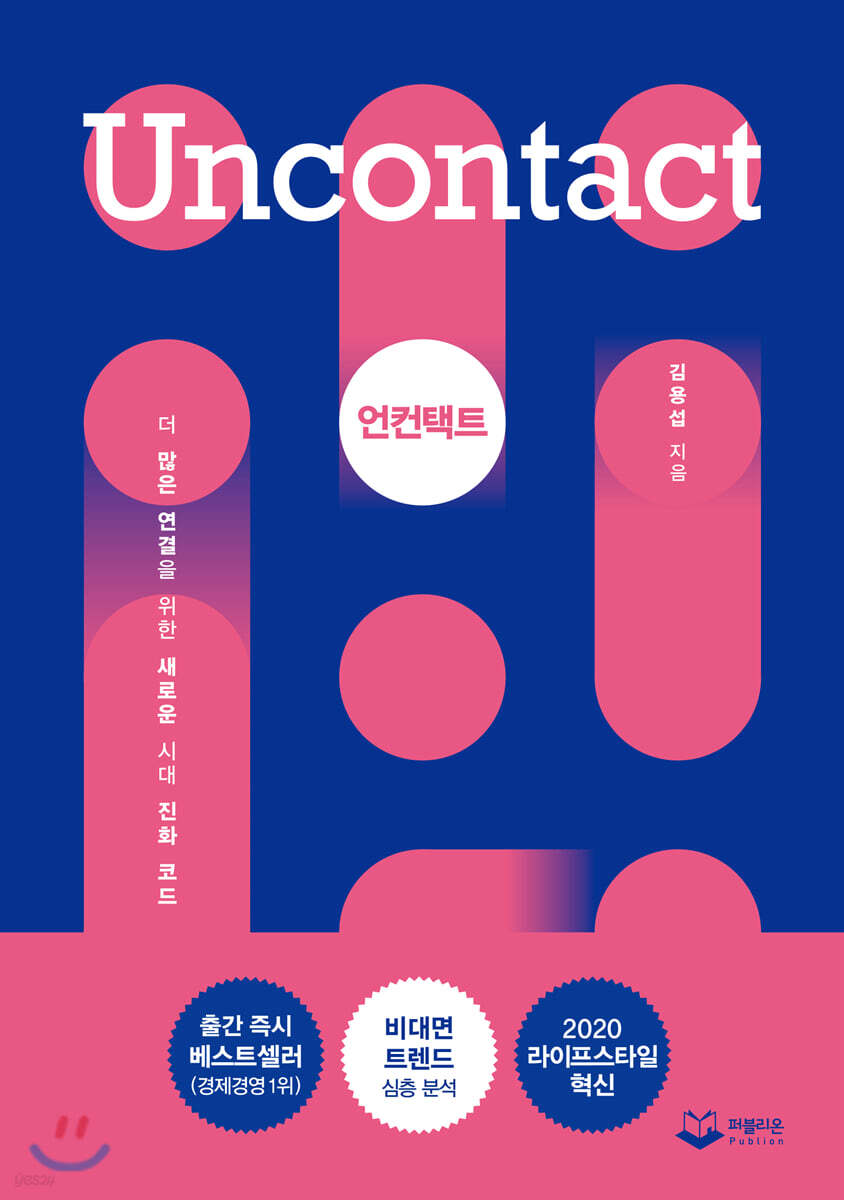
How will our lives change after COVID-19? A completely new way of life, "uncontact," sparked by COVID-19 in 2020! The desire of modern people who dream of 'convenient disconnection' rather than uncomfortable communication, The great evolution of lifestyle has already begun! Contact anxiety has brought about a major shift in our daily lives! How should our attitudes change as we navigate this era of anxiety and risk? In 2020, the world's attention was focused on "uncontact" due to COVID-19. Uncontact is not simply social distancing. It is a product of the desires that our society has developed over a long period of time, and it is the most important evolutionary code for reading the new era. Contactless is not only changing the way we consume, but also the way companies work, our food, clothing, shelter, social relationships, and even our communities, including religion, politics, and romantic relationships. We examine various issues to understand how contactless technology is changing society, how it relates to our desires, and what opportunities and crises it poses for business. This is a bold and detailed future outlook from Korea's leading trend analyst. |
- You can preview some of the book's contents.
Preview
index
PART 1 Uncontact in Everyday Life: When the Obvious Stops Being Obvious!
Mask Kiss and Corona Motel: We've Got a Plan!
Can anxiety overcome sexual desire?
Why did Lenina Huxley ask John Spartan to have sex?
Theodore, who fell in love with Samantha, could be you in real life.
Were George Bernard Shaw and Ellen Terry out of touch?
Why did the German Interior Minister refuse to shake Chancellor Merkel's hand?
Why do doctors and baseball players in the United States try to ban handshakes?
Biju, the most intimate greeting, can this continue in the future?
The cafeteria is changing, so how long will the company dinners be valid?
Social distancing campaigns spread worldwide
Date mask worn to hide one's real face
Comfortable Disconnection Instead of Uncomfortable Communication: The Paradox of the Hyperconnected Age
How can contactless increase transparency?
It wasn't anyone's fault? Was it just bad luck?
PART 2 Uncontact in Business: A Transitional Period of Fierce Opportunity and Crisis!
A fortuitous catalyst for the spread of remote work
Working from home and remotely is a lifestyle change.
Office-free and location-independent
Why did it take 10 years for large corporations to implement electronic voting at their general shareholders' meetings?
The real purpose of large-scale conferences and exhibitions is networking!
The Collapse of the Corporate Lecture Market? Or an Opportunity in a New Education Market?
Schooling and Non-Contact Learning: Homeschooling and MOOCs
The Aggravating Universities' Crisis: How Will Universities Survive in the Contactless Era?
The Evolution of Drive-Thru: From Clinics to Funerals
Contactless Shopping: Avoid Meeting Customers
Siren Order and Amazon Go: No Words Needed
The era of shopping with augmented reality and working with mixed reality
China's QR Code and Facial Recognition Technology in the COVID-19 Era: Big Brother and Contactless
What does factory automation mean to companies experiencing plant closures?
The spread of RPA adoption and contactless in corporate work
Why is Amazon investing in autonomous delivery robots?
Another reason the esports market will grow
The Healthcare Industry Meets Contactless: Non-Face-to-Face Treatment and Telemedicine
The Contactless Economy and the Quantum Leap of Global IT Companies
PART 3 Uncontact in the Community: Deepening Their Own League and Polarization!
The easiest way to create your own league: Private & Premium
The Resurrection of Neighborhood and Voluntary Isolation: What Kind of Relationships Do We Really Want?
Loose Solidarity and the Contactless Society: The Change Has Already Begun
Relationship Stress and the Embarrassment of Feeling Sorry
The contactless divide has become a new social issue.
Religion and Uncontact: Should Monks and Priests Become YouTubers?
Even in a contactless society, we are still social animals.
Politics in the Contactless Era: Will Fundamental Changes Come to Campaigning and Politics?
Hyperconnected and contactless societies are not opposites.
The dilemma of a hyper-connected and contactless society: How much of our lives is considered private?
The Dilemma of Globalization: Will We Become a Disconnected World Again?
Polarization and Dystopia: The Challenges Untact Presents to Us
Mask Kiss and Corona Motel: We've Got a Plan!
Can anxiety overcome sexual desire?
Why did Lenina Huxley ask John Spartan to have sex?
Theodore, who fell in love with Samantha, could be you in real life.
Were George Bernard Shaw and Ellen Terry out of touch?
Why did the German Interior Minister refuse to shake Chancellor Merkel's hand?
Why do doctors and baseball players in the United States try to ban handshakes?
Biju, the most intimate greeting, can this continue in the future?
The cafeteria is changing, so how long will the company dinners be valid?
Social distancing campaigns spread worldwide
Date mask worn to hide one's real face
Comfortable Disconnection Instead of Uncomfortable Communication: The Paradox of the Hyperconnected Age
How can contactless increase transparency?
It wasn't anyone's fault? Was it just bad luck?
PART 2 Uncontact in Business: A Transitional Period of Fierce Opportunity and Crisis!
A fortuitous catalyst for the spread of remote work
Working from home and remotely is a lifestyle change.
Office-free and location-independent
Why did it take 10 years for large corporations to implement electronic voting at their general shareholders' meetings?
The real purpose of large-scale conferences and exhibitions is networking!
The Collapse of the Corporate Lecture Market? Or an Opportunity in a New Education Market?
Schooling and Non-Contact Learning: Homeschooling and MOOCs
The Aggravating Universities' Crisis: How Will Universities Survive in the Contactless Era?
The Evolution of Drive-Thru: From Clinics to Funerals
Contactless Shopping: Avoid Meeting Customers
Siren Order and Amazon Go: No Words Needed
The era of shopping with augmented reality and working with mixed reality
China's QR Code and Facial Recognition Technology in the COVID-19 Era: Big Brother and Contactless
What does factory automation mean to companies experiencing plant closures?
The spread of RPA adoption and contactless in corporate work
Why is Amazon investing in autonomous delivery robots?
Another reason the esports market will grow
The Healthcare Industry Meets Contactless: Non-Face-to-Face Treatment and Telemedicine
The Contactless Economy and the Quantum Leap of Global IT Companies
PART 3 Uncontact in the Community: Deepening Their Own League and Polarization!
The easiest way to create your own league: Private & Premium
The Resurrection of Neighborhood and Voluntary Isolation: What Kind of Relationships Do We Really Want?
Loose Solidarity and the Contactless Society: The Change Has Already Begun
Relationship Stress and the Embarrassment of Feeling Sorry
The contactless divide has become a new social issue.
Religion and Uncontact: Should Monks and Priests Become YouTubers?
Even in a contactless society, we are still social animals.
Politics in the Contactless Era: Will Fundamental Changes Come to Campaigning and Politics?
Hyperconnected and contactless societies are not opposites.
The dilemma of a hyper-connected and contactless society: How much of our lives is considered private?
The Dilemma of Globalization: Will We Become a Disconnected World Again?
Polarization and Dystopia: The Challenges Untact Presents to Us
Detailed image
Into the book
When infectious diseases like COVID-19 become an issue, the industries that are hit hardest are the accommodation and travel industries, and Yanolja is a company that falls into that category.
Just as the general public seeks out "corona motels" to find ways to overcome the crisis, companies like Yanolja also need to prepare for and explore ways to address the growing anxiety about contact and the spread of non-contact.
It is necessary for the lodging industry, such as motels and hotels, to prepare for this by partnering with Yanolja.
An issue that can arise again at any time is an infectious disease.
As they say, a crisis prepared for is no crisis at all, so as a risk management measure for the lodging industry, preparation is necessary.
There is a need to consider safer improvements in areas such as space design, movement lines, equipment, and contact between employees and guests.
--- p.32, from “Can Anxiety Overcome Sexual Desire?”
The older generation's company dinner culture has become irrelevant to the harmony and unity of employees in today's workplace, where there are many millennials.
In fact, company dinners can actually harm harmony.
It's not that there's no need for social gatherings at all, but rather that the drinking-centered company dinner culture has reached its limit.
In this situation, COVID-19 has put a stop to the decline of the company dinner culture.
The drinking culture, which has long been plagued by unsanitary and infectious problems but has not been effectively addressed, is on the verge of disappearing into history.
Many people want an era where they can build relationships and communicate without having to exchange drinks or get drunk.
--- p.70~71, from “The cafeteria is also changing, so how long will the company dinners be valid?”
If you can avoid and reduce face-to-face contact with others, avoiding and reducing it is non-contact.
The direction of non-contact technology and services is not to unconditionally disconnect, but to avoid and reduce contact without any problems.
The purpose of technological evolution is also related to risk aversion and safety orientation.
Technology protects us from danger and, in doing so, expands our freedom.
Ultimately, contactless is an evolutionary topic that expands our activities and guarantees our freedom.
The rise of non-face-to-face communication is not a matter of technology, but of our desires.
As society and culture change, it is ultimately because our desires change and we change according to our needs.
Uncontact is the evolution of desire.
--- p.86~87, from “Comfortable Disconnection Instead of Inconvenient Communication: The Paradox of the Hyperconnected Era”
The number of people creating their own hideouts has also increased.
These days, there are quite a few people who started out by creating a hideout in a neighborhood bookstore, cafe, or book cafe.
It's to show off your tastes and get along with people.
Of course, there is a separate main job.
This is a kind of 'urban Walden'.
It's about having time to focus on yourself while being with people in the city, not in an isolated mountain village.
All of this comes as a result of changes in our relationships with others.
If we move from unconditional connection to favorable and selective connection, and then to selective disconnection, and finally to unconditional disconnection, then we are now entering an era of selective disconnection.
This is the beginning of a truly contactless society.
--- p.236, from “The Resurrection of Neighborhood and Voluntary Isolation: What Kind of Relationship Do We Really Want?”
Collectivist culture is declining and individualistic culture is rising.
The reason we talk about loose solidarity in these times is because of changed desires.
Because we live in an era where people live alone, new solidarity has become necessary.
It's not that I want to be isolated and lonely, but I want to live alone as a default and socialize with people when necessary.
It is a loose solidarity that is the middle ground between being alone and being together, that is, being alone but sometimes being together, connected but not tightly bound.
For those who have accepted this desire, relationships with people can never be the same as they were in the past.
The intimacy that comes from closeness is intertwined with mutual interests and is accompanied by conflict.
This desire to avoid such conflicts and stress is also revealed in loose solidarity.
It is in line with the desire to avoid conflict and stress that arise in human relationships through non-contact.
When what was taken for granted becomes no longer taken for granted, we must make a choice.
The attitude of taking some of the advantages of interpersonal relationships while reducing the burden and complexity of such connections has created a 'loose relationship'.
From a collectivist perspective, this may seem like a somewhat selfish attitude, but from an individualistic perspective, it is a rational and efficient attitude.
And this is not an individual choice, it is a societal choice.
--- p.240~241, from “Loose Solidarity and Uncontact Society: Change Has Already Begun”
If history has evolved to maximize offline connections and interactions, we are now evolving to incorporate online connections and interactions in parallel with offline ones.
Uncontact is not a disconnection, but an evolution of the contact era.
To connect more safely, conveniently, and efficiently, we are embracing contactless technologies that enable connection and interaction without face-to-face contact.
Even if we eventually become a contactless society, our community will remain valid.
It is also true that we are social animals.
However, the way we form, interact, and connect socially is becoming increasingly non-face-to-face and non-contact, and robots and IT technologies may replace some of the human roles.
--- p.263, from “Even in a contactless society, we are still social animals”
The contactless society was a foretold future, but the sudden emergence of COVID-19 has accelerated the transition dramatically.
There were many cases where a non-contact environment was introduced without preparation.
This situation is also becoming an opportunity to rapidly expose the problems of non-contact.
Human alienation, new conflicts, new discrimination, and new risks. Ultimately, once COVID-19 is over, our society must begin to fully respond to a contactless society.
It was a path I had to take anyway, but the timing was brought forward and the speed was increased.
In this contactless society that has already begun, we must continue to ask questions and seek answers.
Because it's just the beginning.
Just as the general public seeks out "corona motels" to find ways to overcome the crisis, companies like Yanolja also need to prepare for and explore ways to address the growing anxiety about contact and the spread of non-contact.
It is necessary for the lodging industry, such as motels and hotels, to prepare for this by partnering with Yanolja.
An issue that can arise again at any time is an infectious disease.
As they say, a crisis prepared for is no crisis at all, so as a risk management measure for the lodging industry, preparation is necessary.
There is a need to consider safer improvements in areas such as space design, movement lines, equipment, and contact between employees and guests.
--- p.32, from “Can Anxiety Overcome Sexual Desire?”
The older generation's company dinner culture has become irrelevant to the harmony and unity of employees in today's workplace, where there are many millennials.
In fact, company dinners can actually harm harmony.
It's not that there's no need for social gatherings at all, but rather that the drinking-centered company dinner culture has reached its limit.
In this situation, COVID-19 has put a stop to the decline of the company dinner culture.
The drinking culture, which has long been plagued by unsanitary and infectious problems but has not been effectively addressed, is on the verge of disappearing into history.
Many people want an era where they can build relationships and communicate without having to exchange drinks or get drunk.
--- p.70~71, from “The cafeteria is also changing, so how long will the company dinners be valid?”
If you can avoid and reduce face-to-face contact with others, avoiding and reducing it is non-contact.
The direction of non-contact technology and services is not to unconditionally disconnect, but to avoid and reduce contact without any problems.
The purpose of technological evolution is also related to risk aversion and safety orientation.
Technology protects us from danger and, in doing so, expands our freedom.
Ultimately, contactless is an evolutionary topic that expands our activities and guarantees our freedom.
The rise of non-face-to-face communication is not a matter of technology, but of our desires.
As society and culture change, it is ultimately because our desires change and we change according to our needs.
Uncontact is the evolution of desire.
--- p.86~87, from “Comfortable Disconnection Instead of Inconvenient Communication: The Paradox of the Hyperconnected Era”
The number of people creating their own hideouts has also increased.
These days, there are quite a few people who started out by creating a hideout in a neighborhood bookstore, cafe, or book cafe.
It's to show off your tastes and get along with people.
Of course, there is a separate main job.
This is a kind of 'urban Walden'.
It's about having time to focus on yourself while being with people in the city, not in an isolated mountain village.
All of this comes as a result of changes in our relationships with others.
If we move from unconditional connection to favorable and selective connection, and then to selective disconnection, and finally to unconditional disconnection, then we are now entering an era of selective disconnection.
This is the beginning of a truly contactless society.
--- p.236, from “The Resurrection of Neighborhood and Voluntary Isolation: What Kind of Relationship Do We Really Want?”
Collectivist culture is declining and individualistic culture is rising.
The reason we talk about loose solidarity in these times is because of changed desires.
Because we live in an era where people live alone, new solidarity has become necessary.
It's not that I want to be isolated and lonely, but I want to live alone as a default and socialize with people when necessary.
It is a loose solidarity that is the middle ground between being alone and being together, that is, being alone but sometimes being together, connected but not tightly bound.
For those who have accepted this desire, relationships with people can never be the same as they were in the past.
The intimacy that comes from closeness is intertwined with mutual interests and is accompanied by conflict.
This desire to avoid such conflicts and stress is also revealed in loose solidarity.
It is in line with the desire to avoid conflict and stress that arise in human relationships through non-contact.
When what was taken for granted becomes no longer taken for granted, we must make a choice.
The attitude of taking some of the advantages of interpersonal relationships while reducing the burden and complexity of such connections has created a 'loose relationship'.
From a collectivist perspective, this may seem like a somewhat selfish attitude, but from an individualistic perspective, it is a rational and efficient attitude.
And this is not an individual choice, it is a societal choice.
--- p.240~241, from “Loose Solidarity and Uncontact Society: Change Has Already Begun”
If history has evolved to maximize offline connections and interactions, we are now evolving to incorporate online connections and interactions in parallel with offline ones.
Uncontact is not a disconnection, but an evolution of the contact era.
To connect more safely, conveniently, and efficiently, we are embracing contactless technologies that enable connection and interaction without face-to-face contact.
Even if we eventually become a contactless society, our community will remain valid.
It is also true that we are social animals.
However, the way we form, interact, and connect socially is becoming increasingly non-face-to-face and non-contact, and robots and IT technologies may replace some of the human roles.
--- p.263, from “Even in a contactless society, we are still social animals”
The contactless society was a foretold future, but the sudden emergence of COVID-19 has accelerated the transition dramatically.
There were many cases where a non-contact environment was introduced without preparation.
This situation is also becoming an opportunity to rapidly expose the problems of non-contact.
Human alienation, new conflicts, new discrimination, and new risks. Ultimately, once COVID-19 is over, our society must begin to fully respond to a contactless society.
It was a path I had to take anyway, but the timing was brought forward and the speed was increased.
In this contactless society that has already begun, we must continue to ask questions and seek answers.
Because it's just the beginning.
--- p.299, from “Polarization and Dystopia: The Concerns Uncontact Has Raised for Us”
Publisher's Review
Contact anxiety has brought about a major shift in our daily lives! How will we communicate and connect?
The new evolutionary code for the hyper-connected era: 'Untact'!
The COVID-19 pandemic that struck the world in 2020 forced us to face a terrifying reality we had never experienced before.
Our daily lives have been shaken to the point where even our individual survival is threatened, and this crisis is showing signs of expanding into a comprehensive crisis that shakes the entire society, including not only an economic crisis but also a job crisis, an income crisis, a retirement crisis, and a political crisis.
And the prevailing view is that the crisis of infectious diseases will continue even after COVID-19.
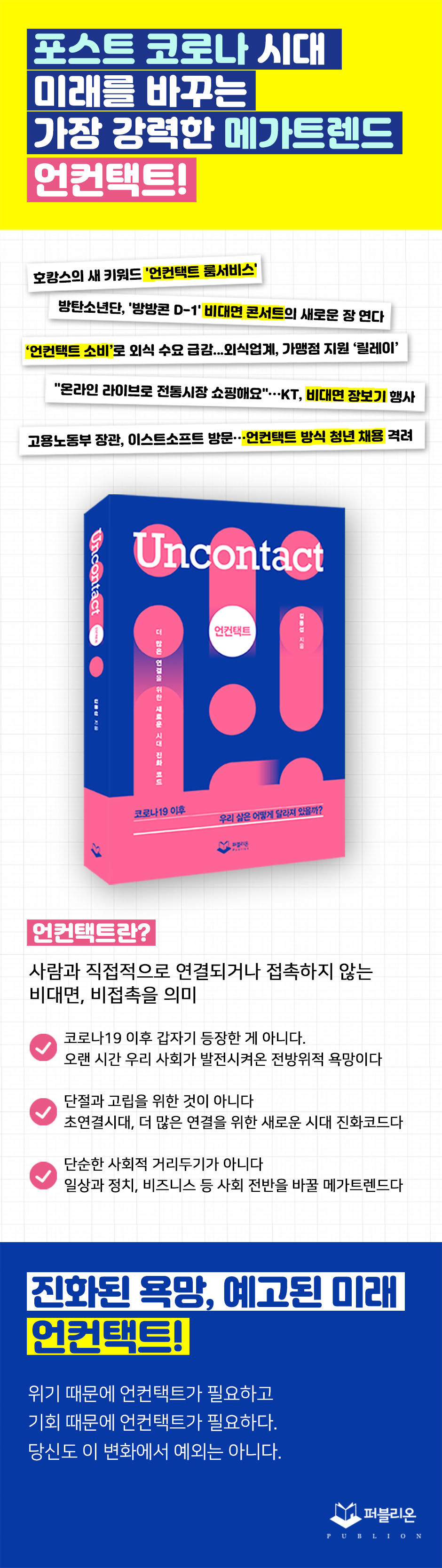
In this situation, 'social distancing' is being practiced across society, and 'uncontact' is quickly becoming an important keyword and a new lifestyle.
Uncontact means non-contact, non-face-to-face, that is, not directly connecting or coming into contact with people.
Contactless isn't simply social distancing; it's a desire we have in this "anxious and convenient" age, and it's the most important megatrend that will shape the future.
Uncontact became a new term in 『Trend Korea 2018』, which suggested that "untact marketing," which involves non-face-to-face and unmanned transactions, was a distribution trend.
Untact is a new word that combines the word contact with the negative prefix un.
The author, a leading trend analyst in Korea who quickly analyzes the rapidly changing desires and changes in daily life of modern people and introduces them to us every year through 『Life Trend』, has published a book in which he unravels the code of the huge changes in daily life triggered by COVID-19 with the keyword 'uncontact'.
This book, "Uncontact," analyzes the modern lifestyle, which is facing a major transformation, and the fact that uncontact is at the center of this tectonic shift. It also analyzes how this is the process of evolution of our desires. It also includes a forecast for the future, such as how our lives will change after the COVID-19 crisis and how the world will unfold in the future.
In this book, the original compound word 'Uncontact', which has a stronger and more weighty connotation as a trend keyword and new word, was used as a new era evolution code.
We are now living in an era of 'uncontact'.
The desire of modern people who dream of 'convenient disconnection' rather than uncomfortable communication,
The great evolution of lifestyle has already begun!
How to Love in an Unstable Age: Mask Kisses and Corona Motels
ㆍ Is contactless virtual sex only possible in movies?
ㆍ Theodore, who fell in love with the artificial intelligence computer Samantha, could be you in real life.
ㆍ COVID-19 will put an end to the drinking culture of company dinners.
ㆍ There are many office-free companies where all employees work from home.
ㆍWorking from home? The way we work is rapidly changing with remote work.
Online and edutech are also the dominant teaching methods in schools.
ㆍ A college diploma is just one of the tools for evaluating employment.
ㆍ Drive-thru for weddings, sushi restaurants, and even funerals, all while sitting in your car!
ㆍReceive all the world's items at your doorstep with just one finger!
ㆍ Now, food and goods are delivered by autonomous delivery robots rather than people.
ㆍ You can receive remote medical services through smartphone apps and video calls.
ㆍ An era that prefers loose solidarity over strong ties between family, work, and personal connections.
ㆍ In the contactless era, religious leaders must abandon authority to survive.
ㆍ In a world where everything is connected, how much of our privacy can be protected?
ㆍ Even in a contactless society, we want to be more connected and communicate.
The disconnection and anxiety brought about by COVID-19,
But we want more communication!
In 2020, the world reached a contactless tipping point.
COVID-19 was just a trigger, but the massive shift from contact to non-contact was already anticipated.
We are currently living in a transition from a contact-based society to a non-contact society, and this major shift could transform our lifestyles, culture, and even our businesses.
While the focus on contactless has been limited to the areas of distribution and consumption, this book expands the scope to cover the contactless trend in all directions, including our daily lives, lifestyles, consumption, distribution, industrial evolution, corporate work methods, personal networks, social communities, religion, politics, and culture.
We explore various issues to understand how contactless technology is changing society, how it relates to our desires, and what opportunities and crises it poses for business.
Isn't this the most important trend we should be thinking about at this time?
The author uses his extensive knowledge and insight spanning various fields, including history, literature, society, philosophy, current affairs, and economics, to explain the causes and background of this rapidly transformative trend, in which the contactless phenomenon is rapidly becoming part of daily life, as well as its future prospects.
Divided into three parts: uncontact in daily life, uncontact in business, and uncontact in the community, it introduces specific examples and data on the forms of uncontact we will encounter in our lives in the future.
How should we cope with this changing world?
Our Attitude in an Age of Anxiety and Danger
“Now communicate without contact!”
The huge megatrend of contactless communication that we are currently facing is ultimately an evolution of the desires we have nurtured.
Uncontact is a trend chosen not to become isolated and disconnected, but to remain connected.
Technological evolution, industrial evolution, and social evolution ultimately exist to fulfill the evolved desires of humans.
We want to live more safely and conveniently, moving beyond contact and non-contact.
This desire did not suddenly appear, but is a trend that has been building up and evolving for a very long time.
In other words, the contactless situation we are facing now is a future that was predicted when viewed from the past.
In an age of anxiety and risk, we embrace contactless technology for more convenient and safer contact.
The way we connect and interact with others may change, but we will continue to be social animals, interconnected, living and working together, and needing each other.
Understanding the changed world after COVID-19 is a task for all of us.
When what was taken for granted is no longer taken for granted, crisis and opportunity come simultaneously.
This book forecasts, through various real-life examples, how our daily lives will change due to the contactless phenomenon, what crises and opportunities there are for business and the economy, and how we can overcome the crisis of alienation and polarization that could deepen in society and communities as contactless communication expands. It also presents a perspective on the issues we must address together.
As we face a major shift in our daily lives, from contact to non-contact, where we strive to communicate without contact, those who truly understand the unfamiliar and confusing changes in the world, embrace this flow, and adapt will seize the opportunities in this age of anxiety and danger.
This book will provide valuable inspiration for examining where we stand now and predicting the future and the path we should take.
Moreover, it will give us insight into how we should live in the world.
The new evolutionary code for the hyper-connected era: 'Untact'!
The COVID-19 pandemic that struck the world in 2020 forced us to face a terrifying reality we had never experienced before.
Our daily lives have been shaken to the point where even our individual survival is threatened, and this crisis is showing signs of expanding into a comprehensive crisis that shakes the entire society, including not only an economic crisis but also a job crisis, an income crisis, a retirement crisis, and a political crisis.
And the prevailing view is that the crisis of infectious diseases will continue even after COVID-19.
In this situation, 'social distancing' is being practiced across society, and 'uncontact' is quickly becoming an important keyword and a new lifestyle.
Uncontact means non-contact, non-face-to-face, that is, not directly connecting or coming into contact with people.
Contactless isn't simply social distancing; it's a desire we have in this "anxious and convenient" age, and it's the most important megatrend that will shape the future.
Uncontact became a new term in 『Trend Korea 2018』, which suggested that "untact marketing," which involves non-face-to-face and unmanned transactions, was a distribution trend.
Untact is a new word that combines the word contact with the negative prefix un.
The author, a leading trend analyst in Korea who quickly analyzes the rapidly changing desires and changes in daily life of modern people and introduces them to us every year through 『Life Trend』, has published a book in which he unravels the code of the huge changes in daily life triggered by COVID-19 with the keyword 'uncontact'.
This book, "Uncontact," analyzes the modern lifestyle, which is facing a major transformation, and the fact that uncontact is at the center of this tectonic shift. It also analyzes how this is the process of evolution of our desires. It also includes a forecast for the future, such as how our lives will change after the COVID-19 crisis and how the world will unfold in the future.
In this book, the original compound word 'Uncontact', which has a stronger and more weighty connotation as a trend keyword and new word, was used as a new era evolution code.
We are now living in an era of 'uncontact'.
The desire of modern people who dream of 'convenient disconnection' rather than uncomfortable communication,
The great evolution of lifestyle has already begun!
How to Love in an Unstable Age: Mask Kisses and Corona Motels
ㆍ Is contactless virtual sex only possible in movies?
ㆍ Theodore, who fell in love with the artificial intelligence computer Samantha, could be you in real life.
ㆍ COVID-19 will put an end to the drinking culture of company dinners.
ㆍ There are many office-free companies where all employees work from home.
ㆍWorking from home? The way we work is rapidly changing with remote work.
Online and edutech are also the dominant teaching methods in schools.
ㆍ A college diploma is just one of the tools for evaluating employment.
ㆍ Drive-thru for weddings, sushi restaurants, and even funerals, all while sitting in your car!
ㆍReceive all the world's items at your doorstep with just one finger!
ㆍ Now, food and goods are delivered by autonomous delivery robots rather than people.
ㆍ You can receive remote medical services through smartphone apps and video calls.
ㆍ An era that prefers loose solidarity over strong ties between family, work, and personal connections.
ㆍ In the contactless era, religious leaders must abandon authority to survive.
ㆍ In a world where everything is connected, how much of our privacy can be protected?
ㆍ Even in a contactless society, we want to be more connected and communicate.
The disconnection and anxiety brought about by COVID-19,
But we want more communication!
In 2020, the world reached a contactless tipping point.
COVID-19 was just a trigger, but the massive shift from contact to non-contact was already anticipated.
We are currently living in a transition from a contact-based society to a non-contact society, and this major shift could transform our lifestyles, culture, and even our businesses.
While the focus on contactless has been limited to the areas of distribution and consumption, this book expands the scope to cover the contactless trend in all directions, including our daily lives, lifestyles, consumption, distribution, industrial evolution, corporate work methods, personal networks, social communities, religion, politics, and culture.
We explore various issues to understand how contactless technology is changing society, how it relates to our desires, and what opportunities and crises it poses for business.
Isn't this the most important trend we should be thinking about at this time?
The author uses his extensive knowledge and insight spanning various fields, including history, literature, society, philosophy, current affairs, and economics, to explain the causes and background of this rapidly transformative trend, in which the contactless phenomenon is rapidly becoming part of daily life, as well as its future prospects.
Divided into three parts: uncontact in daily life, uncontact in business, and uncontact in the community, it introduces specific examples and data on the forms of uncontact we will encounter in our lives in the future.
How should we cope with this changing world?
Our Attitude in an Age of Anxiety and Danger
“Now communicate without contact!”
The huge megatrend of contactless communication that we are currently facing is ultimately an evolution of the desires we have nurtured.
Uncontact is a trend chosen not to become isolated and disconnected, but to remain connected.
Technological evolution, industrial evolution, and social evolution ultimately exist to fulfill the evolved desires of humans.
We want to live more safely and conveniently, moving beyond contact and non-contact.
This desire did not suddenly appear, but is a trend that has been building up and evolving for a very long time.
In other words, the contactless situation we are facing now is a future that was predicted when viewed from the past.
In an age of anxiety and risk, we embrace contactless technology for more convenient and safer contact.
The way we connect and interact with others may change, but we will continue to be social animals, interconnected, living and working together, and needing each other.
Understanding the changed world after COVID-19 is a task for all of us.
When what was taken for granted is no longer taken for granted, crisis and opportunity come simultaneously.
This book forecasts, through various real-life examples, how our daily lives will change due to the contactless phenomenon, what crises and opportunities there are for business and the economy, and how we can overcome the crisis of alienation and polarization that could deepen in society and communities as contactless communication expands. It also presents a perspective on the issues we must address together.
As we face a major shift in our daily lives, from contact to non-contact, where we strive to communicate without contact, those who truly understand the unfamiliar and confusing changes in the world, embrace this flow, and adapt will seize the opportunities in this age of anxiety and danger.
This book will provide valuable inspiration for examining where we stand now and predicting the future and the path we should take.
Moreover, it will give us insight into how we should live in the world.
GOODS SPECIFICS
- Publication date: April 20, 2020
- Page count, weight, size: 312 pages | 516g | 148*210*30mm
- ISBN13: 9791197016806
- ISBN10: 1197016805
You may also like
카테고리
korean


korean

![GQ KOREA Mark (Monthly): December [2025]](http://librairie.coreenne.fr/cdn/shop/files/8ef265dbbfbf186523ed75ba7319009d.jpg?v=1765340328&width=3840)


