

Body and Women
 |
Description
Book Introduction
- A word from MD
-
The most personal and political confessions about the 'body'A new work by Seo-su Lee, one of the young writers who is attracting attention in the literary world with works such as “Help Me Sister.”
It contains an intimate confession about the 'female body', which is subject to all kinds of social gaze as soon as it is born.
By intersecting the lives of the protagonist born in 1983 and his mother born in 1959, it illuminates the body and sexuality that are personally and politically oppressed regardless of the era.
January 6, 2023. Novel/Poetry PD Kim Yu-ri
The 44th novel in the "Modern Literature Pin Series," a special feature of the monthly magazine "Modern Literature," which selects the most modern and cutting-edge writers of contemporary Korean literature and includes new poetry and novels, has been published: Lee Seo-su's "Body and Women."
This work, a revised version of the novel published in the March 2022 issue of 『Modern Literature』, is a novel that confesses the memories of violence entangled in the bodies of the protagonist, born in 1983, and his mother, born in 1959, and their sexuality that is not understood by others.
“I want to talk about my body and my sexuality.
This is such an embarrassing confession that I can only say it once.
So please listen quietly.” (9P)
This work, a revised version of the novel published in the March 2022 issue of 『Modern Literature』, is a novel that confesses the memories of violence entangled in the bodies of the protagonist, born in 1983, and his mother, born in 1959, and their sexuality that is not understood by others.
“I want to talk about my body and my sexuality.
This is such an embarrassing confession that I can only say it once.
So please listen quietly.” (9P)
- You can preview some of the book's contents.
Preview
index
1 9
2 67
3 87
Work Commentary 124
Author's Note 138
2 67
3 87
Work Commentary 124
Author's Note 138
Into the book
“Mom, I am not my body, I am just me.
I am not a being that speaks with my body,
“I am a being who speaks by what I do”
At this point, when women in Lee Seo-su's novels are able to verbalize the specific oppression they have been under, they do not neatly seal up their destructive experiences.
The experience of female existence being reduced to the body by the women in the novel becomes conscious at the point when they become aware of its irrationality, but it remains fractured within a reality where its context has not been completely overcome.
It may be so because what you know and the structure changing are two different issues, and living in such a concrete reality without denying yourself is another issue.
In that respect, the ending of this novel is not hopeful.
(……) But can we truly say this is hopeless? This novel shines even brighter when we focus on the fact that, without daring to offer premature hope, these women continue to push the point of rupture within the process of female identity.
---From "Seonwoo Eunsil's Work Commentary"
I'd like to talk about my body and my sexuality.
This is such an embarrassing confession that I can only say it once.
So please listen carefully.
--- p.9
I sat on the bed and looked at my body in the large vanity mirror.
The chest was so small and flat that when viewed from the front, one might mistake it for a woman's upper body.
For the first time, I wasn't angry when I looked at my breasts.
It wasn't a pity.
It was just my heart, it was just my body.
It was just my body, not used anywhere, not desired by anyone.
At that time, we were twenty years old.
--- p.50
My body has a personality.
My body deserves respect.
Even I can't do anything to my body.
My husband didn't understand a word I said.
He said that my body is mine, and furthermore, it is his.
He said that his body was his and, by extension, mine.
That's what a couple is, they said.
But I didn't think my body was his, and I didn't think his body was mine either.
He said that our bodies are each their own and can never be mixed.
--- pp.61~62
I love my two daughters.
Sometimes I hate it, but overall it's good.
However, just because you like it doesn't mean you can understand it, and just because you don't like it doesn't mean you can't understand it.
When I heard my eldest daughter's intimate confession about her body (……) I was able to understand her while at the same time not being able to.
(……) I desperately hoped that my daughter would not fail like me.
So, I told my eldest daughter all kinds of bad things about wanting to get a divorce and tried to stop her from changing her mind.
But after seeing one text message from my eldest daughter, I couldn't stop her any longer.
--- p.84
Sister Young-seok, oppression and liberation may be connected as a Möbius strip.
The oppression continues until one day it is overturned and leads to liberation, but any kind of liberation ends up being oppression for those who do not want it.
For me, it's all about sex.
When you consider how far liberation can be called liberation, to what extent it can be called liberation to whom, how far oppression can be called oppression, to what extent it can be called oppression to whom, you end up feeling that liberation is ultimately connected to oppression.
Can you understand what I'm saying, sister?
I am not a being that speaks with my body,
“I am a being who speaks by what I do”
At this point, when women in Lee Seo-su's novels are able to verbalize the specific oppression they have been under, they do not neatly seal up their destructive experiences.
The experience of female existence being reduced to the body by the women in the novel becomes conscious at the point when they become aware of its irrationality, but it remains fractured within a reality where its context has not been completely overcome.
It may be so because what you know and the structure changing are two different issues, and living in such a concrete reality without denying yourself is another issue.
In that respect, the ending of this novel is not hopeful.
(……) But can we truly say this is hopeless? This novel shines even brighter when we focus on the fact that, without daring to offer premature hope, these women continue to push the point of rupture within the process of female identity.
---From "Seonwoo Eunsil's Work Commentary"
I'd like to talk about my body and my sexuality.
This is such an embarrassing confession that I can only say it once.
So please listen carefully.
--- p.9
I sat on the bed and looked at my body in the large vanity mirror.
The chest was so small and flat that when viewed from the front, one might mistake it for a woman's upper body.
For the first time, I wasn't angry when I looked at my breasts.
It wasn't a pity.
It was just my heart, it was just my body.
It was just my body, not used anywhere, not desired by anyone.
At that time, we were twenty years old.
--- p.50
My body has a personality.
My body deserves respect.
Even I can't do anything to my body.
My husband didn't understand a word I said.
He said that my body is mine, and furthermore, it is his.
He said that his body was his and, by extension, mine.
That's what a couple is, they said.
But I didn't think my body was his, and I didn't think his body was mine either.
He said that our bodies are each their own and can never be mixed.
--- pp.61~62
I love my two daughters.
Sometimes I hate it, but overall it's good.
However, just because you like it doesn't mean you can understand it, and just because you don't like it doesn't mean you can't understand it.
When I heard my eldest daughter's intimate confession about her body (……) I was able to understand her while at the same time not being able to.
(……) I desperately hoped that my daughter would not fail like me.
So, I told my eldest daughter all kinds of bad things about wanting to get a divorce and tried to stop her from changing her mind.
But after seeing one text message from my eldest daughter, I couldn't stop her any longer.
--- p.84
Sister Young-seok, oppression and liberation may be connected as a Möbius strip.
The oppression continues until one day it is overturned and leads to liberation, but any kind of liberation ends up being oppression for those who do not want it.
For me, it's all about sex.
When you consider how far liberation can be called liberation, to what extent it can be called liberation to whom, how far oppression can be called oppression, to what extent it can be called oppression to whom, you end up feeling that liberation is ultimately connected to oppression.
Can you understand what I'm saying, sister?
--- pp.114~115
Publisher's Review
Women of various generations themselves,
Confess your life in your own language!
Lee Seo-su, who debuted in the Dong-A Ilbo in 2014 but continued her lonely literary career for quite some time, finally won the Hwangsanbeol Youth Literature Award for her first full-length novel, Your 4 Minutes and 33 Seconds, in 2020, receiving rave reviews that said, "It is enough to become an important asset for Korean literature that will take Korean literature to the next level."
Afterwards, he won the Lee Hyo-seok Literary Award for his short story “The Age of Mijo,” which offered profound comfort to young people of his time struggling with the pain of survival, and he firmly established his own unique world of depth in the minds of readers.
And in her second full-length novel, "Help Me Sister," published subsequently, she received rave reviews both inside and outside the literary world for her calm portrayal of the solidarity of family members in the harsh realities of Korean society.
Hyundae Munhak is publishing the new work, “Body and Women,” by Lee Seo-su, who has suddenly emerged as a leading figure in the next generation of Korean literature.
This novel, which consists of three parts, depicts the protagonist's past from his school days to his work and married life in Part 1.
It contains my school days when my small body was the biggest complex in my life, my college days when I was subjected to dating violence by my first date, and my married life when I chose divorce due to unresolved issues with my husband.
In Part 2 of the story of Mother 'Mibok', the difficult past of the mother is introduced, in which she was molested by her school teacher due to her unusual growth, and was chased to the city without receiving any further education because she was a woman, leading a life at the bottom.
Part 3, which returns to the present, depicts the story of me, my older sister Soyeon, and my older sister Youngseok, who live in the same era and culture but have different thoughts and standards about the body.
If the first and second parts of the novel raised questions about female identity centered around my mother's and my 'body', then the third part can be said to be the answer to those questions.
This novel explores the lives of women, a subject the author has long explored, and questions how women themselves experience and internalize the attribute of "female body," while also portraying the self-understanding of contemporary women's bodies.
“And yet, they confess their lives in their own language.
In this novel, the confessional form is not only a feature of the writing style, but is also related to the character's activeness that compels him to speak in this way.
'Confession' is about women having a language that can explain the social context that contributed to their identity.
“The two female speakers may have experienced something in the past but were unable to ‘explain’ the feelings or meaning of the situation at the time, but later, when they looked back on it, they were able to articulate the meaning of their experience.”
-Seonwoo Eunsil
Author's Note
I complete a novel with the belief that there is someone's voice that needs to be heard.
This novel also started from that belief.
That voice had been buried inside me for a long time, amplified as I grew up, and I could well have predicted that it would break out someday.
Beauvoir said:
Sexuality is not a personal issue, it is a political issue.
The starting point of this novel was to depict the diverse sexualities of women.
I am still writing the story that continues.
Before, I couldn't tell which direction to go, but now I can vaguely see the outline.
As if dawn is slowly breaking.
If you encounter change in a new place, you will welcome it.
The forty-fourth volume of "Pin Novels," published by the monthly magazine "Modern Literature"!
The "Modern Literature Pin Series" is a project that selects the most modern and cutting-edge writers of contemporary Korean literature, presents them in the monthly magazine "Modern Literature," and then publishes them in book form.
The single volumes presented here are individual works, but are also curated by six authors as a 'series'.
Modern literature hopes that the seriousness of this series will be ironically combined with the delicate lightness of the word 'pin'.
The "Modern Literature Pin Series Novel Selection" is published by the monthly magazine "Modern Literature" on the 25th of every other month, and is designed to allow readers to encounter new works by Korea's top writers on a set date.
This is a kind of 'salary book' concept that is being introduced for the first time in Korean publishing history.
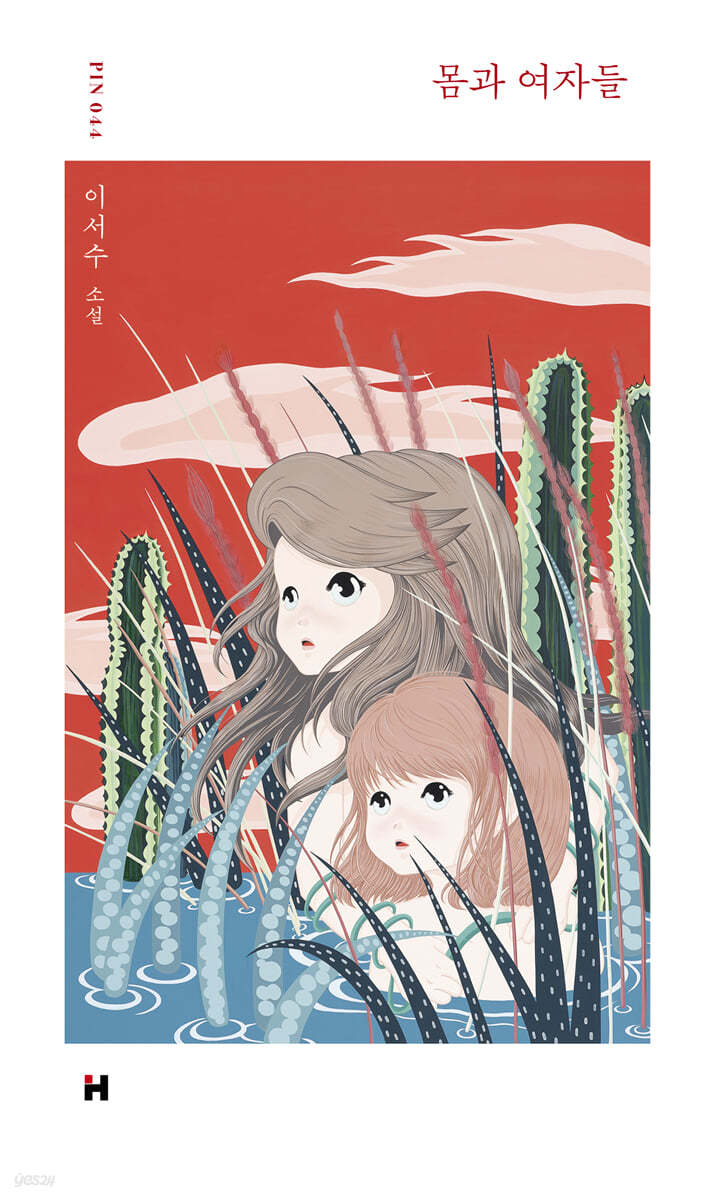
Modern Literature × Artist Lee Yeon-mi
The "Modern Literature Pin Series" has become an original novel collection, an art anthology, reconstructed as a special work of art with a cover work imbued with the artist's soul.
The reason each novel possesses its own unique fragrance and profound artistic fascination is probably because of the spiritual harmony created by the meeting of the two worlds of novels and art.
Lee Yeon-mi
He graduated from the Department of Painting at Kookmin University's College of Fine Arts and the Department of Painting at the same university's graduate school.
Starting with a solo exhibition at the Tokyo Gallery, he has participated in solo and group exhibitions at home and abroad, including at Gallery Hyundai, the Seoul Museum of Art, and the Shanghai Art Museum.
He is actively building his own garden, maximizing the gap between reality and fantasy, and creating a lyrical world of sculptures intertwined with rough-hewn trees and mysterious and unfamiliar flora and fauna.
Confess your life in your own language!
Lee Seo-su, who debuted in the Dong-A Ilbo in 2014 but continued her lonely literary career for quite some time, finally won the Hwangsanbeol Youth Literature Award for her first full-length novel, Your 4 Minutes and 33 Seconds, in 2020, receiving rave reviews that said, "It is enough to become an important asset for Korean literature that will take Korean literature to the next level."
Afterwards, he won the Lee Hyo-seok Literary Award for his short story “The Age of Mijo,” which offered profound comfort to young people of his time struggling with the pain of survival, and he firmly established his own unique world of depth in the minds of readers.
And in her second full-length novel, "Help Me Sister," published subsequently, she received rave reviews both inside and outside the literary world for her calm portrayal of the solidarity of family members in the harsh realities of Korean society.
Hyundae Munhak is publishing the new work, “Body and Women,” by Lee Seo-su, who has suddenly emerged as a leading figure in the next generation of Korean literature.
This novel, which consists of three parts, depicts the protagonist's past from his school days to his work and married life in Part 1.
It contains my school days when my small body was the biggest complex in my life, my college days when I was subjected to dating violence by my first date, and my married life when I chose divorce due to unresolved issues with my husband.
In Part 2 of the story of Mother 'Mibok', the difficult past of the mother is introduced, in which she was molested by her school teacher due to her unusual growth, and was chased to the city without receiving any further education because she was a woman, leading a life at the bottom.
Part 3, which returns to the present, depicts the story of me, my older sister Soyeon, and my older sister Youngseok, who live in the same era and culture but have different thoughts and standards about the body.
If the first and second parts of the novel raised questions about female identity centered around my mother's and my 'body', then the third part can be said to be the answer to those questions.
This novel explores the lives of women, a subject the author has long explored, and questions how women themselves experience and internalize the attribute of "female body," while also portraying the self-understanding of contemporary women's bodies.
“And yet, they confess their lives in their own language.
In this novel, the confessional form is not only a feature of the writing style, but is also related to the character's activeness that compels him to speak in this way.
'Confession' is about women having a language that can explain the social context that contributed to their identity.
“The two female speakers may have experienced something in the past but were unable to ‘explain’ the feelings or meaning of the situation at the time, but later, when they looked back on it, they were able to articulate the meaning of their experience.”
-Seonwoo Eunsil
Author's Note
I complete a novel with the belief that there is someone's voice that needs to be heard.
This novel also started from that belief.
That voice had been buried inside me for a long time, amplified as I grew up, and I could well have predicted that it would break out someday.
Beauvoir said:
Sexuality is not a personal issue, it is a political issue.
The starting point of this novel was to depict the diverse sexualities of women.
I am still writing the story that continues.
Before, I couldn't tell which direction to go, but now I can vaguely see the outline.
As if dawn is slowly breaking.
If you encounter change in a new place, you will welcome it.
The forty-fourth volume of "Pin Novels," published by the monthly magazine "Modern Literature"!
The "Modern Literature Pin Series" is a project that selects the most modern and cutting-edge writers of contemporary Korean literature, presents them in the monthly magazine "Modern Literature," and then publishes them in book form.
The single volumes presented here are individual works, but are also curated by six authors as a 'series'.
Modern literature hopes that the seriousness of this series will be ironically combined with the delicate lightness of the word 'pin'.
The "Modern Literature Pin Series Novel Selection" is published by the monthly magazine "Modern Literature" on the 25th of every other month, and is designed to allow readers to encounter new works by Korea's top writers on a set date.
This is a kind of 'salary book' concept that is being introduced for the first time in Korean publishing history.
Modern Literature × Artist Lee Yeon-mi
The "Modern Literature Pin Series" has become an original novel collection, an art anthology, reconstructed as a special work of art with a cover work imbued with the artist's soul.
The reason each novel possesses its own unique fragrance and profound artistic fascination is probably because of the spiritual harmony created by the meeting of the two worlds of novels and art.
Lee Yeon-mi
He graduated from the Department of Painting at Kookmin University's College of Fine Arts and the Department of Painting at the same university's graduate school.
Starting with a solo exhibition at the Tokyo Gallery, he has participated in solo and group exhibitions at home and abroad, including at Gallery Hyundai, the Seoul Museum of Art, and the Shanghai Art Museum.
He is actively building his own garden, maximizing the gap between reality and fantasy, and creating a lyrical world of sculptures intertwined with rough-hewn trees and mysterious and unfamiliar flora and fauna.
GOODS SPECIFICS
- Publication date: December 25, 2022
- Format: Hardcover book binding method guide
- Page count, weight, size: 140 pages | 218g | 104*182*20mm
- ISBN13: 9791167901507
- ISBN10: 1167901509
You may also like
카테고리
korean


korean

![GQ KOREA Mark (Monthly): December [2025]](http://librairie.coreenne.fr/cdn/shop/files/8ef265dbbfbf186523ed75ba7319009d.jpg?v=1765340328&width=3840)


