

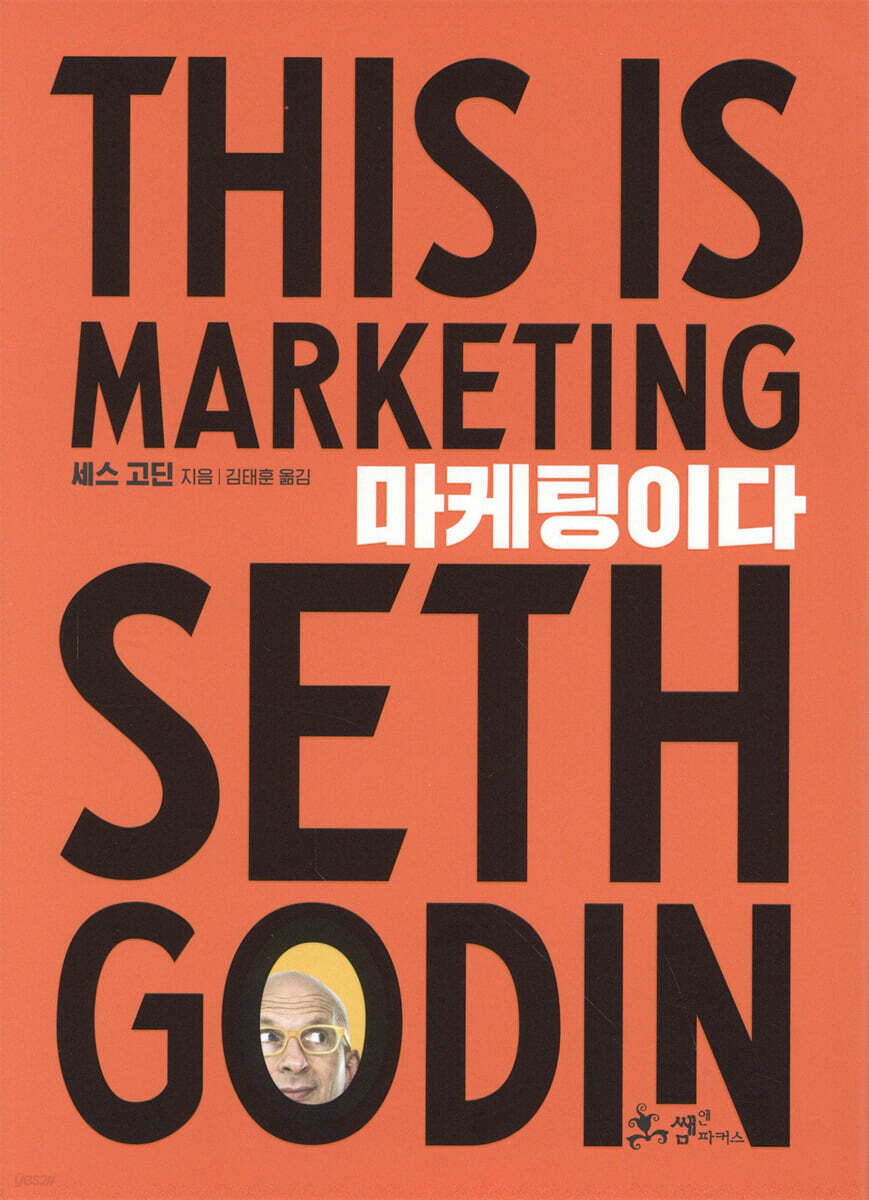
It's marketing
 |
Description
Book Introduction
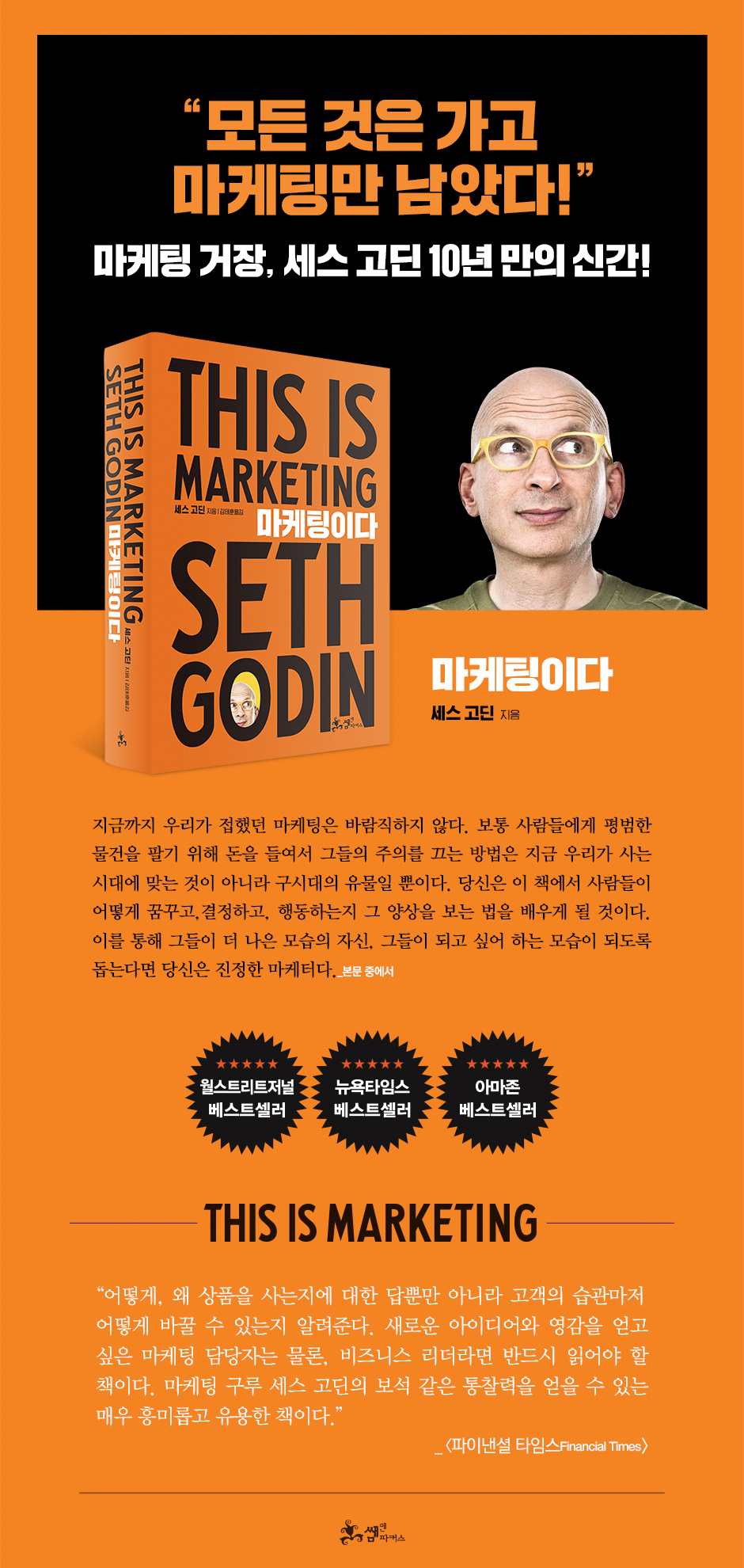
“The era of deception is over. Marketing is in the direction of 'true life'!” It will spark a new spark in marketing that is steeped in routine and convention. Marketing guru Seth Godin's first new book in 10 years! In an era of marketing helplessness, where people feel like they can't do anything anymore, Seth Godin's new book will ignite a new spark in marketing that has become mired in inertia and convention. No matter how excellent the planning, manufacturing method, or product quality is, if marketing is not done properly, it will disappear from the market in an instant. Companies put their lives on the line for marketing and pour huge amounts of money into advertising to reach more people, faster, and in greater numbers. They run newspaper and TV ads, are obsessed with increasing their social media followers, and send meaningless spam emails and texts… But now, soulless tricks don't work. Consumers reject obvious intentions and even ridicule marketing. Now we have to do it differently. Seth Godin has been providing readers with a new level of insight into marketing. In this age of media disappearance and noise, he redefines the concept of what true marketing is. It delicately analyzes the subtle countercurrents that exist within the seemingly massive flow of the market, the complex psychology that unfolds within it that cannot be explained by logic, and the direction of people's true desires. To find important clues in the midst of change, it clearly shows what marketers should look for in times of crisis and how they can market differently. This masterpiece contains the author's unique, deep insight into the rapid changes in the marketing environment over the past 10 years since the publication of the marketing classic, "The Purple Cow." |
- You can preview some of the book's contents.
Preview
index
Author's Note | It's Time to Market Differently
Chapter 1 | Not public, not spam, not shameful
Chapter 2|How Marketers See
Chapter 3 | Stories, Bonds, and Experiences
Chapter 4 | Finding the Minimum Number of Customers Who Will Be Enthusiastic About Me
Chapter 5|In Search of 'Something Better'
Chapter 6|Beyond Daily Necessities
Chapter 7 | Canvas of Dreams and Desires
Chapter 8|Finding the Minimum Viable Market
Chapter 9 | "People Like Us Do This"
Chapter 10 | Trust and Tension Create Momentum
Chapter 11 | Phase, Dominance, and Solidarity
Chapter 12 | A Better Business Plan
Chapter 13 | Signs, Symbols, and Dialects
Chapter 14 | Treat Other People Differently
Chapter 15 | Reaching the Right People
Chapter 16 | Price is a story
Chapter 17 | Approval and Attention: Creating a Virtuous Cycle
Chapter 18 | Trust is as difficult as getting attention
Chapter 19 | The Truth About Funnels
Chapter 20 | Organizing and Leading a Peer Group
Chapter 21 | Cases Using Techniques
Chapter 22 | Now It's Your Turn
Chapter 23 | Marketing to the Most Important People
Appendix 1 | Recommended Reading for Marketing
Appendix 2 | Questions to Consider Before Marketing
Chapter 1 | Not public, not spam, not shameful
Chapter 2|How Marketers See
Chapter 3 | Stories, Bonds, and Experiences
Chapter 4 | Finding the Minimum Number of Customers Who Will Be Enthusiastic About Me
Chapter 5|In Search of 'Something Better'
Chapter 6|Beyond Daily Necessities
Chapter 7 | Canvas of Dreams and Desires
Chapter 8|Finding the Minimum Viable Market
Chapter 9 | "People Like Us Do This"
Chapter 10 | Trust and Tension Create Momentum
Chapter 11 | Phase, Dominance, and Solidarity
Chapter 12 | A Better Business Plan
Chapter 13 | Signs, Symbols, and Dialects
Chapter 14 | Treat Other People Differently
Chapter 15 | Reaching the Right People
Chapter 16 | Price is a story
Chapter 17 | Approval and Attention: Creating a Virtuous Cycle
Chapter 18 | Trust is as difficult as getting attention
Chapter 19 | The Truth About Funnels
Chapter 20 | Organizing and Leading a Peer Group
Chapter 21 | Cases Using Techniques
Chapter 22 | Now It's Your Turn
Chapter 23 | Marketing to the Most Important People
Appendix 1 | Recommended Reading for Marketing
Appendix 2 | Questions to Consider Before Marketing
Detailed image
Into the book
Improvement happens when what we do becomes a culture and creates a better situation.
Improvement happens when the dreams of those we serve come true.
Marketers can improve by making these changes.
Marketing is about sharing the path to betterment.
You can do that.
We can all do it.
--- p.16
The marketing we have encountered so far is not desirable.
Spending money to grab people's attention by selling them ordinary things is not appropriate for the times we live in, it's a relic of an old era.
You will learn to see the patterns in how people dream, decide, and act.
If you can help them become a better version of themselves, the version they want to be, then you are a true marketer.
--- p.33
Most marketers convey a fundamentally similar feeling.
We just do it in different ways, with different services, products, and stories.
Also, I just do it for different people at different times.
If you've given people a sense of belonging, connection, peace, status, or any other desirable emotion, you've done something worthwhile.
What you're selling is just what people need to feel these emotions.
If we focus on tactics rather than results, we will disappoint everyone.
'Who is it for?' and 'What is it for?'
These two questions guide every decision we make.
--- p.46
If you had to choose 1,000 people to become your true fans, who would they be? First and foremost, choose them not based on their appearance, but on what they dream, what they believe, and what they want.
In other words, use psychological groups as your criteria, not population groups.
Just as we can group people together based on the color of their eyes or the length of their ring fingers, we can also group people together based on the stories they tell.
--- p.56
If you try to target as many customers as possible (the maximum possible audience), you will most likely be rejected.
Your ears will be deafened by the chorus of “I hate it.”
This feedback will be direct, emotional, and specific.
When you get rejected so many times, you end up cutting corners to try to fit in.
Until the end, you will try to fit in better than anyone else.
But we must resist.
Your product is not for rejecters.
It's for the customers who are small but sympathetic to your worldview and enthusiastic about it (your minimum effective audience), the people you were originally trying to serve.
--- pp.62~63
As marketers, we must not confuse improving the quality of dog food with the innovation for which it is being promoted.
This is not for the dogs, it is for their owners.
A marketer for a dog food company might decide that they need to improve the taste to increase sales.
But to do that, you need to know what tastes dogs like.
This is a very difficult task.
Rather, the real answer is to create food that dog owners want to buy.
(syncopation)
Just like a dog owner who chooses dog food based on 100 factors (but not taste), you need to understand that the people you serve don't just buy what's cheapest; they also value a wide range of information and emotions.
Choosing which extreme you want to go to will tell you which markets you should consider.
Of course, the opposite is also true.
--- pp.80~81
You might want to target everyone, so you might be tempted to create boring products or services.
If you do that, you won't get cursed at much.
Because it fits the criteria and doesn't cause tension.
If everyone is satisfied, no one will be dissatisfied, so they try to target everyone.
The problem is that the market is made up of people who are satisfied with such boring products.
is stagnant.
They don't look for anything better.
New and boring things don't easily coexist.
So people who are content with boring things don't come looking for you.
Rather, actively avoid it.
--- pp.131~132
Cheaper is not the point.
Better is tricky to define.
But thriving companies go to illogical lengths to become irresistible.
There is no doubt about this.
--- p.137
Your work is like a tree.
Its roots live in the soil of dreams and desires.
Not everyone's dreams and desires, but the dreams and desires of the people you want to serve.
If your work is commodities, a quick response to an obvious need, your roots will not be deep.
The tree will not grow tall, and even if it did, it would not be considered important, useful, or dominant.
--- p.171
When you first opened this book, you thought, 'We need to get more people to buy our product.
You might be thinking, 'There's something wrong with marketing.'
I hope you now realize that this is a manager-centric and self-centered way of thinking.
The purpose of the culture we pursue is not to support capitalism.
Even if capitalism makes money.
Rather, the purpose of capitalism is to support the culture we seek to create.
Transformation occurs when you embrace the attitude of service and culture that is willing to help customers and bring about change.
“How do I get more people to listen to me, spread the word, increase my followers, and turn potential demand into sales?
Instead of asking, “Should we find more customers and pay our employees?” ask, “What changes should we make?”
Once you figure out what you want to represent, the rest becomes much easier.
Improvement happens when the dreams of those we serve come true.
Marketers can improve by making these changes.
Marketing is about sharing the path to betterment.
You can do that.
We can all do it.
--- p.16
The marketing we have encountered so far is not desirable.
Spending money to grab people's attention by selling them ordinary things is not appropriate for the times we live in, it's a relic of an old era.
You will learn to see the patterns in how people dream, decide, and act.
If you can help them become a better version of themselves, the version they want to be, then you are a true marketer.
--- p.33
Most marketers convey a fundamentally similar feeling.
We just do it in different ways, with different services, products, and stories.
Also, I just do it for different people at different times.
If you've given people a sense of belonging, connection, peace, status, or any other desirable emotion, you've done something worthwhile.
What you're selling is just what people need to feel these emotions.
If we focus on tactics rather than results, we will disappoint everyone.
'Who is it for?' and 'What is it for?'
These two questions guide every decision we make.
--- p.46
If you had to choose 1,000 people to become your true fans, who would they be? First and foremost, choose them not based on their appearance, but on what they dream, what they believe, and what they want.
In other words, use psychological groups as your criteria, not population groups.
Just as we can group people together based on the color of their eyes or the length of their ring fingers, we can also group people together based on the stories they tell.
--- p.56
If you try to target as many customers as possible (the maximum possible audience), you will most likely be rejected.
Your ears will be deafened by the chorus of “I hate it.”
This feedback will be direct, emotional, and specific.
When you get rejected so many times, you end up cutting corners to try to fit in.
Until the end, you will try to fit in better than anyone else.
But we must resist.
Your product is not for rejecters.
It's for the customers who are small but sympathetic to your worldview and enthusiastic about it (your minimum effective audience), the people you were originally trying to serve.
--- pp.62~63
As marketers, we must not confuse improving the quality of dog food with the innovation for which it is being promoted.
This is not for the dogs, it is for their owners.
A marketer for a dog food company might decide that they need to improve the taste to increase sales.
But to do that, you need to know what tastes dogs like.
This is a very difficult task.
Rather, the real answer is to create food that dog owners want to buy.
(syncopation)
Just like a dog owner who chooses dog food based on 100 factors (but not taste), you need to understand that the people you serve don't just buy what's cheapest; they also value a wide range of information and emotions.
Choosing which extreme you want to go to will tell you which markets you should consider.
Of course, the opposite is also true.
--- pp.80~81
You might want to target everyone, so you might be tempted to create boring products or services.
If you do that, you won't get cursed at much.
Because it fits the criteria and doesn't cause tension.
If everyone is satisfied, no one will be dissatisfied, so they try to target everyone.
The problem is that the market is made up of people who are satisfied with such boring products.
is stagnant.
They don't look for anything better.
New and boring things don't easily coexist.
So people who are content with boring things don't come looking for you.
Rather, actively avoid it.
--- pp.131~132
Cheaper is not the point.
Better is tricky to define.
But thriving companies go to illogical lengths to become irresistible.
There is no doubt about this.
--- p.137
Your work is like a tree.
Its roots live in the soil of dreams and desires.
Not everyone's dreams and desires, but the dreams and desires of the people you want to serve.
If your work is commodities, a quick response to an obvious need, your roots will not be deep.
The tree will not grow tall, and even if it did, it would not be considered important, useful, or dominant.
--- p.171
When you first opened this book, you thought, 'We need to get more people to buy our product.
You might be thinking, 'There's something wrong with marketing.'
I hope you now realize that this is a manager-centric and self-centered way of thinking.
The purpose of the culture we pursue is not to support capitalism.
Even if capitalism makes money.
Rather, the purpose of capitalism is to support the culture we seek to create.
Transformation occurs when you embrace the attitude of service and culture that is willing to help customers and bring about change.
“How do I get more people to listen to me, spread the word, increase my followers, and turn potential demand into sales?
Instead of asking, “Should we find more customers and pay our employees?” ask, “What changes should we make?”
Once you figure out what you want to represent, the rest becomes much easier.
--- p.212
Publisher's Review
The era of deception is over
Marketing should be our true life.
Marketers are still racking their brains today.
"How much should we grow our brand?" "What market share should we have?" "How many online followers should we increase?" The more they ask themselves these questions, the more they pour in advertising dollars. They don't hesitate to use TV, newspapers, social media, or even spam.
Just to sell more and promote more.
There was definitely a time when advertising was worth the money.
This was possible when channels and markets were limited and customers had no access to information.
But now, customers are suffering from not only information overload but also a lot of noise.
Do you still believe you can buy their attention with money? If so, you're neither a good nor a good marketer.
Such shallow tricks no longer work.
Do you want to be respected by your customers, successfully generate positive buzz, be appropriately busy, become famous, and become a marketer you can be proud of? Then change yourself first.
Redefine your and your company's marketing, free from sham and deception.
Seth Godin has provided readers with unique insights into marketing.
In this age of media disappearance and noise, he redefines the concept of what true marketing is.
It delicately reads the subtle countercurrents that exist within the seemingly massive flow of the market, the complex psychology that unfolds within it that cannot be explained by logic, and the direction of people's true desires.
The direction in which ‘people’s sincerity’ is heading,
And reading the direction that desire is heading
'People see what we see, believe what we believe, and want what we want.' This is a common marketer's misconception.
Unfortunately, that is unlikely to happen.
Because customers don't want what you and your company want.
Ultimately, if you can't tell people the story they want to hear, in the way they want and need to hear it, no amount of marketing will work.
So what is marketing?
Who the hell is a marketer?
Seth Godin says:
“Marketing is the act of changing the market, and marketers are the ones who bring about that change.” A competent marketer does not sell tools to change the market, but rather provides a means to get one step closer to the dreams and desires of customers.
For example, not things, but providing people with feelings, status, and a sense of connection.
We first try to understand the customer's worldview and desires and gain empathy.
Focus on giving your trusted customers more than they expect, without feeling empty and without you.
We don't victimize our customers, but rather focus on their actions as being right and, more importantly, on creating the life experiences they desire.
“This is for you”
“Also, this isn’t for you.”
On the other hand, many marketers try to lower the price and add more features.
This is a stupid idea.
People make purchasing decisions for reasons that are far more illogical, irrational, and deeply personal than that.
They consider their own unique experiences, their desired desires, emotions, and the status they want to enjoy as more important purchasing decision factors.
We make decisions based on the perceptions of people like ourselves, asking ourselves, “Would people like me do this?”
Even if you don't need it right now, or because it's expensive, you press the checkout button simply for the satisfaction of being able to have something new before others.
Marketers need to be able to categorize and group these people.
It is about defining 'people like me', or 'us', very specifically, reading the specific psychology of those customers, and focusing on the direction in which their gaze is directed.
For example, a Hermes bag is more expensive than a Coach bag.
Tesla is more expensive than other luxury cars.
But if you understand the mindset of those who believe that "the more expensive it is, the better it is," their choice becomes understandable.
We need to be able to tie these together.
People who want to show off or demonstrate similar tastes and status.
You also need to be able to boldly say to someone who doesn't belong to a similar psychological group, "This isn't for you."
When you can confidently say to the people you want to serve, the people you want to target, “This is just for you,” they will be more focused on the stories they want to tell, the more important work.
Only then can we bring about change in the market.
In an era of marketing helplessness, where there is nothing more we can do,
A book that will ignite a new spark in marketing that has been steeped in routine and convention!
Marketing is happening everywhere.
From the first moment in our memory to this very moment, we are surrounded by marketing.
I can even learn letters through logos I see on the street.
But customers are nowhere to be found.
People hidden on the Internet and in smartphones are spread out like a thin fog.
People's heads are full of noise.
This book is the answer to the question of what to do in this frustrating reality of marketing.
Seth's marketing options are plentiful.
From tactics that cross the lines between long-tail and short-head, direct marketing and brand marketing, B2B and O2O, to cognitive strategies that stimulate people's inherent psychological status and illogical desires, and leapfrog strategies that leap across the chasm, this book contains crucial clues you've been pondering about marketing.
If you and your company want to have a more positive impact on the world, if you want to be more respected and successful, you need to let go of the lies and understand where your customers are and what they want, not just the ambition to sell more.
Who is it for? What is it for? Remember, great marketing always begins with this simple question.
This book is a must-read for all of us, from field marketers to marketing leaders and corporate CEOs, who are facing an era of stagnation in marketing. It will help us find a breakthrough.
It is also enough to rekindle a spark of passion in a marketing organization that has been steeped in routine and convention.
Marketing should be our true life.
Marketers are still racking their brains today.
"How much should we grow our brand?" "What market share should we have?" "How many online followers should we increase?" The more they ask themselves these questions, the more they pour in advertising dollars. They don't hesitate to use TV, newspapers, social media, or even spam.
Just to sell more and promote more.
There was definitely a time when advertising was worth the money.
This was possible when channels and markets were limited and customers had no access to information.
But now, customers are suffering from not only information overload but also a lot of noise.
Do you still believe you can buy their attention with money? If so, you're neither a good nor a good marketer.
Such shallow tricks no longer work.
Do you want to be respected by your customers, successfully generate positive buzz, be appropriately busy, become famous, and become a marketer you can be proud of? Then change yourself first.
Redefine your and your company's marketing, free from sham and deception.
Seth Godin has provided readers with unique insights into marketing.
In this age of media disappearance and noise, he redefines the concept of what true marketing is.
It delicately reads the subtle countercurrents that exist within the seemingly massive flow of the market, the complex psychology that unfolds within it that cannot be explained by logic, and the direction of people's true desires.
The direction in which ‘people’s sincerity’ is heading,
And reading the direction that desire is heading
'People see what we see, believe what we believe, and want what we want.' This is a common marketer's misconception.
Unfortunately, that is unlikely to happen.
Because customers don't want what you and your company want.
Ultimately, if you can't tell people the story they want to hear, in the way they want and need to hear it, no amount of marketing will work.
So what is marketing?
Who the hell is a marketer?
Seth Godin says:
“Marketing is the act of changing the market, and marketers are the ones who bring about that change.” A competent marketer does not sell tools to change the market, but rather provides a means to get one step closer to the dreams and desires of customers.
For example, not things, but providing people with feelings, status, and a sense of connection.
We first try to understand the customer's worldview and desires and gain empathy.
Focus on giving your trusted customers more than they expect, without feeling empty and without you.
We don't victimize our customers, but rather focus on their actions as being right and, more importantly, on creating the life experiences they desire.
“This is for you”
“Also, this isn’t for you.”
On the other hand, many marketers try to lower the price and add more features.
This is a stupid idea.
People make purchasing decisions for reasons that are far more illogical, irrational, and deeply personal than that.
They consider their own unique experiences, their desired desires, emotions, and the status they want to enjoy as more important purchasing decision factors.
We make decisions based on the perceptions of people like ourselves, asking ourselves, “Would people like me do this?”
Even if you don't need it right now, or because it's expensive, you press the checkout button simply for the satisfaction of being able to have something new before others.
Marketers need to be able to categorize and group these people.
It is about defining 'people like me', or 'us', very specifically, reading the specific psychology of those customers, and focusing on the direction in which their gaze is directed.
For example, a Hermes bag is more expensive than a Coach bag.
Tesla is more expensive than other luxury cars.
But if you understand the mindset of those who believe that "the more expensive it is, the better it is," their choice becomes understandable.
We need to be able to tie these together.
People who want to show off or demonstrate similar tastes and status.
You also need to be able to boldly say to someone who doesn't belong to a similar psychological group, "This isn't for you."
When you can confidently say to the people you want to serve, the people you want to target, “This is just for you,” they will be more focused on the stories they want to tell, the more important work.
Only then can we bring about change in the market.
In an era of marketing helplessness, where there is nothing more we can do,
A book that will ignite a new spark in marketing that has been steeped in routine and convention!
Marketing is happening everywhere.
From the first moment in our memory to this very moment, we are surrounded by marketing.
I can even learn letters through logos I see on the street.
But customers are nowhere to be found.
People hidden on the Internet and in smartphones are spread out like a thin fog.
People's heads are full of noise.
This book is the answer to the question of what to do in this frustrating reality of marketing.
Seth's marketing options are plentiful.
From tactics that cross the lines between long-tail and short-head, direct marketing and brand marketing, B2B and O2O, to cognitive strategies that stimulate people's inherent psychological status and illogical desires, and leapfrog strategies that leap across the chasm, this book contains crucial clues you've been pondering about marketing.
If you and your company want to have a more positive impact on the world, if you want to be more respected and successful, you need to let go of the lies and understand where your customers are and what they want, not just the ambition to sell more.
Who is it for? What is it for? Remember, great marketing always begins with this simple question.
This book is a must-read for all of us, from field marketers to marketing leaders and corporate CEOs, who are facing an era of stagnation in marketing. It will help us find a breakthrough.
It is also enough to rekindle a spark of passion in a marketing organization that has been steeped in routine and convention.
GOODS SPECIFICS
- Date of publication: March 27, 2019
- Format: Hardcover book binding method guide
- Page count, weight, size: 368 pages | 538g | 135*190*33mm
- ISBN13: 9788965707820
- ISBN10: 896570782X
You may also like
카테고리
korean


korean

![ELLE 엘르 스페셜 에디션 A형 : 12월 [2025]](http://librairie.coreenne.fr/cdn/shop/files/b8e27a3de6c9538896439686c6b0e8fb.jpg?v=1766436872&width=3840)


