

The Three Kingdoms through Science
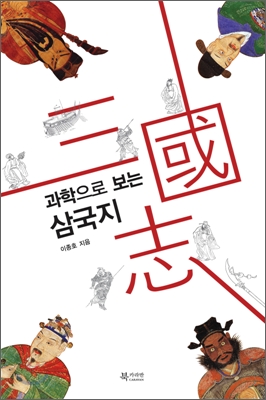 |
Description
Book Introduction
The truth hidden in fierce battles and heroic tales.
The Three Kingdoms period was the most intense period of conflict in Chinese history.
The great exploits of this era's heroes, as seen in novels, movies, and dramas, always excite readers.
The Romance of the Three Kingdoms, with its diverse characters and events, has met countless readers as a reference book for business know-how, a must-read self-help book for self-cultivation, and a novel that offers pure narrative enjoyment.
But as always, behind every well-known story, there are many more untold stories.
How many readers are aware that these dazzling tales contain previously unknown science and mysteries? They are even filled with tales that have inspired modern science and enigmatic tales that even cutting-edge technology has yet to unravel?
Author Dr. Lee Jong-ho reveals that aspects of Chinese culture and history are hidden behind stories that appear to be mere fictional exaggerations.
The author, who has lived his entire life as a scientist and explorer of ancient civilizations, uncovers the mysteries and science hidden in the Romance of the Three Kingdoms, encompassing calculations of alcohol's reactions in the body, an exploration of the scientific principle called the "wick effect," recent research trends in fluorescent organisms, the history of anesthesia and incision surgery, an exploration of China's unique cannibalistic culture, a cultural-historical examination through a chronological comparison of the Three Kingdoms periods of China and Korea, and even the repercussions left by numerous anecdotes from the famous Battle of Red Cliffs.
In the process, the real possibility of natural combustion and the feat of Heungseoljigong, which remained mysteries of natural science, the relationship between dissection, surgery, and anesthesia, the relationship between cannibalistic culture and power, the activities of Goguryeo's Gaemamusa, the scientific principles hidden behind the weapons that heated up the Three Kingdoms period, the Battle of Red Cliffs famous for 100,000 arrows and the southeast wind, and the real truth about Zhuge Liang's conquest of the Southern Barbarians, known for the Seven Arrows and Seven Golden Fist, are revealed.
The Three Kingdoms period was the most intense period of conflict in Chinese history.
The great exploits of this era's heroes, as seen in novels, movies, and dramas, always excite readers.
The Romance of the Three Kingdoms, with its diverse characters and events, has met countless readers as a reference book for business know-how, a must-read self-help book for self-cultivation, and a novel that offers pure narrative enjoyment.
But as always, behind every well-known story, there are many more untold stories.
How many readers are aware that these dazzling tales contain previously unknown science and mysteries? They are even filled with tales that have inspired modern science and enigmatic tales that even cutting-edge technology has yet to unravel?
Author Dr. Lee Jong-ho reveals that aspects of Chinese culture and history are hidden behind stories that appear to be mere fictional exaggerations.
The author, who has lived his entire life as a scientist and explorer of ancient civilizations, uncovers the mysteries and science hidden in the Romance of the Three Kingdoms, encompassing calculations of alcohol's reactions in the body, an exploration of the scientific principle called the "wick effect," recent research trends in fluorescent organisms, the history of anesthesia and incision surgery, an exploration of China's unique cannibalistic culture, a cultural-historical examination through a chronological comparison of the Three Kingdoms periods of China and Korea, and even the repercussions left by numerous anecdotes from the famous Battle of Red Cliffs.
In the process, the real possibility of natural combustion and the feat of Heungseoljigong, which remained mysteries of natural science, the relationship between dissection, surgery, and anesthesia, the relationship between cannibalistic culture and power, the activities of Goguryeo's Gaemamusa, the scientific principles hidden behind the weapons that heated up the Three Kingdoms period, the Battle of Red Cliffs famous for 100,000 arrows and the southeast wind, and the real truth about Zhuge Liang's conquest of the Southern Barbarians, known for the Seven Arrows and Seven Golden Fist, are revealed.
- You can preview some of the book's contents.
Preview
index
Preface: Why the Three Kingdoms Again?
1.
What is the capacity of the equipment?
2.
Make a back with Dong Zhuo's body
3.
Firefly lights, is that possible?
4.
Was Hua Tuo's brain surgery possible?
5.
The gentle hero Liu Bei eats people
6.
The ultimate tactic: the 36 stratagems of running away
7.
Zhuge Liang's elusive Eight Formations
8.
The Science of Siege and Defense: The Fierce Tug-of-War
9.
Cao Cao's Justified "Over": The Conquest of the Wuhuan
10.
Why did Zhuge Liang attack the Nanman?
11.
There was no Battle of Red Cliffs
12.
Zhuge Liang's Secret of Bringing the Southeast Wind
main
1.
What is the capacity of the equipment?
2.
Make a back with Dong Zhuo's body
3.
Firefly lights, is that possible?
4.
Was Hua Tuo's brain surgery possible?
5.
The gentle hero Liu Bei eats people
6.
The ultimate tactic: the 36 stratagems of running away
7.
Zhuge Liang's elusive Eight Formations
8.
The Science of Siege and Defense: The Fierce Tug-of-War
9.
Cao Cao's Justified "Over": The Conquest of the Wuhuan
10.
Why did Zhuge Liang attack the Nanman?
11.
There was no Battle of Red Cliffs
12.
Zhuge Liang's Secret of Bringing the Southeast Wind
main
Into the book
Dong Zhuo, who was unusually large in life, had a large and fat body after death, so soldiers made a lamp by inserting a wick into his navel and lighting it.
The fire on the casket burned for several nights, with the oil boiling hot.
Everyone who passed by trampled on Dong Zhuo's burning corpse and kicked his head.
It can't be a story that sounds like a lie.
Using the human body to light a fire? Perhaps Luo Guanzhong, inspired by Dong Zhuo's previous obesity, assumed human fat served as a kind of fuel.
Is that even possible?
--- From 'Making a Lamp with Dong Zhuo's Body'
Was the story of Guan Yu's surgery true? Modern scientists say that if the bone-cutting procedure had been performed without anesthesia, he would have died from the pain.
In fact, the surgery is accompanied by severe pain.
Therefore, large-scale surgery was unimaginable before the invention of safe and effective anesthetics.
The best surgery that could be performed was to have the patient lie down on the operating table, tie them up tightly with ropes, and have an assistant hold the patient while the doctor cuts off the affected part (leg or arm) with a saw or knife.
After the surgery, the affected area was burned with a red-hot iron to stop the bleeding.
This is why, even in the mid-1800s, large European medical institutions had to hire large men as assistants or search parties.
It was to catch a patient who was running away during surgery and drag him back to the operating table.
--- From 'Was Hua Tuo's Brain Surgery Possible?'
This happened when Liu Bei was defeated by Lu Bu and was on his way to entrust himself to Cao Cao in Xudou, where he spent a night in a small village.
Yuan, a poor hunter, admired Yu Bei and wanted to treat his party with the utmost respect, but unfortunately, he had run out of food and money.
He thought that he could have another wife, but he couldn't let his precious guest starve, so he killed his wife and made a dish.
Liu Bei, who had been well treated, was about to leave at dawn when he saw a dead woman in the kitchen and asked Liu An about the truth.
Yuan told the truth that he had nothing to offer and had killed his wife and offered her meat.
When Liu Bei thought of Liu An's utmost kindness, he felt grateful, but at the same time, he felt immense pity for the woman.
Later, when Cao Cao heard this story through Liu Bei, he said, “Liu An is indeed a man of courage.
He said, “I will give you 100 nyang so that you can get Yu-an a new wife.”
--- The gentle hero Liu Bei eats people
Although the first record of a dog in China dates back to 188 AD, the first archaeological evidence was unearthed in a tomb from that time in 302 AD.
However, since this excavated item is only a simple chest cover made of quilting, it is presumed that the iron cavalry of Wei, Shu, and Wu appearing in the Romance of the Three Kingdoms also used only a partial front cover and were not armored iron cavalry like Goguryeo.
Since China traditionally focused on infantry rather than cavalry, it utilized foreign troops for its cavalry.
Most of the cavalry units active throughout the Three Kingdoms period were foreign troops, and before the start of the Three Kingdoms period, the Han Dynasty employed the Xiongnu, Xianbei, and Wuhuan as mercenaries to guard its borders.
The fire on the casket burned for several nights, with the oil boiling hot.
Everyone who passed by trampled on Dong Zhuo's burning corpse and kicked his head.
It can't be a story that sounds like a lie.
Using the human body to light a fire? Perhaps Luo Guanzhong, inspired by Dong Zhuo's previous obesity, assumed human fat served as a kind of fuel.
Is that even possible?
--- From 'Making a Lamp with Dong Zhuo's Body'
Was the story of Guan Yu's surgery true? Modern scientists say that if the bone-cutting procedure had been performed without anesthesia, he would have died from the pain.
In fact, the surgery is accompanied by severe pain.
Therefore, large-scale surgery was unimaginable before the invention of safe and effective anesthetics.
The best surgery that could be performed was to have the patient lie down on the operating table, tie them up tightly with ropes, and have an assistant hold the patient while the doctor cuts off the affected part (leg or arm) with a saw or knife.
After the surgery, the affected area was burned with a red-hot iron to stop the bleeding.
This is why, even in the mid-1800s, large European medical institutions had to hire large men as assistants or search parties.
It was to catch a patient who was running away during surgery and drag him back to the operating table.
--- From 'Was Hua Tuo's Brain Surgery Possible?'
This happened when Liu Bei was defeated by Lu Bu and was on his way to entrust himself to Cao Cao in Xudou, where he spent a night in a small village.
Yuan, a poor hunter, admired Yu Bei and wanted to treat his party with the utmost respect, but unfortunately, he had run out of food and money.
He thought that he could have another wife, but he couldn't let his precious guest starve, so he killed his wife and made a dish.
Liu Bei, who had been well treated, was about to leave at dawn when he saw a dead woman in the kitchen and asked Liu An about the truth.
Yuan told the truth that he had nothing to offer and had killed his wife and offered her meat.
When Liu Bei thought of Liu An's utmost kindness, he felt grateful, but at the same time, he felt immense pity for the woman.
Later, when Cao Cao heard this story through Liu Bei, he said, “Liu An is indeed a man of courage.
He said, “I will give you 100 nyang so that you can get Yu-an a new wife.”
--- The gentle hero Liu Bei eats people
Although the first record of a dog in China dates back to 188 AD, the first archaeological evidence was unearthed in a tomb from that time in 302 AD.
However, since this excavated item is only a simple chest cover made of quilting, it is presumed that the iron cavalry of Wei, Shu, and Wu appearing in the Romance of the Three Kingdoms also used only a partial front cover and were not armored iron cavalry like Goguryeo.
Since China traditionally focused on infantry rather than cavalry, it utilized foreign troops for its cavalry.
Most of the cavalry units active throughout the Three Kingdoms period were foreign troops, and before the start of the Three Kingdoms period, the Han Dynasty employed the Xiongnu, Xianbei, and Wuhuan as mercenaries to guard its borders.
--- Cao Cao's Conquest of the Wuhuan, a Reasonable 'Over'
Publisher's Review
The Three Kingdoms period was the most intense period of conflict in Chinese history.
The story of the hero's exploits unfolds splendidly, and it contains science and mystery that no one knew about.
Discover the stories that inspired modern science and the mysteries that even cutting-edge technology cannot yet solve!
>> Now read the Romance of the Three Kingdoms with science!
The truth hidden in fierce battles and heroic tales.
The Three Kingdoms period was the most intense period of conflict in Chinese history.
The great exploits of this era's heroes, as seen in novels, movies, and dramas, always excite readers.
The Romance of the Three Kingdoms, with its diverse characters and events, has met countless readers as a reference book for business know-how, a must-read self-help book for self-cultivation, and a novel that offers pure narrative enjoyment.
The popularity of the work is so great that it has even led to the saying, “Don’t discuss life with someone who hasn’t read the Romance of the Three Kingdoms three times.” It’s difficult to list all the praise it has received.
But as always, behind every well-known story, there are many more untold stories.
How many readers are aware that these dazzling tales contain previously unknown science and mysteries? They are even filled with tales that have inspired modern science and enigmatic tales that even cutting-edge technology has yet to unravel?
There are countless stories and materials that are often dismissed as exaggerations or distortions unique to China.
The drinking capacity of the heroes of the Three Kingdoms period, who were said to have drunk alcohol, was equivalent to that of a god, not a human, if converted to modern units. Dong Zhuo, one of the representative villains of the Three Kingdoms period, became a human lighthouse after his death.
It was fireflies that saved King Jinryu from danger in a life-or-death situation, and it is said that the divine physician Hua Tuo, who treated the heroes of the Three Kingdoms, performed incisions without anesthesia in various near-mythical acts.
It is said that the hero Liu Bei, known for his gentleness, ate human flesh without a second thought, and that Zhuge Liang's Eight Formations, known for their elusiveness, were reminiscent of the Labyrinth of Minoan Empire.
Even the famous Battle of Red Cliffs is said to have been a fictitious name created by the erroneous records of numerous writers. So what on earth happened in China at that time?
>> History and Science Hidden Behind Novel Exaggeration
In addition to scientific principles and the latest research trends, various approaches such as historical site exploration stand out.
Author Dr. Lee Jong-ho reveals that behind these stories, which appear to be mere fictional exaggerations, lie aspects of Chinese culture and history.
The author, who has lived his entire life as a scientist and explorer of ancient civilizations, uncovers the mysteries and science hidden in the Romance of the Three Kingdoms, encompassing calculations of alcohol's reactions in the body, an exploration of the scientific principle called the "wick effect," recent research trends in fluorescent organisms, the history of anesthesia and incision surgery, an exploration of China's unique cannibalistic culture, a cultural-historical examination through a chronological comparison of the Three Kingdoms periods of China and Korea, and even the repercussions left by numerous anecdotes from the famous Battle of Red Cliffs.
In the process, the real possibility of natural combustion and the feat of Heungseoljigong, which remained mysteries of natural science, the relationship between dissection, surgery, and anesthesia, the relationship between cannibalistic culture and power, the activities of Goguryeo's Gaemamusa, the scientific principles hidden behind the weapons that heated up the Three Kingdoms period, the Battle of Red Cliffs famous for 100,000 arrows and the southeast wind, and the real truth about Zhuge Liang's conquest of the Southern Barbarians, known for the Seven Arrows and Seven Golden Fist, are revealed.
What makes this book particularly stand out is the author's efforts to identify and bridge the gap between the traditional stories and the truth by personally visiting historical sites.
The author's efforts to personally visit and confirm the locations of Gudanghyeop, Baekjeseong Fortress, Samhyeop, Gangneunggil, Jeokbyeok, and Orim serve to further reexamine the current significance of the Romance of the Three Kingdoms.
Additionally, the photographs showing the current appearance of the historic site are a second source of enjoyment that can be gained from reading this book.
The story of the hero's exploits unfolds splendidly, and it contains science and mystery that no one knew about.
Discover the stories that inspired modern science and the mysteries that even cutting-edge technology cannot yet solve!
>> Now read the Romance of the Three Kingdoms with science!
The truth hidden in fierce battles and heroic tales.
The Three Kingdoms period was the most intense period of conflict in Chinese history.
The great exploits of this era's heroes, as seen in novels, movies, and dramas, always excite readers.
The Romance of the Three Kingdoms, with its diverse characters and events, has met countless readers as a reference book for business know-how, a must-read self-help book for self-cultivation, and a novel that offers pure narrative enjoyment.
The popularity of the work is so great that it has even led to the saying, “Don’t discuss life with someone who hasn’t read the Romance of the Three Kingdoms three times.” It’s difficult to list all the praise it has received.
But as always, behind every well-known story, there are many more untold stories.
How many readers are aware that these dazzling tales contain previously unknown science and mysteries? They are even filled with tales that have inspired modern science and enigmatic tales that even cutting-edge technology has yet to unravel?
There are countless stories and materials that are often dismissed as exaggerations or distortions unique to China.
The drinking capacity of the heroes of the Three Kingdoms period, who were said to have drunk alcohol, was equivalent to that of a god, not a human, if converted to modern units. Dong Zhuo, one of the representative villains of the Three Kingdoms period, became a human lighthouse after his death.
It was fireflies that saved King Jinryu from danger in a life-or-death situation, and it is said that the divine physician Hua Tuo, who treated the heroes of the Three Kingdoms, performed incisions without anesthesia in various near-mythical acts.
It is said that the hero Liu Bei, known for his gentleness, ate human flesh without a second thought, and that Zhuge Liang's Eight Formations, known for their elusiveness, were reminiscent of the Labyrinth of Minoan Empire.
Even the famous Battle of Red Cliffs is said to have been a fictitious name created by the erroneous records of numerous writers. So what on earth happened in China at that time?
>> History and Science Hidden Behind Novel Exaggeration
In addition to scientific principles and the latest research trends, various approaches such as historical site exploration stand out.
Author Dr. Lee Jong-ho reveals that behind these stories, which appear to be mere fictional exaggerations, lie aspects of Chinese culture and history.
The author, who has lived his entire life as a scientist and explorer of ancient civilizations, uncovers the mysteries and science hidden in the Romance of the Three Kingdoms, encompassing calculations of alcohol's reactions in the body, an exploration of the scientific principle called the "wick effect," recent research trends in fluorescent organisms, the history of anesthesia and incision surgery, an exploration of China's unique cannibalistic culture, a cultural-historical examination through a chronological comparison of the Three Kingdoms periods of China and Korea, and even the repercussions left by numerous anecdotes from the famous Battle of Red Cliffs.
In the process, the real possibility of natural combustion and the feat of Heungseoljigong, which remained mysteries of natural science, the relationship between dissection, surgery, and anesthesia, the relationship between cannibalistic culture and power, the activities of Goguryeo's Gaemamusa, the scientific principles hidden behind the weapons that heated up the Three Kingdoms period, the Battle of Red Cliffs famous for 100,000 arrows and the southeast wind, and the real truth about Zhuge Liang's conquest of the Southern Barbarians, known for the Seven Arrows and Seven Golden Fist, are revealed.
What makes this book particularly stand out is the author's efforts to identify and bridge the gap between the traditional stories and the truth by personally visiting historical sites.
The author's efforts to personally visit and confirm the locations of Gudanghyeop, Baekjeseong Fortress, Samhyeop, Gangneunggil, Jeokbyeok, and Orim serve to further reexamine the current significance of the Romance of the Three Kingdoms.
Additionally, the photographs showing the current appearance of the historic site are a second source of enjoyment that can be gained from reading this book.
GOODS SPECIFICS
- Date of issue: April 3, 2009
- Page count, weight, size: 430 pages | 626g | 153*224*30mm
- ISBN13: 9788991945197
- ISBN10: 8991945198
You may also like
카테고리
korean


korean

![GQ KOREA Mark (Monthly): December [2025]](http://librairie.coreenne.fr/cdn/shop/files/8ef265dbbfbf186523ed75ba7319009d.jpg?v=1765340328&width=3840)


