

ear
 |
Description
Book Introduction
A wicked person who has committed an irreversible mistake Unforgiven perpetrator Perhaps a victim who has been falsely accused A loser who succumbs to adversity A fool who lost himself in the midst of trials… What kind of person is she now? Can this life, which seems to have ended, begin again? Kim Hye-jin's new novel, "Listening," has been published by Minumsa. Since his debut in 2012, the author has published his first full-length novel, 『Jungang Station』, in 2013. He has been more active than anyone else, publishing a total of seven novels, including 『About My Daughter』, 『Nine Times』, and 『Fire and My Autobiography』. The result was widespread support from both the literary community and the public. In the past decade, Kim Hye-jin has become an irreplaceable name, adding new color to Korean literature. In particular, in April of last year, the novel "About My Daughter," which depicts the process of a mother and daughter who do not understand each other approaching the world they belong to with high tension and realistic solidarity, was published by the world-renowned French publisher Gallimard, drawing the world's attention to the author. 『About My Daughter』, which has been well-received not only in Korea but also abroad, has been translated into 16 languages around the world. Indeed, many people have been waiting for Kim Hye-jin's next novel. 『Listening』 shares the same theme that Kim Hye-jin's novels have explored so far: the question of the possibility of understanding others, but it offers a completely different perspective from her previous works and attempts to communicate with the world. This novel, which centers on a man whose life has come to a standstill after being completely cut off from the world, builds moments of silence where no judgment can be made in a world accustomed to quick judgments. As the character changes, the speed at which we judge the world also begins to change. The time for listening has come. |
- You can preview some of the book's contents.
Preview
index
Listening 7
Author's Note 309
Author's Note 309
Into the book
“She lived for a long time without showing her emotions.
There were some unbearable moments, but most of them were bearable and easily forgotten.
She believed she had control over her emotions.
I thought that my own will and effort would make it possible.
And now that everything has become impossible, she has no choice but to admit that it was not her own will and effort, but the life around her that made it possible.”
--- p.10
"Because in the bright day everything is easily revealed, and people like to talk about things that are revealed.
Perhaps only in the dead of night, when vision narrows, does people's fearful curiosity finally fall asleep.
She walks around the park one more time, choosing the dark side, and stops in front of the trash can at the park entrance.
After that, take out the neatly folded letter and tear it up.
As if he was going to discard the emotions contained there.
As if he would never be swayed by such emotions again.
--- p.11
Words that draw a line between you and others.
Words that drive others away.
In the end, these are words that highlight her own righteousness and justice, but to her, all of those words are no different.
People's words remind her of the times she has passed.
Because it's still proof that not everything has been forgotten at all.
It's a warning that his name will be persistently mentioned like this for a long time.
It may be her sense of entitlement and victim mentality.
Anyway, she doesn't want to get involved.
Whatever it is, whatever it is, I don't want to be involved anymore.
--- p.15
“She thinks about it until she picks up her pen and starts writing something.
A mess of round, long, and pointed patterns appear on the pure white letter paper.
Anyway, it's not a readable text.
She doesn't have the confidence to tell Taeju.
That's impossible.
From left to right.
“Nothing can be said in this neat and tidy format.”
--- p.28
“She looks back at her house, located between a bright, wide street and a dark, narrow one.
A house that is the boundary between two conflicting worlds, belonging neither to this side nor to that side.
She walks aimlessly, following the memories that come to mind.
And then I recall my past self, when I believed I could control certain memories and certain emotions.”
--- p.34
“Even in her eyes, the turnip’s condition does not look good.
She shields the sun with one hand and waves the other.
Turnip raises his head and looks at her.
“In the bright sunlight, her eyes and Turnip’s eyes meet.”
--- p.46
“At some point, she realized that a thin bond had developed between herself and the little creature.
Humans and animals.
While language is unable to exert its power.
A relationship where only the most basic actions are permitted, such as giving each other food and drink.
Even in the midst of the difficulty of being completely ignorant of each other, she felt that her sincerity had been conveyed to Turnip.
No, that might be a strange conviction and an absurd wish.”
--- p.88
“Pity, compassion, the common feeling we have for weak and pitiful animals.
She can't tell what she's feeling.
It is difficult to gauge whether what one is feeling is the pain that has gripped the turnip, the life exposed to such pain, the time one has endured the pain so far, or the time ahead, which may or may not last.
“Whether it was about the turnip, about yourself, or a mixture of the two.”
--- p.109
“She swallows the thought that doing nothing can be a choice, and that sometimes not doing something is much harder than doing something.
That's not why she made this decision.
“This is more of a reservation than a decision.”
--- p.155
“A turnip seen in the morning is lethargic, a turnip seen in the afternoon is exhausted, and a turnip seen at night is slightly lively.
Dawn is a time she finds difficult to guess.
She doesn't know where Turnip is or what he does during the early morning hours.
--- p.157
“She writes it that far, and revises a few words to get it to the end.
Change the word internally to covertly and add the word secretly.
The word preparation is sometimes replaced with words like mock, conspiracy, and conspiracy.
A certain expression begins to appear in the letter, which was almost expressionless.
Emotions she had never been able to express.
Inappropriate minds.
Words that come back to haunt you as soon as you reveal them.
Therefore, this becomes a letter that cannot be sent again.”
There were some unbearable moments, but most of them were bearable and easily forgotten.
She believed she had control over her emotions.
I thought that my own will and effort would make it possible.
And now that everything has become impossible, she has no choice but to admit that it was not her own will and effort, but the life around her that made it possible.”
--- p.10
"Because in the bright day everything is easily revealed, and people like to talk about things that are revealed.
Perhaps only in the dead of night, when vision narrows, does people's fearful curiosity finally fall asleep.
She walks around the park one more time, choosing the dark side, and stops in front of the trash can at the park entrance.
After that, take out the neatly folded letter and tear it up.
As if he was going to discard the emotions contained there.
As if he would never be swayed by such emotions again.
--- p.11
Words that draw a line between you and others.
Words that drive others away.
In the end, these are words that highlight her own righteousness and justice, but to her, all of those words are no different.
People's words remind her of the times she has passed.
Because it's still proof that not everything has been forgotten at all.
It's a warning that his name will be persistently mentioned like this for a long time.
It may be her sense of entitlement and victim mentality.
Anyway, she doesn't want to get involved.
Whatever it is, whatever it is, I don't want to be involved anymore.
--- p.15
“She thinks about it until she picks up her pen and starts writing something.
A mess of round, long, and pointed patterns appear on the pure white letter paper.
Anyway, it's not a readable text.
She doesn't have the confidence to tell Taeju.
That's impossible.
From left to right.
“Nothing can be said in this neat and tidy format.”
--- p.28
“She looks back at her house, located between a bright, wide street and a dark, narrow one.
A house that is the boundary between two conflicting worlds, belonging neither to this side nor to that side.
She walks aimlessly, following the memories that come to mind.
And then I recall my past self, when I believed I could control certain memories and certain emotions.”
--- p.34
“Even in her eyes, the turnip’s condition does not look good.
She shields the sun with one hand and waves the other.
Turnip raises his head and looks at her.
“In the bright sunlight, her eyes and Turnip’s eyes meet.”
--- p.46
“At some point, she realized that a thin bond had developed between herself and the little creature.
Humans and animals.
While language is unable to exert its power.
A relationship where only the most basic actions are permitted, such as giving each other food and drink.
Even in the midst of the difficulty of being completely ignorant of each other, she felt that her sincerity had been conveyed to Turnip.
No, that might be a strange conviction and an absurd wish.”
--- p.88
“Pity, compassion, the common feeling we have for weak and pitiful animals.
She can't tell what she's feeling.
It is difficult to gauge whether what one is feeling is the pain that has gripped the turnip, the life exposed to such pain, the time one has endured the pain so far, or the time ahead, which may or may not last.
“Whether it was about the turnip, about yourself, or a mixture of the two.”
--- p.109
“She swallows the thought that doing nothing can be a choice, and that sometimes not doing something is much harder than doing something.
That's not why she made this decision.
“This is more of a reservation than a decision.”
--- p.155
“A turnip seen in the morning is lethargic, a turnip seen in the afternoon is exhausted, and a turnip seen at night is slightly lively.
Dawn is a time she finds difficult to guess.
She doesn't know where Turnip is or what he does during the early morning hours.
--- p.157
“She writes it that far, and revises a few words to get it to the end.
Change the word internally to covertly and add the word secretly.
The word preparation is sometimes replaced with words like mock, conspiracy, and conspiracy.
A certain expression begins to appear in the letter, which was almost expressionless.
Emotions she had never been able to express.
Inappropriate minds.
Words that come back to haunt you as soon as you reveal them.
Therefore, this becomes a letter that cannot be sent again.”
--- p.164
Publisher's Review
■ From National Counselor to Public Enemy
Lim Hae-su is a psychological counselor in her late thirties.
Not only are you confident about your emotions, you believe you can control them.
But from that day on, the daily life of trusted counselor Im Hae-su was interrupted.
The position of Lim Hae-su, who confidently gave advice to his clients, also disappeared.
Where Haesu is now is in the midst of insult.
It started when he became the subject of public criticism and contempt.
And then came the resignation notices, breakups, and endless self-pity…
Lim Hae-su's life, banished from both the world of work and life, shows the facets of cancel culture.
Because her existence was 'cancelled' from the world in an instant.
■ Letters that cannot be sent
Lim Hae-su, who is isolated from the world and in a state of confusion, writes letters every night.
This is a letter written to those who demand self-reflection and apology and force 'true remorse'.
It seems like an apology, a protest, a regret, an excuse, but she never finishes writing any of the letters.
Unfinished letters are eventually discarded and become nothing.
What increases over time is the endless repetition of self-pity and self-rationalization.
The way he loses himself in the process confronts readers with profound questions about sin and punishment.
Perhaps the harshest punishment is when you have to punish yourself.
It's like the inner world of Im Hae-su, where a war breaks out every night with resentment and anger that binds her, self-deprecation and self-denial that borders on abuse.
■ Rescuing a cat
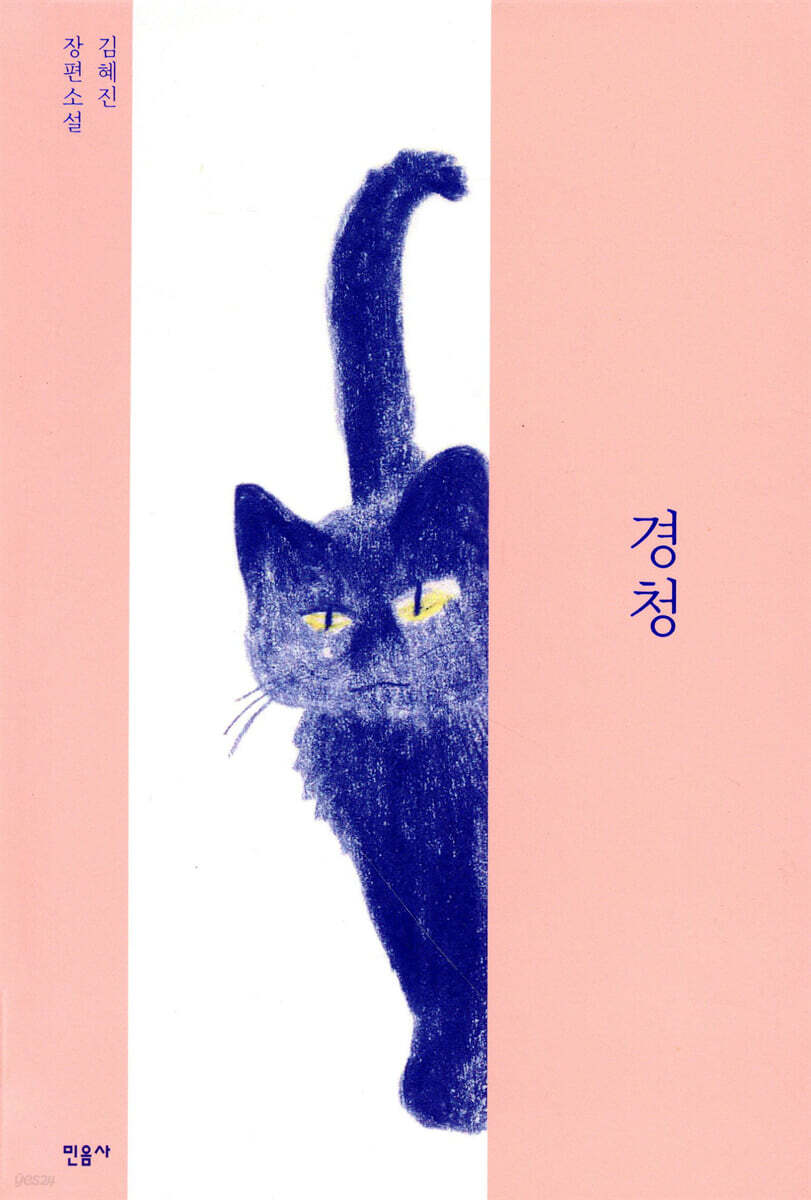
A stray cat comes into Haesu's sight, whose daily routine consists of taking walks, except for the time she spends writing letters.
A hungry cat that is wary of people must be in pain somewhere.
Haesu, who was wandering around the cat, meets a child who tells her the cat's name and the story of the cat's life on this road.
Meanwhile, Haesu gradually becomes closer to a cat that is not easily rescued, and to a child with whom she occasionally meets and talks about turnips and daily life.
The moments spent with strangers are the only times when she can open up her heart.
She becomes more and more immersed in cat rescue.
As if rescuing a cat from danger were rescuing oneself from a dead end, lost and stuck.
■ Non-judgment
Everyone makes mistakes in life, and those who make mistakes must take responsibility for their mistakes.
But who can tell us what proportion of responsibility we should bear and what proportion of suffering we should bear?
Where the language of the law does not dictate, what can we say about reflection, apology, and true remorse?
How can humans, in the face of endless darkness, punish themselves and at the same time reconcile with themselves and live again?
As Haesu wanders, asking and asking questions that no one will listen to, changes also occur in Haesu.
At some point, Haesu's daily life begins to deteriorate as she spends less time writing letters.
Did I cross over from the world I wanted to talk to the world I wanted to hear?
What change is taking place in her heart?
『Listening』 does not take any position toward a person who is being criticized by everyone.
He just stubbornly maintains the observer's gaze on what price he is paying in his own life.
A villain who has committed an irreparable wrong, an unforgiven perpetrator, perhaps a victim bearing a harsh false accusation, a loser who has succumbed to adversity… … But in the eyes of that stubborn observer, we reserve the desire to judge him.
I end up hesitating to call him by any name.
With the idea that not doing something is harder than doing it, and sometimes that can be more important.
Lim Hae-su is a psychological counselor in her late thirties.
Not only are you confident about your emotions, you believe you can control them.
But from that day on, the daily life of trusted counselor Im Hae-su was interrupted.
The position of Lim Hae-su, who confidently gave advice to his clients, also disappeared.
Where Haesu is now is in the midst of insult.
It started when he became the subject of public criticism and contempt.
And then came the resignation notices, breakups, and endless self-pity…
Lim Hae-su's life, banished from both the world of work and life, shows the facets of cancel culture.
Because her existence was 'cancelled' from the world in an instant.
■ Letters that cannot be sent
Lim Hae-su, who is isolated from the world and in a state of confusion, writes letters every night.
This is a letter written to those who demand self-reflection and apology and force 'true remorse'.
It seems like an apology, a protest, a regret, an excuse, but she never finishes writing any of the letters.
Unfinished letters are eventually discarded and become nothing.
What increases over time is the endless repetition of self-pity and self-rationalization.
The way he loses himself in the process confronts readers with profound questions about sin and punishment.
Perhaps the harshest punishment is when you have to punish yourself.
It's like the inner world of Im Hae-su, where a war breaks out every night with resentment and anger that binds her, self-deprecation and self-denial that borders on abuse.
■ Rescuing a cat
A stray cat comes into Haesu's sight, whose daily routine consists of taking walks, except for the time she spends writing letters.
A hungry cat that is wary of people must be in pain somewhere.
Haesu, who was wandering around the cat, meets a child who tells her the cat's name and the story of the cat's life on this road.
Meanwhile, Haesu gradually becomes closer to a cat that is not easily rescued, and to a child with whom she occasionally meets and talks about turnips and daily life.
The moments spent with strangers are the only times when she can open up her heart.
She becomes more and more immersed in cat rescue.
As if rescuing a cat from danger were rescuing oneself from a dead end, lost and stuck.
■ Non-judgment
Everyone makes mistakes in life, and those who make mistakes must take responsibility for their mistakes.
But who can tell us what proportion of responsibility we should bear and what proportion of suffering we should bear?
Where the language of the law does not dictate, what can we say about reflection, apology, and true remorse?
How can humans, in the face of endless darkness, punish themselves and at the same time reconcile with themselves and live again?
As Haesu wanders, asking and asking questions that no one will listen to, changes also occur in Haesu.
At some point, Haesu's daily life begins to deteriorate as she spends less time writing letters.
Did I cross over from the world I wanted to talk to the world I wanted to hear?
What change is taking place in her heart?
『Listening』 does not take any position toward a person who is being criticized by everyone.
He just stubbornly maintains the observer's gaze on what price he is paying in his own life.
A villain who has committed an irreparable wrong, an unforgiven perpetrator, perhaps a victim bearing a harsh false accusation, a loser who has succumbed to adversity… … But in the eyes of that stubborn observer, we reserve the desire to judge him.
I end up hesitating to call him by any name.
With the idea that not doing something is harder than doing it, and sometimes that can be more important.
GOODS SPECIFICS
- Publication date: October 21, 2022
- Format: Hardcover book binding method guide
- Page count, weight, size: 312 pages | 398g | 127*188*30mm
- ISBN13: 9788937472374
- ISBN10: 8937472376
You may also like
카테고리
korean


korean

![GQ KOREA Mark (Monthly): December [2025]](http://librairie.coreenne.fr/cdn/shop/files/8ef265dbbfbf186523ed75ba7319009d.jpg?v=1765340328&width=3840)


