

Lang and My Desert
 |
Description
Book Introduction
- A word from MD
-
Hope will bloom even in the place of loss.The robot 'Gogo', who was buried in the desert, found life after meeting 'Rang', and was left alone in the place where Rang left.
Gogo, who was longing for Lang, sets out on a journey to find the place Lang wanted to go.
Memories do not fade, only the unstoppable heart remains.
Just as the hope of Gogo blooms where Lang leaves, may something bloom in our loss as well.
November 4, 2022. Novel/Poetry PD Lee Na-young
The 43rd novel in the special feature series [Modern Literature Pin Series] of the monthly magazine 『Modern Literature』, which selects the most modern and cutting-edge writers of contemporary Korean literature and includes new poetry and novels, has been published: 『Rang and My Desert』 by Cheon Seon-ran.
This work, a revised version of the novel published in the January 2022 issue of 『Modern Literature』, is about Gogo, a robot created during the "era of war" but left buried in the desert with its functions suspended. When the human "Rang" dies, Gogo sets out alone to find the land that leads to the past that Rang wanted to go to.
In 2019, Cheon Seon-ran, who burst onto the scene with 『The Broken Bridge』, which was lauded as “the epitome of Korean SF apocalypse,” quickly established her literary world on readers with 『The Love of a Certain Material』, a collection of eight novels that are “beautiful and lyrical, novels that make you want to immerse yourself in the waves of emotion that surge through you” (Kim Cho-yeop).
The 4th [Korea Science Fiction Literature Award] full-length novel, 『A Thousand Blues』, which recorded one of the highest sales among genre novels, even drew praise such as, “Even if it were the work of a famous writer who is already active, I would believe it” (Kim Bo-young) and “I was happy because I thought I would no longer have to hear talk about ‘the possibility of good Korean SF’” (Kim Chang-gyu), earning him the reputation of a “prepared writer” who has reached us in a completed form, not just a possibility.
Cheon Seon-ran's active journey did not stop here, but continued with "The Savior Who Comes at Night," "Nine," and "Noland." Now, refusing to be discussed solely within the confines of genre fiction, she has expanded her literary spectrum and become an unprecedented writer loved by a wide range of readers.
It is often said that science fiction novels are difficult for readers of pure literature to read because they feature robots and aliens that threaten humanity, are set somewhere in outer space, and even the worldview they cover is unfamiliar.
Cheon Seon-ran's novel also features countless robots and aliens, and the setting is unfamiliar, but it produces results that go beyond existing preconceptions.
Strangely enough, his novels are both readable and touching.
This work, a revised version of the novel published in the January 2022 issue of 『Modern Literature』, is about Gogo, a robot created during the "era of war" but left buried in the desert with its functions suspended. When the human "Rang" dies, Gogo sets out alone to find the land that leads to the past that Rang wanted to go to.
In 2019, Cheon Seon-ran, who burst onto the scene with 『The Broken Bridge』, which was lauded as “the epitome of Korean SF apocalypse,” quickly established her literary world on readers with 『The Love of a Certain Material』, a collection of eight novels that are “beautiful and lyrical, novels that make you want to immerse yourself in the waves of emotion that surge through you” (Kim Cho-yeop).
The 4th [Korea Science Fiction Literature Award] full-length novel, 『A Thousand Blues』, which recorded one of the highest sales among genre novels, even drew praise such as, “Even if it were the work of a famous writer who is already active, I would believe it” (Kim Bo-young) and “I was happy because I thought I would no longer have to hear talk about ‘the possibility of good Korean SF’” (Kim Chang-gyu), earning him the reputation of a “prepared writer” who has reached us in a completed form, not just a possibility.
Cheon Seon-ran's active journey did not stop here, but continued with "The Savior Who Comes at Night," "Nine," and "Noland." Now, refusing to be discussed solely within the confines of genre fiction, she has expanded her literary spectrum and become an unprecedented writer loved by a wide range of readers.
It is often said that science fiction novels are difficult for readers of pure literature to read because they feature robots and aliens that threaten humanity, are set somewhere in outer space, and even the worldview they cover is unfamiliar.
Cheon Seon-ran's novel also features countless robots and aliens, and the setting is unfamiliar, but it produces results that go beyond existing preconceptions.
Strangely enough, his novels are both readable and touching.
- You can preview some of the book's contents.
Preview
index
Lang and My Desert 9
Work Commentary 146
Author's Note 158
Work Commentary 146
Author's Note 158
Into the book
Paintings have emotions, photographs have intentions.
Emotions move the mind and intentions make interpretations.
To move the heart is to change, and to change is to make the impossible possible.
So, even when people look at a still picture, they think that waves are crashing, the wind is blowing, and women are laughing.
A photograph allows us to guess the before and after of an event, but a painting makes us believe that the world is real.'
--- p.19
'The heart is important.'
To Lang's words, I replied that I had no interest, and Lang shook his head in denial.
'The mind is the purpose.
The mind is trying to reach your goal as quickly as possible.'
I have a purpose to make Lang happy.
We dare to have such a goal, even though we can only guess at happiness as laughter, comfort, and a good night's sleep.
So, I found a solution too late in the process: the right choice to make in response to Lang's question about what I like was to make the choice that would help me achieve my goals.
I should have given both shells to Lang.
--- p.44
I was born a divine being, and I grew up drawing pictures of people's backs, removing the sparks that were embedded in their bodies, without even knowing it.
I decided my next destination based on the words of a child who knew nothing, and I believed that I would guide the souls of the dead safely to the afterlife.
To gain hope.
All I had to do was play that role.
So I just said whatever I wanted with confidence.
If it gives me strength, if it allows me to live, then what good is the truth? It's nothing more than something that won't fill my stomach or quench my thirst.
"Isn't that amazing in many ways? Living in a world ruined by humans, yet believing in humanity."
--- p.70
“Now there are no humans around us who would call you a robot or me an alien.
The need to distinguish between them like that has also disappeared.
Imagine if even the last remaining human being disappeared.
So who are you imitating? What emotions are you imitating? If humanity were gone, and only you and I remained.
“……That……mine.”
“You know what I mean, right?”
Nod your head.
--- pp.133~134
I want to talk to Lang when I see him again.
About the desert I encountered.
About the desert I walked through to meet you.
I will talk to Lang, who is growing old, with my body slowly deteriorating.
I don't think it's bad.
I finally feel like my time with Lang is right.
This time, I descend into deeper darkness, remembering Lang, with the vain hope that I can grow old with you.
Desperately.
Emotions move the mind and intentions make interpretations.
To move the heart is to change, and to change is to make the impossible possible.
So, even when people look at a still picture, they think that waves are crashing, the wind is blowing, and women are laughing.
A photograph allows us to guess the before and after of an event, but a painting makes us believe that the world is real.'
--- p.19
'The heart is important.'
To Lang's words, I replied that I had no interest, and Lang shook his head in denial.
'The mind is the purpose.
The mind is trying to reach your goal as quickly as possible.'
I have a purpose to make Lang happy.
We dare to have such a goal, even though we can only guess at happiness as laughter, comfort, and a good night's sleep.
So, I found a solution too late in the process: the right choice to make in response to Lang's question about what I like was to make the choice that would help me achieve my goals.
I should have given both shells to Lang.
--- p.44
I was born a divine being, and I grew up drawing pictures of people's backs, removing the sparks that were embedded in their bodies, without even knowing it.
I decided my next destination based on the words of a child who knew nothing, and I believed that I would guide the souls of the dead safely to the afterlife.
To gain hope.
All I had to do was play that role.
So I just said whatever I wanted with confidence.
If it gives me strength, if it allows me to live, then what good is the truth? It's nothing more than something that won't fill my stomach or quench my thirst.
"Isn't that amazing in many ways? Living in a world ruined by humans, yet believing in humanity."
--- p.70
“Now there are no humans around us who would call you a robot or me an alien.
The need to distinguish between them like that has also disappeared.
Imagine if even the last remaining human being disappeared.
So who are you imitating? What emotions are you imitating? If humanity were gone, and only you and I remained.
“……That……mine.”
“You know what I mean, right?”
Nod your head.
--- pp.133~134
I want to talk to Lang when I see him again.
About the desert I encountered.
About the desert I walked through to meet you.
I will talk to Lang, who is growing old, with my body slowly deteriorating.
I don't think it's bad.
I finally feel like my time with Lang is right.
This time, I descend into deeper darkness, remembering Lang, with the vain hope that I can grow old with you.
Desperately.
--- p.144
Publisher's Review
The truth discovered at the end of the journey!
Everything is already within me… …
The robot 'Gogo', which was created a long time ago but was left buried in the desert with no function, is discovered one day by a boy 'Rang'.
Lang, along with his mother 'Jo', gives new life to Gogo, and thus begins the cohabitation of Lang, Jo, and Gogo in the middle of the desert.
Joe, who lives a finite life, faces death at some point, and even Langma leaves Gogo's side.
Jika, Lang's friend who buried Lang's body with Gogo, suggests that Gogo go to the sea with her, but Gogo refuses and sets off alone into the deep desert.
Gogo, who has lost all memories from before birth, is sometimes curious about his past, but is also afraid that he might have been created to harm someone.
On his journey alone, Gogo meets humans, robots, and aliens one after another, and although they offer to accompany him, he declines them. Instead, he faithfully reviews and practices what he received from Lang, and mourns Lang in his own way.
Among them, the recurring, inexplicable memories were thought to be due to a circuit malfunction, but Gogo soon realized what it was and silently walked to where he wanted to go.
“It’s a story about having to keep living even after losing what was once your only purpose in life.
For Gogo, who didn't even care about the Earth's environment, Lang was his whole world, and since Lang left without giving Gogo a next goal, Gogo is left alone.
A lump of something that is just lying there doing nothing.
Gogo, whose only choice in life was Lang, eventually makes Lang his sole purpose once again.
“I wanted to give Gogogo, who set out on a journey, a purpose for himself, not for Lang.” (-Cheon Seon-ran, from “Author’s Note”)
This novel, filled with the author's hope that the journey of our lost hearts can be like this, through meeting new people, sharing things, and finding hope even in the arid desert where we have lost our purpose in life, is a novel filled with longing for humanity as seen from the perspective of a robot living a life close to eternal life, or from the perspective of an infinite universe.
“You already know
That's what longing is."
We live our lives parting with many precious things not only because of death, but also because of oblivion, time, or simply the boring reality of reality.
In most cases, people don't even realize that they have broken up and don't have the opportunity to mourn.
The protagonists of Cheon Seon-ran, who are willing to sacrifice immortality for the desire to not harm others, do their best to complete their journey and grow up affectionately.
Like Lang, who went through adolescence of “disassembling and reassembling himself thousands of times” and willingly entered the “unknown world,” this is an archaic adolescence that comes after thousands of years of creation.
I now know that the human heart and love are things that do not stop until told to stop, or even when told to stop.
-Oh Jeong-yeon, from “Work Commentary”
Author's Note
Sometimes I wonder if it's my job to think about the state of mind, the people, and the lives of those who continue to pour water on the places where someone has stayed.
At times like that, I wanted to tell my heart first that even if I forget sometimes, rain will fall so the ground won't dry out, birds will come and go so I won't get bored, and leaves may bud while I look away for a moment.
I wanted to make Gogo's journey not too long and tedious.
Gogo leaves, having lost his purpose in life, but even in the dry desert, he meets new people, shares things, and finds hope.
I hope that the journey of a lost heart can be like this, so I'm sharing this short journey.
October 2022 Sunran Olympics
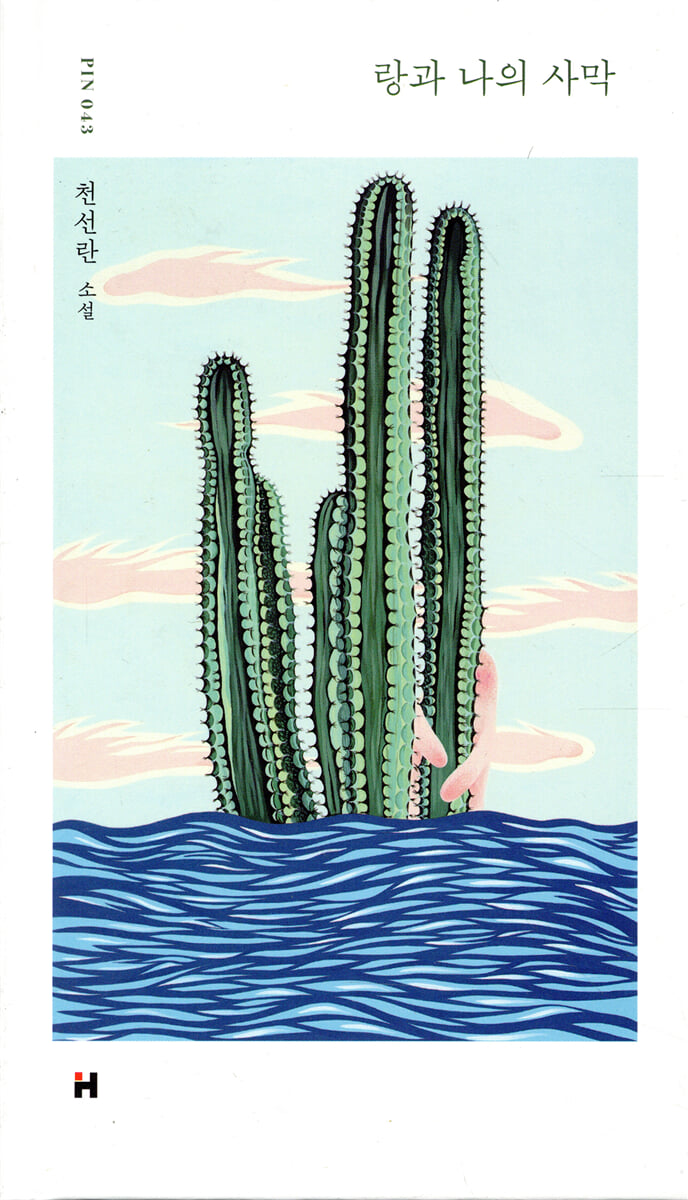
Modern Literature × Artist Lee Yeon-mi
The "Modern Literature Pin Series" has become an original novel collection, an art anthology, reconstructed as a special work of art with a cover work imbued with the artist's soul.
The reason each novel possesses its own unique fragrance and profound artistic fascination is probably because of the spiritual harmony created by the meeting of the two worlds of novels and art.
Lee Yeon-mi
He graduated from the Department of Painting at Kookmin University's College of Fine Arts and the Department of Painting at the same university's graduate school.
Starting with a solo exhibition at the Tokyo Gallery, he has participated in solo and group exhibitions at home and abroad, including at Gallery Hyundai, the Seoul Museum of Art, and the Shanghai Art Museum.
He is actively building his own garden, maximizing the gap between reality and fantasy, and creating a lyrical world of sculptures intertwined with rough-hewn trees and mysterious and unfamiliar flora and fauna.
Everything is already within me… …
The robot 'Gogo', which was created a long time ago but was left buried in the desert with no function, is discovered one day by a boy 'Rang'.
Lang, along with his mother 'Jo', gives new life to Gogo, and thus begins the cohabitation of Lang, Jo, and Gogo in the middle of the desert.
Joe, who lives a finite life, faces death at some point, and even Langma leaves Gogo's side.
Jika, Lang's friend who buried Lang's body with Gogo, suggests that Gogo go to the sea with her, but Gogo refuses and sets off alone into the deep desert.
Gogo, who has lost all memories from before birth, is sometimes curious about his past, but is also afraid that he might have been created to harm someone.
On his journey alone, Gogo meets humans, robots, and aliens one after another, and although they offer to accompany him, he declines them. Instead, he faithfully reviews and practices what he received from Lang, and mourns Lang in his own way.
Among them, the recurring, inexplicable memories were thought to be due to a circuit malfunction, but Gogo soon realized what it was and silently walked to where he wanted to go.
“It’s a story about having to keep living even after losing what was once your only purpose in life.
For Gogo, who didn't even care about the Earth's environment, Lang was his whole world, and since Lang left without giving Gogo a next goal, Gogo is left alone.
A lump of something that is just lying there doing nothing.
Gogo, whose only choice in life was Lang, eventually makes Lang his sole purpose once again.
“I wanted to give Gogogo, who set out on a journey, a purpose for himself, not for Lang.” (-Cheon Seon-ran, from “Author’s Note”)
This novel, filled with the author's hope that the journey of our lost hearts can be like this, through meeting new people, sharing things, and finding hope even in the arid desert where we have lost our purpose in life, is a novel filled with longing for humanity as seen from the perspective of a robot living a life close to eternal life, or from the perspective of an infinite universe.
“You already know
That's what longing is."
We live our lives parting with many precious things not only because of death, but also because of oblivion, time, or simply the boring reality of reality.
In most cases, people don't even realize that they have broken up and don't have the opportunity to mourn.
The protagonists of Cheon Seon-ran, who are willing to sacrifice immortality for the desire to not harm others, do their best to complete their journey and grow up affectionately.
Like Lang, who went through adolescence of “disassembling and reassembling himself thousands of times” and willingly entered the “unknown world,” this is an archaic adolescence that comes after thousands of years of creation.
I now know that the human heart and love are things that do not stop until told to stop, or even when told to stop.
-Oh Jeong-yeon, from “Work Commentary”
Author's Note
Sometimes I wonder if it's my job to think about the state of mind, the people, and the lives of those who continue to pour water on the places where someone has stayed.
At times like that, I wanted to tell my heart first that even if I forget sometimes, rain will fall so the ground won't dry out, birds will come and go so I won't get bored, and leaves may bud while I look away for a moment.
I wanted to make Gogo's journey not too long and tedious.
Gogo leaves, having lost his purpose in life, but even in the dry desert, he meets new people, shares things, and finds hope.
I hope that the journey of a lost heart can be like this, so I'm sharing this short journey.
October 2022 Sunran Olympics
Modern Literature × Artist Lee Yeon-mi
The "Modern Literature Pin Series" has become an original novel collection, an art anthology, reconstructed as a special work of art with a cover work imbued with the artist's soul.
The reason each novel possesses its own unique fragrance and profound artistic fascination is probably because of the spiritual harmony created by the meeting of the two worlds of novels and art.
Lee Yeon-mi
He graduated from the Department of Painting at Kookmin University's College of Fine Arts and the Department of Painting at the same university's graduate school.
Starting with a solo exhibition at the Tokyo Gallery, he has participated in solo and group exhibitions at home and abroad, including at Gallery Hyundai, the Seoul Museum of Art, and the Shanghai Art Museum.
He is actively building his own garden, maximizing the gap between reality and fantasy, and creating a lyrical world of sculptures intertwined with rough-hewn trees and mysterious and unfamiliar flora and fauna.
GOODS SPECIFICS
- Publication date: October 25, 2022
- Format: Hardcover book binding method guide
- Page count, weight, size: 160 pages | 238g | 104*182*20mm
- ISBN13: 9791167901354
- ISBN10: 1167901355
You may also like
카테고리
korean


korean

![GQ KOREA Mark (Monthly): December [2025]](http://librairie.coreenne.fr/cdn/shop/files/8ef265dbbfbf186523ed75ba7319009d.jpg?v=1765340328&width=3840)


