

Korean History
 |
Description
Book Introduction
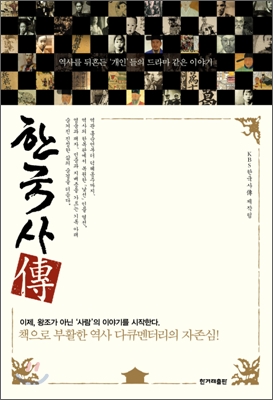
A new challenge for KBS's historical documentary: Tracing the drama of people who never disappear!
『Korean History』 is a book that looks into a page of our history that we must set right, with people who created meaningful miracles as the main characters, or people who became victims of the system and disappeared into the back alleys of history, like Princess Deokhye, as the main characters, just as the executive producer Jang Young-joo intended to “show how the small actions of individuals moved history and tried to look at history from the perspective of people in history, not dynasties and emperors.”
The book begins with the story of 'people' rather than the dynasties with brilliant records, such as Hong Sun-eon, a Joseon Dynasty interpreter and hidden protagonist of the Imjin War; Lee Jin, who started out as a Joseon government official and became a first-generation modern woman; Hong Jong-woo, the first French scholar in Korea who assassinated Kim Ok-gyun; Shin Yu, the hero of the Naseon Expedition who conquered the Heilongjiang River; and Shin Suk-ju, King Sejo's kingmaker.
The book contains parts that have been reconstructed in a conversational style to aid the general public's understanding, but above all, it adheres to the nature of a documentary and faithfully follows historically researched sources.
We are also absorbing the latest research results through interviews with not only authoritative domestic scholars but also global experts such as Professor Marc Orange, a former Korea expert at Collège de France.
『Korean History』 is a book that looks into a page of our history that we must set right, with people who created meaningful miracles as the main characters, or people who became victims of the system and disappeared into the back alleys of history, like Princess Deokhye, as the main characters, just as the executive producer Jang Young-joo intended to “show how the small actions of individuals moved history and tried to look at history from the perspective of people in history, not dynasties and emperors.”
The book begins with the story of 'people' rather than the dynasties with brilliant records, such as Hong Sun-eon, a Joseon Dynasty interpreter and hidden protagonist of the Imjin War; Lee Jin, who started out as a Joseon government official and became a first-generation modern woman; Hong Jong-woo, the first French scholar in Korea who assassinated Kim Ok-gyun; Shin Yu, the hero of the Naseon Expedition who conquered the Heilongjiang River; and Shin Suk-ju, King Sejo's kingmaker.
The book contains parts that have been reconstructed in a conversational style to aid the general public's understanding, but above all, it adheres to the nature of a documentary and faithfully follows historically researched sources.
We are also absorbing the latest research results through interviews with not only authoritative domestic scholars but also global experts such as Professor Marc Orange, a former Korea expert at Collège de France.
- You can preview some of the book's contents.
Preview
index
A real drama about the "individuals" who shook up history - Executive Producer Jang Young-joo
1.
The Tale of a Diplomat Who Saved Joseon - Hong Sun-eon
200 years of justified protests by a weak nation
A surprising twist that appears before Hong Sun-eon
The only interpreter-turned-Gwangguk Gongsin
Joseon Dynasty interpreters were capable traders.
The 'Jungin' who were in charge of all the practical affairs of the state
The hidden protagonist of the Imjin War
Fate begets fate
2.
From Korean Dancer to Parisian Lover - Lee Jin
Joseon's 'Flower of the Soul'
A fateful love with Colin de Plancy
The first modern woman to walk through Paris
The entry of Joseon women into Parisian society
A stranger in a strange culture
The irreversible fate of 'Gwanbi'
Live for Paris, die for Paris
3.
Goguryeo Emperors in Continental China - Lee Jeong-gi
Goguryeo refugees who ruled the continent
Blocking the Yonggyo Bridge and choking the party
Gain fame as a soldier
The thief chosen by his subordinates
The country of the best place to live in the Tang Dynasty
Draw your sword and aim it at the Tang imperial family
The rise and fall of the Lee Jeong-gi kingdom
4.
Is he Sejo's greatest contributor or Danjong's traitor? - Shin Suk-ju
Sejo's Kingmaker
First-class contributor to the Gye-Yu Rebellion
Shin Suk-ju's terrible betrayal of his choice to become a public servant
The movement to restore King Danjong ended in failure
The new host chosen by King Sejo, 'Number Three'
Controversy over Shin Suk-ju's loyalty to Sejo
Loyal subject Seong Sam-mun vs. meritorious subject Shin Suk-ju
Shin Suk-ju's path vs. Seong Sam-mun's path
5.
20 days of intense diplomacy in The Hague - Lee Jun
The Hague's cold reception
Gojong's last card
The man chosen by King Gojong
Diplomatic activities outside the conference hall
Lee Jun's sudden death
The three special envoys who were killed twice
6.
Superman's Father's Tears - King Yeongjo
Prince Sado's illness revealed in the 21st century
Suspicions Surrounding the Deaths of the Superman Father and the Ordinary Son, Prince Sado
The seeds of deep-rooted partisan strife
The Irreversible Conflict of the Rich
The last of the prince trapped in the back room
The regret of a father who did not know 'how to love'
7.
Joseon's Female CEO - Kim Man-deok
The woman who saved Jeju from the swamp
From a courtesan to a merchant
Kim Man-deok's guesthouse, which has been on a roll
1.
The Tale of a Diplomat Who Saved Joseon - Hong Sun-eon
200 years of justified protests by a weak nation
A surprising twist that appears before Hong Sun-eon
The only interpreter-turned-Gwangguk Gongsin
Joseon Dynasty interpreters were capable traders.
The 'Jungin' who were in charge of all the practical affairs of the state
The hidden protagonist of the Imjin War
Fate begets fate
2.
From Korean Dancer to Parisian Lover - Lee Jin
Joseon's 'Flower of the Soul'
A fateful love with Colin de Plancy
The first modern woman to walk through Paris
The entry of Joseon women into Parisian society
A stranger in a strange culture
The irreversible fate of 'Gwanbi'
Live for Paris, die for Paris
3.
Goguryeo Emperors in Continental China - Lee Jeong-gi
Goguryeo refugees who ruled the continent
Blocking the Yonggyo Bridge and choking the party
Gain fame as a soldier
The thief chosen by his subordinates
The country of the best place to live in the Tang Dynasty
Draw your sword and aim it at the Tang imperial family
The rise and fall of the Lee Jeong-gi kingdom
4.
Is he Sejo's greatest contributor or Danjong's traitor? - Shin Suk-ju
Sejo's Kingmaker
First-class contributor to the Gye-Yu Rebellion
Shin Suk-ju's terrible betrayal of his choice to become a public servant
The movement to restore King Danjong ended in failure
The new host chosen by King Sejo, 'Number Three'
Controversy over Shin Suk-ju's loyalty to Sejo
Loyal subject Seong Sam-mun vs. meritorious subject Shin Suk-ju
Shin Suk-ju's path vs. Seong Sam-mun's path
5.
20 days of intense diplomacy in The Hague - Lee Jun
The Hague's cold reception
Gojong's last card
The man chosen by King Gojong
Diplomatic activities outside the conference hall
Lee Jun's sudden death
The three special envoys who were killed twice
6.
Superman's Father's Tears - King Yeongjo
Prince Sado's illness revealed in the 21st century
Suspicions Surrounding the Deaths of the Superman Father and the Ordinary Son, Prince Sado
The seeds of deep-rooted partisan strife
The Irreversible Conflict of the Rich
The last of the prince trapped in the back room
The regret of a father who did not know 'how to love'
7.
Joseon's Female CEO - Kim Man-deok
The woman who saved Jeju from the swamp
From a courtesan to a merchant
Kim Man-deok's guesthouse, which has been on a roll
Into the book
History is an undistorted mirror.
Eastern historians have said that history serves a reflective function.
It means that we can look at history and be on guard.
So I believed that history should record even the most shameful of events, and it did.
That's how real history is.
《Korean History》 put aside the historical stories of the system and focused on the historical stories full of real human stories.
---p. from the introduction
An unfamiliar name: Hong Sun-eon.
He is an interpreter (diplomat) who changed the fate of Joseon.
The key figure who led the Imjin War to victory was Hong Sun-eon, an interpreter of commoner origin, who was neither a general nor a warrior.
Moreover, he also made a great contribution to correcting Joseon's history.
But the opportunity that made that possible was a brief encounter with a woman.
It all started here.
---p.14 Hong Sun-eon
Only four pages of records left by a Frenchman.
This is a story about a Joseon dancer.
114 years ago, a woman who was a court dancer in Joseon went to Paris, France.
France is still a very distant country from our country, taking 10 hours by plane.
It must have been a truly monumental undertaking to travel all the way to France a century ago.
But how did this once-Joseon dancer end up in Paris? The life, love, and strange fate of a Joseon woman, a story our history has not recorded.
Now, let's begin the story.
---p.42 Lee Jin's side
781 AD.
Urgent news arrives at the Tang imperial palace.
There was news that the strongest army of the time, 100,000 strong, would move to Jeum and begin large-scale military training.
The party government was shocked.
A situation that threatens the survival of the nation has inevitably occurred.
The gathering place of the 100,000-strong army is the Jeum Plain.
It was a sudden movement of troops.
The end of the moving matrix was not in sight.
Jeum Plain, the gathering place for soldiers.
It was only a few days' journey from here to Luoyang, the eastern capital of the Tang Dynasty.
The 100,000-strong army is targeting the Tang Dynasty.
The person leading them and pointing a sword at the emperor's neck was none other than Goguryeo refugee Lee Jeong-gi.
Lee Jeong-gi appeared 64 years after the fall of Goguryeo.
It was the beginning of another Goguryeo history.
---p.68 Lee Jeong-gi
In 1392, Joseon was founded.
The new dynasty reached its peak under the fourth king, Sejong.
Then, dark clouds begin to gather over history.
Prince Suyang, who caused the Gye-yu Rebellion, overthrew the young King Danjong and ascended to the throne.
In response, the six loyal ministers' movement to restore King Danjong to the throne and King Sejo's brutal punishment.
It was the biggest bloodbath in the early Joseon Dynasty.
In the midst of this political storm was Shin Suk-ju, the person chosen by King Sejo, Grand Prince of Suyang.
---p.98 Shin Suk-ju's side
At 7:00 PM on July 14, 1907, a Korean died in The Hague, Netherlands.
Lee Jun, the last special envoy of Emperor Gojong.
He died suddenly 20 days after arriving in The Hague.
Special Envoy Lee Jun, who carried out fierce diplomatic activities in The Hague.
What on earth happened to him? - Part 126 Lee Jun
May 13, 1762.
Yeongjo imprisons his son, Crown Prince Sado, in a rice chest.
A father who hammered nails into the back of his son's house despite his son's crying pleas.
Why did Yeongjo have to kill his son? - Yeongjo's Chapter 154
In the 20th year of King Jeongjo's reign (autumn of 1796), a woman from Jeju entered the palace.
It was unprecedented in Joseon history for a commoner woman to have an audience with the king.
Kim Man-deok.
She was neither a chaste woman nor a filial daughter.
He was a merchant who started with nothing and became the richest man in Jeju overnight.
200 years ago, when Jeju was suffering from the worst famine, Mandeok used his wealth to save thousands of Jeju residents.
In Joseon society, where commerce was looked down upon, she was ahead of her time and recognized the value of money.
---p.184 Kim Man-deok
1962, the year the military regime came into power.
A plane carrying a woman landed on the runway in Gimpo.
The moment the plane landed, elderly people wearing beautiful hanbok bowed deeply.
“Baby.” The woman called Baby did not recognize the sight of her homeland when she saw it again after 38 years.
Princess Deokhye is the only daughter of Emperor Gojong who was taken to Japan and the last princess of the forgotten Korean Empire.
---p.212 Princess Deokhye
March 1894.
Kim Ok-gyun was assassinated in Shanghai.
The culprit is Hong Jong-woo, who was staying at the hotel with him.
To this day, Hong Jong-woo remains a mysterious assassin.
Hong Jong-woo is also evaluated as a villain who murdered Kim Ok-gyun for personal gain.
It is said that he simply blocked Joseon's reforms without any special opinion.
However, there are many things that make it difficult to define Hong Jong-woo in this way.
---p.240 Hong Jong-woo
On the 10th day of the 6th lunar month in 1658, a large-scale battle took place in Heilongjiang, about 2,000 li from the Joseon border.
The combined forces of Joseon and Qing and the Russian forces clashed.
This was an international war that determined Russia's advance into Asia at the time.
200 Joseon musketeers participated in this war.
They led the decisive victory of the Joseon-Qing allied forces.
And during Joseon's conquest of Russia, the famous Joseon general Shin Yu was present at the scene.
Eastern historians have said that history serves a reflective function.
It means that we can look at history and be on guard.
So I believed that history should record even the most shameful of events, and it did.
That's how real history is.
《Korean History》 put aside the historical stories of the system and focused on the historical stories full of real human stories.
---p. from the introduction
An unfamiliar name: Hong Sun-eon.
He is an interpreter (diplomat) who changed the fate of Joseon.
The key figure who led the Imjin War to victory was Hong Sun-eon, an interpreter of commoner origin, who was neither a general nor a warrior.
Moreover, he also made a great contribution to correcting Joseon's history.
But the opportunity that made that possible was a brief encounter with a woman.
It all started here.
---p.14 Hong Sun-eon
Only four pages of records left by a Frenchman.
This is a story about a Joseon dancer.
114 years ago, a woman who was a court dancer in Joseon went to Paris, France.
France is still a very distant country from our country, taking 10 hours by plane.
It must have been a truly monumental undertaking to travel all the way to France a century ago.
But how did this once-Joseon dancer end up in Paris? The life, love, and strange fate of a Joseon woman, a story our history has not recorded.
Now, let's begin the story.
---p.42 Lee Jin's side
781 AD.
Urgent news arrives at the Tang imperial palace.
There was news that the strongest army of the time, 100,000 strong, would move to Jeum and begin large-scale military training.
The party government was shocked.
A situation that threatens the survival of the nation has inevitably occurred.
The gathering place of the 100,000-strong army is the Jeum Plain.
It was a sudden movement of troops.
The end of the moving matrix was not in sight.
Jeum Plain, the gathering place for soldiers.
It was only a few days' journey from here to Luoyang, the eastern capital of the Tang Dynasty.
The 100,000-strong army is targeting the Tang Dynasty.
The person leading them and pointing a sword at the emperor's neck was none other than Goguryeo refugee Lee Jeong-gi.
Lee Jeong-gi appeared 64 years after the fall of Goguryeo.
It was the beginning of another Goguryeo history.
---p.68 Lee Jeong-gi
In 1392, Joseon was founded.
The new dynasty reached its peak under the fourth king, Sejong.
Then, dark clouds begin to gather over history.
Prince Suyang, who caused the Gye-yu Rebellion, overthrew the young King Danjong and ascended to the throne.
In response, the six loyal ministers' movement to restore King Danjong to the throne and King Sejo's brutal punishment.
It was the biggest bloodbath in the early Joseon Dynasty.
In the midst of this political storm was Shin Suk-ju, the person chosen by King Sejo, Grand Prince of Suyang.
---p.98 Shin Suk-ju's side
At 7:00 PM on July 14, 1907, a Korean died in The Hague, Netherlands.
Lee Jun, the last special envoy of Emperor Gojong.
He died suddenly 20 days after arriving in The Hague.
Special Envoy Lee Jun, who carried out fierce diplomatic activities in The Hague.
What on earth happened to him? - Part 126 Lee Jun
May 13, 1762.
Yeongjo imprisons his son, Crown Prince Sado, in a rice chest.
A father who hammered nails into the back of his son's house despite his son's crying pleas.
Why did Yeongjo have to kill his son? - Yeongjo's Chapter 154
In the 20th year of King Jeongjo's reign (autumn of 1796), a woman from Jeju entered the palace.
It was unprecedented in Joseon history for a commoner woman to have an audience with the king.
Kim Man-deok.
She was neither a chaste woman nor a filial daughter.
He was a merchant who started with nothing and became the richest man in Jeju overnight.
200 years ago, when Jeju was suffering from the worst famine, Mandeok used his wealth to save thousands of Jeju residents.
In Joseon society, where commerce was looked down upon, she was ahead of her time and recognized the value of money.
---p.184 Kim Man-deok
1962, the year the military regime came into power.
A plane carrying a woman landed on the runway in Gimpo.
The moment the plane landed, elderly people wearing beautiful hanbok bowed deeply.
“Baby.” The woman called Baby did not recognize the sight of her homeland when she saw it again after 38 years.
Princess Deokhye is the only daughter of Emperor Gojong who was taken to Japan and the last princess of the forgotten Korean Empire.
---p.212 Princess Deokhye
March 1894.
Kim Ok-gyun was assassinated in Shanghai.
The culprit is Hong Jong-woo, who was staying at the hotel with him.
To this day, Hong Jong-woo remains a mysterious assassin.
Hong Jong-woo is also evaluated as a villain who murdered Kim Ok-gyun for personal gain.
It is said that he simply blocked Joseon's reforms without any special opinion.
However, there are many things that make it difficult to define Hong Jong-woo in this way.
---p.240 Hong Jong-woo
On the 10th day of the 6th lunar month in 1658, a large-scale battle took place in Heilongjiang, about 2,000 li from the Joseon border.
The combined forces of Joseon and Qing and the Russian forces clashed.
This was an international war that determined Russia's advance into Asia at the time.
200 Joseon musketeers participated in this war.
They led the decisive victory of the Joseon-Qing allied forces.
And during Joseon's conquest of Russia, the famous Joseon general Shin Yu was present at the scene.
---p.266 Shin Yu-pyeon
Publisher's Review
A historical documentary unfolding across the world
Hong Sun-eon, the first protagonist of “Korean History,” is from the middle class.
He was an interpreter during the Joseon Dynasty and a hidden hero who led the Japanese invasions of Korea to victory. Because of his connection, people from the Ming Dynasty came to this land and settled down as the Haeju Seok clan.
Also, during the reign of King Jeongjo, a woman named Kim Man-deok saved the people of Jeju Island, who were mired in the worst famine in history and whose sea routes were blocked and whose king could not save them, by donating all of her wealth.
The stage of the Korean Dictionary spreads across the world.
It is also proof that our ancestors' stage of activity was the entire world.
It starts from Euljiro 3-ga in Seoul where interpreter Hong Sun-eon lived, to Jeju where Man-deok lived, to the Guimet Museum in Paris where Hong Jong-woo worked, and even to Vladivostok in Russia where Special Envoy Lee Jun and his party passed through.
I searched through Heilongjiang Province to trace the traces of Lee Jeong-gi, a descendant of Goguryeo refugees who dominated the Chinese mainland, and went across the sea to meet Lee Jin, who was introduced in a French book titled “In Korea,” and even visited the author’s descendants.
As a result, traces of the protagonists hidden everywhere, from as little as 100 years to as long as 1,000 years later, were captured by the keen eyes of the production team and captured in their entirety in the book.
The French Ministry of Foreign Affairs, through its Korean dictionary production team, first disclosed the personal records of Collin de Plancy, and at the Qingzhou Provincial Museum in China, where Lee Jeong-gi's country was located, it was confirmed that Lee Jeong-gi was a military commander who conquered 15 provinces in China and a hero of Qingju.
In addition, the truth about the mental illness that Prince Sado suffered from, which had been shrouded in mystery, was confirmed through a handwritten letter from Prince Sado stored in the Yamaguchi Prefectural Library in Japan.
Hong Sun-eon, the first protagonist of “Korean History,” is from the middle class.
He was an interpreter during the Joseon Dynasty and a hidden hero who led the Japanese invasions of Korea to victory. Because of his connection, people from the Ming Dynasty came to this land and settled down as the Haeju Seok clan.
Also, during the reign of King Jeongjo, a woman named Kim Man-deok saved the people of Jeju Island, who were mired in the worst famine in history and whose sea routes were blocked and whose king could not save them, by donating all of her wealth.
The stage of the Korean Dictionary spreads across the world.
It is also proof that our ancestors' stage of activity was the entire world.
It starts from Euljiro 3-ga in Seoul where interpreter Hong Sun-eon lived, to Jeju where Man-deok lived, to the Guimet Museum in Paris where Hong Jong-woo worked, and even to Vladivostok in Russia where Special Envoy Lee Jun and his party passed through.
I searched through Heilongjiang Province to trace the traces of Lee Jeong-gi, a descendant of Goguryeo refugees who dominated the Chinese mainland, and went across the sea to meet Lee Jin, who was introduced in a French book titled “In Korea,” and even visited the author’s descendants.
As a result, traces of the protagonists hidden everywhere, from as little as 100 years to as long as 1,000 years later, were captured by the keen eyes of the production team and captured in their entirety in the book.
The French Ministry of Foreign Affairs, through its Korean dictionary production team, first disclosed the personal records of Collin de Plancy, and at the Qingzhou Provincial Museum in China, where Lee Jeong-gi's country was located, it was confirmed that Lee Jeong-gi was a military commander who conquered 15 provinces in China and a hero of Qingju.
In addition, the truth about the mental illness that Prince Sado suffered from, which had been shrouded in mystery, was confirmed through a handwritten letter from Prince Sado stored in the Yamaguchi Prefectural Library in Japan.
GOODS SPECIFICS
- Date of issue: March 10, 2008
- Page count, weight, size: 293 pages | 570g | 153*224*20mm
- ISBN13: 9788984312579
- ISBN10: 8984312576
You may also like
카테고리
korean


korean

![GQ KOREA Mark (Monthly): December [2025]](http://librairie.coreenne.fr/cdn/shop/files/8ef265dbbfbf186523ed75ba7319009d.jpg?v=1765340328&width=3840)


