

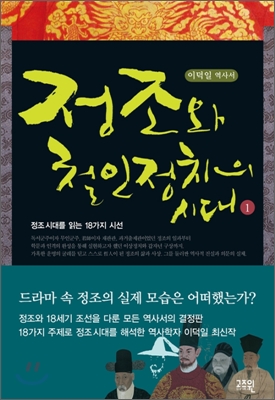
The Age of Jeongjo and Iron Politics 1
 |
Description
Book Introduction
"The Age of King Jeongjo and Philosopher's Rule" is a book that reflects on the life and thoughts of King Jeongjo, a monarch who refused to be the protagonist of a tragedy avenging the death of Crown Prince Sado and instead became a philosopher himself, and the meaning of the truth in history for today.
The author describes the era of King Jeongjo under 18 themes, and includes in the book the daily life of King Jeongjo, who was a scholar-monarch and a military monarch, a teacher, and a model for all by working hard and practicing frugality, the people around him, his dreams for the future, and even his plans for the year of Gapja.
This book is an attempt to get as close to the truth of history as possible by encompassing not only official historical records such as 『Jeongjo Sillok』, 『Ilseongnok』, and 『Hongjaejeonseo』, but also individual collections of writings such as Chae Je-gong's 『Beonamjip』, Jeong Yak-yong's Anthology, Lee Deok-mu's 『Cheongjanggwanjeonseo』, Park Je-ga's 『Jeongyujip』, and Yu Deuk-gong's 『Goundangpilgi』, allowing us to think about the history of the hopes and frustrations, successes and regrets, challenges and dreams of the philosophical monarch Jeongjo.
The author describes the era of King Jeongjo under 18 themes, and includes in the book the daily life of King Jeongjo, who was a scholar-monarch and a military monarch, a teacher, and a model for all by working hard and practicing frugality, the people around him, his dreams for the future, and even his plans for the year of Gapja.
This book is an attempt to get as close to the truth of history as possible by encompassing not only official historical records such as 『Jeongjo Sillok』, 『Ilseongnok』, and 『Hongjaejeonseo』, but also individual collections of writings such as Chae Je-gong's 『Beonamjip』, Jeong Yak-yong's Anthology, Lee Deok-mu's 『Cheongjanggwanjeonseo』, Park Je-ga's 『Jeongyujip』, and Yu Deuk-gong's 『Goundangpilgi』, allowing us to think about the history of the hopes and frustrations, successes and regrets, challenges and dreams of the philosophical monarch Jeongjo.
- You can preview some of the book's contents.
Preview
index
Chapter 1: Snow Shame
Chapter 2: The fruit is the son of the Crown Prince Sado.
The Crown Prince is the son of the Crown Prince Sado. The Crown Prince does not need to know three things.
Chapter 3: Hong In-han's Right-Wingers
Hong Bong-han under attack | A dilemma | Hong In-han's counterattack
Chapter 4: The War of the Relatives
Kim Gwi-ju's Attack on Hong Bong-han | The Battle between the Gong Hong-pa and the Bu Hong-pa | Kim Gwi-ju Launches a Resurgence
Chapter 5: The Three Great Treason Cases
Assassin on the Roof | The Cursing Priestess | Eunjeongun's Implications
Chapter 6: Blackhead Peak, Hong Guk-yeong
Hong Guk-yeong and Jeongjo's First Meeting | Jeongjo and the Soron Party | Elevating Song Si-yeol and Banishing Yun Jeung
Hong Guk-yeong, who drove out his relatives and became the maternal relatives | Hong Guk-yeong's downfall under Heukdu Bongjo | Jeongjo's counterattack
Chapter 7: The Gyujanggak Royal Archives: Dominating the Era
The Disciples of the Baektap School | The Northern Learning School | The Birth of the Document Communication System and the Four Examinations
Sit in order of age | Challenging all kinds of discrimination | Dreaming of reform
Chapter 8: The Incident of the Appointment of Song Si-yeol's Descendants
Song Deok-sang, the descendant of Daero | A conversation with the Iron Monarch | Song Deok-sang's path
Descendants of the Attacked Ones|The Incident of the Great Master Song Deok-sang's Enthronement
Chapter 9: Queen Jeongsun's Counterattack
The Korean language proclamation, like a proclamation, sparks the Noron faction.
The Lee Yul and Hong Bok-yeong Treason Case | Gu Seon-bok Caught in the Law
Chapter 10: Namin and Catholicism
The First Catholic Incident - The Eulsa Chujo Incident | The Namin Splits
Catholicism and the Sacrificial Ritual Issue | The Truth Revealed | The Widening Front
Chapter 2: The fruit is the son of the Crown Prince Sado.
The Crown Prince is the son of the Crown Prince Sado. The Crown Prince does not need to know three things.
Chapter 3: Hong In-han's Right-Wingers
Hong Bong-han under attack | A dilemma | Hong In-han's counterattack
Chapter 4: The War of the Relatives
Kim Gwi-ju's Attack on Hong Bong-han | The Battle between the Gong Hong-pa and the Bu Hong-pa | Kim Gwi-ju Launches a Resurgence
Chapter 5: The Three Great Treason Cases
Assassin on the Roof | The Cursing Priestess | Eunjeongun's Implications
Chapter 6: Blackhead Peak, Hong Guk-yeong
Hong Guk-yeong and Jeongjo's First Meeting | Jeongjo and the Soron Party | Elevating Song Si-yeol and Banishing Yun Jeung
Hong Guk-yeong, who drove out his relatives and became the maternal relatives | Hong Guk-yeong's downfall under Heukdu Bongjo | Jeongjo's counterattack
Chapter 7: The Gyujanggak Royal Archives: Dominating the Era
The Disciples of the Baektap School | The Northern Learning School | The Birth of the Document Communication System and the Four Examinations
Sit in order of age | Challenging all kinds of discrimination | Dreaming of reform
Chapter 8: The Incident of the Appointment of Song Si-yeol's Descendants
Song Deok-sang, the descendant of Daero | A conversation with the Iron Monarch | Song Deok-sang's path
Descendants of the Attacked Ones|The Incident of the Great Master Song Deok-sang's Enthronement
Chapter 9: Queen Jeongsun's Counterattack
The Korean language proclamation, like a proclamation, sparks the Noron faction.
The Lee Yul and Hong Bok-yeong Treason Case | Gu Seon-bok Caught in the Law
Chapter 10: Namin and Catholicism
The First Catholic Incident - The Eulsa Chujo Incident | The Namin Splits
Catholicism and the Sacrificial Ritual Issue | The Truth Revealed | The Widening Front
Into the book
“The Queen Mother has issued a proclamation to use the Korean language.”
Queen Jeongsun Kim issued the proclamation of the Korean alphabet.
It was a vernacular mission that no one expected.
Since King Jeongjo was already an adult, the Queen Dowager's involvement in state affairs was in itself a violation of national law.
However, this one sudden edict threw the political situation into a whirlpool.
…
"How could I sit and watch, ignorant, before the widow's last remaining thread of life is snatched from her? After returning all the sealed herbal medicine and taking the asura, I finally managed to gather my wits and roughly write down my farewell in Korean. My throat is choked up, and I cannot express it all. Please look into it carefully and let those inside and outside understand its meaning."
Queen Jeongsun, concerned that the involvement of women in state affairs might be dismissed as illegal, immediately issued another Korean decree to emphasize this point.
“The transmission of this text should not be viewed only by the ministers.
“If there is anyone who punishes the king’s enemies and the country’s traitors, my illness will soon be cured. Please convey this to the Royal Secretariat.”
It was a proclamation like a proclamation urging all the people to rise up.
With Prince Sanggye already dead, who does Queen Dowager Jeongsun identify as a traitor and call for a general uprising? Who are the "enemies of the king and traitors of the nation" who must be subdued?
It was Prince Eun-eon, Lee In, the father of Prince Sanggye and the younger brother of King Jeongjo.
The meaning was that killing Crown Prince Sado, the son of Sukbin Im and King Jeongjo's half-brother, was the way to punish 'the king's enemy and the country's traitor.'
It was an attempt to follow in the footsteps of Prince Eunjeon, who had no choice but to surrender due to the all-out attack of the Noron Byeokpa faction when the Three Great Rebellions occurred in the first year of King Jeongjo's reign.
Queen Jeongsun displayed her fighting spirit by fasting and abstaining from herbal medicine.
It was King Jeongjo's will to take the life of his only remaining blood relative.
---Volume 1 p.
234·237
When the Jang family heard the news of King Jeongjo's death, they were deeply saddened and praised as "loyal subjects."
However, Jang Si-kyung said that the reason the king passed away was because of 'excessive use of fish medicine.'
The statement that someone 'died from overdosing on drugs' meant that they were poisoned.
It was the first time the rural people had heard this.
Even if they had heard of it, it had nothing to do with them.
Politics was done by the yangban nobility, and they just had to work hard at farming.
But the moment they heard that the king had died from 'overusing fish poison', the people's hearts raced.
Because everyone knew that the king had bestowed goodness upon the people.
Six years ago (the 18th year of King Jeongjo's reign), during the 60th birthday celebration of the king's deceased father and mother, rice was also distributed to the people of this remote rural area.
He also knew that whenever there was a drought or famine, the king's wealth, including the royal treasury and grain, was used to provide relief, so that the number of people starving to death almost disappeared.
“When the young crown prince succeeded, the Noron faction gained power, the Namin faction was completely driven out, and the people’s lives became more difficult by the day. How can you and I just sit back and watch when the country is in such a state of utter loneliness?”
Jang Si-kyung said something even more surprising.
“I am now leading the army to Seoul to save the country from its crisis.
If this succeeds, you will become loyal subjects, and each of you will receive a platinum reward. Isn't this a wonderful thing? I will first relay the message to the authorities. If the leader doesn't follow my orders, I will have him bound and taken to Seoul.
“Even when you go up to Seonsan and Sangju, you will all do the same.” …
Indong Busa Lee Gap-hoe immediately reported the rebellion to Gyeongsang Province Governor Kim I-yeong, and the government, greatly surprised, appointed Minister of Justice Lee Seo-gu as Yeongnam Anhaksa and dispatched him to the scene.
However, the court handled this incident quietly so that it would not be revealed to the public---Volume 1 p.
25·34
With the death of King Jeongjo, Joseon turned from the future to the past, from openness to closure, from communication to disconnection, and from love to hate.
It was the road to death.
That's right.
With his death on June 28, 1800, Joseon entered the path of death.
For this reason, Jeongjo must come back to life today.
It's not just that this era craves leaders with insight into the future.
Hasn't that longing always been great?
More importantly, the dream he had is the path we must walk.
Because the future he tried to open by choosing the future, not the past, and love, not hate, must be our tomorrow.
Because the dream of a tragic hero who, though born with a more tragic fate than Oedipus and Hamlet, never succumbed to it, pursued a personality perfected through endless self-cultivation and, based on that, attempted to transform his nation, and thus took infinite responsibility for himself and history, cannot remain unfulfilled.
Queen Jeongsun Kim issued the proclamation of the Korean alphabet.
It was a vernacular mission that no one expected.
Since King Jeongjo was already an adult, the Queen Dowager's involvement in state affairs was in itself a violation of national law.
However, this one sudden edict threw the political situation into a whirlpool.
…
"How could I sit and watch, ignorant, before the widow's last remaining thread of life is snatched from her? After returning all the sealed herbal medicine and taking the asura, I finally managed to gather my wits and roughly write down my farewell in Korean. My throat is choked up, and I cannot express it all. Please look into it carefully and let those inside and outside understand its meaning."
Queen Jeongsun, concerned that the involvement of women in state affairs might be dismissed as illegal, immediately issued another Korean decree to emphasize this point.
“The transmission of this text should not be viewed only by the ministers.
“If there is anyone who punishes the king’s enemies and the country’s traitors, my illness will soon be cured. Please convey this to the Royal Secretariat.”
It was a proclamation like a proclamation urging all the people to rise up.
With Prince Sanggye already dead, who does Queen Dowager Jeongsun identify as a traitor and call for a general uprising? Who are the "enemies of the king and traitors of the nation" who must be subdued?
It was Prince Eun-eon, Lee In, the father of Prince Sanggye and the younger brother of King Jeongjo.
The meaning was that killing Crown Prince Sado, the son of Sukbin Im and King Jeongjo's half-brother, was the way to punish 'the king's enemy and the country's traitor.'
It was an attempt to follow in the footsteps of Prince Eunjeon, who had no choice but to surrender due to the all-out attack of the Noron Byeokpa faction when the Three Great Rebellions occurred in the first year of King Jeongjo's reign.
Queen Jeongsun displayed her fighting spirit by fasting and abstaining from herbal medicine.
It was King Jeongjo's will to take the life of his only remaining blood relative.
---Volume 1 p.
234·237
When the Jang family heard the news of King Jeongjo's death, they were deeply saddened and praised as "loyal subjects."
However, Jang Si-kyung said that the reason the king passed away was because of 'excessive use of fish medicine.'
The statement that someone 'died from overdosing on drugs' meant that they were poisoned.
It was the first time the rural people had heard this.
Even if they had heard of it, it had nothing to do with them.
Politics was done by the yangban nobility, and they just had to work hard at farming.
But the moment they heard that the king had died from 'overusing fish poison', the people's hearts raced.
Because everyone knew that the king had bestowed goodness upon the people.
Six years ago (the 18th year of King Jeongjo's reign), during the 60th birthday celebration of the king's deceased father and mother, rice was also distributed to the people of this remote rural area.
He also knew that whenever there was a drought or famine, the king's wealth, including the royal treasury and grain, was used to provide relief, so that the number of people starving to death almost disappeared.
“When the young crown prince succeeded, the Noron faction gained power, the Namin faction was completely driven out, and the people’s lives became more difficult by the day. How can you and I just sit back and watch when the country is in such a state of utter loneliness?”
Jang Si-kyung said something even more surprising.
“I am now leading the army to Seoul to save the country from its crisis.
If this succeeds, you will become loyal subjects, and each of you will receive a platinum reward. Isn't this a wonderful thing? I will first relay the message to the authorities. If the leader doesn't follow my orders, I will have him bound and taken to Seoul.
“Even when you go up to Seonsan and Sangju, you will all do the same.” …
Indong Busa Lee Gap-hoe immediately reported the rebellion to Gyeongsang Province Governor Kim I-yeong, and the government, greatly surprised, appointed Minister of Justice Lee Seo-gu as Yeongnam Anhaksa and dispatched him to the scene.
However, the court handled this incident quietly so that it would not be revealed to the public---Volume 1 p.
25·34
With the death of King Jeongjo, Joseon turned from the future to the past, from openness to closure, from communication to disconnection, and from love to hate.
It was the road to death.
That's right.
With his death on June 28, 1800, Joseon entered the path of death.
For this reason, Jeongjo must come back to life today.
It's not just that this era craves leaders with insight into the future.
Hasn't that longing always been great?
More importantly, the dream he had is the path we must walk.
Because the future he tried to open by choosing the future, not the past, and love, not hate, must be our tomorrow.
Because the dream of a tragic hero who, though born with a more tragic fate than Oedipus and Hamlet, never succumbed to it, pursued a personality perfected through endless self-cultivation and, based on that, attempted to transform his nation, and thus took infinite responsibility for himself and history, cannot remain unfulfilled.
---From the preface
GOODS SPECIFICS
- Date of issue: February 5, 2008
- Page count, weight, size: 296 pages | 496g | 148*210*20mm
- ISBN13: 9788992975025
- ISBN10: 8992975023
You may also like
카테고리
korean


korean

![GQ KOREA Mark (Monthly): December [2025]](http://librairie.coreenne.fr/cdn/shop/files/8ef265dbbfbf186523ed75ba7319009d.jpg?v=1765340328&width=3840)


