

Another Roman Story
 |
Description
Book Introduction
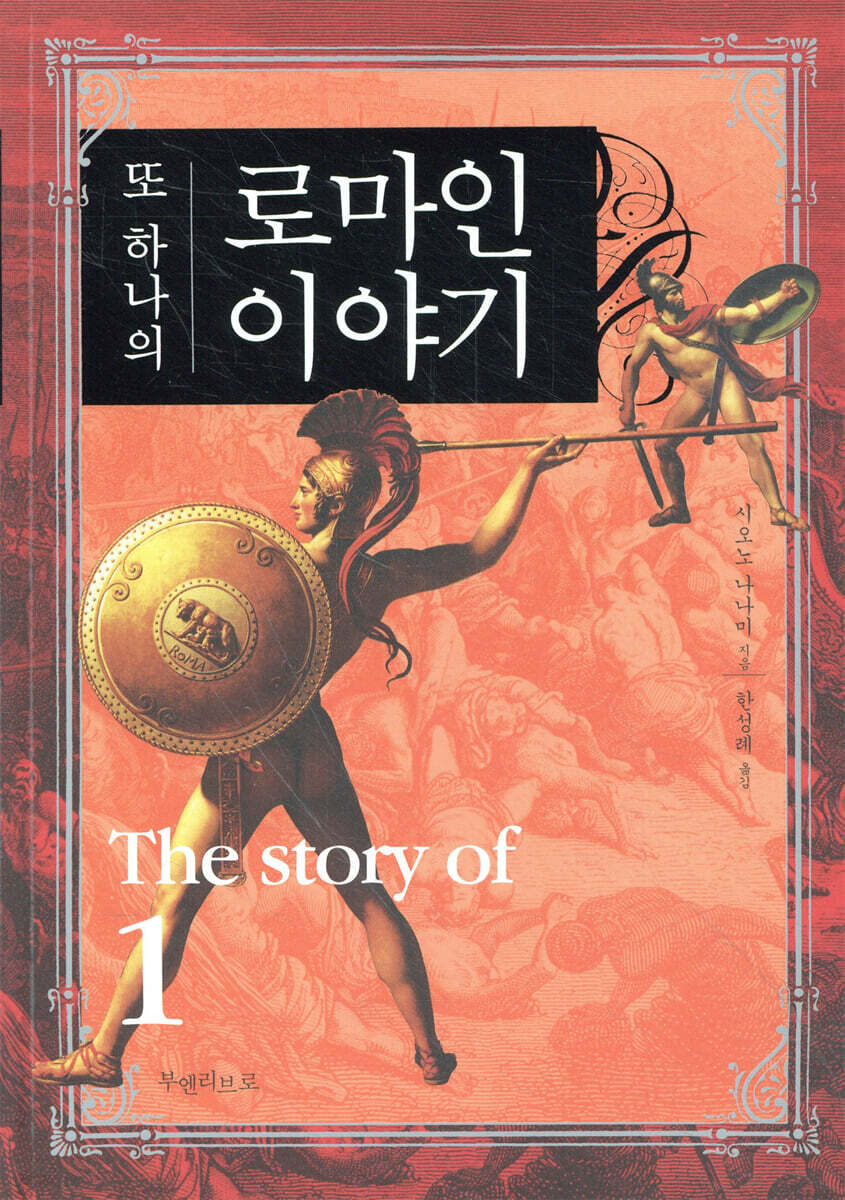
Nanami Shiono, author of the best-selling and still-steady-selling "Roman Stories," introduces readers to the captivating Rome of stylish men.
『Roman Stories』 is a massive series of 15 volumes, and in fact, many readers were overwhelmed by its vastness and had difficulty starting it.
"Another Roman Story" captures the thousand-year history of Rome in a single book. It begins on a desolate hill in a corner of Italy and tells the story of the rise and fall of the Roman Empire, which achieved Pax Romana, and the main characters who shaped its history. It is written in a critical narrative style that is sometimes grand and sometimes cold, crossing between the Romans and their contemporary contemporaries.
The author presents a life course for us living today by briefly and grandly describing, or concisely critiques, the Romans' values of tolerance and inclusion, their way of life, such as building an open system and strengthening traditions and identity, demonstrated throughout their splendid history of over a thousand years.
This book could be said to be a story about Rome read in one volume, but because it compares and discusses ancient Rome with modern times, it allows one to view Rome in one volume, so it can be said to contain the entire story of Rome in one volume.
A translation of 『Seeing Japan from Rome』, published in Japan in 2005.
『Roman Stories』 is a massive series of 15 volumes, and in fact, many readers were overwhelmed by its vastness and had difficulty starting it.
"Another Roman Story" captures the thousand-year history of Rome in a single book. It begins on a desolate hill in a corner of Italy and tells the story of the rise and fall of the Roman Empire, which achieved Pax Romana, and the main characters who shaped its history. It is written in a critical narrative style that is sometimes grand and sometimes cold, crossing between the Romans and their contemporary contemporaries.
The author presents a life course for us living today by briefly and grandly describing, or concisely critiques, the Romans' values of tolerance and inclusion, their way of life, such as building an open system and strengthening traditions and identity, demonstrated throughout their splendid history of over a thousand years.
This book could be said to be a story about Rome read in one volume, but because it compares and discusses ancient Rome with modern times, it allows one to view Rome in one volume, so it can be said to contain the entire story of Rome in one volume.
A translation of 『Seeing Japan from Rome』, published in Japan in 2005.
- You can preview some of the book's contents.
Preview
index
To begin with
Chapter 1: Why Ancient Rome Now?
History is human // Why were Renaissance people interested in ancient Rome // The best hint to know 'what is human' // The era of Roman history again // The unprecedented 'universal empire' // The history of Rome, full of failures and hardships // Trial and error created Rome // Rome's 'great confusion' // Men with the highest quality
The die is cast!
Chapter 2: This is how Rome was born
The die is cast! // Why Caesar was a 'creative genius' // A founding myth? Twins sent down the river // Romulus's 'separation of powers' // Why was Rome an 'empty land' // A group of energetic young men // 'Robbing Sabine women' // A surprising peace proposal // The 'origin of the empire' lies here // Why was the Roman army so strong // The obligation of military service as a 'direct tax' // Profiles of kings // Tarquinius, the arrogant king // A bloody coronation // Why did scandals occur // The king's banishment // The end of boyhood
Chapter 3: The Republic Was Not Built in a Day
The revolution of the 'fool' // From king to consul // The Senate that holds the key to the republic // Noblesse oblige // "Fathers, newcomers" // Why did the young become the 'resistance force' // Continuity of war // Left-handed Mucius // Weaknesses of the republic // The discontent of the common people // The first 'strike' in the founding of the nation // The 'veto' is the power of powers // Why could the class conflict not be resolved // The dictator who abandoned the sword and took up a hoe // The 'loyalty and recognition' of the Romans // Why did Caesar lose his 'right arm' // The reform of Athens, the reform of Rome // The prophecy of Camillus // The invasion of the 'forest dwellers' // Rome, burning // Starting again from the swamp // Priorities for recovery // The surprising contents of the 'Licinian-Sextian Law' // The opening of the Senate // The temple of fusion
Chapter 4 Rome of Organization
Unification of the Italian Peninsula // Why did Athens fall // 'Lessons from history' learned by the Romans // Rome as an organization // Why didn't the Romans need 'punishment by merit' // Two networks // Why did the Latin League fail // Even conservatives can lead to innovation // What is the Roman Union // 'Roman wisdom' that granted citizenship to former enemies // Alliances are impossible without colonies /// Why did the Romans build roads // Why do losers blame the winners // The necessity of a community of shared destiny // All roads lead to Rome // The man who shook up Rome as an organization
Chapter 5: Hannibal's Challenge
Was Carthage a 'peaceful nation'? // The Punic Wars, which began as a 'war of self-defense' // The charm of history lies in the details // Rome on land, Carthage on the sea // The counter-argument to 'Roman common sense' // The Battle of Cannae // Why was Hannibal so strong? // Why couldn't the Roman army change? // The Roman army's power was mainly heavy infantry // Reforms that take away 'uniqueness' are meaningless // The organization's awareness of Rome // Hannibal's misjudgment // The conditions for a leader // The emergence of Scipio // Hannibal's 'ominous prophecy'
Chapter 6: The Winner's Confusion
The wrinkles of rapid growth // The strengthened Senate // Why did confusion arise // The pain of the 'new reality' // The fall of independent farmers // The communalization of the republic // The rise of the knight class // A gap that is difficult to bridge // Why did the 'crack' in the Roman Union arise // The Gracchi brothers // Unemployment measures // And thus the tragedy occurred // The beginning of the 'era of civil war' // Gaius's reforms that attempted 'border liberalization' // Isolationism? The Senate that wielded a 'secret weapon' // A prophet without weapons fails // Marius's military reform // Unexpected side effects // The war of allies // A milestone in the 'empire' // Another 'disaster' // A series of bloodshed // Sulla, the 'political man' // The blind spot of Sulla's reform
Chapter 7: Caesar, the Creative Genius
Dictator for life // “Sulla did not know politics” // True reform is reconstruction // Caesar’s ‘peace declaration’ // Senators from Gaul // Provinces are also Rome // Construction of colonial cities that ‘kill three birds with one stone’ // Cosmopolis // Centralization and decentralization // From the era of attack to the era of defense // The Gallic problem was a Germanic problem // Caesar created Europe // Why did Caesar advocate ‘tolerance’ // Caesar’s death
Chapter 8: The Path to Pax Romana
Whose 'nation' does it belong to? // Rome's mission // The greatest 'famous actor' in Roman history // The careful strategy of 'Augustus' // The 'card' to become emperor // Supreme command of the entire army // Augustus' 'small wish' // The birth of 'the emperor' // The lesson of the assassination of Caesar // The existence of the emperor // 'Internal peace' and 'external peace'? Establishment of the tax system // The 'invention' of inheritance tax // Roman consumption tax // The lie of 'bread and circuses' // Why did Rome not have public schools or public hospitals // Reduction of the Roman legions // The wisdom hidden in the 'auxiliary soldier' system // The path to a community of destiny // Establishment of the Roman defense system // The word given to the emperor
Chapter 9: Looking Back at Ourselves Today in Rome
Masters of 'structural adjustment' // The decision to 'destroy Germania' // Why did the Romans seek 'law' // The reason there was no written law in Rome // Reforms that ignore history and tradition fail // Reform is not 'denial of the past' // Why does 'good intention' cause harm // One of the most famous debates in Roman history // The 'good intention' of the Senate // Cassandra's tragedy // Reformers are lonely // Heroes who solve today's problems are born from 'entrusting' // The misunderstood history of Rome // Hoping that Roman history will become a 'milestone' in your life
Special Appendix: Hear from the Author about the Achievements of Roman Heroes
Translator's Note
Chapter 1: Why Ancient Rome Now?
History is human // Why were Renaissance people interested in ancient Rome // The best hint to know 'what is human' // The era of Roman history again // The unprecedented 'universal empire' // The history of Rome, full of failures and hardships // Trial and error created Rome // Rome's 'great confusion' // Men with the highest quality
The die is cast!
Chapter 2: This is how Rome was born
The die is cast! // Why Caesar was a 'creative genius' // A founding myth? Twins sent down the river // Romulus's 'separation of powers' // Why was Rome an 'empty land' // A group of energetic young men // 'Robbing Sabine women' // A surprising peace proposal // The 'origin of the empire' lies here // Why was the Roman army so strong // The obligation of military service as a 'direct tax' // Profiles of kings // Tarquinius, the arrogant king // A bloody coronation // Why did scandals occur // The king's banishment // The end of boyhood
Chapter 3: The Republic Was Not Built in a Day
The revolution of the 'fool' // From king to consul // The Senate that holds the key to the republic // Noblesse oblige // "Fathers, newcomers" // Why did the young become the 'resistance force' // Continuity of war // Left-handed Mucius // Weaknesses of the republic // The discontent of the common people // The first 'strike' in the founding of the nation // The 'veto' is the power of powers // Why could the class conflict not be resolved // The dictator who abandoned the sword and took up a hoe // The 'loyalty and recognition' of the Romans // Why did Caesar lose his 'right arm' // The reform of Athens, the reform of Rome // The prophecy of Camillus // The invasion of the 'forest dwellers' // Rome, burning // Starting again from the swamp // Priorities for recovery // The surprising contents of the 'Licinian-Sextian Law' // The opening of the Senate // The temple of fusion
Chapter 4 Rome of Organization
Unification of the Italian Peninsula // Why did Athens fall // 'Lessons from history' learned by the Romans // Rome as an organization // Why didn't the Romans need 'punishment by merit' // Two networks // Why did the Latin League fail // Even conservatives can lead to innovation // What is the Roman Union // 'Roman wisdom' that granted citizenship to former enemies // Alliances are impossible without colonies /// Why did the Romans build roads // Why do losers blame the winners // The necessity of a community of shared destiny // All roads lead to Rome // The man who shook up Rome as an organization
Chapter 5: Hannibal's Challenge
Was Carthage a 'peaceful nation'? // The Punic Wars, which began as a 'war of self-defense' // The charm of history lies in the details // Rome on land, Carthage on the sea // The counter-argument to 'Roman common sense' // The Battle of Cannae // Why was Hannibal so strong? // Why couldn't the Roman army change? // The Roman army's power was mainly heavy infantry // Reforms that take away 'uniqueness' are meaningless // The organization's awareness of Rome // Hannibal's misjudgment // The conditions for a leader // The emergence of Scipio // Hannibal's 'ominous prophecy'
Chapter 6: The Winner's Confusion
The wrinkles of rapid growth // The strengthened Senate // Why did confusion arise // The pain of the 'new reality' // The fall of independent farmers // The communalization of the republic // The rise of the knight class // A gap that is difficult to bridge // Why did the 'crack' in the Roman Union arise // The Gracchi brothers // Unemployment measures // And thus the tragedy occurred // The beginning of the 'era of civil war' // Gaius's reforms that attempted 'border liberalization' // Isolationism? The Senate that wielded a 'secret weapon' // A prophet without weapons fails // Marius's military reform // Unexpected side effects // The war of allies // A milestone in the 'empire' // Another 'disaster' // A series of bloodshed // Sulla, the 'political man' // The blind spot of Sulla's reform
Chapter 7: Caesar, the Creative Genius
Dictator for life // “Sulla did not know politics” // True reform is reconstruction // Caesar’s ‘peace declaration’ // Senators from Gaul // Provinces are also Rome // Construction of colonial cities that ‘kill three birds with one stone’ // Cosmopolis // Centralization and decentralization // From the era of attack to the era of defense // The Gallic problem was a Germanic problem // Caesar created Europe // Why did Caesar advocate ‘tolerance’ // Caesar’s death
Chapter 8: The Path to Pax Romana
Whose 'nation' does it belong to? // Rome's mission // The greatest 'famous actor' in Roman history // The careful strategy of 'Augustus' // The 'card' to become emperor // Supreme command of the entire army // Augustus' 'small wish' // The birth of 'the emperor' // The lesson of the assassination of Caesar // The existence of the emperor // 'Internal peace' and 'external peace'? Establishment of the tax system // The 'invention' of inheritance tax // Roman consumption tax // The lie of 'bread and circuses' // Why did Rome not have public schools or public hospitals // Reduction of the Roman legions // The wisdom hidden in the 'auxiliary soldier' system // The path to a community of destiny // Establishment of the Roman defense system // The word given to the emperor
Chapter 9: Looking Back at Ourselves Today in Rome
Masters of 'structural adjustment' // The decision to 'destroy Germania' // Why did the Romans seek 'law' // The reason there was no written law in Rome // Reforms that ignore history and tradition fail // Reform is not 'denial of the past' // Why does 'good intention' cause harm // One of the most famous debates in Roman history // The 'good intention' of the Senate // Cassandra's tragedy // Reformers are lonely // Heroes who solve today's problems are born from 'entrusting' // The misunderstood history of Rome // Hoping that Roman history will become a 'milestone' in your life
Special Appendix: Hear from the Author about the Achievements of Roman Heroes
Translator's Note
Into the book
The fun of reading history...is not limited to the national aspect, nor is it necessarily 'helpful.'
And we can't say that those are the only things to take from history.
If we look closely at the history of Rome, we can see that it is also a story of great men who appeared one after another and lived their lives.
---- p.29
Octavian, the 'great hypocrite', had no intention of returning Rome to a republic or of handing power over to the Senate.
He was convinced that if he did so, Rome would immediately fall back into a period of civil war and chaos.
...Octavianus devises a thorough plan to make the Senate let down its guard.
The first means was this 'Declaration of the Restoration of the Republic'.
And we can't say that those are the only things to take from history.
If we look closely at the history of Rome, we can see that it is also a story of great men who appeared one after another and lived their lives.
---- p.29
Octavian, the 'great hypocrite', had no intention of returning Rome to a republic or of handing power over to the Senate.
He was convinced that if he did so, Rome would immediately fall back into a period of civil war and chaos.
...Octavianus devises a thorough plan to make the Senate let down its guard.
The first means was this 'Declaration of the Restoration of the Republic'.
--- p.242
Publisher's Review
Why Ancient Rome Now?
These words are the question the author poses to us living in this era through “Another Roman Story.”
Beginning with this topic, the author begins by describing the rise and fall of the Roman Empire, which began on a desolate hill in a corner of Italy and achieved Pax Romana, and the story of the protagonists who shaped its history, moving back and forth between the Romans and their contemporary contemporaries, sometimes with a grand, sometimes with a cool, critical narrative style.
So, to the question, "Why ancient Rome now?" the author's answer is clear.
"Because history is made up of people." "History is made up of living people.
"Following the movements of these characters one by one, the pleasure of reading history becomes more interesting." Moreover, it is no exaggeration to say that the history of Rome, which has accumulated over 1,000 years, is a treasure trove of world civilization.
Since everyone's direct experience throughout life is limited, looking back at human life reveals countless trials and errors repeated across time and space.
Therefore, by following the footsteps of historical figures who lived dynamic lives and the trends of their times, we can reflect on our current state and gain insight into the goals and passions that dominate society as a whole.
In particular, the history of Rome, which overcame numerous crises of survival, such as the shock of the Celtic raids and the Punic Wars, despite all the harsh conditions, to unify the Italian peninsula and maintain its position as the hegemon of the Mediterranean for over a thousand years, can be said to be a treasure trove of wisdom that is useful to us living today.
The author describes the Romans' way of life, demonstrated over a thousand years of history, through tolerance and inclusion, the establishment of an open system, and the self-reform achieved by strengthening tradition and identity, in brief, sometimes grand, and sometimes concise critiques, providing us with a guide for life today.
Just as ancient Rome provided Machiavelli with a starting point for thinking about "what it means to be human," the author, too, travels across vast time to the extent that it is considered a myth to bring out Caesar, the political engineer who planned Rome for 1,000 years, and quietly gives us clues to wise living in the present age by bringing to life various historical facts about the political situation, culture, life, economy, and art of Rome that he built.
Therefore, 『Another Roman Story』 is not just another Roman story, but also a milestone and guidebook that allows us to look back from Rome to ourselves today, and even to our lives.
These words are the question the author poses to us living in this era through “Another Roman Story.”
Beginning with this topic, the author begins by describing the rise and fall of the Roman Empire, which began on a desolate hill in a corner of Italy and achieved Pax Romana, and the story of the protagonists who shaped its history, moving back and forth between the Romans and their contemporary contemporaries, sometimes with a grand, sometimes with a cool, critical narrative style.
So, to the question, "Why ancient Rome now?" the author's answer is clear.
"Because history is made up of people." "History is made up of living people.
"Following the movements of these characters one by one, the pleasure of reading history becomes more interesting." Moreover, it is no exaggeration to say that the history of Rome, which has accumulated over 1,000 years, is a treasure trove of world civilization.
Since everyone's direct experience throughout life is limited, looking back at human life reveals countless trials and errors repeated across time and space.
Therefore, by following the footsteps of historical figures who lived dynamic lives and the trends of their times, we can reflect on our current state and gain insight into the goals and passions that dominate society as a whole.
In particular, the history of Rome, which overcame numerous crises of survival, such as the shock of the Celtic raids and the Punic Wars, despite all the harsh conditions, to unify the Italian peninsula and maintain its position as the hegemon of the Mediterranean for over a thousand years, can be said to be a treasure trove of wisdom that is useful to us living today.
The author describes the Romans' way of life, demonstrated over a thousand years of history, through tolerance and inclusion, the establishment of an open system, and the self-reform achieved by strengthening tradition and identity, in brief, sometimes grand, and sometimes concise critiques, providing us with a guide for life today.
Just as ancient Rome provided Machiavelli with a starting point for thinking about "what it means to be human," the author, too, travels across vast time to the extent that it is considered a myth to bring out Caesar, the political engineer who planned Rome for 1,000 years, and quietly gives us clues to wise living in the present age by bringing to life various historical facts about the political situation, culture, life, economy, and art of Rome that he built.
Therefore, 『Another Roman Story』 is not just another Roman story, but also a milestone and guidebook that allows us to look back from Rome to ourselves today, and even to our lives.
GOODS SPECIFICS
- Date of publication: September 27, 2007
- Page count, weight, size: 355 pages | 530g | 153*224*30mm
- ISBN13: 9788995968215
- ISBN10: 8995968214
You may also like
카테고리
korean


korean

![GQ KOREA Mark (Monthly): December [2025]](http://librairie.coreenne.fr/cdn/shop/files/8ef265dbbfbf186523ed75ba7319009d.jpg?v=1765340328&width=3840)


