

Paradise
 |
Description
Book Introduction
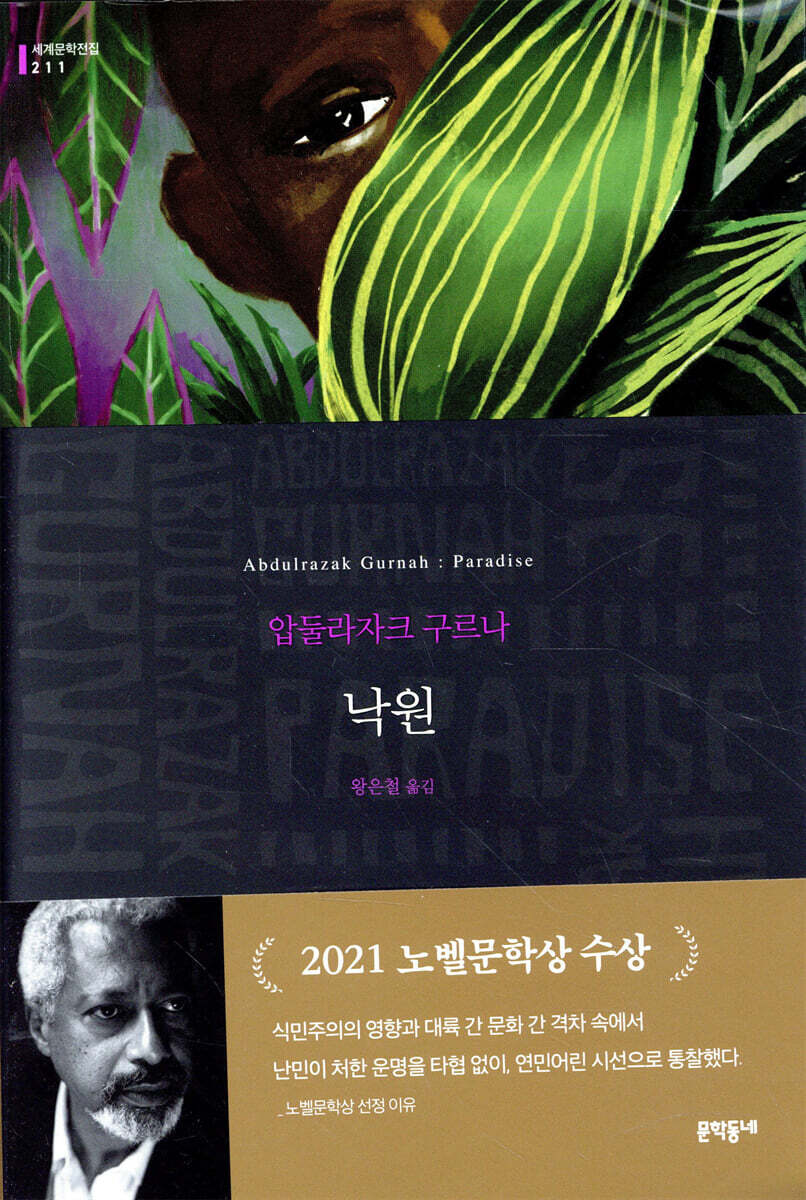
“Wouldn’t it be nice to think that paradise would be like this?” 2021 Nobel Prize in Literature winner Abdulrazaq Gurna's masterpieces Paradise (original title: Paradise) by Abdulrazaq Gurna, a British writer from Zanzibar who won the 2021 Nobel Prize in Literature, has been published. Paradise, a coming-of-age story and tragic love story of a 12-year-old boy, Yusuf, set in the fictional village of Kawa in Tanzania, East Africa, is his fourth full-length novel, published in 1994. It is a masterpiece that made Abdulrazaq Gurna's name known, as it was shortlisted for the Booker Prize and the Whitbread Prize. Abdulrazaq Gurna, born in 1948 on the British protectorate island of Zanzibar, left Zanzibar in 1968 for England after the Zanzibar Revolution of January 1964 overthrew the Islamic monarchy and intensified persecution of the Arab elite and Islam, and enrolled at Canterbury Christ Church College. He began writing novels in English the following year, and continued to write even after taking up a professorship in English Literature and Postcolonial Literature at the University of Kent in 1983, publishing ten full-length novels to date. The process of maintaining his identity as an Arab-Muslim East African in the center of the empire and in a predominantly Christian and white British society, and dedicating himself to writing in English, the language of the empire, was itself a process of concretizing his own words, “I left there, but I live there in my heart,” into life and literature. Paradise, which begins with the twelve-year-old boy Yusuf leaving home, also evokes the various forms of diaspora life that many of Gurna's novels portray, but it precedes his other works that deal with contemporary diaspora life in that it is set in East Africa colonized by Germany and hints at the impending war between British and German forces throughout. |
- You can preview some of the book's contents.
Preview
index
Walled Garden 9
Mountain Village 67
Inland Travel 127
Flame Gate 173
Forest of Desire 233
Blood Lump 287
Commentary | Nomadic Novels by Islamic African Writers 323
Abdulrazaq Gurna Chronicles 335
Mountain Village 67
Inland Travel 127
Flame Gate 173
Forest of Desire 233
Blood Lump 287
Commentary | Nomadic Novels by Islamic African Writers 323
Abdulrazaq Gurna Chronicles 335
Into the book
But you can never be sure about people.
--- p.15
At the train station, Yusuf saw another flag with a black cross bordered in silver, in addition to the yellow flag with the angry-looking black bird.
They only flew the flag when high-ranking German officers were traveling by train.
--- p.30
After a while, Yusuf noticed that the tears were no longer flowing.
But I hesitated to lose the feeling of sadness.
--- p.30~31
Later, in a dream, she saw her own cowardice covered in postpartum mucus, glistening in the moonlight.
It was only when someone standing in the shadows told him that he realized it was his own cowardice.
He himself saw it breathing.
--- p.33
Where were your eyes and ears while they were making you like this?
--- p.39
The only thing faster than a werewolf is prayer.
--- p.45
They complained about poverty and prices, and, like everyone else, they remained silent about their own lies and cruelty.
--- p.46
He learned not to count time, and that kind of absurd success made him understand that days can feel like weeks if you don't get greedy.
--- p.50
The madness in such stories may be due to misguided love, a spell to steal an inheritance, or unfulfilled revenge.
He wanted to tell it to Khalil.
Don't worry too much about that, everything will be fixed before the end of the story.
--- p.57
“Wouldn’t it be nice to think that paradise would be like this?” Hamid asked softly, in the night air filled with the sound of water.
“Imagine that there are waterfalls more beautiful than we can imagine.
Yusuf, imagine something far more beautiful than this.
Didn't you know that all the waters of the world flow from there? There are four rivers in paradise.
The rivers flow in all directions, east, west, south, and north, dividing the garden of the gods into four parts.
So there is water everywhere.
“There is water under the pavilion, next to the orchard, next to the terrace, and on the road next to the forest.”
--- p.111
Mohamed Abdallah also taught him about the business they were doing.
“This is what we are here for,” said Mohamed Abdallah.
“It’s business.
We go to the driest deserts and the darkest forests and do business, whether we are kings or barbarians, whether we live or die.
Everything is the same for us.
You will see the places we pass by, and the people who live in those places are people who have never known what business was.
They live like paralyzed insects.
There are no people more clever than merchants, and no profession more noble.
That's our life."
--- p.159
They sat in silence for several minutes.
Yusuf felt the winds of life spinning in his hands.
He let the owl turn without resistance.
And he got up and left there.
He sat quietly alone for a long time, his heart heavy with guilt over not being able to keep his parents' memories vivid.
He wondered if his parents still thought of him and if they were still alive.
He also knew that he had no desire to find out the answer.
He couldn't resist the other memories that came to mind in this state.
Images of being abandoned came flooding back.
They all made him neglect himself.
His life was full of events.
He tried to keep his head above the debris, his eyes fixed on the nearer horizon, choosing ignorance over the futile attempt to know what lay ahead.
He couldn't think of anything that would free him from the bondage of the life he had lived.
--- p.229
If this is hell, leave.
I'll go with you.
They raised us to be fearful, obedient, and respectful even when they abused us.
Leave.
I'll go with you.
We're both in the middle of a place with no name.
What could be worse than this? Nowhere else can you find a walled garden, with its sturdy pine trees, endless shrubs, fruit trees, and unexpectedly bright flowers.
There will be no bittersweet scent of orange sap that we can smell during the day, and no jasmine scent that embraces us deeply at night.
There will be no scent of pomegranate seeds or fragrant grasses growing on the edges.
There will be no sound of water in puddles and canals.
There will be no satisfaction in being in a jujube forest on a blisteringly hot midday.
There will be no music that numbs our senses.
It would be like exile.
But how could it get any worse than this?
--- p.305
He thought he would not feel any guilt towards his parents.
That wasn't going to happen.
They were the ones who had abandoned him years ago for their own freedom.
Now it was his turn to abandon them.
The relief they felt from his capture was now over.
He wanted to live a life for himself.
As I wandered freely across the plains, I might have stopped by them one day and thanked them for teaching me the hard lessons that had helped me begin that life.
--- p.305
He was about to leave.
Nothing could be simpler than that.
He had to go somewhere where he could escape the oppressive demands that everything was making on him.
But he knew that a solid lump of loneliness had long since formed in his exiled heart, and that wherever he went it would be with him, diminishing or scattering any small accomplishments he planned.
--- p.308
He discovered several piles of dung beyond the shade of the bark trees.
The dogs were already eating it little by little.
The dogs glanced at him suspiciously, then sidelong glanced warily.
They turned slightly to shield their food from his greedy gaze.
He was so surprised that he stared at the sight for a moment.
I was so shocked that he would eat something so dirty.
Dogs immediately recognized a person who lived off of feces.
--- p.15
At the train station, Yusuf saw another flag with a black cross bordered in silver, in addition to the yellow flag with the angry-looking black bird.
They only flew the flag when high-ranking German officers were traveling by train.
--- p.30
After a while, Yusuf noticed that the tears were no longer flowing.
But I hesitated to lose the feeling of sadness.
--- p.30~31
Later, in a dream, she saw her own cowardice covered in postpartum mucus, glistening in the moonlight.
It was only when someone standing in the shadows told him that he realized it was his own cowardice.
He himself saw it breathing.
--- p.33
Where were your eyes and ears while they were making you like this?
--- p.39
The only thing faster than a werewolf is prayer.
--- p.45
They complained about poverty and prices, and, like everyone else, they remained silent about their own lies and cruelty.
--- p.46
He learned not to count time, and that kind of absurd success made him understand that days can feel like weeks if you don't get greedy.
--- p.50
The madness in such stories may be due to misguided love, a spell to steal an inheritance, or unfulfilled revenge.
He wanted to tell it to Khalil.
Don't worry too much about that, everything will be fixed before the end of the story.
--- p.57
“Wouldn’t it be nice to think that paradise would be like this?” Hamid asked softly, in the night air filled with the sound of water.
“Imagine that there are waterfalls more beautiful than we can imagine.
Yusuf, imagine something far more beautiful than this.
Didn't you know that all the waters of the world flow from there? There are four rivers in paradise.
The rivers flow in all directions, east, west, south, and north, dividing the garden of the gods into four parts.
So there is water everywhere.
“There is water under the pavilion, next to the orchard, next to the terrace, and on the road next to the forest.”
--- p.111
Mohamed Abdallah also taught him about the business they were doing.
“This is what we are here for,” said Mohamed Abdallah.
“It’s business.
We go to the driest deserts and the darkest forests and do business, whether we are kings or barbarians, whether we live or die.
Everything is the same for us.
You will see the places we pass by, and the people who live in those places are people who have never known what business was.
They live like paralyzed insects.
There are no people more clever than merchants, and no profession more noble.
That's our life."
--- p.159
They sat in silence for several minutes.
Yusuf felt the winds of life spinning in his hands.
He let the owl turn without resistance.
And he got up and left there.
He sat quietly alone for a long time, his heart heavy with guilt over not being able to keep his parents' memories vivid.
He wondered if his parents still thought of him and if they were still alive.
He also knew that he had no desire to find out the answer.
He couldn't resist the other memories that came to mind in this state.
Images of being abandoned came flooding back.
They all made him neglect himself.
His life was full of events.
He tried to keep his head above the debris, his eyes fixed on the nearer horizon, choosing ignorance over the futile attempt to know what lay ahead.
He couldn't think of anything that would free him from the bondage of the life he had lived.
--- p.229
If this is hell, leave.
I'll go with you.
They raised us to be fearful, obedient, and respectful even when they abused us.
Leave.
I'll go with you.
We're both in the middle of a place with no name.
What could be worse than this? Nowhere else can you find a walled garden, with its sturdy pine trees, endless shrubs, fruit trees, and unexpectedly bright flowers.
There will be no bittersweet scent of orange sap that we can smell during the day, and no jasmine scent that embraces us deeply at night.
There will be no scent of pomegranate seeds or fragrant grasses growing on the edges.
There will be no sound of water in puddles and canals.
There will be no satisfaction in being in a jujube forest on a blisteringly hot midday.
There will be no music that numbs our senses.
It would be like exile.
But how could it get any worse than this?
--- p.305
He thought he would not feel any guilt towards his parents.
That wasn't going to happen.
They were the ones who had abandoned him years ago for their own freedom.
Now it was his turn to abandon them.
The relief they felt from his capture was now over.
He wanted to live a life for himself.
As I wandered freely across the plains, I might have stopped by them one day and thanked them for teaching me the hard lessons that had helped me begin that life.
--- p.305
He was about to leave.
Nothing could be simpler than that.
He had to go somewhere where he could escape the oppressive demands that everything was making on him.
But he knew that a solid lump of loneliness had long since formed in his exiled heart, and that wherever he went it would be with him, diminishing or scattering any small accomplishments he planned.
--- p.308
He discovered several piles of dung beyond the shade of the bark trees.
The dogs were already eating it little by little.
The dogs glanced at him suspiciously, then sidelong glanced warily.
They turned slightly to shield their food from his greedy gaze.
He was so surprised that he stared at the sight for a moment.
I was so shocked that he would eat something so dirty.
Dogs immediately recognized a person who lived off of feces.
--- p.322
Publisher's Review
A broader, sharper, and warmer perspective gained through the loss of one's hometown.
Delicately drawn with compassion for the uprooted
The Existence of Islamic Africans
A portrait of an absent paradise, drawn through the growth of the boy Yusuf.
Kawa emerged as a new city as the Germans used it as a base for building a railway to the highlands of the African interior.
But the lightning race passed quickly, and the train now stops there only to load wood and water.
Yusuf's father runs a run-down four-bedroom hotel there to make a living, and laments that the entire city is falling into disrepair.
Yusuf, a twelve-year-old boy who is used to playing alone in the yard of his house, admires 'Uncle' Aziz, who occasionally visits his father's house as a guest.
Because whenever Mr. Aziz stays at home for a few days and leaves, he gives him a generous amount of coins in his hand.
Then, one day, when Aziz comes to Yusuf's house again and stays for a few days, he is about to leave. Contrary to Yusuf's expectations, he is not given any allowance, and instead hears from his tearful parents that he will be traveling with Aziz's caravan.
Without any mental preparation, Yusuf leaves home and is separated from his parents as a means to pay off his father's debt.
Although Yusuf didn't understand all the details, he didn't think there was anything wrong with working for Uncle Aziz to pay off his father's debt.
After I pay everything off, I will be able to go home.
But it would have been better if they had told him before he left.
(Page 39)
Tears welled up in Yusuf's eyes.
I missed my hometown and felt abandoned.
But I tried my best not to cry.
(Page 58)
It wasn't that he missed them terribly.
In fact, as time went by, I missed them less and less.
It would rather mean that parting with them was the most memorable event in his life.
He thought about it deeply and mourned what he had lost.
He thought about things he should have known about them or could have asked them.
The fierce fights that terrified him.
The names of two boys who drowned after leaving Bagamoyo.
The names of the trees.
If I had only thought to ask them about such things, I might not have felt so ignorant and so dangerously adrift from everything.
He did what he was given, completed whatever Khalil asked him to do, and became dependent on his 'brother.'
And when I got permission, I worked in the garden.
(Page 71)
At his base, where he arrived following Uncle Aziz, there was a young man named Khalil who, like Yusuf, had been sold to pay off his family's debt.
Khalil, who sometimes teaches and cares for Yusuf like an older brother and sometimes like a strict guardian, warns Yusuf not to call Aziz "uncle" and drops vague hints about Aziz's identity that Yusuf cannot guess.
While Aziz is away on a long caravan journey, Yusuf lives with the merchant Hamid, his wife Maimuna, and their neighbors Kalasinga and Hussein. Yusuf learns to read and grows up tending the garden filled with mysterious trees and shrubs that occupy Aziz's mansion.
Then one day, Yusuf joins Aziz's caravan journey to the Sultanate, and the expedition, which is in danger due to the Sultan's tyranny, is saved thanks to Yusuf.
After returning from a long journey, Yusuf is thrown into great confusion when he learns the secret of Aziz's wife, who never leaves the house, and the secret of Khalil and Aziz...
'Speaking' through 'not speaking'
― Elaborately constructed metaphors and descriptions, with an explosive ending.
The novel "Paradise" resembles a "garden" in the work, mysteriously filled with orange trees, pomegranate trees, and all kinds of fragrant flowers and shrubs.
Set just before World War I, the story follows a long and adventurous caravan journey from the Swahili coast of the Indian Ocean to Lake Tanganyika and the Congo, and then on to the deep interior beyond. Although no direct expressions like "colonialism," "colonialism," or "imperialism" are mentioned, the imminent war between the British and German armies is hinted at here and there through the eyes of the boy Yusuf.
Yusuf saw another flag with a black cross bordered in silver, besides the yellow flag with the angry-looking black bird.
They only flew the flag when high-ranking German officers were traveling by train.
(Page 30)
The emotion that dominates the entire novel, which depicts the growth of twelve-year-old Yusuf to seventeen, is moist, like the boy's curious eyes that are constantly drawn to the mysterious.
The boy, having experienced abandonment, grows into a young man who knows how to use the resulting sadness and longing as a driving force to push through his life, and learns to observe his own cowardice, which confuses him at crucial moments, from a distance.
And there are 'dogs' that hover around the real space of the growing boy and eventually appear in his conscious space.
Sometimes at night, dogs roaming the dark streets would harass them.
The dogs swarmed in packs, fighting and tangling in the shadows and undergrowth, yet they leaped and remained alert.
(Page 41)
“Come here.
You, Side told me to get ready in the morning.
You will come with us, do business, and learn about the difference between civilization and barbarism.
Instead of playing in a dirty store… …now that I’m a little older, it’s time to look back and see what the world is like.” A smile spread across his face as he said that.
It was the face of a marauder, the dog that had been prowling in Yusuf's nightmares.
(Page 76)
“After one more journey, you will become as hard as iron.
But now that European dogs are everywhere, there will be no more travel.
By the time they parted ways with us, they would have done it to every orifice in our bodies.
They would have done it to us in a way that would have been completely unrecognizable.
We will become worse than the shit they feed us.
All evil will be ours, the property of those who share our blood.
So even naked savages will despise us.
“Just wait and see.” (Page 243)
Living up to the reviews that describe it as “layered, intense, beautiful, and strange” and “a sophisticated novel in many senses,” the metaphors of the dogs circling around the boy are layered one by one, pointing to a point so clear that it is through this decisiveness that “Africa is properly depicted only in Gurna’s novels.”
Delicately drawn with compassion for the uprooted
The Existence of Islamic Africans
A portrait of an absent paradise, drawn through the growth of the boy Yusuf.
Kawa emerged as a new city as the Germans used it as a base for building a railway to the highlands of the African interior.
But the lightning race passed quickly, and the train now stops there only to load wood and water.
Yusuf's father runs a run-down four-bedroom hotel there to make a living, and laments that the entire city is falling into disrepair.
Yusuf, a twelve-year-old boy who is used to playing alone in the yard of his house, admires 'Uncle' Aziz, who occasionally visits his father's house as a guest.
Because whenever Mr. Aziz stays at home for a few days and leaves, he gives him a generous amount of coins in his hand.
Then, one day, when Aziz comes to Yusuf's house again and stays for a few days, he is about to leave. Contrary to Yusuf's expectations, he is not given any allowance, and instead hears from his tearful parents that he will be traveling with Aziz's caravan.
Without any mental preparation, Yusuf leaves home and is separated from his parents as a means to pay off his father's debt.
Although Yusuf didn't understand all the details, he didn't think there was anything wrong with working for Uncle Aziz to pay off his father's debt.
After I pay everything off, I will be able to go home.
But it would have been better if they had told him before he left.
(Page 39)
Tears welled up in Yusuf's eyes.
I missed my hometown and felt abandoned.
But I tried my best not to cry.
(Page 58)
It wasn't that he missed them terribly.
In fact, as time went by, I missed them less and less.
It would rather mean that parting with them was the most memorable event in his life.
He thought about it deeply and mourned what he had lost.
He thought about things he should have known about them or could have asked them.
The fierce fights that terrified him.
The names of two boys who drowned after leaving Bagamoyo.
The names of the trees.
If I had only thought to ask them about such things, I might not have felt so ignorant and so dangerously adrift from everything.
He did what he was given, completed whatever Khalil asked him to do, and became dependent on his 'brother.'
And when I got permission, I worked in the garden.
(Page 71)
At his base, where he arrived following Uncle Aziz, there was a young man named Khalil who, like Yusuf, had been sold to pay off his family's debt.
Khalil, who sometimes teaches and cares for Yusuf like an older brother and sometimes like a strict guardian, warns Yusuf not to call Aziz "uncle" and drops vague hints about Aziz's identity that Yusuf cannot guess.
While Aziz is away on a long caravan journey, Yusuf lives with the merchant Hamid, his wife Maimuna, and their neighbors Kalasinga and Hussein. Yusuf learns to read and grows up tending the garden filled with mysterious trees and shrubs that occupy Aziz's mansion.
Then one day, Yusuf joins Aziz's caravan journey to the Sultanate, and the expedition, which is in danger due to the Sultan's tyranny, is saved thanks to Yusuf.
After returning from a long journey, Yusuf is thrown into great confusion when he learns the secret of Aziz's wife, who never leaves the house, and the secret of Khalil and Aziz...
'Speaking' through 'not speaking'
― Elaborately constructed metaphors and descriptions, with an explosive ending.
The novel "Paradise" resembles a "garden" in the work, mysteriously filled with orange trees, pomegranate trees, and all kinds of fragrant flowers and shrubs.
Set just before World War I, the story follows a long and adventurous caravan journey from the Swahili coast of the Indian Ocean to Lake Tanganyika and the Congo, and then on to the deep interior beyond. Although no direct expressions like "colonialism," "colonialism," or "imperialism" are mentioned, the imminent war between the British and German armies is hinted at here and there through the eyes of the boy Yusuf.
Yusuf saw another flag with a black cross bordered in silver, besides the yellow flag with the angry-looking black bird.
They only flew the flag when high-ranking German officers were traveling by train.
(Page 30)
The emotion that dominates the entire novel, which depicts the growth of twelve-year-old Yusuf to seventeen, is moist, like the boy's curious eyes that are constantly drawn to the mysterious.
The boy, having experienced abandonment, grows into a young man who knows how to use the resulting sadness and longing as a driving force to push through his life, and learns to observe his own cowardice, which confuses him at crucial moments, from a distance.
And there are 'dogs' that hover around the real space of the growing boy and eventually appear in his conscious space.
Sometimes at night, dogs roaming the dark streets would harass them.
The dogs swarmed in packs, fighting and tangling in the shadows and undergrowth, yet they leaped and remained alert.
(Page 41)
“Come here.
You, Side told me to get ready in the morning.
You will come with us, do business, and learn about the difference between civilization and barbarism.
Instead of playing in a dirty store… …now that I’m a little older, it’s time to look back and see what the world is like.” A smile spread across his face as he said that.
It was the face of a marauder, the dog that had been prowling in Yusuf's nightmares.
(Page 76)
“After one more journey, you will become as hard as iron.
But now that European dogs are everywhere, there will be no more travel.
By the time they parted ways with us, they would have done it to every orifice in our bodies.
They would have done it to us in a way that would have been completely unrecognizable.
We will become worse than the shit they feed us.
All evil will be ours, the property of those who share our blood.
So even naked savages will despise us.
“Just wait and see.” (Page 243)
Living up to the reviews that describe it as “layered, intense, beautiful, and strange” and “a sophisticated novel in many senses,” the metaphors of the dogs circling around the boy are layered one by one, pointing to a point so clear that it is through this decisiveness that “Africa is properly depicted only in Gurna’s novels.”
GOODS SPECIFICS
- Publication date: May 20, 2022
- Page count, weight, size: 348 pages | 466g | 140*210*16mm
- ISBN13: 9788954686785
- ISBN10: 8954686788
You may also like
카테고리
korean


korean

![GQ KOREA Mark (Monthly): December [2025]](http://librairie.coreenne.fr/cdn/shop/files/8ef265dbbfbf186523ed75ba7319009d.jpg?v=1765340328&width=3840)


