

We become a city
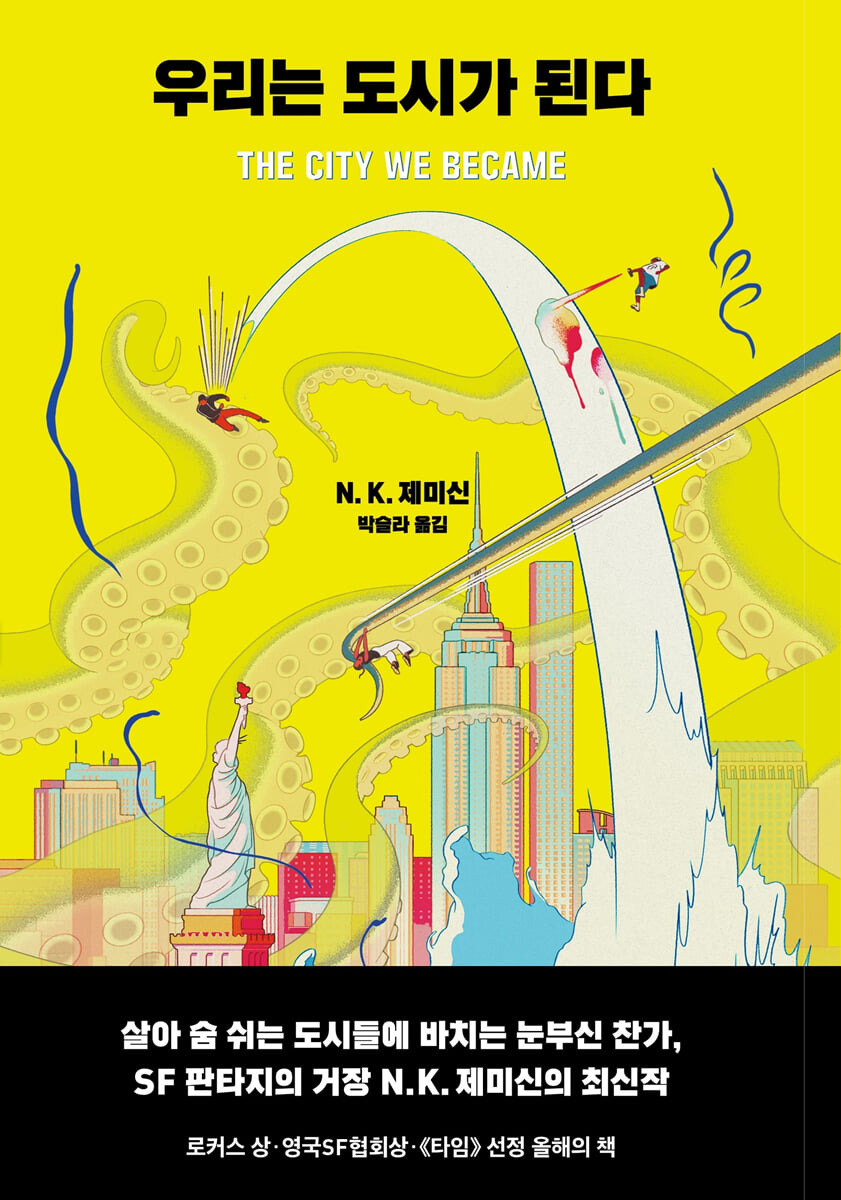 |
Description
Book Introduction
New York, at the crossroads of birth and destruction, is on the verge of reaching a critical point.
A decisive battle between the "enemy" from a parallel world and the incarnations protecting the city from it.
N. Winner of the Hugo Award for three consecutive years.
K. Jemisin's new fantasy series
N., who won the Hugo Award, the most prestigious science fiction award, for three consecutive years with the "Broken Earth" trilogy and was included on the lists of influential people selected by [Time] and [Foreign Policy], established himself as a master of speculative fiction.
K. Jemisin returns with a new feature-length series.
This urban fantasy two-part series, titled "Great Cities," depicts a once-in-a-lifetime battle surrounding the fate of modern New York, based on the premise that great cities are teeming with life and are protected by human incarnations of gods.
In the introduction to the short story collection, "How Long Will It Take to the Black Future Moon?", the author mentioned the Genie Locorum (or Genius Loci), a spirit that protects a specific place, as one of the topics he has dealt with. In line with this interest, he uses the short story "The Birth of a Great City" published in 2016 as a prologue to expand the worldview to the multiverse and deeply explore the relationship between space and humans.
The first installment of the series, "We Become the City," is full of lively energy and action, in contrast to the seriousness of the previous "Broken Earth" series. It fully displays the author's wide range of works, and won the Locus Award and the British Science Fiction Association Award, and was also selected as one of the Books of the Year by [Time].
A decisive battle between the "enemy" from a parallel world and the incarnations protecting the city from it.
N. Winner of the Hugo Award for three consecutive years.
K. Jemisin's new fantasy series
N., who won the Hugo Award, the most prestigious science fiction award, for three consecutive years with the "Broken Earth" trilogy and was included on the lists of influential people selected by [Time] and [Foreign Policy], established himself as a master of speculative fiction.
K. Jemisin returns with a new feature-length series.
This urban fantasy two-part series, titled "Great Cities," depicts a once-in-a-lifetime battle surrounding the fate of modern New York, based on the premise that great cities are teeming with life and are protected by human incarnations of gods.
In the introduction to the short story collection, "How Long Will It Take to the Black Future Moon?", the author mentioned the Genie Locorum (or Genius Loci), a spirit that protects a specific place, as one of the topics he has dealt with. In line with this interest, he uses the short story "The Birth of a Great City" published in 2016 as a prologue to expand the worldview to the multiverse and deeply explore the relationship between space and humans.
The first installment of the series, "We Become the City," is full of lively energy and action, in contrast to the seriousness of the previous "Broken Earth" series. It fully displays the author's wide range of works, and won the Locus Award and the British Science Fiction Association Award, and was also selected as one of the Books of the Year by [Time].
- You can preview some of the book's contents.
Preview
index
Prologue What happened 11
Intermission 38
Chapter 1: The Beginning of Manhattan and the Battle of FDR Drive 41
Chapter 2: The Final Battle in the Forest 79
Chapter 3 Lady (Staton) Aislinn 128
Intermission 157
Chapter 4: The Boogie Down Bronca and the Toilet of Death 163
Chapter 5: In Search of the Queen 181
Chapter 6: Interdimensional Art Critic Dr. White 197
Chapter 7: What's in Grandma Yu's Pool Next Door 243
Intermission 291
Chapter 8: Sleepless Brooklyn (and Nearby) 300
Chapter 9: The Emergence of a Better New York 317
Chapter 10: Build a Wall on Staten Island (Stop São Paulo) 369
Chapter 11: Yeah, that teamwork thing, 403
Chapter 12: There Is No City There 453
Chapter 13: Bozarda, You Fools 475
Chapter 14, Avenue 2, Gauntlet 514
Chapter 15: “And the Beast Saw Beauty’s Face” 537
Chapter 16: Who is New York? 563
Coda 587
Acknowledgments 595
Intermission 38
Chapter 1: The Beginning of Manhattan and the Battle of FDR Drive 41
Chapter 2: The Final Battle in the Forest 79
Chapter 3 Lady (Staton) Aislinn 128
Intermission 157
Chapter 4: The Boogie Down Bronca and the Toilet of Death 163
Chapter 5: In Search of the Queen 181
Chapter 6: Interdimensional Art Critic Dr. White 197
Chapter 7: What's in Grandma Yu's Pool Next Door 243
Intermission 291
Chapter 8: Sleepless Brooklyn (and Nearby) 300
Chapter 9: The Emergence of a Better New York 317
Chapter 10: Build a Wall on Staten Island (Stop São Paulo) 369
Chapter 11: Yeah, that teamwork thing, 403
Chapter 12: There Is No City There 453
Chapter 13: Bozarda, You Fools 475
Chapter 14, Avenue 2, Gauntlet 514
Chapter 15: “And the Beast Saw Beauty’s Face” 537
Chapter 16: Who is New York? 563
Coda 587
Acknowledgments 595
Publisher's Review
N. Winner of the Hugo Award for three consecutive years.
K. Jemisin's new fantasy series
**Locus Award and British Science Fiction Association Award Winner**
New York, at the crossroads of birth and destruction, is on the verge of reaching a critical point.
A decisive battle between the "enemy" from a parallel world and the incarnations protecting the city from it.
N., who won the Hugo Award, the most prestigious science fiction award, for three consecutive years with the "Broken Earth" trilogy and was included on the lists of influential people by Time and Foreign Policy, has established himself as a master of speculative fiction.
K. Jemisin returns with a new feature-length series.
This urban fantasy two-part series, titled "Great Cities," depicts a once-in-a-lifetime battle surrounding the fate of modern-day New York City, based on the premise that great cities are teeming with life and are protected by human incarnations of gods.
In the introduction to the short story collection, "How Long Will It Take to the Black Future Moon?", the author mentioned the Genie Locorum (or Genius Loci), a spirit that protects a specific place, as one of the topics he has dealt with. In line with this interest, he uses the short story "The Birth of a Great City" published in 2016 as a prologue to expand the worldview to the multiverse and deeply explore the relationship between space and humans.
The first installment of the series, "We Become the City," is full of lively energy and action, in contrast to the seriousness of the previous "Broken Earth" series. It fully displays the author's wide range of works, and won the Locus Award and the British Science Fiction Association Award, and was also selected as one of Time magazine's best books of the year.
What I'm saying is that it's not just decisions that have an impact.
Every legend and lie this city holds becomes a new world.
And all of that combined is New York.
Then, finally, when everything collapses under the crushing weight of that heavy weight… …it becomes something completely new.
Alive._From the text
A city that comes to life through diversity and expansion of imagination,
Ordinary citizens awakening as agents of that place
Like all other living things, cities are in fact alive.
As the population explodes in a specific place and new cultures flow in, the accumulated unfamiliarity and singularity gradually bring about changes in reality, giving birth to the space called the city as a self-conscious living organism.
When this time comes, the city chooses someone from its membership to be the 'midwife' to assist in the birth.
As an agent who represents and protects the city itself.
And there's a homeless man who roams the streets of New York at night, singing and painting murals.
This nameless youth, who began learning the duties of an incarnation from the foreign incarnation of São Paulo, who was born earlier, begins to hear the city breathing and witnesses suspicious figures throughout the streets.
The monstrous creatures, with long tentacles and limbs invisible to the naked eye, begin to pursue the newly awakened incarnation of New York.
A young man who has learned how to wield the city's power in times of crisis almost wins a battle against the 'enemy', but is injured and falls somewhere.
A city is an entity that accepts and integrates new things.
But while some new things become part of the city and help it grow and become stronger, others divide it and harm it._From the text
At that moment, when a commotion erupts in the heart of downtown, a man riding the subway into New York City for graduate school awakens in another incarnation.
The only thing that comes to mind for a man who has completely forgotten himself is the name 'Manny' and the feeling of identification with the borough of Manhattan.
While wandering through the city in the midst of chaos, Manny encounters creatures that seem unlikely to exist in reality. He soon discovers a way to combat them through the power of imagination known as 'construction concepts'.
Likewise, Brooklyn, a former rapper and current city council member; Padmini (Queens), a math genius from India; Bronka (Bronx), an art gallery director of Lenape descent; and Aislinn, a librarian on Staten Island, a remote island within the borough, also awaken as incarnations and witness the 'enemy' one after another.
These lesser incarnations, now beginning to sense each other's presence, must now set out to find the missing Primary, the central incarnation of New York, in order to save the city.
The threat that comes in the form of hate and gentrification,
Saving a city in disarray is only possible through the struggle of those who try to protect it.
In "We Become the City," the "enemy" that threatens the incarnations is a being from a parallel world that moves with the goal of preventing the creation of a city that exists in our reality.
What makes this 'enemy' even more frightening is that it systematically seeks to take over the city through hate and gentrification.
She appears primarily as a persona called 'The Woman in White', but also as a spider, mycelium, and H.
They appear throughout the city in the form of tentacles reminiscent of the works of H.P. Lovecraft, causing “something fundamentally, essentially, contagiously damaging” to those they come into contact with. (The work even directly and profoundly quotes Lovecraft.) The way these contagious attacks are very specific and directly connected to life.
They try to exhibit artworks that are blatantly hateful and discriminatory under the guise of sponsoring non-profit art galleries, incite organized attacks online or protests by white men, try to take away ownership of homes that people have lived in for a long time under the guise of a foundation, and even suddenly attack buildings that house the same Starbucks everywhere you go by transforming into tentacled monsters.
Even though they have gained superpowers, these threats that constantly come to the ordinary people who live incarnations are extremely fatal.
However, the reason they do not do so and instead fight against the enemy to protect the real world, despite the fact that the easiest and most certain solution is to abandon their status as incarnations through the act of 'leaving', is because this is ultimately a place where they can live together with the people they care about.
The author states in the afterword:
“I hate this city.
I love this city.
I am willing to fight for this city until it rejects me.
This work is my tribute to New York.” The author, who has used his unique imagination to blend contemporary reality with the space he lives in, is eagerly anticipating what kind of New York he will portray in his next work.
K. Jemisin's new fantasy series
**Locus Award and British Science Fiction Association Award Winner**
New York, at the crossroads of birth and destruction, is on the verge of reaching a critical point.
A decisive battle between the "enemy" from a parallel world and the incarnations protecting the city from it.
N., who won the Hugo Award, the most prestigious science fiction award, for three consecutive years with the "Broken Earth" trilogy and was included on the lists of influential people by Time and Foreign Policy, has established himself as a master of speculative fiction.
K. Jemisin returns with a new feature-length series.
This urban fantasy two-part series, titled "Great Cities," depicts a once-in-a-lifetime battle surrounding the fate of modern-day New York City, based on the premise that great cities are teeming with life and are protected by human incarnations of gods.
In the introduction to the short story collection, "How Long Will It Take to the Black Future Moon?", the author mentioned the Genie Locorum (or Genius Loci), a spirit that protects a specific place, as one of the topics he has dealt with. In line with this interest, he uses the short story "The Birth of a Great City" published in 2016 as a prologue to expand the worldview to the multiverse and deeply explore the relationship between space and humans.
The first installment of the series, "We Become the City," is full of lively energy and action, in contrast to the seriousness of the previous "Broken Earth" series. It fully displays the author's wide range of works, and won the Locus Award and the British Science Fiction Association Award, and was also selected as one of Time magazine's best books of the year.
What I'm saying is that it's not just decisions that have an impact.
Every legend and lie this city holds becomes a new world.
And all of that combined is New York.
Then, finally, when everything collapses under the crushing weight of that heavy weight… …it becomes something completely new.
Alive._From the text
A city that comes to life through diversity and expansion of imagination,
Ordinary citizens awakening as agents of that place
Like all other living things, cities are in fact alive.
As the population explodes in a specific place and new cultures flow in, the accumulated unfamiliarity and singularity gradually bring about changes in reality, giving birth to the space called the city as a self-conscious living organism.
When this time comes, the city chooses someone from its membership to be the 'midwife' to assist in the birth.
As an agent who represents and protects the city itself.
And there's a homeless man who roams the streets of New York at night, singing and painting murals.
This nameless youth, who began learning the duties of an incarnation from the foreign incarnation of São Paulo, who was born earlier, begins to hear the city breathing and witnesses suspicious figures throughout the streets.
The monstrous creatures, with long tentacles and limbs invisible to the naked eye, begin to pursue the newly awakened incarnation of New York.
A young man who has learned how to wield the city's power in times of crisis almost wins a battle against the 'enemy', but is injured and falls somewhere.
A city is an entity that accepts and integrates new things.
But while some new things become part of the city and help it grow and become stronger, others divide it and harm it._From the text
At that moment, when a commotion erupts in the heart of downtown, a man riding the subway into New York City for graduate school awakens in another incarnation.
The only thing that comes to mind for a man who has completely forgotten himself is the name 'Manny' and the feeling of identification with the borough of Manhattan.
While wandering through the city in the midst of chaos, Manny encounters creatures that seem unlikely to exist in reality. He soon discovers a way to combat them through the power of imagination known as 'construction concepts'.
Likewise, Brooklyn, a former rapper and current city council member; Padmini (Queens), a math genius from India; Bronka (Bronx), an art gallery director of Lenape descent; and Aislinn, a librarian on Staten Island, a remote island within the borough, also awaken as incarnations and witness the 'enemy' one after another.
These lesser incarnations, now beginning to sense each other's presence, must now set out to find the missing Primary, the central incarnation of New York, in order to save the city.
The threat that comes in the form of hate and gentrification,
Saving a city in disarray is only possible through the struggle of those who try to protect it.
In "We Become the City," the "enemy" that threatens the incarnations is a being from a parallel world that moves with the goal of preventing the creation of a city that exists in our reality.
What makes this 'enemy' even more frightening is that it systematically seeks to take over the city through hate and gentrification.
She appears primarily as a persona called 'The Woman in White', but also as a spider, mycelium, and H.
They appear throughout the city in the form of tentacles reminiscent of the works of H.P. Lovecraft, causing “something fundamentally, essentially, contagiously damaging” to those they come into contact with. (The work even directly and profoundly quotes Lovecraft.) The way these contagious attacks are very specific and directly connected to life.
They try to exhibit artworks that are blatantly hateful and discriminatory under the guise of sponsoring non-profit art galleries, incite organized attacks online or protests by white men, try to take away ownership of homes that people have lived in for a long time under the guise of a foundation, and even suddenly attack buildings that house the same Starbucks everywhere you go by transforming into tentacled monsters.
Even though they have gained superpowers, these threats that constantly come to the ordinary people who live incarnations are extremely fatal.
However, the reason they do not do so and instead fight against the enemy to protect the real world, despite the fact that the easiest and most certain solution is to abandon their status as incarnations through the act of 'leaving', is because this is ultimately a place where they can live together with the people they care about.
The author states in the afterword:
“I hate this city.
I love this city.
I am willing to fight for this city until it rejects me.
This work is my tribute to New York.” The author, who has used his unique imagination to blend contemporary reality with the space he lives in, is eagerly anticipating what kind of New York he will portray in his next work.
GOODS SPECIFICS
- Publication date: April 15, 2022
- Page count, weight, size: 600 pages | 650g | 140*210*29mm
- ISBN13: 9791170521310
- ISBN10: 1170521312
You may also like
카테고리
korean


korean

![GQ KOREA Mark (Monthly): December [2025]](http://librairie.coreenne.fr/cdn/shop/files/8ef265dbbfbf186523ed75ba7319009d.jpg?v=1765340328&width=3840)


