

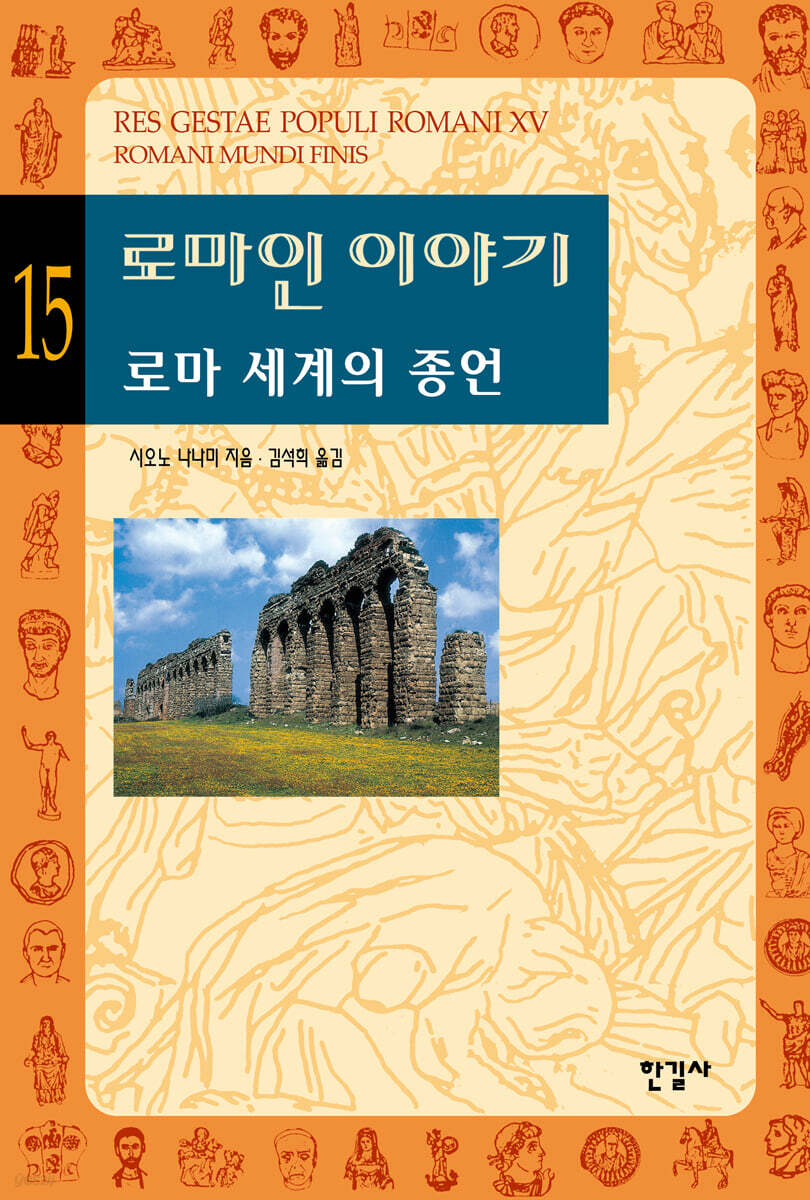
Roman Tales 15
 |
Description
Book Introduction
There are as many historical books and studies discussing the decline of Rome as there are grains of sand on the beach, but except for those that can only be called absurd, all of them are somewhat correct.
If you collect them together, you can easily understand the factors that led to the decline of Rome.
But I didn't feel like spending my one and only life collecting other people's achievements.
So, in the last five volumes, I decided to focus on 'how' it declined rather than 'why' it declined.
The history of a country is similar to the life of a person.
If you want to know someone thoroughly, you have to follow them throughout their life from birth to death…
Today, textbooks around the world list 476 AD as the year the Western Roman Empire fell.
But no textbook, no authority on Roman history, speaks of the 'year' in which the Western Roman Empire fell, but not of the 'month' or 'day'.
The reason is simple.
Because I don't know.
However, if you count from 753 BC, the year of its founding, it fell 1,229 years later.
What a ridiculous end this is compared to the destruction of Carthage in 146 BC, 622 years earlier.
Rome lasted twice as long as Carthage, had an incomparably wider reach, and had a profound and profound influence on the countless people who lived there, yet it never had a "great moment."
It did burn.
But it wasn't burned by flames.
It was destroyed.
But it did not perish with the cruel Abigyuhuan.
It just passed away without anyone noticing, without even a 'great moment'.
If you collect them together, you can easily understand the factors that led to the decline of Rome.
But I didn't feel like spending my one and only life collecting other people's achievements.
So, in the last five volumes, I decided to focus on 'how' it declined rather than 'why' it declined.
The history of a country is similar to the life of a person.
If you want to know someone thoroughly, you have to follow them throughout their life from birth to death…
Today, textbooks around the world list 476 AD as the year the Western Roman Empire fell.
But no textbook, no authority on Roman history, speaks of the 'year' in which the Western Roman Empire fell, but not of the 'month' or 'day'.
The reason is simple.
Because I don't know.
However, if you count from 753 BC, the year of its founding, it fell 1,229 years later.
What a ridiculous end this is compared to the destruction of Carthage in 146 BC, 622 years earlier.
Rome lasted twice as long as Carthage, had an incomparably wider reach, and had a profound and profound influence on the countless people who lived there, yet it never had a "great moment."
It did burn.
But it wasn't burned by flames.
It was destroyed.
But it did not perish with the cruel Abigyuhuan.
It just passed away without anyone noticing, without even a 'great moment'.
- You can preview some of the book's contents.
Preview
index
To the readers
Part 1: The Last Romans (395–410 AD)
East-West separation
Romans and barbarians
General Stilicho
custodian
Witness at the scene
Alaric
The era when the Mediterranean was an 'inland sea'
Africa, rebellion
From peasant to serf
The rise of non-productive people
Decline of public opinion
Resumption of invasion
To Italy
Showdown
Abandon Gaul
Improvement ceremony
Move the capital to Ravenna
A large wave is coming
Interception
The actual power of the Roman Empire
Battle of Fiesole
The reality of Gaul
Defeat barbarians with barbarians
isolation
plot
agony
death
gap
Extortion - First
Blackmail - Second
The Rape of Rome
People leaving Rome
Part II: The Fall of the Roman Empire (410–476 AD)
Responsibilities of a hegemonic power
Ongoing barbarism
'One-third system'
Eastern Roman Empire
Women and Power
'Military commanders'
Boniface, the 'military commander'
Vandals
St. Augustine
Aetius, the 'Commander-in-Chief'
debacle
Huns
Attila
Champagne rotation
The Birth of Venice
collapse on one's own
The Rape of Rome Again
The last 20 years
The Last Joint Struggle between East and West
The fall of the Roman Empire
After the Third Empire (476 AD)
Odoaker
Symbiotic route
Britannia—'Post-Empire'
Gaul—'After the Empire'
Hispania—'After the Empire'
North Africa—'After Empire'
Pax Barbarica (Peace of the Barbarians)
Division of roles
Theodoric
Ostrogothic Kingdom
Loser's Leverage
Loyal Cassiodorus
The 'long hand' extending from the east
The End of Pax Barbarica
academy
monastery
Justinian the Great
"Complete Roman Law"
Holy war ideology
General Belisarius
Advance into Africa
Destruction of the Crescent Kingdom
Italian advance
Gothic Wars
Siege of Rome
General Narses
Fall of Ravenna
Resumption of war
Before the war
Death in Italy
The Death of Belisarius
The death of Justinian
At the end of the book
Appendix 1
Appendix 2
Chronology
References
List of picture sources
Part 1: The Last Romans (395–410 AD)
East-West separation
Romans and barbarians
General Stilicho
custodian
Witness at the scene
Alaric
The era when the Mediterranean was an 'inland sea'
Africa, rebellion
From peasant to serf
The rise of non-productive people
Decline of public opinion
Resumption of invasion
To Italy
Showdown
Abandon Gaul
Improvement ceremony
Move the capital to Ravenna
A large wave is coming
Interception
The actual power of the Roman Empire
Battle of Fiesole
The reality of Gaul
Defeat barbarians with barbarians
isolation
plot
agony
death
gap
Extortion - First
Blackmail - Second
The Rape of Rome
People leaving Rome
Part II: The Fall of the Roman Empire (410–476 AD)
Responsibilities of a hegemonic power
Ongoing barbarism
'One-third system'
Eastern Roman Empire
Women and Power
'Military commanders'
Boniface, the 'military commander'
Vandals
St. Augustine
Aetius, the 'Commander-in-Chief'
debacle
Huns
Attila
Champagne rotation
The Birth of Venice
collapse on one's own
The Rape of Rome Again
The last 20 years
The Last Joint Struggle between East and West
The fall of the Roman Empire
After the Third Empire (476 AD)
Odoaker
Symbiotic route
Britannia—'Post-Empire'
Gaul—'After the Empire'
Hispania—'After the Empire'
North Africa—'After Empire'
Pax Barbarica (Peace of the Barbarians)
Division of roles
Theodoric
Ostrogothic Kingdom
Loser's Leverage
Loyal Cassiodorus
The 'long hand' extending from the east
The End of Pax Barbarica
academy
monastery
Justinian the Great
"Complete Roman Law"
Holy war ideology
General Belisarius
Advance into Africa
Destruction of the Crescent Kingdom
Italian advance
Gothic Wars
Siege of Rome
General Narses
Fall of Ravenna
Resumption of war
Before the war
Death in Italy
The Death of Belisarius
The death of Justinian
At the end of the book
Appendix 1
Appendix 2
Chronology
References
List of picture sources
GOODS SPECIFICS
- Date of issue: February 5, 2007
- Page count, weight, size: 533 pages | 738g | 148*210*35mm
- ISBN13: 9788935654888
- ISBN10: 8935654884
You may also like
카테고리
korean


korean

![GQ KOREA Mark (Monthly): December [2025]](http://librairie.coreenne.fr/cdn/shop/files/8ef265dbbfbf186523ed75ba7319009d.jpg?v=1765340328&width=3840)


