

Regarding the Southern Sea
 |
Description
Book Introduction
The sea, a new territory that our humanities must discover, a neglected space and time!
We restore everything in our sea that has a history but no records!!!
A new concept of marine cultural history encompassing the life, folklore, geography, science, history, mythology, and ecology of our seas.
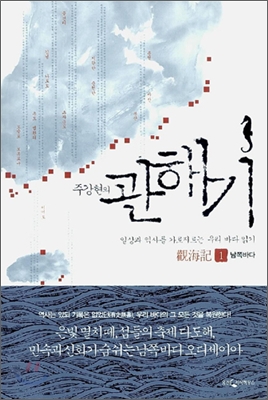
This book comprehensively explores the life, folklore, ecology, and history of the three seas bordering the Korean Peninsula: Biyangdo, a small and beautiful island in the southern sea; Abai Village in Sokcho, filled with the sorrows and joys of refugees; Gijang, a feast of silver anchovies; Samcheonpo, where the primitive fishing method of bamboo blinds is still alive; and Gyeokryeolbi Islands, filled with the loneliness of the open sea.
In addition, with over 600 photographs added, it is a comprehensive record of the history, folk knowledge, and ecology of the time, totaling over 1,000 pages.
It can also be said to be a new achievement in Korean humanities, described through an interdisciplinary method that breaks away from land-centered historical geography and rediscovers the sea, a neglected space and time.
Part 1 deals with the story of the southern sea, where silver anchovies swarm, the island festival of Dadohae, and folklore and myths breathe.
We restore everything in our sea that has a history but no records!!!
A new concept of marine cultural history encompassing the life, folklore, geography, science, history, mythology, and ecology of our seas.
This book comprehensively explores the life, folklore, ecology, and history of the three seas bordering the Korean Peninsula: Biyangdo, a small and beautiful island in the southern sea; Abai Village in Sokcho, filled with the sorrows and joys of refugees; Gijang, a feast of silver anchovies; Samcheonpo, where the primitive fishing method of bamboo blinds is still alive; and Gyeokryeolbi Islands, filled with the loneliness of the open sea.
In addition, with over 600 photographs added, it is a comprehensive record of the history, folk knowledge, and ecology of the time, totaling over 1,000 pages.
It can also be said to be a new achievement in Korean humanities, described through an interdisciplinary method that breaks away from land-centered historical geography and rediscovers the sea, a neglected space and time.
Part 1 deals with the story of the southern sea, where silver anchovies swarm, the island festival of Dadohae, and folklore and myths breathe.
- You can preview some of the book's contents.
Preview
index
A utopia where myth and science meet - The Ieodo of Myth and Science
The prototype of our ship, the place to catch Teu - the place to catch Teu, the ship of Seogwipo Bomok Port
A school of blue-backed pufferfish melting the bitter wind - Jeju Moseulpo Pufferfish Festival
The resilient strength of Tamna women, nurtured by material wealth - Jamnyeo, a symbol of Jeju culture
The Light of Imperialism: Who Speaks of the Romanticism of Lighthouses? - Udo Lighthouse, the Light of Modernity
The world of Maitreya and the water crest that rose from the sea - the world of the water crest, the world of the sea Maitreya
Biyangdo, an unfinished island that holds the wealth of slowness—a purple utopia created by the gods
The Chuja Archipelago, a chain of 42 islands connecting Jeju and Jeolla Provinces in the South Sea.
Manage the Sea: Dasan's "Namdo Management Theory," which foresaw hundreds of years—Reflecting on "Gyeongse Yuhyo" in Gangjin Bay
Mihwangsa Temple, a seaside temple where crabs, turtles, and fish live
A Tradition That Made It: Songjing and Jang Bogo-Wando Songjing Dangsanje in Cheonghaejin
The Tidal Flats Connecting the Sea and the River: The "Aesthetics of Boundaries" - Lessons from the Suncheon Bay Reed Fields
Warm Winter Seas, Tuna Attacks - The Kuroshio Current and the Narodo Tuna Fishing
A Midsummer Night's Dream of Dinosaurs - Dinosaur Republic, Goseong
Jukbangryeom, a bamboo curtain that was spread out like a Go board during the Joseon Dynasty - Samcheonpo primitive fishing method Jukbangryeom
The Living Primitive Fishing Method 'Dolsal' - Traditional Fishing Methods of Namhae, Haenam, Seocheon, and Taean
Every year, a neatly prepared ancestral rite meal is prepared at the sea forests of Namhae, Gyeongnam Province, where fishermen and Mijori are kept.
Oysters Growing in a Complex City of National Defense, Arts, Fisheries, and Tourism - Tongyeong's Marine Culture and Oysters
The folk knowledge of the fishermen continues with the Yuksojangmang - Geoje Island's "Yuksojangmang" fishing method for catching mullet.
Masan Aguijjim, the living flesh of the city of Masan - Masan Aguijjim
Anchovies are also fish - Gijang's specialty anchovies and seaweed
Jagalchi Ajimae, with the vitality of an eel - Jagalchi Market's Sea Life Encyclopedia
Sashimi and Uchida, Memories of a Sea Colony - Anago and Conger Eel
The prototype of our ship, the place to catch Teu - the place to catch Teu, the ship of Seogwipo Bomok Port
A school of blue-backed pufferfish melting the bitter wind - Jeju Moseulpo Pufferfish Festival
The resilient strength of Tamna women, nurtured by material wealth - Jamnyeo, a symbol of Jeju culture
The Light of Imperialism: Who Speaks of the Romanticism of Lighthouses? - Udo Lighthouse, the Light of Modernity
The world of Maitreya and the water crest that rose from the sea - the world of the water crest, the world of the sea Maitreya
Biyangdo, an unfinished island that holds the wealth of slowness—a purple utopia created by the gods
The Chuja Archipelago, a chain of 42 islands connecting Jeju and Jeolla Provinces in the South Sea.
Manage the Sea: Dasan's "Namdo Management Theory," which foresaw hundreds of years—Reflecting on "Gyeongse Yuhyo" in Gangjin Bay
Mihwangsa Temple, a seaside temple where crabs, turtles, and fish live
A Tradition That Made It: Songjing and Jang Bogo-Wando Songjing Dangsanje in Cheonghaejin
The Tidal Flats Connecting the Sea and the River: The "Aesthetics of Boundaries" - Lessons from the Suncheon Bay Reed Fields
Warm Winter Seas, Tuna Attacks - The Kuroshio Current and the Narodo Tuna Fishing
A Midsummer Night's Dream of Dinosaurs - Dinosaur Republic, Goseong
Jukbangryeom, a bamboo curtain that was spread out like a Go board during the Joseon Dynasty - Samcheonpo primitive fishing method Jukbangryeom
The Living Primitive Fishing Method 'Dolsal' - Traditional Fishing Methods of Namhae, Haenam, Seocheon, and Taean
Every year, a neatly prepared ancestral rite meal is prepared at the sea forests of Namhae, Gyeongnam Province, where fishermen and Mijori are kept.
Oysters Growing in a Complex City of National Defense, Arts, Fisheries, and Tourism - Tongyeong's Marine Culture and Oysters
The folk knowledge of the fishermen continues with the Yuksojangmang - Geoje Island's "Yuksojangmang" fishing method for catching mullet.
Masan Aguijjim, the living flesh of the city of Masan - Masan Aguijjim
Anchovies are also fish - Gijang's specialty anchovies and seaweed
Jagalchi Ajimae, with the vitality of an eel - Jagalchi Market's Sea Life Encyclopedia
Sashimi and Uchida, Memories of a Sea Colony - Anago and Conger Eel
Publisher's Review
1.
Reading Discovering Our Sea will make you see the sea in a new light!
- A 21st-century odyssey of our seas, written by foot, exploring every corner of our seas, east, west, and south.
When we look at it from the perspective of the sea, land-centered history and culture represent only a part of human history.
This book, "Gwanhaegi," proposes that we move beyond a land-centered perspective and focus on our oceans with a sea-centered perspective and a worldview of the ocean.
As the author says, “The sea is large, deep, and vast, and is full of stories from all over the world, like a pearl of light, and it is the only unknown space on Earth that requires an absolute amount of knowledge from an expert.” As such, the sea is an ‘unknown’ space and time that must be newly discovered.
This book is the first popular guide to our humanities toward the sea.
According to the author, the word 'Gwanhae' used in the title of this book is an old word that has not been used for about 100 years.
As can be seen from the word meaning 'reading the sea' or 'crossing the sea', the author approaches the sea surrounding the Korean Peninsula in this book in a way that allows for a comprehensive reading of everything about the sea, including its natural ecology, environment, history, culture, folklore, and daily life, without dividing it into parts.
On the lonely island of Gyeokryeolbi Island floating in the West Sea, we find traces of cultural exchange with the continent, on the legendary island of Ieodo, we discover hope for future marine science, we hear the creation myth of Grandmother Susungdang of the Chilsan Sea in the West Sea, we praise the taste of Ulleungdo squid and Daegwallyeong dried pollack, and we also emphasize the boundless future value of the East Sea's deep seabed.
The sea described by the author in this book is not simply a natural or geographical concept.
The sea the author found is “full of implications as a sea of life that breathes in and out, and as a ‘sea of humanity.’”
This book, which restores everything about our oceans based on a deep knowledge of historical geography and folklore, as well as vivid interdisciplinary research and coverage of related fields such as oceanography, ecology, and mythology, allows readers to understand the importance of the ocean, the profound history and stories it holds, and the messages it conveys to us.
After reading this book, the sea you encounter again will no longer be the sea of the past, represented by 'grilled clams, raw fish, and beaches.'
2.
A triumph of Korean humanities that restored the folk knowledge of the sea creatures and the neglected history and lives of the remote regions.
- More than 200 people, including fishermen, marine experts, and marine-related officials, cooperated and provided advice.
At the end of each volume of this book, there are letters of thanks and names of over 200 fishermen and marine people, not found in other books.
This is a list of people who participated in the author's arduous work to complete this book, and who the author has declared to be the primary copyright holders of this book.
The author describes our sea as having 'a history, but no records (有史無書)'.
The sea was the home of the so-called 'sea people' who were driven out of the country, and it was a thoroughly marginalized area.
Records were scarce, and reconstructing them was a arduous task.
Therefore, the author's strategy for writing the "Gwanhaegi" was to use methods such as life history, oral history, microhistory, daily life history, and folk history.
By visiting the coasts and islands across the country, he collected valuable folk knowledge and stories from the field about the creatures who “hid in narrow waterways, shallow seas, small catches and fishing.”
However, this book is not limited to simply collecting folk knowledge from the field. It has value as a maritime cultural history that spans the daily life and history of our seas in the 21st century because it actively reflects the expertise of related scholars and experts who have accumulated their knowledge and experience in the field.
The fact that this book reflects all kinds of specialized stories, including general oceanography, marine biology, food history, ornithology, shipbuilding engineering, environmental ecology, and underwater science, is due to the active participation of numerous maritime professionals who want to transcend academic boundaries and raise awareness of the importance of the ocean and interest in our neglected seas.
And above all, this was possible thanks to the efforts of the author, who is widely known as a historian and folklorist and a historian of maritime culture, who discovered the sea, collected data for over a decade, investigated and researched it, and dedicated his life to something that others had not yet recognized.
3.
An archive of over 600 precious photographs, documenting the past and present of our oceans.
- A variety of visual materials depicting our oceans are displayed, including 100-year-old Jeju diving women's records, breathtaking underwater worlds captured by professional photographers, 3D restored images of the continental shelf and seaweed, and maps from ancient documents.
A turtle is carved on the cornerstone of the main hall of Mihwangsa Temple in Haenam (Gwanhaegi, Vol. 1, p. 132).
The temple's buildings and pagodas, which stand at the end of the land and the beginning of the sea, are engraved with an unusually large number of seafood, including crabs, fish, and turtles.
However, it is not easy for people who visit this temple to notice this.
In "Guanhaiji," countless images of the sea that have been with us all along but that we have never seen before are vividly presented in photographs.
The over 600 cuts in the three volumes are full of images of our seas, from vivid photos of the bright smile of a fishmonger's wife who commits seppuku (disembowelment) on a squid, to islands standing alone on the black waves of the open sea, to glass plate photos of fish taken during the Japanese colonial period, images of ports during the port opening period, various ancient documents and old maps, the enchanting beauty of the underwater world beneath the sea, and photos of the deep sea floor restored with 3D graphics, etc.
This book's rich photographs will reveal the sea of life where inhalation and exhalation intersect, the sea of humanity where history and life intertwine, and the sea of the future where new explorations and discoveries await.
4.
The joy of reading the sea, encompassing the sea of life and the sea of humanity.
-Reading about our oceans is more interesting than travelogues, with its history, ecology, folklore, and maritime knowledge.
Author Joo Kang-hyun is the author of the best-selling book, “The Mystery of Our Culture,” which provides new understanding and meaning to our traditional culture and folklore.
Even though it's been ten years since its publication, it's still highly recommended for readers of all ages, from teenagers to adults, who want to understand and study the symbols of our culture.
The author wrote this book, hoping that, like his previous work, The Mystery of Our Culture, the fascinating and colorful history, life, nature, environment, folklore, and mythology of our seas would be fully conveyed to many readers.
This book, which covers everything from specialized maritime knowledge to historical and folk knowledge in a way that is easily accessible to the general reader, will provide an enjoyable reading experience even for readers who are unfamiliar with the ocean, thanks to the author's characteristically straightforward style that easily popularizes "cultured information."
Reading Discovering Our Sea will make you see the sea in a new light!
- A 21st-century odyssey of our seas, written by foot, exploring every corner of our seas, east, west, and south.
When we look at it from the perspective of the sea, land-centered history and culture represent only a part of human history.
This book, "Gwanhaegi," proposes that we move beyond a land-centered perspective and focus on our oceans with a sea-centered perspective and a worldview of the ocean.
As the author says, “The sea is large, deep, and vast, and is full of stories from all over the world, like a pearl of light, and it is the only unknown space on Earth that requires an absolute amount of knowledge from an expert.” As such, the sea is an ‘unknown’ space and time that must be newly discovered.
This book is the first popular guide to our humanities toward the sea.
According to the author, the word 'Gwanhae' used in the title of this book is an old word that has not been used for about 100 years.
As can be seen from the word meaning 'reading the sea' or 'crossing the sea', the author approaches the sea surrounding the Korean Peninsula in this book in a way that allows for a comprehensive reading of everything about the sea, including its natural ecology, environment, history, culture, folklore, and daily life, without dividing it into parts.
On the lonely island of Gyeokryeolbi Island floating in the West Sea, we find traces of cultural exchange with the continent, on the legendary island of Ieodo, we discover hope for future marine science, we hear the creation myth of Grandmother Susungdang of the Chilsan Sea in the West Sea, we praise the taste of Ulleungdo squid and Daegwallyeong dried pollack, and we also emphasize the boundless future value of the East Sea's deep seabed.
The sea described by the author in this book is not simply a natural or geographical concept.
The sea the author found is “full of implications as a sea of life that breathes in and out, and as a ‘sea of humanity.’”
This book, which restores everything about our oceans based on a deep knowledge of historical geography and folklore, as well as vivid interdisciplinary research and coverage of related fields such as oceanography, ecology, and mythology, allows readers to understand the importance of the ocean, the profound history and stories it holds, and the messages it conveys to us.
After reading this book, the sea you encounter again will no longer be the sea of the past, represented by 'grilled clams, raw fish, and beaches.'
2.
A triumph of Korean humanities that restored the folk knowledge of the sea creatures and the neglected history and lives of the remote regions.
- More than 200 people, including fishermen, marine experts, and marine-related officials, cooperated and provided advice.
At the end of each volume of this book, there are letters of thanks and names of over 200 fishermen and marine people, not found in other books.
This is a list of people who participated in the author's arduous work to complete this book, and who the author has declared to be the primary copyright holders of this book.
The author describes our sea as having 'a history, but no records (有史無書)'.
The sea was the home of the so-called 'sea people' who were driven out of the country, and it was a thoroughly marginalized area.
Records were scarce, and reconstructing them was a arduous task.
Therefore, the author's strategy for writing the "Gwanhaegi" was to use methods such as life history, oral history, microhistory, daily life history, and folk history.
By visiting the coasts and islands across the country, he collected valuable folk knowledge and stories from the field about the creatures who “hid in narrow waterways, shallow seas, small catches and fishing.”
However, this book is not limited to simply collecting folk knowledge from the field. It has value as a maritime cultural history that spans the daily life and history of our seas in the 21st century because it actively reflects the expertise of related scholars and experts who have accumulated their knowledge and experience in the field.
The fact that this book reflects all kinds of specialized stories, including general oceanography, marine biology, food history, ornithology, shipbuilding engineering, environmental ecology, and underwater science, is due to the active participation of numerous maritime professionals who want to transcend academic boundaries and raise awareness of the importance of the ocean and interest in our neglected seas.
And above all, this was possible thanks to the efforts of the author, who is widely known as a historian and folklorist and a historian of maritime culture, who discovered the sea, collected data for over a decade, investigated and researched it, and dedicated his life to something that others had not yet recognized.
3.
An archive of over 600 precious photographs, documenting the past and present of our oceans.
- A variety of visual materials depicting our oceans are displayed, including 100-year-old Jeju diving women's records, breathtaking underwater worlds captured by professional photographers, 3D restored images of the continental shelf and seaweed, and maps from ancient documents.
A turtle is carved on the cornerstone of the main hall of Mihwangsa Temple in Haenam (Gwanhaegi, Vol. 1, p. 132).
The temple's buildings and pagodas, which stand at the end of the land and the beginning of the sea, are engraved with an unusually large number of seafood, including crabs, fish, and turtles.
However, it is not easy for people who visit this temple to notice this.
In "Guanhaiji," countless images of the sea that have been with us all along but that we have never seen before are vividly presented in photographs.
The over 600 cuts in the three volumes are full of images of our seas, from vivid photos of the bright smile of a fishmonger's wife who commits seppuku (disembowelment) on a squid, to islands standing alone on the black waves of the open sea, to glass plate photos of fish taken during the Japanese colonial period, images of ports during the port opening period, various ancient documents and old maps, the enchanting beauty of the underwater world beneath the sea, and photos of the deep sea floor restored with 3D graphics, etc.
This book's rich photographs will reveal the sea of life where inhalation and exhalation intersect, the sea of humanity where history and life intertwine, and the sea of the future where new explorations and discoveries await.
4.
The joy of reading the sea, encompassing the sea of life and the sea of humanity.
-Reading about our oceans is more interesting than travelogues, with its history, ecology, folklore, and maritime knowledge.
Author Joo Kang-hyun is the author of the best-selling book, “The Mystery of Our Culture,” which provides new understanding and meaning to our traditional culture and folklore.
Even though it's been ten years since its publication, it's still highly recommended for readers of all ages, from teenagers to adults, who want to understand and study the symbols of our culture.
The author wrote this book, hoping that, like his previous work, The Mystery of Our Culture, the fascinating and colorful history, life, nature, environment, folklore, and mythology of our seas would be fully conveyed to many readers.
This book, which covers everything from specialized maritime knowledge to historical and folk knowledge in a way that is easily accessible to the general reader, will provide an enjoyable reading experience even for readers who are unfamiliar with the ocean, thanks to the author's characteristically straightforward style that easily popularizes "cultured information."
GOODS SPECIFICS
- Date of issue: July 10, 2006
- Page count, weight, size: 314 pages | 575g | 153*224*30mm
- ISBN13: 9788901058917
- ISBN10: 890105891x
You may also like
카테고리
korean


korean

![GQ KOREA Mark (Monthly): December [2025]](http://librairie.coreenne.fr/cdn/shop/files/8ef265dbbfbf186523ed75ba7319009d.jpg?v=1765340328&width=3840)


