

Stuffed animals and young people
 |
Description
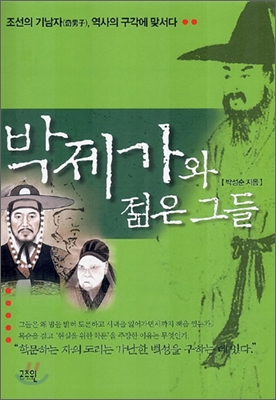
Book Introduction
A meeting and challenge of young people who dream of a new Joseon.
Park Je-ga, Lee Deok-mu, Hong Dae-yong, Baek Dong-soo...
And King Jeongjo.
A record of their beautiful friendship, empathy for ideals, challenges, and frustrations.
This is a historical book in the form of a biography that comprehensively examines the life of Park Je-ga, a figure from the late Joseon Dynasty. Through Park Je-ga's life, it fully captures the rise, development, and decline of the Silhak movement in the late Joseon Dynasty.
It consists of two parts, and the first part, 'Flowers in Bloom on Baektap', presents the beautiful relationship between Park Je-ga and his Baektap faction comrades who shared everything with him from his birth to his youth, the process of establishing the Northern Learning theory that led to the Northern Learning faction, and its detailed contents.
Part 2, “What Should I Fear When There Is Someone Who Understands,” deals with the reform activities of Park Je-ga, who was appointed as a proofreader at Gyujanggak with the approval of King Jeongjo and began to put the Northern Learning theory into practice in earnest, as well as the opposition of conservative forces and the frustration of the reform.
By tracing the life of Park Je-ga, this book does not simply list his life story, but examines the background of the Northern Learning theory that Park Je-ga and his friends devoted their lives to, its content, and how it was received in reality. It also describes in detail how it was connected to King Jeongjo's reformist politics and what results it brought about, thereby compiling into one volume the various historical implications implied by the figure of Park Je-ga.
Park Je-ga, Lee Deok-mu, Hong Dae-yong, Baek Dong-soo...
And King Jeongjo.
A record of their beautiful friendship, empathy for ideals, challenges, and frustrations.
This is a historical book in the form of a biography that comprehensively examines the life of Park Je-ga, a figure from the late Joseon Dynasty. Through Park Je-ga's life, it fully captures the rise, development, and decline of the Silhak movement in the late Joseon Dynasty.
It consists of two parts, and the first part, 'Flowers in Bloom on Baektap', presents the beautiful relationship between Park Je-ga and his Baektap faction comrades who shared everything with him from his birth to his youth, the process of establishing the Northern Learning theory that led to the Northern Learning faction, and its detailed contents.
Part 2, “What Should I Fear When There Is Someone Who Understands,” deals with the reform activities of Park Je-ga, who was appointed as a proofreader at Gyujanggak with the approval of King Jeongjo and began to put the Northern Learning theory into practice in earnest, as well as the opposition of conservative forces and the frustration of the reform.
By tracing the life of Park Je-ga, this book does not simply list his life story, but examines the background of the Northern Learning theory that Park Je-ga and his friends devoted their lives to, its content, and how it was received in reality. It also describes in detail how it was connected to King Jeongjo's reformist politics and what results it brought about, thereby compiling into one volume the various historical implications implied by the figure of Park Je-ga.
- You can preview some of the book's contents.
Preview
index
At the beginning of the book
Before we begin
Part 1: Flowers blooming on the White Pagoda
Young talented stuffed animal
Befriending loneliness
A meeting like Baek-ah and Jong-ja-gi
A fool who only reads books, Lee Deok-mu
The way to get along with people
The Swordsman Baek Dong-soo
Happy times
Meet Mr. Park Ji-won
The young ones
International scholar Hong Dae-yong
Re-recognition of China
People who don't believe in reality
The hypocrisy of the Sarim regime
Stuffed Animal Goes to the Qing Dynasty
The Birth of 『Bukhakui』
The purpose of learning
Part 2: If someone knows, what should I fear?
The establishment of Gyujanggak
Promotion of illegitimate children
unchanging customs
Special privileges given to Kyujanggak officials
The Chogye Moonshin System and Talent Development
Kyujanggak Inspectorate
Be well-versed in both literature and martial arts.
Publication of the 『Muye Dobo Tongji』
"Byeong-o So-hoe" and a closed society
Heartbreaking days
Submit an agricultural tax report
literary style revision
The death of King Jeongjo and Oh Hoe-yeon
dream
Appendix_Brief Biography and Representative Writings of Silhak Intellectuals of the Late Joseon Dynasty
References
English abstract
Search
Before we begin
Part 1: Flowers blooming on the White Pagoda
Young talented stuffed animal
Befriending loneliness
A meeting like Baek-ah and Jong-ja-gi
A fool who only reads books, Lee Deok-mu
The way to get along with people
The Swordsman Baek Dong-soo
Happy times
Meet Mr. Park Ji-won
The young ones
International scholar Hong Dae-yong
Re-recognition of China
People who don't believe in reality
The hypocrisy of the Sarim regime
Stuffed Animal Goes to the Qing Dynasty
The Birth of 『Bukhakui』
The purpose of learning
Part 2: If someone knows, what should I fear?
The establishment of Gyujanggak
Promotion of illegitimate children
unchanging customs
Special privileges given to Kyujanggak officials
The Chogye Moonshin System and Talent Development
Kyujanggak Inspectorate
Be well-versed in both literature and martial arts.
Publication of the 『Muye Dobo Tongji』
"Byeong-o So-hoe" and a closed society
Heartbreaking days
Submit an agricultural tax report
literary style revision
The death of King Jeongjo and Oh Hoe-yeon
dream
Appendix_Brief Biography and Representative Writings of Silhak Intellectuals of the Late Joseon Dynasty
References
English abstract
Search
Into the book
The boxes that the five-year-old stuffed toy had been playing with were piled high with palm-sized books, along with blunt brushes and leftover ink.
In addition to classics such as the 『Great Learning』, 『Mencius』, and 『Book of Songs』, difficult books such as 『Li Sao』, 『Jinhan Wenxian』, 『Du Shi』, 『Dang Shi』, 『Gong Shi Bo』, and 『Seok Ju O Yul』 were also included.
Although they were not all scattered and complete, they were books that the young boy read and personally criticized.
Park Jae-ga loved writing so much that he always carried a brush in his mouth.
Even when I went to the bathroom, I wrote in the sand, and whenever I sat down somewhere, I practiced writing in the air.
One summer day, while Park Je-ga was writing on a chalkboard, he crawled up on top of it naked.
The sweat that flowed from my knees and belly button made ink.
I used it to practice my handwriting by imitating the writing on the folding screen and hanging scroll.
It was imitation (臨摹), which involved copying someone else's handwriting to learn the writer's intentions contained in the shape or style of the letters.
After moving to Cheonggyo-dong (Euljiro 5-ga) in 1756, when he was seven years old, there was no white space left on the walls of the house because Park Je-ga practiced calligraphy there. (pp. 22-24)
This happened when Park Jae-ga was 18 years old.
Lee Deok-mu went to Baek Dong-su's house as usual.
The stream flowed from Namsan Mountain and meandered towards Baek Dong-su's house.
At that moment, a boy came out of the door and was seen walking north along the stream with a clever-looking gait.
He was wearing a white double-breasted outfit with a green belt and was walking leisurely, looking satisfied with himself.
The forehead is high, the eyes are full of curiosity, and the complexion is cheerful.
He was just like the 'gi-namja (a man with exceptional talent or wisdom)' who looked so handsome.
Lee Deok-mu had an intuition that he was the son of the Park family, Park Je-ga.
When Lee Deok-mu looked at the boy, he seemed to notice and looked at Lee Deok-mu.
Lee Deok-mu thought that this boy would definitely come to Baek Dong-soo's house to look for him.
Indeed, the boy approached Lee Deok-mu and wrote a plum blossom poem of about 500 characters and presented it to him.
It was an imitation of the atmosphere in which the gentlemen of old socialized.
Lee Deok-mu could clearly see that he had a strange talent.
Lee Deok-mu tried to throw a word at him as a test.
It was a test of the boy's integrity and chastity.
Through the reply he received, Lee Deok-mu felt that the boy's character and soul were shining.
Lee Deok-mu could not hide his joy.
The boy held his crowning ceremony that year and was given the name Jaeseon.
It was a stuffed animal that Lee Deok-mu had always been curious about.
The two quickly hit it off.
Park Je-ga seemed unable to speak to other people, but he spoke very well when he met Lee Deok-mu.
Lee Deok-mu also had difficulty understanding what other people were saying, but he was able to understand Park Je-ga's words very well.
Even though Park Jae-ga didn't want to speak, Lee Deok-mu was able to understand him.
The relationship between the two was like that of Baek-ah and Jong-ja-gi. (pp. 33-34)
Park Je-ga lamented that the Joseon people of the time were stuck in outdated stereotypes and were unable to actively accept new things.
“People today have corneas that are glued together with fish glue and lacquered, and no matter how hard they try, there is no way to remove them.
“The cornea of learning is firmly attached to learning, and the cornea of sentences is firmly attached to sentences.”
He pointed out that the Korean people were obsessed with stubborn prejudices and said how far their views were from reality because of these prejudices.
“Let’s put the big issue aside and get the horse out of the cart.
When we suggest using a cart, people say that our country has rugged mountains and blocked water, so carts cannot be used.
It is also said that the plaque at Shanhaiguan (the gateway to Liaodong) is in the handwriting of Li Si and can be seen from ten miles away.
Westerners say that when drawing people, they squeeze out the black pupils of the eyes and use them to create the eyes, so that the eyes look alive no matter where you look at them.
When braiding hair, some people braid one or two braids depending on whether their parents are alive, so it is said to be similar to the old way of braiding hair.
all.
And that's not all.
There is a theory that the emperor decides on the surnames of his subjects, and another theory that books are printed on clay tablets is also circulated.
“These kinds of rumors are so rampant that it is impossible to tell them all in detail.” (pp. 95-96)
Park Je-ga actively advocated commercial activities, which were looked down upon as the lowest of the three occupations in Joseon: scholars, farmers, artisans, and merchants.
“It is a very wise idea for Chinese people to become merchants when they are poor.
What about us?
There are too many things that we only know about on the surface and shake our heads in disapproval.
The nobles only eat and play, and do nothing.
No matter how poor a person is, if a nobleman farms in the fields, no one will recognize him.
So, even though they don't have a penny at home, they dress up in tall hats and sleeved clothes and just walk around and talk loudly.
So the market vendors also say that the rest of what they eat is dirty.
So, the Chinese who are into business are much better than us who only care about appearances.”
Since merchants are also one of the four classes of people, it was thought that those engaged in commerce, along with scholars, farmers, and artisans, should account for three-tenths of the total population.
The taxidermist asks himself.
"Why is our country in decline despite its frugality? Being frugal means not overusing things even when you have them. It doesn't mean giving up on things just because you don't have them."
The taxidermist concludes as follows:
“Wealth is like a well.
If you scoop it out, it will get cold, and if you don't use it, it will dry up.
“Just as there are no silk weavers in the country, there are no silk weavers in the country.” (pp. 114-115)
The Noron Byeokpa faction, which had been watching Jeongjo's political line with displeasure, was eagerly waiting for an opportunity to attack Jeongjo's right-wing member, Park Je-ga.
As it happened, the taxidermist's impudent behavior gave them a good excuse.
The stuffed animal's protruding forehead was enough to hint at his gun and stubbornness.
Even within the palace, he appeared to be unfamiliar with norms and formalities.
On February 25, 1797 (the 21st year of King Jeongjo's reign), Sim Hwan-ji, the leader of the Noron Byeokpa faction, requested the dismissal of Park Je-ga, who sat on a chair, ignoring the distinction of rank, during the king's procession.
When the king was in attendance, there was a distinction in the ranks of the chairs installed in the companion (civil officials) and the western section (military officials).
Civil officials could only sit on the chair if they were of the third rank, Cham-ui or higher, and military officials could only sit on the chair if they were of the second rank, A-jang or higher.
However, the impudent taxidermist ignored these court etiquettes.
On January 29, 1797 (the 21st year of King Jeongjo's reign), King Jeongjo went to Hwaseong Temporary Palace to pay his respects at Hyeonryungwon, the tomb of his father, Crown Prince Sado. At that time, Park Je-ga ignored his rank and sat on a chair among the ranks of high-ranking officials, which was the beginning of the incident.
Comrade Kyungyeonsa Sim Hwan-ji reported as follows:
“Recently, when (His Majesty) was visiting Won (Hyeonryungwon, the tomb of Crown Prince Sado), the former Chief of the Five Guards, Park Je-ga, was sitting in a royal chair among the ranks. I had a servant go and ask him about it. He suddenly became angry and said, ‘The chair was originally from our house, so I had a servant bring it over.’
His conduct is unjust and his speech is very harsh, so I cannot ignore it just because it is a small matter.
“Please fire the taxidermist.”
However, King Jeongjo rather supported Park Je-ga.
“The fact that the taxidermist’s reply was impolite is because he is originally reckless and does not know etiquette.
What is there to complain about?
From now on, we must clarify the old law again so that such abuses do not occur again.”
Despite the strict etiquette before the king, Jeongjo protected Park Je-ga, the magistrate of Yeongpyeong County, who held only a lowly position of the fifth rank.
In this regard, Lee Byeong-jeong, the Minister of Personnel, also took Sim Hwan-ji's side.
He also requested that a formal rule be established to ensure that no one below the third rank would be allowed to sit on the throne in the future, and King Jeongjo accepted this, thereby resolving the situation. (pp. 204-205)
In addition to classics such as the 『Great Learning』, 『Mencius』, and 『Book of Songs』, difficult books such as 『Li Sao』, 『Jinhan Wenxian』, 『Du Shi』, 『Dang Shi』, 『Gong Shi Bo』, and 『Seok Ju O Yul』 were also included.
Although they were not all scattered and complete, they were books that the young boy read and personally criticized.
Park Jae-ga loved writing so much that he always carried a brush in his mouth.
Even when I went to the bathroom, I wrote in the sand, and whenever I sat down somewhere, I practiced writing in the air.
One summer day, while Park Je-ga was writing on a chalkboard, he crawled up on top of it naked.
The sweat that flowed from my knees and belly button made ink.
I used it to practice my handwriting by imitating the writing on the folding screen and hanging scroll.
It was imitation (臨摹), which involved copying someone else's handwriting to learn the writer's intentions contained in the shape or style of the letters.
After moving to Cheonggyo-dong (Euljiro 5-ga) in 1756, when he was seven years old, there was no white space left on the walls of the house because Park Je-ga practiced calligraphy there. (pp. 22-24)
This happened when Park Jae-ga was 18 years old.
Lee Deok-mu went to Baek Dong-su's house as usual.
The stream flowed from Namsan Mountain and meandered towards Baek Dong-su's house.
At that moment, a boy came out of the door and was seen walking north along the stream with a clever-looking gait.
He was wearing a white double-breasted outfit with a green belt and was walking leisurely, looking satisfied with himself.
The forehead is high, the eyes are full of curiosity, and the complexion is cheerful.
He was just like the 'gi-namja (a man with exceptional talent or wisdom)' who looked so handsome.
Lee Deok-mu had an intuition that he was the son of the Park family, Park Je-ga.
When Lee Deok-mu looked at the boy, he seemed to notice and looked at Lee Deok-mu.
Lee Deok-mu thought that this boy would definitely come to Baek Dong-soo's house to look for him.
Indeed, the boy approached Lee Deok-mu and wrote a plum blossom poem of about 500 characters and presented it to him.
It was an imitation of the atmosphere in which the gentlemen of old socialized.
Lee Deok-mu could clearly see that he had a strange talent.
Lee Deok-mu tried to throw a word at him as a test.
It was a test of the boy's integrity and chastity.
Through the reply he received, Lee Deok-mu felt that the boy's character and soul were shining.
Lee Deok-mu could not hide his joy.
The boy held his crowning ceremony that year and was given the name Jaeseon.
It was a stuffed animal that Lee Deok-mu had always been curious about.
The two quickly hit it off.
Park Je-ga seemed unable to speak to other people, but he spoke very well when he met Lee Deok-mu.
Lee Deok-mu also had difficulty understanding what other people were saying, but he was able to understand Park Je-ga's words very well.
Even though Park Jae-ga didn't want to speak, Lee Deok-mu was able to understand him.
The relationship between the two was like that of Baek-ah and Jong-ja-gi. (pp. 33-34)
Park Je-ga lamented that the Joseon people of the time were stuck in outdated stereotypes and were unable to actively accept new things.
“People today have corneas that are glued together with fish glue and lacquered, and no matter how hard they try, there is no way to remove them.
“The cornea of learning is firmly attached to learning, and the cornea of sentences is firmly attached to sentences.”
He pointed out that the Korean people were obsessed with stubborn prejudices and said how far their views were from reality because of these prejudices.
“Let’s put the big issue aside and get the horse out of the cart.
When we suggest using a cart, people say that our country has rugged mountains and blocked water, so carts cannot be used.
It is also said that the plaque at Shanhaiguan (the gateway to Liaodong) is in the handwriting of Li Si and can be seen from ten miles away.
Westerners say that when drawing people, they squeeze out the black pupils of the eyes and use them to create the eyes, so that the eyes look alive no matter where you look at them.
When braiding hair, some people braid one or two braids depending on whether their parents are alive, so it is said to be similar to the old way of braiding hair.
all.
And that's not all.
There is a theory that the emperor decides on the surnames of his subjects, and another theory that books are printed on clay tablets is also circulated.
“These kinds of rumors are so rampant that it is impossible to tell them all in detail.” (pp. 95-96)
Park Je-ga actively advocated commercial activities, which were looked down upon as the lowest of the three occupations in Joseon: scholars, farmers, artisans, and merchants.
“It is a very wise idea for Chinese people to become merchants when they are poor.
What about us?
There are too many things that we only know about on the surface and shake our heads in disapproval.
The nobles only eat and play, and do nothing.
No matter how poor a person is, if a nobleman farms in the fields, no one will recognize him.
So, even though they don't have a penny at home, they dress up in tall hats and sleeved clothes and just walk around and talk loudly.
So the market vendors also say that the rest of what they eat is dirty.
So, the Chinese who are into business are much better than us who only care about appearances.”
Since merchants are also one of the four classes of people, it was thought that those engaged in commerce, along with scholars, farmers, and artisans, should account for three-tenths of the total population.
The taxidermist asks himself.
"Why is our country in decline despite its frugality? Being frugal means not overusing things even when you have them. It doesn't mean giving up on things just because you don't have them."
The taxidermist concludes as follows:
“Wealth is like a well.
If you scoop it out, it will get cold, and if you don't use it, it will dry up.
“Just as there are no silk weavers in the country, there are no silk weavers in the country.” (pp. 114-115)
The Noron Byeokpa faction, which had been watching Jeongjo's political line with displeasure, was eagerly waiting for an opportunity to attack Jeongjo's right-wing member, Park Je-ga.
As it happened, the taxidermist's impudent behavior gave them a good excuse.
The stuffed animal's protruding forehead was enough to hint at his gun and stubbornness.
Even within the palace, he appeared to be unfamiliar with norms and formalities.
On February 25, 1797 (the 21st year of King Jeongjo's reign), Sim Hwan-ji, the leader of the Noron Byeokpa faction, requested the dismissal of Park Je-ga, who sat on a chair, ignoring the distinction of rank, during the king's procession.
When the king was in attendance, there was a distinction in the ranks of the chairs installed in the companion (civil officials) and the western section (military officials).
Civil officials could only sit on the chair if they were of the third rank, Cham-ui or higher, and military officials could only sit on the chair if they were of the second rank, A-jang or higher.
However, the impudent taxidermist ignored these court etiquettes.
On January 29, 1797 (the 21st year of King Jeongjo's reign), King Jeongjo went to Hwaseong Temporary Palace to pay his respects at Hyeonryungwon, the tomb of his father, Crown Prince Sado. At that time, Park Je-ga ignored his rank and sat on a chair among the ranks of high-ranking officials, which was the beginning of the incident.
Comrade Kyungyeonsa Sim Hwan-ji reported as follows:
“Recently, when (His Majesty) was visiting Won (Hyeonryungwon, the tomb of Crown Prince Sado), the former Chief of the Five Guards, Park Je-ga, was sitting in a royal chair among the ranks. I had a servant go and ask him about it. He suddenly became angry and said, ‘The chair was originally from our house, so I had a servant bring it over.’
His conduct is unjust and his speech is very harsh, so I cannot ignore it just because it is a small matter.
“Please fire the taxidermist.”
However, King Jeongjo rather supported Park Je-ga.
“The fact that the taxidermist’s reply was impolite is because he is originally reckless and does not know etiquette.
What is there to complain about?
From now on, we must clarify the old law again so that such abuses do not occur again.”
Despite the strict etiquette before the king, Jeongjo protected Park Je-ga, the magistrate of Yeongpyeong County, who held only a lowly position of the fifth rank.
In this regard, Lee Byeong-jeong, the Minister of Personnel, also took Sim Hwan-ji's side.
He also requested that a formal rule be established to ensure that no one below the third rank would be allowed to sit on the throne in the future, and King Jeongjo accepted this, thereby resolving the situation. (pp. 204-205)
--- From the text
Publisher's Review
Park Je-ga, well known as the Northern Learning School of the late Joseon Dynasty, his teacher Park Ji-won, close friends Lee Deok-mu, Baek Dong-su, Hong Dae-yong…
Those who gathered around the Baektap spent the night discussing and writing books, even losing their eyesight.
What were they pursuing?
What efforts did they make to achieve their goal, and what results did they achieve?
* A record of the beautiful friendships, sympathy for ideals, challenges and frustrations of the young people who dreamed of a new Joseon.
Park Cho-jeong (朴楚亭) is an outstanding writer of the Eastern country.
Although he was short in stature, he possessed a strong and dignified presence, and was overflowing with talent and humanity.
Because he studied the excellent poems above and collected the writings of a hundred schools of thought, the writing style he used was beautiful, like starlight, had a solid energy like a seashell, and was as auspicious as the water of the water palace where the dragon lives.
How could this not be a truly remarkable sentence! However, he lacked the strength to rise on his own, so in the end, very few people recognized him. (Page 21)
Li Zhaoyuan (李調元), a Qing Dynasty scholar who was considered one of the greatest intellectuals of his time, commented on Park Je-ga as follows:
Park Je-ga, a representative scholar of Northern Learning in the 18th century.
There are over 50 papers with his name in the title, and the number of translated books of his representative work, 『Bukhakui (北學議)』, is approaching 10 volumes.
There are over 100 books and papers that mention stuffed animals, so we can guess at their status.
When looking at the life of Park Je-ga, it is no exaggeration to say that his body contains the entire process of the rise, development, and fall of the Silhak movement in the late Joseon Dynasty.
This book is the first to comprehensively overview the life of Park Je-ga, a significant figure of Joseon's "Ginnamja" (page 33).
Part 1, 'Flowers in the White Pagoda', presents the beautiful friendship between Park Je-ga and his fellow members of the White Pagoda, with whom he shared everything from his birth to his youth, and the process of establishing the Northern Learning theory that led to the creation of the Northern Learning School, along with its detailed contents.
Part 2, “What Should I Fear When There Is Someone Who Understands,” deals with the reform activities of Park Je-ga, who was appointed as a proofreader at Gyujanggak with the approval of King Jeongjo and began to put the Northern Learning theory into practice in earnest, as well as the opposition of conservative forces and the frustration of the reform.
When talking about Park Je-ga, we cannot leave out the figures of the Northern Learning School who shared his views, such as Park Ji-won, Lee Deok-mu, Hong Dae-yong, and Baek Dong-su, and the story of King Jeongjo who recognized and promoted them and embarked on the path of reform.
In addition, we cannot leave out the specific content of the Northern Learning theory advocated by Park Je-ga and his friends.
This book does not simply list the life of Park Je-ga by tracing his life, but examines the background of the Northern Learning theory that Park Je-ga and his friends devoted their lives to advocating, its contents, and how it was received in reality. It also describes in detail how it was connected to King Jeongjo's reformist politics and what results it brought about, thereby compiling into one volume the various historical meanings implied by the figure of Park Je-ga.
* The life of a taxidermist
“A buffalo-like forehead, blade-like eyebrows, black eyes, and white ears.” This is a self-portrait drawn by Park Jae-ga in his twenties.
In his “Small Biography” written when he was twenty-seven (1776), Bak Je-ga expressed his outlook on life and values as follows:
They only choose lonely and noble people and become especially close to them, and they become distant from the powerful and wealthy even when they only see them from afar.
So, they always live in poverty without anyone to match their wishes.
As a child, he learned the writings of a man of letters, and as an adult, he liked the study of governing the country and saving the people.
I've been trying for months without coming home, but now no one notices.
He now shares his heart with the most famous people, and does not give up what he has to work hard for in the world.
Consider and synthesize the principles of fortune telling, and immerse yourself in profound thoughts.
They confide in people from a hundred generations ago, and they run wild in distant lands thousands of miles away. (Page 27)
Park Je-ga, born in 1750 as the illegitimate son of Seungji Park Pyeong, was renowned for his talents in poetry, calligraphy, and painting from a young age. As a young man, he consciously avoided power and wealth and devoted himself to establishing a theory of statecraft.
His main question was, 'How can we eradicate poverty in Joseon?'
After visiting Yanjing in the Qing Dynasty in 1778, he wrote "Bukhakui" in which he emphasized the importance of welfare and went on to say that noblemen who did not work should be eliminated.
For him, a scholar's life was something sacred that had to be dedicated to saving the poor people and the country.
In 1779, Park Je-ga was recognized by King Jeongjo and appointed as a proofreader at Gyujanggak despite being of illegitimate birth. He became associated with Jeongjo's reformist politics and proposed many policies for social reform.
He devoted his life to transforming the rigid and closed Joseon society into an open and rational society, and he had no fear in expressing his will.
He was criticized as a "Tang Gui" (唐魁), meaning a person with a Chinese disease, for his strong insistence that the advanced civilization of the Qing Dynasty should be emulated, but he paid no attention to it.
It is well known that Chusa Kim Jeong-hui learned writing from Park Je-ga and that he became interested in Northern Learning under the influence of this teacher.
However, Park Je-ga's actions completely turned the conservative forces, who were in power at the time, into enemies, and Park Je-ga, who was ultimately unable to overcome this wall, was unable to further his ambitions with the death of King Jeongjo.
* Young ones
Park Je-ga maintained close friendships and academic exchanges that transcended blood ties with the Baektap School of writers.
The Baektap faction, also known as Yeonam Ilpa or Bukhakpa, refers to a group of scholars centered around Yeonam Park Ji-won, and Baektap is a ten-story stone pagoda at Wonkaksa Temple located in the current Tapgol Park.
Representative figures include Lee Deok-mu, Yu Deuk-gong, and Lee Seo-gu, and Park Je-ga expressed what kind of people these friends were in a poem: “Brothers with different temperaments/ A couple who do not live in the same room/ If a person is without a friend even for a day/ It is as if he has lost both his left and right hands” (p. 71).
These people, centered around Park Ji-won, studied under the eaves of a house with a leaky roof and snow falling, and they also discussed by clapping their hands while heating alcohol and picking out sparks from lamps.
It was a process of polishing to improve the reality of Joseon.
The result was the ‘Northern Learning Theory’.
* Proclamation of the Northern Learning Theory
The Baektap faction rejected the prevailing ideology of China as a Sino-Korean ideology at the time and believed that Joseon needed to acquire the necessary substance to become a true Sino-Korean nation.
To achieve this, it was thought that much had to be learned from the Qing Dynasty, and this was the theory of learning from the North (北學論).
Originally, 'Bukhak' was defined in the "Dengwen Factory District" of the Mencius, "I have heard that barbarians were transformed by Chinese culture, but I have never heard that Chinese culture was transformed by barbarians.
Chen Liang was from the state of Chu.
He liked the teachings of the Duke of Zhou and Confucius, so he went to northern China to study.
As a result, among the scholars of the North, there was no one better than Jinryang (I have never heard of a person who changed from a barbarian to a barbarian.
This is a phrase from an article that says, “Chen Liang, Chu Xing也, Gao Zhou Gong仲尼之道, Bukhak於中國, Buk方之學者, 未能或之先也.”
After Park Je-ga cited this passage in 1778 and named his book, which advocated learning Chinese culture, “Bukhakui (北學議),” Bukhaku became established as a term representing the Baektap School.
Their thoughts were completely different from the ideas of the Sino-Korean War and the theory of loyalty to the Ming Dynasty that had been passed down from the Northern Expedition at the time.
At that time, Joseon's ideological world was extremely rigid.
Even when interpreting the classics in a unique way rather than following Zhu Xi's teachings, they were branded as "traitors of the literary world."
Even the intellectuals of the Baektap faction were frankly afraid of the criticism they would face if they made claims that ran counter to the Great Ming's theory of duty.
So they needed the justification and logic of the Northern Learning Theory.
Such logic was well-organized in Park Ji-won's "Ilshin Supil (馹?隨筆)" of "Yeolha Diary."
The logic of Bukhak was largely threefold.
First, he emphasized an open attitude that anything that is for the people and the country should be actively accepted without questioning its source.
Second, he showed the idea that the civilization that the Qing Dynasty currently enjoys is not that of barbarians, but the essence of Chinese civilization that has been passed down from the beginning.
Third, the ultimate goal that Joseon was trying to achieve through Northern Learning was to cultivate practical power to repel the traitors, and this was ultimately not in conflict with the Northern Expedition theory or the theory of loyalty to the Ming Dynasty.
Using the justification of this Northern Learning theory, the Northern Learning faction of the Baektap School insisted on immediate acceptance of the utilitarian lifestyle and the welfare facilities that supported the prosperity of the Qing Dynasty.
Park Je-ga specifically addressed a wide range of topics in his 『Bukhakui』, including the importance of commerce and distribution, the use of carts and ships, the expansion of the road network, the introduction of technology and machinery, the standardization of weights and measures, and the liberalization of society.
In particular, the emphasis on active distribution of goods using carts and trade with foreign countries has a very important ideological significance in that it directly points out the problems with the Joseon government's financial management method ('frugality' policy, see p. 121) that had been passed down since the founding of the nation.
The scholars of the Northern Learning School believed that the theory of self-cultivation alone, which had been advocated by the majority of Neo-Confucian scholars in Joseon society, to preserve the good nature of human beings endowed by heaven, could not stabilize the people's livelihood.
Basically, it was believed that only after enriching the lives of the people could the achievement of the virtues pursued in Neo-Confucianism be possible.
If we recall that Confucius also said that the fundamental needs of humans were food and sex, that is, basic economic stability and the reproduction of offspring through harmony between men and women, we can see that their economic theories went beyond the narrow confines of Neo-Confucianism and aimed for the position of original Confucianism preached by Confucius.
This overturned the Neo-Confucian position that emphasized moral primacy and emphasized the typical Confucian worldly stance of pursuing moral perfection on a basic economic foundation. (p. 123)
* King Jeongjo and the Four Inspections of Gyujanggak
In order to overcome the evils of the Tangpyeong politics of the Yeongjo era and to achieve reform, King Jeongjo established Gyujanggak as a policy tool, advocating the Cheongron (淸論) orientation of favoring scholars and conducting politics based on academic research as a political principle.
The role of Gyujanggak was to enshrine the royal writings and royal appeals of past emperors and to collect and compile ancient and modern books, but its internal purpose was to cultivate talents who would support King Jeongjo's politics, generate information, and conduct policy research.
In short, Gyujanggak was the headquarters of Jeongjo's reformist politics, comparable to Jiphyeonjeon during the reign of King Sejong.
Furthermore, King Jeongjo, based on his reformist logic, sought to gather talented individuals and develop them into princely figures, including men of letters who were born to illegitimate children.
Thus, four scholars of illegitimate birth, Park Je-ga, Lee Deok-mu, Yu Deuk-gong, and Seo Ri-su, were appointed as inspectors of the Gyujanggak.
Although the inspector was a low-ranking official of the 7th rank or lower, he was in charge of the very important work of writing letters to the king, drying books in the sun, and editing, proofreading, and correcting all the royal records, calendars, daily records, and command texts that came out of the cabinet (Gyujanggak). In fact, he was also responsible for the duty of a historian who recorded the king's every move.
King Jeongjo's love for his censors was extreme, and he cherished and cared for Park Je-ga more than anyone else.
King Jeongjo called Park Je-ga a scholar without equal, and once compared him to Wang An-shi, a reform politician of the Song Dynasty.
* The book of poems presented by the stuffed animal to the king
Bak Je-ga took advantage of the fact that he was in the King's good graces to express his views on state affairs whenever he had the opportunity.
On January 22nd of the year of Byung-o, he submitted his thoughts on the policy he had been thinking about (see “Byeong-o So-hoe,” p. 183). In it, Park Je-ga advocated trade with China, the theory of inviting Western scholars, and the theory of nurturing talent through studying in China, and said, “Those who just sit idle are the biggest bugs in the country.”
“The reason why the number of people who just eat and drink is increasing is because the nobility is prospering by the day,” he said, and insisted that this nobility should be encouraged to engage in business and trade so that they can enjoy their livelihood, and that their excessively strong authority should be reduced.
In 1798, Park Je-ga selected several articles related to farming from the inner and outer sections of 『Bukhakui』, added several new articles related to farming, and presented them to the king.
It was a genuine copy of 『Bukhakui』 with 47 articles in 27 items in total.
Along with this, he wrote “Eungji Jinbukhak Uiso (應旨進北學議疏)” and separately described the core of agricultural promotion.
Here, the stuffed animals were put forward as arguments for eliminating Confucian scholars, for using carts as common vehicles, for learning how to make agricultural implements and tools from China, for establishing agricultural experiment stations, and for stockpiling 300,000 sacks of rice.
This claim was groundbreaking at the time.
Even King Jeongjo compared Park Je-ga to Wang An-shi, a radical reformer from the Song Dynasty, so it was highly unlikely that the Joseon literati, who were obsessed with outdated family ideologies and the Huai view, would tolerate such a claim.
King Jeongjo died suddenly 28 days after the Ohoeyeongyo, which denied the political justification of the Noron Byeokpa faction, which was in power at the time, and declared a new national course.
The stuffed animal now had to give up its ideals.
* Current meaning
In his previous work, “The Scholar’s Betrayal,” the author revealed the true nature of the Sarim faction in the late Joseon Dynasty and deeply diagnosed their influence on our society.
In this book, “Park Je-ga and the Young Ones,” he writes about the lives of Park Je-ga and the Silhak scholars who advocated “study of utility and welfare” in opposition to the Sarim faction, and says the following.
By tracing the life of Park Je-ga, I was able to encounter the academic views held by Silhak scholars of the late Joseon Dynasty.
They all believed that scholarship should be realistic and practical.
He did not hesitate to make extreme remarks, such as that those scholars who study things that do not help in reality should be eliminated.
I wondered if there were any people who thought more seriously about the current meaning and role of academia.
Through their noble lives, we were able to reflect on various issues regarding our attitude toward learning, such as whether we are lining up for personal advancement using shallow knowledge as a foundation, whether we are weighing our own interests while looking at the world's opinion while weakening the spirit of young scholars, and whether we are using learning as a means to deceive ourselves and the world through sophistry.
Although Bak Je-ga's practical learning attitude was not successful in his time, I believe it is an academic attitude that is still desperately needed today.
In the 21st century, we anticipate the rise of a new Silhak (practical learning) and envision a future for our society that will be even better than it is today. (Page 8)
Those who gathered around the Baektap spent the night discussing and writing books, even losing their eyesight.
What were they pursuing?
What efforts did they make to achieve their goal, and what results did they achieve?
* A record of the beautiful friendships, sympathy for ideals, challenges and frustrations of the young people who dreamed of a new Joseon.
Park Cho-jeong (朴楚亭) is an outstanding writer of the Eastern country.
Although he was short in stature, he possessed a strong and dignified presence, and was overflowing with talent and humanity.
Because he studied the excellent poems above and collected the writings of a hundred schools of thought, the writing style he used was beautiful, like starlight, had a solid energy like a seashell, and was as auspicious as the water of the water palace where the dragon lives.
How could this not be a truly remarkable sentence! However, he lacked the strength to rise on his own, so in the end, very few people recognized him. (Page 21)
Li Zhaoyuan (李調元), a Qing Dynasty scholar who was considered one of the greatest intellectuals of his time, commented on Park Je-ga as follows:
Park Je-ga, a representative scholar of Northern Learning in the 18th century.
There are over 50 papers with his name in the title, and the number of translated books of his representative work, 『Bukhakui (北學議)』, is approaching 10 volumes.
There are over 100 books and papers that mention stuffed animals, so we can guess at their status.
When looking at the life of Park Je-ga, it is no exaggeration to say that his body contains the entire process of the rise, development, and fall of the Silhak movement in the late Joseon Dynasty.
This book is the first to comprehensively overview the life of Park Je-ga, a significant figure of Joseon's "Ginnamja" (page 33).
Part 1, 'Flowers in the White Pagoda', presents the beautiful friendship between Park Je-ga and his fellow members of the White Pagoda, with whom he shared everything from his birth to his youth, and the process of establishing the Northern Learning theory that led to the creation of the Northern Learning School, along with its detailed contents.
Part 2, “What Should I Fear When There Is Someone Who Understands,” deals with the reform activities of Park Je-ga, who was appointed as a proofreader at Gyujanggak with the approval of King Jeongjo and began to put the Northern Learning theory into practice in earnest, as well as the opposition of conservative forces and the frustration of the reform.
When talking about Park Je-ga, we cannot leave out the figures of the Northern Learning School who shared his views, such as Park Ji-won, Lee Deok-mu, Hong Dae-yong, and Baek Dong-su, and the story of King Jeongjo who recognized and promoted them and embarked on the path of reform.
In addition, we cannot leave out the specific content of the Northern Learning theory advocated by Park Je-ga and his friends.
This book does not simply list the life of Park Je-ga by tracing his life, but examines the background of the Northern Learning theory that Park Je-ga and his friends devoted their lives to advocating, its contents, and how it was received in reality. It also describes in detail how it was connected to King Jeongjo's reformist politics and what results it brought about, thereby compiling into one volume the various historical meanings implied by the figure of Park Je-ga.
* The life of a taxidermist
“A buffalo-like forehead, blade-like eyebrows, black eyes, and white ears.” This is a self-portrait drawn by Park Jae-ga in his twenties.
In his “Small Biography” written when he was twenty-seven (1776), Bak Je-ga expressed his outlook on life and values as follows:
They only choose lonely and noble people and become especially close to them, and they become distant from the powerful and wealthy even when they only see them from afar.
So, they always live in poverty without anyone to match their wishes.
As a child, he learned the writings of a man of letters, and as an adult, he liked the study of governing the country and saving the people.
I've been trying for months without coming home, but now no one notices.
He now shares his heart with the most famous people, and does not give up what he has to work hard for in the world.
Consider and synthesize the principles of fortune telling, and immerse yourself in profound thoughts.
They confide in people from a hundred generations ago, and they run wild in distant lands thousands of miles away. (Page 27)
Park Je-ga, born in 1750 as the illegitimate son of Seungji Park Pyeong, was renowned for his talents in poetry, calligraphy, and painting from a young age. As a young man, he consciously avoided power and wealth and devoted himself to establishing a theory of statecraft.
His main question was, 'How can we eradicate poverty in Joseon?'
After visiting Yanjing in the Qing Dynasty in 1778, he wrote "Bukhakui" in which he emphasized the importance of welfare and went on to say that noblemen who did not work should be eliminated.
For him, a scholar's life was something sacred that had to be dedicated to saving the poor people and the country.
In 1779, Park Je-ga was recognized by King Jeongjo and appointed as a proofreader at Gyujanggak despite being of illegitimate birth. He became associated with Jeongjo's reformist politics and proposed many policies for social reform.
He devoted his life to transforming the rigid and closed Joseon society into an open and rational society, and he had no fear in expressing his will.
He was criticized as a "Tang Gui" (唐魁), meaning a person with a Chinese disease, for his strong insistence that the advanced civilization of the Qing Dynasty should be emulated, but he paid no attention to it.
It is well known that Chusa Kim Jeong-hui learned writing from Park Je-ga and that he became interested in Northern Learning under the influence of this teacher.
However, Park Je-ga's actions completely turned the conservative forces, who were in power at the time, into enemies, and Park Je-ga, who was ultimately unable to overcome this wall, was unable to further his ambitions with the death of King Jeongjo.
* Young ones
Park Je-ga maintained close friendships and academic exchanges that transcended blood ties with the Baektap School of writers.
The Baektap faction, also known as Yeonam Ilpa or Bukhakpa, refers to a group of scholars centered around Yeonam Park Ji-won, and Baektap is a ten-story stone pagoda at Wonkaksa Temple located in the current Tapgol Park.
Representative figures include Lee Deok-mu, Yu Deuk-gong, and Lee Seo-gu, and Park Je-ga expressed what kind of people these friends were in a poem: “Brothers with different temperaments/ A couple who do not live in the same room/ If a person is without a friend even for a day/ It is as if he has lost both his left and right hands” (p. 71).
These people, centered around Park Ji-won, studied under the eaves of a house with a leaky roof and snow falling, and they also discussed by clapping their hands while heating alcohol and picking out sparks from lamps.
It was a process of polishing to improve the reality of Joseon.
The result was the ‘Northern Learning Theory’.
* Proclamation of the Northern Learning Theory
The Baektap faction rejected the prevailing ideology of China as a Sino-Korean ideology at the time and believed that Joseon needed to acquire the necessary substance to become a true Sino-Korean nation.
To achieve this, it was thought that much had to be learned from the Qing Dynasty, and this was the theory of learning from the North (北學論).
Originally, 'Bukhak' was defined in the "Dengwen Factory District" of the Mencius, "I have heard that barbarians were transformed by Chinese culture, but I have never heard that Chinese culture was transformed by barbarians.
Chen Liang was from the state of Chu.
He liked the teachings of the Duke of Zhou and Confucius, so he went to northern China to study.
As a result, among the scholars of the North, there was no one better than Jinryang (I have never heard of a person who changed from a barbarian to a barbarian.
This is a phrase from an article that says, “Chen Liang, Chu Xing也, Gao Zhou Gong仲尼之道, Bukhak於中國, Buk方之學者, 未能或之先也.”
After Park Je-ga cited this passage in 1778 and named his book, which advocated learning Chinese culture, “Bukhakui (北學議),” Bukhaku became established as a term representing the Baektap School.
Their thoughts were completely different from the ideas of the Sino-Korean War and the theory of loyalty to the Ming Dynasty that had been passed down from the Northern Expedition at the time.
At that time, Joseon's ideological world was extremely rigid.
Even when interpreting the classics in a unique way rather than following Zhu Xi's teachings, they were branded as "traitors of the literary world."
Even the intellectuals of the Baektap faction were frankly afraid of the criticism they would face if they made claims that ran counter to the Great Ming's theory of duty.
So they needed the justification and logic of the Northern Learning Theory.
Such logic was well-organized in Park Ji-won's "Ilshin Supil (馹?隨筆)" of "Yeolha Diary."
The logic of Bukhak was largely threefold.
First, he emphasized an open attitude that anything that is for the people and the country should be actively accepted without questioning its source.
Second, he showed the idea that the civilization that the Qing Dynasty currently enjoys is not that of barbarians, but the essence of Chinese civilization that has been passed down from the beginning.
Third, the ultimate goal that Joseon was trying to achieve through Northern Learning was to cultivate practical power to repel the traitors, and this was ultimately not in conflict with the Northern Expedition theory or the theory of loyalty to the Ming Dynasty.
Using the justification of this Northern Learning theory, the Northern Learning faction of the Baektap School insisted on immediate acceptance of the utilitarian lifestyle and the welfare facilities that supported the prosperity of the Qing Dynasty.
Park Je-ga specifically addressed a wide range of topics in his 『Bukhakui』, including the importance of commerce and distribution, the use of carts and ships, the expansion of the road network, the introduction of technology and machinery, the standardization of weights and measures, and the liberalization of society.
In particular, the emphasis on active distribution of goods using carts and trade with foreign countries has a very important ideological significance in that it directly points out the problems with the Joseon government's financial management method ('frugality' policy, see p. 121) that had been passed down since the founding of the nation.
The scholars of the Northern Learning School believed that the theory of self-cultivation alone, which had been advocated by the majority of Neo-Confucian scholars in Joseon society, to preserve the good nature of human beings endowed by heaven, could not stabilize the people's livelihood.
Basically, it was believed that only after enriching the lives of the people could the achievement of the virtues pursued in Neo-Confucianism be possible.
If we recall that Confucius also said that the fundamental needs of humans were food and sex, that is, basic economic stability and the reproduction of offspring through harmony between men and women, we can see that their economic theories went beyond the narrow confines of Neo-Confucianism and aimed for the position of original Confucianism preached by Confucius.
This overturned the Neo-Confucian position that emphasized moral primacy and emphasized the typical Confucian worldly stance of pursuing moral perfection on a basic economic foundation. (p. 123)
* King Jeongjo and the Four Inspections of Gyujanggak
In order to overcome the evils of the Tangpyeong politics of the Yeongjo era and to achieve reform, King Jeongjo established Gyujanggak as a policy tool, advocating the Cheongron (淸論) orientation of favoring scholars and conducting politics based on academic research as a political principle.
The role of Gyujanggak was to enshrine the royal writings and royal appeals of past emperors and to collect and compile ancient and modern books, but its internal purpose was to cultivate talents who would support King Jeongjo's politics, generate information, and conduct policy research.
In short, Gyujanggak was the headquarters of Jeongjo's reformist politics, comparable to Jiphyeonjeon during the reign of King Sejong.
Furthermore, King Jeongjo, based on his reformist logic, sought to gather talented individuals and develop them into princely figures, including men of letters who were born to illegitimate children.
Thus, four scholars of illegitimate birth, Park Je-ga, Lee Deok-mu, Yu Deuk-gong, and Seo Ri-su, were appointed as inspectors of the Gyujanggak.
Although the inspector was a low-ranking official of the 7th rank or lower, he was in charge of the very important work of writing letters to the king, drying books in the sun, and editing, proofreading, and correcting all the royal records, calendars, daily records, and command texts that came out of the cabinet (Gyujanggak). In fact, he was also responsible for the duty of a historian who recorded the king's every move.
King Jeongjo's love for his censors was extreme, and he cherished and cared for Park Je-ga more than anyone else.
King Jeongjo called Park Je-ga a scholar without equal, and once compared him to Wang An-shi, a reform politician of the Song Dynasty.
* The book of poems presented by the stuffed animal to the king
Bak Je-ga took advantage of the fact that he was in the King's good graces to express his views on state affairs whenever he had the opportunity.
On January 22nd of the year of Byung-o, he submitted his thoughts on the policy he had been thinking about (see “Byeong-o So-hoe,” p. 183). In it, Park Je-ga advocated trade with China, the theory of inviting Western scholars, and the theory of nurturing talent through studying in China, and said, “Those who just sit idle are the biggest bugs in the country.”
“The reason why the number of people who just eat and drink is increasing is because the nobility is prospering by the day,” he said, and insisted that this nobility should be encouraged to engage in business and trade so that they can enjoy their livelihood, and that their excessively strong authority should be reduced.
In 1798, Park Je-ga selected several articles related to farming from the inner and outer sections of 『Bukhakui』, added several new articles related to farming, and presented them to the king.
It was a genuine copy of 『Bukhakui』 with 47 articles in 27 items in total.
Along with this, he wrote “Eungji Jinbukhak Uiso (應旨進北學議疏)” and separately described the core of agricultural promotion.
Here, the stuffed animals were put forward as arguments for eliminating Confucian scholars, for using carts as common vehicles, for learning how to make agricultural implements and tools from China, for establishing agricultural experiment stations, and for stockpiling 300,000 sacks of rice.
This claim was groundbreaking at the time.
Even King Jeongjo compared Park Je-ga to Wang An-shi, a radical reformer from the Song Dynasty, so it was highly unlikely that the Joseon literati, who were obsessed with outdated family ideologies and the Huai view, would tolerate such a claim.
King Jeongjo died suddenly 28 days after the Ohoeyeongyo, which denied the political justification of the Noron Byeokpa faction, which was in power at the time, and declared a new national course.
The stuffed animal now had to give up its ideals.
* Current meaning
In his previous work, “The Scholar’s Betrayal,” the author revealed the true nature of the Sarim faction in the late Joseon Dynasty and deeply diagnosed their influence on our society.
In this book, “Park Je-ga and the Young Ones,” he writes about the lives of Park Je-ga and the Silhak scholars who advocated “study of utility and welfare” in opposition to the Sarim faction, and says the following.
By tracing the life of Park Je-ga, I was able to encounter the academic views held by Silhak scholars of the late Joseon Dynasty.
They all believed that scholarship should be realistic and practical.
He did not hesitate to make extreme remarks, such as that those scholars who study things that do not help in reality should be eliminated.
I wondered if there were any people who thought more seriously about the current meaning and role of academia.
Through their noble lives, we were able to reflect on various issues regarding our attitude toward learning, such as whether we are lining up for personal advancement using shallow knowledge as a foundation, whether we are weighing our own interests while looking at the world's opinion while weakening the spirit of young scholars, and whether we are using learning as a means to deceive ourselves and the world through sophistry.
Although Bak Je-ga's practical learning attitude was not successful in his time, I believe it is an academic attitude that is still desperately needed today.
In the 21st century, we anticipate the rise of a new Silhak (practical learning) and envision a future for our society that will be even better than it is today. (Page 8)
GOODS SPECIFICS
- Date of issue: April 20, 2006
- Page count, weight, size: 247 pages | 453g | 153*224*20mm
- ISBN13: 9788991319622
- ISBN10: 8991319629
You may also like
카테고리
korean


korean

![GQ KOREA Mark (Monthly): December [2025]](http://librairie.coreenne.fr/cdn/shop/files/8ef265dbbfbf186523ed75ba7319009d.jpg?v=1765340328&width=3840)


