

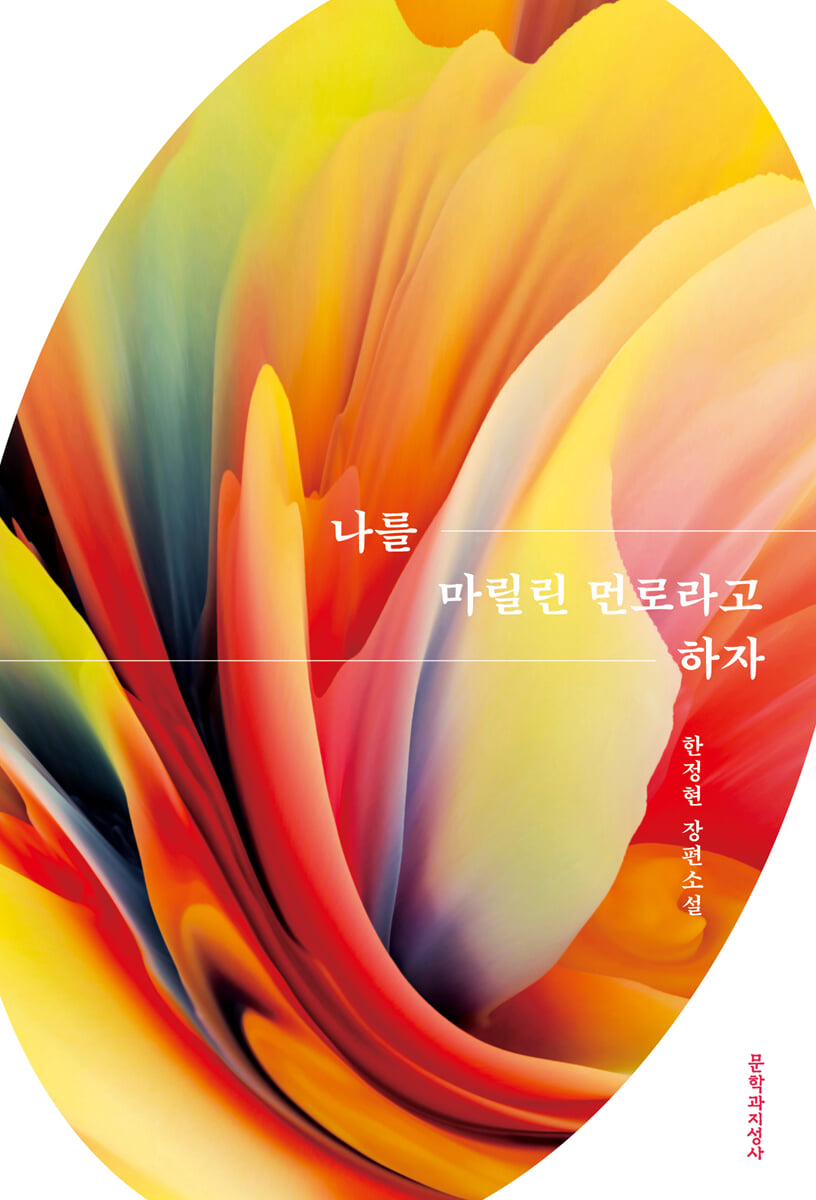
Let me be Marilyn Monroe
 |
Description
Book Introduction
- A word from MD
-
We were all Marilyn MonroeA mysterious email from a missing friend leads two people to begin tracking him down.
What is revealed as you search for clues is the corners of your memory, the people hidden behind the scenes, the face of Marilyn Monroe that everyone has seen but never knew.
The novel thus restores the faces distorted by history and the names omitted.
February 22, 2022. Novel/Poetry PD Park Hyung-wook
Watson's Case Log in a World Without Sherlock
A genealogy of love that extends beyond one person's time to me
Author Han Jeong-hyeon, who records the gaps in history and the hidden present, has published her second full-length novel, “Let Me Be Marilyn Monroe” (Munhak-kwa-Jiseongsa, 2022).
This is the second full-length novel to be released in three years since 『Juliana Tokyo』, which won the Today's Writer Award.
This novel is an extension of Han Jeong-hyeon's "Han Jeong-hyeon Universe," a project he has been attempting to create by unearthing obscure names omitted from official history or erased by mainstream history and allowing readers to encounter their lives within the novel, thereby drawing a new map of history.
Researcher Yoon Seol-young, who lives in Japan, lost part of her memory in an accident several years ago.
One day, Seol-yeong receives an email from a friend who disappeared around the time of the accident.
The nickname that comes to mind before my friend's name is Sherlock.
The two, who were close friends, co-authored a paper on the public health case of female guerrilla survivors.
As a result, a job opportunity arose in Korea related to my thesis, and I needed to contact my co-author, Sherlock.
Seol-yeong, who has returned to Seoul after several years, traces the vague clues left behind by Sherlock along with Gu Yeon-jeong, a plastic surgeon who was in charge of Sherlock.
In a world where Sherlock has disappeared, private detectives who call themselves Recorder Watson appear.
Will these Watsons be able to find Sherlock?
A genealogy of love that extends beyond one person's time to me
Author Han Jeong-hyeon, who records the gaps in history and the hidden present, has published her second full-length novel, “Let Me Be Marilyn Monroe” (Munhak-kwa-Jiseongsa, 2022).
This is the second full-length novel to be released in three years since 『Juliana Tokyo』, which won the Today's Writer Award.
This novel is an extension of Han Jeong-hyeon's "Han Jeong-hyeon Universe," a project he has been attempting to create by unearthing obscure names omitted from official history or erased by mainstream history and allowing readers to encounter their lives within the novel, thereby drawing a new map of history.
Researcher Yoon Seol-young, who lives in Japan, lost part of her memory in an accident several years ago.
One day, Seol-yeong receives an email from a friend who disappeared around the time of the accident.
The nickname that comes to mind before my friend's name is Sherlock.
The two, who were close friends, co-authored a paper on the public health case of female guerrilla survivors.
As a result, a job opportunity arose in Korea related to my thesis, and I needed to contact my co-author, Sherlock.
Seol-yeong, who has returned to Seoul after several years, traces the vague clues left behind by Sherlock along with Gu Yeon-jeong, a plastic surgeon who was in charge of Sherlock.
In a world where Sherlock has disappeared, private detectives who call themselves Recorder Watson appear.
Will these Watsons be able to find Sherlock?
- You can preview some of the book's contents.
Preview
index
Prologue/Invitation
Chapter 1: The Past Arrived
Chapter 2: Paruchizan in Tokyo
Chapter 3: The Disappeared Actors
Chapter 4: Temporary Closure
Chapter 5: Seoul, the setting of this mystery novel
Chapter 6: A mystery novel, maybe a romance novel
Chapter 7: Watson and the Others
Chapter 8: A Place So Close
Chapter 9: A Good Season for a Picnic
Chapter 10: A Story Written Twice
Chapter 11: The Forest of the Undying Witch
Chapter 12: We will remain in their hearts for a long time.
Epilogue/Invitation
Commentary: Paruchizan in Tokyo and Seoul: A Detective Novel of a Queer Family_Kim Geon-hyung
Author's Note
Appendix: Things I Referenced While Writing the Novel
Chapter 1: The Past Arrived
Chapter 2: Paruchizan in Tokyo
Chapter 3: The Disappeared Actors
Chapter 4: Temporary Closure
Chapter 5: Seoul, the setting of this mystery novel
Chapter 6: A mystery novel, maybe a romance novel
Chapter 7: Watson and the Others
Chapter 8: A Place So Close
Chapter 9: A Good Season for a Picnic
Chapter 10: A Story Written Twice
Chapter 11: The Forest of the Undying Witch
Chapter 12: We will remain in their hearts for a long time.
Epilogue/Invitation
Commentary: Paruchizan in Tokyo and Seoul: A Detective Novel of a Queer Family_Kim Geon-hyung
Author's Note
Appendix: Things I Referenced While Writing the Novel
Detailed image
Into the book
“Aren’t we all like Marilyn Monroe? People who adore you for your beauty, then rush to you as if they’ll destroy you if you reject them.
As a woman, my life seemed to be on display somewhere for the rest of my life.
“My body felt like a public object.” --- p.314
“I feel like this is my job too.
No, maybe it's all of our business... ... It definitely seems like everyone's business." --- p.327
“Don’t you think people sometimes have a tendency to believe that only what they themselves have decided is original, that it is real?” --- p.352
Maybe that's what love is.
There are things that no genius detective can perfectly deduce, and sometimes no one can make them understand. --- p.356
“[…] Sometimes I feel like our lives are like the longest mystery a detective in a mystery novel does.
The truth isn't easily revealed, so there's a lot of despair and disappointment, but if you don't give up, there's an answer, there's the truth, and there's someone you want to see... even if that's different from the answer the world has set.
So, let's survive even if something like that happens to each other.
Let's come alive and meet in a world beyond human time and talk.
I lived happily, and I lived even happier because someone was waiting for me at the end of this long life.
“I tried harder to remember and search more diligently, wanting to tell someone about the time I had passed.” --- p.360
“People who are originally power-oriented tend to fall for anything that resembles power.
"Why would you bring the real thing? Fighting violence with violence is a lowly thing to do."
As a woman, my life seemed to be on display somewhere for the rest of my life.
“My body felt like a public object.” --- p.314
“I feel like this is my job too.
No, maybe it's all of our business... ... It definitely seems like everyone's business." --- p.327
“Don’t you think people sometimes have a tendency to believe that only what they themselves have decided is original, that it is real?” --- p.352
Maybe that's what love is.
There are things that no genius detective can perfectly deduce, and sometimes no one can make them understand. --- p.356
“[…] Sometimes I feel like our lives are like the longest mystery a detective in a mystery novel does.
The truth isn't easily revealed, so there's a lot of despair and disappointment, but if you don't give up, there's an answer, there's the truth, and there's someone you want to see... even if that's different from the answer the world has set.
So, let's survive even if something like that happens to each other.
Let's come alive and meet in a world beyond human time and talk.
I lived happily, and I lived even happier because someone was waiting for me at the end of this long life.
“I tried harder to remember and search more diligently, wanting to tell someone about the time I had passed.” --- p.360
“People who are originally power-oriented tend to fall for anything that resembles power.
"Why would you bring the real thing? Fighting violence with violence is a lowly thing to do."
--- p.376
Publisher's Review
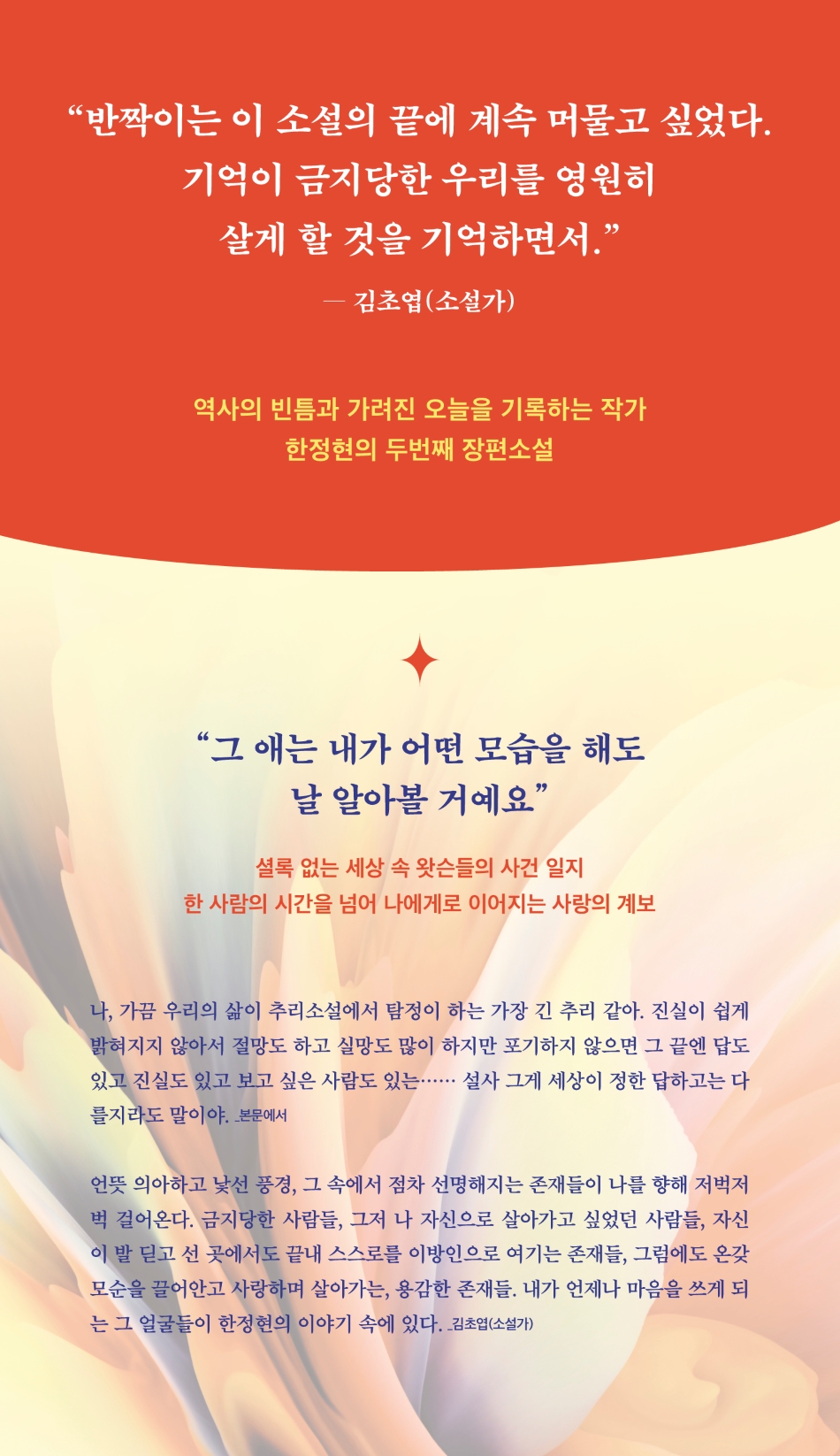
“He’ll recognize me no matter what I look like.”
Watson's Case Log in a World Without Sherlock
A genealogy of love that extends beyond one person's time to me
Author Han Jeong-hyeon, who records the gaps in history and the hidden present, has published her second full-length novel, “Let Me Be Marilyn Monroe” (Munhak-kwa-Jiseongsa, 2022).
This is the second full-length novel to be released in three years since 『Juliana Tokyo』, which won the Today's Writer Award.
This novel is an extension of Han Jeong-hyeon's "Han Jeong-hyeon Universe," a project he has been attempting to create by unearthing obscure names omitted from official history or erased by mainstream history and allowing readers to encounter their lives within the novel, thereby drawing a new map of history.
This novel, which borrows the format of a mystery novel, begins with Seol-yeong, who has lost her memory, and Yeon-jeong, who cannot forget her memories, tracking down the 'Sherlock' in Seol-yeong's lost memories.
Through the people he meets on his journey to find clues, Han Jeong-hyeon quietly calls out the names and makes eye contact with those who have not been recorded in official history and who have not been saved by public institutions.
Once again, we attempt to replace the seemingly solid genealogy of violence in capital-letter history with a genealogy of love.
I wanted to stay at the end of this sparkling novel.
Remembering that which will make us, whose memories are forbidden, live forever.
Kim Cho-yeop (novelist)
Watson doesn't come up with any plausible deductions or solve cases, but he does record and archive them.
Of course, it is not a direct copy of the facts, but rather a reconstruction of Watson's own.
That was probably a novel.
A detective novel by Conan Doyle that explores the pursuit of truth.
_In the text
First of all, a mystery novel, maybe a romance novel, and then a historical novel.
Researcher Yoon Seol-young, who lives in Japan, lost part of her memory in an accident several years ago.
One day, Seol-yeong receives an email from a friend who disappeared around the time of the accident.
The nickname that comes to mind before my friend's name is Sherlock.
The two, who were close friends, co-authored a paper on the public health case of female guerrilla survivors.
As a result, a job opportunity arose in Korea related to my thesis, and I needed to contact my co-author, Sherlock.
Seol-yeong, who has returned to Seoul after several years, traces the vague clues left behind by Sherlock along with Gu Yeon-jeong, a plastic surgeon who was in charge of Sherlock.
In a world where Sherlock has disappeared, private detectives who call themselves Recorder Watson appear.
Will these Watsons be able to find Sherlock?
“What we are going through is so similar even now.
“It feels like nothing is over”
I could definitely realize it.
The problems there at that time are still recurring problems here and now in this society.
Many victims hold their breath because they are victims.
It means living as if you don't exist outside of society.
That's how the novel was completed.
_From the author's note
Watson checks the information in Sherlock's email, solves the hints, finds hidden places, and meets people related to the paper.
But more important than the truth that gradually emerges while tracking down clues in this novel is the 'process' itself of recovering Seol-yeong's lost memories and comforting Yeon-jeong's unforgettable memories.
Watson uncovers the structures of historically recurring violence through the process of digging through memories and meeting people.
The people Seol-yeong and Yeon-jeong encounter in reality and recall from their memories are victims or survivors of state violence, gender-based violence, and hate crimes.
Partisans who were sexually assaulted by their comrades in the mountains and by the authorities when they came down, sexual minorities who had to suppress their identities to live as part of an elite family, queer youth and intersex people who disappeared for the honor of the group.
People with 'stories' who were not recorded in official history or who were not saved by public institutions.
As literary critic Kim Geon-hyeong interprets, this novel shows the genealogy of violence that continues from the past to the present, and traces how a social system that arbitrarily selects and excludes the normal and the abnormal operates.
A capitalized history that erases those who threaten the "normal" order of "male-institution-state" from the political and social realms to everyday life.
On the other side, there is Han Jeong-hyeon's new history, which "fights the weight of established historical narratives and seeks to give historical reality to characters."
Furthermore, this novel does not explicitly reproduce the victim's suffering or easily mourn it.
The people Watson meets are already beyond victims/survivors, “people who have their own way of enduring and speaking” (Kim Geon-hyung).
Kim Chun-hee and Lee Ui-seon, victims of sexual violence within the guerrilla group, healed themselves by understanding the structure of the violence they had experienced.
Even in the final stages of his life, he tried to become what he wanted to be and lived his life helping others.
Those who were brought back to life through the memories of those left behind who honored them and met the Watsons again.
Even though they are no longer in this world, Chun-hee and Ui-seon will live on through time as companions who share the same lonely pain and heal other Watsons, rather than as flat victims or symbols of sorrow.
The path to you, breaking through the names defined by the world
According to the novel, the first official plastic surgery in Korea was “the deaf surgery brought in by the US military right after the Korean War.”
However, people in Han Jeong-hyeon's novels are more interested in the article from the early 1940s about "a person who was both male and female who had plastic surgery to restore their sex."
Why is the title of this novel “Let Me Be Marilyn Monroe”?
“The most beautiful and most hated face in the world”, Marilyn Monroe.
“People who admire beauty and then rush to destroy it if you reject them” “compared other women to Marilyn Monroe, causing even women to criticize Marilyn Monroe.”
Within the “structure created by those in power and pitted against those without power,” Marilyn Monroe has been an object of both admiration and contempt.
The “global finger pointing” and “criticism” that women who conformed to the system faced when they tried to find their own way in life were often “combined with their appearance.”
The author uses Yeon-jeong, a plastic surgeon in Gangnam, to discuss the contradictions of a society that encourages an obsession with beauty while simultaneously showing contempt for the efforts to become beautiful.
'Although it is sometimes criticized as a vulgar act that destroys the original in order to become the object of mainstream normative desire, for some people, plastic surgery can be a way to create the person they want, rather than just the body they were born with and cannot be changed' (Kim Geon-hyung).
Yeonjeong thinks.
In the first place, “even the original is ultimately something that the people of the world have determined to be real,” and “there is no such thing as an original, and there is nothing fixed.”
The words of affection, which are emphasized with weight in the novel, may be felt as comfort to those struggling with identity, and as a rebuke to those who exclude others according to vain standards.
Therefore, the title of this book could be read as an attempt to renew the meaning of names that have been distorted according to the classification of powerful people in the genealogy of violence.
You and I still live in a world overflowing with people shouting about causes, duties, or providence, but for myself and those around me who have managed to escape that shallow order with difficulty.
“What we are going through is so similar even now.
“It feels like nothing is over.” The world changes very slowly.
This sentence in the novel may remain valid as long as humanity continues.
But if I can convey to someone in the future the slightly different me of today, wouldn't these words now be read as hope?
In the novel “Our Wish is a Science Boy”, which won the Young Writer’s Award, Han Jeong-hyeon said:
“And be optimistic.” In this novel, he once again emphasizes the power of naive optimism, and the existence of strong and transparent people who “maintain human dignity as much as possible in the midst of violence” (Author’s Note).
"Let Me Be Marilyn Monroe" speaks of difficult optimism instead of easy despair, for the brave and simple love of all.
Watson's Case Log in a World Without Sherlock
A genealogy of love that extends beyond one person's time to me
Author Han Jeong-hyeon, who records the gaps in history and the hidden present, has published her second full-length novel, “Let Me Be Marilyn Monroe” (Munhak-kwa-Jiseongsa, 2022).
This is the second full-length novel to be released in three years since 『Juliana Tokyo』, which won the Today's Writer Award.
This novel is an extension of Han Jeong-hyeon's "Han Jeong-hyeon Universe," a project he has been attempting to create by unearthing obscure names omitted from official history or erased by mainstream history and allowing readers to encounter their lives within the novel, thereby drawing a new map of history.
This novel, which borrows the format of a mystery novel, begins with Seol-yeong, who has lost her memory, and Yeon-jeong, who cannot forget her memories, tracking down the 'Sherlock' in Seol-yeong's lost memories.
Through the people he meets on his journey to find clues, Han Jeong-hyeon quietly calls out the names and makes eye contact with those who have not been recorded in official history and who have not been saved by public institutions.
Once again, we attempt to replace the seemingly solid genealogy of violence in capital-letter history with a genealogy of love.
I wanted to stay at the end of this sparkling novel.
Remembering that which will make us, whose memories are forbidden, live forever.
Kim Cho-yeop (novelist)
Watson doesn't come up with any plausible deductions or solve cases, but he does record and archive them.
Of course, it is not a direct copy of the facts, but rather a reconstruction of Watson's own.
That was probably a novel.
A detective novel by Conan Doyle that explores the pursuit of truth.
_In the text
First of all, a mystery novel, maybe a romance novel, and then a historical novel.
Researcher Yoon Seol-young, who lives in Japan, lost part of her memory in an accident several years ago.
One day, Seol-yeong receives an email from a friend who disappeared around the time of the accident.
The nickname that comes to mind before my friend's name is Sherlock.
The two, who were close friends, co-authored a paper on the public health case of female guerrilla survivors.
As a result, a job opportunity arose in Korea related to my thesis, and I needed to contact my co-author, Sherlock.
Seol-yeong, who has returned to Seoul after several years, traces the vague clues left behind by Sherlock along with Gu Yeon-jeong, a plastic surgeon who was in charge of Sherlock.
In a world where Sherlock has disappeared, private detectives who call themselves Recorder Watson appear.
Will these Watsons be able to find Sherlock?
“What we are going through is so similar even now.
“It feels like nothing is over”
I could definitely realize it.
The problems there at that time are still recurring problems here and now in this society.
Many victims hold their breath because they are victims.
It means living as if you don't exist outside of society.
That's how the novel was completed.
_From the author's note
Watson checks the information in Sherlock's email, solves the hints, finds hidden places, and meets people related to the paper.
But more important than the truth that gradually emerges while tracking down clues in this novel is the 'process' itself of recovering Seol-yeong's lost memories and comforting Yeon-jeong's unforgettable memories.
Watson uncovers the structures of historically recurring violence through the process of digging through memories and meeting people.
The people Seol-yeong and Yeon-jeong encounter in reality and recall from their memories are victims or survivors of state violence, gender-based violence, and hate crimes.
Partisans who were sexually assaulted by their comrades in the mountains and by the authorities when they came down, sexual minorities who had to suppress their identities to live as part of an elite family, queer youth and intersex people who disappeared for the honor of the group.
People with 'stories' who were not recorded in official history or who were not saved by public institutions.
As literary critic Kim Geon-hyeong interprets, this novel shows the genealogy of violence that continues from the past to the present, and traces how a social system that arbitrarily selects and excludes the normal and the abnormal operates.
A capitalized history that erases those who threaten the "normal" order of "male-institution-state" from the political and social realms to everyday life.
On the other side, there is Han Jeong-hyeon's new history, which "fights the weight of established historical narratives and seeks to give historical reality to characters."
Furthermore, this novel does not explicitly reproduce the victim's suffering or easily mourn it.
The people Watson meets are already beyond victims/survivors, “people who have their own way of enduring and speaking” (Kim Geon-hyung).
Kim Chun-hee and Lee Ui-seon, victims of sexual violence within the guerrilla group, healed themselves by understanding the structure of the violence they had experienced.
Even in the final stages of his life, he tried to become what he wanted to be and lived his life helping others.
Those who were brought back to life through the memories of those left behind who honored them and met the Watsons again.
Even though they are no longer in this world, Chun-hee and Ui-seon will live on through time as companions who share the same lonely pain and heal other Watsons, rather than as flat victims or symbols of sorrow.
The path to you, breaking through the names defined by the world
According to the novel, the first official plastic surgery in Korea was “the deaf surgery brought in by the US military right after the Korean War.”
However, people in Han Jeong-hyeon's novels are more interested in the article from the early 1940s about "a person who was both male and female who had plastic surgery to restore their sex."
Why is the title of this novel “Let Me Be Marilyn Monroe”?
“The most beautiful and most hated face in the world”, Marilyn Monroe.
“People who admire beauty and then rush to destroy it if you reject them” “compared other women to Marilyn Monroe, causing even women to criticize Marilyn Monroe.”
Within the “structure created by those in power and pitted against those without power,” Marilyn Monroe has been an object of both admiration and contempt.
The “global finger pointing” and “criticism” that women who conformed to the system faced when they tried to find their own way in life were often “combined with their appearance.”
The author uses Yeon-jeong, a plastic surgeon in Gangnam, to discuss the contradictions of a society that encourages an obsession with beauty while simultaneously showing contempt for the efforts to become beautiful.
'Although it is sometimes criticized as a vulgar act that destroys the original in order to become the object of mainstream normative desire, for some people, plastic surgery can be a way to create the person they want, rather than just the body they were born with and cannot be changed' (Kim Geon-hyung).
Yeonjeong thinks.
In the first place, “even the original is ultimately something that the people of the world have determined to be real,” and “there is no such thing as an original, and there is nothing fixed.”
The words of affection, which are emphasized with weight in the novel, may be felt as comfort to those struggling with identity, and as a rebuke to those who exclude others according to vain standards.
Therefore, the title of this book could be read as an attempt to renew the meaning of names that have been distorted according to the classification of powerful people in the genealogy of violence.
You and I still live in a world overflowing with people shouting about causes, duties, or providence, but for myself and those around me who have managed to escape that shallow order with difficulty.
“What we are going through is so similar even now.
“It feels like nothing is over.” The world changes very slowly.
This sentence in the novel may remain valid as long as humanity continues.
But if I can convey to someone in the future the slightly different me of today, wouldn't these words now be read as hope?
In the novel “Our Wish is a Science Boy”, which won the Young Writer’s Award, Han Jeong-hyeon said:
“And be optimistic.” In this novel, he once again emphasizes the power of naive optimism, and the existence of strong and transparent people who “maintain human dignity as much as possible in the midst of violence” (Author’s Note).
"Let Me Be Marilyn Monroe" speaks of difficult optimism instead of easy despair, for the brave and simple love of all.
GOODS SPECIFICS
- Publication date: February 16, 2022
- Page count, weight, size: 420 pages | 374g | 120*188*20mm
- ISBN13: 9788932039459
- ISBN10: 8932039453
You may also like
카테고리
korean


korean

![GQ KOREA Mark (Monthly): December [2025]](http://librairie.coreenne.fr/cdn/shop/files/8ef265dbbfbf186523ed75ba7319009d.jpg?v=1765340328&width=3840)


