

Rivals in the history of classical literature
 |
Description
Book Introduction
History doesn't have any hypotheticals, but if Wolmyeongsa had been born a century earlier and Choi Chi-won a century later, would they have been truly happy? What kind of books would Kim Bu-sik and Il-yeon have published if they had lived and met at the same time? How would Yi In-ro and Yi Gyu-bo have intertwined in the literary annals of the late 12th century? Why did Kim Man-jung and Jo Seong-gi write novels? Did Yeonam Park Ji-won and Dasan Jeong Yak-yong truly not know each other?
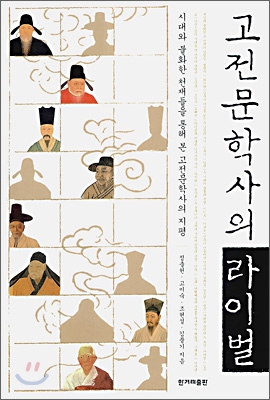
『Rivals in the History of Classical Literature』 is a unique book created by four leading humanities scholars, Jeong Chul-heon, Go Mi-sook, Jo Hyeon-seol, and Kim Poong-gi, who captured the rivals (18 people) who dominated an era and restored the history of classical literature through their fiercely competitive artistic worlds and lives.
From Choi Chi-won to Ahn Min-yeong, the leading writers in classical literature richly reveal the political circumstances in which they lived, their literary aspirations, their relationship with political choices, and the diverse landscapes of literary history through their lives.
So, the history of classical literature is vividly revived through these rivals: the genius who was at odds with history and the genius who rode on the bandwagon of history.
Through the differences in artistic orientation and passion of these rivals, readers can go beyond a linear understanding of literary history and glimpse the horizons of classical literature encompassed in a single era.
『Rivals in the History of Classical Literature』 is a unique book created by four leading humanities scholars, Jeong Chul-heon, Go Mi-sook, Jo Hyeon-seol, and Kim Poong-gi, who captured the rivals (18 people) who dominated an era and restored the history of classical literature through their fiercely competitive artistic worlds and lives.
From Choi Chi-won to Ahn Min-yeong, the leading writers in classical literature richly reveal the political circumstances in which they lived, their literary aspirations, their relationship with political choices, and the diverse landscapes of literary history through their lives.
So, the history of classical literature is vividly revived through these rivals: the genius who was at odds with history and the genius who rode on the bandwagon of history.
Through the differences in artistic orientation and passion of these rivals, readers can go beyond a linear understanding of literary history and glimpse the horizons of classical literature encompassed in a single era.
- You can preview some of the book's contents.
Preview
index
At the beginning of the book
The Crossroads of Two "Geniuses" at War with the World: Wolmyeongsa vs. Choi Chi-won
The greatest hyangga poet and the most accomplished poet of Chinese poetry | The lives of geniuses at odds with the harsh reality | The crossroads from ancient times to the Middle Ages | The harmony and divergence of descendants | Me, You, and Us
Two 'male' perspectives on women in the Three Kingdoms: Kim Bu-sik vs. Il-yeon
A True Competitor Who Told the History of the Three Kingdoms | Trite Common Sense, or Confirmation | Kim Bu-sik: Seeing Women in the Name of Family | Il-yeon's Reflection on Buddhist Perspectives | Those Who Run Away, Those Who Settle
The Clash and Cracks of Two Eras: Yi In-ro vs. Yi Gyu-bo
A Broken Table, or a Scene from Medieval Literature | The Cynicism of the Bamboo Grove and the Satire of the Madman | A Hero or a God? | A Tale of the Muddy Waters, or a Pleasant Thing? | Two Poetry Collections, or the Meeting of Two Eras
The Two Paths of History Created by the Founding of the Nation: Jeong Do-jeon vs. Kwon Geun
Between Resistance and Submission | Jeong Do-jeon, the Man Who Completed Revolution with Death | Kwon Geun, the Literature of the Four Great Dynasties or the Medieval Embodiment of Civilization | The Birth of a Rival
Two Portraits of Scholar-Writers: Seo Geo-jeong vs. Kim Si-seup
A figure born from the turbulent times | Renowned for his genius | A life of wandering and unforeseen separation | A world of poetry filled with abundance and intensity | Aspiring for laughter and joy, resentment and anger toward reality | The forgotten, the resurrected
The Friendly Rivals Who Ushered in the Era of Family Novels: Kim Man-jung vs. Jo Seong-gi
The Street Politician and the Sick Scholar in the Attic | The Platonic Solidarity of Things, Their One Point of Contact | The 17th Century: The Age of Novels, and the Reader Called Mother | "Changseongam Uirok" vs. "Sassinamjeonggi"
Between Cheerful Nomadism and Fierce Engagement: Park Ji-won vs. Jeong Yak-yong
Nomad or Sedentary | Fierce Engagement or Avant-Garde Stylist | Paradox of Passion or Pathos of Revolution | They Didn't Meet!
The culmination of thought and emotion portrayed by two medieval figures: Lee Ok vs. Kim Ryeo
Rivals of Friendship | Medieval Intellectuals Who Faced the Challenge with New Writing | The Crossroads of Exile for Those Who Repented | Writing from Everyday Reality, or Literary Achievement | Then and Now, Them and Us
Two Artists Who Pursued the Ultimate in Performing Arts: Shin Jae-hyo and Ahn Min-young
Raising Art to a New Level | Trends in 19th-Century Performing Arts and the Paths of the Pungryu Singers | Their Aspirations for the Art World | Endless Debates on Merit and Flaw
The Crossroads of Two "Geniuses" at War with the World: Wolmyeongsa vs. Choi Chi-won
The greatest hyangga poet and the most accomplished poet of Chinese poetry | The lives of geniuses at odds with the harsh reality | The crossroads from ancient times to the Middle Ages | The harmony and divergence of descendants | Me, You, and Us
Two 'male' perspectives on women in the Three Kingdoms: Kim Bu-sik vs. Il-yeon
A True Competitor Who Told the History of the Three Kingdoms | Trite Common Sense, or Confirmation | Kim Bu-sik: Seeing Women in the Name of Family | Il-yeon's Reflection on Buddhist Perspectives | Those Who Run Away, Those Who Settle
The Clash and Cracks of Two Eras: Yi In-ro vs. Yi Gyu-bo
A Broken Table, or a Scene from Medieval Literature | The Cynicism of the Bamboo Grove and the Satire of the Madman | A Hero or a God? | A Tale of the Muddy Waters, or a Pleasant Thing? | Two Poetry Collections, or the Meeting of Two Eras
The Two Paths of History Created by the Founding of the Nation: Jeong Do-jeon vs. Kwon Geun
Between Resistance and Submission | Jeong Do-jeon, the Man Who Completed Revolution with Death | Kwon Geun, the Literature of the Four Great Dynasties or the Medieval Embodiment of Civilization | The Birth of a Rival
Two Portraits of Scholar-Writers: Seo Geo-jeong vs. Kim Si-seup
A figure born from the turbulent times | Renowned for his genius | A life of wandering and unforeseen separation | A world of poetry filled with abundance and intensity | Aspiring for laughter and joy, resentment and anger toward reality | The forgotten, the resurrected
The Friendly Rivals Who Ushered in the Era of Family Novels: Kim Man-jung vs. Jo Seong-gi
The Street Politician and the Sick Scholar in the Attic | The Platonic Solidarity of Things, Their One Point of Contact | The 17th Century: The Age of Novels, and the Reader Called Mother | "Changseongam Uirok" vs. "Sassinamjeonggi"
Between Cheerful Nomadism and Fierce Engagement: Park Ji-won vs. Jeong Yak-yong
Nomad or Sedentary | Fierce Engagement or Avant-Garde Stylist | Paradox of Passion or Pathos of Revolution | They Didn't Meet!
The culmination of thought and emotion portrayed by two medieval figures: Lee Ok vs. Kim Ryeo
Rivals of Friendship | Medieval Intellectuals Who Faced the Challenge with New Writing | The Crossroads of Exile for Those Who Repented | Writing from Everyday Reality, or Literary Achievement | Then and Now, Them and Us
Two Artists Who Pursued the Ultimate in Performing Arts: Shin Jae-hyo and Ahn Min-young
Raising Art to a New Level | Trends in 19th-Century Performing Arts and the Paths of the Pungryu Singers | Their Aspirations for the Art World | Endless Debates on Merit and Flaw
Publisher's Review
The Crossroads of Two "Geniuses" at War with the World: Wolmyeongsa vs. Choi Chi-won
Wolmyeongsa, who sang the hyangga "Dosolga" during the reign of King Gyeongdeok of Silla and caused the natural disaster of two suns to disappear, and Choi Chi-won, who brought civilization to China during the reign of Queen Jinseong and then returned to his homeland.
If Wolmyeongsa is the greatest hyangga poet, Choi Chi-won is an outstanding writer of Chinese poetry.
By contrasting the personal histories of Wolmyeongsa and Choi Chi-won, we retrace the path of Hyangga, a brilliant achievement in national literature, and Hansi, a foreign poetry, from the Three Kingdoms period to the early Goryeo period.
Two 'male' perspectives on women in the Three Kingdoms: Kim Bu-sik vs. Il-yeon
Although Kim Bu-sik and Il-yeon did not live at the same time, 『Samguk Sagi』 and 『Samguk Yusa』 are important historical books that convey the history of the Three Kingdoms, and have been passed down to this day as contrasting rivals.
Starting from official and unofficial history, there are four major historical perceptions and independent historical perceptions, Confucian and Buddhist content, aristocratic and commoner content, rational content and mystical content, etc.
It is interesting to examine how Kim Bu-sik, who was grounded in Confucian rationalism, and Il-yeon, who sought to appreciate the women of the Three Kingdoms through a Buddhist perspective, viewed them.
The Clash and Cracks of Two Eras: Yi In-ro vs. Yi Gyu-bo
Lee In-ro and Lee Gyu-bo can be viewed from the perspective of the relationship between the aristocratic families who owned large farms and were pushed out by the military rebellion and the newly emerging aristocrats from local districts who emerged after the military rebellion.
The two people had different worldviews and different perspectives on the military regime.
When we say that they are rivals in the history of literature, we can see the difference between Yi In-ro and Yi Gyu-bo in their creative methodologies, namely, Yongsa (用事) and Sinui (新意), Takmul Ui (託物寓意) and Uheungchokmul (寓興觸物).
Through 『Pahanjip』 and 『Baekunsoseol』, we can get a glimpse into their thoughts through their different works, each of which feels like an attitude of ignorance or blindness to the contradictions of reality, or a sense of tension.
The two were symbolic beings representing one era and another era, respectively.
The Two Paths of History Created by the Founding of the Nation: Jeong Do-jeon vs. Kwon Geun
Although Jeong Do-jeon was a close vassal of the Goryeo king and a high-ranking official, he did not live up to his name, and Kwon Geun lived a long life and died.
Their deaths hide the history and ideological attitudes of each of them.
Jeong Do-jeon, who dedicated his life to founding Joseon and dreaming of a new world, completed the founding of Joseon with his death.
Kwon Geun's growth is intertwined with the incident of Jeong Do-jeon's assassination, but he is pushed by the great force of history to take a completely different path.
Jeong Do-jeon maintained an attitude of fundamentally realizing the theory of re-establishment of the nation based on a thorough foundation of Confucianism, while Gwon Geun valued a splendid yet elegant attitude that could magnify the nation's dignity.
Unlike Jeong Do-jeon, who devoted his energy to criticizing Buddhism, which had real influence and power, Kwon Geun focused on laying the foundations of Confucianism and strengthening it.
Two Portraits of Scholar-Writers: Seo Geo-jeong vs. Kim Si-seup
The event that separated their fates was Sejo's usurpation of the throne.
Seo Geo-jeong rose to the rank of first-class meritorious retainer and followed the same smooth political path, while Kim Si-seup, as one of the six loyal retainers, spent his entire life wandering around mountain temples across the country.
If Seo Geo-jeong represented the poetry of the court, Kim Si-seup is said to have represented the poetry of the mountains and fields.
In Seo Geo-jeong's world of poetry, one can easily read 'a diagonal tendency praising the prosperity of the times' and 'a splendid expression of aristocratic sentiments', while Kim Si-seup's world of poetry often focused on content representing the suffering of the people who were suffering from feudal contradictions and the resulting exploitation.
Kim Si-seup's poetic world is diverse, encompassing works that explore self-pity, conflict, and existential and ontological concerns about one's own identity.
The two lived a life of contrasting light and dark, both alive and dead.
The Friendly Rivals Who Ushered in the Era of Family Novels: Kim Man-jung vs. Jo Seong-gi
The reason the two can be called rivals is because of the 'petty' story called a novel.
The era of novels began in the 17th century, and the reason that Jo Seong-gi and Kim Man-jung competed with each other to write long novels was because there were women from noble families who loved novels, like their mothers.
We can get a detailed look at the contemporary situation through “Changseon Gam Uirok” and “Sassi Namjeonggi.” Jo Seong-gi and Kim Man-jung had the same idea that the shaky social order after the Imjin War should be reorganized by establishing the royal lineage at the national level and patriarchal authority within the family.
The sympathy and friendly competition between two people who tried to express this reality through a novel gave birth to the magnificent flower of the long family novel in the history of 17th century novels.
Between Cheerful Nomadism and Fierce Engagement: Park Ji-won vs. Jeong Yak-yong
While one was a man of letters in his fifties with no wealth or power, the other was a young bureaucrat who was experiencing the highlight of his life.
Two shining stars of 18th century intellectual history, Yeonam Park Ji-won and Dasan Jeong Yak-yong.
They thought about and practiced the 'outside of the Middle Ages' in different ways, and connected with the modern era in entirely different ways.
If Yeonam was a cheerful nomad who glides smoothly in all directions, Dasan was an unfortunate settler who fiercely raced toward that lofty ideal.
As an avant-garde stylist, Yeonam enjoyed using humor and paradox, while Dasan specialized in pathos, expressing anger and sadness passionately.
The culmination of thought and emotion portrayed by two medieval figures: Lee Ok vs. Kim Ryeo
The late civil and military scholar Lee Ok, who left behind only a messy manuscript, and the late Damjeong Kim Ryeo, who wept over the remains of his friend and passed them down to us today.
For Lee Ok, writing was the basis for his survival against medieval oppression, and in that sense, he was a pioneer of modern writers, distinct from the medieval scholar-officials who talked about the unification of Taoism and literature.
Lee Ok and Kim Ryeo dreamed of dismantling or overthrowing the normative world that the orthodox scholars had tried to construct and maintain through their writings.
Through decentralized writing, she subtly reveals her alienated consciousness from reality and, furthermore, her solidarity with them. She also seeks to confront the human and lived experiences of oppressed women and the common people through her sensuous yet individualistic writing.
Two Artists Who Pursued the Ultimate in Performing Arts: Shin Jae-hyo and Ahn Min-young
Shin Jae-hyo, who thinks that life is only once, should live it to the fullest, and Ahn Min-young, who thinks that meeting and parting with the person she misses is the joy of life.
Shin Jae-hyo revised and organized the lyrics of six of the twelve pansori songs that had been handed down, and An Min-yeong refined and polished the sijo songs they had been singing, compiling them into the 『Gagokwonryu』.
Shin Jae-hyo and Ahn Min-young sought to put into practice the artistic world they had completed through theoretical work in the field.
They presented a single set of rules to the numerous artists who were promoting a diverse artistic world, and through them, they sought to achieve the specialization and sophistication of pansori and sijo that art history demanded in the late 19th century.
An Min-yeong was not only a practical theorist who suggested and guided the rules for performing sijo, but also a planning manager in the entertainment industry, and Shin Jae-hyo was a realistic and political artist who frequently depicted the exploitation suffered by the affluent in rural society, while also showing deep interest in the promising phenomena of rural people.
Wolmyeongsa, who sang the hyangga "Dosolga" during the reign of King Gyeongdeok of Silla and caused the natural disaster of two suns to disappear, and Choi Chi-won, who brought civilization to China during the reign of Queen Jinseong and then returned to his homeland.
If Wolmyeongsa is the greatest hyangga poet, Choi Chi-won is an outstanding writer of Chinese poetry.
By contrasting the personal histories of Wolmyeongsa and Choi Chi-won, we retrace the path of Hyangga, a brilliant achievement in national literature, and Hansi, a foreign poetry, from the Three Kingdoms period to the early Goryeo period.
Two 'male' perspectives on women in the Three Kingdoms: Kim Bu-sik vs. Il-yeon
Although Kim Bu-sik and Il-yeon did not live at the same time, 『Samguk Sagi』 and 『Samguk Yusa』 are important historical books that convey the history of the Three Kingdoms, and have been passed down to this day as contrasting rivals.
Starting from official and unofficial history, there are four major historical perceptions and independent historical perceptions, Confucian and Buddhist content, aristocratic and commoner content, rational content and mystical content, etc.
It is interesting to examine how Kim Bu-sik, who was grounded in Confucian rationalism, and Il-yeon, who sought to appreciate the women of the Three Kingdoms through a Buddhist perspective, viewed them.
The Clash and Cracks of Two Eras: Yi In-ro vs. Yi Gyu-bo
Lee In-ro and Lee Gyu-bo can be viewed from the perspective of the relationship between the aristocratic families who owned large farms and were pushed out by the military rebellion and the newly emerging aristocrats from local districts who emerged after the military rebellion.
The two people had different worldviews and different perspectives on the military regime.
When we say that they are rivals in the history of literature, we can see the difference between Yi In-ro and Yi Gyu-bo in their creative methodologies, namely, Yongsa (用事) and Sinui (新意), Takmul Ui (託物寓意) and Uheungchokmul (寓興觸物).
Through 『Pahanjip』 and 『Baekunsoseol』, we can get a glimpse into their thoughts through their different works, each of which feels like an attitude of ignorance or blindness to the contradictions of reality, or a sense of tension.
The two were symbolic beings representing one era and another era, respectively.
The Two Paths of History Created by the Founding of the Nation: Jeong Do-jeon vs. Kwon Geun
Although Jeong Do-jeon was a close vassal of the Goryeo king and a high-ranking official, he did not live up to his name, and Kwon Geun lived a long life and died.
Their deaths hide the history and ideological attitudes of each of them.
Jeong Do-jeon, who dedicated his life to founding Joseon and dreaming of a new world, completed the founding of Joseon with his death.
Kwon Geun's growth is intertwined with the incident of Jeong Do-jeon's assassination, but he is pushed by the great force of history to take a completely different path.
Jeong Do-jeon maintained an attitude of fundamentally realizing the theory of re-establishment of the nation based on a thorough foundation of Confucianism, while Gwon Geun valued a splendid yet elegant attitude that could magnify the nation's dignity.
Unlike Jeong Do-jeon, who devoted his energy to criticizing Buddhism, which had real influence and power, Kwon Geun focused on laying the foundations of Confucianism and strengthening it.
Two Portraits of Scholar-Writers: Seo Geo-jeong vs. Kim Si-seup
The event that separated their fates was Sejo's usurpation of the throne.
Seo Geo-jeong rose to the rank of first-class meritorious retainer and followed the same smooth political path, while Kim Si-seup, as one of the six loyal retainers, spent his entire life wandering around mountain temples across the country.
If Seo Geo-jeong represented the poetry of the court, Kim Si-seup is said to have represented the poetry of the mountains and fields.
In Seo Geo-jeong's world of poetry, one can easily read 'a diagonal tendency praising the prosperity of the times' and 'a splendid expression of aristocratic sentiments', while Kim Si-seup's world of poetry often focused on content representing the suffering of the people who were suffering from feudal contradictions and the resulting exploitation.
Kim Si-seup's poetic world is diverse, encompassing works that explore self-pity, conflict, and existential and ontological concerns about one's own identity.
The two lived a life of contrasting light and dark, both alive and dead.
The Friendly Rivals Who Ushered in the Era of Family Novels: Kim Man-jung vs. Jo Seong-gi
The reason the two can be called rivals is because of the 'petty' story called a novel.
The era of novels began in the 17th century, and the reason that Jo Seong-gi and Kim Man-jung competed with each other to write long novels was because there were women from noble families who loved novels, like their mothers.
We can get a detailed look at the contemporary situation through “Changseon Gam Uirok” and “Sassi Namjeonggi.” Jo Seong-gi and Kim Man-jung had the same idea that the shaky social order after the Imjin War should be reorganized by establishing the royal lineage at the national level and patriarchal authority within the family.
The sympathy and friendly competition between two people who tried to express this reality through a novel gave birth to the magnificent flower of the long family novel in the history of 17th century novels.
Between Cheerful Nomadism and Fierce Engagement: Park Ji-won vs. Jeong Yak-yong
While one was a man of letters in his fifties with no wealth or power, the other was a young bureaucrat who was experiencing the highlight of his life.
Two shining stars of 18th century intellectual history, Yeonam Park Ji-won and Dasan Jeong Yak-yong.
They thought about and practiced the 'outside of the Middle Ages' in different ways, and connected with the modern era in entirely different ways.
If Yeonam was a cheerful nomad who glides smoothly in all directions, Dasan was an unfortunate settler who fiercely raced toward that lofty ideal.
As an avant-garde stylist, Yeonam enjoyed using humor and paradox, while Dasan specialized in pathos, expressing anger and sadness passionately.
The culmination of thought and emotion portrayed by two medieval figures: Lee Ok vs. Kim Ryeo
The late civil and military scholar Lee Ok, who left behind only a messy manuscript, and the late Damjeong Kim Ryeo, who wept over the remains of his friend and passed them down to us today.
For Lee Ok, writing was the basis for his survival against medieval oppression, and in that sense, he was a pioneer of modern writers, distinct from the medieval scholar-officials who talked about the unification of Taoism and literature.
Lee Ok and Kim Ryeo dreamed of dismantling or overthrowing the normative world that the orthodox scholars had tried to construct and maintain through their writings.
Through decentralized writing, she subtly reveals her alienated consciousness from reality and, furthermore, her solidarity with them. She also seeks to confront the human and lived experiences of oppressed women and the common people through her sensuous yet individualistic writing.
Two Artists Who Pursued the Ultimate in Performing Arts: Shin Jae-hyo and Ahn Min-young
Shin Jae-hyo, who thinks that life is only once, should live it to the fullest, and Ahn Min-young, who thinks that meeting and parting with the person she misses is the joy of life.
Shin Jae-hyo revised and organized the lyrics of six of the twelve pansori songs that had been handed down, and An Min-yeong refined and polished the sijo songs they had been singing, compiling them into the 『Gagokwonryu』.
Shin Jae-hyo and Ahn Min-young sought to put into practice the artistic world they had completed through theoretical work in the field.
They presented a single set of rules to the numerous artists who were promoting a diverse artistic world, and through them, they sought to achieve the specialization and sophistication of pansori and sijo that art history demanded in the late 19th century.
An Min-yeong was not only a practical theorist who suggested and guided the rules for performing sijo, but also a planning manager in the entertainment industry, and Shin Jae-hyo was a realistic and political artist who frequently depicted the exploitation suffered by the affluent in rural society, while also showing deep interest in the promising phenomena of rural people.
GOODS SPECIFICS
- Date of issue: February 17, 2006
- Page count, weight, size: 279 pages | 378g | 153*224*20mm
- ISBN13: 9788984311800
- ISBN10: 8984311804
You may also like
카테고리
korean


korean

![GQ KOREA Mark (Monthly): December [2025]](http://librairie.coreenne.fr/cdn/shop/files/8ef265dbbfbf186523ed75ba7319009d.jpg?v=1765340328&width=3840)


