

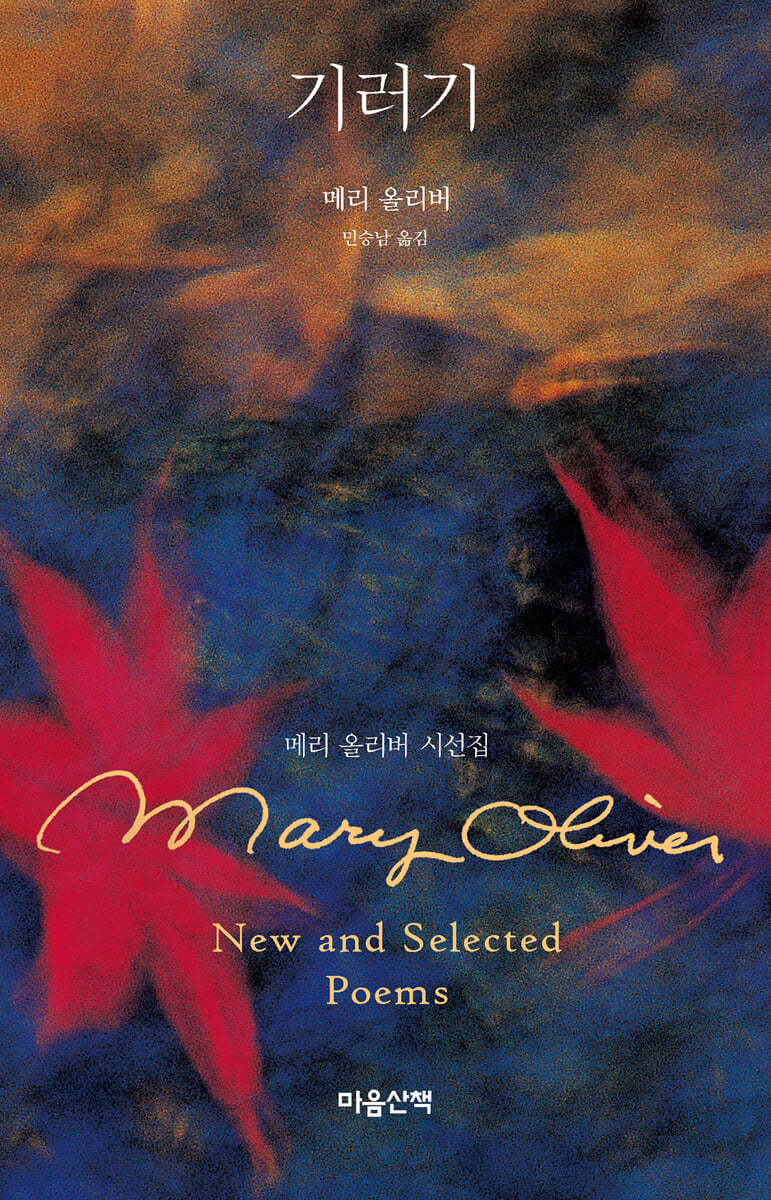
wild goose
 |
Description
Book Introduction
Following Mary Oliver's first poetry collection, A Thousand Mornings, published in Korea, the National Book Award-winning poetry collection, Wild Geese, is now introduced by Maumsanchaek. "Wild Geese" contains 142 carefully selected poems written between 1963 and 1992, including the Pulitzer Prize-winning poetry collection "American Primitive." The poet's heartfelt love for nature can be felt in his poems that sing of the wonder and beauty of the wild, written daily through his walks through the forests and sea of Provincetown, Massachusetts. It will be a great opportunity for readers to delve deeper into Mary Oliver's world of poetry. The poems that have been circulated domestically are also notable. This is Mary Oliver's poem "Wild Geese," which became famous when author Kim Yeon-su quoted it in her novel "Whoever You Are, How Lonely You Are." This poem is Mary Oliver's representative poem, widely loved not only in Korea but also in the United States, to the point where it is used to decorate university dormitories. In addition to poems praising nature, it also includes a variety of poems about writers he loved, such as Blake, James Wright, and Stanley Kunitz, as well as poems about the poet's own family. "Wild Geese," translated by professional translator Seungnam Min and accompanied by beautiful photographs by photographer Hangu Lee, will convey to readers a deep affection for the world and the joy of life. |
- You can preview some of the book's contents.
Preview
index
1
rain
Blue-crowned Butterfly
When death comes
Picking Blueberries, Austerlitz, New York, 1957
Dog's Grave
Golden Road
Waterfall (for May Swenson)
Peony
This morning again in the pine forest
Marengo Swamp
Fields near Linden, Alabama
Northern cormorant
whelk
Crocodile City
hawk
goldfinch
rice
poppy
The poison that permeates the morning air
grief
morning
water snake
common heron
Snowshoe Rabbit
sun
winter
A lonely, white field
A hummingbird pauses for a moment on a daffodil
white flowers
October
2
Some questions you might ask
Moccasin flower
Buddha's Last Teachings
spring
Singapore
Hermit crab
lily
swan
Indonesia
How many egrets
Five o'clock in the morning in the pine forest
The little owl living in the orchard
Laughing Kingfisher
Water lilies blooming on black water
nature
pond
summer day
Rose, late summer
perhaps
A snowy owl flying in and out of the field
3
dome shark
Morning Poem
anger
wild goose
Robert Schumann
starfish
travel
visitor
Stanley Kunitz
Just one or two things
turtle
sunrise
Two kinds of liberation
sight
acid
moth
1945?1985, a poem for Memorial Day
sunflower
4
August
mushroom
lightning
common heron
First snow
ghost
eagle
Rain in Ohio
Boston University Hospital
sitting fan
flowering
White Night
fish
Crossing the swamp
humpback whale
meeting
ocean
happiness
Tecumseh
In the Blackwater Forest
5
Fall asleep in the forest
sea mussel
black snake
spring
Strawberry Moon
Truro Bear
Entering the kingdom
Deer Moon─ If you look at the insect guide
dream
lamplight
Poem of Bone
Aunt Leaf
Hunter's Moon - Eating Bear
The last days
black walnut
Wolf Moon
Night Traveler
6
Aunt LG's Night Music
rural areas
brook
rose
Winter in the countryside
family
ice
clam seller
Scooping water out of the boat
crow
rabbit
Three Poems for James Wright
At the Blackwater Pond
7
Hattie Bloom
Spring in the Classroom
Alex
Learning about Indians
night flight
Anne
solution
Eskimos don't have a word for 'war'
encounter
Magellan
Go to Walden
River Styx, Ohio
8
Without traveling
house
Beyond the Snow Belt
A letter from home
Dream of trees
The Murderer's House
Growing up in the countryside
Teaching swimming
Morning in a New Land
Swans of the Air River
return
At the end of winter
rain
Blue-crowned Butterfly
When death comes
Picking Blueberries, Austerlitz, New York, 1957
Dog's Grave
Golden Road
Waterfall (for May Swenson)
Peony
This morning again in the pine forest
Marengo Swamp
Fields near Linden, Alabama
Northern cormorant
whelk
Crocodile City
hawk
goldfinch
rice
poppy
The poison that permeates the morning air
grief
morning
water snake
common heron
Snowshoe Rabbit
sun
winter
A lonely, white field
A hummingbird pauses for a moment on a daffodil
white flowers
October
2
Some questions you might ask
Moccasin flower
Buddha's Last Teachings
spring
Singapore
Hermit crab
lily
swan
Indonesia
How many egrets
Five o'clock in the morning in the pine forest
The little owl living in the orchard
Laughing Kingfisher
Water lilies blooming on black water
nature
pond
summer day
Rose, late summer
perhaps
A snowy owl flying in and out of the field
3
dome shark
Morning Poem
anger
wild goose
Robert Schumann
starfish
travel
visitor
Stanley Kunitz
Just one or two things
turtle
sunrise
Two kinds of liberation
sight
acid
moth
1945?1985, a poem for Memorial Day
sunflower
4
August
mushroom
lightning
common heron
First snow
ghost
eagle
Rain in Ohio
Boston University Hospital
sitting fan
flowering
White Night
fish
Crossing the swamp
humpback whale
meeting
ocean
happiness
Tecumseh
In the Blackwater Forest
5
Fall asleep in the forest
sea mussel
black snake
spring
Strawberry Moon
Truro Bear
Entering the kingdom
Deer Moon─ If you look at the insect guide
dream
lamplight
Poem of Bone
Aunt Leaf
Hunter's Moon - Eating Bear
The last days
black walnut
Wolf Moon
Night Traveler
6
Aunt LG's Night Music
rural areas
brook
rose
Winter in the countryside
family
ice
clam seller
Scooping water out of the boat
crow
rabbit
Three Poems for James Wright
At the Blackwater Pond
7
Hattie Bloom
Spring in the Classroom
Alex
Learning about Indians
night flight
Anne
solution
Eskimos don't have a word for 'war'
encounter
Magellan
Go to Walden
River Styx, Ohio
8
Without traveling
house
Beyond the Snow Belt
A letter from home
Dream of trees
The Murderer's House
Growing up in the countryside
Teaching swimming
Morning in a New Land
Swans of the Air River
return
At the end of winter
Detailed image
.jpg)
Into the book
This morning's practice was no less than Monet's water lilies.
You look beautiful.
And I am no longer a useful being,
I don't want to be a gentle being,
Leading the children of the fields to the textbook of civilization
I don't want to teach them that they are better (or worse) than grass.
--- p.24, from "Rain"
When my life ends, I want to say,
I was a bride who married a miracle.
He was a groom who held the world in his arms.
--- p.32, from “When Death Comes”
Do you love this world?
Do you cherish your simple, silky life?
Do you worship the green grass that stands above fear?
--- p.47, from “Peony”
One morning
As the fox came down the hill with a shining and proud appearance,
You didn't see me─and I thought.
This is the world.
I'm not in here.
The world is beautiful.
--- p.95, from “October”
If the world were just pain and logic, who would want it?
Of course, the world isn't like that.
I'm not talking about some miracle or anything, just
It's a story about the light that shines brightly in life.
The way she unfolded and folded the blue cloth,
The smile you made just for me, so
This city is full of trees and birds.
--- p.110~111, from “Singapore”
You don't have to be nice.
In repentance, I walk through the vast desert
You don't have to cross on your knees.
Just a fragile animal called your body
Just let what you love be loved.
Tell me your despair, and I'll tell you mine.
Meanwhile, the world keeps turning.
Meanwhile, the sun and the transparent pebble-like rain
Passing across the landscape,
(…)
Whoever you are, no matter how lonely you are
The world is left to your imagination,
--- p.163, from "Geese"
For a long time I just
I tried to love life.
however
Butterfly
In the wind, lightly, I flew up.
“Don’t love life too much.”
The butterfly said so,
Into the world
It's gone.
--- p.178~179, from “Just One or Two Things”
A miracle is not a simple change.
Not made with a strong and hot rebirth.
Not softness or longing, but boldness,
The power to break through a frozen waterfall, breakthrough.
Ferns, leaves, flowers, their elegance and peace
The final elaborate decoration is,
Waiting to rise and prosper.
Opening a path doesn't have to be pretty.
--- p.226~227, from “Sitting Fan”
I let go of the branches the bear was holding in his hand.
Lifting your honey-stained mouth toward the leaves
I saw it, I saw the two heavy arms,
All sweetness and wings
As if I were to fly away like a giant bee,
Overgrown with vines, roses and clover
Go down to the perfect meadow
Wandering, each dazzling day
Swaying between flowers
In a very thin net
I'm falling asleep.
--- p.246, from "Happiness"
To survive in this world
Three things
You have to be able to do it.
To love finite life,
that your life depends on it
Knowing it and embracing it,
And when it's time to let go
Let go.
--- p.251~252, from “In the Blackwater Forest”
My lifelong dream is
Lying by the slowly flowing river
Looking at the light in the trees─
Just for a while
Become a rich lens that focuses on
Learning something.
--- p.267, from “Entering the Kingdom”
Sweet world,
It starts without any signs or sounds
Don't try to embarrass me with love or poetry,
There is still ice on the river
Spring is far away, I wake up in the dark
To the sounds of underground explosions calling for spring
Listen with your heart pounding.
You look beautiful.
And I am no longer a useful being,
I don't want to be a gentle being,
Leading the children of the fields to the textbook of civilization
I don't want to teach them that they are better (or worse) than grass.
--- p.24, from "Rain"
When my life ends, I want to say,
I was a bride who married a miracle.
He was a groom who held the world in his arms.
--- p.32, from “When Death Comes”
Do you love this world?
Do you cherish your simple, silky life?
Do you worship the green grass that stands above fear?
--- p.47, from “Peony”
One morning
As the fox came down the hill with a shining and proud appearance,
You didn't see me─and I thought.
This is the world.
I'm not in here.
The world is beautiful.
--- p.95, from “October”
If the world were just pain and logic, who would want it?
Of course, the world isn't like that.
I'm not talking about some miracle or anything, just
It's a story about the light that shines brightly in life.
The way she unfolded and folded the blue cloth,
The smile you made just for me, so
This city is full of trees and birds.
--- p.110~111, from “Singapore”
You don't have to be nice.
In repentance, I walk through the vast desert
You don't have to cross on your knees.
Just a fragile animal called your body
Just let what you love be loved.
Tell me your despair, and I'll tell you mine.
Meanwhile, the world keeps turning.
Meanwhile, the sun and the transparent pebble-like rain
Passing across the landscape,
(…)
Whoever you are, no matter how lonely you are
The world is left to your imagination,
--- p.163, from "Geese"
For a long time I just
I tried to love life.
however
Butterfly
In the wind, lightly, I flew up.
“Don’t love life too much.”
The butterfly said so,
Into the world
It's gone.
--- p.178~179, from “Just One or Two Things”
A miracle is not a simple change.
Not made with a strong and hot rebirth.
Not softness or longing, but boldness,
The power to break through a frozen waterfall, breakthrough.
Ferns, leaves, flowers, their elegance and peace
The final elaborate decoration is,
Waiting to rise and prosper.
Opening a path doesn't have to be pretty.
--- p.226~227, from “Sitting Fan”
I let go of the branches the bear was holding in his hand.
Lifting your honey-stained mouth toward the leaves
I saw it, I saw the two heavy arms,
All sweetness and wings
As if I were to fly away like a giant bee,
Overgrown with vines, roses and clover
Go down to the perfect meadow
Wandering, each dazzling day
Swaying between flowers
In a very thin net
I'm falling asleep.
--- p.246, from "Happiness"
To survive in this world
Three things
You have to be able to do it.
To love finite life,
that your life depends on it
Knowing it and embracing it,
And when it's time to let go
Let go.
--- p.251~252, from “In the Blackwater Forest”
My lifelong dream is
Lying by the slowly flowing river
Looking at the light in the trees─
Just for a while
Become a rich lens that focuses on
Learning something.
--- p.267, from “Entering the Kingdom”
Sweet world,
It starts without any signs or sounds
Don't try to embarrass me with love or poetry,
There is still ice on the river
Spring is far away, I wake up in the dark
To the sounds of underground explosions calling for spring
Listen with your heart pounding.
--- p.354, from “Growing Up in the Countryside”
Publisher's Review
“No matter who you are or how lonely you are,
The world is left to your imagination.”
Mary Oliver's National Book Award-winning "The Wild Goose" is published for the first time in Korea.
Following Mary Oliver's first poetry collection, A Thousand Mornings, published in Korea, the National Book Award-winning poetry collection, Wild Geese, is now introduced by Maumsanchaek.
"Geese" contains 142 carefully selected poems from his writings, including the Pulitzer Prize-winning poetry collection "American Primitive."
Mary Oliver, who lived most of her life in Provincetown, Massachusetts, spent her daily walks in the forests and along the beach, singing of the wonders and beauty of the wild.
Called a “wetland ranger” and “a relentless guide to the natural world,” he was also named “America’s best-selling poet” by The New York Times.
"The Wild Geese," a chronological compilation of Mary Oliver's poetry, offers a valuable opportunity to delve deeply into her poetic world.
The poems that have been circulated domestically are also notable.
This is Mary Oliver's poem "Wild Geese," which became famous when author Kim Yeon-su quoted it in her novel "Whoever You Are, How Lonely You Are."
This poem is a famous work by Mary Oliver, famous not only in Korea but also in the United States. Joe Biden read it at the 8th anniversary memorial service for the September 11 attacks, and it was so widely loved that it was used to decorate college students' dorm rooms.
This collection also includes a variety of poems, including poems praising nature, as well as poems about artists he loved, such as William Blake, James Wright, and Robert Schumann, as well as poems about the poet's own family.
"Wild Geese," translated by Seungnam Min, winner of the 15th Yuyoung Translation Award and a Mary Oliver expert, and accompanied by the beautiful photographs of photographer Han-gu Lee, will convey to readers the poet's deep affection for the world and the joy of life.
You don't have to be nice.
In repentance, I walk through the vast desert
You don't have to cross on your knees.
Just a fragile animal called your body
Just let what you love be loved.
Tell me your despair, and I'll tell you mine.
Meanwhile, the world keeps turning.
Meanwhile, the sun and the transparent pebble-like rain
Passing across the landscape,
(…)
Whoever you are, no matter how lonely you are
The world is left to your imagination,
-"wild goose"
“A wild eyewitness account so detailed”
A poet's vivid eyewitness accounts of the wild, the wonders of nature.
In an interview given before her death, Mary Oliver said that she always carried a notebook with her to write down ideas as they came to her, and after experiencing the embarrassment of not having a pen, she hid pens in the trees along her walks.
In this way, Mary Oliver observed nature firsthand and conveyed the wonders of the wild to her readers through exquisite descriptions and metaphors.
He admires the beauty of nature, which flows according to its own laws regardless of human will, and, watching a turtle crawl across the sand to lay eggs, he marvels at how the turtle is doing what it must do, following its own nature and its “long-standing, blind wish.”
Recalling the experience of falling asleep in a blueberry field and being awakened by a collision with a deer, I praise my happy encounter with nature.
Mary Oliver's gaze, which explores the relationship between humans and nature, even reaches the desire to become one with nature.
In his dreams, he sees a mother buffalo giving birth to a calf and asks her to give him a place to join them, and in "August," he empathizes with a bear eating blackberries and expresses its joy.
The poet's perspective, which accepts death as a process of life, is also special.
In “Fish,” the speaker sings of the mystery of the “long journey of life” in nature, where one eats and is eaten while eating fish, and in “When Death Comes,” he confesses that if he were to face death, he would “enter that door full of curiosity.”
To survive in this world
Three things
You have to be able to do it.
To love finite life,
that your life depends on it
Knowing it and embracing it,
And when it's time to let go
Let go.
-「In the Blackwater Forest」
From his early poems written in the 1960s to his representative works
Into the world of Mary Oliver's poetry
In 『Wild Geese』, a collection of poems written by Mary Oliver over a period of 30 years, including her first collection 『Without Traveling』 (1963), you can find poems that deal with various subjects, not just nature.
First, the poems written about the poet's favorite artists stand out.
In "The Blue Butterfly," he writes about James Blake as a boy who turned his eyes away from real life and turned to "a life of imagination," and in "Three Poems for James Wright," he conveys the poignant mourning for the death of poet James Wright.
It also includes a poem of the same name about the musician Robert Schumann, whom Mary Oliver says she 'never went a day without thinking about'.
In her poems reminiscing about her childhood, we see aspects of Mary Oliver before she became a poet who sang of nature.
He writes about his memories of going to mate horses ("Spring"), and humorously describes his anger at being stuck in the classroom on a full-blown spring day, captivated by the nature outside ("Spring in the Classroom").
In “Growing Up in the Countryside,” he says that because he grew up in the countryside, he “had the five senses of trees and the sixth sense of water,” and thus was able to sensitively capture the signs of nature.
The attempts to reach out to family and those around them also attract attention.
In 『River Styx, Ohio』, the theme of death is thick in the poem, from the title to the content, about the grandmother, her elderly mother, and Mary Oliver's experience of going to the River Styx (also the name of the river of the underworld in Greek mythology) in Ohio.
"Aunt Elsie's Night Music" is a touching story about the poet's love for his elderly aunt who suffers from auditory hallucinations, and "Boston University Hospital" is a touching story about the poet's fear of his loved one's absence while visiting them in the hospital.
Grandma was standing between the kettles and ladles.
With a bright smile and ungrammatical words,
You are blessed, you will definitely become a great person.
So I studied to please my grandmother─
In that year of abundance, we picked all kinds of fruits
I will always remember my grandmother who cooked and cooled the food and put a name tag on it.
-"solution"
The world is left to your imagination.”
Mary Oliver's National Book Award-winning "The Wild Goose" is published for the first time in Korea.
Following Mary Oliver's first poetry collection, A Thousand Mornings, published in Korea, the National Book Award-winning poetry collection, Wild Geese, is now introduced by Maumsanchaek.
"Geese" contains 142 carefully selected poems from his writings, including the Pulitzer Prize-winning poetry collection "American Primitive."
Mary Oliver, who lived most of her life in Provincetown, Massachusetts, spent her daily walks in the forests and along the beach, singing of the wonders and beauty of the wild.
Called a “wetland ranger” and “a relentless guide to the natural world,” he was also named “America’s best-selling poet” by The New York Times.
"The Wild Geese," a chronological compilation of Mary Oliver's poetry, offers a valuable opportunity to delve deeply into her poetic world.
The poems that have been circulated domestically are also notable.
This is Mary Oliver's poem "Wild Geese," which became famous when author Kim Yeon-su quoted it in her novel "Whoever You Are, How Lonely You Are."
This poem is a famous work by Mary Oliver, famous not only in Korea but also in the United States. Joe Biden read it at the 8th anniversary memorial service for the September 11 attacks, and it was so widely loved that it was used to decorate college students' dorm rooms.
This collection also includes a variety of poems, including poems praising nature, as well as poems about artists he loved, such as William Blake, James Wright, and Robert Schumann, as well as poems about the poet's own family.
"Wild Geese," translated by Seungnam Min, winner of the 15th Yuyoung Translation Award and a Mary Oliver expert, and accompanied by the beautiful photographs of photographer Han-gu Lee, will convey to readers the poet's deep affection for the world and the joy of life.
You don't have to be nice.
In repentance, I walk through the vast desert
You don't have to cross on your knees.
Just a fragile animal called your body
Just let what you love be loved.
Tell me your despair, and I'll tell you mine.
Meanwhile, the world keeps turning.
Meanwhile, the sun and the transparent pebble-like rain
Passing across the landscape,
(…)
Whoever you are, no matter how lonely you are
The world is left to your imagination,
-"wild goose"
“A wild eyewitness account so detailed”
A poet's vivid eyewitness accounts of the wild, the wonders of nature.
In an interview given before her death, Mary Oliver said that she always carried a notebook with her to write down ideas as they came to her, and after experiencing the embarrassment of not having a pen, she hid pens in the trees along her walks.
In this way, Mary Oliver observed nature firsthand and conveyed the wonders of the wild to her readers through exquisite descriptions and metaphors.
He admires the beauty of nature, which flows according to its own laws regardless of human will, and, watching a turtle crawl across the sand to lay eggs, he marvels at how the turtle is doing what it must do, following its own nature and its “long-standing, blind wish.”
Recalling the experience of falling asleep in a blueberry field and being awakened by a collision with a deer, I praise my happy encounter with nature.
Mary Oliver's gaze, which explores the relationship between humans and nature, even reaches the desire to become one with nature.
In his dreams, he sees a mother buffalo giving birth to a calf and asks her to give him a place to join them, and in "August," he empathizes with a bear eating blackberries and expresses its joy.
The poet's perspective, which accepts death as a process of life, is also special.
In “Fish,” the speaker sings of the mystery of the “long journey of life” in nature, where one eats and is eaten while eating fish, and in “When Death Comes,” he confesses that if he were to face death, he would “enter that door full of curiosity.”
To survive in this world
Three things
You have to be able to do it.
To love finite life,
that your life depends on it
Knowing it and embracing it,
And when it's time to let go
Let go.
-「In the Blackwater Forest」
From his early poems written in the 1960s to his representative works
Into the world of Mary Oliver's poetry
In 『Wild Geese』, a collection of poems written by Mary Oliver over a period of 30 years, including her first collection 『Without Traveling』 (1963), you can find poems that deal with various subjects, not just nature.
First, the poems written about the poet's favorite artists stand out.
In "The Blue Butterfly," he writes about James Blake as a boy who turned his eyes away from real life and turned to "a life of imagination," and in "Three Poems for James Wright," he conveys the poignant mourning for the death of poet James Wright.
It also includes a poem of the same name about the musician Robert Schumann, whom Mary Oliver says she 'never went a day without thinking about'.
In her poems reminiscing about her childhood, we see aspects of Mary Oliver before she became a poet who sang of nature.
He writes about his memories of going to mate horses ("Spring"), and humorously describes his anger at being stuck in the classroom on a full-blown spring day, captivated by the nature outside ("Spring in the Classroom").
In “Growing Up in the Countryside,” he says that because he grew up in the countryside, he “had the five senses of trees and the sixth sense of water,” and thus was able to sensitively capture the signs of nature.
The attempts to reach out to family and those around them also attract attention.
In 『River Styx, Ohio』, the theme of death is thick in the poem, from the title to the content, about the grandmother, her elderly mother, and Mary Oliver's experience of going to the River Styx (also the name of the river of the underworld in Greek mythology) in Ohio.
"Aunt Elsie's Night Music" is a touching story about the poet's love for his elderly aunt who suffers from auditory hallucinations, and "Boston University Hospital" is a touching story about the poet's fear of his loved one's absence while visiting them in the hospital.
Grandma was standing between the kettles and ladles.
With a bright smile and ungrammatical words,
You are blessed, you will definitely become a great person.
So I studied to please my grandmother─
In that year of abundance, we picked all kinds of fruits
I will always remember my grandmother who cooked and cooled the food and put a name tag on it.
-"solution"
GOODS SPECIFICS
- Publication date: November 30, 2021
- Page count, weight, size: 380 pages | 578g | 135*210*25mm
- ISBN13: 9788960907034
- ISBN10: 8960907030
You may also like
카테고리
korean


korean

![GQ KOREA Mark (Monthly): December [2025]](http://librairie.coreenne.fr/cdn/shop/files/8ef265dbbfbf186523ed75ba7319009d.jpg?v=1765340328&width=3840)


