

Lee Se-rin Guide
 |
Description
Book Introduction
- A word from MD
-
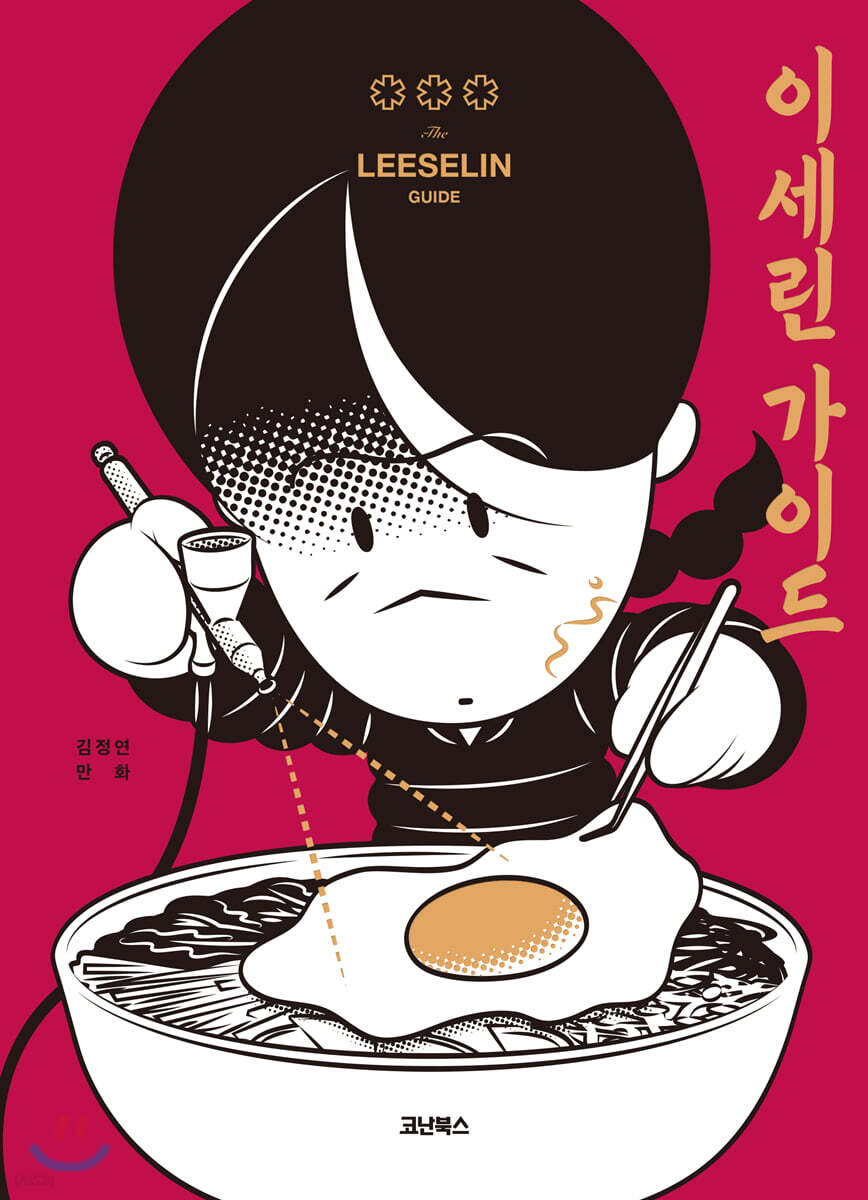
Kim Jeong-yeon's food comics, not food comicsA new work by author Kim Jeong-yeon, who received much attention with her debut work, “How to Raise a Child Alone.”
The protagonist, a prominent daughter of a family with a knack for making fakes and a food model maker, calmly confesses the stories, memories, and thoughts surrounding the creation of fifteen food models.
The unique and rich world of Kim Jeong-yeon has returned.
February 2, 2021. Comics/Light Novel PD Kim Yu-ri
Artist Kim Jeong-yeon, who made a leap forward in Korean comics and Korean women's narratives with her debut webtoon, "How to Raise a Child Alone," has returned with a new webtoon, "Lee Se-rin's Guide."
Based on the world of food model maker Lee Se-rin, who depicts food models so realistically and charmingly as if telling the story of a real person, and adding vivid imagination to the endless stories surrounding food, a truly unique yet believable world has been meticulously constructed within a single comic book.
As you follow Lee Se-rin's monologue, which continues on each of the fifteen menu items with a mischievous and expansive quality, you will nod in agreement as to why the author chose food as her subject.
And as you read each and every one of the well-written stories, you'll find yourself empathizing with them to the point where you'll want to raise your hand and say, "Me too! I was like that too!"
Based on the world of food model maker Lee Se-rin, who depicts food models so realistically and charmingly as if telling the story of a real person, and adding vivid imagination to the endless stories surrounding food, a truly unique yet believable world has been meticulously constructed within a single comic book.
As you follow Lee Se-rin's monologue, which continues on each of the fifteen menu items with a mischievous and expansive quality, you will nod in agreement as to why the author chose food as her subject.
And as you read each and every one of the well-written stories, you'll find yourself empathizing with them to the point where you'll want to raise your hand and say, "Me too! I was like that too!"
- You can preview some of the book's contents.
Preview
index
Episode 1 California Roll
Episode 2: Waffles and Pupa
Episode 3 Bibimbap
Episode 4: Cabbage Kimchi
Episode 5 Dried Persimmons and Oysters
Episode 6: Rice Cake Soup and Seaweed Soup
Episode 7 Spicy Ramen
Episode 8 Green Tea Cream Baumkuchen
Episode 9: Rice
Episode 10: A Table Setting
Episode 11 Assorted Fried Food
Episode 12: Cheongju and Takju
Episode 13: Injeolmi Bingsu and Patbingsu
Episode 14: Bulgogi Lunchbox
Episode 15 Weekend Stew
Reviews
Episode 2: Waffles and Pupa
Episode 3 Bibimbap
Episode 4: Cabbage Kimchi
Episode 5 Dried Persimmons and Oysters
Episode 6: Rice Cake Soup and Seaweed Soup
Episode 7 Spicy Ramen
Episode 8 Green Tea Cream Baumkuchen
Episode 9: Rice
Episode 10: A Table Setting
Episode 11 Assorted Fried Food
Episode 12: Cheongju and Takju
Episode 13: Injeolmi Bingsu and Patbingsu
Episode 14: Bulgogi Lunchbox
Episode 15 Weekend Stew
Reviews
Detailed image
.jpg)
Publisher's Review
Kim Jeong-yeon, a pioneer in Korean comics, returns.
Artist Kim Jeong-yeon, who made a leap forward in Korean comics and Korean women's narratives with her debut webtoon, "How to Raise a Child Alone," has returned with a new webtoon, "Lee Se-rin's Guide."
For his second work, he chose the format of a single-volume comic book and the theme of food.
Lee Se-rin's guide.
As if to betray its somehow familiar-sounding title, the book, instead of indulging in sensual gourmet food, lavishly tells the story of the protagonist, Lee Se-rin, making and eating food.
Tenacious imagination, intricate story
The allure of high-density Khan comics
Lee Se-rin.
Born into a family with a knack for making fakes, she dreamed of becoming a model maker for the National Museum of Natural History, but somehow, there was no sign of a natural history museum being built in Korea. So, she ended up becoming a food model maker, but she has since become a respectable self-employed professional who can handle even the most difficult orders.
This comic, which has a strong sense of humor from the main character's profile, combines the author's unique, persistent imagination with the charm of Khan comics to provide a more dense and entertaining experience.
Based on the world of food model makers, which is depicted realistically and attractively as if telling the story of a real person, and vivid imagination added to the colorful stories surrounding food, a truly unique yet believable world has been meticulously constructed within a single comic book.
With fifteen menus
A sumptuously prepared table of stories
Because of Ise-rin, who doesn't like to eat much, her mother always gets a cold look.
Student Lee Se-rin is concerned about her teacher and classmates because she cannot finish her lunch on time.
Even as adults, we continue to be looked at and evaluated on our bodies.
There are conflicts that arise at every family event, such as the three-meal nagging banquet held under the name of table manners education, kimchi-making, and ancestral rites…
Like this, the food we eat three times a day for the rest of our lives is not remembered only for its taste.
Good and bad memories accumulate in us, and we share those stories while eating.
Lee Se-rin also monologues about the experiences and emotions she had while making and eating food while making food models.
As you follow Lee Se-rin's monologue, which continues on each of the fifteen menu items with a mischievous and expansive quality, you will nod in agreement as to why the author chose food as her subject.
While guiding you through the world of food model making, the story behind each menu item is lavishly presented, and each episode is enriched with diverse themes, such as the world of batter and the body, seaweed soup and food superstitions, and spicy food and mukbang.
As you read each story, which is so densely and skillfully connected, you'll find yourself empathizing with it to the point where you'll want to raise your hand and say, "Me too! I did that too!"
Family is like an amusement park restaurant,
Languages of Deeper Empathy
This confession, casually made by Lee Se-rin while making waffles at the amusement park's request, makes you giggle and follow the joke, but then you feel as if you've been caught off guard and your heart drops.
“After all, you can’t choose your family,
There are many cases where people are not careful with each other.
It's like restaurants inside an amusement park
It's the same reason why it doesn't have to be a good restaurant.
* No competing businesses.
“If you don’t like it, there are no other options.”
In comics, family is as important as food.
And since Lee Se-rin has two older brothers, she is called the 'daughter of the famous person', like a person who is served on top of food, so the story of her family is ultimately a story about herself as a woman.
Making a model of bibimbap reminds me of the days when we would pack up all the food for our guests during large family holidays and then mix the leftovers together to eat. Making a table setting reminds me of my school days when we were taught 'femininity' in the name of etiquette. Making batter for fried food makes me think about myself, who was ashamed of my body and hid it tightly.
Every word that Lee Se-rin thinks about her family and herself fully reveals the charm of “Lee Se-rin Guide,” which aims to be a “food comic that is not a food comic.”
And so, returning to food, it explores what it means to prepare and eat food, creating a unique and moving food comic that leaves a deeper impression.
Artist Kim Jeong-yeon, who made a leap forward in Korean comics and Korean women's narratives with her debut webtoon, "How to Raise a Child Alone," has returned with a new webtoon, "Lee Se-rin's Guide."
For his second work, he chose the format of a single-volume comic book and the theme of food.
Lee Se-rin's guide.
As if to betray its somehow familiar-sounding title, the book, instead of indulging in sensual gourmet food, lavishly tells the story of the protagonist, Lee Se-rin, making and eating food.
Tenacious imagination, intricate story
The allure of high-density Khan comics
Lee Se-rin.
Born into a family with a knack for making fakes, she dreamed of becoming a model maker for the National Museum of Natural History, but somehow, there was no sign of a natural history museum being built in Korea. So, she ended up becoming a food model maker, but she has since become a respectable self-employed professional who can handle even the most difficult orders.
This comic, which has a strong sense of humor from the main character's profile, combines the author's unique, persistent imagination with the charm of Khan comics to provide a more dense and entertaining experience.
Based on the world of food model makers, which is depicted realistically and attractively as if telling the story of a real person, and vivid imagination added to the colorful stories surrounding food, a truly unique yet believable world has been meticulously constructed within a single comic book.
With fifteen menus
A sumptuously prepared table of stories
Because of Ise-rin, who doesn't like to eat much, her mother always gets a cold look.
Student Lee Se-rin is concerned about her teacher and classmates because she cannot finish her lunch on time.
Even as adults, we continue to be looked at and evaluated on our bodies.
There are conflicts that arise at every family event, such as the three-meal nagging banquet held under the name of table manners education, kimchi-making, and ancestral rites…
Like this, the food we eat three times a day for the rest of our lives is not remembered only for its taste.
Good and bad memories accumulate in us, and we share those stories while eating.
Lee Se-rin also monologues about the experiences and emotions she had while making and eating food while making food models.
As you follow Lee Se-rin's monologue, which continues on each of the fifteen menu items with a mischievous and expansive quality, you will nod in agreement as to why the author chose food as her subject.
While guiding you through the world of food model making, the story behind each menu item is lavishly presented, and each episode is enriched with diverse themes, such as the world of batter and the body, seaweed soup and food superstitions, and spicy food and mukbang.
As you read each story, which is so densely and skillfully connected, you'll find yourself empathizing with it to the point where you'll want to raise your hand and say, "Me too! I did that too!"
Family is like an amusement park restaurant,
Languages of Deeper Empathy
This confession, casually made by Lee Se-rin while making waffles at the amusement park's request, makes you giggle and follow the joke, but then you feel as if you've been caught off guard and your heart drops.
“After all, you can’t choose your family,
There are many cases where people are not careful with each other.
It's like restaurants inside an amusement park
It's the same reason why it doesn't have to be a good restaurant.
* No competing businesses.
“If you don’t like it, there are no other options.”
In comics, family is as important as food.
And since Lee Se-rin has two older brothers, she is called the 'daughter of the famous person', like a person who is served on top of food, so the story of her family is ultimately a story about herself as a woman.
Making a model of bibimbap reminds me of the days when we would pack up all the food for our guests during large family holidays and then mix the leftovers together to eat. Making a table setting reminds me of my school days when we were taught 'femininity' in the name of etiquette. Making batter for fried food makes me think about myself, who was ashamed of my body and hid it tightly.
Every word that Lee Se-rin thinks about her family and herself fully reveals the charm of “Lee Se-rin Guide,” which aims to be a “food comic that is not a food comic.”
And so, returning to food, it explores what it means to prepare and eat food, creating a unique and moving food comic that leaves a deeper impression.
GOODS SPECIFICS
- Date of issue: February 1, 2021
- Format: Hardcover book binding method guide
- Page count, weight, size: 285 pages | 584g | 152*215*22mm
- ISBN13: 9791188605170
- ISBN10: 1188605178
You may also like
카테고리
korean


korean

![GQ KOREA Mark (Monthly): December [2025]](http://librairie.coreenne.fr/cdn/shop/files/8ef265dbbfbf186523ed75ba7319009d.jpg?v=1765340328&width=3840)


