

Sweet Revenge Co., Ltd.
 |
Description
Book Introduction
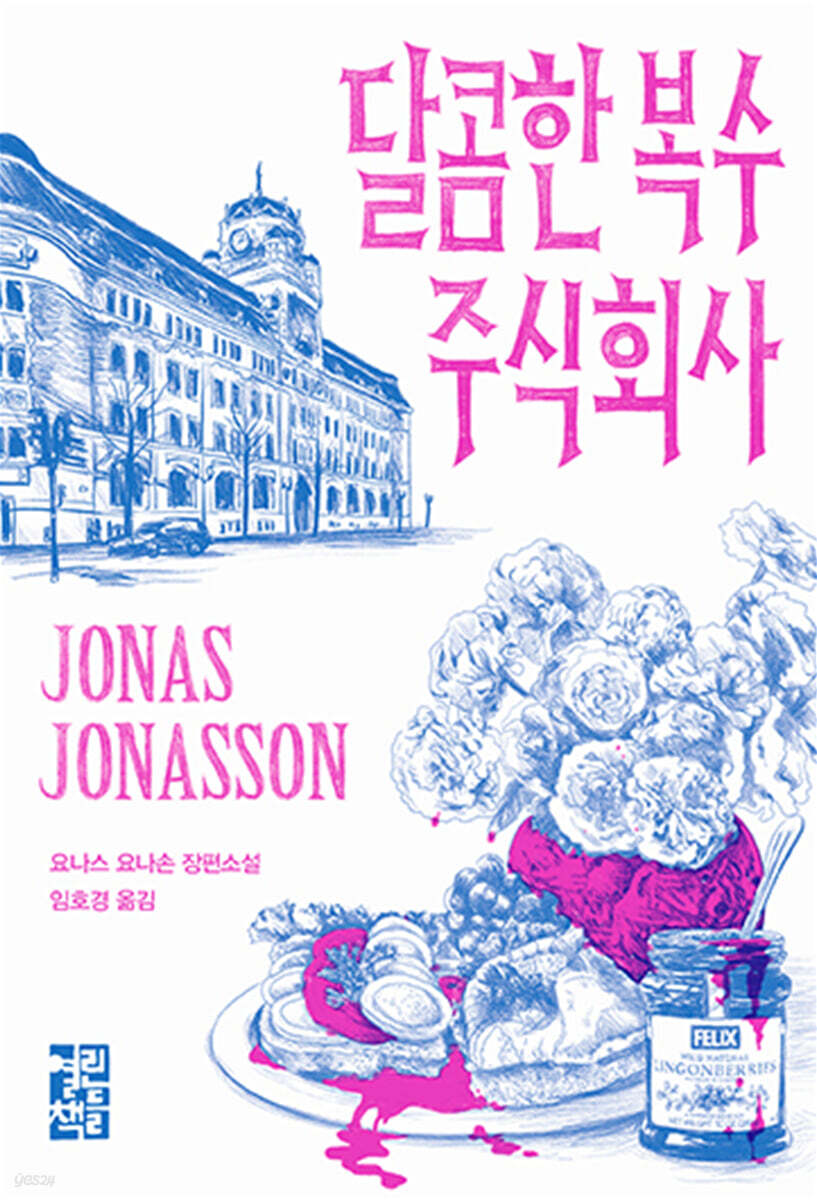
A new book by Jonas Jonasson, the bestselling author with 16 million copies worldwide. Want to get revenge without breaking the law? We've got you covered! Bestselling author Jonas Jonasson's novel, Sweet Revenge Inc., has been published. Jonasson is a world-renowned author whose four novels have sold over 16 million copies worldwide. This book, his fifth, also appeared on bestseller lists across Europe immediately after its publication, and in Germany it sold out within a month. The translation was done by professional translator Lim Ho-kyung, who is renowned for preserving Jonasson's unique writing style and language. Viktor, a cunning and hypocritical art dealer living in Stockholm, Sweden, uses despicable methods to steal his wife's fortune and divorce her. He also takes Kevin, his son from a relationship with a prostitute, to the Kenyan savannah and abandons him, intending to kill him. Kevin is rescued by the indigenous healer Ole Mbatian and transformed into a Maasai warrior. However, he is horrified to learn that the coming-of-age ceremony includes circumcision and returns to Sweden. Kevin meets Viktor's ex-wife, Yannu, by chance. The two people who have joined forces dream of revenge, but the one who appears before them is Hugo, the CEO of 'Sweet Revenge Corporation', which carries out revenge on their behalf. Hugo plans revenge for the two men with Ole Mbatyan, who came from Kenya to Sweden in search of his adopted son. |
- You can preview some of the book's contents.
Preview
Into the book
"Well, I can't help it!"
He would often shrug his shoulders and say:
In other words, it was saying that we still had to struggle a little more.
Anyway, in a cheerful mood.
--- p.15
This time I didn't head back to my home country, which was a good thing.
Adolf may not have known who she was yet, but she was everything he hated.
She was not only an expressionist, but also close to people of color, including black people.
He himself was also Jewish.
Adding communism here would be the ultimate flaw.
--- p.99
When the neighbor brought up the city hall again, Hugo wanted to strangle him.
No, I wanted to throw it in the trash.
No, I wanted to make him eat all the garbage he produced.
Fortunately, he did none of these.
He accepted that he had the worst neighbors in Sweden.
In other words, he was resigned to action.
But in my thoughts it wasn't like that.
For months, as Hugo sat sipping his morning coffee and looking out at his neighbors, his yard, his trash cans, and his driveway, the only thing on his mind was the trash can dispute.
How can I get revenge in the coolest way?
--- p.114-115
Yes, revenge as a concept.
Revenge as a business model.
Hugo was a wizard who knew how to package marmalade, potato chips, and scratch-off lottery tickets into something more valuable than they actually were.
If you can sell such nonsense, why not do the same with revenge?
Working from home.
--- p.125
"By the way, didn't that... to borrow the teacher's expression, 'the loser' sometimes get hit with an earplug or two in the name of 'discipline' during his school days?"
“Yes, that’s right,” Roessler admitted honestly.
"In fact, there are times when you have no choice but to use earplugs during the three years that teachers and students have to live inextricably intertwined."
"So he took revenge on the teacher?"
"yes."
"And you want to give it back to me, sir?"
"He started it first!"
--- p.135-136
By the time Hugo took off, the two neighbors had thoroughly digested the lesson.
The first man continued the feud by throwing nails into the other man's driveway, and in return the second man set fire to the other man's tool shed, and the first man responded by shooting the other man in the buttocks with a shotgun.
Police arrived at the scene and arrested the man, who was found injecting pesticide into plastic Coca-Cola bottles after being shot with a shotgun.
He couldn't explain its purpose.
--- p.173-174
Pope Francis was delighted to hear his friend the archbishop's voice after so long, but he was also troubled by the topic of their conversation.
Because I thought I still had enough thorny issues to deal with regarding sex.
Truly, the Lord has been constantly giving us crosses to bear.
He just smiled and endured it.
He would often shrug his shoulders and say:
In other words, it was saying that we still had to struggle a little more.
Anyway, in a cheerful mood.
--- p.15
This time I didn't head back to my home country, which was a good thing.
Adolf may not have known who she was yet, but she was everything he hated.
She was not only an expressionist, but also close to people of color, including black people.
He himself was also Jewish.
Adding communism here would be the ultimate flaw.
--- p.99
When the neighbor brought up the city hall again, Hugo wanted to strangle him.
No, I wanted to throw it in the trash.
No, I wanted to make him eat all the garbage he produced.
Fortunately, he did none of these.
He accepted that he had the worst neighbors in Sweden.
In other words, he was resigned to action.
But in my thoughts it wasn't like that.
For months, as Hugo sat sipping his morning coffee and looking out at his neighbors, his yard, his trash cans, and his driveway, the only thing on his mind was the trash can dispute.
How can I get revenge in the coolest way?
--- p.114-115
Yes, revenge as a concept.
Revenge as a business model.
Hugo was a wizard who knew how to package marmalade, potato chips, and scratch-off lottery tickets into something more valuable than they actually were.
If you can sell such nonsense, why not do the same with revenge?
Working from home.
--- p.125
"By the way, didn't that... to borrow the teacher's expression, 'the loser' sometimes get hit with an earplug or two in the name of 'discipline' during his school days?"
“Yes, that’s right,” Roessler admitted honestly.
"In fact, there are times when you have no choice but to use earplugs during the three years that teachers and students have to live inextricably intertwined."
"So he took revenge on the teacher?"
"yes."
"And you want to give it back to me, sir?"
"He started it first!"
--- p.135-136
By the time Hugo took off, the two neighbors had thoroughly digested the lesson.
The first man continued the feud by throwing nails into the other man's driveway, and in return the second man set fire to the other man's tool shed, and the first man responded by shooting the other man in the buttocks with a shotgun.
Police arrived at the scene and arrested the man, who was found injecting pesticide into plastic Coca-Cola bottles after being shot with a shotgun.
He couldn't explain its purpose.
--- p.173-174
Pope Francis was delighted to hear his friend the archbishop's voice after so long, but he was also troubled by the topic of their conversation.
Because I thought I still had enough thorny issues to deal with regarding sex.
Truly, the Lord has been constantly giving us crosses to bear.
He just smiled and endured it.
--- p.327-328
Publisher's Review
A quest for revenge set in Kenya and Sweden!
If you want to take a fresh look at this messy world, check out Sweet Revenge Inc.
Bestselling author Jonas Jonasson's novel, Sweet Revenge Inc., has been published by Open Books.
Jonasson is a world-renowned author whose four novels have sold over 16 million copies worldwide.
This book, his fifth, also appeared on bestseller lists across Europe immediately after its publication, and in Germany it sold out within a month.
The translation was done by professional translator Lim Ho-kyung, who is renowned for preserving Jonasson's unique writing style and language.
Viktor, a cunning and hypocritical art dealer living in Stockholm, Sweden, uses despicable methods to steal his wife's fortune and divorce her.
He also takes Kevin, his son from a relationship with a prostitute, to the Kenyan savannah and abandons him, intending to kill him.
Kevin is rescued by the indigenous healer Ole Mbatian and transformed into a Maasai warrior.
However, he is horrified to learn that the coming-of-age ceremony includes circumcision and returns to Sweden.
Kevin meets Viktor's ex-wife, Yannu, by chance.
The two people who have joined forces dream of revenge, but the one who appears before them is Hugo, the CEO of Sweet Revenge Co., Ltd., which carries out revenge on their behalf.
Hugo plans revenge for the two men with Ole Mbatyan, who came from Kenya to Sweden in search of his adopted son.
The power of revenge that brings joy to a listless daily life.
The key word in this work is “revenge.”
We naturally feel revenge on the neighbor who litters carelessly, the teacher who punished us in school, or the soccer coach who disciplined our child.
Couldn't he make money by relieving this feeling? Hugo, who went from being Europe's top advertising man to CEO of Sweet Revenge Inc., starts a revenge agency.
This character brings to mind author Jonas Jonasson, who has 15 years of experience as a journalist and has led a media company that grew from two employees to 100.
Jonasson said he came up with the idea for this piece while plotting revenge on a friend who was having a conflict with his neighbors.
He notes the creative potential of revenge and says that planning revenge is the most effective form of healing.
And in the work, a revenge story unfolds in which all kinds of outrageous methods are used.
To that extent, revenge is intertwined with our daily lives.
As you read this book, you will find yourself wanting to ask Sweet Revenge Co. for advice and find a feasible way to get revenge.
Such dull and listless daily life comes alive with a lively cheerfulness.
Jonas Jonasson, one of the most beloved storytellers of our time, is back!
Another keyword is “modern art.”
Jonasson, who has shown a keen eye for and affection for modern art, sheds light on Irma Stern, a hidden master of expressionist art, in this work.
Born in 1894 to German-Jewish parents in South Africa, Stern was influenced by African people, landscapes, and culture.
After studying art in Germany, Stern encountered expressionism and perfected his own color palette. He then traveled to Africa and created mystical works that explored the inner selves of people.
Three paintings that provide a glimpse into her world of work are included in the book.
This book centers on Hitler's suppression of art and the resulting rise of Expressionism, namely the life of Irma Stern.
Alongside him, Viktor, a Stockholm art dealer who advocates neo-Naziism and indulges in racism and xenophobia, forms an axis that transcends time and space.
The actions of these two figures reflect the recognition that the reality in which freedom of expression is violated further threatens democracy.
In addition, Jonasson's humorous insight into the proliferation of black-and-white logic and the advent of populism due to the development of social media shines.
His delightful international sensibility, which crosses continents, is still intact, even with the emergence of Pope Francis and the Korean who seeks revenge.
Jonasson maintains his signature style of colorful characters, unpredictable events, hidden lessons about world history, and, above all, endless humor, yet he goes one step further, demonstrating his mastery of entertainment literature.
And so we announce the return of one of our time's most beloved storytellers.
The Hidden Masters of Expressionist Art
Irma Stern (1894-1966) was born in a small town in South Africa.
She received her art education in Berlin and became friends with Max Pechstein, an expressionist artist who was being persecuted by Hitler's Nazi regime at the time.
Thus, while being influenced by the traditions of the European Jewish community and the development of modern art, he developed his own unique color based on his experiences in Africa.
Her work is full of vibrant colors and exotic motifs.
In one of her letters, she wrote:
“Images fell onto my lap like ripe pears on the grass in autumn.”
Irma Stern is considered the first white artist on the African continent to recognize and portray black models as individual subjects.
Expressionist painting style sometimes involves exaggerating or distorting subjects, and this artistic technique can also be found in Jonas Jonasson, who individualizes the characters in his novels.
Interview with author Jonas Jonasson
Bestselling author Jonas Jonasson's new novel, Corona and Lessons from the Past
Swedish novelist Jonas Jonasson, who likes to look at the world with a playful wink, has been a guaranteed bestseller since The Hundred-Year-Old Man Who Climbed Out the Window and Disappeared.
To mark the publication of his new book, Sweet Revenge Inc., we spoke with him about art, freedom, Africa, and the coronavirus.
Q.
Before you'd even written a single sentence of "Sweet Revenge Inc.", you'd already signed contracts with publishers around the world.
Did that put pressure on you to write?
Not at all.
I love my job and always come into work feeling confident.
After all, I can only write what I want to read.
Q.
Revenge is a central device in this novel.
Do you personally like revenge?
No! Revenge is bad (laughs).
Still, I think there is a certain amount of vengeance lurking in people's hearts.
Moreover, revenge has not only negative aspects, but also positive and therapeutic effects.
If you did something bad to me, I would consider various forms of revenge.
Q.
You're saying you're just thinking about it and not taking action?
that's right.
That can be an important way to deal with other people's misdeeds.
Moreover, the concept of revenge has quite a few humorous elements.
That's why I put revenge into my story.
Q.
The cultural clash between Sweden and Africa is another aspect of your story.
The setting is Kenya. How did you come up with the idea?
I am a co-owner of a Kenya Safari Lodge that works to preserve natural landscapes and prevent forests from being cleared for agriculture.
We also support schools there to protect girls from circumcision, a ritual genital mutilation.
Q.
Did you want to portray a true Maasai warrior through the protagonist of the novel?
Maybe partially, but not entirely.
These days, even young Masai people wearing traditional costumes and herding goats all have smartphones in their hands.
That is the Maasai culture of today.
It's a combination of long-standing tradition and cutting-edge technology.
The Maasai in the novel couldn't have cell phones for the sake of my story.
That's why they brought in an old chief who banned electricity and internet access for his people.
Q.
How do you write? Do you establish a clear plot and then insert characters, or do you prefer to be surprised by characters who suddenly act out of nowhere?
Before I write, I always decide on a beginning and an end.
There are about ten stops between the start and the end.
If we compare the story to a bus route,
Anyway, each stop is very clearly designated.
Then I just put the character out there and start writing.
That's where the real fun of writing a novel lies.
Because it's like riding a bus, I always get to know my character little by little along the way.
Then, when you write about 140 pages, you may have to go back to page 10, 15, or 20.
To modify various statements or reactions of the characters.
Now I know the character better than before.
Q.
The paintings of Irma Stern, a South African artist of German Jewish descent, also play an important role in the novel.
How did you come up with the idea?
Irma Stern wasn't there at the bus stop in my story from the beginning.
It popped up when I was doing research at the Bukowski Art Auction House in Stockholm.
I asked the curator there if he could give me any specific information about the art fraud case.
After that, we looked through African painters together.
Then the curator put Irma Stern in front of me.
He was a painter I had heard of before.
I've also seen her paintings at an art gallery in Cape Town.
Anyway, the moment I heard the name, I intuitively knew that Irma Stern was the right person for my story.
I felt like I had found a bridge connecting my Africa and my Europe.
Q.
Isn't that all?
Yes, that's right.
Stern gave me the opportunity to express my concerns about our future and the continued development of democracy in this work.
Freedom of art is very close to freedom of expression or freedom of the press.
But today we are facing some difficulties in relation to it.
Then, suddenly, a thought occurred to me.
Irma Stern's struggles would have been even greater when she was at the peak of her creative powers in her early thirties.
Q.
Are you worried that people don't seem to learn anything from the past?
Of course, I am very worried.
In "The Hundred-Year-Old Man Who Climbed Out the Window and Disappeared," I wanted to remind people, in my own way, that we have lived through the most horrific century in history, at least in terms of the number of victims of war and conflict.
This book has sold over ten million copies.
But the world hasn't changed a bit.
Then you can say it with great confidence.
I failed (laughs).
Still, I never give up.
Q.
Last May, you and your wife were infected with the coronavirus.
Are you okay now?
Yes, okay.
I am very healthy.
However, if you have a heart that cares for others, you shouldn't act like you're invincible and won't bow down to anything.
That could give the wrong signal.
Q.
Do you think Sweden's approach to dealing with the pandemic was the right one?
I don't think we'll find the answer to that in 10 years.
However, there is still no evidence to suggest that Sweden's approach is wrong.
From another perspective, the pandemic has exposed systemic flaws in our society, namely Swedish society.
It really shows how poorly organized our nursing homes are and how extremely low wages the people who work there are.
In that respect, the coronavirus has sounded a wake-up call for us.
Something needs to change!
Q.
Germany is currently in a state of lockdown due to a second wave of the coronavirus pandemic.
In some ways, I have more time to read. Besides yours, can you recommend any other books for a quiet winter night?
I love the work of Finnish artist Arto Pasilinna.
One piece I particularly like is “That Year with the Rabbit.”
Pasilinna is a very good Corona writer (laughs).
Andrea Herdegen, translated by Jongdae Park, Rhinepfalz, January 23, 2021
It's outrageous and ridiculously fun.
- [Stadtkind Hanover Magazin]
A novel that brings the greatest joy in these gloomy times of COVID-19.
- [Rheinische Post]
A masterpiece that once again confirms Jonasson's position as the greatest living comic novelist.
- [Daily Mirror]
With this novel, which is unpredictable from beginning to end, Jonasson has surpassed himself!
- [Yan Magazine]
This masterpiece, filled with Jonasson's sharp satire, proves that he is a master of entertainment literature.
- [MDR Cooltur]
Jonasson's novel not only satirizes contemporary politics, but also surveys the past hundred years of art history.
- [Spiegel]
Colorful characters, unpredictable events, hidden lessons about world history, and, above all, endless humor!
- [The Telegraph]
His amazingly creative plots and quirky comedy have made Jonas Jonasson a star in the global book industry.
- [Upper Austrian Nachrichten]
It's clever, captivating, uncomplicated, and above all, fun.
Jonasson's ambition was not to lose his readers, and he achieved that goal admirably.
- [Mariesta's Tidings]
The highly creative writer Jonas Jonasson has created a captivating and engaging story filled with philosophical reflections on art, politics, and revenge.
- [The Times]
As a reader, it is difficult to defend yourself.
Each page has its own reasons to make us smile and feel the urge to sunbathe.
- [Yellow]
As always, his quirky characters and concise language are compelling.
He depicts all too human things ironically, once again holding a mirror up to society.
The best reading to beat coronavirus stress!
- [Killer Magachin]
If you want to take a fresh look at this messy world, check out Sweet Revenge Inc.
Bestselling author Jonas Jonasson's novel, Sweet Revenge Inc., has been published by Open Books.
Jonasson is a world-renowned author whose four novels have sold over 16 million copies worldwide.
This book, his fifth, also appeared on bestseller lists across Europe immediately after its publication, and in Germany it sold out within a month.
The translation was done by professional translator Lim Ho-kyung, who is renowned for preserving Jonasson's unique writing style and language.
Viktor, a cunning and hypocritical art dealer living in Stockholm, Sweden, uses despicable methods to steal his wife's fortune and divorce her.
He also takes Kevin, his son from a relationship with a prostitute, to the Kenyan savannah and abandons him, intending to kill him.
Kevin is rescued by the indigenous healer Ole Mbatian and transformed into a Maasai warrior.
However, he is horrified to learn that the coming-of-age ceremony includes circumcision and returns to Sweden.
Kevin meets Viktor's ex-wife, Yannu, by chance.
The two people who have joined forces dream of revenge, but the one who appears before them is Hugo, the CEO of Sweet Revenge Co., Ltd., which carries out revenge on their behalf.
Hugo plans revenge for the two men with Ole Mbatyan, who came from Kenya to Sweden in search of his adopted son.
The power of revenge that brings joy to a listless daily life.
The key word in this work is “revenge.”
We naturally feel revenge on the neighbor who litters carelessly, the teacher who punished us in school, or the soccer coach who disciplined our child.
Couldn't he make money by relieving this feeling? Hugo, who went from being Europe's top advertising man to CEO of Sweet Revenge Inc., starts a revenge agency.
This character brings to mind author Jonas Jonasson, who has 15 years of experience as a journalist and has led a media company that grew from two employees to 100.
Jonasson said he came up with the idea for this piece while plotting revenge on a friend who was having a conflict with his neighbors.
He notes the creative potential of revenge and says that planning revenge is the most effective form of healing.
And in the work, a revenge story unfolds in which all kinds of outrageous methods are used.
To that extent, revenge is intertwined with our daily lives.
As you read this book, you will find yourself wanting to ask Sweet Revenge Co. for advice and find a feasible way to get revenge.
Such dull and listless daily life comes alive with a lively cheerfulness.
Jonas Jonasson, one of the most beloved storytellers of our time, is back!
Another keyword is “modern art.”
Jonasson, who has shown a keen eye for and affection for modern art, sheds light on Irma Stern, a hidden master of expressionist art, in this work.
Born in 1894 to German-Jewish parents in South Africa, Stern was influenced by African people, landscapes, and culture.
After studying art in Germany, Stern encountered expressionism and perfected his own color palette. He then traveled to Africa and created mystical works that explored the inner selves of people.
Three paintings that provide a glimpse into her world of work are included in the book.
This book centers on Hitler's suppression of art and the resulting rise of Expressionism, namely the life of Irma Stern.
Alongside him, Viktor, a Stockholm art dealer who advocates neo-Naziism and indulges in racism and xenophobia, forms an axis that transcends time and space.
The actions of these two figures reflect the recognition that the reality in which freedom of expression is violated further threatens democracy.
In addition, Jonasson's humorous insight into the proliferation of black-and-white logic and the advent of populism due to the development of social media shines.
His delightful international sensibility, which crosses continents, is still intact, even with the emergence of Pope Francis and the Korean who seeks revenge.
Jonasson maintains his signature style of colorful characters, unpredictable events, hidden lessons about world history, and, above all, endless humor, yet he goes one step further, demonstrating his mastery of entertainment literature.
And so we announce the return of one of our time's most beloved storytellers.
The Hidden Masters of Expressionist Art
Irma Stern (1894-1966) was born in a small town in South Africa.
She received her art education in Berlin and became friends with Max Pechstein, an expressionist artist who was being persecuted by Hitler's Nazi regime at the time.
Thus, while being influenced by the traditions of the European Jewish community and the development of modern art, he developed his own unique color based on his experiences in Africa.
Her work is full of vibrant colors and exotic motifs.
In one of her letters, she wrote:
“Images fell onto my lap like ripe pears on the grass in autumn.”
Irma Stern is considered the first white artist on the African continent to recognize and portray black models as individual subjects.
Expressionist painting style sometimes involves exaggerating or distorting subjects, and this artistic technique can also be found in Jonas Jonasson, who individualizes the characters in his novels.
Interview with author Jonas Jonasson
Bestselling author Jonas Jonasson's new novel, Corona and Lessons from the Past
Swedish novelist Jonas Jonasson, who likes to look at the world with a playful wink, has been a guaranteed bestseller since The Hundred-Year-Old Man Who Climbed Out the Window and Disappeared.
To mark the publication of his new book, Sweet Revenge Inc., we spoke with him about art, freedom, Africa, and the coronavirus.
Q.
Before you'd even written a single sentence of "Sweet Revenge Inc.", you'd already signed contracts with publishers around the world.
Did that put pressure on you to write?
Not at all.
I love my job and always come into work feeling confident.
After all, I can only write what I want to read.
Q.
Revenge is a central device in this novel.
Do you personally like revenge?
No! Revenge is bad (laughs).
Still, I think there is a certain amount of vengeance lurking in people's hearts.
Moreover, revenge has not only negative aspects, but also positive and therapeutic effects.
If you did something bad to me, I would consider various forms of revenge.
Q.
You're saying you're just thinking about it and not taking action?
that's right.
That can be an important way to deal with other people's misdeeds.
Moreover, the concept of revenge has quite a few humorous elements.
That's why I put revenge into my story.
Q.
The cultural clash between Sweden and Africa is another aspect of your story.
The setting is Kenya. How did you come up with the idea?
I am a co-owner of a Kenya Safari Lodge that works to preserve natural landscapes and prevent forests from being cleared for agriculture.
We also support schools there to protect girls from circumcision, a ritual genital mutilation.
Q.
Did you want to portray a true Maasai warrior through the protagonist of the novel?
Maybe partially, but not entirely.
These days, even young Masai people wearing traditional costumes and herding goats all have smartphones in their hands.
That is the Maasai culture of today.
It's a combination of long-standing tradition and cutting-edge technology.
The Maasai in the novel couldn't have cell phones for the sake of my story.
That's why they brought in an old chief who banned electricity and internet access for his people.
Q.
How do you write? Do you establish a clear plot and then insert characters, or do you prefer to be surprised by characters who suddenly act out of nowhere?
Before I write, I always decide on a beginning and an end.
There are about ten stops between the start and the end.
If we compare the story to a bus route,
Anyway, each stop is very clearly designated.
Then I just put the character out there and start writing.
That's where the real fun of writing a novel lies.
Because it's like riding a bus, I always get to know my character little by little along the way.
Then, when you write about 140 pages, you may have to go back to page 10, 15, or 20.
To modify various statements or reactions of the characters.
Now I know the character better than before.
Q.
The paintings of Irma Stern, a South African artist of German Jewish descent, also play an important role in the novel.
How did you come up with the idea?
Irma Stern wasn't there at the bus stop in my story from the beginning.
It popped up when I was doing research at the Bukowski Art Auction House in Stockholm.
I asked the curator there if he could give me any specific information about the art fraud case.
After that, we looked through African painters together.
Then the curator put Irma Stern in front of me.
He was a painter I had heard of before.
I've also seen her paintings at an art gallery in Cape Town.
Anyway, the moment I heard the name, I intuitively knew that Irma Stern was the right person for my story.
I felt like I had found a bridge connecting my Africa and my Europe.
Q.
Isn't that all?
Yes, that's right.
Stern gave me the opportunity to express my concerns about our future and the continued development of democracy in this work.
Freedom of art is very close to freedom of expression or freedom of the press.
But today we are facing some difficulties in relation to it.
Then, suddenly, a thought occurred to me.
Irma Stern's struggles would have been even greater when she was at the peak of her creative powers in her early thirties.
Q.
Are you worried that people don't seem to learn anything from the past?
Of course, I am very worried.
In "The Hundred-Year-Old Man Who Climbed Out the Window and Disappeared," I wanted to remind people, in my own way, that we have lived through the most horrific century in history, at least in terms of the number of victims of war and conflict.
This book has sold over ten million copies.
But the world hasn't changed a bit.
Then you can say it with great confidence.
I failed (laughs).
Still, I never give up.
Q.
Last May, you and your wife were infected with the coronavirus.
Are you okay now?
Yes, okay.
I am very healthy.
However, if you have a heart that cares for others, you shouldn't act like you're invincible and won't bow down to anything.
That could give the wrong signal.
Q.
Do you think Sweden's approach to dealing with the pandemic was the right one?
I don't think we'll find the answer to that in 10 years.
However, there is still no evidence to suggest that Sweden's approach is wrong.
From another perspective, the pandemic has exposed systemic flaws in our society, namely Swedish society.
It really shows how poorly organized our nursing homes are and how extremely low wages the people who work there are.
In that respect, the coronavirus has sounded a wake-up call for us.
Something needs to change!
Q.
Germany is currently in a state of lockdown due to a second wave of the coronavirus pandemic.
In some ways, I have more time to read. Besides yours, can you recommend any other books for a quiet winter night?
I love the work of Finnish artist Arto Pasilinna.
One piece I particularly like is “That Year with the Rabbit.”
Pasilinna is a very good Corona writer (laughs).
Andrea Herdegen, translated by Jongdae Park, Rhinepfalz, January 23, 2021
It's outrageous and ridiculously fun.
- [Stadtkind Hanover Magazin]
A novel that brings the greatest joy in these gloomy times of COVID-19.
- [Rheinische Post]
A masterpiece that once again confirms Jonasson's position as the greatest living comic novelist.
- [Daily Mirror]
With this novel, which is unpredictable from beginning to end, Jonasson has surpassed himself!
- [Yan Magazine]
This masterpiece, filled with Jonasson's sharp satire, proves that he is a master of entertainment literature.
- [MDR Cooltur]
Jonasson's novel not only satirizes contemporary politics, but also surveys the past hundred years of art history.
- [Spiegel]
Colorful characters, unpredictable events, hidden lessons about world history, and, above all, endless humor!
- [The Telegraph]
His amazingly creative plots and quirky comedy have made Jonas Jonasson a star in the global book industry.
- [Upper Austrian Nachrichten]
It's clever, captivating, uncomplicated, and above all, fun.
Jonasson's ambition was not to lose his readers, and he achieved that goal admirably.
- [Mariesta's Tidings]
The highly creative writer Jonas Jonasson has created a captivating and engaging story filled with philosophical reflections on art, politics, and revenge.
- [The Times]
As a reader, it is difficult to defend yourself.
Each page has its own reasons to make us smile and feel the urge to sunbathe.
- [Yellow]
As always, his quirky characters and concise language are compelling.
He depicts all too human things ironically, once again holding a mirror up to society.
The best reading to beat coronavirus stress!
- [Killer Magachin]
GOODS SPECIFICS
- Publication date: September 5, 2021
- Page count, weight, size: 524 pages | 562g | 128*188*31mm
- ISBN13: 9788932921433
- ISBN10: 8932921431
You may also like
카테고리
korean


korean

![GQ KOREA Mark (Monthly): December [2025]](http://librairie.coreenne.fr/cdn/shop/files/8ef265dbbfbf186523ed75ba7319009d.jpg?v=1765340328&width=3840)


