

Greenhouse at the End of the Earth
 |
Description
Book Introduction
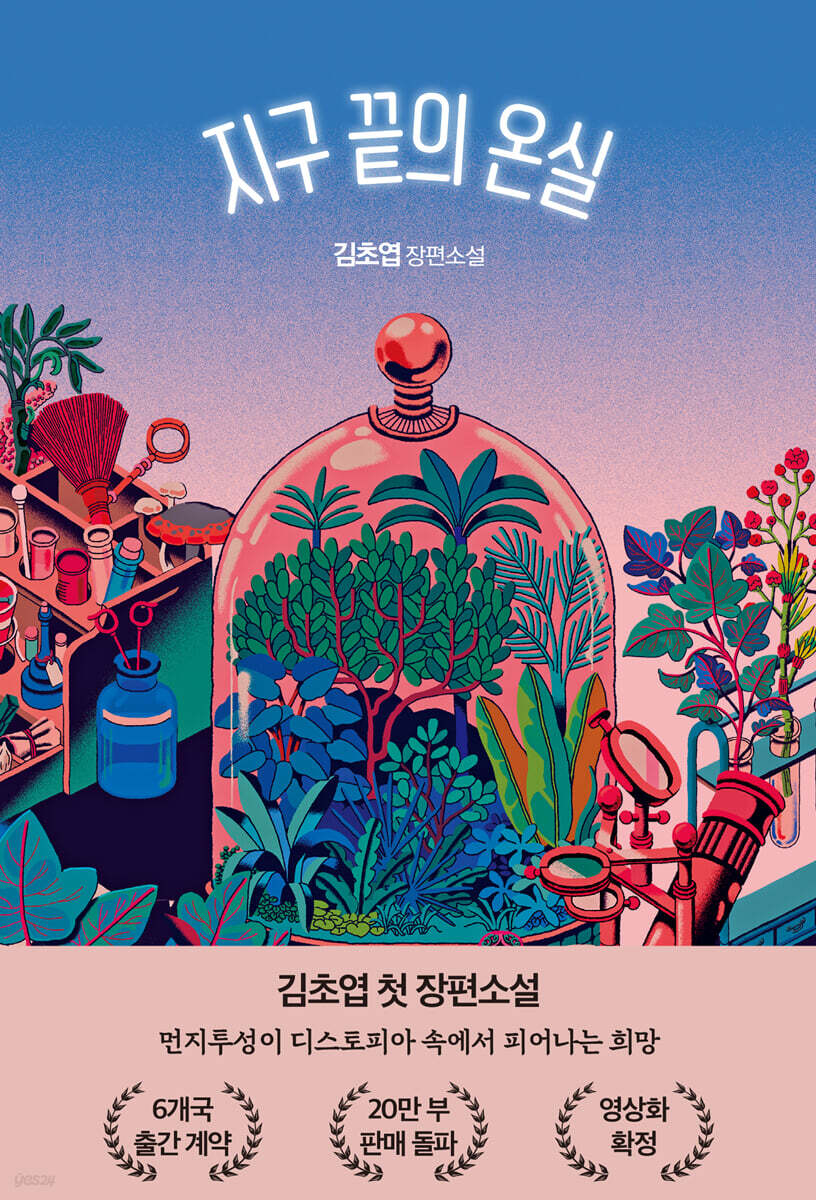
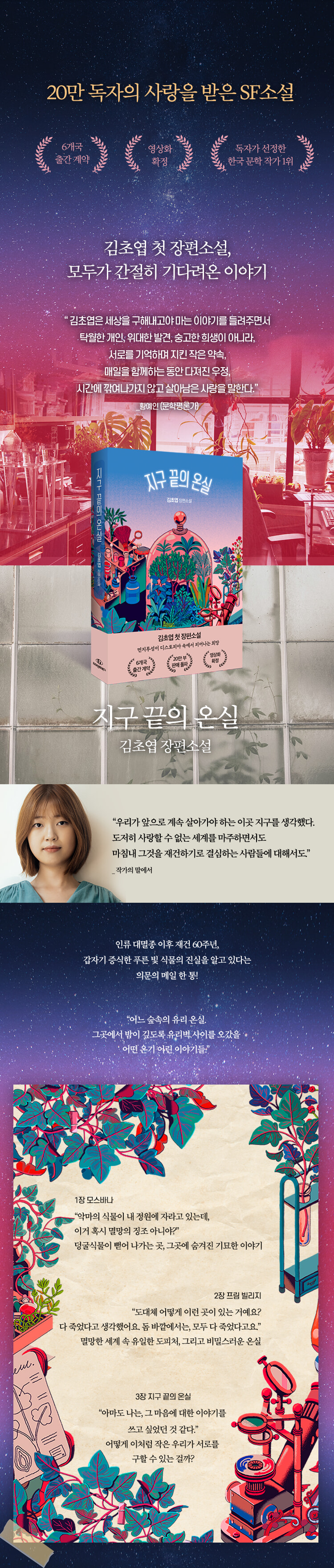
Kim Cho-yeop's first full-length novel sells over 200,000 copies! Author Kim Cho-yeop, who won the Best Writer Award at the Galaxy Award, a Chinese science fiction literary award, for her short story collection, “If We Can’t Travel at the Speed of Light,” and proved that she is receiving enthusiastic love from readers around the world, showed the world after it was destroyed by Dust through her first full-length novel, “Greenhouse at the End of the Earth.” Published in August 2021, it met readers and became an immediate bestseller, selling 150,000 copies within a year of publication, and surpassing 200,000 copies ahead of its third anniversary. In addition, a visualization contract was signed with Studio Dragon, and publishing contracts were signed with a total of six countries: Japan, Taiwan, China, Russia, Indonesia, and France. It has reached readers in Japan, Taiwan, and China in its respective languages, and is scheduled to be published in other countries as well. |
- You can preview some of the book's contents.
Preview
index
Prologue _007
Chapter 1 Mosvana _023
Chapter 2 Prim Village _111
Chapter 3: Greenhouse at the End of the Earth _245
Author's Note _387
References _390
Chapter 1 Mosvana _023
Chapter 2 Prim Village _111
Chapter 3: Greenhouse at the End of the Earth _245
Author's Note _387
References _390
Detailed image
Into the book
Ayoung enjoyed watching the process of such slow and lingering things spreading far and wide.
Slow-growing but powerful things, like plants that, if not properly watched, will overwhelm the garden.
Ayoung had known since childhood that such creatures possessed terrifying powers, incredible vitality, and strange stories.
--- p.82
"great.
Let me tell you the story just one more time.
Maybe the owner of the garden you mentioned is someone I know.
You may not know the answers yet, but you know where to go to find them.
I'm also thinking about going there."
--- p.109
“From now on, we have to do an experiment.
Remember what I taught you and what we did in the village.
This time, all we're going to is this forest and greenhouse.
It's not about changing the inside of the dome, it's about changing the outside.
Go as far as you can.
Go and build another Prim Village.
“You understand?”
--- p.242
Discovering some strange and beautiful phenomenon and persistently pursuing the basis of that phenomenon may also be a valid scientific methodology.
Ayoung thought that although she might fail, and perhaps most would fail, she might still find surprising truths on that path that she would not have discovered if she had not gone there.
Slow-growing but powerful things, like plants that, if not properly watched, will overwhelm the garden.
Ayoung had known since childhood that such creatures possessed terrifying powers, incredible vitality, and strange stories.
--- p.82
"great.
Let me tell you the story just one more time.
Maybe the owner of the garden you mentioned is someone I know.
You may not know the answers yet, but you know where to go to find them.
I'm also thinking about going there."
--- p.109
“From now on, we have to do an experiment.
Remember what I taught you and what we did in the village.
This time, all we're going to is this forest and greenhouse.
It's not about changing the inside of the dome, it's about changing the outside.
Go as far as you can.
Go and build another Prim Village.
“You understand?”
--- p.242
Discovering some strange and beautiful phenomenon and persistently pursuing the basis of that phenomenon may also be a valid scientific methodology.
Ayoung thought that although she might fail, and perhaps most would fail, she might still find surprising truths on that path that she would not have discovered if she had not gone there.
--- p.257
Publisher's Review
“There’s a devil’s plant growing in my garden. Is this a sign of doom?”
Where the vines spread, there lies a strange story hidden.
The novel consists of three chapters.
The character waiting for the reader in 'Chapter 1 Mosvana' is Ayoung, a plant ecologist working as a researcher at the Dust Ecology Research Center in 2129.
He was drawn to this work by the slow but far-reaching growth of plants, and the incredible vitality and strange stories they hold.
Although he never forgets his principles as a scientist, he secretly enjoys ghost stories and his hobby is accessing 'Stranger Tales'.
One day, Ayoung hears news that the creeper Mosvana is growing suspiciously fast in the ruined city of Haewol, causing problems.
When he hears that an unknown blue light has been seen, he is reminded of a scene he saw in the garden of Lee Hee-soo, an old man who lived next door when he was young.
A garden in the middle of the night, overgrown with weeds as if abandoned, with blue lights floating magically above it.
Why on earth did Mosvana suddenly start multiplying abnormally, and what is the identity of the blue light?
He collects and analyzes Mosbananas, while also asking around for information about the plant through Stranger Tales.
Finally, he reaches the sisters Amara and Naomi, who were called the "Witches of Langano" by the people for using Mosvana as a medicinal herb during the Dust Age.
Ayoung definitely wants to hear something from them.
“How on earth does a place like this exist?
I thought they were all dead.
Outside the dome, everyone is dead.”
The only refuge in a ruined world, and a secret greenhouse.
In 'Chapter 2 Prim Village', the character the reader meets is Naomi, a child wandering in a world destroyed by Dust in 2058.
The dust that comes with the red fog instantly kills any living being.
People build their own cities under domes, and they do not hesitate to kill to maintain them.
Naomi, who has suffered as a test subject and hunted by hunters who crave her blood because of her resistance to dust, heads into the forest with her older sister Amara in search of a rumored refuge.
Finally, the sisters reach Prim Village, a place where people live, even without a dome, and exposed to the pouring rain and blowing wind.
This place was maintained simply by the faithful labor of the people, without any grand ideology or justification.
And another thing, the crops and dust decomposers given by Rachel, a botanist who lives in a greenhouse on a hill that only the leader, Jisoo, can enter, are feeding the people.
Naomi gradually becomes absorbed into an incredibly vibrant forest village.
But peace cannot last forever.
Invaders appear in Prim Village, and Jisoo distributes the plants she has prepared to the villagers and tells them to leave.
Go outside the forest, plant some plants, and create another Prim Village.
As she leaves the village, Naomi has a feeling that her heart will probably be stuck here for the rest of her life.
“Perhaps I wanted to write a story about that heart.”
How can we, so small, save each other?
In Chapter 3, Greenhouse at the End of the Earth, readers meet Ayoung again.
As Ayoung, who lives after the world has been rebuilt, listens to Naomi's testimony, who has lived through the era of destruction, she feels that the countless puzzles that have existed separately in her mind are forming a single, complete picture.
As she organizes Naomi's testimony and supports it with data, Ayoung reaches distinct conclusions both as a scientist searching for buried truths and as a human being with intimate memories and feelings.
What will happen in the minds of readers when they reach this conclusion along with Ayoung?
The things that a writer's first full-length novel contains are, so to speak, countless.
Scientists who pour their passion and energy into seemingly useless subjects with pure curiosity, conversations shared with respect and admiration by people of different generations, the appearance of plants that completely changed our perspective on the world, an attitude we should embrace in an age where we feel the crisis of the Earth every day, an unexpected and heartbreaking story of love… … But above all, if there is a place that 『Greenhouse at the End of the Earth』 is headed, it is our ‘hearts,’ as the author says, “Perhaps I wanted to write a story about that heart” (p. 389).
Readers have already experienced through the author's first collection how precisely and gently he explores this feeling, reaching a point they didn't even know they had.
Perhaps the author wanted to tell us that we, who have such hearts, sometimes go against each other because of certain feelings, but in the end, we end up saving each other.
So, 『Greenhouse at the End of the Earth』 can be said to be a story of salvation, a story of how “not outstanding individuals, great discoveries, or noble sacrifices, but small promises kept while remembering each other, a friendship forged through spending each day together, and a love that survives without being eroded by time” (literary critic Hwang Ye-in) saves each other.
Where the vines spread, there lies a strange story hidden.
The novel consists of three chapters.
The character waiting for the reader in 'Chapter 1 Mosvana' is Ayoung, a plant ecologist working as a researcher at the Dust Ecology Research Center in 2129.
He was drawn to this work by the slow but far-reaching growth of plants, and the incredible vitality and strange stories they hold.
Although he never forgets his principles as a scientist, he secretly enjoys ghost stories and his hobby is accessing 'Stranger Tales'.
One day, Ayoung hears news that the creeper Mosvana is growing suspiciously fast in the ruined city of Haewol, causing problems.
When he hears that an unknown blue light has been seen, he is reminded of a scene he saw in the garden of Lee Hee-soo, an old man who lived next door when he was young.
A garden in the middle of the night, overgrown with weeds as if abandoned, with blue lights floating magically above it.
Why on earth did Mosvana suddenly start multiplying abnormally, and what is the identity of the blue light?
He collects and analyzes Mosbananas, while also asking around for information about the plant through Stranger Tales.
Finally, he reaches the sisters Amara and Naomi, who were called the "Witches of Langano" by the people for using Mosvana as a medicinal herb during the Dust Age.
Ayoung definitely wants to hear something from them.
“How on earth does a place like this exist?
I thought they were all dead.
Outside the dome, everyone is dead.”
The only refuge in a ruined world, and a secret greenhouse.
In 'Chapter 2 Prim Village', the character the reader meets is Naomi, a child wandering in a world destroyed by Dust in 2058.
The dust that comes with the red fog instantly kills any living being.
People build their own cities under domes, and they do not hesitate to kill to maintain them.
Naomi, who has suffered as a test subject and hunted by hunters who crave her blood because of her resistance to dust, heads into the forest with her older sister Amara in search of a rumored refuge.
Finally, the sisters reach Prim Village, a place where people live, even without a dome, and exposed to the pouring rain and blowing wind.
This place was maintained simply by the faithful labor of the people, without any grand ideology or justification.
And another thing, the crops and dust decomposers given by Rachel, a botanist who lives in a greenhouse on a hill that only the leader, Jisoo, can enter, are feeding the people.
Naomi gradually becomes absorbed into an incredibly vibrant forest village.
But peace cannot last forever.
Invaders appear in Prim Village, and Jisoo distributes the plants she has prepared to the villagers and tells them to leave.
Go outside the forest, plant some plants, and create another Prim Village.
As she leaves the village, Naomi has a feeling that her heart will probably be stuck here for the rest of her life.
“Perhaps I wanted to write a story about that heart.”
How can we, so small, save each other?
In Chapter 3, Greenhouse at the End of the Earth, readers meet Ayoung again.
As Ayoung, who lives after the world has been rebuilt, listens to Naomi's testimony, who has lived through the era of destruction, she feels that the countless puzzles that have existed separately in her mind are forming a single, complete picture.
As she organizes Naomi's testimony and supports it with data, Ayoung reaches distinct conclusions both as a scientist searching for buried truths and as a human being with intimate memories and feelings.
What will happen in the minds of readers when they reach this conclusion along with Ayoung?
The things that a writer's first full-length novel contains are, so to speak, countless.
Scientists who pour their passion and energy into seemingly useless subjects with pure curiosity, conversations shared with respect and admiration by people of different generations, the appearance of plants that completely changed our perspective on the world, an attitude we should embrace in an age where we feel the crisis of the Earth every day, an unexpected and heartbreaking story of love… … But above all, if there is a place that 『Greenhouse at the End of the Earth』 is headed, it is our ‘hearts,’ as the author says, “Perhaps I wanted to write a story about that heart” (p. 389).
Readers have already experienced through the author's first collection how precisely and gently he explores this feeling, reaching a point they didn't even know they had.
Perhaps the author wanted to tell us that we, who have such hearts, sometimes go against each other because of certain feelings, but in the end, we end up saving each other.
So, 『Greenhouse at the End of the Earth』 can be said to be a story of salvation, a story of how “not outstanding individuals, great discoveries, or noble sacrifices, but small promises kept while remembering each other, a friendship forged through spending each day together, and a love that survives without being eroded by time” (literary critic Hwang Ye-in) saves each other.
GOODS SPECIFICS
- Publication date: August 18, 2021
- Page count, weight, size: 392 pages | 420g | 130*187*20mm
- ISBN13: 9791191824001
- ISBN10: 1191824004
You may also like
카테고리
korean


korean

![GQ KOREA Mark (Monthly): December [2025]](http://librairie.coreenne.fr/cdn/shop/files/8ef265dbbfbf186523ed75ba7319009d.jpg?v=1765340328&width=3840)


