

That's what France was like back then
 |
Description
Book Introduction
- A word from MD
- During World War II, France was occupied by Germany.
Josef Joanovich, a Jewish scrap metal dealer of Romanian descent, takes advantage of this chaos to actively cooperate with Germany and become a billionaire. As Germany's defeat nears, he also begins supporting the French Resistance.
After the defeat of Germany, conflicting testimonies surrounded him as he stood trial for war crimes.
A graphic novel vividly depicting the life of one of the most controversial figures in French history - Manhwa MD Yang Chan
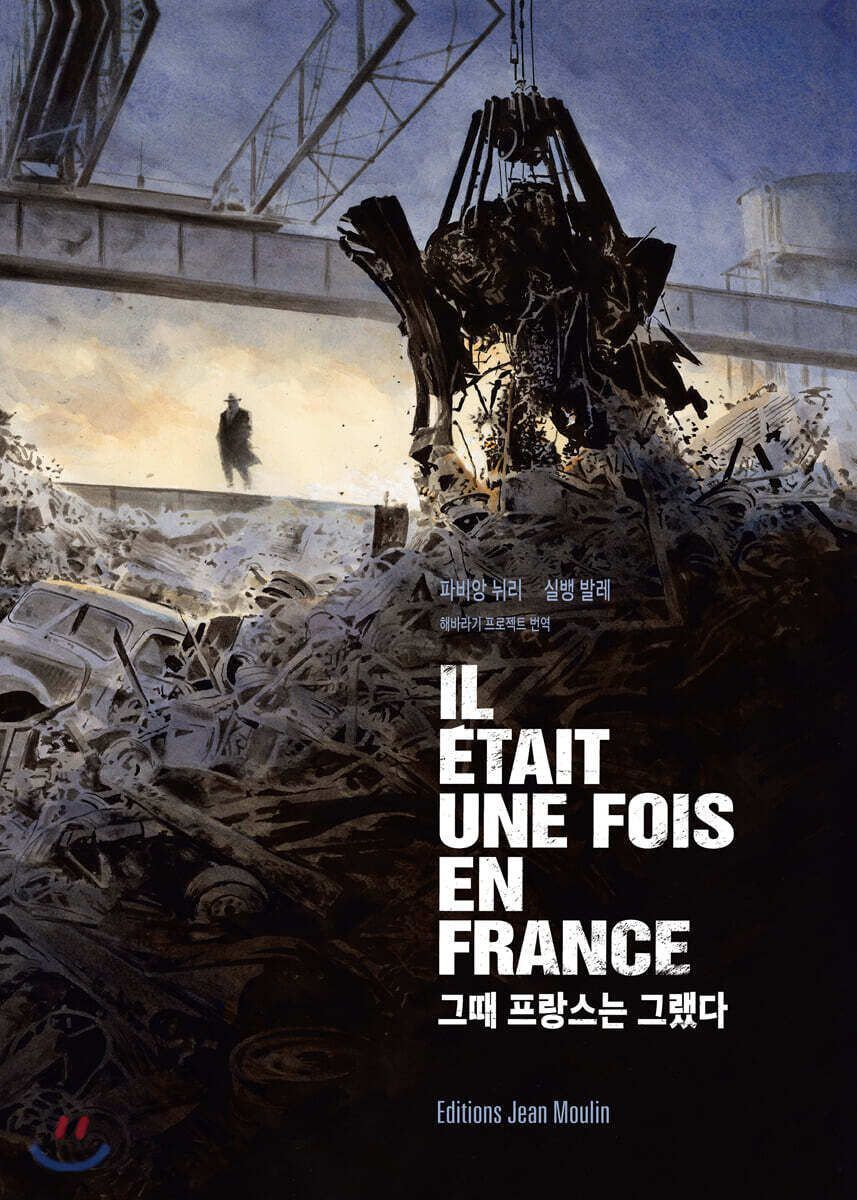
"That's How France Was" is a work set in German-occupied France during World War II that sheds light on the life of Josef Joanovich, a Jew who collaborated with the Nazis while also participating in resistance activities.
Not only does it offer a glimpse into French society during the dark occupation, but it also details the rampant double spies of the time and France's efforts to come to terms with its past by punishing German collaborators.
In 2015, it won the Best Feature Award at Lucca Comics & Games in Italy, and in 2011, it won the Best Feature Award at the Angoulême International Comics Festival.
As the work progresses, the writers persistently say, “That’s how it was back then.
So what does that have to do with anyone today?” he asks.
As readers think about the answer to this question, they sympathize with the characters, and sometimes become angry, and gradually come closer to the 'meaning of history.'
This work argues that coming to terms with and reflecting on the past is not something that can be achieved simply by reading historical records summarized in one line, but that true reflection can only be achieved through evaluating them with the human heart and perspective. Although the story takes place on the other side of the globe, it will resonate deeply with us, who share a similar historical context.
Not only does it offer a glimpse into French society during the dark occupation, but it also details the rampant double spies of the time and France's efforts to come to terms with its past by punishing German collaborators.
In 2015, it won the Best Feature Award at Lucca Comics & Games in Italy, and in 2011, it won the Best Feature Award at the Angoulême International Comics Festival.
As the work progresses, the writers persistently say, “That’s how it was back then.
So what does that have to do with anyone today?” he asks.
As readers think about the answer to this question, they sympathize with the characters, and sometimes become angry, and gradually come closer to the 'meaning of history.'
This work argues that coming to terms with and reflecting on the past is not something that can be achieved simply by reading historical records summarized in one line, but that true reflection can only be achieved through evaluating them with the human heart and perspective. Although the story takes place on the other side of the globe, it will resonate deeply with us, who share a similar historical context.
- You can preview some of the book's contents.
Preview
Detailed image
.jpg)
Publisher's Review
I.
World War II, France occupied by Germany.
France didn't have it easy either.
This work is set in German-occupied France during World War II and highlights the life of a man named Jozef Joanovich, who collaborated with the Nazis while also participating in resistance activities.
Through this book, we not only get a glimpse into French society during the dark period of occupation, but also learn in detail about the rampant activities of double agents at the time and how France came to terms with its past by condemning German collaborators.
Additionally, while the work progresses, the writers persistently say, “That’s how it was back then.
So, what does that have to do with anyone today?” he asks the reader.
As I think about the answer to this question, I sometimes sympathize with the characters, and sometimes feel angry, and I gradually come closer to the 'meaning of history.'
Furthermore, although this 『France at that Time』 is a story from the other side of the world, because the history of France at that time has some similarities to that of Korea, this work goes beyond universality and resonates deeply with us.
II.
Joseph Joanovich, the most controversial figure in French history
Joseph Joanovich was born Jewish in Romania in 1905.
Struggling with financial difficulties, he moved to France to live with his wife Eva's uncle and worked in a scrap metal shop.
But Eva's uncle was a greedy man, and when Joseph's life did not improve even after having a child, he drove him out and monopolized the scrap metal business.
Joseph, who had a special talent for metal, soon stabilized the company.
But his greed only grew.
He eventually became France's richest man by secretly selling metals to Germany, a World War I war criminal nation where metal trade was banned.
Meanwhile, in 1939, World War II broke out between France and Germany.
However, the French army, which had prided itself on being the strongest army in Europe, was surrounded and destroyed by the German army in just one month, and France surrendered to Germany.
The northwest, including Paris, became a German-occupied zone, and France moved its capital to Vichy in the south and established a new pro-German government.
Joseph Joanovich tries to flee to the United States with his family, but soon changes his mind.
“I made a living in France and made a lot of money.
“So you want me to throw it all away and run away like everyone else?” He goes to a German officer he had previously dealt with, forges his identity, and continues to supply metal to the Nazis.
III.
If you're a fool who doesn't even know which side to take now, you're going to pay a very high price sooner or later.
In 1941, Japan attacked Pearl Harbor, Hawaii, destroying the U.S. Pacific Fleet.
In response, the United States declared war on Japan and Germany and declared its participation in the Allied Forces.
After the attack on Pearl Harbor, many independence activists in South Korea turned pro-Japanese.
Because they were frustrated that they could never become independent from Japan, which had defeated the United States.
But the interpretation of the German collaborators in Europe was different.
Germany judged that it could never defeat the Allied Forces once the giant United States entered the war.
They began to prepare for Germany's defeat.
Start learning English and start helping Jews.
“Don’t forget that I helped you.”
The same was true for Joseph Joanovich.
He decides to invest a huge amount of his money to hide his dirty past.
It was to the resistance that was resisting Germany.
Joseph Joanovich provides weapons to the Resistance, sets up secret hideouts, publishes underground newspapers, and hides British spies.
Finally, in 1944, the Allied landings in Normandy were successful and Paris was liberated.
Many of those who collaborated with Germany were executed or arrested.
Also, women who dated German soldiers were publicly humiliated and had their heads shaved.
In this situation, Joseph claims that he was actually a member of the resistance and even receives a medal.
IV.
If you're Jewish, are you absolutely innocent even if you sell out your country to save yourself? Shouldn't we consider that in consideration?
However, Joseph's past is relentlessly dug up by the French intelligence agency, the Bureau of Territorial Surveillance, who suspect Joseph of collaborating with Germany, and by Judge Le Genty, who is investigating the murder of a young resistance fighter.
In response, Joseph mobilizes the mafia and the police, not hesitating to bribe and murder to obstruct their investigation.
But the truth gradually emerges, revealing that Joseph's resistance activities were merely a deception to cover up his collaboration with Germany.
Eventually, Joseph is imprisoned and has his property confiscated on charges of treason and murder.
As time passes and Joseph becomes an old man and faces death, he talks about his past by saying, "Those were the times."
It's in the same vein as the famous pro-Japanese poet Seo Jeong-ju said, "No one thought liberation would come so quickly."
In fact, as you read this work, you may feel pity for Joseph.
It is an undeniable fact that he was Jewish and that he did dirty things to save his family.
Nevertheless, the verdict of history is firm.
Because we have to stand on the victim's side and look at things.
However, this work argues that liquidating and reflecting on the past is not something that can be accomplished simply by reading historical records summarized in one line, but rather that true reflection can only be achieved through evaluating them with the human heart and perspective.
V.
Other information
- 『France was like that back then』 was originally a six-volume work, but the Korean edition was published as a combined edition totaling 380 pages.
- Since the first volume was published in 2007, one volume has been introduced every year.
- In 2015, it won the Best Feature Award at Lucca Comics & Games in Italy, and in 2011, it won the Best Feature Award at the Angoulême International Comics Festival.
- The Korean version was published with the copyright sponsored by the French Cultural Center and printed with the support of Tumblbug.
World War II, France occupied by Germany.
France didn't have it easy either.
This work is set in German-occupied France during World War II and highlights the life of a man named Jozef Joanovich, who collaborated with the Nazis while also participating in resistance activities.
Through this book, we not only get a glimpse into French society during the dark period of occupation, but also learn in detail about the rampant activities of double agents at the time and how France came to terms with its past by condemning German collaborators.
Additionally, while the work progresses, the writers persistently say, “That’s how it was back then.
So, what does that have to do with anyone today?” he asks the reader.
As I think about the answer to this question, I sometimes sympathize with the characters, and sometimes feel angry, and I gradually come closer to the 'meaning of history.'
Furthermore, although this 『France at that Time』 is a story from the other side of the world, because the history of France at that time has some similarities to that of Korea, this work goes beyond universality and resonates deeply with us.
II.
Joseph Joanovich, the most controversial figure in French history
Joseph Joanovich was born Jewish in Romania in 1905.
Struggling with financial difficulties, he moved to France to live with his wife Eva's uncle and worked in a scrap metal shop.
But Eva's uncle was a greedy man, and when Joseph's life did not improve even after having a child, he drove him out and monopolized the scrap metal business.
Joseph, who had a special talent for metal, soon stabilized the company.
But his greed only grew.
He eventually became France's richest man by secretly selling metals to Germany, a World War I war criminal nation where metal trade was banned.
Meanwhile, in 1939, World War II broke out between France and Germany.
However, the French army, which had prided itself on being the strongest army in Europe, was surrounded and destroyed by the German army in just one month, and France surrendered to Germany.
The northwest, including Paris, became a German-occupied zone, and France moved its capital to Vichy in the south and established a new pro-German government.
Joseph Joanovich tries to flee to the United States with his family, but soon changes his mind.
“I made a living in France and made a lot of money.
“So you want me to throw it all away and run away like everyone else?” He goes to a German officer he had previously dealt with, forges his identity, and continues to supply metal to the Nazis.
III.
If you're a fool who doesn't even know which side to take now, you're going to pay a very high price sooner or later.
In 1941, Japan attacked Pearl Harbor, Hawaii, destroying the U.S. Pacific Fleet.
In response, the United States declared war on Japan and Germany and declared its participation in the Allied Forces.
After the attack on Pearl Harbor, many independence activists in South Korea turned pro-Japanese.
Because they were frustrated that they could never become independent from Japan, which had defeated the United States.
But the interpretation of the German collaborators in Europe was different.
Germany judged that it could never defeat the Allied Forces once the giant United States entered the war.
They began to prepare for Germany's defeat.
Start learning English and start helping Jews.
“Don’t forget that I helped you.”
The same was true for Joseph Joanovich.
He decides to invest a huge amount of his money to hide his dirty past.
It was to the resistance that was resisting Germany.
Joseph Joanovich provides weapons to the Resistance, sets up secret hideouts, publishes underground newspapers, and hides British spies.
Finally, in 1944, the Allied landings in Normandy were successful and Paris was liberated.
Many of those who collaborated with Germany were executed or arrested.
Also, women who dated German soldiers were publicly humiliated and had their heads shaved.
In this situation, Joseph claims that he was actually a member of the resistance and even receives a medal.
IV.
If you're Jewish, are you absolutely innocent even if you sell out your country to save yourself? Shouldn't we consider that in consideration?
However, Joseph's past is relentlessly dug up by the French intelligence agency, the Bureau of Territorial Surveillance, who suspect Joseph of collaborating with Germany, and by Judge Le Genty, who is investigating the murder of a young resistance fighter.
In response, Joseph mobilizes the mafia and the police, not hesitating to bribe and murder to obstruct their investigation.
But the truth gradually emerges, revealing that Joseph's resistance activities were merely a deception to cover up his collaboration with Germany.
Eventually, Joseph is imprisoned and has his property confiscated on charges of treason and murder.
As time passes and Joseph becomes an old man and faces death, he talks about his past by saying, "Those were the times."
It's in the same vein as the famous pro-Japanese poet Seo Jeong-ju said, "No one thought liberation would come so quickly."
In fact, as you read this work, you may feel pity for Joseph.
It is an undeniable fact that he was Jewish and that he did dirty things to save his family.
Nevertheless, the verdict of history is firm.
Because we have to stand on the victim's side and look at things.
However, this work argues that liquidating and reflecting on the past is not something that can be accomplished simply by reading historical records summarized in one line, but rather that true reflection can only be achieved through evaluating them with the human heart and perspective.
V.
Other information
- 『France was like that back then』 was originally a six-volume work, but the Korean edition was published as a combined edition totaling 380 pages.
- Since the first volume was published in 2007, one volume has been introduced every year.
- In 2015, it won the Best Feature Award at Lucca Comics & Games in Italy, and in 2011, it won the Best Feature Award at the Angoulême International Comics Festival.
- The Korean version was published with the copyright sponsored by the French Cultural Center and printed with the support of Tumblbug.
GOODS SPECIFICS
- Date of issue: July 25, 2020
- Format: Hardcover book binding method guide
- Page count, weight, size: 377 pages | 1,626g | 231*313*35mm
- ISBN13: 9791188438174
- ISBN10: 1188438174
You may also like
카테고리
korean


korean

![GQ KOREA Mark (Monthly): December [2025]](http://librairie.coreenne.fr/cdn/shop/files/8ef265dbbfbf186523ed75ba7319009d.jpg?v=1765340328&width=3840)


