

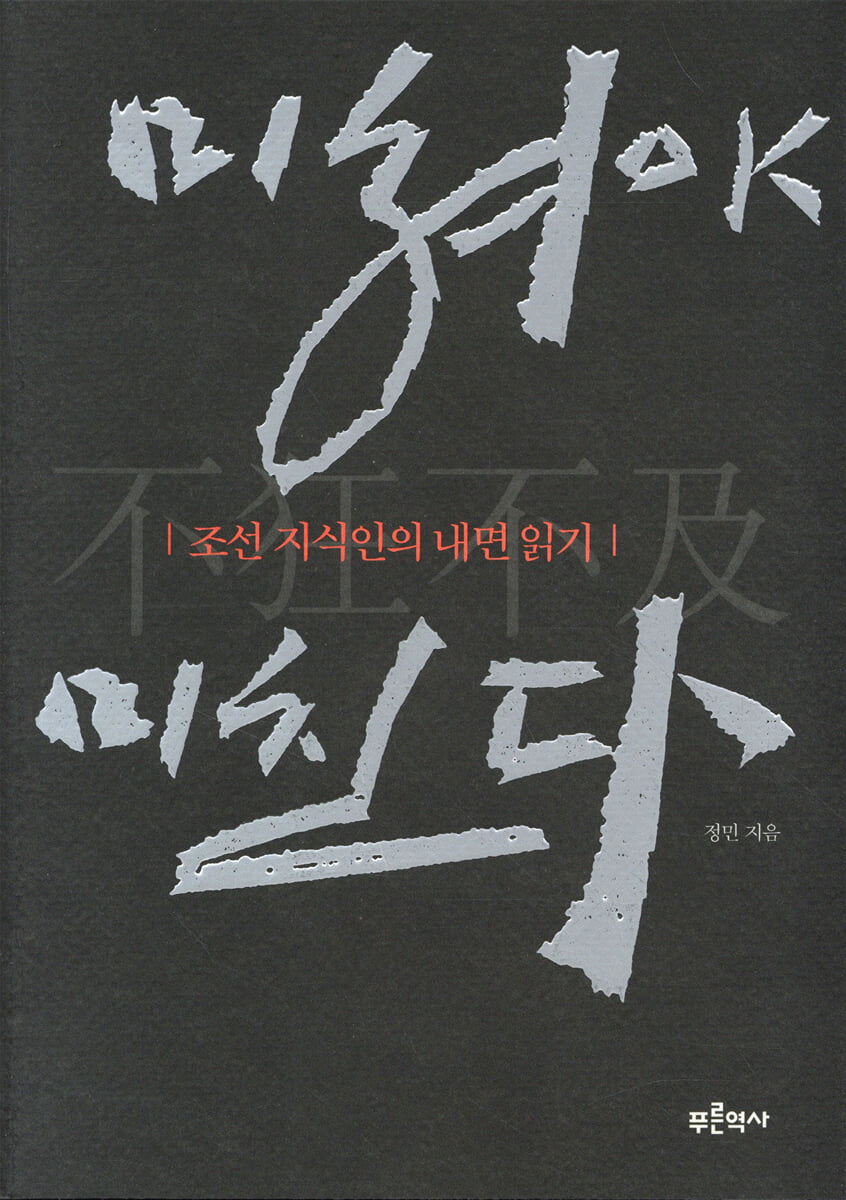
You have to be crazy to be crazy
 |
Description
Book Introduction
Passion and madness are hidden in the intellectual and artistic achievements that captivated an era.
If you don't go crazy, you won't be able to reach your goal.
18th century Joseon intellectuals such as Park Ji-won, Park Je-ga, Jeong Yak-yong, Heo Gyun, and Lee Deok-mu.
Although they were minor figures in their time, they were able to form a family thanks to the passion and madness that only they could possess.
For contemporary Joseon intellectuals, this ‘maniacal tendency’ was a trend of the times.
Lee Deok-mu was crazy about books, and Jeong Yak-jeon, who was crazy about sea creatures, left behind the ‘Hyeonsan Eobo.’
For the sake of their cause, some people pierced their ears with awls, and there were even geniuses who starved to death.
Their passionate lives, which could not have been achieved without going crazy, and which could not have been achieved without going crazy, still give us much to think about today.
In addition to the people who are obsessed with the wall in Part 1, you can also catch a glimpse of their human side in Part 2, Delicious Encounters, and Part 3, Enlightenment in Everyday Life.
If you don't go crazy, you won't be able to reach your goal.
18th century Joseon intellectuals such as Park Ji-won, Park Je-ga, Jeong Yak-yong, Heo Gyun, and Lee Deok-mu.
Although they were minor figures in their time, they were able to form a family thanks to the passion and madness that only they could possess.
For contemporary Joseon intellectuals, this ‘maniacal tendency’ was a trend of the times.
Lee Deok-mu was crazy about books, and Jeong Yak-jeon, who was crazy about sea creatures, left behind the ‘Hyeonsan Eobo.’
For the sake of their cause, some people pierced their ears with awls, and there were even geniuses who starved to death.
Their passionate lives, which could not have been achieved without going crazy, and which could not have been achieved without going crazy, still give us much to think about today.
In addition to the people who are obsessed with the wall in Part 1, you can also catch a glimpse of their human side in Part 2, Delicious Encounters, and Part 3, Enlightenment in Everyday Life.
- You can preview some of the book's contents.
Preview
Publisher's Review
This book explores the passion and madness that captivated the minds of Joseon Dynasty intellectuals.
Most of those who appear in the book, such as Heo Gyun, Kwon Pil, Hong Dae-yong, Park Ji-won, Lee Deok-mu, Park Je-ga, Jeong Yak-yong, Kim Deuk-sin, No Geung, and Kim Yeong, were not major leaguers of their time, but anti- or minor players who barely managed to avoid the periphery or border.
“For nearly 10 years, I have met these people and cried and laughed with them.
Even when I wanted to run away from the pressure of reality, standing in front of them brought me to my senses.
When I was indolent and complacent, I heard the sound of rain hitting the back of my head.
“Here are sad, sharp, and grateful records that were shattered by reality but never turned away or avoided.” - From
The spirit of walking alone, regardless of whether others point fingers or not, whether it helps one's career or not; the attitude of living consistently with sincerity and effort even in despair, without weighing this way or that; the sincere desire to meet that person beyond their name, forgetting status, age, and gender; the insight that sees through the essence of things and brings about extraordinary awakenings in the ordinary.
However, rather than being recognized by the world, they went through a difficult time as sinners, traitors, illegitimate children, or as looked down upon and despised gisaengs and painters.
Forgotten in people's memories, they disappeared like the dew on the execution grounds or even starved to death.
The author simply stated, “In this book, I simply want to fulfill my duty as a person who tells the stories of those who have been hidden between the lines of records and not easily seen.”
The lives of those who have been revived in this way will be a great comfort and strength to us who live in this ambiguous era, without any examples to emulate or clear direction.
● Book Features
The inner landscape of intellectuals, drawn from ancient texts
The author of this book, Jeong Min, says that he is engrossed in the task of finding an 'old future' in a dusty, quiet place.
They say that even classical music can become powerful words if you just change the code.
Yes, that's right.
The same text can have different resonances and feelings depending on who reads it and how.
The topic the author focuses on in this book is 'You have to be crazy to be crazy (不狂不及)'.
Why did you choose this as a topic to read the inner thoughts of Joseon intellectuals?
A New Code for Reading 18th-Century Intellectuals: Byeok (癖)
“A man without walls is nothing but a useless man.
The character for wall comes from the character for disease (疾), so it is a partial disease.
However, only those with a creative spirit and the ability to master specialized skills can often do so.” - Park Je-ga, 《Baekhwaboseo》
Kim Deok-hyeong, who was crazy about flowers, Bang Hyo-ryang, who was obsessed with long-winded writing, Jeong Cheol-jo, a stone idiot who would carve an inkstone whenever he saw a rock, Lee Ok, who loved tobacco so much that he compiled a book by collecting records about tobacco, Kim Deuk-sin, a bookworm who read Eul 113,000 times, Lee Deok-mu, who called himself a ganseochi (a book-crazy fool)… … In the writings of 18th-century Joseon intellectuals, the presence of enthusiasts who were completely crazy about something is increasingly noticeable.
The existence of people who are so madly absorbed in one thing that it seems like madness to the onlookers clearly shows the nature of the intellectual foundation that changed during this period.
The Age of Mad Mania
Eighteenth-century intellectuals were quite enthusiastic about these wallflowers, or maniacs.
It was a trend of the times for everyone to go crazy about something.
This is a phenomenon that has never been seen before.
Until then, intellectuals were absorbed in the study of self-improvement.
It was said that if you become absorbed in something, you will lose your meaning, so it was taboo.
Although the study of geomulchiji was emphasized, the ultimate goal was knowledge, not objects, and the inner self, not the outer self.
This trend collapsed helplessly in the 18th century.
The world is changing and there has been a fundamental shift in the paradigm of knowledge.
The vast number of works that poured out during this period, which is called the Joseon Renaissance, such as Jeong Yak-jeon's "Hyeonsaneobo," Kim Ryeo's "Uhaeieobo," and Jeong Yak-yong's enormous works, were all products of a new intellectual paradigm born from the pursuit of the wall.
The cool sound of bamboo rain scolding laziness and complacency
However, the author does not focus only on their achievements.
Heo Gyun, who shared a deep friendship with a mere gisaeng and was deeply disheartened by the death of a lowly painter; Hong Daeyong and his friends, who shared their true feelings through music, forgetting their age and status; Gwon Pil, the teacher who encouraged his student who blamed himself for being dull, and Song Hee-gap, the student who served such a teacher with devotion—these people's attitudes toward life are in themselves a cold, chilling sound of rain to those living today.
I ask those who are swept around here and there, unable to establish a subject to judge right from wrong amidst the daily deluge of information, what on earth can be accomplished by doing so.
Restoring the Lives of Little Heroes - "The World Doesn't Love the Talented"
These people, who left behind a remarkable achievement through the power of focusing on one thing, strangely enough, all of them lived difficult and bitter lives.
In the midst of contempt and disdain, in the midst of frustration and anger at not being recognized by the world, it was forgotten.
The author meticulously restores the lives of Kim Young, a genius astronomer who starved to death; No Geung, who was ridiculed as a ghostwriter for the civil service examination and became cynical about the world; and Lee Ok, who was reprimanded for writing subversive essays and served in the military.
He said that they seemed to keep talking to him.
Hong Gil-ju lamented Kim Yeong's death, saying, "The world does not love the talented," and Lee Ga-hwan also said, "There is no one who would recognize No Geung (a person who recognized the great scholarship of Yang Ung during the Han Dynasty)," and offered to take on that role.
It is thanks to their records that their lives have been passed down in this way.
Most of those who appear in the book, such as Heo Gyun, Kwon Pil, Hong Dae-yong, Park Ji-won, Lee Deok-mu, Park Je-ga, Jeong Yak-yong, Kim Deuk-sin, No Geung, and Kim Yeong, were not major leaguers of their time, but anti- or minor players who barely managed to avoid the periphery or border.
“For nearly 10 years, I have met these people and cried and laughed with them.
Even when I wanted to run away from the pressure of reality, standing in front of them brought me to my senses.
When I was indolent and complacent, I heard the sound of rain hitting the back of my head.
“Here are sad, sharp, and grateful records that were shattered by reality but never turned away or avoided.” - From
The spirit of walking alone, regardless of whether others point fingers or not, whether it helps one's career or not; the attitude of living consistently with sincerity and effort even in despair, without weighing this way or that; the sincere desire to meet that person beyond their name, forgetting status, age, and gender; the insight that sees through the essence of things and brings about extraordinary awakenings in the ordinary.
However, rather than being recognized by the world, they went through a difficult time as sinners, traitors, illegitimate children, or as looked down upon and despised gisaengs and painters.
Forgotten in people's memories, they disappeared like the dew on the execution grounds or even starved to death.
The author simply stated, “In this book, I simply want to fulfill my duty as a person who tells the stories of those who have been hidden between the lines of records and not easily seen.”
The lives of those who have been revived in this way will be a great comfort and strength to us who live in this ambiguous era, without any examples to emulate or clear direction.
● Book Features
The inner landscape of intellectuals, drawn from ancient texts
The author of this book, Jeong Min, says that he is engrossed in the task of finding an 'old future' in a dusty, quiet place.
They say that even classical music can become powerful words if you just change the code.
Yes, that's right.
The same text can have different resonances and feelings depending on who reads it and how.
The topic the author focuses on in this book is 'You have to be crazy to be crazy (不狂不及)'.
Why did you choose this as a topic to read the inner thoughts of Joseon intellectuals?
A New Code for Reading 18th-Century Intellectuals: Byeok (癖)
“A man without walls is nothing but a useless man.
The character for wall comes from the character for disease (疾), so it is a partial disease.
However, only those with a creative spirit and the ability to master specialized skills can often do so.” - Park Je-ga, 《Baekhwaboseo》
Kim Deok-hyeong, who was crazy about flowers, Bang Hyo-ryang, who was obsessed with long-winded writing, Jeong Cheol-jo, a stone idiot who would carve an inkstone whenever he saw a rock, Lee Ok, who loved tobacco so much that he compiled a book by collecting records about tobacco, Kim Deuk-sin, a bookworm who read Eul 113,000 times, Lee Deok-mu, who called himself a ganseochi (a book-crazy fool)… … In the writings of 18th-century Joseon intellectuals, the presence of enthusiasts who were completely crazy about something is increasingly noticeable.
The existence of people who are so madly absorbed in one thing that it seems like madness to the onlookers clearly shows the nature of the intellectual foundation that changed during this period.
The Age of Mad Mania
Eighteenth-century intellectuals were quite enthusiastic about these wallflowers, or maniacs.
It was a trend of the times for everyone to go crazy about something.
This is a phenomenon that has never been seen before.
Until then, intellectuals were absorbed in the study of self-improvement.
It was said that if you become absorbed in something, you will lose your meaning, so it was taboo.
Although the study of geomulchiji was emphasized, the ultimate goal was knowledge, not objects, and the inner self, not the outer self.
This trend collapsed helplessly in the 18th century.
The world is changing and there has been a fundamental shift in the paradigm of knowledge.
The vast number of works that poured out during this period, which is called the Joseon Renaissance, such as Jeong Yak-jeon's "Hyeonsaneobo," Kim Ryeo's "Uhaeieobo," and Jeong Yak-yong's enormous works, were all products of a new intellectual paradigm born from the pursuit of the wall.
The cool sound of bamboo rain scolding laziness and complacency
However, the author does not focus only on their achievements.
Heo Gyun, who shared a deep friendship with a mere gisaeng and was deeply disheartened by the death of a lowly painter; Hong Daeyong and his friends, who shared their true feelings through music, forgetting their age and status; Gwon Pil, the teacher who encouraged his student who blamed himself for being dull, and Song Hee-gap, the student who served such a teacher with devotion—these people's attitudes toward life are in themselves a cold, chilling sound of rain to those living today.
I ask those who are swept around here and there, unable to establish a subject to judge right from wrong amidst the daily deluge of information, what on earth can be accomplished by doing so.
Restoring the Lives of Little Heroes - "The World Doesn't Love the Talented"
These people, who left behind a remarkable achievement through the power of focusing on one thing, strangely enough, all of them lived difficult and bitter lives.
In the midst of contempt and disdain, in the midst of frustration and anger at not being recognized by the world, it was forgotten.
The author meticulously restores the lives of Kim Young, a genius astronomer who starved to death; No Geung, who was ridiculed as a ghostwriter for the civil service examination and became cynical about the world; and Lee Ok, who was reprimanded for writing subversive essays and served in the military.
He said that they seemed to keep talking to him.
Hong Gil-ju lamented Kim Yeong's death, saying, "The world does not love the talented," and Lee Ga-hwan also said, "There is no one who would recognize No Geung (a person who recognized the great scholarship of Yang Ung during the Han Dynasty)," and offered to take on that role.
It is thanks to their records that their lives have been passed down in this way.
GOODS SPECIFICS
- Date of issue: April 3, 2004
- Page count, weight, size: 336 pages | 478g | 153*224*30mm
- ISBN13: 9788987787848
- ISBN10: 8987787842
You may also like
카테고리
korean


korean

![ELLE 엘르 스페셜 에디션 A형 : 12월 [2025]](http://librairie.coreenne.fr/cdn/shop/files/b8e27a3de6c9538896439686c6b0e8fb.jpg?v=1766436872&width=3840)


