

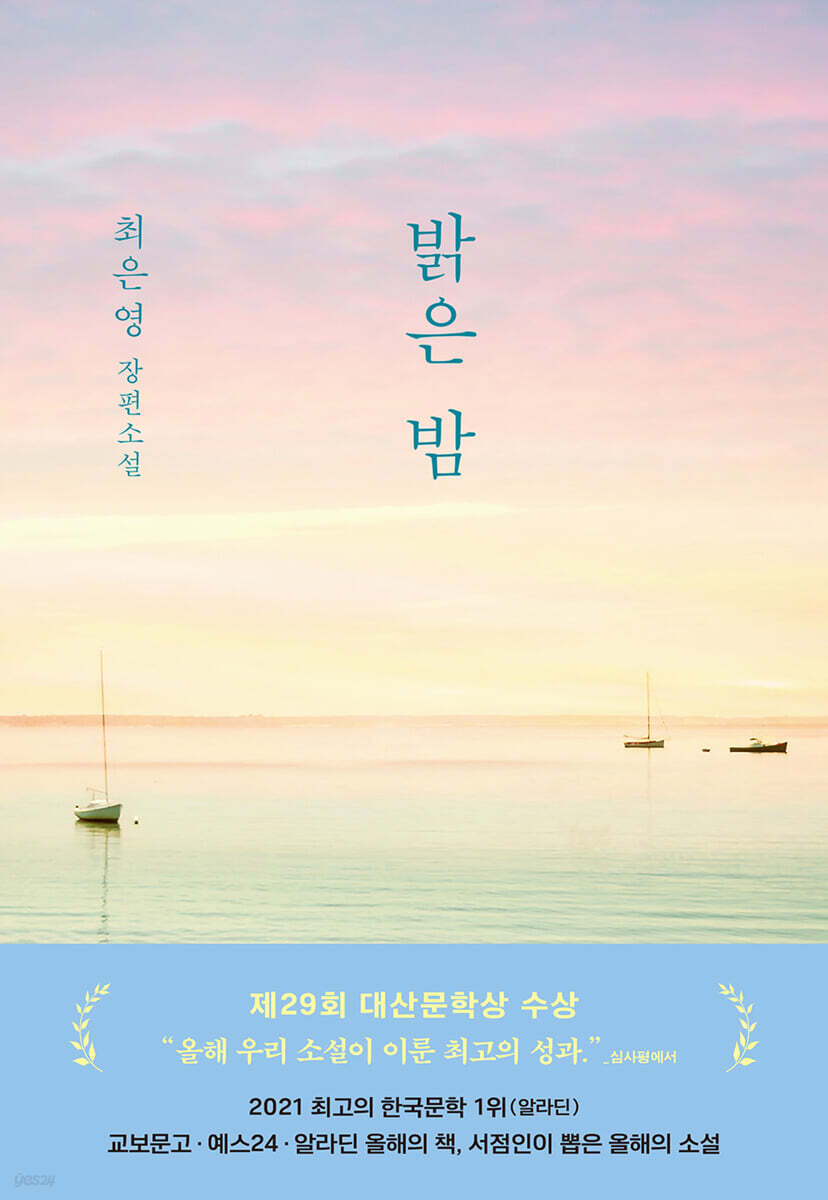
bright night
 |
Description
Book Introduction
A record of love and breath that spans a hundred years
"Shoko's Smile" and "A Person Harmless to Me": Choi Eun-young's first full-length novels The first full-length novel by Choi Eun-young, an author who has consistently received widespread reader support and literary attention since her debut, thanks to her relatable story, lyrical and thoughtful prose, and the burning issues embedded within it. Whenever discussing the writers who will lead the next generation of Korean novels, such as ‘Next-generation writers to watch chosen by cultural professionals’ (Dong-A Ilbo), ‘Novels of the Year chosen by novelists in 2016 and 2018’ (Kyobo Book Centre), and ‘Young writers who will become the future of Korean literature chosen by readers’ (Yes24), writer Choi Eun-young, who has been actively working and comes to mind most clearly regardless of the field, stopped working on a novel that was scheduled for 2019 and took a breather. The gap that the writer, who had been passionately working on a novel, had to endure was the time he spent “before being invited into the world of a writer again” (from “Author’s Note”) and also the time he waited for the characters in the novel to come to him. "Bright Night" is the author's first full-length novel, the result of a year of painstakingly refining a series published in the quarterly [Munhakdongne] from the spring to winter of 2020. It is a work that fully demonstrates the author's special strengths, particularly in long-form novels such as "Shoko's Smile," "Hanji and Yeongju," and "The House Built of Sand." In an interview in 2016, when her first short story collection, "Shoko's Smile," was published, the author was asked about her plans for a full-length novel, saying, "I have a desire to write stories about my mother, my grandmother, and the women who lived in this land a long time ago." "Bright Night" naturally spans a hundred years, illuminating the lives of four generations—great-grandmother, grandmother, mother, and me—that the author has long held in her heart. As the story that begins with my great-grandmother and continues to me and the story that begins with me and continues to my great-grandmother pass through each other and gradually fill the gap, we will come to feel that the process of stories being passed down through people's mouths is also a process of breathing together that keeps each other alive, and that this is the inherent power of stories themselves. Choi Eun-young's novel, which gradually brightens the surroundings with its gentle yet strong presence, has now arrived to us. |
- You can preview some of the book's contents.
Preview
index
Part 1_007
Part 2_083
Part 3_153
Part 4_237
Part 5_295
Author's Note _339
Part 2_083
Part 3_153
Part 4_237
Part 5_295
Author's Note _339
Into the book
왜 개새끼라고 하나.
Isn't that because the dog is too kind to people?
Because they treat you well without any conditions, because they don't avoid you when you hit them and wag their tails, because they obey you, because they like you, isn't it true that they find it funny and despise you?
Isn't that what it means to be human?
나는 그 생각을 하며 개새끼라는 단어를 가만히 내려다봤다.
I felt like an asshole myself.
--- p.13
If the heart were an organ inside the body that could be taken out, I would sometimes want to put my hand in my chest, take it out, and wash it with warm water.
I wanted to wash it clean, dry it with a towel, and hang it in a sunny, well-ventilated place.
In the meantime, I will live as a person without a heart, and when my heart has dried in the sun, I will be able to put my soft and fragrant heart back in my chest and start anew.
--- p.14
My great-grandmother left the house without looking back.
It was because I felt like I wouldn't be able to leave if I looked back even for a moment.
The house I lived in for seventeen years, a house with a foul odor that never went away, a house where I had to scoop out the filth myself because no one even came to pay attention to the garbage collector, a house where I was looking at a pretty flower blooming in a corner at sunset and got hit in the head by a rock that flew for no reason, a house with no good memories whatsoever.
As I left the house and headed to the train station, the short journey felt like a thousand miles, and each step felt heavy, as if I were wearing shoes made of lead.
Still, I had to leave.
Because that was the way to live.
--- p.34
She had that talent.
The talent of never deceiving yourself.
The talent to feel injustice as injustice, sadness as sadness, and loneliness as loneliness.
--- p.54
She was worried that the child might not be able to cry freely because he was too busy keeping an eye on his small body and mind.
Her love grew out of that worry.
One day, as she made eye contact with her child and smiled, she realized that she cherished the child in her heart.
It may not be what people in the world call a mother's instinctive love.
--- p.73
But what good is all that?
I couldn't figure out what it meant for people to remember people, for someone to remember someone who had been in this world and then disappeared.
Do I want to be remembered?
Whenever I ask myself this question, the answer is always that I don't want to be remembered.
Whether I wished for it or not, that was the ultimate end for humanity.
When the Earth reaches the end of its lifespan, and even longer after that, when entropy reaches its maximum, even time will disappear.
At that time, humans will become a species that does not even remember that they have briefly stayed in space.
The universe becomes a place without a mind to remember them.
That's our final ending.
--- p.81
Samcheon-ah, azaleas are in full bloom in Saebi right now.
Is that the case with Gaeseong too?
I remember picking flowers with you and drinking the honey.
We used to pick it and make pancakes with it, and we also used to dig up mugwort and make rice cakes with it.
Now I've become a person who thinks of you even when I see flowers or grass.
When I look at the stars or the moon, I only think of your face as you look up at them.
Savi, isn't that strange? I think of you saying that while looking at the night sky.
This is strange, that is strange, our Samcheoni comes to mind.
--- p.120~121
We are on round, blue boats, drifting across the dark sea, and most of us must leave in less than a hundred years.
So where are you going?
I've often thought that.
Compared to the age of the universe, or even compared to the much shorter age of the Earth, isn't our life so fleeting?
I couldn't understand why life, which is only a fleeting moment, sometimes felt so long and painful.
I could have been born as an oak tree or a goose, so why was I born as a human?
The desire to kill so many people with an atomic bomb and the power to put that desire into action both came from humans.
I am human like them.
I thought quietly about the suffering caused by humans made of stardust, and how stardust was arranged to become human beings.
Touching my body, which may have been a star at one time, and a fragment of a supernova at another.
Everything felt new.
--- p.130
There was no longer anything that would cause us to engage in a war of nerves to the point where we wouldn't speak to each other for days on end like we used to.
We had put out the fire before it became a big one, and we suddenly felt embarrassed that we had thrown a small spark at the other person.
That also meant we weren't that close.
We shared in our eyes the fear that we might hurt each other so badly that it might be irreversible.
We have become so close that we can no longer fight to the end.
A relationship where we can't fight till the end because we're afraid it'll really end.
--- p.137
My grandmother thought that life was like that, when you were trembling with the thought that something might happen at any moment, and even if nothing happened, just when you felt a little relieved, it would hit you in the back of the head.
Misfortune seemed to like that kind of environment.
When I finally caught my breath, I thought maybe life was worth living.
--- p.199
The affection that Grandma Myeong-suk showed in her letters was burdensome to Grandma.
Reading Grandma Myeong-suk's letters, I eventually realized that she was a person who wanted to be loved by someone.
Because I have come to admit that I am a person who desperately and desperately wants to be loved.
I could endure Namseon's harsh words as much as I wanted.
But my heart always ached when I read Grandma Myeongsuk's letters.
Love made the grandmother cry.
It touched a heart that even insults and wounds could not touch.
Isn't that because the dog is too kind to people?
Because they treat you well without any conditions, because they don't avoid you when you hit them and wag their tails, because they obey you, because they like you, isn't it true that they find it funny and despise you?
Isn't that what it means to be human?
나는 그 생각을 하며 개새끼라는 단어를 가만히 내려다봤다.
I felt like an asshole myself.
--- p.13
If the heart were an organ inside the body that could be taken out, I would sometimes want to put my hand in my chest, take it out, and wash it with warm water.
I wanted to wash it clean, dry it with a towel, and hang it in a sunny, well-ventilated place.
In the meantime, I will live as a person without a heart, and when my heart has dried in the sun, I will be able to put my soft and fragrant heart back in my chest and start anew.
--- p.14
My great-grandmother left the house without looking back.
It was because I felt like I wouldn't be able to leave if I looked back even for a moment.
The house I lived in for seventeen years, a house with a foul odor that never went away, a house where I had to scoop out the filth myself because no one even came to pay attention to the garbage collector, a house where I was looking at a pretty flower blooming in a corner at sunset and got hit in the head by a rock that flew for no reason, a house with no good memories whatsoever.
As I left the house and headed to the train station, the short journey felt like a thousand miles, and each step felt heavy, as if I were wearing shoes made of lead.
Still, I had to leave.
Because that was the way to live.
--- p.34
She had that talent.
The talent of never deceiving yourself.
The talent to feel injustice as injustice, sadness as sadness, and loneliness as loneliness.
--- p.54
She was worried that the child might not be able to cry freely because he was too busy keeping an eye on his small body and mind.
Her love grew out of that worry.
One day, as she made eye contact with her child and smiled, she realized that she cherished the child in her heart.
It may not be what people in the world call a mother's instinctive love.
--- p.73
But what good is all that?
I couldn't figure out what it meant for people to remember people, for someone to remember someone who had been in this world and then disappeared.
Do I want to be remembered?
Whenever I ask myself this question, the answer is always that I don't want to be remembered.
Whether I wished for it or not, that was the ultimate end for humanity.
When the Earth reaches the end of its lifespan, and even longer after that, when entropy reaches its maximum, even time will disappear.
At that time, humans will become a species that does not even remember that they have briefly stayed in space.
The universe becomes a place without a mind to remember them.
That's our final ending.
--- p.81
Samcheon-ah, azaleas are in full bloom in Saebi right now.
Is that the case with Gaeseong too?
I remember picking flowers with you and drinking the honey.
We used to pick it and make pancakes with it, and we also used to dig up mugwort and make rice cakes with it.
Now I've become a person who thinks of you even when I see flowers or grass.
When I look at the stars or the moon, I only think of your face as you look up at them.
Savi, isn't that strange? I think of you saying that while looking at the night sky.
This is strange, that is strange, our Samcheoni comes to mind.
--- p.120~121
We are on round, blue boats, drifting across the dark sea, and most of us must leave in less than a hundred years.
So where are you going?
I've often thought that.
Compared to the age of the universe, or even compared to the much shorter age of the Earth, isn't our life so fleeting?
I couldn't understand why life, which is only a fleeting moment, sometimes felt so long and painful.
I could have been born as an oak tree or a goose, so why was I born as a human?
The desire to kill so many people with an atomic bomb and the power to put that desire into action both came from humans.
I am human like them.
I thought quietly about the suffering caused by humans made of stardust, and how stardust was arranged to become human beings.
Touching my body, which may have been a star at one time, and a fragment of a supernova at another.
Everything felt new.
--- p.130
There was no longer anything that would cause us to engage in a war of nerves to the point where we wouldn't speak to each other for days on end like we used to.
We had put out the fire before it became a big one, and we suddenly felt embarrassed that we had thrown a small spark at the other person.
That also meant we weren't that close.
We shared in our eyes the fear that we might hurt each other so badly that it might be irreversible.
We have become so close that we can no longer fight to the end.
A relationship where we can't fight till the end because we're afraid it'll really end.
--- p.137
My grandmother thought that life was like that, when you were trembling with the thought that something might happen at any moment, and even if nothing happened, just when you felt a little relieved, it would hit you in the back of the head.
Misfortune seemed to like that kind of environment.
When I finally caught my breath, I thought maybe life was worth living.
--- p.199
The affection that Grandma Myeong-suk showed in her letters was burdensome to Grandma.
Reading Grandma Myeong-suk's letters, I eventually realized that she was a person who wanted to be loved by someone.
Because I have come to admit that I am a person who desperately and desperately wants to be loved.
I could endure Namseon's harsh words as much as I wanted.
But my heart always ached when I read Grandma Myeongsuk's letters.
Love made the grandmother cry.
It touched a heart that even insults and wounds could not touch.
--- p.220
Publisher's Review
"The Greater Power of Sorrow that Comforts and Embraces Grief" _ Oh Jeong-hee (novelist)
A story that came to me through my great-grandmother, grandmother, and mother.
Just as life is transmitted to me, can I, too, reach them now?
Just as countless past selves came together to create the present me
Will I, too, be able to meet countless past selves?
Jiyeon, 32 years old, packs up her life in Seoul and leaves for Heeryeong.
It was about a month after I divorced my cheating husband that I saw the job posting for a researcher at the Heeryeong Astronomical Observatory.
Jiyeon, who cannot easily recover from the shock of her husband's betrayal, decides to move as if running away.
Heeryeong, a small seaside town, is an unfamiliar place I have never been to except when I visited my grandmother's house when I was ten years old.
One weekend, while continuing her life in Heeryeong, spending time “unable to readily answer yes to the question, ‘Are things getting better?’” (page 15), Jiyeon meets an old woman on the hill on her way home.
He was a person who lived in the same apartment complex as Jiyeon and would always look happy whenever we ran into each other.
On a hill with a gentle breeze blowing and a view of the sea sparkling in the afternoon sunlight, the grandmother says something unexpected.
“Young lady, you look like my granddaughter.
I last saw him when he was ten.
“She’s my daughter’s daughter.”
After saying that, my grandmother looked at me quietly.
“My granddaughter’s name is Jiyeon, Lee Jiyeon.
“My daughter’s name is Gilmi-seon.”
I looked into my grandmother's face.
My grandmother was saying my mother's and my name.
(…)
We stood awkwardly on the hill, looking at each other.
A playful expression appeared on my grandmother's face, and I thought she had recognized me from the start.
"grandma."
Grandma nodded at my words.
“Long time no see.” (pp. 20-21)
For some reason, the relationship between the grandmother and the mother became estranged, and so the grandmother, whom Jiyeon had not seen for over twenty years, appears in front of her.
Jiyeon feels awkward and has difficulty reuniting with her grandmother, but she is also curious about the “faint friendship that underlies such feelings” (p. 23).
And Jiyeon, who visited her grandmother's house as a result of that meeting, talks to her grandmother in a cautious yet warm atmosphere and receives a photo.
In the photo, two women wearing white blouses and black skirts are smiling, one of whom bears a striking resemblance to Jiyeon.
The grandmother points to the woman and says.
This person is his mother.
Then, the story begins to unfold about how Jiyeon's great-grandmother, who was born the daughter of a Baekjeong in Samcheon, Hwanghae-do and lived a life of persecution, met her great-grandfather, the son of a commoner, and what kind of life she lived and came to come to Huiryeong.
Starting with that, 『Bright Night』 unfolds with the present-day story of Jiyeon continuing her new life in Heeryeong intersecting with the past story told by her grandmother.
What is special about this story format is that the story of the past is not told directly through the grandmother's mouth, but is reconstructed by Jiyeon based on what she heard from her grandmother.
In other words, it is a story that unfolds from the perspective of the person who is delaying the time span of nearly a hundred years, starting from the great-grandmother's story set in the 1930s and reaching the present day.
In this way, 『Bright Night』 moves back and forth between the two stories, bringing people from long ago who only existed in photographs and memories back to life in the present by portraying them as concrete figures.
“Love touched a heart that even insult or hurt could not touch.”
The origin of love discovered by tracing the trajectory that led me to it now
Contrary to her ex-husband's belief that "time is not a flowing river, but a frozen river" and that "the past, present, and future exist simultaneously" (p. 173), the story revived through Jiyeon's reconstruction is not fixed as a story of the past or present, but rather blends smoothly into each other's stories.
The scene where the great-grandmother, who was born the daughter of a butcher and was not welcomed by anyone, meets ‘Aunt Saebi’ and shares her friendship for the first time flows out of the 1930s and flows into the dark times of the present for Ji-yeon, and as the grandmother, who is nearing her eighties, goes through Ji-yeon’s story, she is not an old woman with deep wrinkles and difficulty bending over, but comes back to life as a gentle baby who “did not complain about what to eat and did not whine even when her baby teeth came in” (p. 74).
In this way, the characters are not reborn as fixed figures of the present, but as figures that contain numerous 'selves'.
And the fact that it is none other than the 'stories' that they tell each other that make this possible seems to confirm author Choi Eun-young's belief in and affection for the novel format.
As the grandmother says, “Because you listen to my story, Uncle Saebi lives that much longer” (page 81), the story of the past continues to be passed down to Jiyeon through her great-grandmother, grandmother, and mother, and the story that arrives after passing through many layers in this way brings about some kind of change in Jiyeon’s present life.
So, can we say “Bright Night” like this?
Eunyoung Choi's beautiful and sincere answer to the question of why some lives must be told to us through stories.
Choi Eun-young, with a deep faith in the inherent power of the novel, carefully takes each step forward, drawing the path of the heart flowing toward people she has never met.
The shape of the waterway that is completed the moment you close the book may be different for each person, but one thing is certain.
The water will flow to where even a little love is stored, “even if it is a place full of thorns” (p. 56).
Like the warmth that comes from touching a sun-warmed stone, the love that Choi Eun-young discovered and passed on to us is so warm and strong.
“The past two years have been the most difficult for me since becoming an adult.
For half of that time I couldn't write, and for the rest of the time I wrote "Bright Night."
“At that time, I didn’t seem to be a human being. I was like a water bag that would spill if someone touched it. Writing this novel was a process of me regaining my body and my mind and becoming a person.” _From the author’s note
A story that came to me through my great-grandmother, grandmother, and mother.
Just as life is transmitted to me, can I, too, reach them now?
Just as countless past selves came together to create the present me
Will I, too, be able to meet countless past selves?
Jiyeon, 32 years old, packs up her life in Seoul and leaves for Heeryeong.
It was about a month after I divorced my cheating husband that I saw the job posting for a researcher at the Heeryeong Astronomical Observatory.
Jiyeon, who cannot easily recover from the shock of her husband's betrayal, decides to move as if running away.
Heeryeong, a small seaside town, is an unfamiliar place I have never been to except when I visited my grandmother's house when I was ten years old.
One weekend, while continuing her life in Heeryeong, spending time “unable to readily answer yes to the question, ‘Are things getting better?’” (page 15), Jiyeon meets an old woman on the hill on her way home.
He was a person who lived in the same apartment complex as Jiyeon and would always look happy whenever we ran into each other.
On a hill with a gentle breeze blowing and a view of the sea sparkling in the afternoon sunlight, the grandmother says something unexpected.
“Young lady, you look like my granddaughter.
I last saw him when he was ten.
“She’s my daughter’s daughter.”
After saying that, my grandmother looked at me quietly.
“My granddaughter’s name is Jiyeon, Lee Jiyeon.
“My daughter’s name is Gilmi-seon.”
I looked into my grandmother's face.
My grandmother was saying my mother's and my name.
(…)
We stood awkwardly on the hill, looking at each other.
A playful expression appeared on my grandmother's face, and I thought she had recognized me from the start.
"grandma."
Grandma nodded at my words.
“Long time no see.” (pp. 20-21)
For some reason, the relationship between the grandmother and the mother became estranged, and so the grandmother, whom Jiyeon had not seen for over twenty years, appears in front of her.
Jiyeon feels awkward and has difficulty reuniting with her grandmother, but she is also curious about the “faint friendship that underlies such feelings” (p. 23).
And Jiyeon, who visited her grandmother's house as a result of that meeting, talks to her grandmother in a cautious yet warm atmosphere and receives a photo.
In the photo, two women wearing white blouses and black skirts are smiling, one of whom bears a striking resemblance to Jiyeon.
The grandmother points to the woman and says.
This person is his mother.
Then, the story begins to unfold about how Jiyeon's great-grandmother, who was born the daughter of a Baekjeong in Samcheon, Hwanghae-do and lived a life of persecution, met her great-grandfather, the son of a commoner, and what kind of life she lived and came to come to Huiryeong.
Starting with that, 『Bright Night』 unfolds with the present-day story of Jiyeon continuing her new life in Heeryeong intersecting with the past story told by her grandmother.
What is special about this story format is that the story of the past is not told directly through the grandmother's mouth, but is reconstructed by Jiyeon based on what she heard from her grandmother.
In other words, it is a story that unfolds from the perspective of the person who is delaying the time span of nearly a hundred years, starting from the great-grandmother's story set in the 1930s and reaching the present day.
In this way, 『Bright Night』 moves back and forth between the two stories, bringing people from long ago who only existed in photographs and memories back to life in the present by portraying them as concrete figures.
“Love touched a heart that even insult or hurt could not touch.”
The origin of love discovered by tracing the trajectory that led me to it now
Contrary to her ex-husband's belief that "time is not a flowing river, but a frozen river" and that "the past, present, and future exist simultaneously" (p. 173), the story revived through Jiyeon's reconstruction is not fixed as a story of the past or present, but rather blends smoothly into each other's stories.
The scene where the great-grandmother, who was born the daughter of a butcher and was not welcomed by anyone, meets ‘Aunt Saebi’ and shares her friendship for the first time flows out of the 1930s and flows into the dark times of the present for Ji-yeon, and as the grandmother, who is nearing her eighties, goes through Ji-yeon’s story, she is not an old woman with deep wrinkles and difficulty bending over, but comes back to life as a gentle baby who “did not complain about what to eat and did not whine even when her baby teeth came in” (p. 74).
In this way, the characters are not reborn as fixed figures of the present, but as figures that contain numerous 'selves'.
And the fact that it is none other than the 'stories' that they tell each other that make this possible seems to confirm author Choi Eun-young's belief in and affection for the novel format.
As the grandmother says, “Because you listen to my story, Uncle Saebi lives that much longer” (page 81), the story of the past continues to be passed down to Jiyeon through her great-grandmother, grandmother, and mother, and the story that arrives after passing through many layers in this way brings about some kind of change in Jiyeon’s present life.
So, can we say “Bright Night” like this?
Eunyoung Choi's beautiful and sincere answer to the question of why some lives must be told to us through stories.
Choi Eun-young, with a deep faith in the inherent power of the novel, carefully takes each step forward, drawing the path of the heart flowing toward people she has never met.
The shape of the waterway that is completed the moment you close the book may be different for each person, but one thing is certain.
The water will flow to where even a little love is stored, “even if it is a place full of thorns” (p. 56).
Like the warmth that comes from touching a sun-warmed stone, the love that Choi Eun-young discovered and passed on to us is so warm and strong.
“The past two years have been the most difficult for me since becoming an adult.
For half of that time I couldn't write, and for the rest of the time I wrote "Bright Night."
“At that time, I didn’t seem to be a human being. I was like a water bag that would spill if someone touched it. Writing this novel was a process of me regaining my body and my mind and becoming a person.” _From the author’s note
GOODS SPECIFICS
- Publication date: July 27, 2021
- Page count, weight, size: 344 pages | 478g | 145*210*21mm
- ISBN13: 9788954681179
- ISBN10: 8954681174
You may also like
카테고리
korean


korean

![GQ KOREA Mark (Monthly): December [2025]](http://librairie.coreenne.fr/cdn/shop/files/8ef265dbbfbf186523ed75ba7319009d.jpg?v=1765340328&width=3840)


