

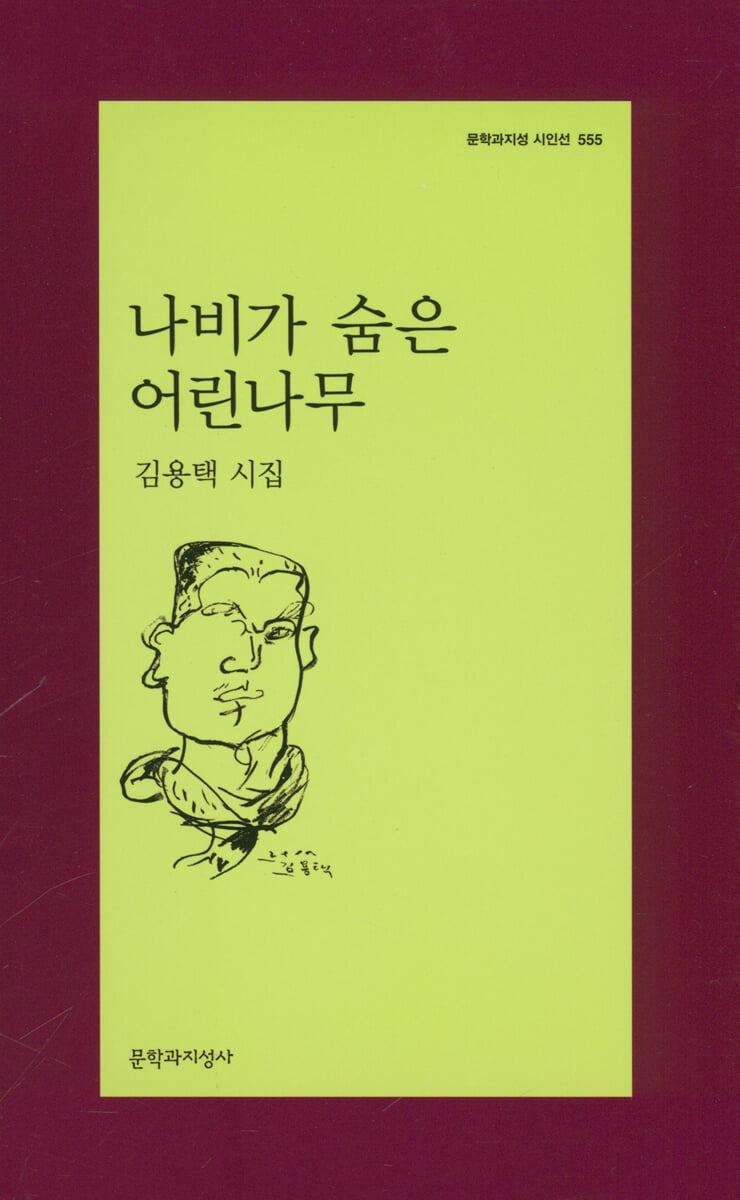
Butterfly hiding in the young tree
 |
Description
Book Introduction
- A word from MD
-
Poems by poet Kim Yong-taek that comfort the heartThe thirteenth poetry collection by Kim Yong-taek, the ‘Seomjin River Poet.’
The poems in 『The Young Tree Where the Butterfly Hides』 embrace the colors of the season and the light of nature, and begin with the poet's story and expand into our universal lives.
A book full of poems like “A gust of wind crossing the river that would not look down on anyone’s happiness (from “Things I See”)”June 18, 2021. Novel/Poetry PD Park Hyung-wook
“The horse that walks on water has not yet come to me.”
Towards the truth of life that is completely empty
The fate of a poet who takes endless steps
Kim Yong-taek's thirteenth poetry collection, "The Young Tree Where the Butterfly Hides," has been published, providing comfort and courage to many readers through language that soothes everyday life and a perspective that captures the sublimity of nature.
Kim Yong-taek has steadily expanded the boundaries of traditional lyric poetry by publishing numerous poetry collections, including his first collection of poems, Seomjin River (1985), which achieved a monumental achievement in Korean literature.
Even while receiving enthusiastic love from readers, he never stopped taking on poetic challenges. In this collection of poems, he seeks another expansion by erasing the specificity of both the speaker and the visible object.
In line with the phrase “When insignificant things become something/then I am happy, and when they return to nothing/then I am at ease” (“Miracle”), I go one step further from my previous work, which clearly revealed poetic intent, and aim to reach “the infinite possibilities opened by emptying out meaning.”
Thus, 『The Young Tree Where the Butterfly Hides』 presents the surprising experience of encountering a certain enlightenment without realizing it, following the poet's mature and contemplative gaze.
The poetic language, liberated from meaning, leads us to discover the strangeness and beauty of everyday life in the mystery of returning to the purest dimension of language.
Towards the truth of life that is completely empty
The fate of a poet who takes endless steps
Kim Yong-taek's thirteenth poetry collection, "The Young Tree Where the Butterfly Hides," has been published, providing comfort and courage to many readers through language that soothes everyday life and a perspective that captures the sublimity of nature.
Kim Yong-taek has steadily expanded the boundaries of traditional lyric poetry by publishing numerous poetry collections, including his first collection of poems, Seomjin River (1985), which achieved a monumental achievement in Korean literature.
Even while receiving enthusiastic love from readers, he never stopped taking on poetic challenges. In this collection of poems, he seeks another expansion by erasing the specificity of both the speaker and the visible object.
In line with the phrase “When insignificant things become something/then I am happy, and when they return to nothing/then I am at ease” (“Miracle”), I go one step further from my previous work, which clearly revealed poetic intent, and aim to reach “the infinite possibilities opened by emptying out meaning.”
Thus, 『The Young Tree Where the Butterfly Hides』 presents the surprising experience of encountering a certain enlightenment without realizing it, following the poet's mature and contemplative gaze.
The poetic language, liberated from meaning, leads us to discover the strangeness and beauty of everyday life in the mystery of returning to the purest dimension of language.
- You can preview some of the book's contents.
Preview
index
Poet's words
Forest of young birds/By the wings/Words related to you/Time when butterflies fly/Prose poem, and child/Morning star/Things that have passed are understood and disappear/Morning of yellow oriole/Believe in silence/Lyric poem/The spring of the year after my father passed away, that is, 1985/The house where sparrows went on a picnic/Behind the house where I live, the moon and the night live in the same house/A beautiful walk/If you go too far, you can't come back/Time on the grass/A young tree where a butterfly hides/A certain posture on a spring day/The spring of a helpless cat/Sad play/Not even holding flowers/What if the moon cools down/When my mother is not at home/Alone in the rain/Wandering/When bored and suffering/Now is the time/My reality shines directly/Please leave my news behind/I give you this poem/I am released from stillness/A path where I can stand/A glass wall of silence/A precarious autumn/A certain previous scenery/My pleasant The fall of the hand/Things I see/On a day when I stand by the snowy river/The sound of the river soothing the wind/Time that people have abandoned/Miracle/Yangsik's yard/A tree that reached the riverbank of a day/Snow piles up Let's go to the next sentence/Connecting dreams to reality/That star I once saw/I know this wind/The end of that season/The tree you are standing on is an apricot tree
epilogue
The poet moves on to the next sentence. Shin Yong-mok
Forest of young birds/By the wings/Words related to you/Time when butterflies fly/Prose poem, and child/Morning star/Things that have passed are understood and disappear/Morning of yellow oriole/Believe in silence/Lyric poem/The spring of the year after my father passed away, that is, 1985/The house where sparrows went on a picnic/Behind the house where I live, the moon and the night live in the same house/A beautiful walk/If you go too far, you can't come back/Time on the grass/A young tree where a butterfly hides/A certain posture on a spring day/The spring of a helpless cat/Sad play/Not even holding flowers/What if the moon cools down/When my mother is not at home/Alone in the rain/Wandering/When bored and suffering/Now is the time/My reality shines directly/Please leave my news behind/I give you this poem/I am released from stillness/A path where I can stand/A glass wall of silence/A precarious autumn/A certain previous scenery/My pleasant The fall of the hand/Things I see/On a day when I stand by the snowy river/The sound of the river soothing the wind/Time that people have abandoned/Miracle/Yangsik's yard/A tree that reached the riverbank of a day/Snow piles up Let's go to the next sentence/Connecting dreams to reality/That star I once saw/I know this wind/The end of that season/The tree you are standing on is an apricot tree
epilogue
The poet moves on to the next sentence. Shin Yong-mok
Into the book
If the wind born from silence comes
Can fly lightly
Wait, your hands will follow your heart.
--- From "The Young Tree Where the Butterfly Hides"
I sometimes
To the western beech forest where no one lives
I also try walking to meet the wind of justice.
--- From "When I'm Bored and Suffering"
The snowflakes that rest on the branches and then fall again, enjoying their freedom, are
The image I dream of returning to my original place
--- From "The Way to Stand Up"
Do I have to go?
The cuckoo's cry fades away
I still
I have a lot left to give you
Can fly lightly
Wait, your hands will follow your heart.
--- From "The Young Tree Where the Butterfly Hides"
I sometimes
To the western beech forest where no one lives
I also try walking to meet the wind of justice.
--- From "When I'm Bored and Suffering"
The snowflakes that rest on the branches and then fall again, enjoying their freedom, are
The image I dream of returning to my original place
--- From "The Way to Stand Up"
Do I have to go?
The cuckoo's cry fades away
I still
I have a lot left to give you
--- From "The End of That Season"
Publisher's Review
“Some days are different, some days are different.”
As I read "The Young Tree Where the Butterfly Hides," I suddenly wondered whose voice this was.
Given the context of the content, it is easy to assume that this is the poet Kim Yong-taek's speech, but if you look closely at the words and lines, you can see that the subject of the voice is not fixed and subtly changes.
A few paths leading out of the village
The wind, the wind, the wind, followed the wind, and gathered together in a winding path, reaching the sea.
I have thoughts, thoughts that I can't let go of, and they are welling up in my chest.
Who, no one, is going to say that?
I must have walked along the road leading out to the sea, my thoughts filling my mind.
Gentle waves crashed into the western sea of our country.
On the beach, where pebbles roll away with a backward step, someone is sitting.
―The part about “Behind the house where I live, the moon and the night live together”
The poem is divided into four verses, and the first verse is filled with a text message the poet received from his daughter and his feelings about it.
Therefore, we naturally read this work as if the speaker were a poet, but after the second stanza describing the village scenery, we suddenly notice that his presence disappears in the third stanza.
When the 'several paths' that lead out of the village reach the sea as one, 'someone' who had been walking while filling up with thoughts that could not be abandoned suddenly appears, and that 'someone' witnesses another 'someone' sitting on the beach.
This writing technique erases not only the poetic subject but also the object with vague and unspecificity, leading the reader to directly fill in this blank space with their own memories and experiences.
Thus, Kim Yong-taek's poetry succeeds in being filled with the reader's individual and specific experiences while simultaneously being empty in places, like "a cloud hanging over the western mountain, throwing away all the collected thoughts" ("Things I See").
“I go across from this tree to that tree, leaf by leaf.”
So, what is the poet ultimately trying to achieve in this collection of poems, which is open to diverse interpretations?
It can be figured out by following the image of a butterfly flying leisurely across the poem.
Morning becomes morning, night becomes night, and so, passing you, I finally return, return, return to the place where everyone knows, where everyone goes, beside everything, a spring day like the wind, passing a spring day with butterflies, past a few graves where wild violets bloom, beyond the black rock, beside the wings where the wind rests
―Full text from "By the Wings"
In this poem, the speaker flies “past the spring days when butterflies fly,” “over a few graves,” “beyond the black rocks,” and “to the side of everything where everyone goes.”
Where is that place?
Just as “morning returns to morning and night returns to night,” perhaps the place I “want to return to” is the origin of life.
Just as “I can only reach home if I slowly retrace my steps” (“If I Go Too Far, I Can’t Return”), the place the poet ultimately wants to reach is the origin of poetry and the starting point for a new leap forward.
Therefore, 『The Young Tree Where the Butterfly Hides』 contains the endless strength of a poet who, having realized the truth of life through the passage of time, willingly returns to the starting point and moves forward toward another life.
As a poet, Yongtaek Kim has developed a world of profound and widely loved poetry over the past 40 years.
Today, he is taking another step forward in an unknown direction.
I stayed on my back for a long time on the first sentence
The snow is piling up
The angle of the snowflakes that try to be parallel is controlled.
Snow is piling up. Let's move on to the next sentence.
―"Snow is piling up. Let's move on to the next sentence."
A separation without a next day is sad
What can I say?
My silence is alive
Horses, run around
I was released from suspension
―Back cover text
"It was a windy day
It was a place where butterflies flew
It was a river where people threw stones with all their might.
The unborn words could not overcome the hardship
I wrote a few words separately"
Summer 2021
Kim Yong-taek
As I read "The Young Tree Where the Butterfly Hides," I suddenly wondered whose voice this was.
Given the context of the content, it is easy to assume that this is the poet Kim Yong-taek's speech, but if you look closely at the words and lines, you can see that the subject of the voice is not fixed and subtly changes.
A few paths leading out of the village
The wind, the wind, the wind, followed the wind, and gathered together in a winding path, reaching the sea.
I have thoughts, thoughts that I can't let go of, and they are welling up in my chest.
Who, no one, is going to say that?
I must have walked along the road leading out to the sea, my thoughts filling my mind.
Gentle waves crashed into the western sea of our country.
On the beach, where pebbles roll away with a backward step, someone is sitting.
―The part about “Behind the house where I live, the moon and the night live together”
The poem is divided into four verses, and the first verse is filled with a text message the poet received from his daughter and his feelings about it.
Therefore, we naturally read this work as if the speaker were a poet, but after the second stanza describing the village scenery, we suddenly notice that his presence disappears in the third stanza.
When the 'several paths' that lead out of the village reach the sea as one, 'someone' who had been walking while filling up with thoughts that could not be abandoned suddenly appears, and that 'someone' witnesses another 'someone' sitting on the beach.
This writing technique erases not only the poetic subject but also the object with vague and unspecificity, leading the reader to directly fill in this blank space with their own memories and experiences.
Thus, Kim Yong-taek's poetry succeeds in being filled with the reader's individual and specific experiences while simultaneously being empty in places, like "a cloud hanging over the western mountain, throwing away all the collected thoughts" ("Things I See").
“I go across from this tree to that tree, leaf by leaf.”
So, what is the poet ultimately trying to achieve in this collection of poems, which is open to diverse interpretations?
It can be figured out by following the image of a butterfly flying leisurely across the poem.
Morning becomes morning, night becomes night, and so, passing you, I finally return, return, return to the place where everyone knows, where everyone goes, beside everything, a spring day like the wind, passing a spring day with butterflies, past a few graves where wild violets bloom, beyond the black rock, beside the wings where the wind rests
―Full text from "By the Wings"
In this poem, the speaker flies “past the spring days when butterflies fly,” “over a few graves,” “beyond the black rocks,” and “to the side of everything where everyone goes.”
Where is that place?
Just as “morning returns to morning and night returns to night,” perhaps the place I “want to return to” is the origin of life.
Just as “I can only reach home if I slowly retrace my steps” (“If I Go Too Far, I Can’t Return”), the place the poet ultimately wants to reach is the origin of poetry and the starting point for a new leap forward.
Therefore, 『The Young Tree Where the Butterfly Hides』 contains the endless strength of a poet who, having realized the truth of life through the passage of time, willingly returns to the starting point and moves forward toward another life.
As a poet, Yongtaek Kim has developed a world of profound and widely loved poetry over the past 40 years.
Today, he is taking another step forward in an unknown direction.
I stayed on my back for a long time on the first sentence
The snow is piling up
The angle of the snowflakes that try to be parallel is controlled.
Snow is piling up. Let's move on to the next sentence.
―"Snow is piling up. Let's move on to the next sentence."
A separation without a next day is sad
What can I say?
My silence is alive
Horses, run around
I was released from suspension
―Back cover text
"It was a windy day
It was a place where butterflies flew
It was a river where people threw stones with all their might.
The unborn words could not overcome the hardship
I wrote a few words separately"
Summer 2021
Kim Yong-taek
GOODS SPECIFICS
- Publication date: June 14, 2021
- Page count, weight, size: 88 pages | 140g | 128*205*15mm
- ISBN13: 9788932038698
- ISBN10: 8932038694
You may also like
카테고리
korean


korean

![GQ KOREA Mark (Monthly): December [2025]](http://librairie.coreenne.fr/cdn/shop/files/8ef265dbbfbf186523ed75ba7319009d.jpg?v=1765340328&width=3840)


