

Man made of snow
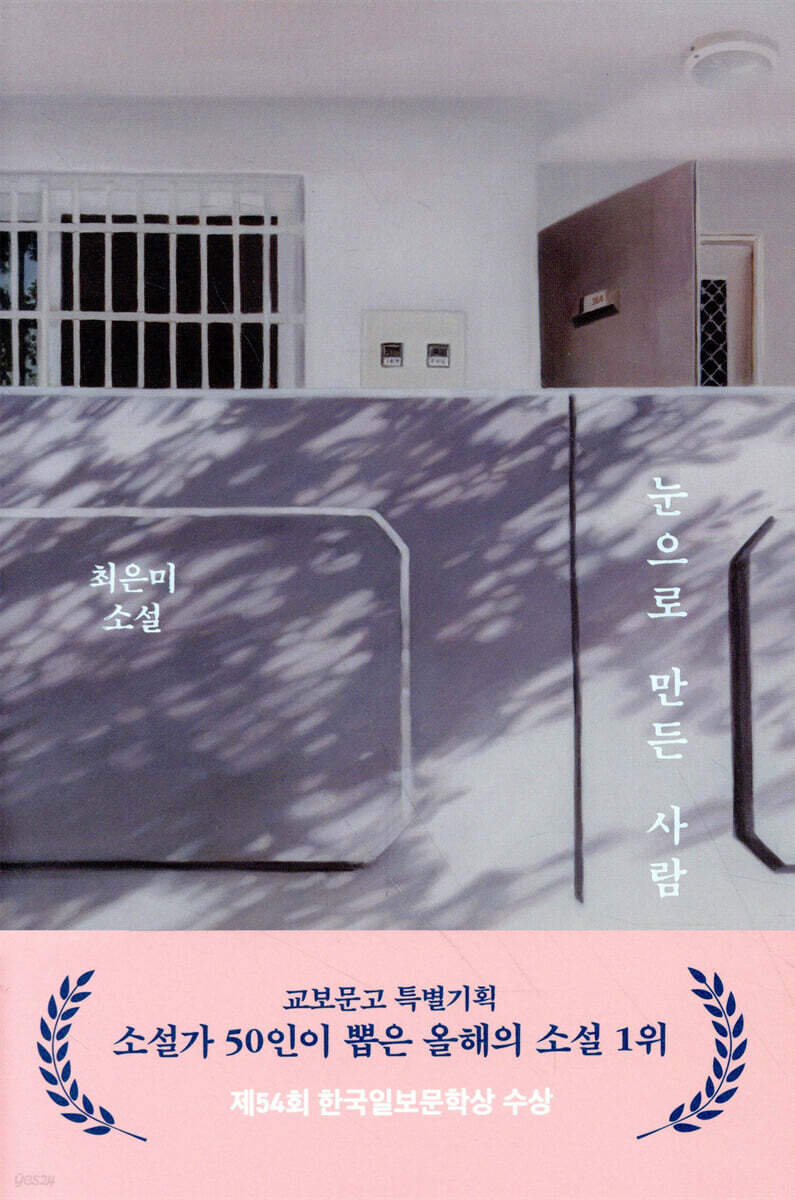 |
Description
Book Introduction
A beautiful, mad, and lonely whirlwind A dazzling turning point in Choi Eun-mi's novel world Includes the 2021 Contemporary Literature Award winner, "Here We Meet," and the 2017 Young Writer's Award winner, "A Man Made of Snow." Author Choi Eun-mi, who calmly builds refined sentences to create explosive narratives in one breath, presents her third collection of short stories, "A Person Made of Snow," which will mark a dazzling turning point in her literary world. This collection of short stories, including “Here We Meet,” which won the Contemporary Literature Award and was praised as “a benchmark for future Korean literature,” and “A Person Made of Snow,” which received much attention from the time of its publication, including the Young Writer’s Award and being nominated for a major literary award, contains nine short stories written between 2016 and 2020. It is the result of the author, who has continuously expanded her literary horizons through “A Very Beautiful Dream,” “The True Story of Magnolia,” and “The Ninth Wave,” finally establishing a unique world that can be called “Choi Eun-mi Style.” While previous works depicted the emotions of oppression arising from situations with no escape through characters placed in a pre-determined world, this collection of short stories, featuring a diverse cast of characters ranging from teenage girls to married women with children, departs far from the typical images we often associate with these individuals, eliciting a pathos of liberation where nothing is fixed and therefore can go anywhere. Eunmi Choi's characters, who had endured and persevered, burst out in this collection of short stories, shouting and running. However, rather than a quick and hot outburst of emotion, it is closer to creating a precarious state, like water in a cup that is about to overflow with just one drop, by cutting it cold and sharply like an ice crystal. In this situation, when a single drop of water is dropped and everything explodes, the cool destructive power that is the seal of Eunmi Choi's novels is unleashed. “All the emotions, words, curses and love, pleading and contempt, resignation, expectations, self-reproach and screams that arise and disappear, rise and scatter, are pressed down, crushed, burst out and become embedded in the ceiling like fragments” (The Sender, p. 19) are brought out to vividly depict the beautiful, frenzied, and lonely whirlpool that swirls within us. "The Man Made of Snow" is a collection of works that will be placed first when discussing Korean literature of the 2020s, shining with unique patterns engraved in its swirls. |
- You can preview some of the book's contents.
Preview
index
Sender… 007
Here we meet… 047
Man Made of Snow… 091
Me and the client… 131
Unnae… 153
Mt. Mi... 197
When I was me… 223
November line… 275
Lights… 311
Commentary | Kang Ji-hee (literary critic)
The elasticity of love, engraved as it bursts… 349
Author's Note … 385
Here we meet… 047
Man Made of Snow… 091
Me and the client… 131
Unnae… 153
Mt. Mi... 197
When I was me… 223
November line… 275
Lights… 311
Commentary | Kang Ji-hee (literary critic)
The elasticity of love, engraved as it bursts… 349
Author's Note … 385
Into the book
In Jin-ah's house, which was filled with colorless hues, the dining table was the most shining object.
How many early evenings have we drank together under that lamp?
The Yoons were playing safely at home, the husbands weren't home or were late, and we had many reasons not to drink.
--- p.14, "The Sender"
The house I live in.
A house that floats in the air, shimmering with two or three drops of light overlapping.
I even left the lights on at home to get a feel for that moment.
To see the place where my entire decade is contained.
All the emotions, words, curses and love, pleading and contempt, resignation and expectation, self-reproach and screams, that arose and disappeared, sprang and scattered, were pressed down, crushed, burst out and were embedded in the ceiling like fragments, and as I looked across it while holding onto the railing and twisting, ha… … What the hell, what is there, my Yoon, Jin-ah’s Yoon, Jin-ah, my husband, even myself, I felt like I could love them all.
It was so important to me to reach that emotional high by any means possible.
On days when I don't feel that way, I get anxious and anxious again.
--- p.19, "The Sender"
That feeling of being a burden to your family because of work.
That feeling where the more you try to do a good job, the more you sink into a swamp.
It was a feeling that had been repeated over and over again while I was balancing childcare and work, and it was also a feeling that had gradually been crushed as experience and resignation accumulated over nearly a decade.
Perhaps the balance of work, housework, and childcare that I believed I was achieving was being pushed back to square one, back to square one, in the spring of 2020.
--- pp.59~60, "Here We Meet"
Did Sumi know?
When I have to be a 'teacher' who is not someone's heart, not some kind of spring, when I have to stand with the official title of 'instructor', what about me am I hiding?
How clean and sane I am, selectively erasing only my labor as a housewife in order to survive as a 'teacher'.
summer solstice
Even at that moment when I am a 'teacher', I am being consumed in real time by the labor that I have hidden away.
How to become another woman to another woman with your face erased.
How, in order to cultivate the minimum strength to stand on my own, I have to erase my labor again and again, over and over again, every single day, and become one of those women who live comfortably, being eaten by what I erase, and being eaten by what I erase.
Why did I come to believe that I had to erase some part of myself to be trusted with my abilities?
--- p.74, "Here We Meet"
After that, the client keeps his mouth shut.
Time just flows.
I decide to wait.
Because I know that time doesn't just pass by.
The counselor waits for the client who is looking down at his house in a box.
By waiting as best as you can, you convey that this sand therapy room is a safe place and that anything is allowed inside the sandbox.
--- pp.141~142, "Me and the Client"
Living without seeing people you don't want to see.
I know how much Kang Soo-young wants that.
Saying you won't see someone you don't want to see.
I also know how difficult that is for Kang Soo-young.
I know how amazing it is to bring things you've never touched into your own box.
--- p.150, "Me and the Client"
Practitioners should visualize their past by recalling it in chronological order.
All the scenes from the past that cannot be erased, all the flashes of memory, and even the memories that cannot be captured but are not non-existent, must all be visualized and thrown back to Earth one by one.
The method was described in detail in a booklet piled up on one side of the store in the tile-roofed glass house, and I remember comparing the process of clearly recalling memories to a fight.
--- p.162, "Unnae"
I still remember the shock and sadness of the moment when the thing I really wanted to have and touch was destroyed as soon as it touched my hands.
--- p.216, 「Misan」
What Yujeong was afraid of was that she would not be able to see her family.
What Yujeong feared was that if she continued to look at her family with resignation, she would start to hate herself again.
What Yujeong wanted was to see her family in her right mind without experiencing any division.
--- p.264, "When I Was Me"
Yoo Jeong said she wanted to get out.
Yujeong said she wanted to escape from the original world where she had been trapped for a long time.
He said that he wanted to come out through himself, not by avoiding himself.
--- p.266, "When I Was Me"
There was something magical and gift-like about watching the lights come on together.
As they stood there, looking back at each other, Kyung had a feeling that she would become very close to Min.
How many early evenings have we drank together under that lamp?
The Yoons were playing safely at home, the husbands weren't home or were late, and we had many reasons not to drink.
--- p.14, "The Sender"
The house I live in.
A house that floats in the air, shimmering with two or three drops of light overlapping.
I even left the lights on at home to get a feel for that moment.
To see the place where my entire decade is contained.
All the emotions, words, curses and love, pleading and contempt, resignation and expectation, self-reproach and screams, that arose and disappeared, sprang and scattered, were pressed down, crushed, burst out and were embedded in the ceiling like fragments, and as I looked across it while holding onto the railing and twisting, ha… … What the hell, what is there, my Yoon, Jin-ah’s Yoon, Jin-ah, my husband, even myself, I felt like I could love them all.
It was so important to me to reach that emotional high by any means possible.
On days when I don't feel that way, I get anxious and anxious again.
--- p.19, "The Sender"
That feeling of being a burden to your family because of work.
That feeling where the more you try to do a good job, the more you sink into a swamp.
It was a feeling that had been repeated over and over again while I was balancing childcare and work, and it was also a feeling that had gradually been crushed as experience and resignation accumulated over nearly a decade.
Perhaps the balance of work, housework, and childcare that I believed I was achieving was being pushed back to square one, back to square one, in the spring of 2020.
--- pp.59~60, "Here We Meet"
Did Sumi know?
When I have to be a 'teacher' who is not someone's heart, not some kind of spring, when I have to stand with the official title of 'instructor', what about me am I hiding?
How clean and sane I am, selectively erasing only my labor as a housewife in order to survive as a 'teacher'.
summer solstice
Even at that moment when I am a 'teacher', I am being consumed in real time by the labor that I have hidden away.
How to become another woman to another woman with your face erased.
How, in order to cultivate the minimum strength to stand on my own, I have to erase my labor again and again, over and over again, every single day, and become one of those women who live comfortably, being eaten by what I erase, and being eaten by what I erase.
Why did I come to believe that I had to erase some part of myself to be trusted with my abilities?
--- p.74, "Here We Meet"
After that, the client keeps his mouth shut.
Time just flows.
I decide to wait.
Because I know that time doesn't just pass by.
The counselor waits for the client who is looking down at his house in a box.
By waiting as best as you can, you convey that this sand therapy room is a safe place and that anything is allowed inside the sandbox.
--- pp.141~142, "Me and the Client"
Living without seeing people you don't want to see.
I know how much Kang Soo-young wants that.
Saying you won't see someone you don't want to see.
I also know how difficult that is for Kang Soo-young.
I know how amazing it is to bring things you've never touched into your own box.
--- p.150, "Me and the Client"
Practitioners should visualize their past by recalling it in chronological order.
All the scenes from the past that cannot be erased, all the flashes of memory, and even the memories that cannot be captured but are not non-existent, must all be visualized and thrown back to Earth one by one.
The method was described in detail in a booklet piled up on one side of the store in the tile-roofed glass house, and I remember comparing the process of clearly recalling memories to a fight.
--- p.162, "Unnae"
I still remember the shock and sadness of the moment when the thing I really wanted to have and touch was destroyed as soon as it touched my hands.
--- p.216, 「Misan」
What Yujeong was afraid of was that she would not be able to see her family.
What Yujeong feared was that if she continued to look at her family with resignation, she would start to hate herself again.
What Yujeong wanted was to see her family in her right mind without experiencing any division.
--- p.264, "When I Was Me"
Yoo Jeong said she wanted to get out.
Yujeong said she wanted to escape from the original world where she had been trapped for a long time.
He said that he wanted to come out through himself, not by avoiding himself.
--- p.266, "When I Was Me"
There was something magical and gift-like about watching the lights come on together.
As they stood there, looking back at each other, Kyung had a feeling that she would become very close to Min.
--- p.323, "Lighting"
Publisher's Review
In the middle of a season filled with tense cold and pale light
Being cut, added, and built up again to become who I am today
"The Snowman" can be broadly divided into two novels: one that focuses on the experiences of female characters in their relationships with their families, and one that focuses on the special relationships female characters have with people outside their families.
If “A Man Made of Snow,” “Mt. Misan,” and “November Journey” belong to the former, then “The Sender,” “Here We Meet,” and “Unnae” can be said to belong to the latter.
"A Man Made of Snow," which is also the title work, is the first of the nine works included in this collection, and it deserves special attention as it points to the various directions in which Choi Eun-mi's novel world will branch out.
The novel begins with Kang Yun-hee, who lives a happy life with her family, being asked one day by her uncle, Kang Jung-sik, to take care of his son, Kang Min-seo, for a while.
Kang Min-seo, who was diagnosed with childhood lymphoma when she was young, was declared cured after chemotherapy treatment, but the cancer recently recurred.
While spending time with Kang Min-seo, Kang Yoon-hee finds comfort in his caring and affectionate nature, which is unusual for a middle school student.
But at the same time, Kang Min-seo reminds Kang Yoon-hee of an old memory with Kang Jung-sik that she wants to forget but cannot shake off.
Kang Joong-sik had committed sexual violence against Kang Yun-hee when she was young.
These circumstances interfere with the stories of 'Kang Su-yeong' in 'Me and the Client' and 'Yu-jeong' in 'When I Was Me', who are in similar situations, and make us look at the three works as a kind of series. What is characteristic of all three works is that rather than focusing on depicting the violent aspects of the incident that swept away the characters, they meticulously deal with the characters' lives after the incident.
Kang Yoon-hee, who made a snowman with Kang Min-seo, said, “The snowman is not gone even after it has completely melted and flowed away.
As the author said, “It’s just that the appearance has changed” (p. 128), in “Me and the Client,” the author ends the novel with the appearance of the counselor “I” waiting for Kang Su-yeong, who no longer comes to visit after the counseling period ends, thereby giving hope that this waiting will someday end.
The circumstances of Yoo Jeong in "When I Was Me" are similar.
Novelist Yoo Jeong receives a call from her close friend, Chang Yong, who lived in a village called Misan a long time ago, and heads to Naerincheon Rest Stop with her younger brother, Yoo Tae.
The village below the Naerincheon rest area is a place where the wounds Yujeong suffered as a child are buried, and it is a place where Yujeong could fall into a hole of unknown depth at any time.
While the novel blocks easy empathy for the pain Yu-jeong feels, it leaves open the possibility that Yu-jeong can 'get through' her pain by having her meet 'Dien,' a Vietnamese immigrant woman and the wife of Chang-yong's older brother, and head to Misan, the origin of her wounds.
The fact that “it is strangely tenaciously latent” (“When I Was Me, p. 246) makes it impossible for the characters to “stop rewinding time again and again” (“Unnae,” p. 158) is a common occurrence in this collection of short stories.
"Unnae" depicts the time spent by "I" who was sent to a place called Unnae, far from home when I was thirteen, with "Seungmi", a girl of the same age whom I met there, and "Misan" repeatedly brings to mind the sensation of something being torn, shattered, and split by overlapping the moment when "I" was going to bed as a child with the moment when I lost my younger sibling. It is a story about passing through that time "without knowing that I would leave something precious behind forever" ("November Journey," p. 279), and it adds the color of sadness due to loss to that time that remains sticky, damp, and incomprehensible.
“A feeling that cannot be expressed anywhere,
I love you so much I can't say it, I don't love you so I can't say it,
It's too close to say, it's too far to say,
“Things that become insignificant once you tell them.”
And that loss is connected not only to the loss of others, but also to the sense of losing oneself.
“The Sender” and “Here We Meet,” placed side by side at the beginning of the collection, express in overwhelming detail the isolation felt by married women with children within their families and society, thereby capturing the struggles of women to stand as “themselves” and the intense, unfamiliar vitality that erupts when they encounter one another.
In "Here We Meet," which depicts a life that has drastically changed due to the COVID-19 pandemic, "I" has finally opened a workshop in a commercial building after ending nine years of working at a home workshop.
However, due to COVID-19, I am suffocating from the anxiety and loneliness of not being able to properly manage work, childcare, or anything else.
This also applies to 'Sumi', who raises children while working.
The lives of these married women with children, who feel a near-obsessive burden of both work and childcare, are beginning to head towards crisis with the spread of COVID-19.
In "The Sender," 'I' and 'Jina' also become close due to their commonality of living in the same apartment complex and raising an eleven-year-old girl.
The relationship between the two people who have been together for quite some time, however, changes at some point as the atmosphere surrounding Jin-ah changes, and it becomes difficult for 'I' to talk to Jin-ah to the point where I wonder if I made a mistake.
Meanwhile, on a weekend when a strong typhoon was moving north, 'I' discovered that the blinds in Jin-ah's living room, which were always firmly closed on weekends when her husband came home, were open that day.
How can I forget?
The moment I turned back again, feeling an inexplicable feeling, and focused my eyes on Jinah's window.
The moment I noticed something through the crack in the window.
At that moment, I saw Jin-ah's glass window bursting white as if it was bulging from the pressure from within.
I saw the front window surrounding the house shatter into pieces in an instant.
It seemed I wasn't the only one who saw it, as sounds—screams, gasps, or something else—echoed through the air. (The Sender, p. 41)
This scene, which seems to symbolically express the state of mind of a character who has reached a critical point through the breaking of a window, however, also gives us a different feeling.
If we recall the belief of “I” that “I will not make a very bad choice at any moment in life” (“The Sender,” p. 11), this intense scene can also be read as a desperate signal sent to the outside world to escape from a certain limit, rather than destroying oneself.
This collection of short stories, which actively refreshes the air of Korean society today by unfolding stories that are more closely related to reality than ever before, provides an opportunity to witness the process in which Choi Eun-mi's awareness of the issues surrounding women, family, and society becomes more acute. By rejecting conventional representations related to these issues, it will also be an opportunity to enjoy Choi Eun-mi's unique voice that defies any category.
In the novel, where exceptional and unexpected circumstances, such as an unprecedented heat wave or a cold snap that seems to freeze everything, have passed, the characters who have learned to vent rather than retract themselves will likely fill that space with something else far beyond our expectations.
And it seems that the achievement of Choi Eun-mi's new collection of short stories is to open up that possibility.
The intensity and brilliance of a single writer perfecting the literary elements that make up his or her own world of work is captured in this collection of short stories.
★
I have been captivated by the swaying shadows.
I've lit up my back all night long
I've dreamed of the outside, even though the window didn't reflect anything.
I know a snowman who exists simultaneously with light.
I know that things that are invisible have not disappeared.
I've always thought that I wanted to love novels a little less, that I wanted to live a life separate from them, but if I've been able to break free from self-loathing even a little, it was all thanks to the time I spent writing novels.
_From the author's note
Being cut, added, and built up again to become who I am today
"The Snowman" can be broadly divided into two novels: one that focuses on the experiences of female characters in their relationships with their families, and one that focuses on the special relationships female characters have with people outside their families.
If “A Man Made of Snow,” “Mt. Misan,” and “November Journey” belong to the former, then “The Sender,” “Here We Meet,” and “Unnae” can be said to belong to the latter.
"A Man Made of Snow," which is also the title work, is the first of the nine works included in this collection, and it deserves special attention as it points to the various directions in which Choi Eun-mi's novel world will branch out.
The novel begins with Kang Yun-hee, who lives a happy life with her family, being asked one day by her uncle, Kang Jung-sik, to take care of his son, Kang Min-seo, for a while.
Kang Min-seo, who was diagnosed with childhood lymphoma when she was young, was declared cured after chemotherapy treatment, but the cancer recently recurred.
While spending time with Kang Min-seo, Kang Yoon-hee finds comfort in his caring and affectionate nature, which is unusual for a middle school student.
But at the same time, Kang Min-seo reminds Kang Yoon-hee of an old memory with Kang Jung-sik that she wants to forget but cannot shake off.
Kang Joong-sik had committed sexual violence against Kang Yun-hee when she was young.
These circumstances interfere with the stories of 'Kang Su-yeong' in 'Me and the Client' and 'Yu-jeong' in 'When I Was Me', who are in similar situations, and make us look at the three works as a kind of series. What is characteristic of all three works is that rather than focusing on depicting the violent aspects of the incident that swept away the characters, they meticulously deal with the characters' lives after the incident.
Kang Yoon-hee, who made a snowman with Kang Min-seo, said, “The snowman is not gone even after it has completely melted and flowed away.
As the author said, “It’s just that the appearance has changed” (p. 128), in “Me and the Client,” the author ends the novel with the appearance of the counselor “I” waiting for Kang Su-yeong, who no longer comes to visit after the counseling period ends, thereby giving hope that this waiting will someday end.
The circumstances of Yoo Jeong in "When I Was Me" are similar.
Novelist Yoo Jeong receives a call from her close friend, Chang Yong, who lived in a village called Misan a long time ago, and heads to Naerincheon Rest Stop with her younger brother, Yoo Tae.
The village below the Naerincheon rest area is a place where the wounds Yujeong suffered as a child are buried, and it is a place where Yujeong could fall into a hole of unknown depth at any time.
While the novel blocks easy empathy for the pain Yu-jeong feels, it leaves open the possibility that Yu-jeong can 'get through' her pain by having her meet 'Dien,' a Vietnamese immigrant woman and the wife of Chang-yong's older brother, and head to Misan, the origin of her wounds.
The fact that “it is strangely tenaciously latent” (“When I Was Me, p. 246) makes it impossible for the characters to “stop rewinding time again and again” (“Unnae,” p. 158) is a common occurrence in this collection of short stories.
"Unnae" depicts the time spent by "I" who was sent to a place called Unnae, far from home when I was thirteen, with "Seungmi", a girl of the same age whom I met there, and "Misan" repeatedly brings to mind the sensation of something being torn, shattered, and split by overlapping the moment when "I" was going to bed as a child with the moment when I lost my younger sibling. It is a story about passing through that time "without knowing that I would leave something precious behind forever" ("November Journey," p. 279), and it adds the color of sadness due to loss to that time that remains sticky, damp, and incomprehensible.
“A feeling that cannot be expressed anywhere,
I love you so much I can't say it, I don't love you so I can't say it,
It's too close to say, it's too far to say,
“Things that become insignificant once you tell them.”
And that loss is connected not only to the loss of others, but also to the sense of losing oneself.
“The Sender” and “Here We Meet,” placed side by side at the beginning of the collection, express in overwhelming detail the isolation felt by married women with children within their families and society, thereby capturing the struggles of women to stand as “themselves” and the intense, unfamiliar vitality that erupts when they encounter one another.
In "Here We Meet," which depicts a life that has drastically changed due to the COVID-19 pandemic, "I" has finally opened a workshop in a commercial building after ending nine years of working at a home workshop.
However, due to COVID-19, I am suffocating from the anxiety and loneliness of not being able to properly manage work, childcare, or anything else.
This also applies to 'Sumi', who raises children while working.
The lives of these married women with children, who feel a near-obsessive burden of both work and childcare, are beginning to head towards crisis with the spread of COVID-19.
In "The Sender," 'I' and 'Jina' also become close due to their commonality of living in the same apartment complex and raising an eleven-year-old girl.
The relationship between the two people who have been together for quite some time, however, changes at some point as the atmosphere surrounding Jin-ah changes, and it becomes difficult for 'I' to talk to Jin-ah to the point where I wonder if I made a mistake.
Meanwhile, on a weekend when a strong typhoon was moving north, 'I' discovered that the blinds in Jin-ah's living room, which were always firmly closed on weekends when her husband came home, were open that day.
How can I forget?
The moment I turned back again, feeling an inexplicable feeling, and focused my eyes on Jinah's window.
The moment I noticed something through the crack in the window.
At that moment, I saw Jin-ah's glass window bursting white as if it was bulging from the pressure from within.
I saw the front window surrounding the house shatter into pieces in an instant.
It seemed I wasn't the only one who saw it, as sounds—screams, gasps, or something else—echoed through the air. (The Sender, p. 41)
This scene, which seems to symbolically express the state of mind of a character who has reached a critical point through the breaking of a window, however, also gives us a different feeling.
If we recall the belief of “I” that “I will not make a very bad choice at any moment in life” (“The Sender,” p. 11), this intense scene can also be read as a desperate signal sent to the outside world to escape from a certain limit, rather than destroying oneself.
This collection of short stories, which actively refreshes the air of Korean society today by unfolding stories that are more closely related to reality than ever before, provides an opportunity to witness the process in which Choi Eun-mi's awareness of the issues surrounding women, family, and society becomes more acute. By rejecting conventional representations related to these issues, it will also be an opportunity to enjoy Choi Eun-mi's unique voice that defies any category.
In the novel, where exceptional and unexpected circumstances, such as an unprecedented heat wave or a cold snap that seems to freeze everything, have passed, the characters who have learned to vent rather than retract themselves will likely fill that space with something else far beyond our expectations.
And it seems that the achievement of Choi Eun-mi's new collection of short stories is to open up that possibility.
The intensity and brilliance of a single writer perfecting the literary elements that make up his or her own world of work is captured in this collection of short stories.
★
I have been captivated by the swaying shadows.
I've lit up my back all night long
I've dreamed of the outside, even though the window didn't reflect anything.
I know a snowman who exists simultaneously with light.
I know that things that are invisible have not disappeared.
I've always thought that I wanted to love novels a little less, that I wanted to live a life separate from them, but if I've been able to break free from self-loathing even a little, it was all thanks to the time I spent writing novels.
_From the author's note
GOODS SPECIFICS
- Publication date: June 11, 2021
- Page count, weight, size: 392 pages | 472g | 133*200*24mm
- ISBN13: 9788954679930
- ISBN10: 8954679935
You may also like
카테고리
korean


korean

![GQ KOREA Mark (Monthly): December [2025]](http://librairie.coreenne.fr/cdn/shop/files/8ef265dbbfbf186523ed75ba7319009d.jpg?v=1765340328&width=3840)


