

Black Song
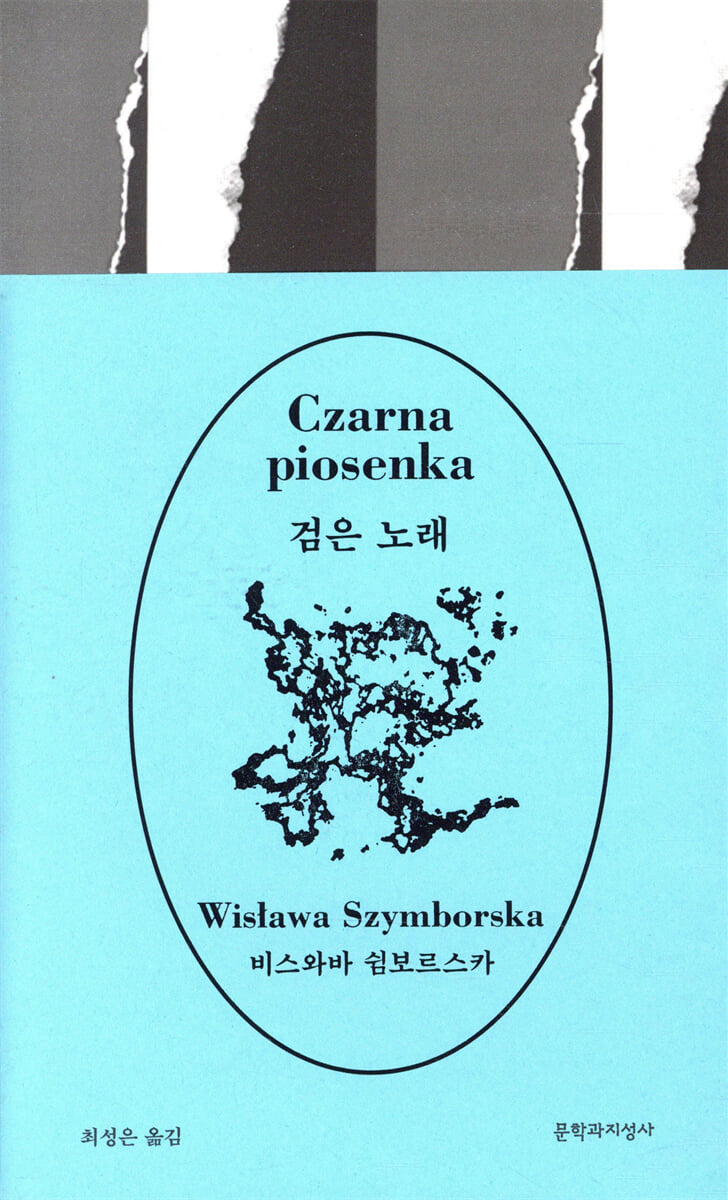 |
Description
Book Introduction
- A word from MD
-
Meet the beginning of a great poetA poetry collection that introduces the first works of Nobel Prize-winning poet Wisława Szymborska.
The book includes early works that were not published and works that were not introduced in Korea.
A book that helps you understand the world of Szymborska's poetry, offering a glimpse into the poet's thoughts, interests, and world of works before publishing her debut poetry collection.February 9, 2021. Novel/Poetry PD Park Hyung-wook
“I will lay my body in a small wound,
“The world is big, it’s so huge.”
A bundle of old manuscripts kept in the poet's desk drawer… …
Meet the first steps of a great poet in poems from before his first collection!
Wisława Szymborska passed away from lung cancer at her home in Krakow, southern Poland, on February 1, 2012.
Nine years later, a special collection of Szymborska's poems was published by Munhak-kwa-Jiseongsa.
What makes this anthology special is that it contains early works that were not published in book form during the poet's lifetime.
These are the poems included in 'Black Song', which is the title of this book and the first in the collection of poems.
In addition to the previously mentioned unpublished early manuscripts of Szymborska, the newly published 『Black Song』 also includes poems from regular poetry collections published during the poet's lifetime that have not been translated or introduced in Korea until now, arranged chronologically.
Thus, the encounter with Szymborska, which began with 『The End and the Beginning』, was finally completed in a complete collection of poems through three volumes, from the posthumous poetry collection 『Enough』 to 『Black Song』.
It is particularly significant that the collection of poems placed at the end contains poems that are like the first steps of the young Szymborska, who was just entering the world of poetry.
“The world is big, it’s so huge.”
A bundle of old manuscripts kept in the poet's desk drawer… …
Meet the first steps of a great poet in poems from before his first collection!
Wisława Szymborska passed away from lung cancer at her home in Krakow, southern Poland, on February 1, 2012.
Nine years later, a special collection of Szymborska's poems was published by Munhak-kwa-Jiseongsa.
What makes this anthology special is that it contains early works that were not published in book form during the poet's lifetime.
These are the poems included in 'Black Song', which is the title of this book and the first in the collection of poems.
In addition to the previously mentioned unpublished early manuscripts of Szymborska, the newly published 『Black Song』 also includes poems from regular poetry collections published during the poet's lifetime that have not been translated or introduced in Korea until now, arranged chronologically.
Thus, the encounter with Szymborska, which began with 『The End and the Beginning』, was finally completed in a complete collection of poems through three volumes, from the posthumous poetry collection 『Enough』 to 『Black Song』.
It is particularly significant that the collection of poems placed at the end contains poems that are like the first steps of the young Szymborska, who was just entering the world of poetry.
- You can preview some of the book's contents.
Preview
index
Unpublished manuscript from 2014_Black Song by Czarna Piosenka
For more
Children's Crusade
Find the word
peace
Musician Yanek
Memories of September
Memories of January
Kiss of the Nameless Soldier
Letter to the West
A tribute to poetry
The line of life
All Souls' Day
summit
wandering
About smiles
About the pursuers and the pursued
Return of regret
Jewish transport
Children of War
A humorous erotic poem
Black Song
modern ballads
1954 Questions Asked of Me Pytanie zadawane sobie
Those in love
1957 Call to the Yeti Wołanie do Yeti
Hania
commemoration
Funeral 1
Bruegel's Two Monkeys
A Midsummer Night's Dream
Reflect on the world
1962 Salt Sol
teaching
remain
coloratura
Poetry Recitation Night
Epitaph
The Prologue to Comedy
montage
1967 Aemuldanji Sto pociech
Memory finally
Monologue for Cassandra
Byzantine mosaics
Thomas Mann
movement
1972 Wszelki wypadek in case
Letters from the deceased
In a nursing home
The Walk of the Risen One
Crowd photo
Interviews with children
assurance
Classic
1976 huge number Wielka liczba
The Old Turtle's Dream
old singer
hideout
apple tree
People on the Bridge 1986 Ludzie na mo?cie
clothes
The Great Man's House
In broad daylight
1993 The End and the Beginning Koniec i pocz?tek
The unfortunate bill
2002 Moment Chwila
Plato, so why
In the park
some
ball
memo
2005 Colon Dwukropek
traffic accident
case
solace
Interview with Atropos
maze
carelessness
Translator's Note: A Great Poet's Shy First Steps
Author's chronology
For more
Children's Crusade
Find the word
peace
Musician Yanek
Memories of September
Memories of January
Kiss of the Nameless Soldier
Letter to the West
A tribute to poetry
The line of life
All Souls' Day
summit
wandering
About smiles
About the pursuers and the pursued
Return of regret
Jewish transport
Children of War
A humorous erotic poem
Black Song
modern ballads
1954 Questions Asked of Me Pytanie zadawane sobie
Those in love
1957 Call to the Yeti Wołanie do Yeti
Hania
commemoration
Funeral 1
Bruegel's Two Monkeys
A Midsummer Night's Dream
Reflect on the world
1962 Salt Sol
teaching
remain
coloratura
Poetry Recitation Night
Epitaph
The Prologue to Comedy
montage
1967 Aemuldanji Sto pociech
Memory finally
Monologue for Cassandra
Byzantine mosaics
Thomas Mann
movement
1972 Wszelki wypadek in case
Letters from the deceased
In a nursing home
The Walk of the Risen One
Crowd photo
Interviews with children
assurance
Classic
1976 huge number Wielka liczba
The Old Turtle's Dream
old singer
hideout
apple tree
People on the Bridge 1986 Ludzie na mo?cie
clothes
The Great Man's House
In broad daylight
1993 The End and the Beginning Koniec i pocz?tek
The unfortunate bill
2002 Moment Chwila
Plato, so why
In the park
some
ball
memo
2005 Colon Dwukropek
traffic accident
case
solace
Interview with Atropos
maze
carelessness
Translator's Note: A Great Poet's Shy First Steps
Author's chronology
Into the book
After the bullet passed through the body,
Everything human is strange to me,
Except for the extremely limited time,
That time was like a hot gust of wind
I am passing by.
The thrill of struggle left me.
The struggle for joy, the dream of a shattered door
Because I'm facing you guys.
Comrades, attention!
Country road, longing for white hair,
The weeping willows are lush.
Mother sent two letters in a row,
I will send three letters, and then a fourth.
Like a kite that has become tired from floating in the air
Before the gap with that high place narrows
I will lay my body in a small wound,
The world is big, it's so huge.
Poets, lament the death of the protagonist.
This epitaph is incorrect.
That soldier could have been your poem,
Seemingly depressed by the death of a stranger.
But he didn't want to be the main character,
The girls were frozen like fossils,
Yesterday's touch to the women
At that moment, when I sent a kiss as if it were a trustworthy joke.
---From "The Kiss of the Nameless Soldier"
I didn't come here to taste regret.
Rather than that
To remove damp stains from leaves,
That way the leaves will be much more beautiful and light.
I didn't come here to fight.
Just to keep the faint spark burning brightly,
To prevent it from shaking from the wind.
Space will no longer be lonely:
With fir and fruit blossom decorations
Because I will cover up the graves that you don't want to see.
More will happen in that moment:
For silence, not fear, will descend upon us.
It must be a silence filled with countless attempts.
I wasn't waiting for poetry here.
I came
To find, to catch, to grab.
To live.
---From "All Souls' Day Zaduszki"
For the saxophonist who plays while dragging his feet, the clown saxophonist
No words are needed, because you have discovered your own way of navigating the world.
The future - someone will predict it.
As someone did in the past.
Blinking, he shakes off his thoughts and plays a black song.
People dance face to face.
Dance.
Suddenly someone collapses.
Hitting the floor with your head to the beat.
Everyone passes him in rhythm.
His eyes do not see the pure white knees of the dancers.
Breaking through the noisy crowd, in the strangely colored darkness, dawn opens its pale eyelids.
Let's not make a fuss.
Because he is alive.
Or maybe you just drank too much
The blood on my temple could be a lipstick stain. Nothing happened here.
Someone just fell on the floor.
I fell alone, so I will rise alone.
Moreover, he survived even that terrible war.
People dance in a sealed sweetness.
Warmth and coldness mixed in the wind from the ventilator,
The saxophone melody howls like a puppy toward the pink lights.
Everything human is strange to me,
Except for the extremely limited time,
That time was like a hot gust of wind
I am passing by.
The thrill of struggle left me.
The struggle for joy, the dream of a shattered door
Because I'm facing you guys.
Comrades, attention!
Country road, longing for white hair,
The weeping willows are lush.
Mother sent two letters in a row,
I will send three letters, and then a fourth.
Like a kite that has become tired from floating in the air
Before the gap with that high place narrows
I will lay my body in a small wound,
The world is big, it's so huge.
Poets, lament the death of the protagonist.
This epitaph is incorrect.
That soldier could have been your poem,
Seemingly depressed by the death of a stranger.
But he didn't want to be the main character,
The girls were frozen like fossils,
Yesterday's touch to the women
At that moment, when I sent a kiss as if it were a trustworthy joke.
---From "The Kiss of the Nameless Soldier"
I didn't come here to taste regret.
Rather than that
To remove damp stains from leaves,
That way the leaves will be much more beautiful and light.
I didn't come here to fight.
Just to keep the faint spark burning brightly,
To prevent it from shaking from the wind.
Space will no longer be lonely:
With fir and fruit blossom decorations
Because I will cover up the graves that you don't want to see.
More will happen in that moment:
For silence, not fear, will descend upon us.
It must be a silence filled with countless attempts.
I wasn't waiting for poetry here.
I came
To find, to catch, to grab.
To live.
---From "All Souls' Day Zaduszki"
For the saxophonist who plays while dragging his feet, the clown saxophonist
No words are needed, because you have discovered your own way of navigating the world.
The future - someone will predict it.
As someone did in the past.
Blinking, he shakes off his thoughts and plays a black song.
People dance face to face.
Dance.
Suddenly someone collapses.
Hitting the floor with your head to the beat.
Everyone passes him in rhythm.
His eyes do not see the pure white knees of the dancers.
Breaking through the noisy crowd, in the strangely colored darkness, dawn opens its pale eyelids.
Let's not make a fuss.
Because he is alive.
Or maybe you just drank too much
The blood on my temple could be a lipstick stain. Nothing happened here.
Someone just fell on the floor.
I fell alone, so I will rise alone.
Moreover, he survived even that terrible war.
People dance in a sealed sweetness.
Warmth and coldness mixed in the wind from the ventilator,
The saxophone melody howls like a puppy toward the pink lights.
---From "Black Song Czarna piosenka"
Publisher's Review
“I will lay my body in a small wound,
“The world is big, it’s so huge.”
A bundle of old manuscripts kept in the poet's desk drawer… …
Meet the first steps of a great poet in poems from before his first collection!
Wisława Szymborska passed away from lung cancer at her home in Krakow, southern Poland, on February 1, 2012.
Nine years later, a special collection of Szymborska's poems was published by Munhak-kwa-Jiseongsa.
What makes this anthology special is that it contains early works that were not published in book form during the poet's lifetime.
These are the poems included in 'Black Song', which is the title of this book and the first in the collection of poems.
Szymborska, who made her literary debut by publishing “In Search of Words” in the Polish Daily on March 14, 1945, prepared her first poetry collection around 1949, but it was not published.
There are many speculations about the reason, including the theory that the poet withdrew the publication due to a lack of confidence in his own potential and talent, the theory that it was due to censorship by the socialist regime, and the theory that the poet himself gave up because he judged that it would not be possible to publish it anyway according to the standards demanded by socialist realism.
What is certain is that the manuscript of this unpublished poetry collection, which was to be edited by her then-husband and editor, Błodek, whom she married in 1948, was not found in her first poetry collection, The Reason We Live, published in 1952.
"Kiss of the Nameless Soldier" was the only piece included.
Szymborska, like many other writers active in Poland at the time, wrote poems with politically agitational content demanded by the party until her second poetry collection, Questions for Myself, published in 1954. However, in 1956, she declared a break with the socialist party and turned to 'apolitical' literature.
And starting with his third poetry collection, 『Call to the Yeti』, published in 1957, he began to build his own unique realm, expressing contemplation and reflection in refined poetic language.
As the poet was developing her world of poetry as a mid-career poet, her ex-husband, Bwodek, from whom she was divorced at the time, sent her a birthday present.
The gift, which arrived on July 2, 1970, was a rough edited version of the poet's early works, which were to have been his first poetry collection, typewritten and dated.
Bwardeck sent a letter with the manuscript, saying he was preparing for his next move and awaiting a response, but contrary to his wishes, the manuscript remained in the poet's desk drawer for a long time, never seeing the light of day.
Among them, three poems, “*** Once We Could Live in the World as It Came to Us,” “Leaving the Theater,” and “Black Song,” were included in the Szymborska Charity Poems Collection published in 2001, but this manuscript bundle was not discovered in its entirety until after Szymborska’s death in 2012.
Michał Rusinek, chairman of the Wisława Szymborska Foundation, decided to publish this manuscript in 2014.
This is because we believe it is a valuable resource that allows us to examine what thoughts and concerns Szymborska had in her early days before publishing her debut collection of poetry, what poetic motifs the future Nobel Prize winner in Literature was interested in in her younger days, and what influence the scars of World War II had on the poet's world of work.
The poet who first greeted us with "The End and the Beginning"
As the title suggests, the poems that became Szymborska's 'beginning' at the very end...
Professor Choi Seong-eun of the Polish Department at Hankuk University of Foreign Studies, who helped us rediscover Szymborska by translating “The End and the Beginning” in 2007, has taken on the translation of Szymborska’s posthumous poetry collection “Enough” in 2016.
Professor Choi Seong-eun, who said, “Even under long-term foreign occupation, we have maintained our national identity with literature as the center, and so I consider Poland, a country that passionately loves literature, as my ‘second motherland,’” has once again vividly and completely translated into Korean Szymborska’s poetry, which contains her characteristically clear language that hits the nail on the head, rich symbols and metaphors, cool yet passionate thoughts, concise yet restrained expressions, and humor.
In the commentary for this collection of poems, he reveals that, before becoming a translator, he had always had questions about Polish literature and that these were resolved in "Black Song."
The question was why, unlike other contemporary writers, there are so few poems written by Szymborska, who was clearly part of the “war generation,” that sing of her experiences during World War II.
The answer was right there in a bundle of manuscripts that had never been revealed to the world.
The poems about war written by the poet were there, abandoned and neglected.
The most frequently appearing themes in 『Black Song』 are World War II, the Holocaust, and the wounds and pain that ordinary individuals had to endure due to war.
Despite criticism that the book was published posthumously without the poet's consent, Professor Choi Seong-eun says that the publication of this collection of poems has finally filled the years of gaps that were left, either voluntarily or involuntarily, in the life of a great poet.
He also preaches that the reason why it took a considerable amount of time, seven years, to publish her first poetry collection after her debut is contained in this collection of poems, and that “in that sense, ‘Black Song’ will be a valuable clue and resource for those studying the world of Szymborska’s work.”
Professor Choi Seong-eun also suggests an interesting reading method: for readers who enjoy Szymborska's poetry, it would be a great pleasure to discover the connections between the works included in "Black Song" and her later works published earlier.
These later poems are mostly included in "Ends and Beginnings," and not only do they expand or develop specific motifs or materials, but they also contain similar verses in a more complete form.
The verses of "Summit" from 1946, which express the sense of transcendence felt when looking down on the earth from a vastly high space, are transformed into even more beautiful and original passages in "University Notes on an Unsuccessful Himalayan Expedition" included in "Call to the Yeti" published in 1957, and "Transportation of Jews" from 1947, which is about a train carrying Jews being taken to the Auschwitz concentration camp, is closely connected to "Not Yet" from 1957.
The 1945 works “Musician Yanek” and “All Souls’ Day,” which bring to mind epitaphs dedicated to the dead, become more vivid in their meaning when read together with “Dream,” a work included in “Salt,” published in 1962. Reading “Children of War,” from 1847, together with “Children of the Age,” from 1986, helps us understand the poet’s intentions contained between the lines and the work.
Also, the sadness and regret of the one left behind in “Regret Returns” from 1947, “With moments more insignificant than dust / I have outlived you,” was similarly rewritten in “Farewell to the Landscape” from 1993, written after the death of Szymborska’s lover and soulmate, novelist Kornel Filipowicz.
Professor Choi Seong-eun finally recommends comparing “Modern Ballad” from 1948 with “The Fool” from 1957 and “Shadow” and “Ballad” from 1962.
This is because they are closely related in that they sublimate the condensed, hot emotions into a poem while maintaining a certain distance from the subject and using restrained expressions.
In addition to the previously mentioned unpublished early manuscripts of Szymborska, the newly published 『Black Song』 also includes poems from regular poetry collections published during the poet's lifetime that have not been translated or introduced in Korea until now, arranged chronologically.
Thus, the encounter with Szymborska, which began with 『The End and the Beginning』, was finally completed in a complete collection of poems through three volumes, from the posthumous poetry collection 『Enough』 to 『Black Song』.
It is particularly significant that the collection of poems placed at the end contains poems that are like the first steps of the young Szymborska, who was just entering the world of poetry.
It may read quite differently from the poet's more well-known masterpieces and may feel unfamiliar, but its raw freshness and unfinished purity will be even more precious to readers.
This is because we can confirm that the world-renowned poet who won the Nobel Prize in Literature was not a genius writer whose talent was instantly recognized, nor was he a literary star who rose to fame, but simply a human being who passionately loved poetry and literature.
In his acceptance speech for the Nobel Prize in Literature, the poet, who felt fear at the vastness of the world and our own helplessness, and lived with bitter anger at the world's indifference to the individual suffering of people, animals, and plants within it, said that in the world of poetry, no existence is ordinary or routine.
So, the poet Szymborska, who always said that she had a lot to do, began to tell the story of lying down in that small wound and came across as 『Black Song』.
As the title, “End and Beginning,” suggests at the beginning of this collection, these are the poems that become Szymborska’s “beginning” at the very end.
In this way, the reading of Szymborska's poetry begins again at the end.
Whenever we think of the world, we are always afraid because of its vastness and our own helplessness.
I also feel a bitter anger at the world's indifference to the individual suffering of people, animals, and plants.
(……) But in the world of poetry, where every single word has meaning, nothing is ordinary or routine.
Any rock, any cloud that drifts leisurely over it, any day, any night that follows, and above all, any being in this world.
Doesn't this mean that poets have a lot to do anytime, anywhere?
―From the “Nobel Prize in Literature Acceptance Speech”
“The world is big, it’s so huge.”
A bundle of old manuscripts kept in the poet's desk drawer… …
Meet the first steps of a great poet in poems from before his first collection!
Wisława Szymborska passed away from lung cancer at her home in Krakow, southern Poland, on February 1, 2012.
Nine years later, a special collection of Szymborska's poems was published by Munhak-kwa-Jiseongsa.
What makes this anthology special is that it contains early works that were not published in book form during the poet's lifetime.
These are the poems included in 'Black Song', which is the title of this book and the first in the collection of poems.
Szymborska, who made her literary debut by publishing “In Search of Words” in the Polish Daily on March 14, 1945, prepared her first poetry collection around 1949, but it was not published.
There are many speculations about the reason, including the theory that the poet withdrew the publication due to a lack of confidence in his own potential and talent, the theory that it was due to censorship by the socialist regime, and the theory that the poet himself gave up because he judged that it would not be possible to publish it anyway according to the standards demanded by socialist realism.
What is certain is that the manuscript of this unpublished poetry collection, which was to be edited by her then-husband and editor, Błodek, whom she married in 1948, was not found in her first poetry collection, The Reason We Live, published in 1952.
"Kiss of the Nameless Soldier" was the only piece included.
Szymborska, like many other writers active in Poland at the time, wrote poems with politically agitational content demanded by the party until her second poetry collection, Questions for Myself, published in 1954. However, in 1956, she declared a break with the socialist party and turned to 'apolitical' literature.
And starting with his third poetry collection, 『Call to the Yeti』, published in 1957, he began to build his own unique realm, expressing contemplation and reflection in refined poetic language.
As the poet was developing her world of poetry as a mid-career poet, her ex-husband, Bwodek, from whom she was divorced at the time, sent her a birthday present.
The gift, which arrived on July 2, 1970, was a rough edited version of the poet's early works, which were to have been his first poetry collection, typewritten and dated.
Bwardeck sent a letter with the manuscript, saying he was preparing for his next move and awaiting a response, but contrary to his wishes, the manuscript remained in the poet's desk drawer for a long time, never seeing the light of day.
Among them, three poems, “*** Once We Could Live in the World as It Came to Us,” “Leaving the Theater,” and “Black Song,” were included in the Szymborska Charity Poems Collection published in 2001, but this manuscript bundle was not discovered in its entirety until after Szymborska’s death in 2012.
Michał Rusinek, chairman of the Wisława Szymborska Foundation, decided to publish this manuscript in 2014.
This is because we believe it is a valuable resource that allows us to examine what thoughts and concerns Szymborska had in her early days before publishing her debut collection of poetry, what poetic motifs the future Nobel Prize winner in Literature was interested in in her younger days, and what influence the scars of World War II had on the poet's world of work.
The poet who first greeted us with "The End and the Beginning"
As the title suggests, the poems that became Szymborska's 'beginning' at the very end...
Professor Choi Seong-eun of the Polish Department at Hankuk University of Foreign Studies, who helped us rediscover Szymborska by translating “The End and the Beginning” in 2007, has taken on the translation of Szymborska’s posthumous poetry collection “Enough” in 2016.
Professor Choi Seong-eun, who said, “Even under long-term foreign occupation, we have maintained our national identity with literature as the center, and so I consider Poland, a country that passionately loves literature, as my ‘second motherland,’” has once again vividly and completely translated into Korean Szymborska’s poetry, which contains her characteristically clear language that hits the nail on the head, rich symbols and metaphors, cool yet passionate thoughts, concise yet restrained expressions, and humor.
In the commentary for this collection of poems, he reveals that, before becoming a translator, he had always had questions about Polish literature and that these were resolved in "Black Song."
The question was why, unlike other contemporary writers, there are so few poems written by Szymborska, who was clearly part of the “war generation,” that sing of her experiences during World War II.
The answer was right there in a bundle of manuscripts that had never been revealed to the world.
The poems about war written by the poet were there, abandoned and neglected.
The most frequently appearing themes in 『Black Song』 are World War II, the Holocaust, and the wounds and pain that ordinary individuals had to endure due to war.
Despite criticism that the book was published posthumously without the poet's consent, Professor Choi Seong-eun says that the publication of this collection of poems has finally filled the years of gaps that were left, either voluntarily or involuntarily, in the life of a great poet.
He also preaches that the reason why it took a considerable amount of time, seven years, to publish her first poetry collection after her debut is contained in this collection of poems, and that “in that sense, ‘Black Song’ will be a valuable clue and resource for those studying the world of Szymborska’s work.”
Professor Choi Seong-eun also suggests an interesting reading method: for readers who enjoy Szymborska's poetry, it would be a great pleasure to discover the connections between the works included in "Black Song" and her later works published earlier.
These later poems are mostly included in "Ends and Beginnings," and not only do they expand or develop specific motifs or materials, but they also contain similar verses in a more complete form.
The verses of "Summit" from 1946, which express the sense of transcendence felt when looking down on the earth from a vastly high space, are transformed into even more beautiful and original passages in "University Notes on an Unsuccessful Himalayan Expedition" included in "Call to the Yeti" published in 1957, and "Transportation of Jews" from 1947, which is about a train carrying Jews being taken to the Auschwitz concentration camp, is closely connected to "Not Yet" from 1957.
The 1945 works “Musician Yanek” and “All Souls’ Day,” which bring to mind epitaphs dedicated to the dead, become more vivid in their meaning when read together with “Dream,” a work included in “Salt,” published in 1962. Reading “Children of War,” from 1847, together with “Children of the Age,” from 1986, helps us understand the poet’s intentions contained between the lines and the work.
Also, the sadness and regret of the one left behind in “Regret Returns” from 1947, “With moments more insignificant than dust / I have outlived you,” was similarly rewritten in “Farewell to the Landscape” from 1993, written after the death of Szymborska’s lover and soulmate, novelist Kornel Filipowicz.
Professor Choi Seong-eun finally recommends comparing “Modern Ballad” from 1948 with “The Fool” from 1957 and “Shadow” and “Ballad” from 1962.
This is because they are closely related in that they sublimate the condensed, hot emotions into a poem while maintaining a certain distance from the subject and using restrained expressions.
In addition to the previously mentioned unpublished early manuscripts of Szymborska, the newly published 『Black Song』 also includes poems from regular poetry collections published during the poet's lifetime that have not been translated or introduced in Korea until now, arranged chronologically.
Thus, the encounter with Szymborska, which began with 『The End and the Beginning』, was finally completed in a complete collection of poems through three volumes, from the posthumous poetry collection 『Enough』 to 『Black Song』.
It is particularly significant that the collection of poems placed at the end contains poems that are like the first steps of the young Szymborska, who was just entering the world of poetry.
It may read quite differently from the poet's more well-known masterpieces and may feel unfamiliar, but its raw freshness and unfinished purity will be even more precious to readers.
This is because we can confirm that the world-renowned poet who won the Nobel Prize in Literature was not a genius writer whose talent was instantly recognized, nor was he a literary star who rose to fame, but simply a human being who passionately loved poetry and literature.
In his acceptance speech for the Nobel Prize in Literature, the poet, who felt fear at the vastness of the world and our own helplessness, and lived with bitter anger at the world's indifference to the individual suffering of people, animals, and plants within it, said that in the world of poetry, no existence is ordinary or routine.
So, the poet Szymborska, who always said that she had a lot to do, began to tell the story of lying down in that small wound and came across as 『Black Song』.
As the title, “End and Beginning,” suggests at the beginning of this collection, these are the poems that become Szymborska’s “beginning” at the very end.
In this way, the reading of Szymborska's poetry begins again at the end.
Whenever we think of the world, we are always afraid because of its vastness and our own helplessness.
I also feel a bitter anger at the world's indifference to the individual suffering of people, animals, and plants.
(……) But in the world of poetry, where every single word has meaning, nothing is ordinary or routine.
Any rock, any cloud that drifts leisurely over it, any day, any night that follows, and above all, any being in this world.
Doesn't this mean that poets have a lot to do anytime, anywhere?
―From the “Nobel Prize in Literature Acceptance Speech”
GOODS SPECIFICS
- Date of issue: February 1, 2021
- Page count, weight, size: 212 pages | 262g | 125*205*20mm
- ISBN13: 9788932038209
- ISBN10: 8932038201
You may also like
카테고리
korean


korean

![GQ KOREA Mark (Monthly): December [2025]](http://librairie.coreenne.fr/cdn/shop/files/8ef265dbbfbf186523ed75ba7319009d.jpg?v=1765340328&width=3840)


