

It was the hormones
 |
Description
Book Introduction
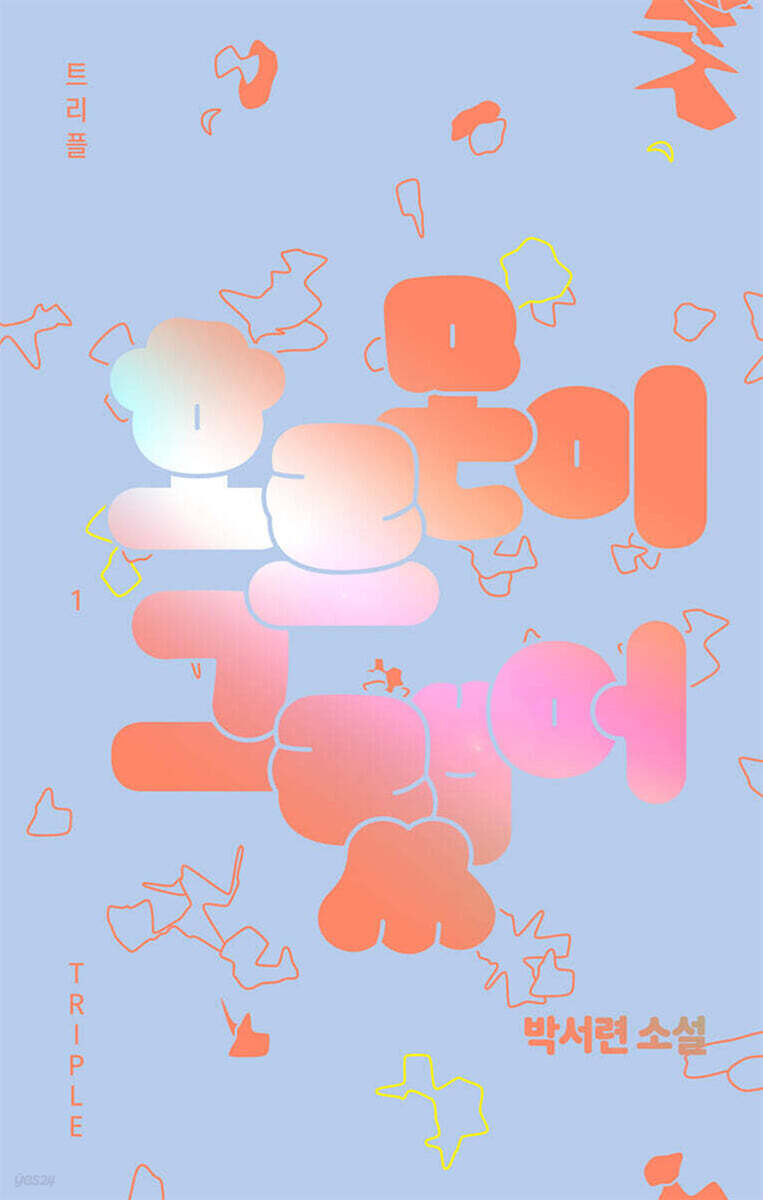
“Let’s leave the first sentence alone. There must be some things that don't change. “Because this is also a novel about things that don’t change.” Park Seo-ryeon, winner of the Hankyoreh Literary Award The first novel in the triple series [Consonant and Vowel Triple Series] is a project that allows you to encounter new Korean literature writers without any time lag. 『Hormones Did It』 by Park Seo-ryeon, a new writer who debuted in 2015 with 『Practical Literature』 and won the 23rd Hankyoreh Literary Award for her novel 『The Worker Kang Ju-ryong』, has been published as the first in the [Triple Series]. This book is also the first collection of short stories by Park Seo-ryeon, who has colorfully depicted the lives of female characters from different eras and spaces through her novels 『The Worker Kang Ju-ryong』, 『Martha's Work』, and 『The Shirley Club』, using her creative imagination. The three short stories in 『Hormones Did It』 are the works that most closely reflect the author's voice, as they tell the story of the lives of young people of the same generation who are living in a reality strayed from the warm climate and stricken by a cold front. |
- You can preview some of the book's contents.
Preview
index
The wind blows towards you again
It was the hormones
Total tomb
Essay... ... wrote
Commentary: Winter Practice_Yun Kyung-hee
It was the hormones
Total tomb
Essay... ... wrote
Commentary: Winter Practice_Yun Kyung-hee
Detailed image
.jpg)
Into the book
The character 'ye' was added to the end of the name 'ye'.
It was the same letter as the first letter of my name, Seo.
Pre-planned, unfolded.
We found it fascinating that the same letters were changed to "ye" in my name and "ye" in her name.
---From "The Wind Blows Towards You Again"
I'm in Seoul now.
What are you talking about all of a sudden? Seoul doesn't seem like a city to me, it's a state.
Even when winter comes, I am in Seoul.
Even when winter passes, I am in Seoul.
I am Seoul, without summer, fall or spring.
Then, suddenly, Ye looked at me and asked.
Are you in Seoul too?
---From "The Wind Blows Towards You Again"
Finally I meet an example.
I confess that my wish, which I so desperately wanted to come true that I even wrote about in a novel, has finally come true.
I'm being completely honest about how far I've come and how messed up I am.
---From "The Wind Blows Towards You Again"
The breakup was notified by text message.
(……) At first, I really resented the thoughtlessness of someone who even notified me of the breakup through text, but when I thought about it, I soon came to the conclusion that it was possible because a lover is a kind of irregular worker.
At that time, I was finally reborn as a complete unemployed person.
---From "It Was the Hormones"
It seemed like there was some kind of hormonal link between my mother and me.
I thought that just as the forces at work between the Earth and the Moon keep the two stars neither getting closer nor farther apart, my mother's and my hormones were invisibly working together and competing to keep our menstrual cycles apart.
And the father could not exert any power over that ring.
---From "It Was the Hormones"
After I found out about my mother's lover, imagining what happened between my mother and father became a kind of sport that I couldn't stop doing, even though I felt guilty about it.
Does my mother, who still has her period, still have sex with my father? If so, how many days apart and for how many minutes at a time?
---From "It Was the Hormones"
You lay face down in the middle of the room, two blankets wide open.
A mysterious catalog with a worn spine from being handled so many times.
(……) While living in such a place, you were fascinated by things like the Taj Mahal, said to be the most beautiful tomb, the pyramids, said to be the largest tomb on earth, and the Tomb of King Munmu, said to be the world’s only underwater tomb.
---From "Tomb"
You were kept in room 42 of the orchid room.
I arrived at the glass door in 12 minutes, which the store owner said would take at least 20 minutes.
Although there was no wind inside the building, the temperature seemed lower than outside.
Fuck, even the bathroom lockers are bigger than this.
I was angry when I thought of you living in such a cold and cramped place, relying on a flimsy lock.
---From "Tomb"
Salt crystals formed like snowflakes on the mountain where sweat repeatedly dripped and dried.
(……) I piled up the things I couldn’t throw away at the head and feet of the bed, and slept soundly with my arms crossed and my shoulders held on like the corpse of an Egyptian king.
It's not because it's cramped, it's because there's no one to hug.
It's not that there's no one to hug, it's because it's too small.
Or both.
It was the same letter as the first letter of my name, Seo.
Pre-planned, unfolded.
We found it fascinating that the same letters were changed to "ye" in my name and "ye" in her name.
---From "The Wind Blows Towards You Again"
I'm in Seoul now.
What are you talking about all of a sudden? Seoul doesn't seem like a city to me, it's a state.
Even when winter comes, I am in Seoul.
Even when winter passes, I am in Seoul.
I am Seoul, without summer, fall or spring.
Then, suddenly, Ye looked at me and asked.
Are you in Seoul too?
---From "The Wind Blows Towards You Again"
Finally I meet an example.
I confess that my wish, which I so desperately wanted to come true that I even wrote about in a novel, has finally come true.
I'm being completely honest about how far I've come and how messed up I am.
---From "The Wind Blows Towards You Again"
The breakup was notified by text message.
(……) At first, I really resented the thoughtlessness of someone who even notified me of the breakup through text, but when I thought about it, I soon came to the conclusion that it was possible because a lover is a kind of irregular worker.
At that time, I was finally reborn as a complete unemployed person.
---From "It Was the Hormones"
It seemed like there was some kind of hormonal link between my mother and me.
I thought that just as the forces at work between the Earth and the Moon keep the two stars neither getting closer nor farther apart, my mother's and my hormones were invisibly working together and competing to keep our menstrual cycles apart.
And the father could not exert any power over that ring.
---From "It Was the Hormones"
After I found out about my mother's lover, imagining what happened between my mother and father became a kind of sport that I couldn't stop doing, even though I felt guilty about it.
Does my mother, who still has her period, still have sex with my father? If so, how many days apart and for how many minutes at a time?
---From "It Was the Hormones"
You lay face down in the middle of the room, two blankets wide open.
A mysterious catalog with a worn spine from being handled so many times.
(……) While living in such a place, you were fascinated by things like the Taj Mahal, said to be the most beautiful tomb, the pyramids, said to be the largest tomb on earth, and the Tomb of King Munmu, said to be the world’s only underwater tomb.
---From "Tomb"
You were kept in room 42 of the orchid room.
I arrived at the glass door in 12 minutes, which the store owner said would take at least 20 minutes.
Although there was no wind inside the building, the temperature seemed lower than outside.
Fuck, even the bathroom lockers are bigger than this.
I was angry when I thought of you living in such a cold and cramped place, relying on a flimsy lock.
---From "Tomb"
Salt crystals formed like snowflakes on the mountain where sweat repeatedly dripped and dried.
(……) I piled up the things I couldn’t throw away at the head and feet of the bed, and slept soundly with my arms crossed and my shoulders held on like the corpse of an Egyptian king.
It's not because it's cramped, it's because there's no one to hug.
It's not that there's no one to hug, it's because it's too small.
Or both.
---From "Tomb"
Publisher's Review
“The example is not crumpled.
Instead, it disappeared.
“Only in my world.”
About the unfinished present and the incomprehensible future
The most imperfect questions… …
The characters in "The Hormone Did It" are either college freshmen who received dormitory and scholarship benefits based on "how far away and how poor they lived" ("The Wind Goes Towards You Again"), or they are exhausted from irregular work, job seeking, and unemployment, losing the healthy rhythm of their daily lives and being overwhelmed by depression, or they are even struggling with early morning part-time jobs and unpaid labor while moving between semi-basement rooms and goshiwon.
In this way, the young people depicted by the author all struggle with poverty every day, unable to properly plan for the future or even to imagine it.
Therefore, the season that mainly dominates the three novels is 'winter'.
'I' was embarrassed to receive a padded jumper as a gift from my mother's lover in November, when "the cold came earlier than usual, making the word 'global warming' seem meaningless" ("It Was the Hormones"), and often held hands because "we were cold in that space where not even the wind blew" ("The Wind Comes to You Again").
And the feeling of winter, when they feel they will never see another season, weakens their bodies and minds.
“How far have we come?
“I’m going to tell you openly how messed up it is.”
The transition from the season of winter, a season of decline, to a season of concentration.
The author said, “I, who wrote the three works in this book, and I, who revised them, are clearly continuous and identical beings, yet we are so different.
(……) He says, “I revised the novel with the mindset of starting over from the beginning” (author’s essay “……I wrote”).
Therefore, the lives of the characters in these three novels are not “final drafts that cannot be changed anymore, but rather unfinished drafts” and have the possibility of being “corrected somehow and rewritten from scratch” (commentary on “Winter Practice,” by literary critic Kyunghee Yoon).
It seemed like there was some kind of hormonal link between my mother and me.
Just as the various forces at work between the Earth and the Moon keep the two stars neither moving closer nor farther apart, I thought my mother's and my hormones were invisibly cooperating and competing, creating a gap between our menstrual cycles. ("It Was the Hormones")
Therefore, the questions about the unfinished present and the incomprehensible future that remain unresolved to this day lead to efforts to “rewrite” the present from scratch, as if this were “the best way to rescue life from the ephemeral.”
Just as the sense of season in these novels “transitions from the season of winter, a season of shrinkage, to a season of concentration” (literary critic Kyunghee Yoon), I hope that readers will also be able to welcome a new season.
Author's Note
I wanted to write beautiful sentences, even if they were a little vague, and I wanted to dare to tell a story that not everyone could understand.
Now, I find beauty in precise sentences and seek out stories that everyone can relate to.
I, who wrote the three works in this book, and I, who revised them, are clearly continuous and identical beings, yet we are so different.
_Essay "... ... wrote"
commentary
Their lives were not final drafts that could no longer be changed, but unfinished drafts, not the dead end of writing abandoned without a plan, but exercises that could somehow be fixed and rewritten 'from the beginning', as if repetition and retry of practice were the best way to rescue life from the ephemeral, connecting the past, present, and future and continuing to practice in the future.
Winter is a transition from a season of decline to a season of concentration.
Yoon Kyung-hee (literary critic)
Introducing the Triple Series
[Triple] is the fastest way to encounter the scene of Korean short stories.
By bringing together three novels in one volume, the author can explore a range of interesting approaches that would be difficult to achieve in a typical collection, while readers can seamlessly access new contemporary authors.
I hope that this series will introduce many authors with fascinating worlds, leading to a beautiful triple effect between author, work, and reader.
Instead, it disappeared.
“Only in my world.”
About the unfinished present and the incomprehensible future
The most imperfect questions… …
The characters in "The Hormone Did It" are either college freshmen who received dormitory and scholarship benefits based on "how far away and how poor they lived" ("The Wind Goes Towards You Again"), or they are exhausted from irregular work, job seeking, and unemployment, losing the healthy rhythm of their daily lives and being overwhelmed by depression, or they are even struggling with early morning part-time jobs and unpaid labor while moving between semi-basement rooms and goshiwon.
In this way, the young people depicted by the author all struggle with poverty every day, unable to properly plan for the future or even to imagine it.
Therefore, the season that mainly dominates the three novels is 'winter'.
'I' was embarrassed to receive a padded jumper as a gift from my mother's lover in November, when "the cold came earlier than usual, making the word 'global warming' seem meaningless" ("It Was the Hormones"), and often held hands because "we were cold in that space where not even the wind blew" ("The Wind Comes to You Again").
And the feeling of winter, when they feel they will never see another season, weakens their bodies and minds.
“How far have we come?
“I’m going to tell you openly how messed up it is.”
The transition from the season of winter, a season of decline, to a season of concentration.
The author said, “I, who wrote the three works in this book, and I, who revised them, are clearly continuous and identical beings, yet we are so different.
(……) He says, “I revised the novel with the mindset of starting over from the beginning” (author’s essay “……I wrote”).
Therefore, the lives of the characters in these three novels are not “final drafts that cannot be changed anymore, but rather unfinished drafts” and have the possibility of being “corrected somehow and rewritten from scratch” (commentary on “Winter Practice,” by literary critic Kyunghee Yoon).
It seemed like there was some kind of hormonal link between my mother and me.
Just as the various forces at work between the Earth and the Moon keep the two stars neither moving closer nor farther apart, I thought my mother's and my hormones were invisibly cooperating and competing, creating a gap between our menstrual cycles. ("It Was the Hormones")
Therefore, the questions about the unfinished present and the incomprehensible future that remain unresolved to this day lead to efforts to “rewrite” the present from scratch, as if this were “the best way to rescue life from the ephemeral.”
Just as the sense of season in these novels “transitions from the season of winter, a season of shrinkage, to a season of concentration” (literary critic Kyunghee Yoon), I hope that readers will also be able to welcome a new season.
Author's Note
I wanted to write beautiful sentences, even if they were a little vague, and I wanted to dare to tell a story that not everyone could understand.
Now, I find beauty in precise sentences and seek out stories that everyone can relate to.
I, who wrote the three works in this book, and I, who revised them, are clearly continuous and identical beings, yet we are so different.
_Essay "... ... wrote"
commentary
Their lives were not final drafts that could no longer be changed, but unfinished drafts, not the dead end of writing abandoned without a plan, but exercises that could somehow be fixed and rewritten 'from the beginning', as if repetition and retry of practice were the best way to rescue life from the ephemeral, connecting the past, present, and future and continuing to practice in the future.
Winter is a transition from a season of decline to a season of concentration.
Yoon Kyung-hee (literary critic)
Introducing the Triple Series
[Triple] is the fastest way to encounter the scene of Korean short stories.
By bringing together three novels in one volume, the author can explore a range of interesting approaches that would be difficult to achieve in a typical collection, while readers can seamlessly access new contemporary authors.
I hope that this series will introduce many authors with fascinating worlds, leading to a beautiful triple effect between author, work, and reader.
GOODS SPECIFICS
- Date of issue: February 1, 2021
- Format: Hardcover book binding method guide
- Page count, weight, size: 136 pages | 178g | 115*188*20mm
- ISBN13: 9788954446334
- ISBN10: 8954446337
You may also like
카테고리
korean


korean

![GQ KOREA Mark (Monthly): December [2025]](http://librairie.coreenne.fr/cdn/shop/files/8ef265dbbfbf186523ed75ba7319009d.jpg?v=1765340328&width=3840)


