

Everything was eternal
 |
Description
Book Introduction
- A word from MD
-
Munji Literary Award, Young Writer Award Grand Prize, Jeong Ji-don's novelQuotations, questions, jokes, and irony, Jeong Ji-don's novel.
The story centers on the life of the real-life Jeong Wellington, the son of communist Alice Hyun, who was once mistaken for an American spy.
The author rearranges and weaves fact and imagination, past, present, and future, and portrays a world obscured by time as something of today.
December 29, 2020. Novel/Poetry PD Park Hyung-wook
“This novel is a testimony to what has not been seen.”
A book of the future that shows yesterday, or a book of yesterday that thinks about today
Connected with quotes, questions, jokes and irony
A novel called Jeong Ji-don
The full-length novel 『Everything Was Eternal』 by Jeong Ji-don, winner of the Munji Literary Award and the Young Writer Award, has been published.
Ji-don Jeong, who has expanded the horizons of his novels by incorporating various genres, has consistently worked to borrow facts from the texts he has absorbed and create new writings, from his first book, "As I Fight," to his most recent work, "People Who Hate Jokes."
"Everything Was Forever" is based on the life of a real-life figure, Wellington Jeong, the son of communist Alice Hyun, who was once mistaken for an American spy.
Jung Ji-don gives space to Jung Wellington and his contemporaries, mixing dry information with rich fiction, interweaving dry jokes with serious discourses that move between necessity and chance, skepticism and faith.
Scattered images, data, and text were compiled into a single book through Jeong Ji-don.
What can we say about this intelligent book, full of quotes, questions, and irony?
A letter sent with the intention of "thinking of them and thinking through them"? A comprehensive network curated by Jeong Ji-don? The artist will likely respond in his own unique way.
My novel “There is no word that can describe the whole thing, and I have not thought about it” (Nicola Re).
Whatever you call it, it's a fitting end of the year to engage with his approach, exploring how the records of centuries past can connect to our present reality.
I hope you can experience the world you've never experienced before in "Everything Was Forever" right in your room.
Raphael Hythlodaeus.
A name meaning “one who spreads nonsense” or “one who is knowledgeable about meaningless things.”
It was to "Utopia" that Thomas More took the reader with this guide's explanation.
We need more people who can combine the sense of meaninglessness with the sense of utopia.
What I always find amazing and fortunate is that humans are creatures who can feel longing even for things they have never had.
I would argue that this ability is one of the important measures of humanity.
Kim Su-hwan (Professor at Hankuk University of Foreign Studies, Russian literature researcher)
A book of the future that shows yesterday, or a book of yesterday that thinks about today
Connected with quotes, questions, jokes and irony
A novel called Jeong Ji-don
The full-length novel 『Everything Was Eternal』 by Jeong Ji-don, winner of the Munji Literary Award and the Young Writer Award, has been published.
Ji-don Jeong, who has expanded the horizons of his novels by incorporating various genres, has consistently worked to borrow facts from the texts he has absorbed and create new writings, from his first book, "As I Fight," to his most recent work, "People Who Hate Jokes."
"Everything Was Forever" is based on the life of a real-life figure, Wellington Jeong, the son of communist Alice Hyun, who was once mistaken for an American spy.
Jung Ji-don gives space to Jung Wellington and his contemporaries, mixing dry information with rich fiction, interweaving dry jokes with serious discourses that move between necessity and chance, skepticism and faith.
Scattered images, data, and text were compiled into a single book through Jeong Ji-don.
What can we say about this intelligent book, full of quotes, questions, and irony?
A letter sent with the intention of "thinking of them and thinking through them"? A comprehensive network curated by Jeong Ji-don? The artist will likely respond in his own unique way.
My novel “There is no word that can describe the whole thing, and I have not thought about it” (Nicola Re).
Whatever you call it, it's a fitting end of the year to engage with his approach, exploring how the records of centuries past can connect to our present reality.
I hope you can experience the world you've never experienced before in "Everything Was Forever" right in your room.
Raphael Hythlodaeus.
A name meaning “one who spreads nonsense” or “one who is knowledgeable about meaningless things.”
It was to "Utopia" that Thomas More took the reader with this guide's explanation.
We need more people who can combine the sense of meaninglessness with the sense of utopia.
What I always find amazing and fortunate is that humans are creatures who can feel longing even for things they have never had.
I would argue that this ability is one of the important measures of humanity.
Kim Su-hwan (Professor at Hankuk University of Foreign Studies, Russian literature researcher)
- You can preview some of the book's contents.
Preview
index
Everything was eternal
References
References
Into the book
He just realized that he was an outcast.
An outcast who lacks the sensitivity to issues that any member of this society can relate to.
That's why other people won't be able to empathize with his problems.
They will not feel any injustice or anger toward each other's problems.
--- p.54
The Czech regime was strange.
It was oppressive yet loose, hellish yet languid and free.
After Khrushchev's de-Stalinization speech, the regime recognized that it had to evolve and change, but it also knew that nothing had to change to maintain its power.
Power was caught between dilemmas, unable to move, and although it clung to its original ways, it became noticeably quieter.
People learned how to live there.
There is a certain perverse freedom here.
--- p.69
In the early days of their relationship, Willy loved to talk about his lost adventures and struggles, and Anna loved listening to them.
It wasn't because I liked the adventure and the struggle, but because Willy was telling a story he'd never told anyone, and Willy was telling a story he'd never told anyone, about a moment he'd missed and dreamed of in his short life.
Then, for a moment, both of them could have fallen into an illusion.
Willy could dream that life was meaningful now and that the adventure was still going on—some days Anna would practically run down the slopes of Karlovy Vary while listening to his stories—and Anna enjoyed the secret pleasure of discovering a place beyond the reach of the outside world.
--- p.107
She looked at the magazine for a long time.
I didn't know when I would be back here again if not now, and I was shocked to think that if I didn't buy what captured my heart, I would feel like my life was ruined.
Where does the idea come from that the weight of one's life is measured by whether or not one buys foreign magazines?
Why do I believe this affects my mood?
--- p.114
I've always been fascinated by people who have done nothing.
Depending on your perspective, you might call it incompetence.
But ability is the most overrated virtue.
Ability does not come from within a person, but is formed through the interaction between the inside and the outside, and ultimately resides outside of him.
In that sense, people who do nothing are not incapable, but rather have the ability to deny.
If competence is the kind of ability that proves oneself, incompetence is the kind of ability that proves the world.
Wellington's inability to do anything was his most obvious ability.
As records and voices that barely remain, as oblivion.
--- p.135~36
Who should you write for? A true writer writes for himself.
But that no longer serves as a reason or motivation, but it suddenly occurred to me on the train.
New reader.
I'm saying that there are countless people in other places who are in similar situations to me, but who are not like me, and maybe I've been writing for them from the beginning.
An outcast who lacks the sensitivity to issues that any member of this society can relate to.
That's why other people won't be able to empathize with his problems.
They will not feel any injustice or anger toward each other's problems.
--- p.54
The Czech regime was strange.
It was oppressive yet loose, hellish yet languid and free.
After Khrushchev's de-Stalinization speech, the regime recognized that it had to evolve and change, but it also knew that nothing had to change to maintain its power.
Power was caught between dilemmas, unable to move, and although it clung to its original ways, it became noticeably quieter.
People learned how to live there.
There is a certain perverse freedom here.
--- p.69
In the early days of their relationship, Willy loved to talk about his lost adventures and struggles, and Anna loved listening to them.
It wasn't because I liked the adventure and the struggle, but because Willy was telling a story he'd never told anyone, and Willy was telling a story he'd never told anyone, about a moment he'd missed and dreamed of in his short life.
Then, for a moment, both of them could have fallen into an illusion.
Willy could dream that life was meaningful now and that the adventure was still going on—some days Anna would practically run down the slopes of Karlovy Vary while listening to his stories—and Anna enjoyed the secret pleasure of discovering a place beyond the reach of the outside world.
--- p.107
She looked at the magazine for a long time.
I didn't know when I would be back here again if not now, and I was shocked to think that if I didn't buy what captured my heart, I would feel like my life was ruined.
Where does the idea come from that the weight of one's life is measured by whether or not one buys foreign magazines?
Why do I believe this affects my mood?
--- p.114
I've always been fascinated by people who have done nothing.
Depending on your perspective, you might call it incompetence.
But ability is the most overrated virtue.
Ability does not come from within a person, but is formed through the interaction between the inside and the outside, and ultimately resides outside of him.
In that sense, people who do nothing are not incapable, but rather have the ability to deny.
If competence is the kind of ability that proves oneself, incompetence is the kind of ability that proves the world.
Wellington's inability to do anything was his most obvious ability.
As records and voices that barely remain, as oblivion.
--- p.135~36
Who should you write for? A true writer writes for himself.
But that no longer serves as a reason or motivation, but it suddenly occurred to me on the train.
New reader.
I'm saying that there are countless people in other places who are in similar situations to me, but who are not like me, and maybe I've been writing for them from the beginning.
--- p.203
Publisher's Review
Q.
What beliefs do you want to convey in your novel?
A.
complexity.
I like stories that leave a lot of room for misunderstanding.
The truth is, our lives are all complicated.
I wish novels, like life, were full of layers.
―From an interview with Magazine B, 『JOBS: NOVELIST』
“I’ve always been fascinated by people who can’t do anything.”
Little is known about King Wellington.
Son of Hyun Alice, an independence activist and communist.
Born and raised in Hawaii in October 1927.
In 1945, he became a sailor on an overseas ship.
He studied briefly at UCLA Medical School in 1947.
In 1948, he arrived in Cheb, Czech Republic via France and Germany.
The following year, he entered the medical school of Charles University in Prague.
He became a doctor in 1955.
In 1958, he married Anna Soltisova, a Czech woman of Soviet origin, and they had a daughter, Tabitha.
In October of that year, Wellington renounced his American citizenship and requested Czech citizenship.
Naturalized in April 1959.
In November 1962, he was appointed director of the Central Research Institute of Hep City Hospital.
He committed suicide by swallowing poison in the hospital dissection room in November 1963.
He was a first-generation Hawaiian immigrant and an American citizen, but he was Asian and often faced racial prejudice.
He was a communist who wanted to go to North Korea, but North Korea rejected him as an American citizen.
His mother was executed in North Korea as an American spy.
He worked as a collaborator with the Czech secret police, but the Czech police did not believe he was a communist.
Wellington was not accepted anywhere, not in the United States, not in North Korea, not in the Czech Republic.
Based on this fact, "Everything was eternal," a linear life has little meaning.
Among the briefly described trajectories of Wellington, the part that is mainly dealt with in this novel is his life in the Czech Republic, which began in Heb and ended in Heb.
Jeong Ji-don thinks through Jeong Wellington, filling in the gaps in the facts with conjecture and imagination and mixing up the timetable.
“Time lost its distance in memory, and 14 years ago and 14 years later overlapped on the horizon of consciousness, as if a piece of paper had been folded in half and a hole had been poked with a pen.” As the last period in the Czech Republic and the first time he arrived are cross-edited, Jeong Wellington’s memories and thoughts pour out along with the stories of other characters and texts the author has drawn from outside.
It is clear that Jeong Wellington is a victim of history, an outsider of his time, but what Jeong Ji-don attempts in his novel is not to comfort him (or them), to reveal hidden truths, or to bring about catharsis.
The Wellington that the author envisions exists in a different world from reality.
However, the novelistic reality of a being who has left only a faint trace in history is strangely sad and funny, regardless of the author's intention, but also strangely warm.
This may be the ‘humanity’ that scholar Kim Su-hwan talked about in his recommendation.
“People who do nothing are not incapable, but have the power of negation.
“If competence is the kind of ability that proves oneself, then incompetence is the kind of ability that proves the world.” By following the dilemma of Jeong Wellington, the ‘incompetent’ who was not accepted by the times and the world, we can understand Jeong Ji-don’s novel.
In the novel, Willy, Anna, and Easy have the freedom to think and talk about anything.
In real life, time bound them, so it didn't have to in the novel.
But literature has its own rules, and time always controls us.
I wanted to see the spectacle of homeostasis and mutation reaching into history through discussions of chance and necessity.
The text thinks before I do, so I wanted to see the shapes revealed along the layers of fiction that overlapped before Jeong Wellington's death.
Here, Wellington will not die, so his thoughts will not end.
(p.
158)
The reason I still like this book, which I liked in the past, is because […] I had no choice but to say such things and it resonates with the world in which such things came out.
Grandiose and confident words, gloomy and resentful words, self-deprecating and cynical words, beautiful and miserable words.
Every era makes us dream of every era.
These types of dreams are intertwined with different contexts and lines, and the meaning should be focused on following the traces of the lines rather than distinguishing between right and wrong.
―From “Film and Poetry”
“Every era makes every era dream.”
The title of this novel is likely borrowed from Alexei Yurchak's cultural studies book, Everything Was Forever, Until It Was Gone.
This book sheds new light on the way people lived around the time of the collapse of the Soviet socialist system, “the closest ‘end’ experience our time can remember,” and allows us to feel “the strange resonance that everyday life in the ‘late’ socialist Soviet Union creates with our lives living ‘after’ the modern era” (Kim Su-hwan).
What both books have in common is that we can feel a “strange resonance” with our lives today.
From the latter half of the novel, “Looking to the Future,” the observer and narrator, “I,” appears at the forefront.
I and the 'Young Marxist' go to Cheb, the city where Wellington began and ended his life in the Czech Republic, to find traces of him.
While walking, talking, observing and recording everything they experience there, the two of them accidentally/inevitably meet someone who knows Jeong Wellington.
Through this method, which is both a part of the novel and a kind of author's note, Jeong Ji-don attempts to go beyond past love and its display and connect it with reality in a more practical way.
Also, among the various texts that Jeong Ji-don referenced, let's pay attention to 'Letters'.
As the author quotes Riccardo Piglia, the letters are a reflection of the preoccupation with “how to say the unsayable” in a time when censors existed, and “writing a letter is sending a message to the future.”
“While writing a letter, we are having a conversation in the present tense with someone who is not only not there, but whose state we do not even know […], and only later do we read each other’s stories.”
His contemporaries, who “encountered Wellington at some point in history,” exchanged letters constantly.
From grand and serious statements like, "I cannot help but reflect the events of my time," to trivial remarks like, "It's the coldest where I live," we can once again experience the interweaving of past, present, and future by reading letters sent in the past without any particular distance from their future and our present today.
Perhaps the experience of reading Jeong Ji-don's novels is similar to this.
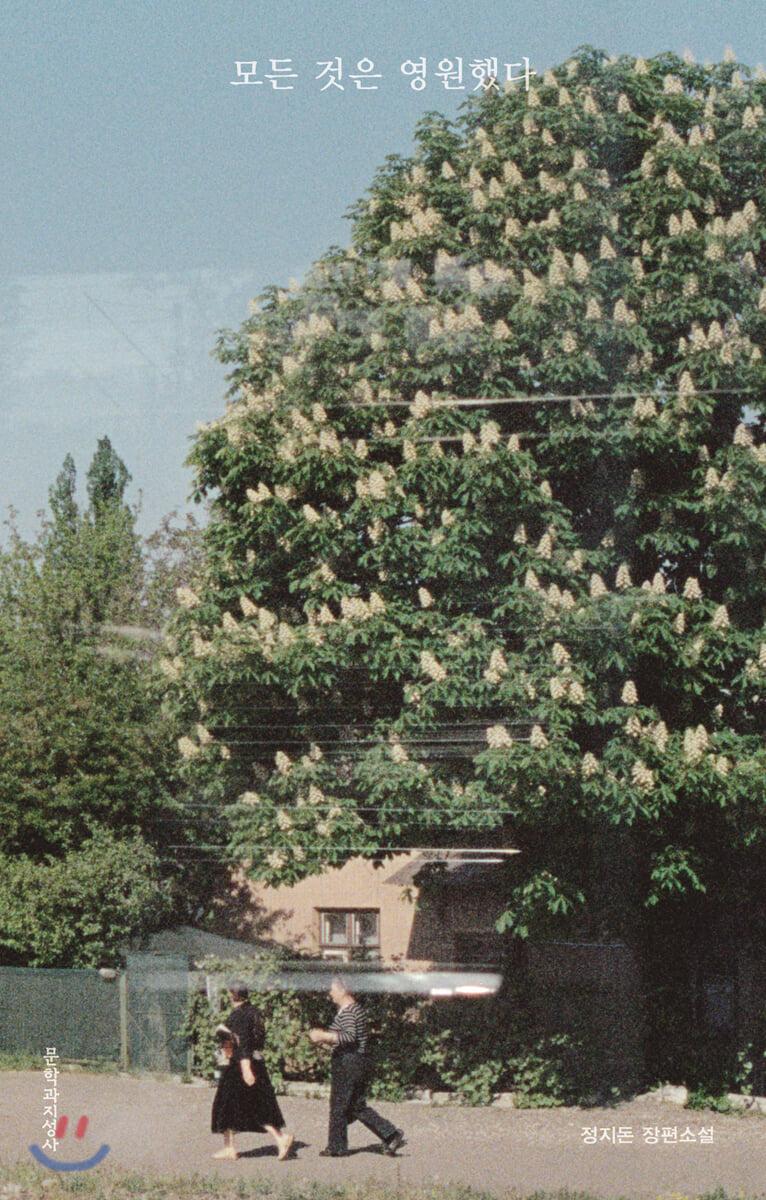
* The cover photo is by Damian Heinisch, a German photographer born in Poland and currently based in Norway.
In 1945, his grandfather disappeared while being deported to Ukraine, and in 1978, his father emigrated with his family to Germany.
Inspired by the train journeys and forced migrations his father and grandfather underwent, Damian Heinisch took photographs of himself crossing Europe by train from Ukraine to Oslo, Norway.
He published this Train Project as a photo book, 『45』, and this photo book was delivered to Jeong Ji-don through novelist Lee Sang-woo.
The two photos used on the cover are works not included in the photo album.
The titles of the photos, whose time and location seem unclear, refer to the distance between cities, but the reference point is unknown.
What beliefs do you want to convey in your novel?
A.
complexity.
I like stories that leave a lot of room for misunderstanding.
The truth is, our lives are all complicated.
I wish novels, like life, were full of layers.
―From an interview with Magazine B, 『JOBS: NOVELIST』
“I’ve always been fascinated by people who can’t do anything.”
Little is known about King Wellington.
Son of Hyun Alice, an independence activist and communist.
Born and raised in Hawaii in October 1927.
In 1945, he became a sailor on an overseas ship.
He studied briefly at UCLA Medical School in 1947.
In 1948, he arrived in Cheb, Czech Republic via France and Germany.
The following year, he entered the medical school of Charles University in Prague.
He became a doctor in 1955.
In 1958, he married Anna Soltisova, a Czech woman of Soviet origin, and they had a daughter, Tabitha.
In October of that year, Wellington renounced his American citizenship and requested Czech citizenship.
Naturalized in April 1959.
In November 1962, he was appointed director of the Central Research Institute of Hep City Hospital.
He committed suicide by swallowing poison in the hospital dissection room in November 1963.
He was a first-generation Hawaiian immigrant and an American citizen, but he was Asian and often faced racial prejudice.
He was a communist who wanted to go to North Korea, but North Korea rejected him as an American citizen.
His mother was executed in North Korea as an American spy.
He worked as a collaborator with the Czech secret police, but the Czech police did not believe he was a communist.
Wellington was not accepted anywhere, not in the United States, not in North Korea, not in the Czech Republic.
Based on this fact, "Everything was eternal," a linear life has little meaning.
Among the briefly described trajectories of Wellington, the part that is mainly dealt with in this novel is his life in the Czech Republic, which began in Heb and ended in Heb.
Jeong Ji-don thinks through Jeong Wellington, filling in the gaps in the facts with conjecture and imagination and mixing up the timetable.
“Time lost its distance in memory, and 14 years ago and 14 years later overlapped on the horizon of consciousness, as if a piece of paper had been folded in half and a hole had been poked with a pen.” As the last period in the Czech Republic and the first time he arrived are cross-edited, Jeong Wellington’s memories and thoughts pour out along with the stories of other characters and texts the author has drawn from outside.
It is clear that Jeong Wellington is a victim of history, an outsider of his time, but what Jeong Ji-don attempts in his novel is not to comfort him (or them), to reveal hidden truths, or to bring about catharsis.
The Wellington that the author envisions exists in a different world from reality.
However, the novelistic reality of a being who has left only a faint trace in history is strangely sad and funny, regardless of the author's intention, but also strangely warm.
This may be the ‘humanity’ that scholar Kim Su-hwan talked about in his recommendation.
“People who do nothing are not incapable, but have the power of negation.
“If competence is the kind of ability that proves oneself, then incompetence is the kind of ability that proves the world.” By following the dilemma of Jeong Wellington, the ‘incompetent’ who was not accepted by the times and the world, we can understand Jeong Ji-don’s novel.
In the novel, Willy, Anna, and Easy have the freedom to think and talk about anything.
In real life, time bound them, so it didn't have to in the novel.
But literature has its own rules, and time always controls us.
I wanted to see the spectacle of homeostasis and mutation reaching into history through discussions of chance and necessity.
The text thinks before I do, so I wanted to see the shapes revealed along the layers of fiction that overlapped before Jeong Wellington's death.
Here, Wellington will not die, so his thoughts will not end.
(p.
158)
The reason I still like this book, which I liked in the past, is because […] I had no choice but to say such things and it resonates with the world in which such things came out.
Grandiose and confident words, gloomy and resentful words, self-deprecating and cynical words, beautiful and miserable words.
Every era makes us dream of every era.
These types of dreams are intertwined with different contexts and lines, and the meaning should be focused on following the traces of the lines rather than distinguishing between right and wrong.
―From “Film and Poetry”
“Every era makes every era dream.”
The title of this novel is likely borrowed from Alexei Yurchak's cultural studies book, Everything Was Forever, Until It Was Gone.
This book sheds new light on the way people lived around the time of the collapse of the Soviet socialist system, “the closest ‘end’ experience our time can remember,” and allows us to feel “the strange resonance that everyday life in the ‘late’ socialist Soviet Union creates with our lives living ‘after’ the modern era” (Kim Su-hwan).
What both books have in common is that we can feel a “strange resonance” with our lives today.
From the latter half of the novel, “Looking to the Future,” the observer and narrator, “I,” appears at the forefront.
I and the 'Young Marxist' go to Cheb, the city where Wellington began and ended his life in the Czech Republic, to find traces of him.
While walking, talking, observing and recording everything they experience there, the two of them accidentally/inevitably meet someone who knows Jeong Wellington.
Through this method, which is both a part of the novel and a kind of author's note, Jeong Ji-don attempts to go beyond past love and its display and connect it with reality in a more practical way.
Also, among the various texts that Jeong Ji-don referenced, let's pay attention to 'Letters'.
As the author quotes Riccardo Piglia, the letters are a reflection of the preoccupation with “how to say the unsayable” in a time when censors existed, and “writing a letter is sending a message to the future.”
“While writing a letter, we are having a conversation in the present tense with someone who is not only not there, but whose state we do not even know […], and only later do we read each other’s stories.”
His contemporaries, who “encountered Wellington at some point in history,” exchanged letters constantly.
From grand and serious statements like, "I cannot help but reflect the events of my time," to trivial remarks like, "It's the coldest where I live," we can once again experience the interweaving of past, present, and future by reading letters sent in the past without any particular distance from their future and our present today.
Perhaps the experience of reading Jeong Ji-don's novels is similar to this.
* The cover photo is by Damian Heinisch, a German photographer born in Poland and currently based in Norway.
In 1945, his grandfather disappeared while being deported to Ukraine, and in 1978, his father emigrated with his family to Germany.
Inspired by the train journeys and forced migrations his father and grandfather underwent, Damian Heinisch took photographs of himself crossing Europe by train from Ukraine to Oslo, Norway.
He published this Train Project as a photo book, 『45』, and this photo book was delivered to Jeong Ji-don through novelist Lee Sang-woo.
The two photos used on the cover are works not included in the photo album.
The titles of the photos, whose time and location seem unclear, refer to the distance between cities, but the reference point is unknown.
GOODS SPECIFICS
- Publication date: December 17, 2020
- Page count, weight, size: 212 pages | 212g | 120*188*20mm
- ISBN13: 9788932038124
- ISBN10: 8932038120
You may also like
카테고리
korean


korean

![GQ KOREA Mark (Monthly): December [2025]](http://librairie.coreenne.fr/cdn/shop/files/8ef265dbbfbf186523ed75ba7319009d.jpg?v=1765340328&width=3840)


