

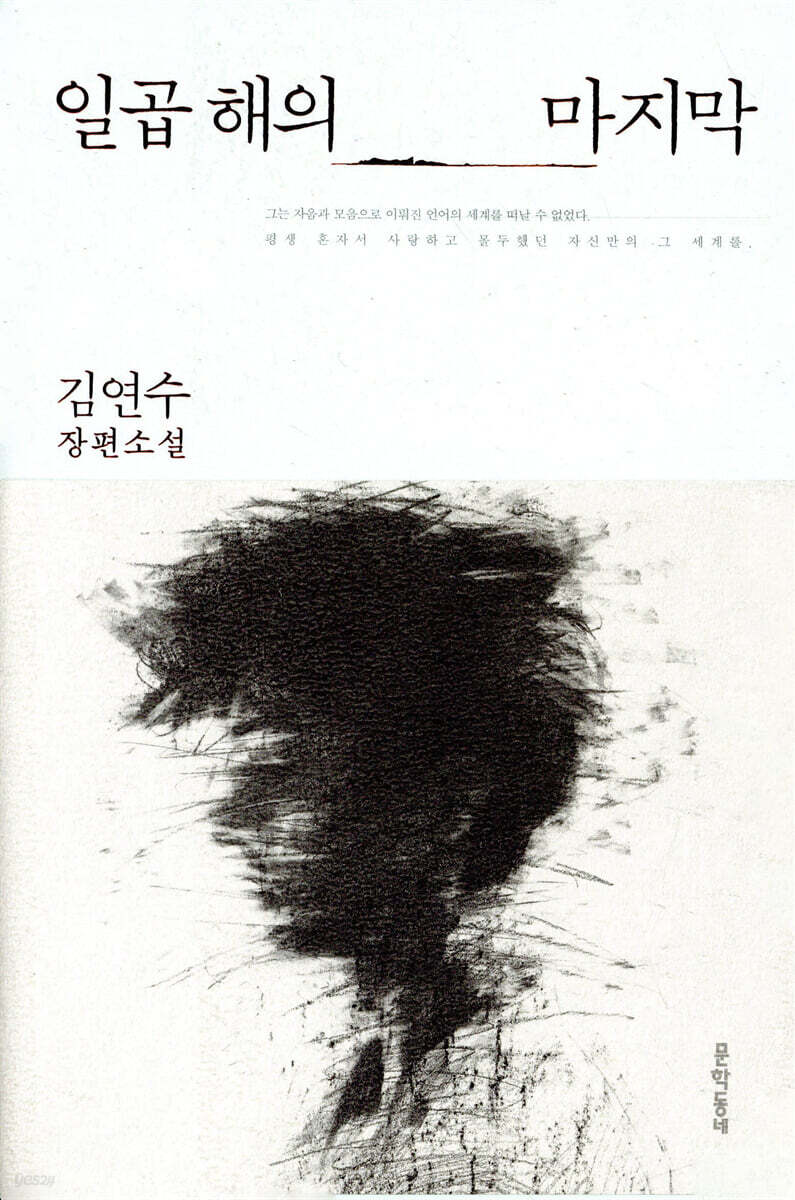
The last of seven years
 |
Description
Book Introduction
- A word from MD
-
Kim Yeon-su, The Story of Poet Baek Seok, Transformed into a NovelWhat is it like to feel a heart that is full of things and cannot express or discard them?
Baek-seok, who became Kim Yeon-su's character in "The Last of Seven Years," silently passes through dark times, feeling anxious and precarious, and now we quietly follow in his footsteps.
It is an incredibly moving time to trace Baek Seok's life through Kim Yeon-su's writing.
July 3, 2020. Novel/Poetry PD Park Hyung-wook
Unfulfilled dreams don't disappear; they are rewritten by someone else.
The light that began with him 60 years ago and has finally reached us now
During her nearly thirty-year career as a writer, Kim Yeon-su has closely documented the energy and anxiety-filled eyes of youth, while also constantly exploring the essence of love and developing her own intellectual introduction to the study of love.
And at the same time, based on extensive historical data, we have been working to discover personal truths in gaps that cannot be reached through objective facts.
This full-length novel, published eight years after “If Waves Are the Sea’s Business,” encompasses all of Kim Yeon-su’s core keywords of previous novels: youth, love, history, and the individual. It depicts the life of the poet “Gihaeng” as he faces a world that has changed rapidly since the Korean War.
It can be inferred that Gihaeng was modeled after the widely known poet Baek Seok, who was known as a poet in the 1930s and 1940s, but after the war, he was asked to write poetry in line with the party's ideology in the North, and he worked on translating Russian literature into Korean.
Even in a desperate situation where he cannot write poetry as he wishes and must learn anew “how to live without hope and dreams,” Gihaeng tries to hold on to poetry, but he always runs into the wall of reality.
No matter how fervent one's desire for poetry, if the weight of reality that weighs down on an individual is overwhelming, will that desire ultimately be frustrated?
What can a writer do in the face of a helpless reality?
What happens to the heart that can never be abandoned, the dream that never comes true?
"The Last of Seven Years" seems to be the answer that Kim Yeon-su finally came up with after going through a dark period as a citizen and writer, carrying these questions with her.
The light that began with him 60 years ago and has finally reached us now
During her nearly thirty-year career as a writer, Kim Yeon-su has closely documented the energy and anxiety-filled eyes of youth, while also constantly exploring the essence of love and developing her own intellectual introduction to the study of love.
And at the same time, based on extensive historical data, we have been working to discover personal truths in gaps that cannot be reached through objective facts.
This full-length novel, published eight years after “If Waves Are the Sea’s Business,” encompasses all of Kim Yeon-su’s core keywords of previous novels: youth, love, history, and the individual. It depicts the life of the poet “Gihaeng” as he faces a world that has changed rapidly since the Korean War.
It can be inferred that Gihaeng was modeled after the widely known poet Baek Seok, who was known as a poet in the 1930s and 1940s, but after the war, he was asked to write poetry in line with the party's ideology in the North, and he worked on translating Russian literature into Korean.
Even in a desperate situation where he cannot write poetry as he wishes and must learn anew “how to live without hope and dreams,” Gihaeng tries to hold on to poetry, but he always runs into the wall of reality.
No matter how fervent one's desire for poetry, if the weight of reality that weighs down on an individual is overwhelming, will that desire ultimately be frustrated?
What can a writer do in the face of a helpless reality?
What happens to the heart that can never be abandoned, the dream that never comes true?
"The Last of Seven Years" seems to be the answer that Kim Yeon-su finally came up with after going through a dark period as a citizen and writer, carrying these questions with her.
- You can preview some of the book's contents.
Preview
index
009 between 1957 and 1958
Confession Committee for Writers Facing Creative Stability 061
The End of the World as We Know It 109
Public Service Journey to Anatta (No-Self) 167
The Last of Seven Years 225
Author's Note 241
Confession Committee for Writers Facing Creative Stability 061
The End of the World as We Know It 109
Public Service Journey to Anatta (No-Self) 167
The Last of Seven Years 225
Author's Note 241
Into the book
What if you lived your life backwards? What if you went back to your teenage years, through the Great Patriotic War, knowing the ending? What if you read Nekrasov's poetry knowing he would become a poet? What if you talked to a classmate thinking, "He'll go to war and never return?" You might feel even sadder, but you'd be even more focused on the moment.
There is no need to think about the future, and since we know the past well, we only think about the present, at this very moment.
--- p.26
The misfortune that fascinated Gihaeng was the result of all that he loved in those prosperous and dazzling times.
That was why I decided to write poetry again.
I'm not afraid of being unhappy as long as I can prove my love.
--- p.32
The ability to not make any facial expressions, the ability to not write any poetry, the ability to not talk about anything.
The highest power a human being can possess is the power to do nothing.
--- p.85
“That’s the kind of crime and punishment that ordinary people commit.
You believe you made the best choice, but after suffering for a long time, you realize it was the worst choice.
“It is not sin that brings about punishment, but punishment that creates sin.”
--- pp.88~89
The shade was shade because there was light.
Being in the shadows now meant there was light somewhere.
It's just that the light hasn't reached him yet.
--- pp.112~113
When the war ended, I learned that there are things worse than hell.
It was a life that continued even after hell.
Is there a way out of such a life?
--- p.117
"How can we talk about life without thinking about death? How can we sing of peace without thinking of war, of healing without thinking of wounds? I feel responsible for death, war, and wounds.
If Korean words are dying inside you, you too must feel responsible for that death.
I have to think about death every day.
I have to think about death every morning and night.
Otherwise, you're not living properly.
I have to think about the dying words every day.
That's the poet's job.
“Just like washing your face every day, without fail.”
--- pp.164~165
Because of the fact that infinite worlds can be created depending on who assembles them and how, Gihaeng could not leave the world of language made up of consonants and vowels.
A world of my own that I loved and immersed myself in all my life.
--- pp.189~190
At that time, he was in a heavy snowy night.
I was in the heart of loving someone.
That night and his heart were with him now.
--- pp.196~197
“Still, we have dreams, so we can barely endure our harsh lives.
Sometimes I walk among the birch trees and think about my simple dreams.
“They are small, light, white dreams that seem like they will fly into the sky if you blow on them.”
There is no need to think about the future, and since we know the past well, we only think about the present, at this very moment.
--- p.26
The misfortune that fascinated Gihaeng was the result of all that he loved in those prosperous and dazzling times.
That was why I decided to write poetry again.
I'm not afraid of being unhappy as long as I can prove my love.
--- p.32
The ability to not make any facial expressions, the ability to not write any poetry, the ability to not talk about anything.
The highest power a human being can possess is the power to do nothing.
--- p.85
“That’s the kind of crime and punishment that ordinary people commit.
You believe you made the best choice, but after suffering for a long time, you realize it was the worst choice.
“It is not sin that brings about punishment, but punishment that creates sin.”
--- pp.88~89
The shade was shade because there was light.
Being in the shadows now meant there was light somewhere.
It's just that the light hasn't reached him yet.
--- pp.112~113
When the war ended, I learned that there are things worse than hell.
It was a life that continued even after hell.
Is there a way out of such a life?
--- p.117
"How can we talk about life without thinking about death? How can we sing of peace without thinking of war, of healing without thinking of wounds? I feel responsible for death, war, and wounds.
If Korean words are dying inside you, you too must feel responsible for that death.
I have to think about death every day.
I have to think about death every morning and night.
Otherwise, you're not living properly.
I have to think about the dying words every day.
That's the poet's job.
“Just like washing your face every day, without fail.”
--- pp.164~165
Because of the fact that infinite worlds can be created depending on who assembles them and how, Gihaeng could not leave the world of language made up of consonants and vowels.
A world of my own that I loved and immersed myself in all my life.
--- pp.189~190
At that time, he was in a heavy snowy night.
I was in the heart of loving someone.
That night and his heart were with him now.
--- pp.196~197
“Still, we have dreams, so we can barely endure our harsh lives.
Sometimes I walk among the birch trees and think about my simple dreams.
“They are small, light, white dreams that seem like they will fly into the sky if you blow on them.”
--- p.223
Publisher's Review
A new full-length novel, eight years after "If Waves Were the Sea's Business"!
Recommended by poet Park Jun and novelist Choi Eun-young
A new full-length novel by author Kim Yeon-su, who transformed the landscape of Korean literature by making the trajectory of his individual creative work one of the important trends in Korean novels.
During her nearly thirty-year career as a writer, Kim Yeon-su has closely documented the energy and anxiety-filled eyes of youth, while also continuously exploring the essence of love and developing her own intellectual introduction to the study of love.
And at the same time, based on extensive historical data, we have been working to discover personal truths in gaps that cannot be reached through objective facts.
This full-length novel, published eight years after “If Waves Are the Sea’s Business,” encompasses all of Kim Yeon-su’s core keywords of previous novels: youth, love, history, and the individual. It depicts the life of the poet “Gihaeng” as he faces a world that has changed rapidly since the Korean War.
It can be inferred that Gihaeng was modeled after the widely known poet Baek Seok, who was known as a poet in the 1930s and 1940s, but after the war, he was asked to write poetry in line with the party's ideology in the North, and he worked on translating Russian literature into Korean.
Even in a desperate situation where he cannot write poetry as he wishes and must relearn “how to live without hope and dreams” (p. 64), Gihaeng tries to hold on to poetry, but he repeatedly runs into the wall of reality.
No matter how fervent one's desire for poetry, if the weight of reality that weighs down on an individual is overwhelming, will that desire ultimately be frustrated?
What can a writer do in the face of a helpless reality?
What happens to the heart that can never be abandoned, the dream that never comes true?
"The Last of Seven Years" seems to be the answer that Kim Yeon-su finally came up with after going through a dark period as a citizen and writer, carrying these questions with her.
“The misfortune that fascinated travel was the prosperous and dazzling times,
It was the result of everything he loved.
That was why I decided to write poetry again.
“I’m not afraid of being unhappy as long as I can prove my love.”
The quiet that came after the beautiful days teeming with gentle and delicate things ended.
A certain feeling that could not be abandoned in that world and a few lines of poetry left behind by that feeling
In the summer of 1958, Ki-haeng, who went to work at the translation office, received an envelope with a letter.
Inside the envelope, which was torn open as if someone had seen it first, were only two poems written in Russian, with no other content.
The person who sent the poem was the Russian poet 'Bella'.
Last summer, when she visited North Korea at the invitation of the Korean Writers' Association, Gihaeng served as her interpreter, having previously translated her poetry.
And before she returned to Russia, Gihang gave her a notebook containing poems he had written.
Although no one knows Gihaeng as a poet now, before the Korean War broke out, he was a poet known for his poetry collection, Deer.
However, the world had changed because of the war, and the North Korean literary world forced Gihaeng to write only literature that could widely spread the party's ideology to the people.
Even though he could be expelled from Pyongyang if he did not write the poetry the party demands, Gihaeng does not write any poetry.
This was because the poetry that the party demanded was not a world created by language that “had been loved and devoted to alone all his life” (p. 190).
Gi-haeng, who hands Bella a notebook and confesses that “the words are crumbling like bricks rolling over a ruin” (p. 162), tells her:
“If Korean words are dying inside you, you too must feel responsible for that death.
I have to think about death every day.
I have to think about death every morning and night.
Otherwise, you're not living properly.
I have to think about the dying words every day.
That's the poet's job.
“Just like washing your face every day, without fail.” (p. 165)
After that meeting, Kihaeng wrote a poem that could not be published in North Korea and sent it to Bella in Russia. There was no reply until a year later when he finally received a reply.
There were only two Russian poems in the envelope.
Who opened that envelope first? Bella must have sent a letter with it, but who took it? What did Bella do with the note she sent? Gi-haeng's life, which had been living in silence and apathy under the Party's literary policy, begins to take an unexpected turn with that reply from Bella.
Unfulfilled dreams don't disappear; they are rewritten by someone else.
The light that began with him 60 years ago and has finally reached us now
Although "The Last of Seven Years" does not focus on restoring Baek-seok's uncertain life after the war, it is significant that the novel looks not at the pre-war period when Gi-haeng was active as a poet, but at the blank period when his dreams were continually frustrated.
During that blank period, he seemed like a failure, “unable to be remembered as a poet, unable to take the woman he loved as his wife, and unable to become a teacher at a country school” (p. 83).
However, Kim Yeon-su seems to be saying that this is only true when looking at the historical background of the 1950s and the life of an individual called Journeyman.
Since some time ago, I have believed that things that cannot be realized in reality become fiction.
Things that were hoped for but never came true, things that were not chosen at the last minute, things that come to mind at night, all become stories and novels.
(…) This is a story about a world that Baek-seok has never experienced, and a story about a wish that he never let go of until the moment of his death.
_From the author's note
That is, the things we dreamed of but couldn't achieve, the things we desperately wanted but couldn't realize, don't disappear, but rather transcend the conditions of that era and individual, and are realized "somewhere else, not now, but sometime in the distant future" (p. 58).
By someone else who fills that void in life.
Therefore, it may be natural that 『The Last of Seven Years』 begins with the life of a traveler in the 1950s.
And because of this, the characters in the novel live in two ways.
Once in a way that doesn't quite live the life you want, and once in a way that's exactly what you wanted.
Making two lives possible by breathing new life into a life that was thought to be complete.
As we read “The Last of Seven Years,” we will realize anew that this is one of the reasons why we continue to be fascinated by Kim Yeon-su’s novels.
Recommended by poet Park Jun and novelist Choi Eun-young
A new full-length novel by author Kim Yeon-su, who transformed the landscape of Korean literature by making the trajectory of his individual creative work one of the important trends in Korean novels.
During her nearly thirty-year career as a writer, Kim Yeon-su has closely documented the energy and anxiety-filled eyes of youth, while also continuously exploring the essence of love and developing her own intellectual introduction to the study of love.
And at the same time, based on extensive historical data, we have been working to discover personal truths in gaps that cannot be reached through objective facts.
This full-length novel, published eight years after “If Waves Are the Sea’s Business,” encompasses all of Kim Yeon-su’s core keywords of previous novels: youth, love, history, and the individual. It depicts the life of the poet “Gihaeng” as he faces a world that has changed rapidly since the Korean War.
It can be inferred that Gihaeng was modeled after the widely known poet Baek Seok, who was known as a poet in the 1930s and 1940s, but after the war, he was asked to write poetry in line with the party's ideology in the North, and he worked on translating Russian literature into Korean.
Even in a desperate situation where he cannot write poetry as he wishes and must relearn “how to live without hope and dreams” (p. 64), Gihaeng tries to hold on to poetry, but he repeatedly runs into the wall of reality.
No matter how fervent one's desire for poetry, if the weight of reality that weighs down on an individual is overwhelming, will that desire ultimately be frustrated?
What can a writer do in the face of a helpless reality?
What happens to the heart that can never be abandoned, the dream that never comes true?
"The Last of Seven Years" seems to be the answer that Kim Yeon-su finally came up with after going through a dark period as a citizen and writer, carrying these questions with her.
“The misfortune that fascinated travel was the prosperous and dazzling times,
It was the result of everything he loved.
That was why I decided to write poetry again.
“I’m not afraid of being unhappy as long as I can prove my love.”
The quiet that came after the beautiful days teeming with gentle and delicate things ended.
A certain feeling that could not be abandoned in that world and a few lines of poetry left behind by that feeling
In the summer of 1958, Ki-haeng, who went to work at the translation office, received an envelope with a letter.
Inside the envelope, which was torn open as if someone had seen it first, were only two poems written in Russian, with no other content.
The person who sent the poem was the Russian poet 'Bella'.
Last summer, when she visited North Korea at the invitation of the Korean Writers' Association, Gihaeng served as her interpreter, having previously translated her poetry.
And before she returned to Russia, Gihang gave her a notebook containing poems he had written.
Although no one knows Gihaeng as a poet now, before the Korean War broke out, he was a poet known for his poetry collection, Deer.
However, the world had changed because of the war, and the North Korean literary world forced Gihaeng to write only literature that could widely spread the party's ideology to the people.
Even though he could be expelled from Pyongyang if he did not write the poetry the party demands, Gihaeng does not write any poetry.
This was because the poetry that the party demanded was not a world created by language that “had been loved and devoted to alone all his life” (p. 190).
Gi-haeng, who hands Bella a notebook and confesses that “the words are crumbling like bricks rolling over a ruin” (p. 162), tells her:
“If Korean words are dying inside you, you too must feel responsible for that death.
I have to think about death every day.
I have to think about death every morning and night.
Otherwise, you're not living properly.
I have to think about the dying words every day.
That's the poet's job.
“Just like washing your face every day, without fail.” (p. 165)
After that meeting, Kihaeng wrote a poem that could not be published in North Korea and sent it to Bella in Russia. There was no reply until a year later when he finally received a reply.
There were only two Russian poems in the envelope.
Who opened that envelope first? Bella must have sent a letter with it, but who took it? What did Bella do with the note she sent? Gi-haeng's life, which had been living in silence and apathy under the Party's literary policy, begins to take an unexpected turn with that reply from Bella.
Unfulfilled dreams don't disappear; they are rewritten by someone else.
The light that began with him 60 years ago and has finally reached us now
Although "The Last of Seven Years" does not focus on restoring Baek-seok's uncertain life after the war, it is significant that the novel looks not at the pre-war period when Gi-haeng was active as a poet, but at the blank period when his dreams were continually frustrated.
During that blank period, he seemed like a failure, “unable to be remembered as a poet, unable to take the woman he loved as his wife, and unable to become a teacher at a country school” (p. 83).
However, Kim Yeon-su seems to be saying that this is only true when looking at the historical background of the 1950s and the life of an individual called Journeyman.
Since some time ago, I have believed that things that cannot be realized in reality become fiction.
Things that were hoped for but never came true, things that were not chosen at the last minute, things that come to mind at night, all become stories and novels.
(…) This is a story about a world that Baek-seok has never experienced, and a story about a wish that he never let go of until the moment of his death.
_From the author's note
That is, the things we dreamed of but couldn't achieve, the things we desperately wanted but couldn't realize, don't disappear, but rather transcend the conditions of that era and individual, and are realized "somewhere else, not now, but sometime in the distant future" (p. 58).
By someone else who fills that void in life.
Therefore, it may be natural that 『The Last of Seven Years』 begins with the life of a traveler in the 1950s.
And because of this, the characters in the novel live in two ways.
Once in a way that doesn't quite live the life you want, and once in a way that's exactly what you wanted.
Making two lives possible by breathing new life into a life that was thought to be complete.
As we read “The Last of Seven Years,” we will realize anew that this is one of the reasons why we continue to be fascinated by Kim Yeon-su’s novels.
GOODS SPECIFICS
- Date of issue: July 1, 2020
- Page count, weight, size: 248 pages | 314g | 133*200*17mm
- ISBN13: 9788954672771
- ISBN10: 8954672779
You may also like
카테고리
korean


korean

![GQ KOREA Mark (Monthly): December [2025]](http://librairie.coreenne.fr/cdn/shop/files/8ef265dbbfbf186523ed75ba7319009d.jpg?v=1765340328&width=3840)


