

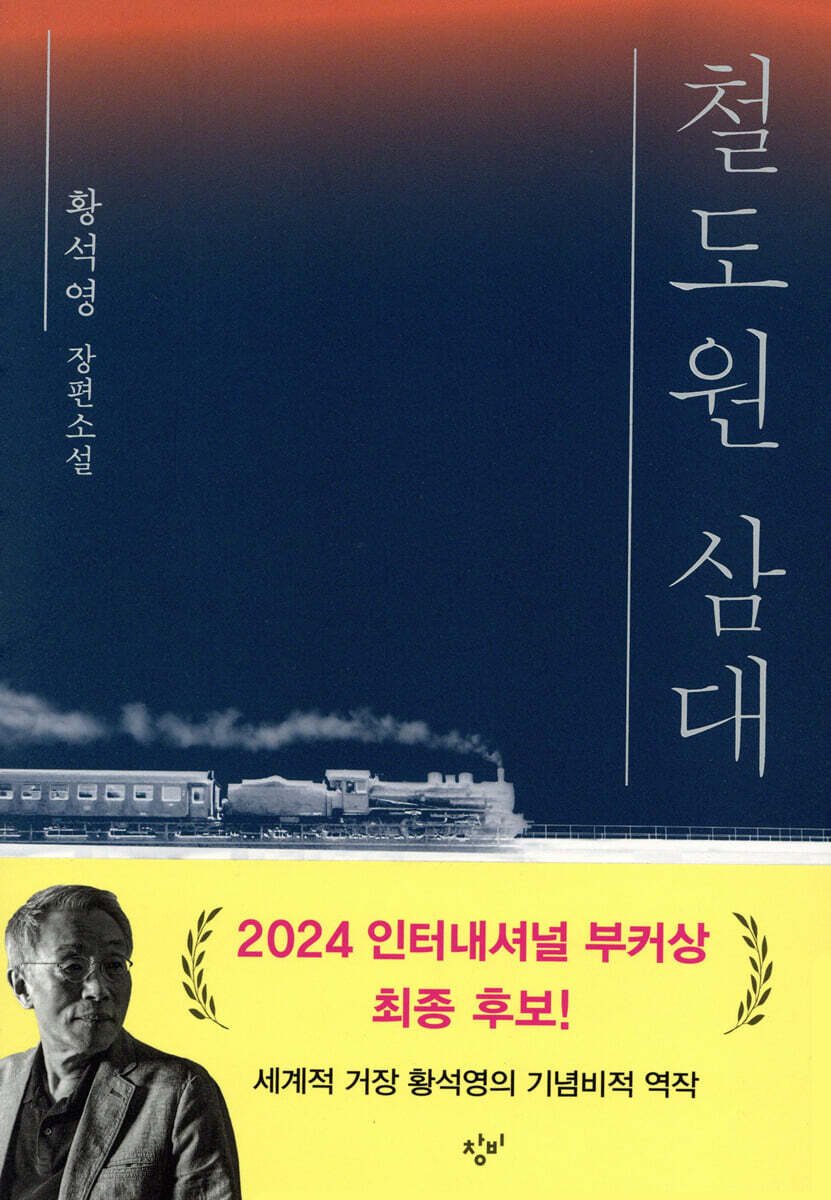
Three generations of railroad workers
 |
Description
Book Introduction
- A word from MD
-
Hwang Sok-yong, A Tribute to All Working PeopleFrom conception to writing, 30 years later, author Hwang Seok-young brilliantly portrays modern and contemporary Korean history through a vast narrative surrounding a railroad worker's family.
This is a tribute to all the workers who have struggled ceaselessly throughout the 100 years of Korean Peninsula history, marking the footsteps of our labor from the Japanese colonial period to the 21st century.
May 29, 2020. Novel/Poetry PD Park Hyung-wook
The power of a vast and powerful narrative that spans 100 years of Korean Peninsula history.
Who we are today is the result of our constant struggle.
Anyway, the world is getting better little by little.
World-renowned master Hwang Sok-yong explores the 100-year history of the Korean Peninsula through his novel, “Three Generations of Railroad Workers.”
Through a vast narrative surrounding a railroad worker's family, the book vividly portrays the lives of workers and the common people from the Japanese colonial period through the pre- and post-liberation period and into the 21st century, and exquisitely weaves together historical materials and old tales to create a literary masterpiece that masterfully portrays modern and contemporary Korean history.
In this era when we dream of a railroad connecting the South and the North, this work is not only a work that allows us to feel the powerful narrative power, but also a masterpiece of the author's life, taking 30 years from conception to writing.
Hwang Sok-young's unique wit, which grows stronger with each passing year, and the vivid characters he portrays will long remain a source of pride in our literary history.
Who we are today is the result of our constant struggle.
Anyway, the world is getting better little by little.
World-renowned master Hwang Sok-yong explores the 100-year history of the Korean Peninsula through his novel, “Three Generations of Railroad Workers.”
Through a vast narrative surrounding a railroad worker's family, the book vividly portrays the lives of workers and the common people from the Japanese colonial period through the pre- and post-liberation period and into the 21st century, and exquisitely weaves together historical materials and old tales to create a literary masterpiece that masterfully portrays modern and contemporary Korean history.
In this era when we dream of a railroad connecting the South and the North, this work is not only a work that allows us to feel the powerful narrative power, but also a masterpiece of the author's life, taking 30 years from conception to writing.
Hwang Sok-young's unique wit, which grows stronger with each passing year, and the vivid characters he portrays will long remain a source of pride in our literary history.
- You can preview some of the book's contents.
Preview
index
Three generations of railroad workers
Author's Note
Author's Note
Detailed image
.jpg)
Into the book
The day before the sit-in began, Jeong and the youngest Cha climbed up the chimney together and helped set up the plastic cover and tent.
They wrapped a placard around the outside of the plastic covering the railing at the very end and held it tightly.
The text '!Rahajangbodongnoyonggo Jijeogakmaehalbun' was written in large letters as a title that explains the reason for the sit-in, and the text '!Direct restoration power plant succession Jono' was written in small letters below it as a subtitle.
Lee Jin-oh has no choice but to read the upside-down writing from the opposite side of the world to those who look up at it.
--- p.12
“Labor struggle is in the Lee family’s blood.
I'm not saying you should just eat your fill, but rather let all workers live like human beings, right? (...) Don't even think about coming down in a month or two.
“There have been countless dead people since the old days until now.”
What she was saying was something that her great-uncle Lee Baek-man, her grandfather Lee Il-cheol, and her father Lee Ji-san always used.
This is something that Lee Jin-oh's mother, Yoon Bok-rye, has agreed with since her youth and it is also her own opinion.
--- pp.110-111
He thought all these efforts were worthwhile.
What was the meaning passed down to him through his great-grandfather, Baek Man Lee, his grandfather, Il-cheol Lee, and his father, Ji-san Lee?
Perhaps it is the belief that life, though boring and difficult, still endures.
That's how I live today.
--- pp.206-207
“Do you think you’re alone up the chimney?”
“I’m here with my grandmother like this.”
She took her grandson's wrist and led him away.
“Look at the stars in the sky over there.
“Hundreds of millions of people have lived and died, but I am watching what you do.”
Jin-oh became a child again and held his grandmother's hand as he walked towards Yeongdeungpo Market.
The willow house, which always seemed like a dream, was still the same.
--- p.213
The mother and daughter, unable to even eat dinner and having even their sweet potatoes taken away, entered the alleyway home, exhausted and exhausted.
My mother sat down in front of the door and cried and cried.
“Let’s live together, you rascals.
“Let’s live together.”
Lee Jin-oh understood that this was exactly the one word she was trying to say.
“It is a huge social change just for workers to climb up to high places and take a sit-in to demand that people understand their situation and position.
My grandmother always said that.
“Anyway, the world is getting better little by little.”
--- p.410
Jin-oh Lee knew very well what kind of loneliness he was experiencing on the chimney right now.
(…) Even on a bitterly cold winter night, whenever I see the shining windows of the apartments and buildings beneath those chimneys and the wave of headlights of sleek, sleek cars endlessly flowing along the riverside road, I realize that the world is always just so indifferent.
He was neither abandoned nor forgotten, but was nothing more than a street tree, an insignificant thing of no interest.
They wrapped a placard around the outside of the plastic covering the railing at the very end and held it tightly.
The text '!Rahajangbodongnoyonggo Jijeogakmaehalbun' was written in large letters as a title that explains the reason for the sit-in, and the text '!Direct restoration power plant succession Jono' was written in small letters below it as a subtitle.
Lee Jin-oh has no choice but to read the upside-down writing from the opposite side of the world to those who look up at it.
--- p.12
“Labor struggle is in the Lee family’s blood.
I'm not saying you should just eat your fill, but rather let all workers live like human beings, right? (...) Don't even think about coming down in a month or two.
“There have been countless dead people since the old days until now.”
What she was saying was something that her great-uncle Lee Baek-man, her grandfather Lee Il-cheol, and her father Lee Ji-san always used.
This is something that Lee Jin-oh's mother, Yoon Bok-rye, has agreed with since her youth and it is also her own opinion.
--- pp.110-111
He thought all these efforts were worthwhile.
What was the meaning passed down to him through his great-grandfather, Baek Man Lee, his grandfather, Il-cheol Lee, and his father, Ji-san Lee?
Perhaps it is the belief that life, though boring and difficult, still endures.
That's how I live today.
--- pp.206-207
“Do you think you’re alone up the chimney?”
“I’m here with my grandmother like this.”
She took her grandson's wrist and led him away.
“Look at the stars in the sky over there.
“Hundreds of millions of people have lived and died, but I am watching what you do.”
Jin-oh became a child again and held his grandmother's hand as he walked towards Yeongdeungpo Market.
The willow house, which always seemed like a dream, was still the same.
--- p.213
The mother and daughter, unable to even eat dinner and having even their sweet potatoes taken away, entered the alleyway home, exhausted and exhausted.
My mother sat down in front of the door and cried and cried.
“Let’s live together, you rascals.
“Let’s live together.”
Lee Jin-oh understood that this was exactly the one word she was trying to say.
“It is a huge social change just for workers to climb up to high places and take a sit-in to demand that people understand their situation and position.
My grandmother always said that.
“Anyway, the world is getting better little by little.”
--- p.410
Jin-oh Lee knew very well what kind of loneliness he was experiencing on the chimney right now.
(…) Even on a bitterly cold winter night, whenever I see the shining windows of the apartments and buildings beneath those chimneys and the wave of headlights of sleek, sleek cars endlessly flowing along the riverside road, I realize that the world is always just so indifferent.
He was neither abandoned nor forgotten, but was nothing more than a street tree, an insignificant thing of no interest.
--- p.412
Publisher's Review
The power of a vast and powerful narrative that spans 100 years of Korean Peninsula history.
Who we are today is the result of our constant struggle.
Anyway, the world is getting better little by little.
World-renowned master Hwang Sok-yong explores the 100-year history of the Korean Peninsula through his novel, “Three Generations of Railroad Workers.”
Through a vast narrative surrounding a railroad worker's family, the book vividly portrays the lives of workers and the common people from the Japanese colonial period through the pre- and post-liberation period and into the 21st century, and exquisitely weaves together historical materials and old tales to create a literary masterpiece that masterfully portrays modern and contemporary Korean history.
In this era when we dream of a railroad connecting the South and the North, this work is not only a work that allows us to feel the powerful narrative power, but also a masterpiece of the author's life, taking 30 years from conception to writing.
Hwang Seok-yeong's unique wit, which grows stronger with each passing year, and the vivid characters he portrays will long remain a source of pride in our literary history.
Despite its overwhelming length of over 2,000 pages, 『Three Generations of Railroad Workers』 allows readers to fully experience Hwang Seok-yeong's power and the charm of a long novel through its fast-paced development and realistic characters.
This novel is largely centered around the story of three generations of railroad workers, from Baekman Lee to Ilcheol Lee and Jisan Lee, and the story of Baekman Lee's great-grandson and factory worker Jin-oh Lee, who is currently on a sit-in protest.
Jin-oh Lee, a laid-off worker who is on a sit-in protest on the chimney of a power plant factory that is 16 stories high, endures his time on the chimney by naming five plastic bottles with the names of the dead people and talking to them.
On a bitterly cold and long night, Jin-oh contemplates the meaning of life that has been passed down to him from the past to the present while calling upon his great-grandmother 'Ju-an-daek', his grandmother 'Singeum-i', his childhood friend 'Gak-sae', his friend 'Jin-gi', a metalworker's union worker, and 'Yeong-suk', a worker who endured the crane strike.
“Perhaps it is the belief that life, though boring and difficult, still endures.
“That’s how I live today.” (page 207)
The story of the brothers Lee Il-cheol and Lee I-cheol, set in the Yeongdeungpo district, a district with a high concentration of factories, resonates even more deeply as it examines the labor movement and independence movement during the Japanese colonial period.
A railway workshop technician who fell in love at first sight with a train “When Baek-man Lee had a son, he named him Han-soe because he thought of a train, and the next son was also named Du-soe after his older brother, and when he was registered as a civil servant, Il-cheol became I-cheol.” (pp. 23-24) The older brother Il-cheol followed in their father’s footsteps and went through the Railway Workers’ Training Institute to become a rare Korean engineer at the time, making him the pride of Baek-man Lee, but the younger brother Cheol Lee was fired from the railway workshop and worked as a factory worker, and suffered hardships such as being imprisoned while working as an independence activist.
The characters such as Lee Jae-yu, Kim Hyeong-seon, and Miyake, who are depicted as having worked with Lee Cheol, Lee Cheol's wife Han Yeo-ok, who was a hideout couple and gave birth to their son Jang-san, Choi Dal-yeong, who acted as a lackey for the Japanese, and Park Seon-ok, who served as Lee Cheol's liaison for the independence movement, enrich the story of the brothers.
Meanwhile, what stands out in the story that Hwang Seok-young draws like a dream is the performance of the female characters.
When Baek Man's wife, Ju An-daek, passes away when Han Soe and Du Soe are still young, Baek Man's younger sister, Lee Mak-eum, takes care of the brothers, and Ju An-daek and Mak-eum's aunt communicate with them through 'souls' and take care of the brothers' weddings and funerals.
Lee Mak-eum, who “came to work at a textile factory and ended up taking care of the children for her second older brother who was left alone” (page 88), used to “make up various legends about Juan-daek because he was a match for Han-soe” (page 94) with her sharp tongue. Juan-daek, who was quiet and had a strong will to live, often showed up to her aunt and Han-soe because she loved her brothers very much.
In particular, Shin Geum-i, the wife of Il-cheol, who “surprised everyone around her by predicting what had happened in the past and what would happen in the future with just a quick glance upon meeting them for the first time” and whose nickname was “Shin Tong Bang Tong Shin Geum-i” (page 24), used her intelligence and innate foresight as a new woman who had participated in the labor movement with her brother-in-law, Lee Cheol, to wisely overcome the hardships that befell the family, comforting and keeping them centered.
This land here is our scene and reality.
We have no choice but to believe in our own strength.
In his “Author’s Note,” Hwang Seok-young pointed out that in our modern and contemporary literature, “the quality and quantity of long novels are far inferior to that of short stories, and among them, novels that reflect the lives of modern industrial workers are rare.”
Therefore, this weighty novel is the monumental result of a struggle to “bring to the forefront the industrial workers who have been absent from our literary history, and to reveal the roots of the lives of Korean workers today through their life journeys over the past hundred years of modern and contemporary history.”
Literary critic Han Ki-wook commented, “If Yeom Sang-seop’s ‘Three Generations’ unfolded the period from the end of the Joseon Dynasty to the rise of capitalism, Hwang Seok-yeong’s ‘Three Generations of Railroad Workers’ covers the history of the Japanese colonial period and division, as well as the current labor movement. Reading these two works together completes the modern and contemporary history of Korean literature.”
It has been fifty years since he began his full-fledged literary career in 1970 when his short story “Tower” was selected for the Chosun Ilbo New Year’s Literary Contest.
The master, who has fought against dictatorships and worked tirelessly for half a century to bring about social change and the development of Korean literature, says, “In the vast expanse of time in the universe, the traces of the times and lives we lived in may be nothing more than a few specks of dust,” and “The world will change slowly, very slowly, but I do not want to give up the hope that it will become a little better.”
Just as the tender leaves of lettuce that Jin-oh Lee started growing from seeds in a flower pot while precariously clinging to life on a 45-meter-high chimney, which is “neither heaven nor earth,” are growing lush, the story of “three generations of railroad workers” that the author has long cherished will become a seed with infinite potential that will bring about small changes in the world.
I have no doubt that this work will be long remembered as a work that provides us with a sense of comfort and pride as we, as workers living in the Republic of Korea, discover our roots and demonstrate our potential.
This is the story of my hometown, filled with memories of my childhood, and also the story of contemporary workers.
I dedicate this novel to Korean workers, filling a void in Korean literature. (Author's Note, p. 619)
Who we are today is the result of our constant struggle.
Anyway, the world is getting better little by little.
World-renowned master Hwang Sok-yong explores the 100-year history of the Korean Peninsula through his novel, “Three Generations of Railroad Workers.”
Through a vast narrative surrounding a railroad worker's family, the book vividly portrays the lives of workers and the common people from the Japanese colonial period through the pre- and post-liberation period and into the 21st century, and exquisitely weaves together historical materials and old tales to create a literary masterpiece that masterfully portrays modern and contemporary Korean history.
In this era when we dream of a railroad connecting the South and the North, this work is not only a work that allows us to feel the powerful narrative power, but also a masterpiece of the author's life, taking 30 years from conception to writing.
Hwang Seok-yeong's unique wit, which grows stronger with each passing year, and the vivid characters he portrays will long remain a source of pride in our literary history.
Despite its overwhelming length of over 2,000 pages, 『Three Generations of Railroad Workers』 allows readers to fully experience Hwang Seok-yeong's power and the charm of a long novel through its fast-paced development and realistic characters.
This novel is largely centered around the story of three generations of railroad workers, from Baekman Lee to Ilcheol Lee and Jisan Lee, and the story of Baekman Lee's great-grandson and factory worker Jin-oh Lee, who is currently on a sit-in protest.
Jin-oh Lee, a laid-off worker who is on a sit-in protest on the chimney of a power plant factory that is 16 stories high, endures his time on the chimney by naming five plastic bottles with the names of the dead people and talking to them.
On a bitterly cold and long night, Jin-oh contemplates the meaning of life that has been passed down to him from the past to the present while calling upon his great-grandmother 'Ju-an-daek', his grandmother 'Singeum-i', his childhood friend 'Gak-sae', his friend 'Jin-gi', a metalworker's union worker, and 'Yeong-suk', a worker who endured the crane strike.
“Perhaps it is the belief that life, though boring and difficult, still endures.
“That’s how I live today.” (page 207)
The story of the brothers Lee Il-cheol and Lee I-cheol, set in the Yeongdeungpo district, a district with a high concentration of factories, resonates even more deeply as it examines the labor movement and independence movement during the Japanese colonial period.
A railway workshop technician who fell in love at first sight with a train “When Baek-man Lee had a son, he named him Han-soe because he thought of a train, and the next son was also named Du-soe after his older brother, and when he was registered as a civil servant, Il-cheol became I-cheol.” (pp. 23-24) The older brother Il-cheol followed in their father’s footsteps and went through the Railway Workers’ Training Institute to become a rare Korean engineer at the time, making him the pride of Baek-man Lee, but the younger brother Cheol Lee was fired from the railway workshop and worked as a factory worker, and suffered hardships such as being imprisoned while working as an independence activist.
The characters such as Lee Jae-yu, Kim Hyeong-seon, and Miyake, who are depicted as having worked with Lee Cheol, Lee Cheol's wife Han Yeo-ok, who was a hideout couple and gave birth to their son Jang-san, Choi Dal-yeong, who acted as a lackey for the Japanese, and Park Seon-ok, who served as Lee Cheol's liaison for the independence movement, enrich the story of the brothers.
Meanwhile, what stands out in the story that Hwang Seok-young draws like a dream is the performance of the female characters.
When Baek Man's wife, Ju An-daek, passes away when Han Soe and Du Soe are still young, Baek Man's younger sister, Lee Mak-eum, takes care of the brothers, and Ju An-daek and Mak-eum's aunt communicate with them through 'souls' and take care of the brothers' weddings and funerals.
Lee Mak-eum, who “came to work at a textile factory and ended up taking care of the children for her second older brother who was left alone” (page 88), used to “make up various legends about Juan-daek because he was a match for Han-soe” (page 94) with her sharp tongue. Juan-daek, who was quiet and had a strong will to live, often showed up to her aunt and Han-soe because she loved her brothers very much.
In particular, Shin Geum-i, the wife of Il-cheol, who “surprised everyone around her by predicting what had happened in the past and what would happen in the future with just a quick glance upon meeting them for the first time” and whose nickname was “Shin Tong Bang Tong Shin Geum-i” (page 24), used her intelligence and innate foresight as a new woman who had participated in the labor movement with her brother-in-law, Lee Cheol, to wisely overcome the hardships that befell the family, comforting and keeping them centered.
This land here is our scene and reality.
We have no choice but to believe in our own strength.
In his “Author’s Note,” Hwang Seok-young pointed out that in our modern and contemporary literature, “the quality and quantity of long novels are far inferior to that of short stories, and among them, novels that reflect the lives of modern industrial workers are rare.”
Therefore, this weighty novel is the monumental result of a struggle to “bring to the forefront the industrial workers who have been absent from our literary history, and to reveal the roots of the lives of Korean workers today through their life journeys over the past hundred years of modern and contemporary history.”
Literary critic Han Ki-wook commented, “If Yeom Sang-seop’s ‘Three Generations’ unfolded the period from the end of the Joseon Dynasty to the rise of capitalism, Hwang Seok-yeong’s ‘Three Generations of Railroad Workers’ covers the history of the Japanese colonial period and division, as well as the current labor movement. Reading these two works together completes the modern and contemporary history of Korean literature.”
It has been fifty years since he began his full-fledged literary career in 1970 when his short story “Tower” was selected for the Chosun Ilbo New Year’s Literary Contest.
The master, who has fought against dictatorships and worked tirelessly for half a century to bring about social change and the development of Korean literature, says, “In the vast expanse of time in the universe, the traces of the times and lives we lived in may be nothing more than a few specks of dust,” and “The world will change slowly, very slowly, but I do not want to give up the hope that it will become a little better.”
Just as the tender leaves of lettuce that Jin-oh Lee started growing from seeds in a flower pot while precariously clinging to life on a 45-meter-high chimney, which is “neither heaven nor earth,” are growing lush, the story of “three generations of railroad workers” that the author has long cherished will become a seed with infinite potential that will bring about small changes in the world.
I have no doubt that this work will be long remembered as a work that provides us with a sense of comfort and pride as we, as workers living in the Republic of Korea, discover our roots and demonstrate our potential.
This is the story of my hometown, filled with memories of my childhood, and also the story of contemporary workers.
I dedicate this novel to Korean workers, filling a void in Korean literature. (Author's Note, p. 619)
GOODS SPECIFICS
- Date of issue: June 1, 2020
- Page count, weight, size: 620 pages | 800g | 145*210*30mm
- ISBN13: 9788936434434
- ISBN10: 8936434438
You may also like
카테고리
korean


korean

![GQ KOREA Mark (Monthly): December [2025]](http://librairie.coreenne.fr/cdn/shop/files/8ef265dbbfbf186523ed75ba7319009d.jpg?v=1765340328&width=3840)


