

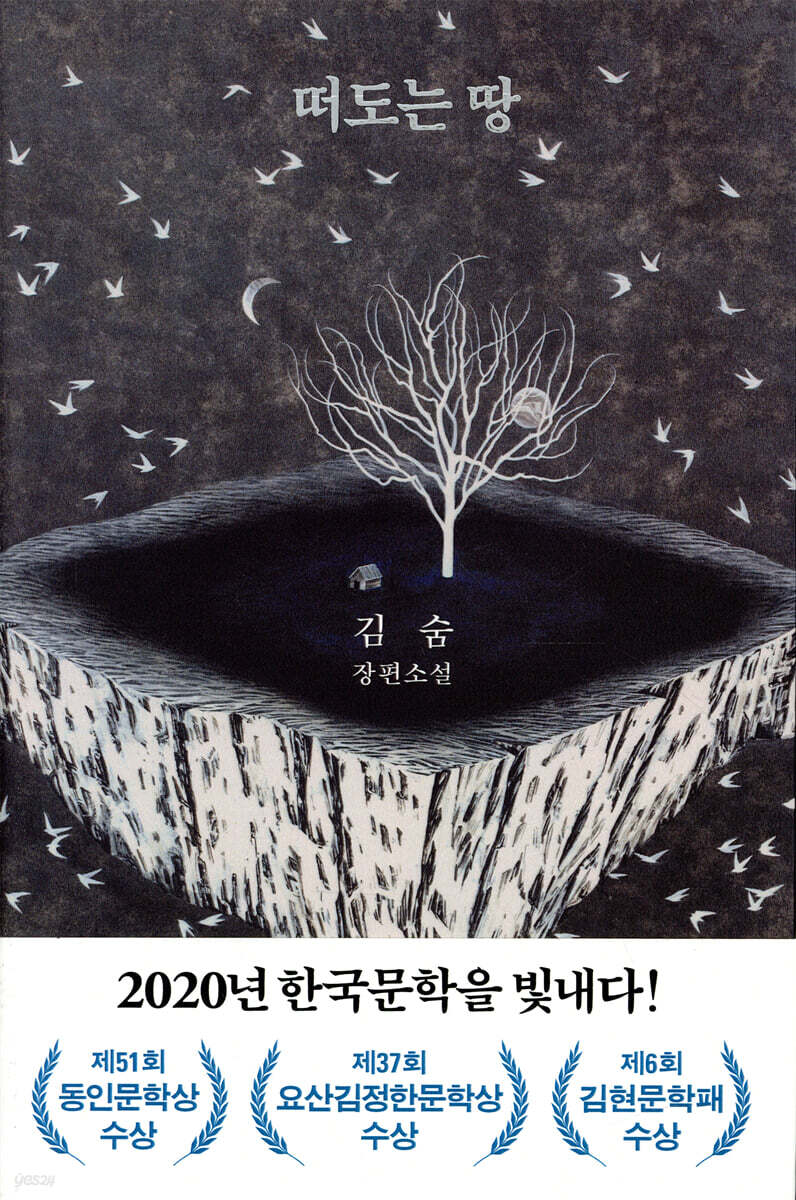
Wandering Land
 |
Description
Book Introduction
- A word from MD
-
The sublimity of humanity buried in a tragic historyIn the Soviet Far East, 1937, people displaced by the relocation order board a train.
170,000 Koryo people lost their homes in a vehicle that could be called a freight train carrying livestock.
Author Kim Soom, who has continued to work to restore the history of human dignity through literature, tells the story of 150 years of the life of a Goryeo person.
May 8, 2020. Novel/Poetry PD Park Hyung-wook
The remarkable power to restore the history of human dignity through literature
Winner of the Contemporary Literature Award, Daesan Literature Award, and Yi Sang Literature Award
Kim Soom's new novel, "The Floating Land," has been published.
The full-length novel 『Floating Land』 by author Kim Soom, winner of major domestic literary awards including the Hyundai Literature Award, Daesan Literature Award, and Yi Sang Literature Award, has been published.
Kim Soom, who celebrated her 23rd anniversary this year, has consistently published works on the origins and dignity of human existence, receiving rave reviews from both the literary community and readers.
There can be no disagreement that he is breathing new life into the Korean literary world by restoring the history of human dignity through literature.
This new work is particularly noteworthy because it encapsulates 150 years of Koryo people's history.
"The Floating Land" is based on the incident in 1937 when 170,000 Koryo-saram living in the Soviet Far East were forcibly relocated to Central Asia by freight train.
This novel, which expands the narrative of diasporic fate through the voices of the people on the train, especially the women, set in the harsh space of a freight car, vividly and delicately depicts the tragic lives of Koryo people who have walked through times filled with sorrow and longing, and their longing for 'rooting' for a long time.
This work took a total of four years from conception to completion, and was revised over a period of two years and six months from a novel serialized in the bimonthly literary magazine 『Axt』.
Winner of the Contemporary Literature Award, Daesan Literature Award, and Yi Sang Literature Award
Kim Soom's new novel, "The Floating Land," has been published.
The full-length novel 『Floating Land』 by author Kim Soom, winner of major domestic literary awards including the Hyundai Literature Award, Daesan Literature Award, and Yi Sang Literature Award, has been published.
Kim Soom, who celebrated her 23rd anniversary this year, has consistently published works on the origins and dignity of human existence, receiving rave reviews from both the literary community and readers.
There can be no disagreement that he is breathing new life into the Korean literary world by restoring the history of human dignity through literature.
This new work is particularly noteworthy because it encapsulates 150 years of Koryo people's history.
"The Floating Land" is based on the incident in 1937 when 170,000 Koryo-saram living in the Soviet Far East were forcibly relocated to Central Asia by freight train.
This novel, which expands the narrative of diasporic fate through the voices of the people on the train, especially the women, set in the harsh space of a freight car, vividly and delicately depicts the tragic lives of Koryo people who have walked through times filled with sorrow and longing, and their longing for 'rooting' for a long time.
This work took a total of four years from conception to completion, and was revised over a period of two years and six months from a novel serialized in the bimonthly literary magazine 『Axt』.
- You can preview some of the book's contents.
Preview
Detailed image
Into the book
Geumsil, who spread her tingling hands like wings and hugged her swollen belly, had a feeling that she would give birth to a baby on the ground where the train, which was running without any direction, would finally stop.
She vaguely thinks the land will be cold and barren.
--- p.13
A flame blooms from the wick.
The flames form a circle of pumpkin-colored light, shaking off the darkness from people's faces.
--- p.38
On our day off from the gold mine, we went for a picnic in the birch forest, carrying sausages and bread wrapped in cloths.
Bees, butterflies, graves, wild strawberries, mushrooms, purple flowers, sunshine… I thought days like that would last forever.
Is that what they call a bolt from the blue?
--- p.107
The bird will wake up and sing again, and then people's faces will be filled with a clear, cold sadness like snowflakes, and their fierce hearts will become gentle...
--- p.112
Geumsil rubs her hands together, as if the texture and warmth of the soil she touched in her dream still remains.
It was a dream of covering my father's feet with dirt.
From each of the blunt toes, which were like taro, three or four thin, faint roots grew.
She vaguely thinks the land will be cold and barren.
--- p.13
A flame blooms from the wick.
The flames form a circle of pumpkin-colored light, shaking off the darkness from people's faces.
--- p.38
On our day off from the gold mine, we went for a picnic in the birch forest, carrying sausages and bread wrapped in cloths.
Bees, butterflies, graves, wild strawberries, mushrooms, purple flowers, sunshine… I thought days like that would last forever.
Is that what they call a bolt from the blue?
--- p.107
The bird will wake up and sing again, and then people's faces will be filled with a clear, cold sadness like snowflakes, and their fierce hearts will become gentle...
--- p.112
Geumsil rubs her hands together, as if the texture and warmth of the soil she touched in her dream still remains.
It was a dream of covering my father's feet with dirt.
From each of the blunt toes, which were like taro, three or four thin, faint roots grew.
--- p.165
Publisher's Review
The remarkable power to restore the history of human dignity through literature
Winner of the Contemporary Literature Award, Daesan Literature Award, and Yi Sang Literature Award
Kim Soom's new novel, "The Floating Land," has been published.
"Kim Soom's unstoppable literary pace is astonishing." - Jeon Seong-tae (novelist)
Kim Soom, a writer who leaves a mark on the hearts of readers.
The power of the story and the density of the narrative created by his persistence and meticulousness resonate deeply with readers and critics.
He writes works that require a lot of energy and emotional energy, and he pours his heart into every single comma and ellipsis.
In the literature written with such dedication, a sense of sublimity remains.
He has been supporting the marginalized, the weak, and the uprooted, such as Japanese military comfort women, adopted children, and those forced to evict, and in this work, he sings of 'diaspora'.
After four years of writing, novelist Kim Soom publishes her full-length novel, “Floating Land,” after one year and nine months.
The full-length novel 『Floating Land』 by author Kim Soom, winner of major domestic literary awards including the Hyundai Literature Award, Daesan Literature Award, and Yi Sang Literature Award, has been published.
Kim Soom, who celebrated her 23rd anniversary this year, has consistently published works on the origins and dignity of human existence, receiving rave reviews from both the literary community and readers.
There can be no disagreement that he is breathing new life into the Korean literary world by restoring the history of human dignity through literature.
This new work is particularly noteworthy because it encapsulates 150 years of Koryo people's history.
"The Floating Land" is based on the incident in 1937 when 170,000 Koryo-saram living in the Soviet Far East were forcibly relocated to Central Asia by freight train.
This novel, which expands the narrative of diasporic fate through the voices of the people on the train, especially the women, set in the harsh space of a freight car, vividly and delicately depicts the tragic lives of Koryo people who have walked through times filled with sorrow and longing, and their longing for 'rooting' for a long time.
This work took a total of four years from conception to completion, and was revised over a period of two years and six months from a novel serialized in the bimonthly literary magazine 『Axt』.
People floating on a floating land, where longing is their whole life
Their story, seeping into the cold, sharp darkness
Fall 1937.
Soviet police storm into Shinhanchon, where Geumsil lives, and go from house to house, ordering them to gather at Revolution Square in three days, taking only a week's worth of food and the clothes they will need for immediate wear.
People ask why the sudden announcement came out of the blue, but the police simply say, “You Koreans have been ordered to relocate.”
Geumsil waits for her husband, a peddler, to return home and says she will set off with him, but they urge her, saying that her husband will follow soon.
Eventually, she leaves a short letter to her husband and boards the train with the emergency food she has prepared and the seeds she will plant in the land she will arrive in.
“After receiving the notice to leave, I went to visit my father’s grave.
He fell down before him, plucked out the withered thistles, and blamed his father.
“Whether I live or die, I will live in my homeland. Why would I come to someone else’s land and cause my children to suffer the humiliation of being kicked out of their homes?” - From the text
People sit on the floor of the cavernous cargo hold, without proper toilets, comfortable places to lie down, or a clear view of the outside, and gather together as families, drawing invisible lines.
They laid planks across the walls on both sides to create a second floor and placed people there as well.
The train they rode was a freight train carrying livestock, not people.
There are a total of twenty-seven people in the same compartment as Geumsil.
Among them are elderly people with poor health, pregnant women with large bellies, curious children, and even newborn babies.
People living in dire straits are feeling hopeless, fearful and disillusioned.
There's not even a window to look outside, so you can't even tell where you are.
The man holding the grandfather clock continues to wind it at his wife's urging.
So that you can tell how many days have passed, and whether it is night or day.
Tough sausages, pickled pork, scorched rice, dried bread… … .
They just endure the dark and hopeless times, relying on each other and saving the little food they have.
Geumsil, who is seven months pregnant, has a feeling that she will give birth in an unfamiliar land.
From beyond the darkness, a boy's voice, as if suffering from a fever, is heard.
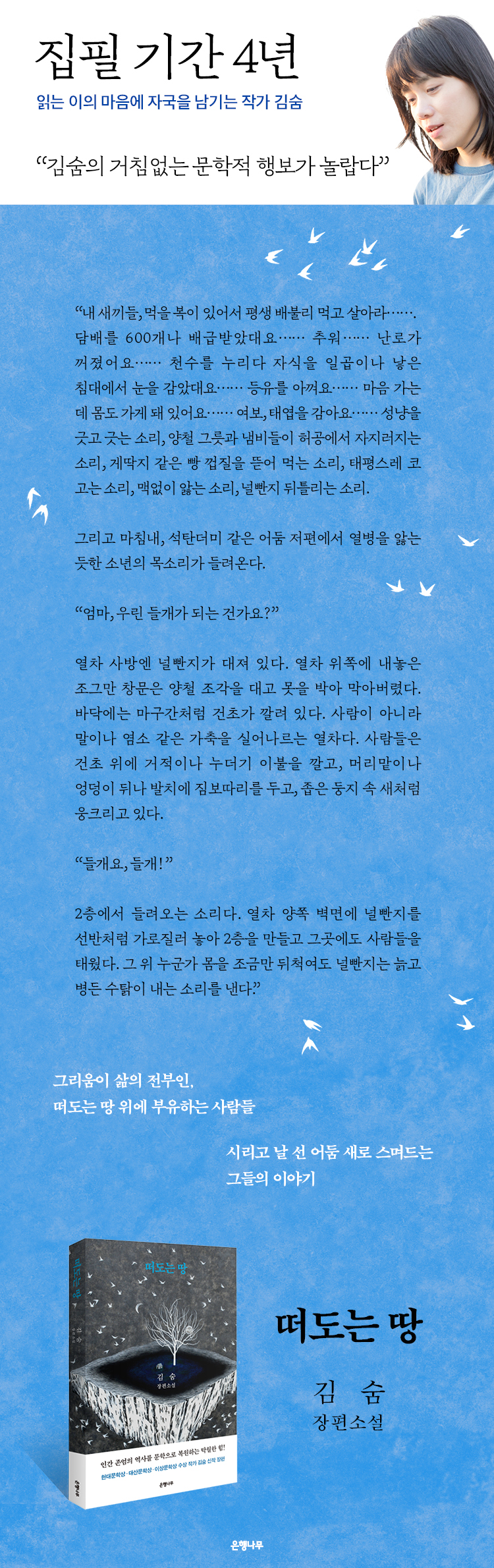
“Mom, are we becoming wild dogs?”_From the text
The stories of their difficult lives are told one by one through the voices of Geumsil, Tanya, Deulsuk, Inseol, and Ohsun.
A person who was suddenly fired from her job as a hospital nurse due to forced migration, a person who married a Russian man but was brutally divorced and ended up on a train with her child, a person who boarded a train holding a newborn baby… … .
Then someone opens his mouth.
We are now heading to 'Kazakhstan'.
A delicate gaze that depicts those wandering in search of their roots
Calling them out and breathing life into their stories
For them, who were born and raised in Russia but ultimately remain foreigners, the land has a meaning that goes beyond just 'land'.
The 'hope' that if we plant something, crops will grow, the wasteland will become fertile, and we will be able to settle down and take root again.
But the hope they have cultivated for generations is taken away overnight.
Professor Sang-won Yoon, director of the Koryo Research Center, said of “The Wandering Land,” “It is a memoir that condenses 150 years of Koryo history” and “ensures that the Koryo people, a diaspora people, will not forget the tragedy they experienced.”
Kim Soom meticulously examined and organized a vast amount of data to create a work that portrays the diaspora fate of Koryo people, and names the characters in the story, calling them out one by one.
In particular, the dense dialogue that fills the entire novel feels like a gentle force that drives the story forward, while also giving each character a flawless three-dimensionality.
People who desperately longed for land to put down roots, but were ultimately deprived of it and are left floating aimlessly on that land.
Through "The Wandering Land," Kim Soom has written about their firm steps and firm determination to overcome the darkness that has descended like darkness and move forward again toward the earth's verdant light.
Novelist Jeon Seong-tae commented on “The Wandering Land” by saying, “It never deprives the individual of his or her voice, but at times, it becomes a voice without an owner, singing resonantly about the fate of humanity and the suffering of women.”
Kim Soom has completed the story of “those who have lost their roots and are wandering” by calmly expressing the nobility of humanity buried in tragic history.
This novel holds great significance in that it reminds us of a past history that must never be repeated, and furthermore, it makes us reflect on the wandering lives of those around us, those on the border.
Winner of the Contemporary Literature Award, Daesan Literature Award, and Yi Sang Literature Award
Kim Soom's new novel, "The Floating Land," has been published.
"Kim Soom's unstoppable literary pace is astonishing." - Jeon Seong-tae (novelist)
Kim Soom, a writer who leaves a mark on the hearts of readers.
The power of the story and the density of the narrative created by his persistence and meticulousness resonate deeply with readers and critics.
He writes works that require a lot of energy and emotional energy, and he pours his heart into every single comma and ellipsis.
In the literature written with such dedication, a sense of sublimity remains.
He has been supporting the marginalized, the weak, and the uprooted, such as Japanese military comfort women, adopted children, and those forced to evict, and in this work, he sings of 'diaspora'.
After four years of writing, novelist Kim Soom publishes her full-length novel, “Floating Land,” after one year and nine months.
The full-length novel 『Floating Land』 by author Kim Soom, winner of major domestic literary awards including the Hyundai Literature Award, Daesan Literature Award, and Yi Sang Literature Award, has been published.
Kim Soom, who celebrated her 23rd anniversary this year, has consistently published works on the origins and dignity of human existence, receiving rave reviews from both the literary community and readers.
There can be no disagreement that he is breathing new life into the Korean literary world by restoring the history of human dignity through literature.
This new work is particularly noteworthy because it encapsulates 150 years of Koryo people's history.
"The Floating Land" is based on the incident in 1937 when 170,000 Koryo-saram living in the Soviet Far East were forcibly relocated to Central Asia by freight train.
This novel, which expands the narrative of diasporic fate through the voices of the people on the train, especially the women, set in the harsh space of a freight car, vividly and delicately depicts the tragic lives of Koryo people who have walked through times filled with sorrow and longing, and their longing for 'rooting' for a long time.
This work took a total of four years from conception to completion, and was revised over a period of two years and six months from a novel serialized in the bimonthly literary magazine 『Axt』.
People floating on a floating land, where longing is their whole life
Their story, seeping into the cold, sharp darkness
Fall 1937.
Soviet police storm into Shinhanchon, where Geumsil lives, and go from house to house, ordering them to gather at Revolution Square in three days, taking only a week's worth of food and the clothes they will need for immediate wear.
People ask why the sudden announcement came out of the blue, but the police simply say, “You Koreans have been ordered to relocate.”
Geumsil waits for her husband, a peddler, to return home and says she will set off with him, but they urge her, saying that her husband will follow soon.
Eventually, she leaves a short letter to her husband and boards the train with the emergency food she has prepared and the seeds she will plant in the land she will arrive in.
“After receiving the notice to leave, I went to visit my father’s grave.
He fell down before him, plucked out the withered thistles, and blamed his father.
“Whether I live or die, I will live in my homeland. Why would I come to someone else’s land and cause my children to suffer the humiliation of being kicked out of their homes?” - From the text
People sit on the floor of the cavernous cargo hold, without proper toilets, comfortable places to lie down, or a clear view of the outside, and gather together as families, drawing invisible lines.
They laid planks across the walls on both sides to create a second floor and placed people there as well.
The train they rode was a freight train carrying livestock, not people.
There are a total of twenty-seven people in the same compartment as Geumsil.
Among them are elderly people with poor health, pregnant women with large bellies, curious children, and even newborn babies.
People living in dire straits are feeling hopeless, fearful and disillusioned.
There's not even a window to look outside, so you can't even tell where you are.
The man holding the grandfather clock continues to wind it at his wife's urging.
So that you can tell how many days have passed, and whether it is night or day.
Tough sausages, pickled pork, scorched rice, dried bread… … .
They just endure the dark and hopeless times, relying on each other and saving the little food they have.
Geumsil, who is seven months pregnant, has a feeling that she will give birth in an unfamiliar land.
From beyond the darkness, a boy's voice, as if suffering from a fever, is heard.
“Mom, are we becoming wild dogs?”_From the text
The stories of their difficult lives are told one by one through the voices of Geumsil, Tanya, Deulsuk, Inseol, and Ohsun.
A person who was suddenly fired from her job as a hospital nurse due to forced migration, a person who married a Russian man but was brutally divorced and ended up on a train with her child, a person who boarded a train holding a newborn baby… … .
Then someone opens his mouth.
We are now heading to 'Kazakhstan'.
A delicate gaze that depicts those wandering in search of their roots
Calling them out and breathing life into their stories
For them, who were born and raised in Russia but ultimately remain foreigners, the land has a meaning that goes beyond just 'land'.
The 'hope' that if we plant something, crops will grow, the wasteland will become fertile, and we will be able to settle down and take root again.
But the hope they have cultivated for generations is taken away overnight.
Professor Sang-won Yoon, director of the Koryo Research Center, said of “The Wandering Land,” “It is a memoir that condenses 150 years of Koryo history” and “ensures that the Koryo people, a diaspora people, will not forget the tragedy they experienced.”
Kim Soom meticulously examined and organized a vast amount of data to create a work that portrays the diaspora fate of Koryo people, and names the characters in the story, calling them out one by one.
In particular, the dense dialogue that fills the entire novel feels like a gentle force that drives the story forward, while also giving each character a flawless three-dimensionality.
People who desperately longed for land to put down roots, but were ultimately deprived of it and are left floating aimlessly on that land.
Through "The Wandering Land," Kim Soom has written about their firm steps and firm determination to overcome the darkness that has descended like darkness and move forward again toward the earth's verdant light.
Novelist Jeon Seong-tae commented on “The Wandering Land” by saying, “It never deprives the individual of his or her voice, but at times, it becomes a voice without an owner, singing resonantly about the fate of humanity and the suffering of women.”
Kim Soom has completed the story of “those who have lost their roots and are wandering” by calmly expressing the nobility of humanity buried in tragic history.
This novel holds great significance in that it reminds us of a past history that must never be repeated, and furthermore, it makes us reflect on the wandering lives of those around us, those on the border.
GOODS SPECIFICS
- Publication date: April 27, 2020
- Page count, weight, size: 280 pages | 376g | 140*210*17mm
- ISBN13: 9791190492522
- ISBN10: 1190492520
You may also like
카테고리
korean


korean

![GQ KOREA Mark (Monthly): December [2025]](http://librairie.coreenne.fr/cdn/shop/files/8ef265dbbfbf186523ed75ba7319009d.jpg?v=1765340328&width=3840)


