

hotel window
 |
Description
Book Introduction
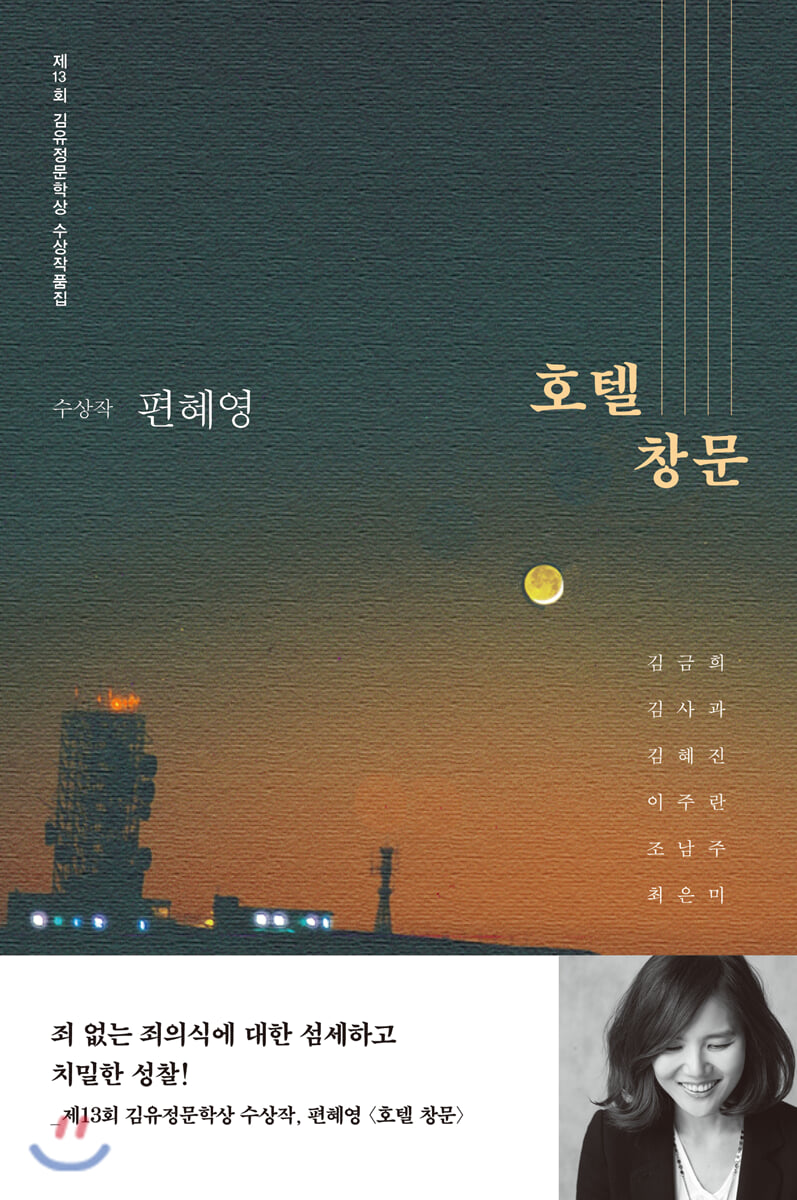
The best short story to wrap up 2019! Pyeon Hye-young's "Hotel Window," winner of the 13th Kim Yu-jeong Literary Award A delicate and meticulous reflection on the guilt of the innocent! Published the 2019 13th Kim Yu-jeong Literary Award winning collection, "Hotel Window" by Pyeon Hye-young. The 2019 13th Kim Yu-jeong Literary Award winning collection, featuring author Pyeon Hye-young's "Hotel Window," which received rave reviews from the judges, calling it "a work that demonstrates a meticulous reflection on guilt without guilt," has been published. Twenty short stories and mid-length novels made it to the final round after preliminary screening by young critics, and after intense discussions among the three final judges – novelists Oh Jeong-hee and Jeon Sang-guk and literary critic Kim Dong-sik – Pyeon Hye-young’s novel “Hotel Window” was selected as the winner of the 13th Kim Yu-jeong Literary Award in 2019. The six award-winning works, composed of works by six female writers (Kim Geum-hee, Kim Sa-gwa, Kim Hye-jin, Lee Ju-ran, Jo Nam-joo, and Choi Eun-mi), will provide an opportunity to examine important currents that permeate our society from a literary perspective. |
- You can preview some of the book's contents.
Preview
index
Judges' comments
Acceptance Speech
Award-winning work
Pyeon Hye-young's "Hotel Window"
Award Nominations
Kim Geum-hee's "The Birth of the Bizarre"
Kim Sa-gwa, "The Artist and His Bohemian Friend"
Kim Hye-jin, "Around Midnight"
Lee Ju-ran's "A Heart for One Person"
Jo Nam-joo, "When the Girl Grows Up"
Eunmi Choi, "The Sender"
Acceptance Speech
Award-winning work
Pyeon Hye-young's "Hotel Window"
Award Nominations
Kim Geum-hee's "The Birth of the Bizarre"
Kim Sa-gwa, "The Artist and His Bohemian Friend"
Kim Hye-jin, "Around Midnight"
Lee Ju-ran's "A Heart for One Person"
Jo Nam-joo, "When the Girl Grows Up"
Eunmi Choi, "The Sender"
Publisher's Review
A miniature of the world we live in,
A sketch of the intimate tragedy between guilt and innocence.
The award-winning work, Hye-Young Pyeon's "Hotel Window," is a work about guilt.
To be more precise, it is a work that depicts a meticulous reflection on the guilt of sinlessness.
A misfortune that is caught in the absurdity of fate, something that happened spontaneously, something that one cannot do anything about.
An incident that left only one person dead through no fault of anyone's.
Pyeon Hye-young, who introduces a person who has been left with a sense of guilt as a legacy of that misfortune, speaks about the framework of thought that our society uses to interpret the world and judge people within the grammar of this guilt that arose without a cause.
The guilt that is unconditionally imposed when the darkness and light of life are not yet distinct.
In the image of a human being who carries the burden of guilt for a sin that he did not know about on one side of his life, Pyeon Hye-young honestly and painfully recreates the guilt left behind by a fate that he was unaware of and could not do anything about, using the narrative of a novel.
You must know who you owe your life to.
The main character, Un-oh, who has to live in a big house due to financial difficulties, follows his cousin and a group of friends who treated him like family.
He circled around them desperately.
For fear of being bullied or abandoned.
My brothers always pointed to Un-oh and said:
“Should I just abandon this kid?”
That was that day.
One ordinary day with no symptoms.
A day when misfortune came as if it were destined to happen.
At first, I just dipped my feet in the river.
I slowly entered the water and pushed the water forward little by little.
Then suddenly my feet rose into the air.
The water pressed heavily against him, but he managed to push himself out and step onto the rock.
Un-oh, who had barely escaped the water after many twists and turns, was overcome with a mixture of fear and relief.
He just fell into the water and escaped, yet the world condemned him for saving his life.
When I was struggling in the river, I stepped on a rock to get out of the water, but it wasn't a rock that I stepped on, it was my cousin.
A lot has changed since then.
My cousin was not a good person.
“Do you want to die?” He raised his eyes, pursed his lips, and threw his fist into the air.
“I live off of you” and “If you mess with me, I’ll throw you in the water” were always on my lips.
That guy saved him and drowned instead.
Growing up, his grandmother reminded him of his sins whenever she had the chance.
I watered my guilt and let it grow.
“You are so blessed.” “You should know who you owe your life to.” He even called Un-oh by his brother’s name, pretending it was a mistake.
The fact that his brother, who he thought would kill him, saved him served as nourishment for his guilt.
He had to live diligently in place of his brother and shoulder all the responsibility for his brother's absence.
His life was non-existent.
Today is the nineteenth anniversary of my brother's death.
He is no different from a ceremonial attendant who must attend the ancestral rites and be placed on the ancestral table.
He has no intention of going to the memorial service today.
While wandering around the neighborhood I call home, I happen to meet my brother's friend.
Someone who shared bad memories.
One of my brother's group of friends.
But now, a lot of time has passed, and I'm envious of people who don't have any guilt over their brother's death.
From him we hear the story of the fire at the water pipe insulation factory.
The official cause of the fire was ruled as spontaneous combustion, but my brother's friend was fired from his job at the factory.
He confesses that he does not know whether it was spontaneous combustion, a fire caused by his own mistake, or arson due to resentment toward the president.
At that moment, a fire breaks out at a hotel near the local market.
As he watches the hotel engulfed in flames, Un-oh realizes that his own life is no different, consumed by the guilt of his brother's death.
Six award-winning works, highlighting important literary trends that permeate our society today.
The six award-nominated works included here also confront reality head-on and overcome it through literature.
Kim Geum-hee's "Birth of the Bizarre," which delicately depicts our twisted hearts that want to comfort and criticize the irrational choices made in love at the same time; Kim Sa-gwa's "The Artist and His Bohemian Friend," which strangely twists the romantic subject of artists and bohemians within the capitalist present's time and space; and Kim Hye-jin's "Around Midnight," which keenly captures the rough texture of life that arises within the mechanism of "recognition" experienced by a queer couple, were nominated.
Meanwhile, Lee Ju-ran's "A Heart for One Person" questions how life after tragedy is possible and illuminates an alternative community comprised of a grandmother, an aunt, and a child.
Jo Nam-joo's "When a Girl Grows Up" explores the multi-layered concerns surrounding sexual harassment on campus, exploring the possibility of understanding and female solidarity that flows from grandmothers' generation to mothers' generation and then to children's generation. Choi Eun-mi's "The Sender" explores the queer emotional bond between two married women, allowing us to rediscover "mothers," who have been considered asexual beings, and is also a notable work that expands and intersects generations and deals with literary moments.
Judges' comments
The award-winning work, "Hotel Window," is a work that raises the topic of guilt, or more precisely, a work that shows a meticulous reflection on guilt without guilt.
The relationship between the older brother and the main character, Un-oh, who appears in the novel, is a microcosm of the world we live in.
My brother committed many sins, but he lived without guilt and died without sin.
On the other hand, in the case of Un-oh, the guilt was given first in a state where the guilt could not be confirmed.
Regardless of whether or not living in a big house was a sin, Un-oh was forced to feel guilty.
If there is sin, it must be found, and if there is no sin, it must be created. This was Un-oh's life.
Through the hierarchical enforcement and acceptance of guilt, Hyung and Un-o maintained their social relationship as kin.
"Hotel Window" shows us that the process of defining things as sins that cannot be determined as sins, imposing excessive guilt on others for that purpose, and creating a guilt-free existence may be principles that are secretly operating in the society we live in.
If we reach this point, perhaps we can explain to some extent why our eyes lingered on the novel “Hotel Window.”
We extend our thanks and congratulations to the author for his sensitive reflection on guilt without sin.
― Oh Jeong-hee (novelist), Jeon Sang-guk (novelist), Kim Dong-sik (literary critic)
A sketch of the intimate tragedy between guilt and innocence.
The award-winning work, Hye-Young Pyeon's "Hotel Window," is a work about guilt.
To be more precise, it is a work that depicts a meticulous reflection on the guilt of sinlessness.
A misfortune that is caught in the absurdity of fate, something that happened spontaneously, something that one cannot do anything about.
An incident that left only one person dead through no fault of anyone's.
Pyeon Hye-young, who introduces a person who has been left with a sense of guilt as a legacy of that misfortune, speaks about the framework of thought that our society uses to interpret the world and judge people within the grammar of this guilt that arose without a cause.
The guilt that is unconditionally imposed when the darkness and light of life are not yet distinct.
In the image of a human being who carries the burden of guilt for a sin that he did not know about on one side of his life, Pyeon Hye-young honestly and painfully recreates the guilt left behind by a fate that he was unaware of and could not do anything about, using the narrative of a novel.
You must know who you owe your life to.
The main character, Un-oh, who has to live in a big house due to financial difficulties, follows his cousin and a group of friends who treated him like family.
He circled around them desperately.
For fear of being bullied or abandoned.
My brothers always pointed to Un-oh and said:
“Should I just abandon this kid?”
That was that day.
One ordinary day with no symptoms.
A day when misfortune came as if it were destined to happen.
At first, I just dipped my feet in the river.
I slowly entered the water and pushed the water forward little by little.
Then suddenly my feet rose into the air.
The water pressed heavily against him, but he managed to push himself out and step onto the rock.
Un-oh, who had barely escaped the water after many twists and turns, was overcome with a mixture of fear and relief.
He just fell into the water and escaped, yet the world condemned him for saving his life.
When I was struggling in the river, I stepped on a rock to get out of the water, but it wasn't a rock that I stepped on, it was my cousin.
A lot has changed since then.
My cousin was not a good person.
“Do you want to die?” He raised his eyes, pursed his lips, and threw his fist into the air.
“I live off of you” and “If you mess with me, I’ll throw you in the water” were always on my lips.
That guy saved him and drowned instead.
Growing up, his grandmother reminded him of his sins whenever she had the chance.
I watered my guilt and let it grow.
“You are so blessed.” “You should know who you owe your life to.” He even called Un-oh by his brother’s name, pretending it was a mistake.
The fact that his brother, who he thought would kill him, saved him served as nourishment for his guilt.
He had to live diligently in place of his brother and shoulder all the responsibility for his brother's absence.
His life was non-existent.
Today is the nineteenth anniversary of my brother's death.
He is no different from a ceremonial attendant who must attend the ancestral rites and be placed on the ancestral table.
He has no intention of going to the memorial service today.
While wandering around the neighborhood I call home, I happen to meet my brother's friend.
Someone who shared bad memories.
One of my brother's group of friends.
But now, a lot of time has passed, and I'm envious of people who don't have any guilt over their brother's death.
From him we hear the story of the fire at the water pipe insulation factory.
The official cause of the fire was ruled as spontaneous combustion, but my brother's friend was fired from his job at the factory.
He confesses that he does not know whether it was spontaneous combustion, a fire caused by his own mistake, or arson due to resentment toward the president.
At that moment, a fire breaks out at a hotel near the local market.
As he watches the hotel engulfed in flames, Un-oh realizes that his own life is no different, consumed by the guilt of his brother's death.
Six award-winning works, highlighting important literary trends that permeate our society today.
The six award-nominated works included here also confront reality head-on and overcome it through literature.
Kim Geum-hee's "Birth of the Bizarre," which delicately depicts our twisted hearts that want to comfort and criticize the irrational choices made in love at the same time; Kim Sa-gwa's "The Artist and His Bohemian Friend," which strangely twists the romantic subject of artists and bohemians within the capitalist present's time and space; and Kim Hye-jin's "Around Midnight," which keenly captures the rough texture of life that arises within the mechanism of "recognition" experienced by a queer couple, were nominated.
Meanwhile, Lee Ju-ran's "A Heart for One Person" questions how life after tragedy is possible and illuminates an alternative community comprised of a grandmother, an aunt, and a child.
Jo Nam-joo's "When a Girl Grows Up" explores the multi-layered concerns surrounding sexual harassment on campus, exploring the possibility of understanding and female solidarity that flows from grandmothers' generation to mothers' generation and then to children's generation. Choi Eun-mi's "The Sender" explores the queer emotional bond between two married women, allowing us to rediscover "mothers," who have been considered asexual beings, and is also a notable work that expands and intersects generations and deals with literary moments.
Judges' comments
The award-winning work, "Hotel Window," is a work that raises the topic of guilt, or more precisely, a work that shows a meticulous reflection on guilt without guilt.
The relationship between the older brother and the main character, Un-oh, who appears in the novel, is a microcosm of the world we live in.
My brother committed many sins, but he lived without guilt and died without sin.
On the other hand, in the case of Un-oh, the guilt was given first in a state where the guilt could not be confirmed.
Regardless of whether or not living in a big house was a sin, Un-oh was forced to feel guilty.
If there is sin, it must be found, and if there is no sin, it must be created. This was Un-oh's life.
Through the hierarchical enforcement and acceptance of guilt, Hyung and Un-o maintained their social relationship as kin.
"Hotel Window" shows us that the process of defining things as sins that cannot be determined as sins, imposing excessive guilt on others for that purpose, and creating a guilt-free existence may be principles that are secretly operating in the society we live in.
If we reach this point, perhaps we can explain to some extent why our eyes lingered on the novel “Hotel Window.”
We extend our thanks and congratulations to the author for his sensitive reflection on guilt without sin.
― Oh Jeong-hee (novelist), Jeon Sang-guk (novelist), Kim Dong-sik (literary critic)
GOODS SPECIFICS
- Date of publication: November 8, 2019
- Page count, weight, size: 222 pages | 318g | 140*215*14mm
- ISBN13: 9791189982614
- ISBN10: 1189982617
You may also like
카테고리
korean


korean

![GQ KOREA Mark (Monthly): December [2025]](http://librairie.coreenne.fr/cdn/shop/files/8ef265dbbfbf186523ed75ba7319009d.jpg?v=1765340328&width=3840)


