

Now to my sister
 |
Description
Book Introduction
"I will go see you someday. “I will definitely come to you.” A story that can only be told now, a story that cannot and must not end Choi Jin-young, the winner of the Shin Dong-yup Literary Award and the Hankyoreh Literary Award, and who has established a prominent position in Korean literature with his delicate sensibility and unstoppable narrative, has published his new novel, "Now, to My Sister," as the first work in Changbi's new light novel series, "Novel Q." This novel, which unfolds in the form of the protagonist's diary, 'Ijeya', confronts head-on the intimate consciousness and reality of survivors of sexual violence. When serialized in the online edition of 『Literature 3』, this work received praise from readers, such as, "I hope this novel will change the air surrounding us, even if only a little," and "I am amazed by the horrific and sad story that revives the language centered on the perpetrator." This work has been completely rewritten. Rather than turning a blind eye to the darker aspects of society, Choi Jin-young's shining courage, which he expresses from their perspective by "approaching without hesitation those who are frozen in fear of life" (Hwang Hyeon-jin's introduction), illuminates the hearts of readers like a lighthouse throughout the novel. |
- You can preview some of the book's contents.
Preview
index
Part 1 / Part 2 / Part 3 / Preface_Hwang Hyeon-jin / Author's Note
Detailed image
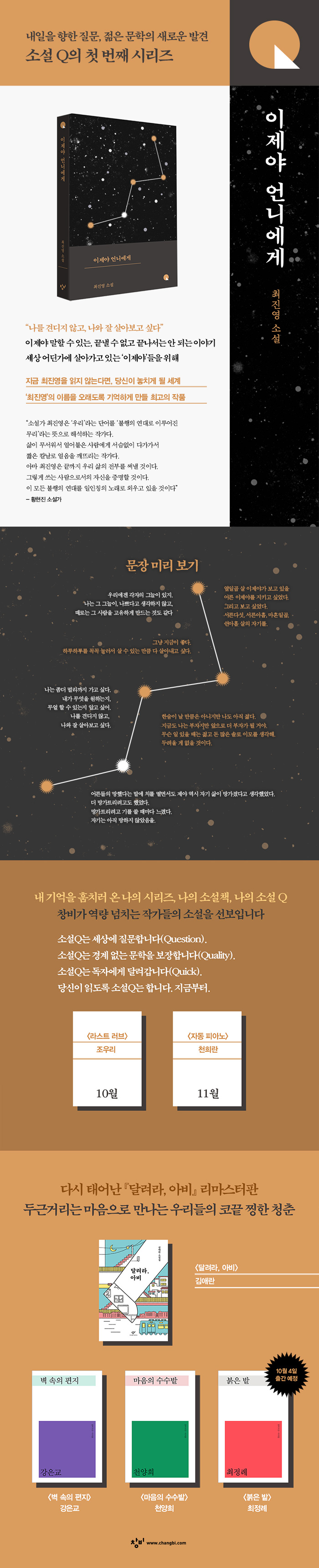
Into the book
Monday, July 14, 2008
Terrible
I want to tear today apart.
--- p.8
From the age of eleven, Jeya wrote a diary twice a day.
One is a diary that is checked by the teacher, and the other is a diary that is kept only for oneself.
(…) I wrote in my diary even on the day I burned it.
"Why use it if you're going to burn it anyway?" Jenny asked.
Why live if you're going to die anyway?
Jaya answered.
Jaya needed that kind of time.
A time to ask about the day, a time to sit still and capture the daily life in words.
--- p.9
On the way home in the car, Jaya asked.
Is my aunt being nice to me because of what I've been through? Not because she's nice, but because she cares and worries about me.
I hope you don't try too hard.
You have to try.
My aunt said firmly.
People have to work hard.
This is especially true for precious beings.
Effort is hard work.
Jaya muttered.
It's about putting your heart into it.
It's not something you do by force.
A beggar who strives for good things.
--- p.161
I didn't know Jaya for a long time.
What you want.
I've imagined dying or being killed a lot, but I never really wanted to.
I also hated violence.
July 14, 2008 was enough.
Even though I was trembling at the adults' words that my life was ruined, I also thought that my life was ruined.
I tried to ruin it even more.
I felt it every time I tried to ruin it.
That I am not ruined yet.
--- p.198
There is a piece of cake in front of you now.
A cake that wasn't a piece from the beginning, but was pieced together and became whole again.
On New Year's Eve, candles were placed on the cake and lit.
Somewhere, Jenny and Seungho, and maybe even their aunt, are singing.
You'll be clapping and calling out to the dung beetle.
(…) midnight is announced on the radio.
The paper will be ringing.
A good time to make a wish.
I will go see you someday.
I will definitely come to you.
Terrible
I want to tear today apart.
--- p.8
From the age of eleven, Jeya wrote a diary twice a day.
One is a diary that is checked by the teacher, and the other is a diary that is kept only for oneself.
(…) I wrote in my diary even on the day I burned it.
"Why use it if you're going to burn it anyway?" Jenny asked.
Why live if you're going to die anyway?
Jaya answered.
Jaya needed that kind of time.
A time to ask about the day, a time to sit still and capture the daily life in words.
--- p.9
On the way home in the car, Jaya asked.
Is my aunt being nice to me because of what I've been through? Not because she's nice, but because she cares and worries about me.
I hope you don't try too hard.
You have to try.
My aunt said firmly.
People have to work hard.
This is especially true for precious beings.
Effort is hard work.
Jaya muttered.
It's about putting your heart into it.
It's not something you do by force.
A beggar who strives for good things.
--- p.161
I didn't know Jaya for a long time.
What you want.
I've imagined dying or being killed a lot, but I never really wanted to.
I also hated violence.
July 14, 2008 was enough.
Even though I was trembling at the adults' words that my life was ruined, I also thought that my life was ruined.
I tried to ruin it even more.
I felt it every time I tried to ruin it.
That I am not ruined yet.
--- p.198
There is a piece of cake in front of you now.
A cake that wasn't a piece from the beginning, but was pieced together and became whole again.
On New Year's Eve, candles were placed on the cake and lit.
Somewhere, Jenny and Seungho, and maybe even their aunt, are singing.
You'll be clapping and calling out to the dung beetle.
(…) midnight is announced on the radio.
The paper will be ringing.
A good time to make a wish.
I will go see you someday.
I will definitely come to you.
--- p.234
Publisher's Review
“I have no regrets.
“That I exist as myself.”
For our 'Ijeyas' who are still enduring in the shadow of violence
On a rainy day, July 14, 2008, after school, Jeya listens to music with her earphones and heads to an abandoned container, her hideout, with her younger sister, Jenny, and her cousin, Seungho.
While waiting for Jenny and Seungho to arrive, Jeya unexpectedly runs into her uncle, who lives in the same neighborhood and has always been kind and affectionate to her. Then, her uncle suddenly changes and sexually assaults Jeya.
From that day on, Jeya, worried that her uncle might do the same thing to her or Jenny again, calmly goes to the gynecologist and the police station alone, but due to the passive attitude of her parents and other relatives and the cynical behavior of her friends who treat her as if she has an infectious disease, she ends up living with her aunt who lives far away, as if abandoned.
『Now, to Sister』, which alternates between a diary written by Jeya herself and a third-person observer, divides Jeya's time into three parts.
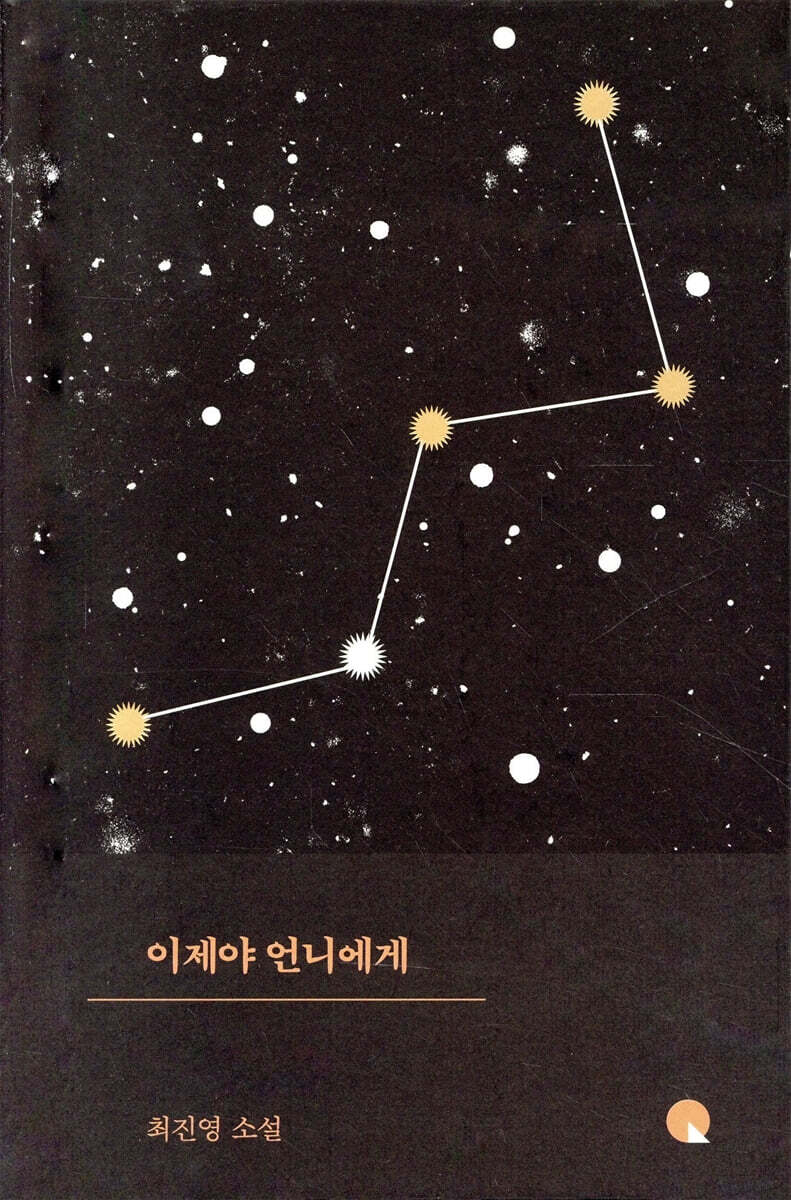
Part 1 shows the quiet and ordinary childhood of Jeya, who would climb up to the rooftop with Jenny and Seungho to look at the Cassiopeia constellation in the night sky and sing 'Dung Beetle'. Part 2 shows Jeya living with her aunt who tries to embrace her somehow, bumping into things and falling down. Part 3 shows Jeya, who passed the qualification exam and entered college, but continues to suffer from pain from the past and finds her present amidst a fear that becomes more intense the more she thinks about the future.
Choi Jin-young's method of having the reader witness Jeya's life from Jeya's perspective shares the character's detailed inner self with the reader, as if showing a diary, and further expands Jeya's story into everyone's story, forcing us to confront the everyday violence we inflict on others or overlook without realizing it.
While writing the novel, Choi Jin-young, who discovered anew how thick the perpetrator's language and behavior were accumulated inside her as a woman, imagined Je-ya's feelings with deep reflection and sadness, said in her postscript, "I know that there are many people who endure alone in indifference and suspicion, so I hesitated as much when writing scenes that might comfort Je-ya as when describing Je-ya's pain" ('Author's Note'), and conveys a gentle but firm sincerity with deep sentences throughout the novel.
“Don’t put up with me, I want to live well with you.”
The hot emergence of "female childhood narratives" that capture the school days of the 1980s and 1990s.
Keywords such as ‘feminism,’ ‘women,’ and ‘queer’ have already become core topics.
If literature, beyond a simple, temporary curiosity about the 'new' and 'unfamiliar,' performs the function of modeling the times and life, it can be seen as evidence that even literature is now beginning to pay attention to those entities that have been hidden for so long.
Jinyoung Choi's "Now, to My Sister" brings the universal narrative of a woman's childhood, which was not easily seen during her school days in the 1980s and 1990s, into the literary world the raw language of a female survivor of violence by men.
This achievement goes beyond literature's confession of past barbarism; it also bears witness to the inner anxiety and anger that still exist among women in their 20s and 30s today.
Meanwhile, this book includes a beautiful travel essay by novelist Hwang Hyeon-jin, who experienced and observed Choi Jin-young while traveling with him in Mongolia last summer.
Hwang Hyun-jin said, “Is there anything more foolish than thinking of the author while reading a novel?
But in the face of a reading that could be the opposite, I don't know what to do," he said, and while walking through the Mongolian desert, he reflected on Choi Jin-young, who must have felt the same way as Je-ya, while conceiving the story of New Year's Eve.
Author Choi Jin-young has persistently invited marginalized people into his novels by featuring characters who live on the outskirts of society and relationships in each of his works.
Some people will feel uncomfortable while reading this novel, some will sympathize with it sadly, and some will be afraid.
While vividly conveying the language of a woman and a victim survivor who must continue to live, Choi Jin-young's tenacity in bearing the pain as her own is the most courageous question and comfort that writers and literature pose to us living today.
“That I exist as myself.”
For our 'Ijeyas' who are still enduring in the shadow of violence
On a rainy day, July 14, 2008, after school, Jeya listens to music with her earphones and heads to an abandoned container, her hideout, with her younger sister, Jenny, and her cousin, Seungho.
While waiting for Jenny and Seungho to arrive, Jeya unexpectedly runs into her uncle, who lives in the same neighborhood and has always been kind and affectionate to her. Then, her uncle suddenly changes and sexually assaults Jeya.
From that day on, Jeya, worried that her uncle might do the same thing to her or Jenny again, calmly goes to the gynecologist and the police station alone, but due to the passive attitude of her parents and other relatives and the cynical behavior of her friends who treat her as if she has an infectious disease, she ends up living with her aunt who lives far away, as if abandoned.
『Now, to Sister』, which alternates between a diary written by Jeya herself and a third-person observer, divides Jeya's time into three parts.
Part 1 shows the quiet and ordinary childhood of Jeya, who would climb up to the rooftop with Jenny and Seungho to look at the Cassiopeia constellation in the night sky and sing 'Dung Beetle'. Part 2 shows Jeya living with her aunt who tries to embrace her somehow, bumping into things and falling down. Part 3 shows Jeya, who passed the qualification exam and entered college, but continues to suffer from pain from the past and finds her present amidst a fear that becomes more intense the more she thinks about the future.
Choi Jin-young's method of having the reader witness Jeya's life from Jeya's perspective shares the character's detailed inner self with the reader, as if showing a diary, and further expands Jeya's story into everyone's story, forcing us to confront the everyday violence we inflict on others or overlook without realizing it.
While writing the novel, Choi Jin-young, who discovered anew how thick the perpetrator's language and behavior were accumulated inside her as a woman, imagined Je-ya's feelings with deep reflection and sadness, said in her postscript, "I know that there are many people who endure alone in indifference and suspicion, so I hesitated as much when writing scenes that might comfort Je-ya as when describing Je-ya's pain" ('Author's Note'), and conveys a gentle but firm sincerity with deep sentences throughout the novel.
“Don’t put up with me, I want to live well with you.”
The hot emergence of "female childhood narratives" that capture the school days of the 1980s and 1990s.
Keywords such as ‘feminism,’ ‘women,’ and ‘queer’ have already become core topics.
If literature, beyond a simple, temporary curiosity about the 'new' and 'unfamiliar,' performs the function of modeling the times and life, it can be seen as evidence that even literature is now beginning to pay attention to those entities that have been hidden for so long.
Jinyoung Choi's "Now, to My Sister" brings the universal narrative of a woman's childhood, which was not easily seen during her school days in the 1980s and 1990s, into the literary world the raw language of a female survivor of violence by men.
This achievement goes beyond literature's confession of past barbarism; it also bears witness to the inner anxiety and anger that still exist among women in their 20s and 30s today.
Meanwhile, this book includes a beautiful travel essay by novelist Hwang Hyeon-jin, who experienced and observed Choi Jin-young while traveling with him in Mongolia last summer.
Hwang Hyun-jin said, “Is there anything more foolish than thinking of the author while reading a novel?
But in the face of a reading that could be the opposite, I don't know what to do," he said, and while walking through the Mongolian desert, he reflected on Choi Jin-young, who must have felt the same way as Je-ya, while conceiving the story of New Year's Eve.
Author Choi Jin-young has persistently invited marginalized people into his novels by featuring characters who live on the outskirts of society and relationships in each of his works.
Some people will feel uncomfortable while reading this novel, some will sympathize with it sadly, and some will be afraid.
While vividly conveying the language of a woman and a victim survivor who must continue to live, Choi Jin-young's tenacity in bearing the pain as her own is the most courageous question and comfort that writers and literature pose to us living today.
GOODS SPECIFICS
- Date of issue: September 20, 2019
- Format: Hardcover book binding method guide
- Page count, weight, size: 252 pages | 336g | 128*194*20mm
- ISBN13: 9788936438012
- ISBN10: 8936438018
You may also like
카테고리
korean


korean

![GQ KOREA Mark (Monthly): December [2025]](http://librairie.coreenne.fr/cdn/shop/files/8ef265dbbfbf186523ed75ba7319009d.jpg?v=1765340328&width=3840)


