

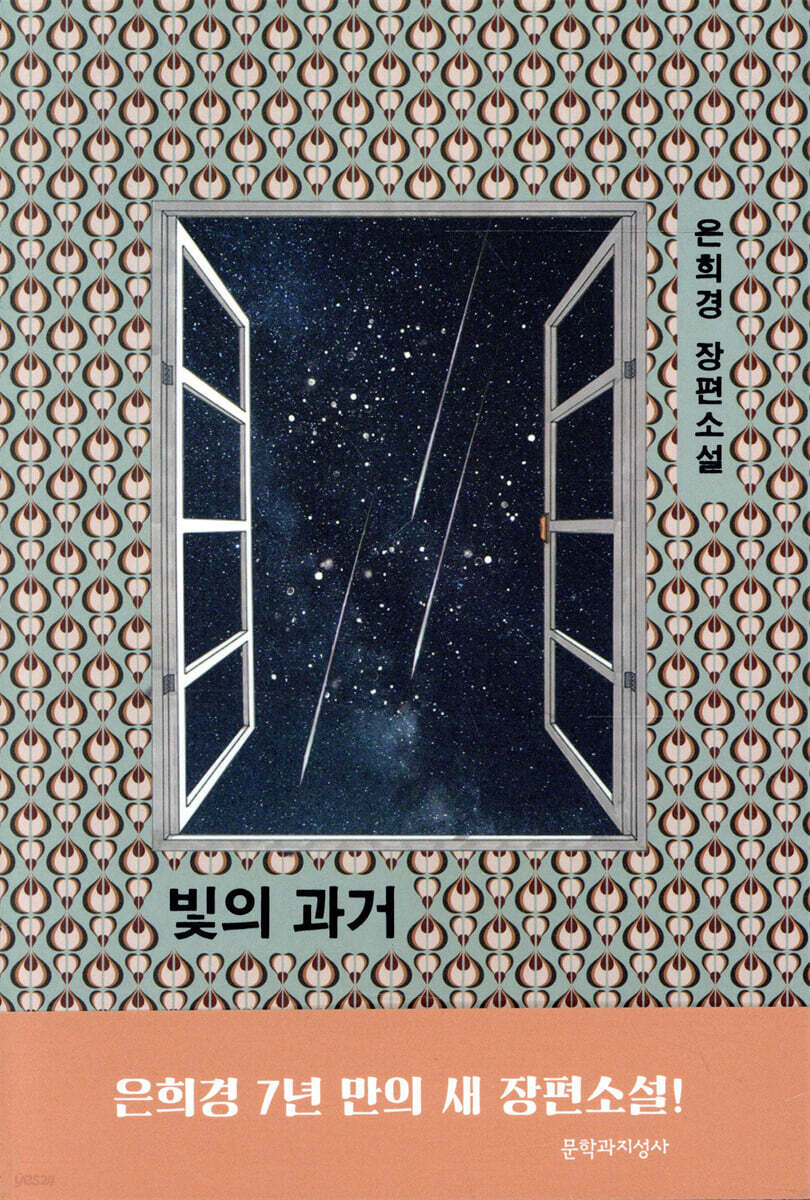
The Past of Light
 |
Description
Book Introduction
“No one can discard their past self. But don't you have the right to edit or abandon it?" Eun Hee-kyung, a shining proper noun in Korean literature, has published her new work, “The Past of Light.” This is a full-length novel that has been published for the first time in seven years since 『A Calm Life』(2012), and it took a long time to write and revise after deep reflection. In 2017, while reading a novel by an old friend who is a writer, I recall a time in a women's college dormitory in 1977. Although we shared the same time, the 'back then' we remember is so different. Eun Hee-kyung depicts the world of 'difference' and 'mixing' that women who have just become adults encounter for the first time in the unfamiliar space of a dormitory. It presents diverse and three-dimensional female characters through dorm roommates and describes in detail the culture and times of the 1970s. Above all, the intimate sentences of an individual who has lived his life using avoidance as a weapon, going back and forth between yesterday's memories and today, and facing his true self and calmly confessing them, reveal the universal concerns of a human being in life and make the reader look at himself. In this way, the story of ‘that time’ becomes the story of ‘today, me’ through the filter of ‘Eun Hee-kyung’. |
- You can preview some of the book's contents.
Preview
index
2017
1977―March, April
1977―May, June, July
2017
1977—September, October, November
1977~2017
1977―March, April
1977―May, June, July
2017
1977—September, October, November
1977~2017
Into the book
She had a habit of creating subtle power dynamics when dealing with people.
He constantly created a magnetic field of relationships that revolved around him, and justified it by alternating between feelings of superiority and victimhood.
There was a need for a witness.
Ultimately, it makes me orbit her like a satellite, reflecting her one-sided and capricious light source.
[…] The unexpected and unexpected situations she creates create small noises in my life, like speed bumps in a monotonous journey, and briefly change it.
Maybe that's why she's my oldest friend.
The recoil of her slowing down shook me, and each time I felt like I was witnessing the destruction I had been avoiding coming back to her.
I had simply lived my life as if I were solving a series of problem books that were constantly being published, but at some point, I saw in her a long alibi for my other life.
--- p.12~13
“The dormitory was a group of female college students in their early twenties who had left their hometown and parents to start life in Seoul.
They came from different places and with different conditions.
Now that I had to lead my own life, whether I was conscious of it or not, my existence was revealed in other forms.
In the same living space, the difference will be even more noticeable.
And that individual 'difference' inevitably leads to 'mixing,' and in that, a narrative of clumsiness and desire that could be called tragedy inevitably intervenes.”
--- p.27~28
Still, I was stuck in a gray zone of helplessness and defensiveness.
I was disappointed in myself, and as a result, I lost motivation and neglected things, and eventually I couldn't do what I needed to do properly, so I fell into a sense of helplessness, and that feeling of helplessness led to being chased and anxious, and so I lost confidence and ended up feeling lonely, and on top of that loneliness, my will to survive, my pride, started to stand out to others, and then I felt alienated right away, and that felt unfair, and all these emotions felt like a waste of time, so I fell into doubt and pessimism. I couldn't avoid going through that orbit.
It wasn't just the so-called wandering of youth.
For the past two months, I've been unable to open the door in front of me and have repeatedly fallen back into my past.
He was still a minor who submitted to the unjust rules of a world he did not like in order to escape from that world.
--- p.
86
Model students are aware of the situation.
Because you need to know the criteria of the person who gave the problem and the person who graded it, that is, where you should fit in.
Trying to guess the correct answer is a matter of following the power that asks the question and gives the score.
It is the model student's mistake to think that he has chosen the right path of his own free will while merely obeying the powers that be.
In that illusion, we are fitting ourselves into an increasingly rigid framework.
Fortunately, I wasn't really a model student.
The moment I left my parents and hometown, I thought I would say goodbye to false obedience.
--- p.116~117
She had a world of 'difference' and 'mixing' that was completely different from the way I had to experience it back then.
We had many walls back then.
The contrast between light and shadow on the wall was also distinct.
But like the stream that hits different rocks and bends at different points, everyone's time flows together, forming rapids.
To get somewhere.
At that time, we all vaguely believed that the times to come would be different from now.
--- p.
193
I didn't want to meet my hometown friends.
I hated both the things I always heard when I met someone, whether they had changed or not.
All the familiar sights I had known before seemed to be far away, at a certain distance.
No, I felt like I was pushed out of there or left out.
It was neither hometown nor non-hometown, neither home nor non-home.
[…]
On the bus ride back, I suddenly realized something.
The death of a first love requires no mourning period.
To me, that summer was like a tragic epilogue, where the main character died and the rest of the story became irrelevant.
No, a tragedy doesn't need an epilogue, regardless of the protagonist's death.
Forgetting is the only complete mourning.
With my summer of twenty.
--- p.233~234
Pessimism is the easiest choice.
Because it is a matter of accepting the world as it is going badly without resistance.
Because it consumes less energy, people with weaker body and mind are more likely to fall for it.
Just as physical movement requires defying gravity, optimistic and proactive thinking also requires strength.
When we say cheer up, we mean be optimistic.
In that sense, the difference between optimism and pessimism may be the difference between being able to exert one's strength easily or not.
The paradox is that pessimism demands more evidence of hope.
No one wants to live in darkness and helplessness.
It is the pessimists who desperately want it to break.
So, it takes a strong positivity and patience to convince even a pessimist like yourself, and you end up tormenting the only person who can give you that hope, your loved one.
--- p.320~321
I often wonder why I am so pessimistic.
If I avoid taking the lead in anything, I end up waiting for someone else to take charge.
But why do we distrust someone from the start or assume they won't be kind to us?
Could it be that the cowardice of accepting the forces that have distorted me up until now as unavoidable injustice rather than violence is manifesting as pessimism about the world?
Ironically, such passivity is precisely the attitude that seeks the help of optimism rather than pessimism.
--- p.
329
After all, we were all people looking in different directions at the same time, and the night of the meteor shower would not be the same scenery for us.
And as the book says, the truth of the past can move the present.
If my past self was not the person I knew myself to be, then my present self must be a different person.
He constantly created a magnetic field of relationships that revolved around him, and justified it by alternating between feelings of superiority and victimhood.
There was a need for a witness.
Ultimately, it makes me orbit her like a satellite, reflecting her one-sided and capricious light source.
[…] The unexpected and unexpected situations she creates create small noises in my life, like speed bumps in a monotonous journey, and briefly change it.
Maybe that's why she's my oldest friend.
The recoil of her slowing down shook me, and each time I felt like I was witnessing the destruction I had been avoiding coming back to her.
I had simply lived my life as if I were solving a series of problem books that were constantly being published, but at some point, I saw in her a long alibi for my other life.
--- p.12~13
“The dormitory was a group of female college students in their early twenties who had left their hometown and parents to start life in Seoul.
They came from different places and with different conditions.
Now that I had to lead my own life, whether I was conscious of it or not, my existence was revealed in other forms.
In the same living space, the difference will be even more noticeable.
And that individual 'difference' inevitably leads to 'mixing,' and in that, a narrative of clumsiness and desire that could be called tragedy inevitably intervenes.”
--- p.27~28
Still, I was stuck in a gray zone of helplessness and defensiveness.
I was disappointed in myself, and as a result, I lost motivation and neglected things, and eventually I couldn't do what I needed to do properly, so I fell into a sense of helplessness, and that feeling of helplessness led to being chased and anxious, and so I lost confidence and ended up feeling lonely, and on top of that loneliness, my will to survive, my pride, started to stand out to others, and then I felt alienated right away, and that felt unfair, and all these emotions felt like a waste of time, so I fell into doubt and pessimism. I couldn't avoid going through that orbit.
It wasn't just the so-called wandering of youth.
For the past two months, I've been unable to open the door in front of me and have repeatedly fallen back into my past.
He was still a minor who submitted to the unjust rules of a world he did not like in order to escape from that world.
--- p.
86
Model students are aware of the situation.
Because you need to know the criteria of the person who gave the problem and the person who graded it, that is, where you should fit in.
Trying to guess the correct answer is a matter of following the power that asks the question and gives the score.
It is the model student's mistake to think that he has chosen the right path of his own free will while merely obeying the powers that be.
In that illusion, we are fitting ourselves into an increasingly rigid framework.
Fortunately, I wasn't really a model student.
The moment I left my parents and hometown, I thought I would say goodbye to false obedience.
--- p.116~117
She had a world of 'difference' and 'mixing' that was completely different from the way I had to experience it back then.
We had many walls back then.
The contrast between light and shadow on the wall was also distinct.
But like the stream that hits different rocks and bends at different points, everyone's time flows together, forming rapids.
To get somewhere.
At that time, we all vaguely believed that the times to come would be different from now.
--- p.
193
I didn't want to meet my hometown friends.
I hated both the things I always heard when I met someone, whether they had changed or not.
All the familiar sights I had known before seemed to be far away, at a certain distance.
No, I felt like I was pushed out of there or left out.
It was neither hometown nor non-hometown, neither home nor non-home.
[…]
On the bus ride back, I suddenly realized something.
The death of a first love requires no mourning period.
To me, that summer was like a tragic epilogue, where the main character died and the rest of the story became irrelevant.
No, a tragedy doesn't need an epilogue, regardless of the protagonist's death.
Forgetting is the only complete mourning.
With my summer of twenty.
--- p.233~234
Pessimism is the easiest choice.
Because it is a matter of accepting the world as it is going badly without resistance.
Because it consumes less energy, people with weaker body and mind are more likely to fall for it.
Just as physical movement requires defying gravity, optimistic and proactive thinking also requires strength.
When we say cheer up, we mean be optimistic.
In that sense, the difference between optimism and pessimism may be the difference between being able to exert one's strength easily or not.
The paradox is that pessimism demands more evidence of hope.
No one wants to live in darkness and helplessness.
It is the pessimists who desperately want it to break.
So, it takes a strong positivity and patience to convince even a pessimist like yourself, and you end up tormenting the only person who can give you that hope, your loved one.
--- p.320~321
I often wonder why I am so pessimistic.
If I avoid taking the lead in anything, I end up waiting for someone else to take charge.
But why do we distrust someone from the start or assume they won't be kind to us?
Could it be that the cowardice of accepting the forces that have distorted me up until now as unavoidable injustice rather than violence is manifesting as pessimism about the world?
Ironically, such passivity is precisely the attitude that seeks the help of optimism rather than pessimism.
--- p.
329
After all, we were all people looking in different directions at the same time, and the night of the meteor shower would not be the same scenery for us.
And as the book says, the truth of the past can move the present.
If my past self was not the person I knew myself to be, then my present self must be a different person.
--- p.
335
335
Publisher's Review
Those women back then,
The story of 'me', both private and public
The story begins with a middle-aged woman, Kim Yu-kyung, reading her long-time friend Kim Hee-jin's novel, "For the Princesses Who No Longer Exist."
They are college classmates, but they have a strange relationship where they “can’t say they are close friends or like each other” and “we’re not that close, but we’re not that close either”, and somehow they ended up being the oldest of friends.
Reading about dormitory life in Kim Hee-jin's novel, which shares the same time and space but is depicted in a completely different way, Kim Yu-kyung recalls her own memories.
The most important thing in a dorm is your roommate.
Four people are randomly assigned to one room, but the influence they have on each other is absurdly large compared to the lightness of the word 'random'.
Kim Yu-kyung, a freshman in the Department of Korean Literature, has roommates in room 322: Choi Seong-ok, a junior in the Department of Chemistry, Yang Ae-ran, a sophomore in the Department of Education, and Oh Hyeon-su, a freshman in the Department of Clothing and Textiles.
He also often meets with the people in room 417 (Kwak Joo-ah, Kim Hee-jin, Lee Jae-sook), who are close friends of Choi Seong-ok and Song Seon-mi.
The story of 1977 focuses on major events such as the freshman orientation in March, the first meeting and festival in spring, and the open house event in fall.
As Kim Yu-kyung's narrative continues, the episodes of the seven women who are roommates in rooms 322 and 417 also unfold in a colorful manner.
They each “enter the door of adulthood” and “create their own lives amidst the tension, confusion, and fear of an unfamiliar world” (2016 author interview).
Kim Yu-kyung suppresses her desires because of her weakness of stuttering, and keeps her mouth shut when words and actions are needed.
By using avoidance as a means of defense, he constantly tries to position himself somewhere in the middle of the world.
Meanwhile, some people are true to their desires.
Oh Hyun-soo, who quietly develops his own tastes while enduring hassles without being swept up in the crowd; Kim Hee-jin, who always wants to be the main character by pulling others down; and Yang Ae-ran, who is similar to them but values satisfying her own desires above all else, not what others think.
There are people who have a big gap between their goals and their actual lives.
Like Choi Sung-ok, the gap is sometimes created by the man she chooses, and there are also cases like Kwak Joo-ah, who constantly tries to correct others to her liking, but ironically ends up tripping on the very point she had been pointing out.
They are “petty and naive” (Author’s Note), and they are both easygoing and delicate.
Kind yet mean, prickly yet weak.
Just like us today.
As many literary critics have noted, when Korean literature reveals humanity and its fundamental concerns through a certain ‘character,’ in many cases there is an implicit implication in parentheses that the ‘character’ is (male).
Women have often had to empathize with '(male) characters' in literature by crossing genders.
"The Past of Light," an "initiation story deeply rooted in women's experiences" (Shin Hyeong-cheol), vividly portrays the diverse aspects of women, narrowing the distance of empathy.
That is why “reading Eun Hee-kyung always means listening to the voice of modern Korean women.”
After reading this novel, written with “a voice that resembles mine” (Jeong Se-rang), I find myself asking about the well-being of those in the novel whose faces resemble mine.
“Where have all the female college students gone?” (Cha Kyung-hee, Goyo Seo-sa)
The light of memory has now arrived before my eyes
'It was a light that had passed through the unknown and now reached me.'
In 『The Past of Light』, the political and cultural aspects of the 1970s are clearly revealed.
At that time, students distributed leaflets against the dictatorship and wore black ribbons to protest the appointment of a puppet president.
It was common for students to be arrested and detained while participating in the student movement.
Kim Yu-kyung doesn't fight fiercely, but her way of life, which is to remain unassuming and unassuming in everything, and to take a step back, may also be in line with the times.
The main reason why Kim Yu-kyung began to have an attitude of being 'model' or 'ordinary' was her stuttering.
Judging from the fact that her stuttering trauma was strengthened after she was forced to shout commands during the military drill class in high school, it seems that Kim Yu-kyung's passive way of dealing with life, called "avoidance," is not solely due to her personal weakness.
“There is no escape from discipline and brainwashing.
Because it makes people feel helpless.
“If that’s the case, then I can’t change into the person I want to be, and I have to live by constantly being hurt and discouraged by the endlessly repeating trajectory of that frame, and continue to deceive myself?” (p.
245).
The tyranny of an era where orders could not be disobeyed were given and failure to follow them resulted in suffering disadvantages permeates the novel like the air, and is clearly revealed in the experience of Kim Yu-kyung, a provincial city native, who went to the express bus terminal to reserve a ticket home and came back empty-handed.
“A bamboo pole was quickly moved back and forth horizontally above the head, threatening to keep the head from rising.
If you straightened your back even a little, you would get hit on the head, regardless of whether you were an old person or a child.
“When they ordered us to change positions without any reason, we moved on our knees as if we were being given orders in the military” (pp.
243~44).
Meanwhile, the richly depicted cultural landscape is another pleasure to read this novel.
From the welcome ceremony featuring 'Matdongsan, Indian rice, Tina crackers, and persimmons' to the method of choosing a meeting partner by writing down the names of male and female protagonists from world literature such as 'Alyssa', 'Lotte', and 'Werther', the FM broadcast 'Between Night and Music' that was listened to on a cassette player, 'University Song Festival', 'Sing-Along Tea House', 'Music Appreciation Room', tea houses 'Rotary Tea House' and 'Gamu', and Western-style restaurants 'Cecil' and 'Eunpa Inn', Eun Hee-kyung's signature meticulous 'details', including representative proper nouns of the era, will give readers who experienced that era directly, as well as those who did not, a small and affectionate joy, as if watching the 'Reply' series.
It is thanks to the power of Eun Hee-kyung's writing that I can fully convey how desperately I needed to receive a call just for me from the 'precious phone' that was responsible for contacting over 200 dormitory students from morning to night in a time before cell phones.
The disk aboard the Voyager spacecraft, launched in 1977, contained “Earth’s self-introduction for any extraterrestrial life we might encounter” (p.
161) is included.
The album, which includes welcoming greetings in languages from around the world, popular songs of the time, poems by Baudelaire, and photographs of the Earth, is called 'Voices of the Earth.'
Like the 'Voice of the Earth' on board Voyager, which traveled the furthest distance from humanity, 'The Past of Light' could be called 'The Voice of Yesterday' written by Eun Hee-kyung, who asks about her well-being today while retracing her memories.
The story of 'me', both private and public
The story begins with a middle-aged woman, Kim Yu-kyung, reading her long-time friend Kim Hee-jin's novel, "For the Princesses Who No Longer Exist."
They are college classmates, but they have a strange relationship where they “can’t say they are close friends or like each other” and “we’re not that close, but we’re not that close either”, and somehow they ended up being the oldest of friends.
Reading about dormitory life in Kim Hee-jin's novel, which shares the same time and space but is depicted in a completely different way, Kim Yu-kyung recalls her own memories.
The most important thing in a dorm is your roommate.
Four people are randomly assigned to one room, but the influence they have on each other is absurdly large compared to the lightness of the word 'random'.
Kim Yu-kyung, a freshman in the Department of Korean Literature, has roommates in room 322: Choi Seong-ok, a junior in the Department of Chemistry, Yang Ae-ran, a sophomore in the Department of Education, and Oh Hyeon-su, a freshman in the Department of Clothing and Textiles.
He also often meets with the people in room 417 (Kwak Joo-ah, Kim Hee-jin, Lee Jae-sook), who are close friends of Choi Seong-ok and Song Seon-mi.
The story of 1977 focuses on major events such as the freshman orientation in March, the first meeting and festival in spring, and the open house event in fall.
As Kim Yu-kyung's narrative continues, the episodes of the seven women who are roommates in rooms 322 and 417 also unfold in a colorful manner.
They each “enter the door of adulthood” and “create their own lives amidst the tension, confusion, and fear of an unfamiliar world” (2016 author interview).
Kim Yu-kyung suppresses her desires because of her weakness of stuttering, and keeps her mouth shut when words and actions are needed.
By using avoidance as a means of defense, he constantly tries to position himself somewhere in the middle of the world.
Meanwhile, some people are true to their desires.
Oh Hyun-soo, who quietly develops his own tastes while enduring hassles without being swept up in the crowd; Kim Hee-jin, who always wants to be the main character by pulling others down; and Yang Ae-ran, who is similar to them but values satisfying her own desires above all else, not what others think.
There are people who have a big gap between their goals and their actual lives.
Like Choi Sung-ok, the gap is sometimes created by the man she chooses, and there are also cases like Kwak Joo-ah, who constantly tries to correct others to her liking, but ironically ends up tripping on the very point she had been pointing out.
They are “petty and naive” (Author’s Note), and they are both easygoing and delicate.
Kind yet mean, prickly yet weak.
Just like us today.
As many literary critics have noted, when Korean literature reveals humanity and its fundamental concerns through a certain ‘character,’ in many cases there is an implicit implication in parentheses that the ‘character’ is (male).
Women have often had to empathize with '(male) characters' in literature by crossing genders.
"The Past of Light," an "initiation story deeply rooted in women's experiences" (Shin Hyeong-cheol), vividly portrays the diverse aspects of women, narrowing the distance of empathy.
That is why “reading Eun Hee-kyung always means listening to the voice of modern Korean women.”
After reading this novel, written with “a voice that resembles mine” (Jeong Se-rang), I find myself asking about the well-being of those in the novel whose faces resemble mine.
“Where have all the female college students gone?” (Cha Kyung-hee, Goyo Seo-sa)
The light of memory has now arrived before my eyes
'It was a light that had passed through the unknown and now reached me.'
In 『The Past of Light』, the political and cultural aspects of the 1970s are clearly revealed.
At that time, students distributed leaflets against the dictatorship and wore black ribbons to protest the appointment of a puppet president.
It was common for students to be arrested and detained while participating in the student movement.
Kim Yu-kyung doesn't fight fiercely, but her way of life, which is to remain unassuming and unassuming in everything, and to take a step back, may also be in line with the times.
The main reason why Kim Yu-kyung began to have an attitude of being 'model' or 'ordinary' was her stuttering.
Judging from the fact that her stuttering trauma was strengthened after she was forced to shout commands during the military drill class in high school, it seems that Kim Yu-kyung's passive way of dealing with life, called "avoidance," is not solely due to her personal weakness.
“There is no escape from discipline and brainwashing.
Because it makes people feel helpless.
“If that’s the case, then I can’t change into the person I want to be, and I have to live by constantly being hurt and discouraged by the endlessly repeating trajectory of that frame, and continue to deceive myself?” (p.
245).
The tyranny of an era where orders could not be disobeyed were given and failure to follow them resulted in suffering disadvantages permeates the novel like the air, and is clearly revealed in the experience of Kim Yu-kyung, a provincial city native, who went to the express bus terminal to reserve a ticket home and came back empty-handed.
“A bamboo pole was quickly moved back and forth horizontally above the head, threatening to keep the head from rising.
If you straightened your back even a little, you would get hit on the head, regardless of whether you were an old person or a child.
“When they ordered us to change positions without any reason, we moved on our knees as if we were being given orders in the military” (pp.
243~44).
Meanwhile, the richly depicted cultural landscape is another pleasure to read this novel.
From the welcome ceremony featuring 'Matdongsan, Indian rice, Tina crackers, and persimmons' to the method of choosing a meeting partner by writing down the names of male and female protagonists from world literature such as 'Alyssa', 'Lotte', and 'Werther', the FM broadcast 'Between Night and Music' that was listened to on a cassette player, 'University Song Festival', 'Sing-Along Tea House', 'Music Appreciation Room', tea houses 'Rotary Tea House' and 'Gamu', and Western-style restaurants 'Cecil' and 'Eunpa Inn', Eun Hee-kyung's signature meticulous 'details', including representative proper nouns of the era, will give readers who experienced that era directly, as well as those who did not, a small and affectionate joy, as if watching the 'Reply' series.
It is thanks to the power of Eun Hee-kyung's writing that I can fully convey how desperately I needed to receive a call just for me from the 'precious phone' that was responsible for contacting over 200 dormitory students from morning to night in a time before cell phones.
The disk aboard the Voyager spacecraft, launched in 1977, contained “Earth’s self-introduction for any extraterrestrial life we might encounter” (p.
161) is included.
The album, which includes welcoming greetings in languages from around the world, popular songs of the time, poems by Baudelaire, and photographs of the Earth, is called 'Voices of the Earth.'
Like the 'Voice of the Earth' on board Voyager, which traveled the furthest distance from humanity, 'The Past of Light' could be called 'The Voice of Yesterday' written by Eun Hee-kyung, who asks about her well-being today while retracing her memories.
GOODS SPECIFICS
- Date of issue: August 30, 2019
- Page count, weight, size: 360 pages | 370g | 128*188*22mm
- ISBN13: 9788932035635
- ISBN10: 8932035636
You may also like
카테고리
korean


korean

![GQ KOREA Mark (Monthly): December [2025]](http://librairie.coreenne.fr/cdn/shop/files/8ef265dbbfbf186523ed75ba7319009d.jpg?v=1765340328&width=3840)


