

lemon
 |
Description
Book Introduction
Lemon, lemon, lemon, the revenge order has begun In 2002, my sister was murdered. Just as someone lost spring without knowing it, I lost my life without knowing it. Kwon Yeo-seon, who captivated countless readers by winning the 47th Dong-in Literary Award for her short story collection “Hello Drunkard” in 2016, has published a new full-length novel, “Lemon,” three years later. Kwon Yeo-seon, who has shown her unique tragic elegance by sharply depicting the absurdity of life with cool sentences, has now expanded her world of works yet again, fully displaying her genre-specific skills. Kwon Yeo-seon's recent transformation, which has firmly established her position as an outstanding achievement in Korean literature and earned her praise from fellow writers, is sure to provide readers with a completely new enjoyment of reading her novels. In the summer of 2002, amidst the excitement of the Korea-Japan World Cup, a tragedy known as the "Beautiful High School Girl Murder Case" occurred, and the lives of all those surrounding this case were shaken and lost. This work, which alternates between the voices of three women at the center of the story, tenaciously delves into the ripple effects of unmourned death and poses profound questions about the meaning of life. This work, which received overwhelming support and garnered a passionate response from readers at a pre-publication review event, will prove to be a new horizon for Kwon Yeo-seon's novels. |
- You can preview some of the book's contents.
Preview
index
Shorts, 2002 / Poetry, 2006 / Lemon, 2010 / String, 2010 / Knee, 2010 / God, 2015 / Breeding, 2017 / Declining Sun, 2019 / Author's Note
Into the book
Was there any meaning to every moment of his life?
No, I don't think so.
I don't think there was any.
I don't think there is any special meaning to any life.
In his life, in my sister's life, and in my life.
No matter how much you try to find it or try to create it, it doesn't exist.
Life begins and ends without a second thought.
--- p.12
Until June of my seventeenth year, I never dreamed that I would live this life.
I never wanted a life like this.
But if we live like this, what meaning does this life have?
However, I can't say that I never wanted this life, nor that I chose it.
--- p.35
It wasn't just Da-eon who lost something.
I also lost something.
Rather, I could have been the more lethal one.
While Da-eon was clearly aware of what he had lost, I lived without even knowing what I had lost.
(...) I asked myself.
I also want to go back to that time.
Back to the days when I was obsessed with Joyce and wrote a poem called "Betty Burne Selling Lemonade."
If you could, would you do that?
I couldn't answer.
--- p.67~68
Some lives are cruel for no reason, and we live in them like poor worms, unaware of the cruelty.
I thought maybe so, but the siblings' mother, who worked in a restaurant kitchen, was a dwarf.
It was small, as if he had been suppressing Seonwoo a little more harshly.
Seeing that mother, strangely enough, made it clear where I should go and what I should do next.
The direction in which I will live has also been decided.
--- p.145
I wonder.
Is there really no meaning in our lives?
No matter how much I try to find it, no matter how much I try to create it, is there really nothing that doesn't exist?
Is this a world where only Hanman is left?
Could it be that being alive, existing in a life where joy and fear intersect, peace and danger mingle, is in itself meaningful?
No, I don't think so.
I don't think there was any.
I don't think there is any special meaning to any life.
In his life, in my sister's life, and in my life.
No matter how much you try to find it or try to create it, it doesn't exist.
Life begins and ends without a second thought.
--- p.12
Until June of my seventeenth year, I never dreamed that I would live this life.
I never wanted a life like this.
But if we live like this, what meaning does this life have?
However, I can't say that I never wanted this life, nor that I chose it.
--- p.35
It wasn't just Da-eon who lost something.
I also lost something.
Rather, I could have been the more lethal one.
While Da-eon was clearly aware of what he had lost, I lived without even knowing what I had lost.
(...) I asked myself.
I also want to go back to that time.
Back to the days when I was obsessed with Joyce and wrote a poem called "Betty Burne Selling Lemonade."
If you could, would you do that?
I couldn't answer.
--- p.67~68
Some lives are cruel for no reason, and we live in them like poor worms, unaware of the cruelty.
I thought maybe so, but the siblings' mother, who worked in a restaurant kitchen, was a dwarf.
It was small, as if he had been suppressing Seonwoo a little more harshly.
Seeing that mother, strangely enough, made it clear where I should go and what I should do next.
The direction in which I will live has also been decided.
--- p.145
I wonder.
Is there really no meaning in our lives?
No matter how much I try to find it, no matter how much I try to create it, is there really nothing that doesn't exist?
Is this a world where only Hanman is left?
Could it be that being alive, existing in a life where joy and fear intersect, peace and danger mingle, is in itself meaningful?
--- p.198
Publisher's Review
A perfect blend of a solid narrative and a mysterious twist.
A new realm in Kwon Yeo-seon's novels
In the summer of 2002, nineteen-year-old Hae-eon was found dead in a park, and 17 years passed without the culprit being caught.
The novel begins with a scene where Da-eon imagines a detective interrogating Han Man-woo, who was a suspect in the case at the time.
There was one more suspect.
Shin Jeong-jun, the driver of the car Hae-eon was riding in when she was last seen.
But Shin Jeong-jun had a solid alibi.
Although the case remains unsolved, the lives of those involved in the tragedy are completely changed.
Kwon Yeo-seon's fourth full-length novel, Lemon, which begins with a murder case, is clearly different from the novels she has written so far.
This captivating mystery narrative displays a surprising power of attraction that instantly draws readers into the story, even providing a genre-specific thrill.
Da-eon, the younger brother of Hae-eon, the central character of this work, was “a child who smiled proudly like the bell of a bicycle rolling down a hill,” but after the incident, his face transforms into an expressionless one with “strange images mixed in a haphazard manner.”
And only after eight years have passed does he decide to go find Han Man-woo, the main suspect in the case.
In 2016, when this work was published, literary critic Jeong Hong-su commented, “It was so outstanding that I wondered if I had ever felt the same depth in another novel as the scene where Kim Da-eon enters Han Man-woo’s house,” and every scene that takes place in Han Man-woo’s house shows the message that this novel ultimately wants to convey in a sorrowful and weighty way.
This story, which begins with the murder of a high school girl, eventually leads to a question about the existence of God and the meaning of life and death, a flow that demonstrates the novelistic depth that only Kwon Yeo-seon can display.
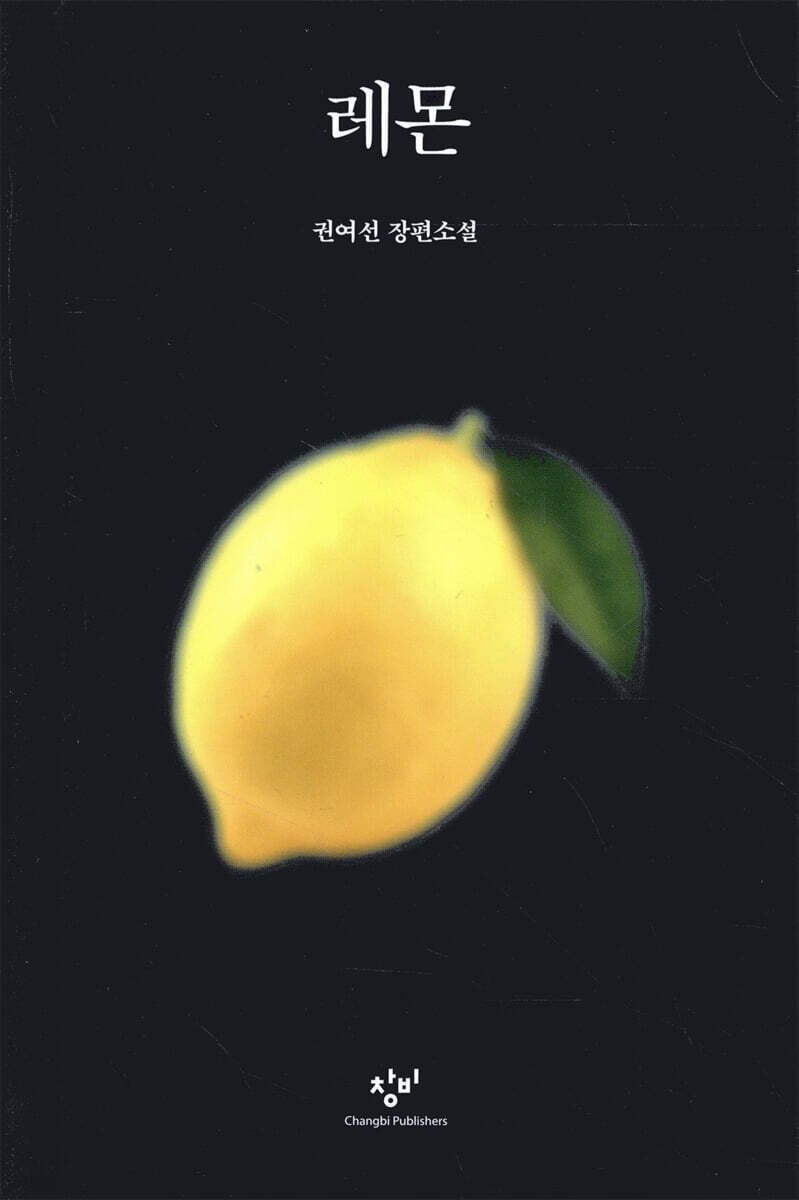
At the center of all these events is the “yellow” represented by “lemon.”
Lemon is a word that appears in a poem written by Sang-hee, a senior friend whom Da-eon loved more than her older sister, and it is also a medium that reminds Da-eon of the sweet yellow color of the warm fried eggs she used to eat together at Han Man-woo's house.
At the same time, that yellow color is also the color of the one-piece dress that my older sister Hae-eon was wearing right before she died.
The yellow color of lemons, which symbolizes the good old days that will never come again, makes Da-eon decide to take revenge as a twisted self-help measure, and this is where the twist of this novel is hidden.
Meanwhile, this novel, which is a revised and supplemented version of the novel "You Don't Know," which was published in 2016 to commemorate the 50th anniversary of the quarterly journal "Creation and Criticism," was performed as a play of the same name in 2017, and has already proven the appeal of the story itself.
“Couldn't those fleeting moments be the meaning of life?”
The novelistic depth that only Kwon Yeo-seon can achieve
Seventeen-year-old Da-eon, who had accepted her sister's death as the destruction of a "beautiful form," finally came to understand after seventeen years that "it was not the form of perfect beauty but the vivid content of life that was destroyed."
Although she thought her sister's death would make everyone else a mere remnant, Da-eon finds the hidden meaning and truth of life through mourning a death she cannot understand.
The one and only truth: that life goes on, that if you're alive, you'll eventually be able to laugh, eat, talk, and embrace the vibrant sensations of life, alive and breathing. Therefore, life itself is the only hope.
This weighty message, which only Kwon Yeo-seon can convey, goes beyond a simple story and will be placed 'in the midst of your painful, scary, and unbearable life' ('Author's Note').
Just like the author's earnest wish that "your life may be peaceful, less painful, and a little more bearable," the yellow light of lemon will brighten the readers' lives.
A new realm in Kwon Yeo-seon's novels
In the summer of 2002, nineteen-year-old Hae-eon was found dead in a park, and 17 years passed without the culprit being caught.
The novel begins with a scene where Da-eon imagines a detective interrogating Han Man-woo, who was a suspect in the case at the time.
There was one more suspect.
Shin Jeong-jun, the driver of the car Hae-eon was riding in when she was last seen.
But Shin Jeong-jun had a solid alibi.
Although the case remains unsolved, the lives of those involved in the tragedy are completely changed.
Kwon Yeo-seon's fourth full-length novel, Lemon, which begins with a murder case, is clearly different from the novels she has written so far.
This captivating mystery narrative displays a surprising power of attraction that instantly draws readers into the story, even providing a genre-specific thrill.
Da-eon, the younger brother of Hae-eon, the central character of this work, was “a child who smiled proudly like the bell of a bicycle rolling down a hill,” but after the incident, his face transforms into an expressionless one with “strange images mixed in a haphazard manner.”
And only after eight years have passed does he decide to go find Han Man-woo, the main suspect in the case.
In 2016, when this work was published, literary critic Jeong Hong-su commented, “It was so outstanding that I wondered if I had ever felt the same depth in another novel as the scene where Kim Da-eon enters Han Man-woo’s house,” and every scene that takes place in Han Man-woo’s house shows the message that this novel ultimately wants to convey in a sorrowful and weighty way.
This story, which begins with the murder of a high school girl, eventually leads to a question about the existence of God and the meaning of life and death, a flow that demonstrates the novelistic depth that only Kwon Yeo-seon can display.
At the center of all these events is the “yellow” represented by “lemon.”
Lemon is a word that appears in a poem written by Sang-hee, a senior friend whom Da-eon loved more than her older sister, and it is also a medium that reminds Da-eon of the sweet yellow color of the warm fried eggs she used to eat together at Han Man-woo's house.
At the same time, that yellow color is also the color of the one-piece dress that my older sister Hae-eon was wearing right before she died.
The yellow color of lemons, which symbolizes the good old days that will never come again, makes Da-eon decide to take revenge as a twisted self-help measure, and this is where the twist of this novel is hidden.
Meanwhile, this novel, which is a revised and supplemented version of the novel "You Don't Know," which was published in 2016 to commemorate the 50th anniversary of the quarterly journal "Creation and Criticism," was performed as a play of the same name in 2017, and has already proven the appeal of the story itself.
“Couldn't those fleeting moments be the meaning of life?”
The novelistic depth that only Kwon Yeo-seon can achieve
Seventeen-year-old Da-eon, who had accepted her sister's death as the destruction of a "beautiful form," finally came to understand after seventeen years that "it was not the form of perfect beauty but the vivid content of life that was destroyed."
Although she thought her sister's death would make everyone else a mere remnant, Da-eon finds the hidden meaning and truth of life through mourning a death she cannot understand.
The one and only truth: that life goes on, that if you're alive, you'll eventually be able to laugh, eat, talk, and embrace the vibrant sensations of life, alive and breathing. Therefore, life itself is the only hope.
This weighty message, which only Kwon Yeo-seon can convey, goes beyond a simple story and will be placed 'in the midst of your painful, scary, and unbearable life' ('Author's Note').
Just like the author's earnest wish that "your life may be peaceful, less painful, and a little more bearable," the yellow light of lemon will brighten the readers' lives.
GOODS SPECIFICS
- Date of issue: April 22, 2019
- Format: Hardcover book binding method guide
- Page count, weight, size: 208 pages | 280g | 128*194*20mm
- ISBN13: 9788936434366
- ISBN10: 8936434365
You may also like
카테고리
korean


korean

![GQ KOREA Mark (Monthly): December [2025]](http://librairie.coreenne.fr/cdn/shop/files/8ef265dbbfbf186523ed75ba7319009d.jpg?v=1765340328&width=3840)


