

Pale Flame
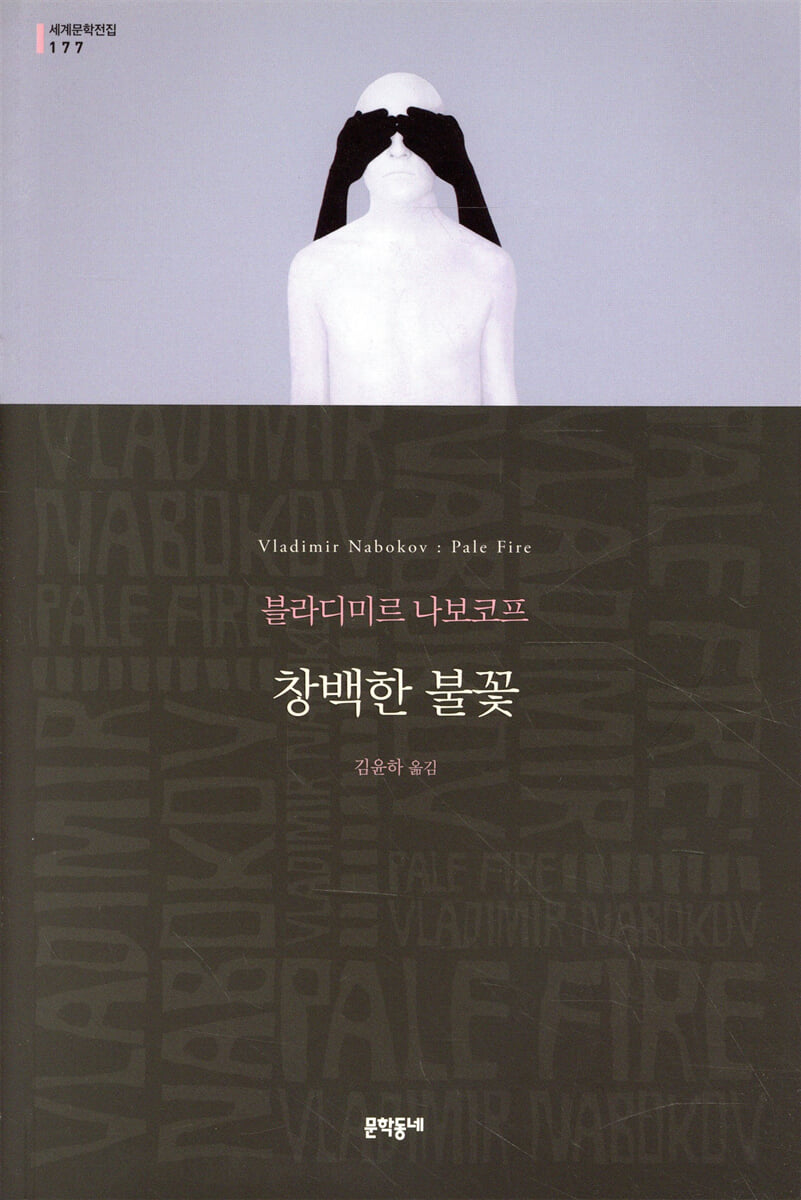 |
Description
Book Introduction
- A word from MD
-
A legendary masterpiece that even literary MDs have been eagerly awaiting.A masterpiece by Nabokov, the magician of language.
It is a game-like novel that exploits the reader's position of having to rely on the annotations of the secretive annotator Kinbote to understand the 999-line poem "Pale Fire" by the murdered poet John Shade.
“Human life is like a footnote to a difficult, unfinished poem.”March 5, 2019. Novel/Poetry PD Kim Do-hoon
The magician of language, Nabokov, the essence of the literary world
An ecstatic intellectual game unprecedented in literary history
“I love this man.
“You could live your life reading and reading and reading only his works.”
_A.
M. Holmes
A full-length novel published in 1962 by Vladimir Nabokov, the magician of language, following the popular success of Lolita.
This is a representative work of Nabokov's literary world, written with all his abilities as a poet, professor of literature, translator, and novelist.
This is the first new translation in 40 years since its first domestic translation in 1979, and is introduced as the 177th volume of the Munhakdongne World Literature Collection.
Nabokov's characteristically extensive literary references, meticulous wordplay, and narrative structure reminiscent of a detective novel captivate readers, while the experimental structure makes it easy for intelligent and active readers to easily fall into the labyrinths and traps designed by Nabokov, leading to a thrilling shock at the novel's conclusion.
"Human life is like annotations to a difficult, unfinished poem!" This novel, a game-like experience, exploits the reader's position as a cryptic annotator, Charles Kinbote, who must rely on the annotations of the cryptic annotator to understand the 999-line, unfinished poem "Pale Fire" by the murdered poet John Shade.
An ecstatic intellectual game unprecedented in literary history
“I love this man.
“You could live your life reading and reading and reading only his works.”
_A.
M. Holmes
A full-length novel published in 1962 by Vladimir Nabokov, the magician of language, following the popular success of Lolita.
This is a representative work of Nabokov's literary world, written with all his abilities as a poet, professor of literature, translator, and novelist.
This is the first new translation in 40 years since its first domestic translation in 1979, and is introduced as the 177th volume of the Munhakdongne World Literature Collection.
Nabokov's characteristically extensive literary references, meticulous wordplay, and narrative structure reminiscent of a detective novel captivate readers, while the experimental structure makes it easy for intelligent and active readers to easily fall into the labyrinths and traps designed by Nabokov, leading to a thrilling shock at the novel's conclusion.
"Human life is like annotations to a difficult, unfinished poem!" This novel, a game-like experience, exploits the reader's position as a cryptic annotator, Charles Kinbote, who must rely on the annotations of the cryptic annotator to understand the 999-line, unfinished poem "Pale Fire" by the murdered poet John Shade.
- You can preview some of the book's contents.
Preview
index
Pale Flame 7
Americas 389
Commentary | Nabokov's Prism Reflecting the Novel's Horizon: Pale Fire 401
Vladimir Nabokov Chronology 435
Americas 389
Commentary | Nabokov's Prism Reflecting the Novel's Horizon: Pale Fire 401
Vladimir Nabokov Chronology 435
Into the book
To be sure, Shade's poetry alone, without my annotations, lacks human truth.
The human reality of his works, such as his poems (which are too unpredictable and reticent to be considered autobiographical) in which significant lines are omitted by the author's careless exclusion, depends entirely on the reality of the author, his surroundings, and his inclinations, and only my annotations can provide this reality.
My dear poet may not agree with this assertion, but for better or worse, the commentator has the last word.
--- p.35~36
I was the shadow of a dead bird
Deceived by the false sky reflected in the windowpane
I was a blob of gray fluff? And yet I
It continued to live and fly, in the sky reflected in the windowpane.
--- p.39
Syllogism: Other people die, but I
It is not someone else, so it does not die.
--- p.50
Life is a message scribbled in the dark.
--- p.51
Human life is like a footnote to a difficult, unfinished poem.
--- p.89
Everything within you is young, and you quote the old poems I wrote for you and make them new.
--- p.90
Loneliness is the devil's playground.
I cannot describe the depth of my loneliness and heartbreak.
--- p.123
True art creates its own special reality that has nothing to do with the ordinary 'reality' perceived by the eyes of ordinary people.
--- p.165
Truth purified by the poet causes no pain or harm.
True art transcends false fame.
The human reality of his works, such as his poems (which are too unpredictable and reticent to be considered autobiographical) in which significant lines are omitted by the author's careless exclusion, depends entirely on the reality of the author, his surroundings, and his inclinations, and only my annotations can provide this reality.
My dear poet may not agree with this assertion, but for better or worse, the commentator has the last word.
--- p.35~36
I was the shadow of a dead bird
Deceived by the false sky reflected in the windowpane
I was a blob of gray fluff? And yet I
It continued to live and fly, in the sky reflected in the windowpane.
--- p.39
Syllogism: Other people die, but I
It is not someone else, so it does not die.
--- p.50
Life is a message scribbled in the dark.
--- p.51
Human life is like a footnote to a difficult, unfinished poem.
--- p.89
Everything within you is young, and you quote the old poems I wrote for you and make them new.
--- p.90
Loneliness is the devil's playground.
I cannot describe the depth of my loneliness and heartbreak.
--- p.123
True art creates its own special reality that has nothing to do with the ordinary 'reality' perceived by the eyes of ordinary people.
--- p.165
Truth purified by the poet causes no pain or harm.
True art transcends false fame.
--- p.264
Publisher's Review
Time's "100 Greatest English Novels of the 20th Century"
Modern Library's "100 Greatest English Literature of the 20th Century"
The novel "Pale Flame," consisting of the 999-line unfinished poem "Pale Flame" and its preface, notes, and index, is considered the quintessence of Nabokov's literary world, containing the literary abilities of the author as a poet, professor of literature, translator, and novelist.
In addition to Nabokov's uniquely elaborate wordplay and extensive literary references, his experimental form is particularly notable.
At the time, Nabokov was interested in the work of Raymond Queneau and Alain Robbe-Grillet, writers of the potential literary laboratory OULIPO, which attempted avant-garde formal experiments, and was even offered to join OULIPO.
Nabokov devoted the same amount of time and effort to translating and annotating Pushkin's verse novel Eugene Onegin as he did to writing his three major novels (Lolita, Pale Fire, and Ada).
As a translator and annotator, he devoted himself for a full 10 years to publishing a single volume of translation with an unusually large and overwhelming three-volume annotation collection in 1964. Nabokov took great pride in this, citing it as his own achievement, and this history is in no way unrelated to the annotator image he created, Charles Kinbote, the narrator of Pale Fire.
“For better or worse, the one who has the last word is ――――”
An ecstatic intellectual game unprecedented in literary history
"Pale Flame" is a commentary by Dr. Charles Kinbote on the posthumous work "Pale Flame" by the renowned American poet John Francis Shade (born July 5, 1898, died July 21, 1959). It is introduced to the reader from the preface, with Kinbote's proofreading instructions to the editor still present.
Kinbote concludes his introduction with the following sentence, emphasizing that his friendship with the poet Shade was the impetus for writing this commentary, and above all, that he alone could provide the “human realism” of this work.
“For better or worse, the last word belongs to the commentator.”
John Shade's "Pale Flame" is an autobiographical poem consisting of four chapters and 999 lines.
It contains his story of birth, upbringing, marriage to his wife Sybil, the suicide of his daughter Hazel, a glimpse into the afterlife after a heart attack, and reflections on life.
Charles Kinbote's commentary progresses sequentially through the text, but his interpretations lead the reader into increasingly bizarre worlds as the text progresses.
From the first commentary, we are introduced to Gembla, the King of Gembla, and Gradus, who is trying to assassinate the King.
A revolution breaks out in the 'far north country' of Zembla.
Prince Charles (born July 5, 1915, reigned 1936–1958), of Russian descent, was captured by revolutionary forces and held captive in the palace until he made a dramatic escape and came to the United States.
Shade gets a teaching position at Wordsmith College, where he is a professor of English, and stays next door to him. He senses the presence of Gradus, who is gradually moving towards him to complete his mission, and while spending sleepless nights, he watches over Shade and passionately inspires him.
Finally, Gradus arrives, the bullet misses, and the poem is left unfinished.
Readers who have read all the notes and index for the 1,000 lines that are not in "Pale Fire" may feel satisfied that they have reached a clear conclusion, but Nabokov's "Pale Fire" is a novel that begins at that very point.
Whose unfinished poem truly belongs to him? Who provided the inspiration? Are the poet and the annotator truly different people?
Shade refers to “annotations on a difficult, unfinished poem” in “Pale Flame.”
The more difficult the work, the more the reader is forced to rely on the commentator's interpretation for a complete understanding.
But the poet Shade has passed away, and Kinbote, who took over his language, is an unreliable commentator.
He evaluates the poet's appearance ("It is only understandable if you regard it as waste"), warns readers who might doubt the objectivity of his commentary ("You have no sense of the work of poetry, or of the commentary on poetry, or of anything else"), and shamelessly talks about learning and conscience while revealing that his previous commentary contained fabricated lines in addition to his intoxicating self-evaluation ("I trust you have enjoyed this commentary"). He also treats Shakespeare's works and English literature based on shoddy translations and distant memories, and even in the index, he deliberately downplays their importance or includes information that is not mentioned at all.
In other words, Kinbote wrote the final words, annotating Shade's poem and the original text.
So, what conclusion will the reader draw after reading these final words? If the reader offers their own answer, then, whether good or bad, right or wrong, the one who speaks the final word is the "reader."
So is that reader really different from Kinbot?
One researcher even argued that the very act of raising such questions was Nabokov's trap aimed at over-enthusiastic readers.
Nabokov's trap, a deadly poison that inevitably introduces criticism into reading by containing its own critical apparatus, intricately intertwined with numerous real and false clues.
The reason it is poisonous is because it encourages readers to become commentators like Kinbote, and to fall into the dilemma of 'overstanding' rather than 'understanding'.
If you don't actively engage with the text, you won't have the opportunity to solve the countless puzzles scattered throughout it, but if you get too immersed, you'll end up twisting the text in your own way, which will lead to delusional reading.
However, 『Pale Flame』 is a novel built with multiple readings in mind, with clues pointing in different directions intentionally hidden in several layers. _From the commentary
Kinbote suggested the following reading of Pale Flame:
“Although the annotations follow the poems as is customary, I encourage readers to skim the annotations first and then, with their help, read the poems themselves.
Of course, you will reread the annotations as you read the poem, but I would like you to refer to the annotations a third time after you have finished reading the poem to understand the entire poem.
In this situation, it would be a bit of a hassle to have to turn the pages back and forth, so I think it would be wiser to cut out the parts containing the poems and bind them together, or, even simpler, buy two copies of the book and spread them out side by side on a comfortable table.” The reader could faithfully follow Kinbote’s suggestion and read the novel in order from the introduction to the index, in the traditional way of reading a novel, but this is the only reading method that Nabokov would suggest.
“It may sound strange, but you can’t read a single book.
“Only you can read and reread it.” This reading method is the key to properly solving the mystery of “Pale Fire” designed by Nabokov.
Modern Library's "100 Greatest English Literature of the 20th Century"
The novel "Pale Flame," consisting of the 999-line unfinished poem "Pale Flame" and its preface, notes, and index, is considered the quintessence of Nabokov's literary world, containing the literary abilities of the author as a poet, professor of literature, translator, and novelist.
In addition to Nabokov's uniquely elaborate wordplay and extensive literary references, his experimental form is particularly notable.
At the time, Nabokov was interested in the work of Raymond Queneau and Alain Robbe-Grillet, writers of the potential literary laboratory OULIPO, which attempted avant-garde formal experiments, and was even offered to join OULIPO.
Nabokov devoted the same amount of time and effort to translating and annotating Pushkin's verse novel Eugene Onegin as he did to writing his three major novels (Lolita, Pale Fire, and Ada).
As a translator and annotator, he devoted himself for a full 10 years to publishing a single volume of translation with an unusually large and overwhelming three-volume annotation collection in 1964. Nabokov took great pride in this, citing it as his own achievement, and this history is in no way unrelated to the annotator image he created, Charles Kinbote, the narrator of Pale Fire.
“For better or worse, the one who has the last word is ――――”
An ecstatic intellectual game unprecedented in literary history
"Pale Flame" is a commentary by Dr. Charles Kinbote on the posthumous work "Pale Flame" by the renowned American poet John Francis Shade (born July 5, 1898, died July 21, 1959). It is introduced to the reader from the preface, with Kinbote's proofreading instructions to the editor still present.
Kinbote concludes his introduction with the following sentence, emphasizing that his friendship with the poet Shade was the impetus for writing this commentary, and above all, that he alone could provide the “human realism” of this work.
“For better or worse, the last word belongs to the commentator.”
John Shade's "Pale Flame" is an autobiographical poem consisting of four chapters and 999 lines.
It contains his story of birth, upbringing, marriage to his wife Sybil, the suicide of his daughter Hazel, a glimpse into the afterlife after a heart attack, and reflections on life.
Charles Kinbote's commentary progresses sequentially through the text, but his interpretations lead the reader into increasingly bizarre worlds as the text progresses.
From the first commentary, we are introduced to Gembla, the King of Gembla, and Gradus, who is trying to assassinate the King.
A revolution breaks out in the 'far north country' of Zembla.
Prince Charles (born July 5, 1915, reigned 1936–1958), of Russian descent, was captured by revolutionary forces and held captive in the palace until he made a dramatic escape and came to the United States.
Shade gets a teaching position at Wordsmith College, where he is a professor of English, and stays next door to him. He senses the presence of Gradus, who is gradually moving towards him to complete his mission, and while spending sleepless nights, he watches over Shade and passionately inspires him.
Finally, Gradus arrives, the bullet misses, and the poem is left unfinished.
Readers who have read all the notes and index for the 1,000 lines that are not in "Pale Fire" may feel satisfied that they have reached a clear conclusion, but Nabokov's "Pale Fire" is a novel that begins at that very point.
Whose unfinished poem truly belongs to him? Who provided the inspiration? Are the poet and the annotator truly different people?
Shade refers to “annotations on a difficult, unfinished poem” in “Pale Flame.”
The more difficult the work, the more the reader is forced to rely on the commentator's interpretation for a complete understanding.
But the poet Shade has passed away, and Kinbote, who took over his language, is an unreliable commentator.
He evaluates the poet's appearance ("It is only understandable if you regard it as waste"), warns readers who might doubt the objectivity of his commentary ("You have no sense of the work of poetry, or of the commentary on poetry, or of anything else"), and shamelessly talks about learning and conscience while revealing that his previous commentary contained fabricated lines in addition to his intoxicating self-evaluation ("I trust you have enjoyed this commentary"). He also treats Shakespeare's works and English literature based on shoddy translations and distant memories, and even in the index, he deliberately downplays their importance or includes information that is not mentioned at all.
In other words, Kinbote wrote the final words, annotating Shade's poem and the original text.
So, what conclusion will the reader draw after reading these final words? If the reader offers their own answer, then, whether good or bad, right or wrong, the one who speaks the final word is the "reader."
So is that reader really different from Kinbot?
One researcher even argued that the very act of raising such questions was Nabokov's trap aimed at over-enthusiastic readers.
Nabokov's trap, a deadly poison that inevitably introduces criticism into reading by containing its own critical apparatus, intricately intertwined with numerous real and false clues.
The reason it is poisonous is because it encourages readers to become commentators like Kinbote, and to fall into the dilemma of 'overstanding' rather than 'understanding'.
If you don't actively engage with the text, you won't have the opportunity to solve the countless puzzles scattered throughout it, but if you get too immersed, you'll end up twisting the text in your own way, which will lead to delusional reading.
However, 『Pale Flame』 is a novel built with multiple readings in mind, with clues pointing in different directions intentionally hidden in several layers. _From the commentary
Kinbote suggested the following reading of Pale Flame:
“Although the annotations follow the poems as is customary, I encourage readers to skim the annotations first and then, with their help, read the poems themselves.
Of course, you will reread the annotations as you read the poem, but I would like you to refer to the annotations a third time after you have finished reading the poem to understand the entire poem.
In this situation, it would be a bit of a hassle to have to turn the pages back and forth, so I think it would be wiser to cut out the parts containing the poems and bind them together, or, even simpler, buy two copies of the book and spread them out side by side on a comfortable table.” The reader could faithfully follow Kinbote’s suggestion and read the novel in order from the introduction to the index, in the traditional way of reading a novel, but this is the only reading method that Nabokov would suggest.
“It may sound strange, but you can’t read a single book.
“Only you can read and reread it.” This reading method is the key to properly solving the mystery of “Pale Fire” designed by Nabokov.
GOODS SPECIFICS
- Date of publication: February 28, 2019
- Page count, weight, size: 448 pages | 580g | 140*210*30mm
- ISBN13: 9788954655200
- ISBN10: 8954655203
You may also like
카테고리
korean


korean

![GQ KOREA Mark (Monthly): December [2025]](http://librairie.coreenne.fr/cdn/shop/files/8ef265dbbfbf186523ed75ba7319009d.jpg?v=1765340328&width=3840)


