

No. 0
 |
Description
Book Introduction
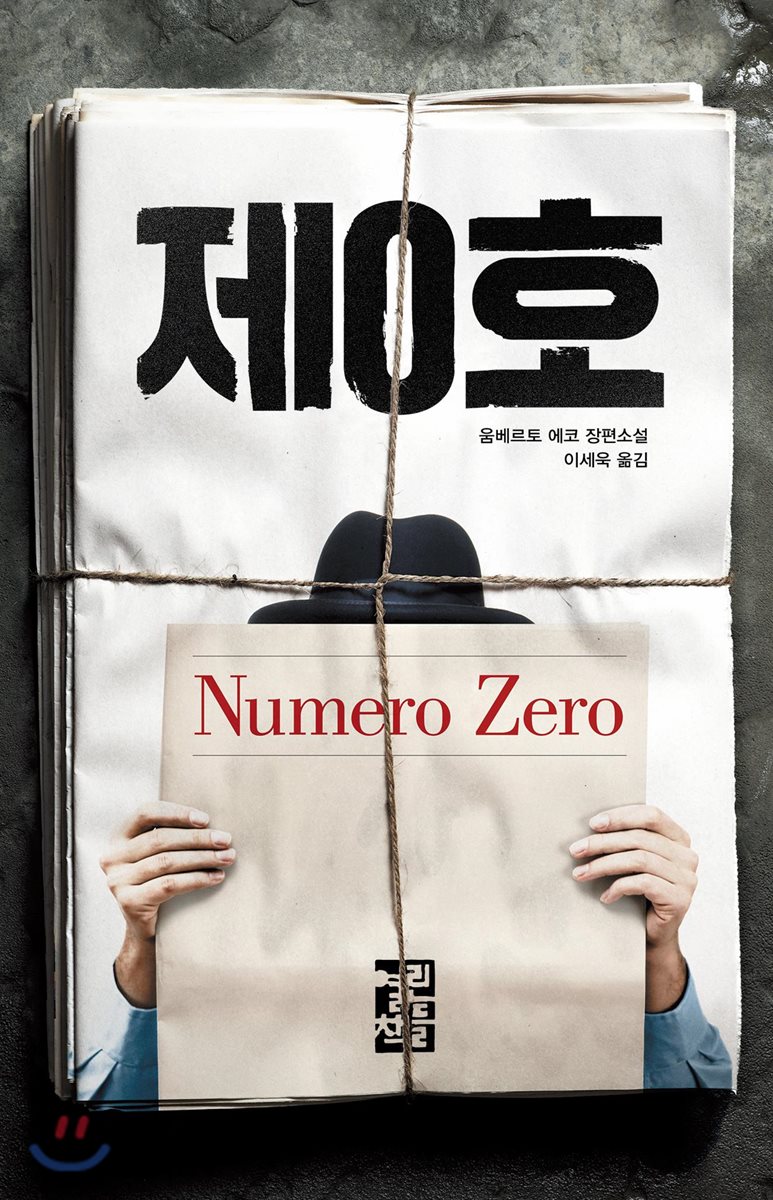
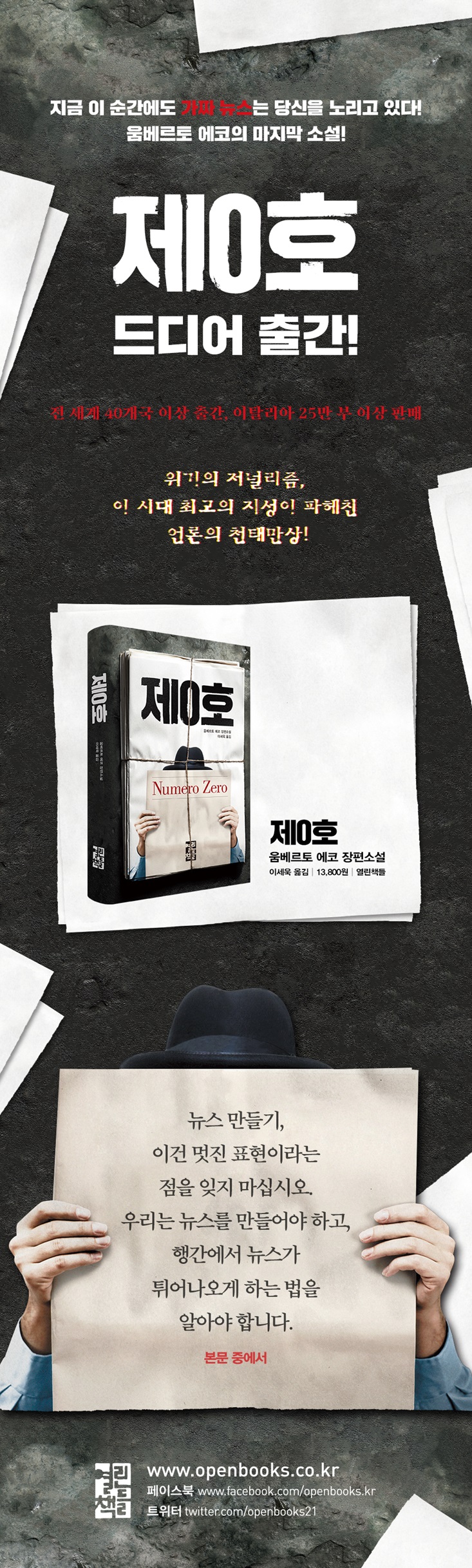
The last novel by our beloved author, Umberto Eco! Umberto Eco's last work depicts the murky and dark world of media, politics, conspiracy, and murder. It asks and answers questions about who creates lies, how people are deceived by such lies, and how those who create such lies fall. “Lies will set you free!” This novel, which strips away the mask of fake news, poses the same question to Korean society. Journalism in crisis, The greatest minds of this era have dug into The myriad aspects of the media The last novel of Umberto Eco, one of the most influential thinkers of our time, an authoritative semiotician, a brilliant philosopher, historian, aesthetician, and a bestselling novelist who enjoyed worldwide popularity - "Number Zero" has been published by Open Books. It has sold over 250,000 copies in Italy alone and is published or scheduled for publication in over 40 countries worldwide, including the United States, France, Spain, Japan, Poland, and Russia. Eco's works, revered as a representative intellectual of his time, spanned a wide range of fields from Thomas Aquinas to popular culture and became unprecedented bestsellers, captivating readers for a long time. Her debut and representative work, The Name of the Rose, has been translated into over 40 languages, sold over 30 million copies worldwide, and was also made into a film of the same name. Additionally, he received the Italian Strega Award in 1981 and the French Médicis Prize for Foreign Literature in 1982 for the same work. Echo passed away from pancreatic cancer on February 19, 2016. His last novel, "No. 0," published in 2015, poses a weighty question about "correct journalism" to modern people living in a flood of information. A chaotic mess of unfair reporting, conspiracy-theoretic paradoxes, and a barrage of pornographic information with no clear direction. Eco, who has long been interested in the public delusion surrounding conspiracy theories, as he has previously discussed in works such as “Foucault’s Pendulum” and “The Prague Cemetery,” catalogs and unfolds the paranoia of journalism. Translator Lee Se-wook, who has translated 『The Prague Cemetery』, 『The Mysterious Flame of Queen Ioana』, and 『How to Get Angry at the Fools of the World While Smiling』, has meticulously translated Umberto Eco's meticulously calculated writing style into Korean based on his in-depth understanding of the author. |
- You can preview some of the book's contents.
Preview
index
1.
Saturday, June 6, 1992, 8:00 AM … … Page 11
2.
Monday, April 6, 1992 … … Page 29
3.
Tuesday, April 7th … … Page 41
4.
Wednesday, April 8th … … Page 75
5.
Friday, April 10th … … Page 81
6.
Wednesday, April 15th … … Page 105
7.
Wednesday, April 15, evening… … Page 119
8.
Friday, April 17th … … Page 129
9.
Friday, April 24th … … Page 139
10.
Sunday, May 3rd… … Page 181
11.
Friday, May 8th … … Page 187
12.
Monday, May 11th… …Page 201
13.
Late May… … Page 211
14.
Wednesday, May 27th … … Page 221
15.
Thursday, May 28th … … Page 235
16.
Saturday, June 6th … … Page 273
17.
Saturday, June 6, 1992, noon… … Page 289
18.
Thursday, June 11th … … Page 297
Translator's Note … … Page 319
Saturday, June 6, 1992, 8:00 AM … … Page 11
2.
Monday, April 6, 1992 … … Page 29
3.
Tuesday, April 7th … … Page 41
4.
Wednesday, April 8th … … Page 75
5.
Friday, April 10th … … Page 81
6.
Wednesday, April 15th … … Page 105
7.
Wednesday, April 15, evening… … Page 119
8.
Friday, April 17th … … Page 129
9.
Friday, April 24th … … Page 139
10.
Sunday, May 3rd… … Page 181
11.
Friday, May 8th … … Page 187
12.
Monday, May 11th… …Page 201
13.
Late May… … Page 211
14.
Wednesday, May 27th … … Page 221
15.
Thursday, May 28th … … Page 235
16.
Saturday, June 6th … … Page 273
17.
Saturday, June 6, 1992, noon… … Page 289
18.
Thursday, June 11th … … Page 297
Translator's Note … … Page 319
Detailed image
Into the book
"The editor-in-chief said he would publish a book?"
"Yes, I will publish a book.
This is a journalist's memoir.
Our newspaper was supposed to be launched but never ended up being launched, but this book tells the story of what we experienced over the course of a year preparing to launch that newspaper.
While we're on the subject, let me add that the title of that newspaper will be [Domani], that is, tomorrow.
It sounds like a slogan for our government, but we'll talk about that tomorrow.
Anyway, the title of the book I'm planning to publish will be [To know tomorrow, look at yesterday].
Isn't it cool? --- p.29~30
By doing so, he proves that he can corner the big shots in the so-called sanctuaries of finance and politics if he so desires.
Then the big shots will ask Commendatore to stop the newspaper launch.
In response to that request, Commendatore will give up the newspaper Domani, and in return, he will be granted entry into the sanctuary of the big shots.
--- p.36~37
"That book will tell a story that contradicts what actually happened.
It's a great book.
But if you publish a book like that, you will hear objections.”
"Who will refute this? Will Commendatore deny the truth in this book? Will he admit that his goal in planning this venture wasn't to set an example for journalism, but to intimidate the big shots? No.
Rather, he would like people to believe that he stopped because he too was under pressure, that he chose to kill the paper so that it would not become a voice controlled by someone else.
What about our journalists? My book introduces them as the most noble journalists. Would they object? My book will be pronounced as [Bachelor], as people commonly pronounce it.
No one can refute that book, nor will anyone try to refute it. --- p.39
Before I could answer, Shimei stepped forward.
"great.
I like the Manzanares story.
But there are other ways to voice your opinion without it being obvious.
To decide what to publish in a newspaper, journalists often have to weigh the merits of the story.
There is so much news to report in the world.
We can't report all that news.
So when there's an accident in Bergamo, next to Milan, they report it, but when there's an accident in Messina, Sicily, they're silent.
You see why? News doesn't make newspapers, newspapers make news.
--- p.84~85
Don't forget, making news is a fancy expression.
We have to make news, and we have to know how to make news jump out between the lines.
--- p.87~88
We have just looked at one parody and the nature of the refutation and counterargument to it.
What you need to remember is that there are three basic elements to consider when writing a rebuttal to a counterargument: gathering testimony, documenting the interview, and raising questions about the credibility of the person making the rebuttal.
Do you understand?
"Excellent."
Everyone answered in unison.
--- p.92~93
We can't afford to put effort into education.
Our readers don't read books.
At best, I read the sports newspaper.
Still, I agree that newspapers should have a cultural section.
Rather than calling it a culture section, it would be better to call it a culture and entertainment section, and it would be better to cover cultural events in an interview format.
When interviewing the author of a book, you can communicate peacefully with the author.
Because no author ever speaks badly of his own book.
So our readers will not encounter malicious and overly arrogant criticism.
--- p.102
I felt like I was lying to her.
Instead of saying that, I thought I should have told her that she was at a dead end, that they would never send her to the Persian Gulf, and that it would be best to run away before it was too late.
But that couldn't make her any more discouraged.
Suddenly an alternative occurred to me.
Instead of telling the truth about her, I wanted to tell the truth about myself.
--- p.123~124
No matter how honest and fair a person may be, there is no one who is 100% like that.
He's probably not a pedophile, he probably didn't kill his grandmother, and he probably didn't take bribes.
But I'm sure he did something suspicious.
If not, and I don't know if I can put it this way, it makes what he does every day seem suspicious.
Palatine, let your imagination run wild.
You know what I mean, right? --- p.188
That man is a very stylish person.
Or maybe you're a member of the hippie movement, which in English used to be called flower children.
It wouldn't be a stretch to imagine him smoking marijuana.
But we shouldn't say that directly.
Readers will have to draw their own conclusions.
Palatine, pay attention to these points and create a portrait with a strong dark atmosphere.
Then the man will know what is scary.
We created news out of nothing.
Without lying.
"Yes, I will publish a book.
This is a journalist's memoir.
Our newspaper was supposed to be launched but never ended up being launched, but this book tells the story of what we experienced over the course of a year preparing to launch that newspaper.
While we're on the subject, let me add that the title of that newspaper will be [Domani], that is, tomorrow.
It sounds like a slogan for our government, but we'll talk about that tomorrow.
Anyway, the title of the book I'm planning to publish will be [To know tomorrow, look at yesterday].
Isn't it cool? --- p.29~30
By doing so, he proves that he can corner the big shots in the so-called sanctuaries of finance and politics if he so desires.
Then the big shots will ask Commendatore to stop the newspaper launch.
In response to that request, Commendatore will give up the newspaper Domani, and in return, he will be granted entry into the sanctuary of the big shots.
--- p.36~37
"That book will tell a story that contradicts what actually happened.
It's a great book.
But if you publish a book like that, you will hear objections.”
"Who will refute this? Will Commendatore deny the truth in this book? Will he admit that his goal in planning this venture wasn't to set an example for journalism, but to intimidate the big shots? No.
Rather, he would like people to believe that he stopped because he too was under pressure, that he chose to kill the paper so that it would not become a voice controlled by someone else.
What about our journalists? My book introduces them as the most noble journalists. Would they object? My book will be pronounced as [Bachelor], as people commonly pronounce it.
No one can refute that book, nor will anyone try to refute it. --- p.39
Before I could answer, Shimei stepped forward.
"great.
I like the Manzanares story.
But there are other ways to voice your opinion without it being obvious.
To decide what to publish in a newspaper, journalists often have to weigh the merits of the story.
There is so much news to report in the world.
We can't report all that news.
So when there's an accident in Bergamo, next to Milan, they report it, but when there's an accident in Messina, Sicily, they're silent.
You see why? News doesn't make newspapers, newspapers make news.
--- p.84~85
Don't forget, making news is a fancy expression.
We have to make news, and we have to know how to make news jump out between the lines.
--- p.87~88
We have just looked at one parody and the nature of the refutation and counterargument to it.
What you need to remember is that there are three basic elements to consider when writing a rebuttal to a counterargument: gathering testimony, documenting the interview, and raising questions about the credibility of the person making the rebuttal.
Do you understand?
"Excellent."
Everyone answered in unison.
--- p.92~93
We can't afford to put effort into education.
Our readers don't read books.
At best, I read the sports newspaper.
Still, I agree that newspapers should have a cultural section.
Rather than calling it a culture section, it would be better to call it a culture and entertainment section, and it would be better to cover cultural events in an interview format.
When interviewing the author of a book, you can communicate peacefully with the author.
Because no author ever speaks badly of his own book.
So our readers will not encounter malicious and overly arrogant criticism.
--- p.102
I felt like I was lying to her.
Instead of saying that, I thought I should have told her that she was at a dead end, that they would never send her to the Persian Gulf, and that it would be best to run away before it was too late.
But that couldn't make her any more discouraged.
Suddenly an alternative occurred to me.
Instead of telling the truth about her, I wanted to tell the truth about myself.
--- p.123~124
No matter how honest and fair a person may be, there is no one who is 100% like that.
He's probably not a pedophile, he probably didn't kill his grandmother, and he probably didn't take bribes.
But I'm sure he did something suspicious.
If not, and I don't know if I can put it this way, it makes what he does every day seem suspicious.
Palatine, let your imagination run wild.
You know what I mean, right? --- p.188
That man is a very stylish person.
Or maybe you're a member of the hippie movement, which in English used to be called flower children.
It wouldn't be a stretch to imagine him smoking marijuana.
But we shouldn't say that directly.
Readers will have to draw their own conclusions.
Palatine, pay attention to these points and create a portrait with a strong dark atmosphere.
Then the man will know what is scary.
We created news out of nothing.
Without lying.
--- p.190
Publisher's Review
Journalism in crisis,
The greatest minds of this era have dug into
The myriad of media!
The last novel of Umberto Eco, one of the most influential thinkers of our time, an authoritative semiotician, a brilliant philosopher, historian, aesthetician, and a bestselling novelist who enjoyed worldwide popularity - "Number Zero" has been published by Open Books.
It has sold over 250,000 copies in Italy alone and is published or about to be published in over 40 countries around the world, including the United States, France, Spain, Japan, Poland, and Russia.
Eco's works, revered as a representative intellectual of his time, spanned a wide range of fields from Thomas Aquinas to popular culture and became unprecedented bestsellers, captivating readers for a long time.
Her debut and representative work, The Name of the Rose, has been translated into over 40 languages, sold over 30 million copies worldwide, and was also made into a film of the same name.
For this work, Eco received the Italian Strega Prize in 1981 and the French Médicis Prize for Foreign Literature in 1982.
Echo passed away from pancreatic cancer on February 19, 2016.
His last novel, "No. 0," published in 2015, poses a weighty question about "correct journalism" to modern people living in a deluge of information.
A chaotic mess of unfair reporting, conspiracy-theoretic paradoxes, and a barrage of pornographic information with no clear direction.
Eco, who has long been interested in the public delusion surrounding conspiracy theories, as he has previously discussed in works such as “Foucault’s Pendulum” and “The Prague Cemetery,” catalogs and unfolds the paranoia of journalism.
Translator Lee Se-wook, who has translated 『The Prague Cemetery』, 『The Mysterious Flame of Queen Ioana』, and 『How to Get Angry at the Fools of the World While Smiling』, has meticulously translated Umberto Eco's meticulously calculated writing style into Korean based on his in-depth understanding of the author.
Another conspiracy theory about history,
Mussolini is alive?!
The novel is set in 1992, a time when an unprecedented political scandal erupted in Italy, sparking a wave of corruption clean-up.
The story vividly depicts the yellow press surrounding Mussolini's death, set in the editorial department of a newspaper backed by powerful figures armed with enormous financial resources and organizational power.
Colonna, a middle-aged man who has been working in a series of low-paying jobs as a cheap writer, receives a call from the newspaper 『Domani (Tomorrow)』, which is about to be launched.
The role he was assigned was to be a ghostwriter for the editor-in-chief of a newspaper company, and to be involved in the production of the newspaper [No. 0], which was never published, and to record the history that took place in the editorial department.
The editor-in-chief plans to prepare a book containing his exposé in case the newspaper never launches and he loses his job.
Colonna accepts the offer, shares the editor's secret, and soon faces six reporters hired by Domani.
He disguises himself as a sort of advisor who reviews expressions to be used in articles and works on the preliminary edition of [Issue 0].
Meanwhile, the person who provides the funds for the scene is a powerful figure known as [Commendator Vimercate].
His goal is to demonstrate his influence over the political and business world by dominating the elite world of leading major newspapers.
In short, Domani is a media outlet that threatens to expand its influence. Its preliminary edition leaks information that could drive the bigwigs of society into a corner, thereby instilling fear in them.
In successive editorial meetings, they discuss how to write sensational articles for a public thirsty for scoops rather than the truth.
The projects prepared by [No. 0], which are just rehashed news stories with different titles, are examples of sloppy journalism.
Then one day, Bragadozzo, a reporter who was preparing an exposé article based on his own hypothesis about the disappearance of Mussolini and involving the Pope, politicians, terrorists, banks, the Mafia, the CIA, and even Freemasons, is found murdered with a knife in the back...
The best satire on the media and power?
Sound the alarm on yellow journalism!
The Mani Pulite (Clean Hands) movement in Italy in the 1990s was aimed at deep-rooted corruption.
The world was in an uproar as structural corruption in politics was revealed, and a prosecution investigation was launched.
Not only in Milan, but in dozens of other cities, more than 4,000 politicians, civil servants and businesspeople were investigated, and more than 1,000 of them were arrested.
The Socialist Party's Craxi fled to Tunisia, and former Prime Minister Andreotti of the Christian Democrats was found to have mafia ties.
As a result, Italy's three-party system collapsed, and the political landscape was reorganized around Berlusconi's Forza Italia party, a former media tycoon, and the right-wing coalition and left-wing coalition.
The First Republic came to an end and the Second Republic began.
Despite the turbulent times, the bribery war and corruption there persist due to superficial innovation without self-reflection.
Above all, politicians armed with enormous financial resources and organizational power and the media play they lead cannot help but be the main culprits in harming the health of society.
"No. 0" is a film that makes us ponder the pervasive influence of mass media on the subconscious of modern society, regardless of geography, including its setting in Italy.
The Umberto Eco Mania Collection 25, which contains Eco's literary theory, "I Write for the Reader" (Korean edition is "Umberto Eco's Literature Lectures"), is a book worth reading.
This book includes an article titled "How I Write Novels."
This was originally published in 1996, but I have rewritten it to reflect my experiences over the years since.
There is a passage in that article that talks about 『No. 0』.
… … At first, the characters are modern people who decide to start a newspaper and think of it as an experiment to see how they can [create] a scoop in a series of [sample issues].
Actually, I even considered titleing the novel Numero Zero.
- From the text of “I Write for Readers”
Before seriously conceiving 『Baudolino』, when he was contemplating a new novel, Eco wanted to deal with characters who made fakes look real.
So I conceived the idea of a story where modern writers are portrayed as characters, and they establish a newspaper and experiment with how to "create" a scoop through a series of pre-launch editions.
In keeping with that concept, I was thinking of title the novel “No. 0.”
Years later, after writing Baudolino, The Mysterious Flame of Queen Ioana, and The Prague Cemetery, Eco finally wrote about the people who make fake newspapers.
A scoop war targeting the ignorant masses.
The man behind the newspaper that will never be published
A huge mystery?
『No. 0』 covers the world of journalism in a journalistic style.
A humorous and satirical tale of failed writers, conspiracy-minded journalists, and bad journalism.
- Translator's Note
In this way, the content mainly focuses on powerful businessmen who use the media for political success, journalists who are forced to get [scoops], and the public who end up becoming scapegoats in the process of such reporting.
However, Echo mixes his characteristic humor and presents a new sense of affection and solidarity between humans that takes root apart from the turbulent external circumstances.
The writing style and structure are simpler and clearer than any previous work, and are aimed solely at the general public, delivering a powerful resonance.
Having worked as a cultural program producer for RAI (Italian Broadcasting Association) since the inception of television broadcasting in Italy in 1954, Umberto Eco is more knowledgeable about the physiology of mass media than anyone else, and his sharpness in dealing with the world makes one wonder if anyone else could possess such a profound and perceptive perception.
"No. 0" deals with a historical event with a low barrier to entry and unfolds a fascinating conspiracy theory about it.
The process by which a single hypothesis threatens ordinary life is vividly relayed.
This last novel of Echo asks the question again at the present time.
On journalism for all, and journalism that is right.
For readers struggling to decide what to believe and how much is true, this novel will serve as a guide.
The greatest minds of this era have dug into
The myriad of media!
The last novel of Umberto Eco, one of the most influential thinkers of our time, an authoritative semiotician, a brilliant philosopher, historian, aesthetician, and a bestselling novelist who enjoyed worldwide popularity - "Number Zero" has been published by Open Books.
It has sold over 250,000 copies in Italy alone and is published or about to be published in over 40 countries around the world, including the United States, France, Spain, Japan, Poland, and Russia.
Eco's works, revered as a representative intellectual of his time, spanned a wide range of fields from Thomas Aquinas to popular culture and became unprecedented bestsellers, captivating readers for a long time.
Her debut and representative work, The Name of the Rose, has been translated into over 40 languages, sold over 30 million copies worldwide, and was also made into a film of the same name.
For this work, Eco received the Italian Strega Prize in 1981 and the French Médicis Prize for Foreign Literature in 1982.
Echo passed away from pancreatic cancer on February 19, 2016.
His last novel, "No. 0," published in 2015, poses a weighty question about "correct journalism" to modern people living in a deluge of information.
A chaotic mess of unfair reporting, conspiracy-theoretic paradoxes, and a barrage of pornographic information with no clear direction.
Eco, who has long been interested in the public delusion surrounding conspiracy theories, as he has previously discussed in works such as “Foucault’s Pendulum” and “The Prague Cemetery,” catalogs and unfolds the paranoia of journalism.
Translator Lee Se-wook, who has translated 『The Prague Cemetery』, 『The Mysterious Flame of Queen Ioana』, and 『How to Get Angry at the Fools of the World While Smiling』, has meticulously translated Umberto Eco's meticulously calculated writing style into Korean based on his in-depth understanding of the author.
Another conspiracy theory about history,
Mussolini is alive?!
The novel is set in 1992, a time when an unprecedented political scandal erupted in Italy, sparking a wave of corruption clean-up.
The story vividly depicts the yellow press surrounding Mussolini's death, set in the editorial department of a newspaper backed by powerful figures armed with enormous financial resources and organizational power.
Colonna, a middle-aged man who has been working in a series of low-paying jobs as a cheap writer, receives a call from the newspaper 『Domani (Tomorrow)』, which is about to be launched.
The role he was assigned was to be a ghostwriter for the editor-in-chief of a newspaper company, and to be involved in the production of the newspaper [No. 0], which was never published, and to record the history that took place in the editorial department.
The editor-in-chief plans to prepare a book containing his exposé in case the newspaper never launches and he loses his job.
Colonna accepts the offer, shares the editor's secret, and soon faces six reporters hired by Domani.
He disguises himself as a sort of advisor who reviews expressions to be used in articles and works on the preliminary edition of [Issue 0].
Meanwhile, the person who provides the funds for the scene is a powerful figure known as [Commendator Vimercate].
His goal is to demonstrate his influence over the political and business world by dominating the elite world of leading major newspapers.
In short, Domani is a media outlet that threatens to expand its influence. Its preliminary edition leaks information that could drive the bigwigs of society into a corner, thereby instilling fear in them.
In successive editorial meetings, they discuss how to write sensational articles for a public thirsty for scoops rather than the truth.
The projects prepared by [No. 0], which are just rehashed news stories with different titles, are examples of sloppy journalism.
Then one day, Bragadozzo, a reporter who was preparing an exposé article based on his own hypothesis about the disappearance of Mussolini and involving the Pope, politicians, terrorists, banks, the Mafia, the CIA, and even Freemasons, is found murdered with a knife in the back...
The best satire on the media and power?
Sound the alarm on yellow journalism!
The Mani Pulite (Clean Hands) movement in Italy in the 1990s was aimed at deep-rooted corruption.
The world was in an uproar as structural corruption in politics was revealed, and a prosecution investigation was launched.
Not only in Milan, but in dozens of other cities, more than 4,000 politicians, civil servants and businesspeople were investigated, and more than 1,000 of them were arrested.
The Socialist Party's Craxi fled to Tunisia, and former Prime Minister Andreotti of the Christian Democrats was found to have mafia ties.
As a result, Italy's three-party system collapsed, and the political landscape was reorganized around Berlusconi's Forza Italia party, a former media tycoon, and the right-wing coalition and left-wing coalition.
The First Republic came to an end and the Second Republic began.
Despite the turbulent times, the bribery war and corruption there persist due to superficial innovation without self-reflection.
Above all, politicians armed with enormous financial resources and organizational power and the media play they lead cannot help but be the main culprits in harming the health of society.
"No. 0" is a film that makes us ponder the pervasive influence of mass media on the subconscious of modern society, regardless of geography, including its setting in Italy.
The Umberto Eco Mania Collection 25, which contains Eco's literary theory, "I Write for the Reader" (Korean edition is "Umberto Eco's Literature Lectures"), is a book worth reading.
This book includes an article titled "How I Write Novels."
This was originally published in 1996, but I have rewritten it to reflect my experiences over the years since.
There is a passage in that article that talks about 『No. 0』.
… … At first, the characters are modern people who decide to start a newspaper and think of it as an experiment to see how they can [create] a scoop in a series of [sample issues].
Actually, I even considered titleing the novel Numero Zero.
- From the text of “I Write for Readers”
Before seriously conceiving 『Baudolino』, when he was contemplating a new novel, Eco wanted to deal with characters who made fakes look real.
So I conceived the idea of a story where modern writers are portrayed as characters, and they establish a newspaper and experiment with how to "create" a scoop through a series of pre-launch editions.
In keeping with that concept, I was thinking of title the novel “No. 0.”
Years later, after writing Baudolino, The Mysterious Flame of Queen Ioana, and The Prague Cemetery, Eco finally wrote about the people who make fake newspapers.
A scoop war targeting the ignorant masses.
The man behind the newspaper that will never be published
A huge mystery?
『No. 0』 covers the world of journalism in a journalistic style.
A humorous and satirical tale of failed writers, conspiracy-minded journalists, and bad journalism.
- Translator's Note
In this way, the content mainly focuses on powerful businessmen who use the media for political success, journalists who are forced to get [scoops], and the public who end up becoming scapegoats in the process of such reporting.
However, Echo mixes his characteristic humor and presents a new sense of affection and solidarity between humans that takes root apart from the turbulent external circumstances.
The writing style and structure are simpler and clearer than any previous work, and are aimed solely at the general public, delivering a powerful resonance.
Having worked as a cultural program producer for RAI (Italian Broadcasting Association) since the inception of television broadcasting in Italy in 1954, Umberto Eco is more knowledgeable about the physiology of mass media than anyone else, and his sharpness in dealing with the world makes one wonder if anyone else could possess such a profound and perceptive perception.
"No. 0" deals with a historical event with a low barrier to entry and unfolds a fascinating conspiracy theory about it.
The process by which a single hypothesis threatens ordinary life is vividly relayed.
This last novel of Echo asks the question again at the present time.
On journalism for all, and journalism that is right.
For readers struggling to decide what to believe and how much is true, this novel will serve as a guide.
GOODS SPECIFICS
- Date of issue: October 30, 2018
- Format: Hardcover book binding method guide
- Page count, weight, size: 336 pages | 426g | 132*195*27mm
- ISBN13: 9788932919270
- ISBN10: 8932919275
You may also like
카테고리
korean


korean

![GQ KOREA Mark (Monthly): December [2025]](http://librairie.coreenne.fr/cdn/shop/files/8ef265dbbfbf186523ed75ba7319009d.jpg?v=1765340328&width=3840)


