

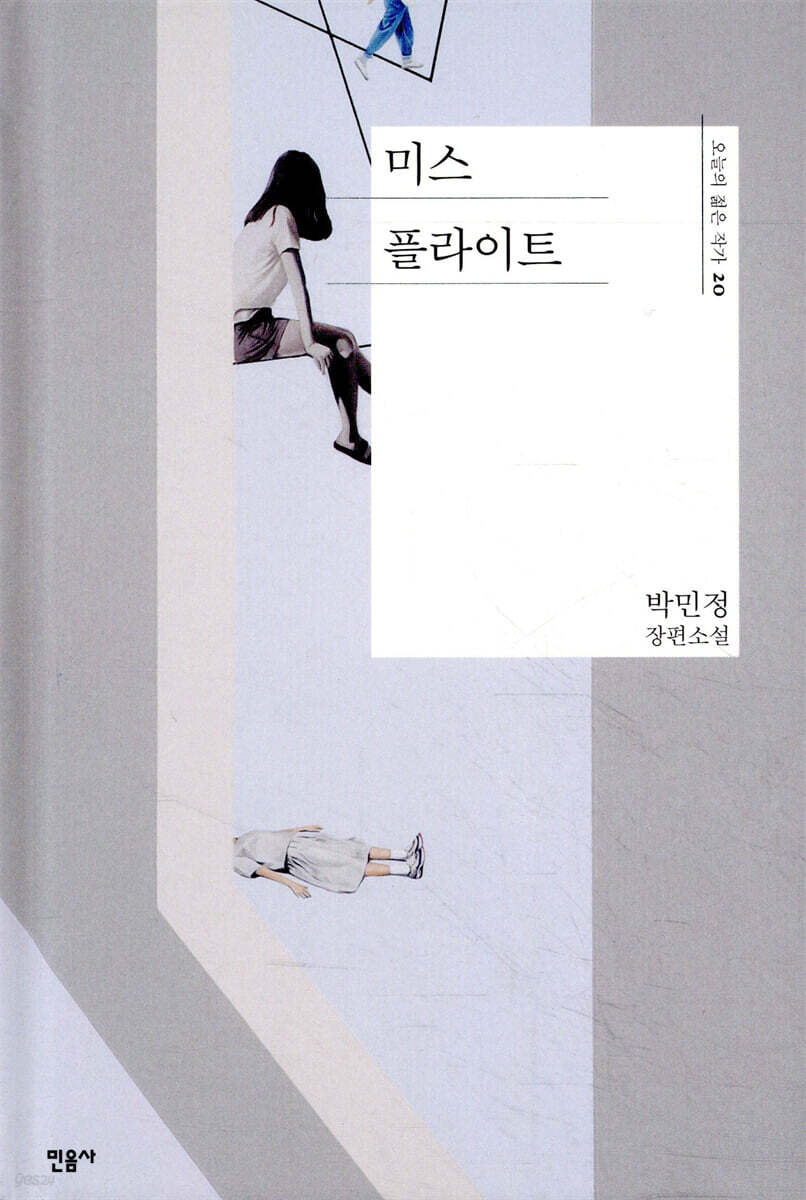
Miss Flight
 |
Description
Book Introduction
Young Writer Award Grand Prize Winner
Park Min-jeong's first full-length novel
Presented by careful observer Park Min-jeong
A mystery without leaps and bounds, a family drama without fantasy.
Park Min-jeong, who has emerged as a writer receiving the most attention by winning the Kim Jun-seong Literary Award, the Munji Literary Award, and the Young Writer Award, has published her first full-length novel, Miss Flight, as the 20th Young Writer of Today.
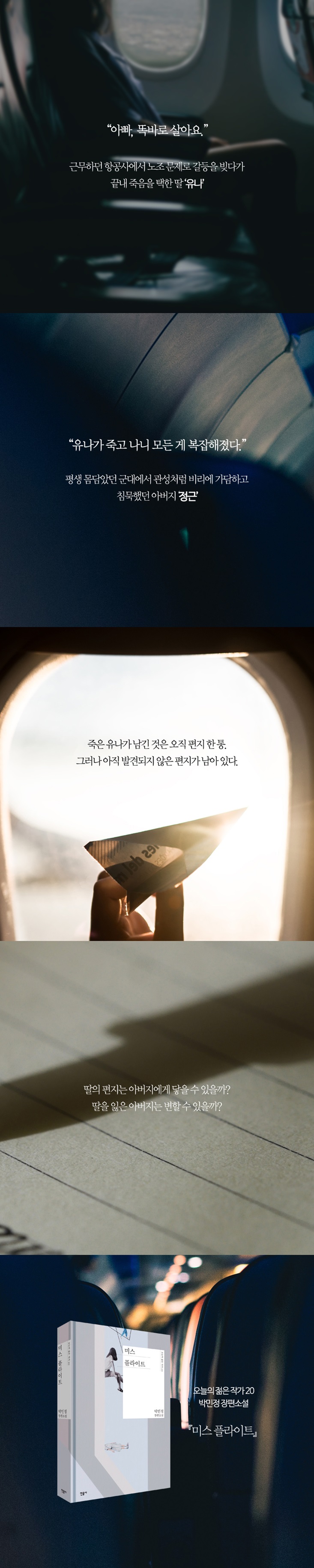
"Miss Flight" is the story of a daughter named Yuna, who ended up taking her own life after a conflict over a labor union issue at the airline where she worked, and her father, Jeong-geun, who was involved in corruption in the military and remained silent throughout his life.
Airlines, flight attendants, bullying, human rights abuse, air force, defense industry corruption, whistleblowing.
The author weaves these hot, complex words together with meticulous research and sophisticated plotting.
It does not avoid the scenes of Korean absurdity, but stares at them and unfolds the story of a father and daughter on top of them.
This is a mystery novel without leaps and a family drama without illusions presented by Park Min-jeong.
Through "Miss Flight," Park Min-jeong goes beyond the image of a "careful observer" she has been recognized for, and presents herself to readers as a "competent storyteller."
Park Min-jeong's first full-length novel
Presented by careful observer Park Min-jeong
A mystery without leaps and bounds, a family drama without fantasy.
Park Min-jeong, who has emerged as a writer receiving the most attention by winning the Kim Jun-seong Literary Award, the Munji Literary Award, and the Young Writer Award, has published her first full-length novel, Miss Flight, as the 20th Young Writer of Today.
"Miss Flight" is the story of a daughter named Yuna, who ended up taking her own life after a conflict over a labor union issue at the airline where she worked, and her father, Jeong-geun, who was involved in corruption in the military and remained silent throughout his life.
Airlines, flight attendants, bullying, human rights abuse, air force, defense industry corruption, whistleblowing.
The author weaves these hot, complex words together with meticulous research and sophisticated plotting.
It does not avoid the scenes of Korean absurdity, but stares at them and unfolds the story of a father and daughter on top of them.
This is a mystery novel without leaps and a family drama without illusions presented by Park Min-jeong.
Through "Miss Flight," Park Min-jeong goes beyond the image of a "careful observer" she has been recognized for, and presents herself to readers as a "competent storyteller."
- You can preview some of the book's contents.
Preview
index
Miss Flight 7
Author's Note 229
Commentary | On the Side of Contaminated Truth by Cheon Hee-ran (Novelist) 231
Author's Note 229
Commentary | On the Side of Contaminated Truth by Cheon Hee-ran (Novelist) 231
Detailed image
Into the book
-Father, this isn't suicide.
Cheol-yong, who had crawled in slowly, grabbed the hem of Jeong-geun's pants.
Jeonggeun suddenly wanted to kick him.
When he was kicked out and rolled around on the floor, I wanted to climb on top of him and slowly slap him across the face.
I wanted to look him straight in the eye and slap him on both cheeks.
Hey, you little shit, you little shit, you're having it harder than me? Where the hell are you campaigning and talking nonsense? You little shit, hey," Jeong-geun bit his lip.
--- p.20
Jeonggeun endured the situation with truly superhuman patience.
Yuna is dead.
They were Yuna's friends.
Jisook and they both know more about Yuna than I do.
I don't know.
I am not qualified.
I am not qualified to talk to Yuna.
--- p.21~22
-That kid has never sat in the back seat.
(……) Younghoon explained to Hyejin the rules that had been created between him and Yuna.
Even though he knew she wouldn't be riding in the back anyway, he said, "Yuna, ride in the back." Yuna replied, "I like the front better," and got into the passenger seat.
Hyejin felt heartbroken when she told the story of how she naturally climbed into the back seat and switched to the passenger seat in front of the colonel.
Isn't it too premature, poor thing?
--- p.139~140
Ironically, on the way back from parting ways with Younghoon, I kept thinking of Colonel Yoon.
When I think of Colonel Yoon, I think of Yuna who used to shoot me so cruelly, and when I think of the military and Ji-sook who kicked me out, I feel devastated because it seems like everything that has happened up until now is because of them.
(……) After Yuna died, everything became complicated.
Jeonggeun now knew exactly what Yuna would have said if she were alive.
Dad, don't you get it yet? It was your fault.
Colonel Yoon didn't do anything wrong.
Cheol-yong, who had crawled in slowly, grabbed the hem of Jeong-geun's pants.
Jeonggeun suddenly wanted to kick him.
When he was kicked out and rolled around on the floor, I wanted to climb on top of him and slowly slap him across the face.
I wanted to look him straight in the eye and slap him on both cheeks.
Hey, you little shit, you little shit, you're having it harder than me? Where the hell are you campaigning and talking nonsense? You little shit, hey," Jeong-geun bit his lip.
--- p.20
Jeonggeun endured the situation with truly superhuman patience.
Yuna is dead.
They were Yuna's friends.
Jisook and they both know more about Yuna than I do.
I don't know.
I am not qualified.
I am not qualified to talk to Yuna.
--- p.21~22
-That kid has never sat in the back seat.
(……) Younghoon explained to Hyejin the rules that had been created between him and Yuna.
Even though he knew she wouldn't be riding in the back anyway, he said, "Yuna, ride in the back." Yuna replied, "I like the front better," and got into the passenger seat.
Hyejin felt heartbroken when she told the story of how she naturally climbed into the back seat and switched to the passenger seat in front of the colonel.
Isn't it too premature, poor thing?
--- p.139~140
Ironically, on the way back from parting ways with Younghoon, I kept thinking of Colonel Yoon.
When I think of Colonel Yoon, I think of Yuna who used to shoot me so cruelly, and when I think of the military and Ji-sook who kicked me out, I feel devastated because it seems like everything that has happened up until now is because of them.
(……) After Yuna died, everything became complicated.
Jeonggeun now knew exactly what Yuna would have said if she were alive.
Dad, don't you get it yet? It was your fault.
Colonel Yoon didn't do anything wrong.
--- p.189
Publisher's Review
Can a father who lost his daughter change?
All that the dead Yuna left behind was a letter.
The recipient of the letter, Hong Jeong-geun, is this kind of person.
A former Air Force colonel, he was dishonorably discharged after being implicated in a defense corruption scandal that came to light in connection with the KF-16 crash.
Although he was from Jeolla Province, he hated people from Jeolla Province the most.
'If you're going to be rude, then be rude' was a man who believed terribly in military-style law and common sense.
He would kick the shins of the young driver who was driving his car, and on days when his superiors came over and had a drinking party that lasted late into the night, he would slap the cheek of the driver who had already exceeded his working hours and hold him back.
He habitually glared at his wife, Ji-sook, and grabbed her head, and he beat his daughter, Yu-na, to death, the only one who looked at him and told him to "live properly."
As a result, he was left alone.
And only after his daughter's death does he look back on the past with the determination to uncover the truth about her death.
Why did Yuna die? Why did she ignore me? He thought the countless questions Yuna had asked him while he was alive were just a series of trials and tribulations, but after Yuna's death, he found himself asking countless questions.
Can a father who lost his daughter change?
Will the daughter's letter reach her father?
There is only one letter from Yuna that my father received.
However, there are still letters that have not been discovered.
It is the diary of Yuna, a five-year flight attendant whose father, with whom she has not spoken for a long time, is unknown, and is also an exposé denouncing violence against flight attendants.
The habitual sexual harassment and physical violence of passengers on board, the unfair pressure from management to assign duty-free sales to individual flight attendants and report their performance, and the airline's lack of a union that should be in place to improve inhumane treatment.
Yuna, who had been watching all this injustice with a keen eye, becomes the target of attention from the company because she is close to a key figure in the pilots' union, and is caught up in a scandal of having an affair with a married co-pilot.
Until the moment of her death, Yuna records everything in detail.
About the humiliation and betrayal I received from the company.
And about you, my father, whom I hate but somehow can't shake off my thoughts.
Who drove Yuna to her death? Why did the letter have to be addressed to her father? Will Yuna's still-undiscovered letter ever reach her father?
Park Min-jeong's narrative of female growth, filled with doubt and questioning.
"Miss Flight" is a novel that borrows the genre technique of "fatherly love narrative" and contains the story of a father's struggle to uncover the truth about his daughter's death.
However, the author questions and twists the genre.
So, what is noteworthy is the life of Yuna, who lived as a soldier's daughter from her childhood until she became 'Miss Flight' at the age of 31, feeling ashamed of injustice, fighting together, and wanting to live 'uprightly'.
Written by Park Min-jeong in the era of the feminist reboot, this novel, which will reach readers, is a female growth narrative disguised as a paternal love narrative.
Just as the father in the novel cannot return to the past after reading his daughter's letter, the reader of this novel cannot return to the past either.
Park Min-jeong makes readers close the last chapter of the novel and begin the story again with a new question.
It will be difficult to shake off thoughts about the various positions surrounding Yuna, the overlapping positions of perpetrator and victim, and the life after the novel's ending.
In an interview immediately after winning the Young Writer's Award, Park Min-jeong said, "I want to write 'sharp works' that are alert to anti-intellectualism, uncompromising in the face of injustice, and with a clear mind."
"Miss Flight" is a sharp novel written with a sparkling intellect and uncompromising clarity, just like its predecessor.
Now is the time for us to take a long look at the face of that unknown novel.
All that the dead Yuna left behind was a letter.
The recipient of the letter, Hong Jeong-geun, is this kind of person.
A former Air Force colonel, he was dishonorably discharged after being implicated in a defense corruption scandal that came to light in connection with the KF-16 crash.
Although he was from Jeolla Province, he hated people from Jeolla Province the most.
'If you're going to be rude, then be rude' was a man who believed terribly in military-style law and common sense.
He would kick the shins of the young driver who was driving his car, and on days when his superiors came over and had a drinking party that lasted late into the night, he would slap the cheek of the driver who had already exceeded his working hours and hold him back.
He habitually glared at his wife, Ji-sook, and grabbed her head, and he beat his daughter, Yu-na, to death, the only one who looked at him and told him to "live properly."
As a result, he was left alone.
And only after his daughter's death does he look back on the past with the determination to uncover the truth about her death.
Why did Yuna die? Why did she ignore me? He thought the countless questions Yuna had asked him while he was alive were just a series of trials and tribulations, but after Yuna's death, he found himself asking countless questions.
Can a father who lost his daughter change?
Will the daughter's letter reach her father?
There is only one letter from Yuna that my father received.
However, there are still letters that have not been discovered.
It is the diary of Yuna, a five-year flight attendant whose father, with whom she has not spoken for a long time, is unknown, and is also an exposé denouncing violence against flight attendants.
The habitual sexual harassment and physical violence of passengers on board, the unfair pressure from management to assign duty-free sales to individual flight attendants and report their performance, and the airline's lack of a union that should be in place to improve inhumane treatment.
Yuna, who had been watching all this injustice with a keen eye, becomes the target of attention from the company because she is close to a key figure in the pilots' union, and is caught up in a scandal of having an affair with a married co-pilot.
Until the moment of her death, Yuna records everything in detail.
About the humiliation and betrayal I received from the company.
And about you, my father, whom I hate but somehow can't shake off my thoughts.
Who drove Yuna to her death? Why did the letter have to be addressed to her father? Will Yuna's still-undiscovered letter ever reach her father?
Park Min-jeong's narrative of female growth, filled with doubt and questioning.
"Miss Flight" is a novel that borrows the genre technique of "fatherly love narrative" and contains the story of a father's struggle to uncover the truth about his daughter's death.
However, the author questions and twists the genre.
So, what is noteworthy is the life of Yuna, who lived as a soldier's daughter from her childhood until she became 'Miss Flight' at the age of 31, feeling ashamed of injustice, fighting together, and wanting to live 'uprightly'.
Written by Park Min-jeong in the era of the feminist reboot, this novel, which will reach readers, is a female growth narrative disguised as a paternal love narrative.
Just as the father in the novel cannot return to the past after reading his daughter's letter, the reader of this novel cannot return to the past either.
Park Min-jeong makes readers close the last chapter of the novel and begin the story again with a new question.
It will be difficult to shake off thoughts about the various positions surrounding Yuna, the overlapping positions of perpetrator and victim, and the life after the novel's ending.
In an interview immediately after winning the Young Writer's Award, Park Min-jeong said, "I want to write 'sharp works' that are alert to anti-intellectualism, uncompromising in the face of injustice, and with a clear mind."
"Miss Flight" is a sharp novel written with a sparkling intellect and uncompromising clarity, just like its predecessor.
Now is the time for us to take a long look at the face of that unknown novel.
GOODS SPECIFICS
- Date of publication: July 27, 2018
- Format: Hardcover book binding method guide
- Page count, weight, size: 244 pages | 354g | 128*188*20mm
- ISBN13: 9788937473203
- ISBN10: 8937473208
You may also like
카테고리
korean


korean

![GQ KOREA Mark (Monthly): December [2025]](http://librairie.coreenne.fr/cdn/shop/files/8ef265dbbfbf186523ed75ba7319009d.jpg?v=1765340328&width=3840)


