

snake and water
 |
Description
Book Introduction
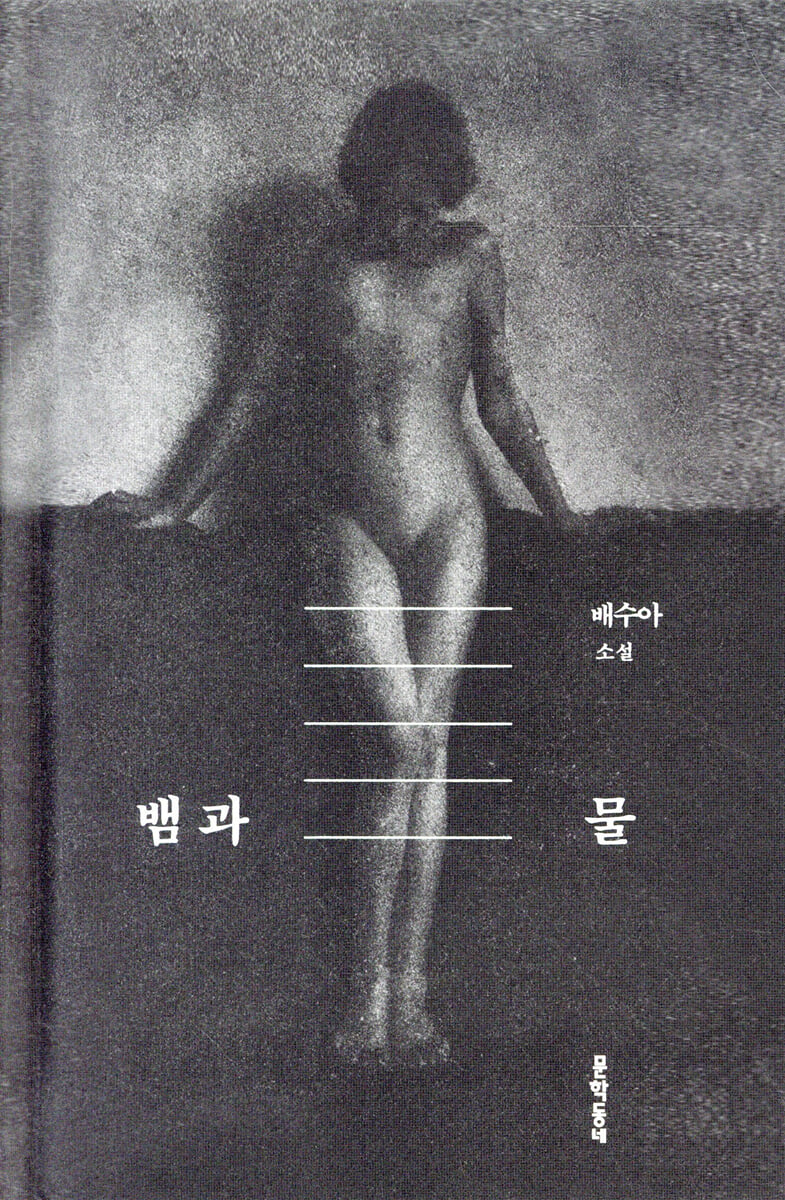
Bae Soo-ah's novel plunges into a world of poverty and madness, and its destructive power It becomes an eternal dream. Lost and loved things come back to me in that dream. Kang Ji-hee (literary critic) “I am delighted with this secret bond.” ―The most unfamiliar entity in Korean literature, a strange and beautiful world, a new novel by Bae Su-ah In Korean literature, the name 'Bae Su-ah' carries a foreign nuance. His works, which show no trace of influence or benefit from previous generations or contemporary Korean literature, and which are closer to images, atmosphere, and voice than narrative, often raise the question, "Can this be called a novel?" However, the strange and beautiful world that this stranger unfolds has steadily built up a fan base over the past 24 years through thirteen novels and eight short story collections. By adding a new label to that world as a translator, Bae Soo-ah is introducing new names as exotic as her own to Korean readers. Fernando Pessoa, Robert Walser, W. G. Sebald, Max Picard, Sadegh Hedijat, Thomas Bernhard… According to his statement that “I think I joined 『Axt』 with the identity of a translator rather than a novelist,” the circumstances of his becoming an editorial member of the bimonthly magazine 『Axt』, in charge of foreign literature, can be seen to be in a similar context. As much as I'm glad that my horizons in foreign literature have broadened through translator Bae Su-ah, the wait for author Bae Su-ah's novels has also gotten longer. Seven years after 『Owl's Absence』 (Changbi) in 2010, he is publishing his first collection of short stories, 『Snake and Water』. There is a short story collection titled “Milena, Milena, Ecstatic” (Theoria) published in 2016 as a result of a project supported by the Gyeonggi Cultural Foundation, but it was disappointing that only two short stories were not enough to relieve the long wait. * The work of Czech photographer František Drtikol on the cover was personally selected by the author. Author Bae Soo-ah said, “The moment I saw the photo, words such as anxiety, imbalance, fire, disharmony, absurdity, darkness, chaos, suggestion, prophecy, body, ghost, unconsciousness, and eroticism swirled around at the same time,” and “the photo is a part of the text in the book and an image that completes the text.” (From an interview with Seoul Shinmun) |
- You can preview some of the book's contents.
Preview
index
What did the child dream of before burning in the snow?
About Earl
1979
In Noin Ula
The Thief Sisters
snake and water
When the train passes over me
Commentary | Kang Ji-hee (literary critic)_The Eternal Shaman's Song
About Earl
1979
In Noin Ula
The Thief Sisters
snake and water
When the train passes over me
Commentary | Kang Ji-hee (literary critic)_The Eternal Shaman's Song
Into the book
What is known to have happened is more mysterious than what has not happened.
That's because we live in two worlds at the same time.
There was a certain self-consciousness that dreamed of non-sequential time in the dim light, and we were children born from it.
--- From "Snake and Water"
“There may be a very old you living inside of you.
Don't let the old lady come out too early.
If she flies away like a crazy chicken, you'll have to chase her for the rest of your life.
Or she'll chase you around.
“If you’re lucky and don’t have that misfortune, you’ll make a great postal worker.”
--- From "Snake and Water"
Childhood also suddenly stopped the tumultuous cycle that would last a lifetime.
childhood.
It was like a wild beast about to pounce, the teacher thought.
Just before all the screams erupted, the mouths were most silent.
Time and air were like clear wine, pooling between the female teacher's ribs.
A cynical person keeps a diary of his life.
While he is writing about his childhood, he forgets his childhood.
Don't have it.
It disappears.
--- From "Snake and Water"
The teacher thought that the tall girl's face was like the tall girl's own shadow reflected in the water, and if you stare at it for a long time, at some point a very clear will and expression suddenly appear, but after that moment, a light breeze blows again, a child cries again, a bus passes again, a siren sounds again, and so it gradually and rapidly disintegrates into a blur.
Therefore, it seemed that in order to preserve the girl's face, some physical action, not just a gaze, would be necessary.
For example, briefly brushing your cheek with the tip of your pinky finger.
That's because we live in two worlds at the same time.
There was a certain self-consciousness that dreamed of non-sequential time in the dim light, and we were children born from it.
--- From "Snake and Water"
“There may be a very old you living inside of you.
Don't let the old lady come out too early.
If she flies away like a crazy chicken, you'll have to chase her for the rest of your life.
Or she'll chase you around.
“If you’re lucky and don’t have that misfortune, you’ll make a great postal worker.”
--- From "Snake and Water"
Childhood also suddenly stopped the tumultuous cycle that would last a lifetime.
childhood.
It was like a wild beast about to pounce, the teacher thought.
Just before all the screams erupted, the mouths were most silent.
Time and air were like clear wine, pooling between the female teacher's ribs.
A cynical person keeps a diary of his life.
While he is writing about his childhood, he forgets his childhood.
Don't have it.
It disappears.
--- From "Snake and Water"
The teacher thought that the tall girl's face was like the tall girl's own shadow reflected in the water, and if you stare at it for a long time, at some point a very clear will and expression suddenly appear, but after that moment, a light breeze blows again, a child cries again, a bus passes again, a siren sounds again, and so it gradually and rapidly disintegrates into a blur.
Therefore, it seemed that in order to preserve the girl's face, some physical action, not just a gaze, would be necessary.
For example, briefly brushing your cheek with the tip of your pinky finger.
--- From "1979"
Publisher's Review
“During my long childhood, the thing I loved most was the game of imagining myself.”
―About the nightmare of childhood
In her ninth collection of short stories, Bae Soo-ah takes readers back to her childhood (girlhood).
The childhood in the work unfolds against the backdrop of a ‘secret bond’ (page 38) and a fantastic space-time.
Things that are far from pure and innocent.
The absence of parents, the journey to find them, heavy bags, days when it snows or the hot sun beats down.
When I turn seven, I no longer have to act like a boy, but I still don't have the strength to protect my precious being.
And then he opens his eyes to death.
Therefore, life is not something that becomes turbid after passing through an innocence period and becoming an adult.
Looking back on childhood with a hazy mind is nothing but an illusion.
In that delusion, the child is nothing more than a 'ghost wandering around like a yellow dog.'
“Childhood is an illusion.
The belief that one had a childhood is a delusion.
Because we are already adults, we were born just a moment ago and we live in this moment.
Therefore, all memories are illusions.
All futures will be delusions.
“All children are ghosts that roam like yellow dogs in our delusions.”
_Page 94, from "1979"
Therefore, the childhood the author speaks of is not something that can be encountered by going back in time.
There is no 'childhood-growth-adulthood' formula here.
It's not that I grew up to be who I am today.
The young me and the present me are not the same being, and there are no sequential stages in between.
The amusement park where 'I' stayed in "What kind of dream did I have before burning in the snow" (hereafter "in the snow"), which is located at the beginning of the collection of works.
In the middle of it all is a giant Ferris wheel.
It is therefore an important indicator that “the Ferris wheel, which is “something larger than the Earth itself or something larger than it” and “no one gets on or off,” is “in fact not a Ferris wheel, but a clock without hands that carries the reality of time.”
Bae Soo-ah's clock has no hands, and the reader cannot help but slide into the work in a completely new grammar of a dreamy world that twists the 'true nature of time' rather than a world of order of one minute and one second.
Am I truly a living entity? Am I merely a figment of my childhood imagination? Am I certain the future hasn't already arrived? Can I be certain that everything I've experienced in my life has truly happened? What about the belief that "if it really happened, all my memories wouldn't be so vivid" (p. 188).
We forgot hunger, thirst, and heat.
The sea took us to a distant world beyond the boundaries of everything.
There, the white foam of the waves executed our childhood.
We, who gaze at the sea, have grown old, been burned by napalm, suffered from breast cancer, been eaten by green frogs, and have accepted all of this naturally, without resentment or fear.
No one was happy or unhappy.
The sun that had been blazing overhead began to tilt slightly.
_Page 168, from “The Thief Sisters”
Another interesting point is the girls who appear in pairs in the story.
‘I’ and ‘the blind girl’ from ‘In the Snow’ and ‘In Old Man Ulla’, which read like a series.
"In the Snow" is the story of 'I' who discovers that my father has disappeared at an amusement park and sets out for a Scythian tomb, and "At Old Man Ula" is the story of 'I' who arrives at Old Man Ula, the northernmost station, in search of my giant father.
The last book the father reads to me in "In the Snow" is "Snow Child," which features a guerrilla girl named "Snow Child." When the police officer asks for my name, "I" answers that my name is "Snow Child."
'Na=Nun Ai', who is sitting at the Mia Center waiting for her father, sees a man whose back resembles her father walking away holding the hand of a 'blind girl' wearing a ribbon.
The blind girl with the ribbon appears again in "Old Woman Ulla" and her name is "Snow Child".
The blind girl is hanged with her neck broken like the guerrilla girl in "The Snow Child," and I tie her ribbon, and the blind girl and I continue our secret bond.
The 'I' and 'Eol-i' in 'About Eol-i' are also a pair.
When my sister was born, Earl was kidnapped and killed.
I realize that one birth requires one death, and I am tormented by guilt that my younger sister was born and died, even though I did not want her to.
As an adult, I once encountered a face that was enlarged from my childhood self.
I recognize Earl, but Earl does not recognize me as myself.
But, he just stares at me, who looks exactly like his mother, who was always teased with “You crazy woman!” and at me, the crazy woman of the village, for a long time.
There is also a tall girl and a small Liu Jin from "1979".
The scene where a male teacher accidentally witnesses a subtle sexual attraction to the most mature 'tall girl' in the class and becomes obsessed with her is one of the dizzying and dreamy scenes that can be encountered throughout this collection.
The children stopped in front of an old wall and each put their fingers into a hole in the wall.
The teacher, watching from a distance, felt the rough, hard texture of earth and minerals, the crumbled eggs of snakes, mold, and dead larvae on his fingers.
Finally, as his fingertips touched the slippery warmth of a midday dream hidden deep within the hole, the teacher's whole body flinched without him realizing it.
After a while, Liu Jin took his finger out of the hole and this time put his finger in his mouth and took out a red candy.
Then he put it into the tall girl's mouth.
The tall girl opened her mouth and took it, wiping the saliva and sugar water from the corners of her mouth with her fingertips.
(…) A sweet, faint, and hazy taste, like that of childhood, spread through the teacher’s mouth.
The teacher wiped the saliva and sugar water from the corner of his mouth with his fingertips.
_Pages 113-114, from “1979”
In “The Thief Sisters,” which features the memorable sentence, “An older sister is a dark mirror reflected ahead of time,” sisters who meet by chance and become older and younger siblings appear.
Girls walking hand in hand, which you can see throughout the novel.
This secret bond, connected by tightly clasped hands, leads to a fantastic story with every step the girls take.
The two rather disparate works in the collection, “Snakes and Water” and “When the Train Passes Over Me,” also contain a unique reality of time.
Let's look at 'Kim Gil-la' from 'Snake and Water'.
The narrative unfolds like a series of interwoven, intertwined dreams, with the young transfer student Gila, the female teacher Gila, and the old Gila split into three.
It is a story about a young transfer student, Gil-a, who comes to school while a teacher (Kim Gil-a) is daydreaming in the classroom in broad daylight, encounters an old Gil-a in the playground, and dies.
A dream where one's future kills one's past, the overlap and intersection of the moment and eternity... "When the Train Passes Over Me," the last story in the collection, is a story about 'me' attending a poetry reading while traveling abroad on International Women's Day, carrying my grandmother's blue tin bag.
My grandmother's name on the obituary is the same as mine, I'm holding her suitcase, and today is the day of her funeral.
I am indistinguishable from my grandmother.
Am I living my grandmother's life of travel?
“Is the dream starting now?”
―The genre called Bae Su-ah
“To mourn for something that has not happened yet, but will happen within me someday, and will surely happen again in the future,” he said, adding that “some people think that literature should only be truthful.
Some people think that literature necessarily contains truth.
For me, literature is, in a sense, just a dream.
“For me, literature inevitably includes mourning,” says Bae Soo-ah (from a conversation with Cha Mi-ryeong in the Fall 2013 issue of Munhakdongne). Bae Soo-ah, the writer who presents a ‘strangeness’ that is dreamlike, infinite, and free, and therefore more captivating than any other narrative.
In these dream-like works that constantly escape fixed time and space, readers will once again discover different landscapes.
For a hundred readers, there are a hundred Bae Soo-ahs, and for a thousand readers, there are a thousand Bae Soo-ahs. That is the genre called Bae Soo-ah.
―About the nightmare of childhood
In her ninth collection of short stories, Bae Soo-ah takes readers back to her childhood (girlhood).
The childhood in the work unfolds against the backdrop of a ‘secret bond’ (page 38) and a fantastic space-time.
Things that are far from pure and innocent.
The absence of parents, the journey to find them, heavy bags, days when it snows or the hot sun beats down.
When I turn seven, I no longer have to act like a boy, but I still don't have the strength to protect my precious being.
And then he opens his eyes to death.
Therefore, life is not something that becomes turbid after passing through an innocence period and becoming an adult.
Looking back on childhood with a hazy mind is nothing but an illusion.
In that delusion, the child is nothing more than a 'ghost wandering around like a yellow dog.'
“Childhood is an illusion.
The belief that one had a childhood is a delusion.
Because we are already adults, we were born just a moment ago and we live in this moment.
Therefore, all memories are illusions.
All futures will be delusions.
“All children are ghosts that roam like yellow dogs in our delusions.”
_Page 94, from "1979"
Therefore, the childhood the author speaks of is not something that can be encountered by going back in time.
There is no 'childhood-growth-adulthood' formula here.
It's not that I grew up to be who I am today.
The young me and the present me are not the same being, and there are no sequential stages in between.
The amusement park where 'I' stayed in "What kind of dream did I have before burning in the snow" (hereafter "in the snow"), which is located at the beginning of the collection of works.
In the middle of it all is a giant Ferris wheel.
It is therefore an important indicator that “the Ferris wheel, which is “something larger than the Earth itself or something larger than it” and “no one gets on or off,” is “in fact not a Ferris wheel, but a clock without hands that carries the reality of time.”
Bae Soo-ah's clock has no hands, and the reader cannot help but slide into the work in a completely new grammar of a dreamy world that twists the 'true nature of time' rather than a world of order of one minute and one second.
Am I truly a living entity? Am I merely a figment of my childhood imagination? Am I certain the future hasn't already arrived? Can I be certain that everything I've experienced in my life has truly happened? What about the belief that "if it really happened, all my memories wouldn't be so vivid" (p. 188).
We forgot hunger, thirst, and heat.
The sea took us to a distant world beyond the boundaries of everything.
There, the white foam of the waves executed our childhood.
We, who gaze at the sea, have grown old, been burned by napalm, suffered from breast cancer, been eaten by green frogs, and have accepted all of this naturally, without resentment or fear.
No one was happy or unhappy.
The sun that had been blazing overhead began to tilt slightly.
_Page 168, from “The Thief Sisters”
Another interesting point is the girls who appear in pairs in the story.
‘I’ and ‘the blind girl’ from ‘In the Snow’ and ‘In Old Man Ulla’, which read like a series.
"In the Snow" is the story of 'I' who discovers that my father has disappeared at an amusement park and sets out for a Scythian tomb, and "At Old Man Ula" is the story of 'I' who arrives at Old Man Ula, the northernmost station, in search of my giant father.
The last book the father reads to me in "In the Snow" is "Snow Child," which features a guerrilla girl named "Snow Child." When the police officer asks for my name, "I" answers that my name is "Snow Child."
'Na=Nun Ai', who is sitting at the Mia Center waiting for her father, sees a man whose back resembles her father walking away holding the hand of a 'blind girl' wearing a ribbon.
The blind girl with the ribbon appears again in "Old Woman Ulla" and her name is "Snow Child".
The blind girl is hanged with her neck broken like the guerrilla girl in "The Snow Child," and I tie her ribbon, and the blind girl and I continue our secret bond.
The 'I' and 'Eol-i' in 'About Eol-i' are also a pair.
When my sister was born, Earl was kidnapped and killed.
I realize that one birth requires one death, and I am tormented by guilt that my younger sister was born and died, even though I did not want her to.
As an adult, I once encountered a face that was enlarged from my childhood self.
I recognize Earl, but Earl does not recognize me as myself.
But, he just stares at me, who looks exactly like his mother, who was always teased with “You crazy woman!” and at me, the crazy woman of the village, for a long time.
There is also a tall girl and a small Liu Jin from "1979".
The scene where a male teacher accidentally witnesses a subtle sexual attraction to the most mature 'tall girl' in the class and becomes obsessed with her is one of the dizzying and dreamy scenes that can be encountered throughout this collection.
The children stopped in front of an old wall and each put their fingers into a hole in the wall.
The teacher, watching from a distance, felt the rough, hard texture of earth and minerals, the crumbled eggs of snakes, mold, and dead larvae on his fingers.
Finally, as his fingertips touched the slippery warmth of a midday dream hidden deep within the hole, the teacher's whole body flinched without him realizing it.
After a while, Liu Jin took his finger out of the hole and this time put his finger in his mouth and took out a red candy.
Then he put it into the tall girl's mouth.
The tall girl opened her mouth and took it, wiping the saliva and sugar water from the corners of her mouth with her fingertips.
(…) A sweet, faint, and hazy taste, like that of childhood, spread through the teacher’s mouth.
The teacher wiped the saliva and sugar water from the corner of his mouth with his fingertips.
_Pages 113-114, from “1979”
In “The Thief Sisters,” which features the memorable sentence, “An older sister is a dark mirror reflected ahead of time,” sisters who meet by chance and become older and younger siblings appear.
Girls walking hand in hand, which you can see throughout the novel.
This secret bond, connected by tightly clasped hands, leads to a fantastic story with every step the girls take.
The two rather disparate works in the collection, “Snakes and Water” and “When the Train Passes Over Me,” also contain a unique reality of time.
Let's look at 'Kim Gil-la' from 'Snake and Water'.
The narrative unfolds like a series of interwoven, intertwined dreams, with the young transfer student Gila, the female teacher Gila, and the old Gila split into three.
It is a story about a young transfer student, Gil-a, who comes to school while a teacher (Kim Gil-a) is daydreaming in the classroom in broad daylight, encounters an old Gil-a in the playground, and dies.
A dream where one's future kills one's past, the overlap and intersection of the moment and eternity... "When the Train Passes Over Me," the last story in the collection, is a story about 'me' attending a poetry reading while traveling abroad on International Women's Day, carrying my grandmother's blue tin bag.
My grandmother's name on the obituary is the same as mine, I'm holding her suitcase, and today is the day of her funeral.
I am indistinguishable from my grandmother.
Am I living my grandmother's life of travel?
“Is the dream starting now?”
―The genre called Bae Su-ah
“To mourn for something that has not happened yet, but will happen within me someday, and will surely happen again in the future,” he said, adding that “some people think that literature should only be truthful.
Some people think that literature necessarily contains truth.
For me, literature is, in a sense, just a dream.
“For me, literature inevitably includes mourning,” says Bae Soo-ah (from a conversation with Cha Mi-ryeong in the Fall 2013 issue of Munhakdongne). Bae Soo-ah, the writer who presents a ‘strangeness’ that is dreamlike, infinite, and free, and therefore more captivating than any other narrative.
In these dream-like works that constantly escape fixed time and space, readers will once again discover different landscapes.
For a hundred readers, there are a hundred Bae Soo-ahs, and for a thousand readers, there are a thousand Bae Soo-ahs. That is the genre called Bae Soo-ah.
GOODS SPECIFICS
- Publication date: November 10, 2017
- Format: Hardcover book binding method guide
- Page count, weight, size: 312 pages | 344g | 120*188*30mm
- ISBN13: 9788954648929
- ISBN10: 8954648924
You may also like
카테고리
korean


korean

![GQ KOREA Mark (Monthly): December [2025]](http://librairie.coreenne.fr/cdn/shop/files/8ef265dbbfbf186523ed75ba7319009d.jpg?v=1765340328&width=3840)


