

Kill the Knight Commander 1
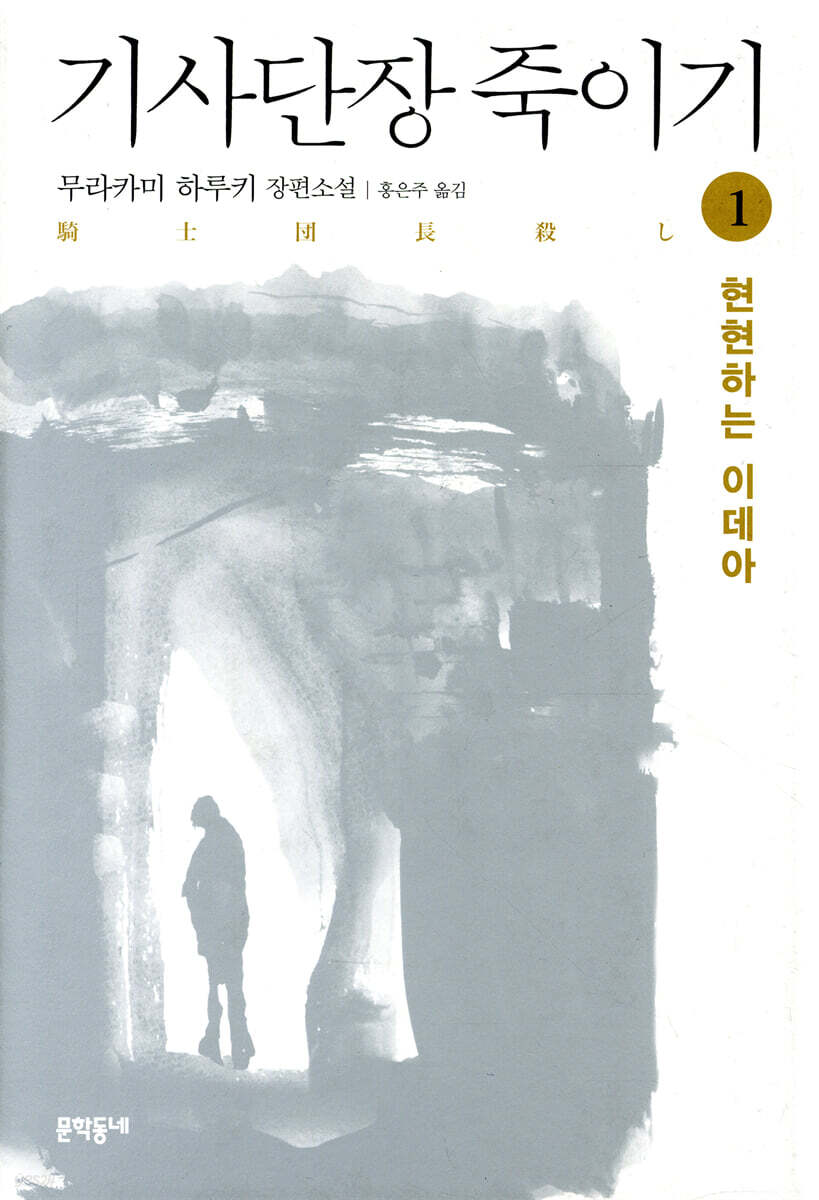 |
Description
Book Introduction
Seven years after "1Q84," everything about Haruki Murakami is here! The power of storytelling that pierces the boundary between reality and ideas A compilation of Haruki Murakami's world, armed with a bold imagination. A portrait painter in his mid-thirties, 'Na', receives a sudden divorce notice from his wife and leaves home to live in the mountain atelier of his friend's father, renowned Japanese painter Tomohiko Amada. And one day, he discovers his unpublished work [Killing the Knight Commander] hidden above the ceiling. After bringing down the painting that seemed to transport the characters from Mozart's opera [Don Giovanni] to Japan's Asuka period, strange things started happening one after another around 'me'. The definitive edition of Haruki Murakami's world, where reality and unreality are exquisitely fused, following the worldview of existing full-length novels such as "The Wind-Up Bird Chronicle" and "1Q84." |
- You can preview some of the book's contents.
Preview
Into the book
When we look back after time has passed, our lives seem truly mysterious.
It's full of unbelievably sudden coincidences and unpredictable twists and turns.
But while they are actually going on, most of the time, no matter how carefully you look, there is no inexplicable element that catches your eye.
To our eyes, in the ceaseless flow of daily life, the most obvious things appear to happen as if they were absolutely natural.
--- Volume 1, pp. 94-95
If you look deep inside, every human being has something shining inside them.
Find it well, and if the surface is cloudy (it may be more often than not), wipe it clean with a cloth.
Because that kind of mindset always comes through in the work.
--- Volume 1, p.27
In other words, there are often times in our lives when the line between reality and unreality is not clearly visible.
That border seems to be constantly shifting.
It's like a border that moves freely depending on the mood of the day.
You have to be especially careful with that movement.
Otherwise, you won't know which side you're on.
--- Volume 1, p.340
This is the so-called Nanjing Massacre.
After fierce fighting, Japanese forces captured downtown Nanjing and committed mass murder.
There were killings during battles, and there were killings after battles.
The Japanese military, which had no time to manage prisoners, killed most of the surrendered soldiers and civilians.
While historians debate the exact number of casualties, the undeniable fact is that a huge number of civilians were caught up in the fighting and lost their lives.
Some say the number of Chinese deaths is 400,000, while others say it is 100,000.
But what exactly is the difference between four hundred thousand and one hundred thousand? --- Vol. 2, p. 88
Growing old is perhaps a more unexpected event for a person than death.
It is something that far exceeds human expectations.
One day, someone tells you outright that you no longer need to exist biologically (and socially) in this world.
--- Volume 2, p.190
I pressed my face against the large glass window and looked out at the Pacific Ocean stretching out before me.
The horizon was close to the sky.
I followed that straight line with my eyes from end to end.
Such a long and beautiful straight line cannot be drawn by human hands, no matter what kind of ruler is used.
And beneath that line, countless lives would be thriving.
This world is filled with countless lives, and an equal number of deaths.
--- Volume 2, pp. 333-334
How can I keep my mind focused? Where does the mind even exist? I tried to visualize the inside of my body in order.
But the heart was nowhere to be seen.
Where the hell is my heart?
“The heart is in the memory.
"We live by eating images." --- Vol. 2, p. 418
He cleverly controls the balance of his existence in this world by keeping secrets.
To him, a secret is like the pole held by a tightrope walker in a circus.
--- Volume 2, p.568
If a person really wants something, he can achieve it.
Reality can become unreal through certain special channels.
Or the unreal can become reality.
If you wish so earnestly.
But that doesn't prove that people are free.
What it proves may actually be the opposite.
--- Volume 2, pp. 217-218
It's full of unbelievably sudden coincidences and unpredictable twists and turns.
But while they are actually going on, most of the time, no matter how carefully you look, there is no inexplicable element that catches your eye.
To our eyes, in the ceaseless flow of daily life, the most obvious things appear to happen as if they were absolutely natural.
--- Volume 1, pp. 94-95
If you look deep inside, every human being has something shining inside them.
Find it well, and if the surface is cloudy (it may be more often than not), wipe it clean with a cloth.
Because that kind of mindset always comes through in the work.
--- Volume 1, p.27
In other words, there are often times in our lives when the line between reality and unreality is not clearly visible.
That border seems to be constantly shifting.
It's like a border that moves freely depending on the mood of the day.
You have to be especially careful with that movement.
Otherwise, you won't know which side you're on.
--- Volume 1, p.340
This is the so-called Nanjing Massacre.
After fierce fighting, Japanese forces captured downtown Nanjing and committed mass murder.
There were killings during battles, and there were killings after battles.
The Japanese military, which had no time to manage prisoners, killed most of the surrendered soldiers and civilians.
While historians debate the exact number of casualties, the undeniable fact is that a huge number of civilians were caught up in the fighting and lost their lives.
Some say the number of Chinese deaths is 400,000, while others say it is 100,000.
But what exactly is the difference between four hundred thousand and one hundred thousand? --- Vol. 2, p. 88
Growing old is perhaps a more unexpected event for a person than death.
It is something that far exceeds human expectations.
One day, someone tells you outright that you no longer need to exist biologically (and socially) in this world.
--- Volume 2, p.190
I pressed my face against the large glass window and looked out at the Pacific Ocean stretching out before me.
The horizon was close to the sky.
I followed that straight line with my eyes from end to end.
Such a long and beautiful straight line cannot be drawn by human hands, no matter what kind of ruler is used.
And beneath that line, countless lives would be thriving.
This world is filled with countless lives, and an equal number of deaths.
--- Volume 2, pp. 333-334
How can I keep my mind focused? Where does the mind even exist? I tried to visualize the inside of my body in order.
But the heart was nowhere to be seen.
Where the hell is my heart?
“The heart is in the memory.
"We live by eating images." --- Vol. 2, p. 418
He cleverly controls the balance of his existence in this world by keeping secrets.
To him, a secret is like the pole held by a tightrope walker in a circus.
--- Volume 2, p.568
If a person really wants something, he can achieve it.
Reality can become unreal through certain special channels.
Or the unreal can become reality.
If you wish so earnestly.
But that doesn't prove that people are free.
What it proves may actually be the opposite.
--- Volume 2, pp. 217-218
--- From the text
Publisher's Review
After his wife's sudden notice of divorce,
I started a new life in a house on top of a mountain.
It was a lonely yet peaceful day, like a remote island.
Until the Knight Commander appears… …
Seven years after 『1Q84』,
Everything about Haruki Murakami is here!
Haruki Murakami's first full-length novel in seven years, "Killing Commendatore" (Volume 1: "The Manifesting Idea", Volume 2: "The Transferring Metaphor"), is being released with a new cover to mark its first anniversary.
This special edition of the recovered book, featuring Haruki Murakami's signature motifs hidden throughout the novel, will be available in limited quantities starting in September 2018.
Is this really the real world?
A mysterious journey of those seeking to fill the void in their lives.
A portrait painter in his mid-thirties, 'Na', receives a sudden divorce notice from his wife and leaves home to live in the mountain atelier of his friend's father, renowned Japanese painter Tomohiko Amada.
And one day, he discovers Tomohiko's unpublished Japanese painting, [Killing Commendatore], hidden above the ceiling.
After bringing down the painting that seemed to transport the characters from Mozart's opera [Don Giovanni] to Japan's Asuka period, strange things started happening one after another around 'me'.
Menshiki Wataru, a white-haired gentleman who lives in a luxurious mansion across the valley, offers a large sum of money to paint a portrait. He follows an unidentified sound he hears in the middle of the night to a shrine behind his house, where he finds a bell ringing under a stone tomb.
With Menshiki's help, they dig up the stone tomb and discover a circular stone chamber that appears to have been intentionally built by someone.
And after a while, the ‘Commander of the Knights’ appears in front of ‘me’.
The 'Idea' that was released from the mysterious pit, just like the Commendatore in Amada Tomohiko's painting.
A separation from his wife, a lonely journey, enclosed spaces like pits and walls, and encounters with mysterious beings—Killing Commendatore is a collection of unique elements from Haruki Murakami's literary world.
Music of various genres, including opera, classical, jazz, and old pop, is appropriately placed to represent the characters' imagery, and the relationship between the main character 'I', Menshiki, and Menshiki and 13-year-old girl Marie can also be read as an homage to 'The Great Gatsby' by Scott Fitzgerald, which Haruki chose as his favorite English literature work and which he himself translated.
As the protagonist's strange experiences begin in earnest, the Edo period writer Ueda Akinari's tale of strange creatures, "The Tale of Harusame," is directly quoted. This is also a work that Haruki has enjoyed reading for a long time, and has said that he "had wanted to write a novel based on this story for a long time."
The fact that he returned to the first-person point of view, which he mainly used in the early days of his career as a writer, is also why the charm of 'Haruki's World' is felt even more strongly.
The adventure story, which exquisitely blends reality and unreality, is a plot that has been consistently repeated in previous novels from "The Wind-Up Bird Chronicle" to "1Q84," but this time, it is characterized by the addition of actual events from modern history.
Tomohiko Amada was studying abroad in Vienna, Austria during World War II and became involved in the Nazi resistance movement. His younger brother, a pianist, was sent to the Battle of Nanjing and experienced massacres under coercive orders. Unable to bear the trauma, he committed suicide.
The painting [Killing the Commendatore], which is full of mysteries about its creation and why it was kept hidden on the ceiling without being released, vividly reveals the will of the old man to confront such great absurdity and violence.
In addition, 'I' overcomes the sense of loss and pain through a series of events, and at the same time, plays the role of carrying on the will of Tomohiko Amada through the medium of drawing.
This kind of pseudo-rich relationship was also depicted more organically and in depth than in previous works.
Also, the Tohoku region, where 'I' left home and traveled for a month without a destination, is a place that still bears the brunt of the 2011 Great East Japan Earthquake, and Haruki Murakami used his own experience of driving through the region the fall of the year before last to include messages of healing and regeneration throughout the novel.
While the main motifs include operas by Mozart and Strauss, abstract concepts such as 'idea' and 'metaphor', and classical novels with Buddhist overtones, the story's core is closely connected to real-world issues.
This passage gives a glimpse into the author's will: "With the sense of responsibility that comes with age, I felt the need to create something new."
The power of storytelling that pierces the boundaries between reality and unreality, between fact and concept.
A compilation of Haruki Murakami's world, armed with a bold imagination.
He has been a writer for over 40 years since his debut in 1979 when he won the Gunzo New Writer's Award for "Listen to the Wind's Song."
Haruki Murakami's literature, once considered the exclusive domain of youth, representing individualism and nihilism, has now become a brand that spans generations and borders.
"Killing Commendatore" is a message to the current generation of readers, with various variations on the world of works that Haruki Murakami has built up to now. Just like the illustrations in the novel, "Killing Commendatore" is the result of an artist delving deep into his inner self and concentrating his efforts.
Through this work, you will be able to discover the power of the long novel in modern society, and the ways in which novelists combat internal and external problems. Haruki Murakami, who has been called a "stateless writer," offers his own unique answers.
It has all the elements that make you say, 'This is Haruki!'
You will be completely immersed in the devices of Haruki's world.
Like Alice falling into a tree hole.
_North Asahi
An adventure through another world, exploring loss and recovery.
With its own keywords appearing one after another, it truly feels like Haruki Murakami's best album.
_Sankei News
You can follow the superficial plot, but each conversation and episode has a different meaning to each reader.
A very ambiguous and multi-layered story is intentionally constructed.
_Yomiuri Shimbun
Long novels are competing with various social media platforms like Twitter and Facebook.
In this day and age where short stories are consumed, it's important to me to write something that readers can't stop reading once they start.
I believe that stories may not have an immediate effect, but with the help of time, they definitely give strength to people.
And my wish is to give as much positive strength as possible.
Haruki Murakami (Asahi Shimbun interview, April 17, 2017)
I started a new life in a house on top of a mountain.
It was a lonely yet peaceful day, like a remote island.
Until the Knight Commander appears… …
Seven years after 『1Q84』,
Everything about Haruki Murakami is here!
Haruki Murakami's first full-length novel in seven years, "Killing Commendatore" (Volume 1: "The Manifesting Idea", Volume 2: "The Transferring Metaphor"), is being released with a new cover to mark its first anniversary.
This special edition of the recovered book, featuring Haruki Murakami's signature motifs hidden throughout the novel, will be available in limited quantities starting in September 2018.
Is this really the real world?
A mysterious journey of those seeking to fill the void in their lives.
A portrait painter in his mid-thirties, 'Na', receives a sudden divorce notice from his wife and leaves home to live in the mountain atelier of his friend's father, renowned Japanese painter Tomohiko Amada.
And one day, he discovers Tomohiko's unpublished Japanese painting, [Killing Commendatore], hidden above the ceiling.
After bringing down the painting that seemed to transport the characters from Mozart's opera [Don Giovanni] to Japan's Asuka period, strange things started happening one after another around 'me'.
Menshiki Wataru, a white-haired gentleman who lives in a luxurious mansion across the valley, offers a large sum of money to paint a portrait. He follows an unidentified sound he hears in the middle of the night to a shrine behind his house, where he finds a bell ringing under a stone tomb.
With Menshiki's help, they dig up the stone tomb and discover a circular stone chamber that appears to have been intentionally built by someone.
And after a while, the ‘Commander of the Knights’ appears in front of ‘me’.
The 'Idea' that was released from the mysterious pit, just like the Commendatore in Amada Tomohiko's painting.
A separation from his wife, a lonely journey, enclosed spaces like pits and walls, and encounters with mysterious beings—Killing Commendatore is a collection of unique elements from Haruki Murakami's literary world.
Music of various genres, including opera, classical, jazz, and old pop, is appropriately placed to represent the characters' imagery, and the relationship between the main character 'I', Menshiki, and Menshiki and 13-year-old girl Marie can also be read as an homage to 'The Great Gatsby' by Scott Fitzgerald, which Haruki chose as his favorite English literature work and which he himself translated.
As the protagonist's strange experiences begin in earnest, the Edo period writer Ueda Akinari's tale of strange creatures, "The Tale of Harusame," is directly quoted. This is also a work that Haruki has enjoyed reading for a long time, and has said that he "had wanted to write a novel based on this story for a long time."
The fact that he returned to the first-person point of view, which he mainly used in the early days of his career as a writer, is also why the charm of 'Haruki's World' is felt even more strongly.
The adventure story, which exquisitely blends reality and unreality, is a plot that has been consistently repeated in previous novels from "The Wind-Up Bird Chronicle" to "1Q84," but this time, it is characterized by the addition of actual events from modern history.
Tomohiko Amada was studying abroad in Vienna, Austria during World War II and became involved in the Nazi resistance movement. His younger brother, a pianist, was sent to the Battle of Nanjing and experienced massacres under coercive orders. Unable to bear the trauma, he committed suicide.
The painting [Killing the Commendatore], which is full of mysteries about its creation and why it was kept hidden on the ceiling without being released, vividly reveals the will of the old man to confront such great absurdity and violence.
In addition, 'I' overcomes the sense of loss and pain through a series of events, and at the same time, plays the role of carrying on the will of Tomohiko Amada through the medium of drawing.
This kind of pseudo-rich relationship was also depicted more organically and in depth than in previous works.
Also, the Tohoku region, where 'I' left home and traveled for a month without a destination, is a place that still bears the brunt of the 2011 Great East Japan Earthquake, and Haruki Murakami used his own experience of driving through the region the fall of the year before last to include messages of healing and regeneration throughout the novel.
While the main motifs include operas by Mozart and Strauss, abstract concepts such as 'idea' and 'metaphor', and classical novels with Buddhist overtones, the story's core is closely connected to real-world issues.
This passage gives a glimpse into the author's will: "With the sense of responsibility that comes with age, I felt the need to create something new."
The power of storytelling that pierces the boundaries between reality and unreality, between fact and concept.
A compilation of Haruki Murakami's world, armed with a bold imagination.
He has been a writer for over 40 years since his debut in 1979 when he won the Gunzo New Writer's Award for "Listen to the Wind's Song."
Haruki Murakami's literature, once considered the exclusive domain of youth, representing individualism and nihilism, has now become a brand that spans generations and borders.
"Killing Commendatore" is a message to the current generation of readers, with various variations on the world of works that Haruki Murakami has built up to now. Just like the illustrations in the novel, "Killing Commendatore" is the result of an artist delving deep into his inner self and concentrating his efforts.
Through this work, you will be able to discover the power of the long novel in modern society, and the ways in which novelists combat internal and external problems. Haruki Murakami, who has been called a "stateless writer," offers his own unique answers.
It has all the elements that make you say, 'This is Haruki!'
You will be completely immersed in the devices of Haruki's world.
Like Alice falling into a tree hole.
_North Asahi
An adventure through another world, exploring loss and recovery.
With its own keywords appearing one after another, it truly feels like Haruki Murakami's best album.
_Sankei News
You can follow the superficial plot, but each conversation and episode has a different meaning to each reader.
A very ambiguous and multi-layered story is intentionally constructed.
_Yomiuri Shimbun
Long novels are competing with various social media platforms like Twitter and Facebook.
In this day and age where short stories are consumed, it's important to me to write something that readers can't stop reading once they start.
I believe that stories may not have an immediate effect, but with the help of time, they definitely give strength to people.
And my wish is to give as much positive strength as possible.
Haruki Murakami (Asahi Shimbun interview, April 17, 2017)
GOODS SPECIFICS
- Date of publication: July 12, 2017
- Format: Hardcover book binding method guide
- Page count, weight, size: 568 pages | 660g | 128*188*35mm
- ISBN13: 9788954646123
- ISBN10: 8954646123
You may also like
카테고리
korean


korean

![GQ KOREA Mark (Monthly): December [2025]](http://librairie.coreenne.fr/cdn/shop/files/8ef265dbbfbf186523ed75ba7319009d.jpg?v=1765340328&width=3840)


